Blog

  • Digital Payments in China Surge

    Digital Payments in China Surge

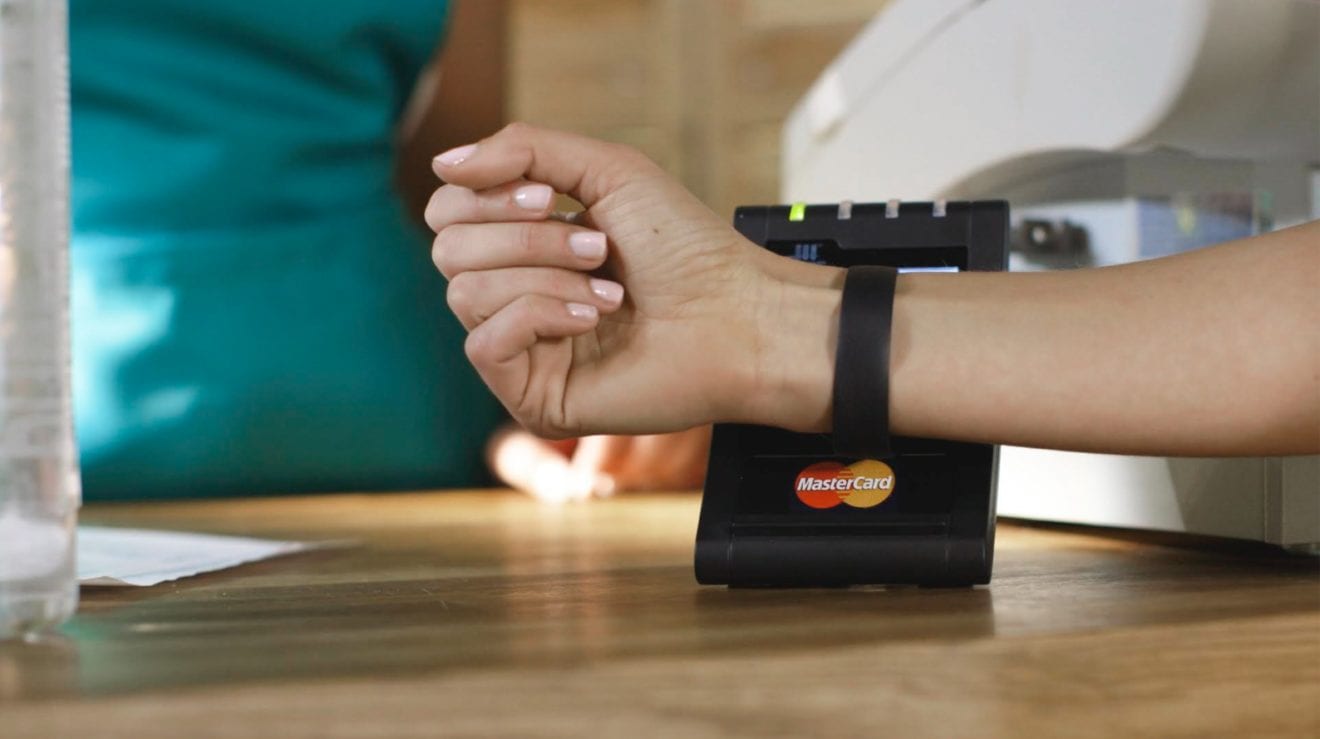
    China’s digital payment market grew to $8.4 trillion in the last quarter of 2019 and there are signs of still robust momentum in the months following the outbreak.

    By transaction volumes, Alipay retained the top rank with 55.1 percent followed by Tencent’s two platforms – WeChatPay and QQ Wallet – at 38.9 percent, according to a report (Mandarin only) by independent research firm iResearch.

    The remaining 6 percent where split between 1qianbao (1.4%), JD Pay (0.9%), UMPay (0.6%), 99bill (0.6%), Yeepay (0.5%), China UMS (0.3%), Sunin Pay (0.2%) and others (1.5%).

    59.8 trillion yuan ($8.4 trillion) in total digital payment representing a year-on-year increase of 13.4%

    Even in the midst of an ongoing coronavirus outbreak, the Chinese digital payment market signaled strength, the report underlined.

    Beijing-based grocery startup Meicai attracted 800,000 new users in one week on an online platform that connects farmers with consumers and restaurants. Between March 18 and 22, Alipay registered average daily purchase of nearly 1.1 million cups of milk tea via branding programs.

  • LVMH-backed L Catterton invests in Japanese cosmetics company Etvos

    LVMH-backed L Catterton invests in Japanese cosmetics company Etvos

    Japanese cosmetics brand Etvos has received a significant investment from global private-equity firm L Catterton’s Asia fund.

    The LVMH and Groupe Arnault-backed fund will partner with Etvos’s existing management to extend growth, with special attention to expanding store footprints and enhancing customer experiences.

    Following the completion of this investment, LVMH Japan president Norbert Leuret and Chanel G.K former special advisor Masatoshi Kuroda will join Etvos as non-executive directors to enhance the board composition.

    “This investment is a testament to the tremendous efforts and hard work of the Etvos team and we are pleased to partner with L Catterton as we accelerate our growth,” said Etvos CEO Hifumi Ogawa. “We look forward to leveraging L Catterton’s unmatched sector expertise and wide network of industry contacts as we expand our retail footprint, enhance the customer experience, and further expand our high-quality product portfolio.”

    The investment is L Catterton’s first in a Japanese cosmetics brand.

  • Citi Extends Relief Payouts to Hong Kong

    Citi Extends Relief Payouts to Hong Kong

    Lower-income staff at Citi will receive payouts in line with chief executive Michael Corbat’s call to extend global support during the crisis.

    Hong Kong-based employees with an annual base salary of HK$470,000 (US$60,622) or less will receive a one-time payment of HK$8,000 ($1,032). This follows the bank’s announcement last week to provide economic support to 75,000 staff globally including $1,000 to each worker in the U.S. with an annual salary of $60,000 or below.

    «This initiative is for colleagues who are more likely to face economic hardship in the current situation,» said Angel Ng Yin-yee, Hong Kong and Macau chief executive at Citi, in a statement. «We hope that our support will help lighten their load as they cope with other challenges and family priorities during this time.»

    Singapore Relief

    Citi also made a similar announcement in Singapore, highlighting relief measures to support retail and institutional clients such as interest and fees waivers, tenure extensions, alternative settlement arrangements and loan payment reduction programs. And in support of the Singapore government’s latest financial relief program, Citi will also offer clients the option to convert outstanding unsecured balances from their Citi credit cards into low-cost term loans.

    «We recognize the financial stress to our clients as a result of the COVID-19 situation,» said Amol Gupte, ASEAN head and Singapore country officer at Citi, expressing support for clients and the city-state’s government.

    For the time being, global banks continue to demonstrate support for the global economy, especially the economically vulnerable, amidst a persistent coronavirus pandemic. In addition to payouts or loan-related relief, the industry has committed to temporary job cut halts, dividend cancellations and even free online classes for homebound children.

  • Harvey Norman executives take pay cut as crisis worsens

    Harvey Norman executives take pay cut as crisis worsens

    Harvey Norman has told shareholders the business will not pay an interim dividend and that its executive team and non-directors will forgo 20 percent of their salaries and director’s fees for three months.

    “In the present environment, the board believes that preserving cash is the most prudent course of action to protect shareholder value,” company secretary Chris Mentis wrote in a letter to shareholders.

    Australian-based Harvey Norman operates stores in Singapore and Malaysia, selling electronic and electrical goods and furniture.

    The decision will keep A$149.5 million of cash in the business and comes two weeks after Harvey Norman revealed a 9.4-per-cent increase in comparable sales in its Australian stores for the period of March 1 to 17.

    At the time, chairman Gerry Harvey told television program 60 Minutes that coronavirus could be an ‘opportunity’ for retailers in certain categories, noting that sales of freezers had quadrupled and air purifiers had doubled.

    Public backlash was swift, and two days later Harvey admitted he was “mortified” that he had come off as a “heartless, greedy old bastard”.

    “Now everyone thinks I’m this callous old bastard out making a profit on other people’s misery… but believe me, that was not my intention,” Harvey said.

    “I was trying to give a positive view of the Covid-19 crisis.”

    Harvey Norman was contacted but had not provided comment by publication.

    The Harvey Norman board’s decision is made in the context of dozens of retailers entering a hibernation state amid a collapsed bricks-and-mortar retail sector, with customer confidence hitting an almost-50-year low.

    ANZ head of Australian economics David Plank said confidence on current economic conditions had fallen almost 50 percent over the last two weeks to its lowest ever level.

    “And many other aspects of the survey are exceptionally weak. The announcement of the largest fiscal package yet may stabilize confidence, but much will depend on how the pandemic evolves,” Plank said.

  • Over 320,000 jobs in Asia-Pacific travel-retail industry under threat

    Over 320,000 jobs in Asia-Pacific travel-retail industry under threat

    Governments across Asia Pacific are being urged to protect more than 320,000 duty-free and travel-retail industry jobs at risk during the coronavirus pandemic.

    The Asia Pacific Travel Retail Association claims that the jobs in the US$36 billion industry may be overlooked by politicians devising financial rescue measures to deal with the economic fallout of the pandemic. It is asking governments to support the industry along with airlines, airports and maritime businesses.

    In a special report, the association outlines the industry’s almost $15 billion contribution to GDP across Asia Pacific.

    “Airport retail and commercial services, including food and beverage, constitute a crucial business sector providing up to 60 percent vital commercial income for airport owners, outpacing aeronautical revenue streams,” read a statement issued by the association.

    “It is the most significant direct contributor to the investment in Asia-Pacific’s aviation infrastructure and ongoing development of world-class national gateways, the region’s hubs to the world.”

    “The dynamics of duty-free and travel retailing are intrinsically linked to the aviation and maritime industries and its viability is entirely dependent on the return in passenger traffic,” said association president Grant Fleming.

    “This means 320,000 jobs are at risk that could be safeguarded if governments extend financial support packages to the industry.”

  • AirAsia seeking govt loan

    AirAsia seeking govt loan

    Airasia may have enough cash to last them for most of 2020 but it is currently seeking out a loan from the Malaysian government to cushion the impact from the challenging economic environment.

    The low-cost carrier’s chief executive officer Tan Sri Tony Fernandes(pic) said there was no need for bailouts and what most airlines were looking for were loans.

    “We think the cash will last us for the most part of this year and when the sales return, then we’re okay.

    “It’ll be great to get a loan as well and we’re working on that with our government. We think liquidity is available in Malaysia and Thailand, ” he told Bloomberg Markets in an interview.

    And amidst the tough environment that airlines are operating in, Fernandes remained optimistic, adding that AirAsia was lucky to have restructured its business a lot and moved towards the digital end.

    He also said the airline’s cost structure is robust enough and the group is restructuring further.

    He admitted that the coronavirus disease (Covid-19) pandemic was currently the worst crisis he has ever been through.

    “We have a lot of ideas to get going again.

    “It’s going to be an uphill slog but we remain optimistic. It’s always better to have more cash.

    “We have enough at the moment but we’ll be very happy to raise some.

    “And it’s about getting our planes flying again, that’s the most important thing right now.

    “Growth will come later, ” he said.

    Fernandes also said that AirAsia had made its representations to the government and he was sure that something would come out.

    “Tourism is 15.8% of the gross domestic product (GDP) and AirAsia itself is 1.8% of that GDP.

    “So we’re sure our suggestions will be listened to, ” he said.

    On its non-airline businesses such as e-wallet, F&B and cargo, Fernandes said the businesses were doing very well and the beauty was, they did not burn a lot of cash on that side.

    He added that they were far from others but the challenging environment currently might give them the chance to catch up.

    Asked about the talks of a merger between AirAsia and Malaysia Airlines, Fernandes said he was not aware of it as AirAsia was just focussed on getting themselves in order as he had never looked at mergers and acquisitions as a solution.

    “But at this point, we’ll keep all options open, but it’s not being discussed at the moment.

    “I think it will be very silly of me and the board to close all options, ” he said.

    On the long haul carrier AirAsia X Bhd, Fernandes said it was doing very well over the last fourth quarter and the beginning of January prior to Covid-19.

    He said it was rationalizing its fleet and most of AirAsia X’s flights have become medium-haul.

    “We’re changing the fleet, we’re bringing down routes to shorter distances and we think we’ll be beneficiaries in some ways because people want to save some money.

    “When we return, a low-cost product would be more viable and we think in the immediate future, travel will be very regional and won’t be cross-continental so we think we’re in a good spot, both AirAsia and AirAsia X, ” he said. Asked if there were any considerations for AirAsia to switch from Airbus’ A330 to Boeing’s 787, Fernandes replied no, stressing that AirAsia has an “interesting relationship” with Airbus and it has a large order book with them.

    “Whether its Boeing or Airbus, I can’t see anyone taking new planes at least for a while. I don’t think any airline is looking at growth right now.

    “The airline industry has to recover, numbers have to come down and business models will have to change. The world is changing but we’re prepared. You can put your head in the sand and cry or you can get up there and do something, ” Fernandes said
  • Coroner hears details of infant’s death at Urban Revivo

    Coroner hears details of infant’s death at Urban Revivo

    A free-standing mirror that crushed an infant to death at an Urban Revivo store at Jewel Changi last August weighed more than 100kg, the Singapore coroner heard yesterday.

    The accident occurred when two six-year-old boys, one a brother of the infant Lai Jiaxin from China, were playing behind it. When one of the boys stepped out from behind the mirror, it tipped over, crushing the one-year-old, causing head injuries from which she later passed away at Changi General Hospital.

    The coroner’s inquest heard that Urban Revivo subsequently removed all free-standing mirrors from the store. All mirrors there now are screwed down and glued to prevent a recurrence of the tragedy.

    Investigation officer Sarah Habibah told the inquest that police do not consider any foul play to be involved in the death, which she described as due to misadventure.

    Jiaxin was one of eight members in a group of family and friends who traveled to Singapore for a four-day holiday. They were at the Urban Revivo stores for some last-minute shopping before a scheduled flight home that afternoon, August 23.

    During the inquest, before State Coroner Kamala Ponnampalam, a video from in-store cameras was played. It showed the two boys running around in the store, under the eye of their grandmothers, while their parents were trying on clothes. The boys went behind the mirror and when they exited separately the mirror fell onto Jiaxin.

    Store staff helped to free the child from beneath the mirror but she was bleeding from her nose and mouth.

    The coroner will deliver her findings on the death on April 15.

  • Luckin Coffee’s value crashes after it admits falsifying sales data

    Luckin Coffee’s value crashes after it admits falsifying sales data

    Chinese chain Luckin Coffee has admitted senior executives exaggerated sales to boost the company’s worth and reputation.

    In a stunning admission, the company has advised investors not to rely on financial statements for the nine months to September last year. Transactions totaling about 2.2 billion yuan (US$310 million), have been cited.

    COO Jian Liu and an unspecified number of other employees have been suspended while the company’s board investigates their misconduct.

    “Certain costs and expenses were also substantially inflated by fabricated transactions during this period,” Luckin said in a stock exchange filing.

    Shares in the company plunged by 81 percent yesterday after the company’s admission.

    Launched in January 2018, Luckin Coffee’s growth trajectory was so fast the company was valued at an astonishing US$2.2 billion within 12 months.

    The true extent of the misrepresentations remains unclear while a panel reviews financial records. However, in November, the company claimed sales were running at six-times the rate of the previous year.

    Prior to its listing in the US, the company secured investment from the Singapore Government sovereign wealth fund GIC and China International Capital Corp, among others. It raised US$778 million in early January and $645 million in a US IPO.

    Luckin Coffee has previously been touted as a serious threat to US chain Starbucks which currently dominates China’s fast-growing coffee cafe market.

    Luckin Coffee’s aggressive competitive strategy involves an IT-focused approach whereby customers purchase coffee via an app, with which they can then monitor brewing progress via live stream. It was counting on technology and a considerably lower price point to win market share from Starbucks.

    Luckin Coffee was planning to reach 10,000 locations by the end of next year, but analysts are now casting doubt on its ability to achieve that goal. At the end of last year it had 4500.

    “It will take several years for management to repair its credibility,” Keybanc Capital Markets analyst Eric Gonzalez said in a note to clients, reported by Bloomberg.

  • Aeon to open mall in Myanmar by 2023

    Aeon to open mall in Myanmar by 2023

    Japan’s largest retailer Aeon is to open a shopping mall in Yangon, Myanmar’s largest city, in 2023. The Japanese retailer will partner with Myanmar conglomerate Shwe Taung Group to set up a joint venture in the country this year.

    The new Aeon shopping mall will target Myanmar’s middle class, which is predicted to increase significantly during the next few years.

    The opening plan is part of the group’s strategy to strengthen its position in the Southeast Asian market. Aeon Group generated US$315 million profit from the region’s operations in the fiscal year to February last year.

    “We will continue our targeted investment in Asia,” said Akio Yoshida, president of Aeon. “I think [Myanmar] will trace the same trajectory Japan once traveled toward a ‘100 million middle class.’”

    Yangon has a population of 5.2 million and was the nation’s capital until 2006.

  • Philippine Airlines to operate Manila-London roundtrip for stranded travellers

    Philippine Airlines to operate Manila-London roundtrip for stranded travellers

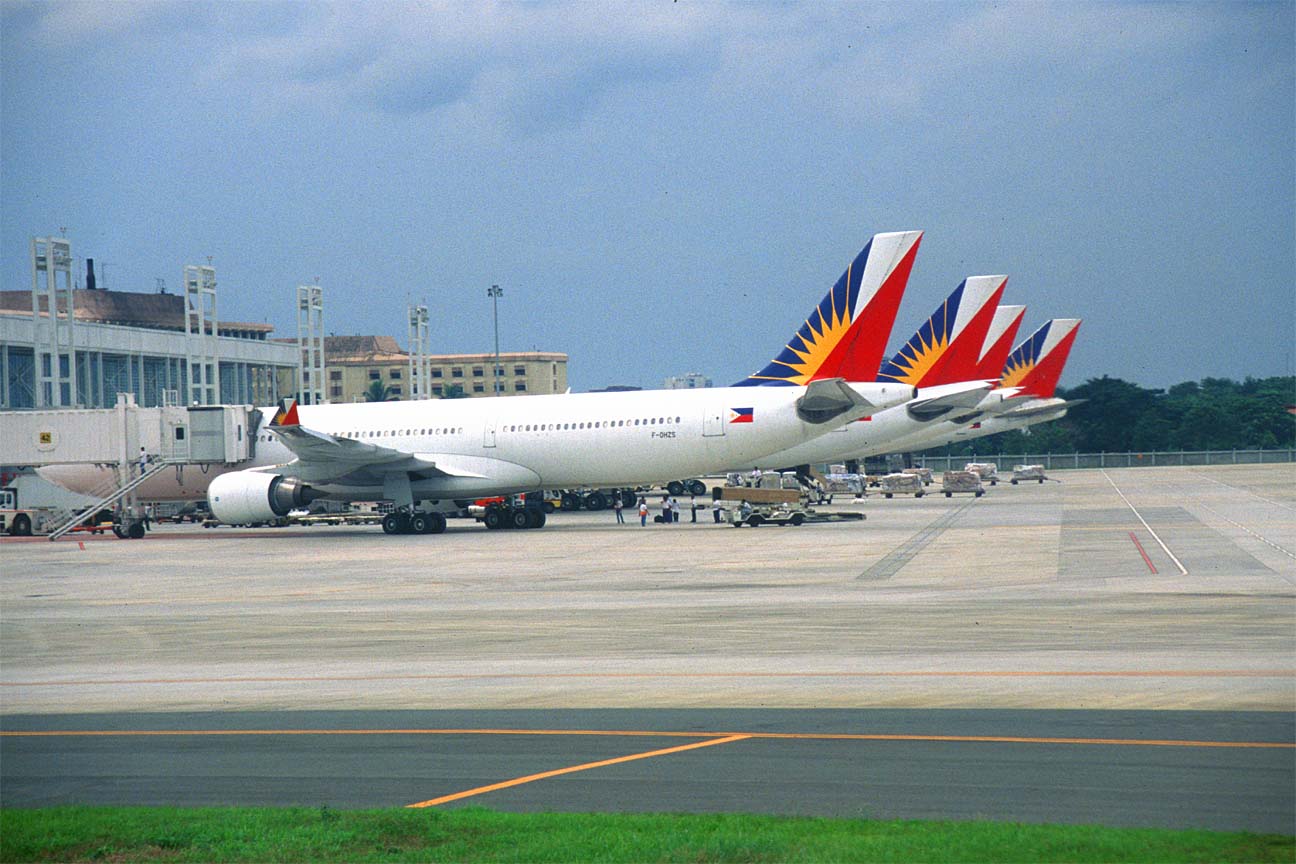
    Philippine Airlines will fly a single round-trip flight between Manila and London Heathrow on April 4 “in response to an urgent public need amid Covid-19 quarantine situation,” the airline said in a notice posted on its website.

    While the airline initially announced that it would pause all remaining international flights from March 26 until April 14 last week, it will now operate this one-off service to the UK to help stranded travelers return home.

    The Manila-London Heathrow flight (PR720) will be allowed to carry only UK nationals to comply with “current Covid-related UK immigration restrictions”, the airline said.

    The return leg (PR721), on the other hand, will be allowed to carry only Filipinos, their foreign spouse and children, and officials from governments and international organizations.

    The service will be operated with an Airbus A350-900, which has seats for 295 passengers.

    Hundreds of thousands of British citizens are thought to be struggling to get home from overseas after the UK government advised all British travelers to come home as soon as possible on March 23. Many airlines are operating a small number of flights to help stranded passengers return home after countries around the world closed their borders to help stop the spread of the coronavirus.

  • Harley-Davidson Files For Cafe Racer

    Harley-Davidson Files For Cafe Racer

    Harley-Davidson has filed two new designs with the European Union Intellectual Property Office, using the same liquid-cooled Revolution Max engine powering the upcoming Harley-Davidson Pan America and Harley-Davidson Bronx models. The two new designs will be built on the same Revolution Max platform, and one of them will be a cafe racer styled model, and the other a flat track-inspired model. While the design drawings clearly indicate that the engine to be used on both models will be the Revolution Max v-twin, there’s still no indication of what the engine displacement will be.

    Harley-Davidson’s first adventure tourer, the Pan America uses a 1,250 cc version of the Revolution Max v-twin, while the Bronx streetfighter uses a 975 cc version. The Revolution Max v-twin is expected to get four different engine displacements, ranging from 500 cc to 1,250 cc. Prototype photos of both these new designs also surfaced, apparently from a Harley-Davidson dealer conference from September 2019.

    The photos of the prototypes look quite similar to the design drawings, but final production models may be slightly different. From earlier experience, Harley-Davidson design drawings, like the one of the Pan America and Bronx streetfighter, have gone on to be finalized for production. So, we won’t be surprised if the latest drawings also make it to the future model line-up, as Harley-Davidson looks to shake off the “heavyweight cruiser” tag and explore different segments of motorcycles.

    Designs of the flat track-inspired model show a design similar to something that could rival the Indian FTR 1200, with a similar tubular swingarm, as well as flat-track inspired high-mounted twin exhausts. The bike has a similar headlight like the Harley-Davidson Fat Bob, and like the FTR 1200, has a similar-looking rear tire-hugging number plate bracket attached to the swingarm. The bike looks like a single-seater, but Harley-Davidson could offer an aftermarket pillion-friendly seat as well once the bike gets closer to production.

    The second design is a cafe racer styled model, with a short windscreen and cafe racer-styled headlight. The exhaust is a two-into-one design, with the end can coming out on the right side of the bike, The design of the cafe racer shares the dual disc brakes and inverted fork with the flat track design, but the rear has a more traditional swingarm, and twin shock suspension set-up. The H-D Pan America, and the Bronx are yet to go into production, followed by the Custom 1250 cruiser, possibly sometime in 2021. But from these latest designs, it’s apparent that Harley-Davidson, despite the problems the brand is facing, is looking ahead to the future with several new models in the pipeline.

  • Central Food Hall employs robot in coronavirus fight

    Central Food Hall employs robot in coronavirus fight

    Thai supermarket Central Food Hall has begun using UV-C Disinfection Robots to sterilize stores in a move to combat coronavirus transmission.

    The firm is the first supermarket in the region to implement disinfection robots, certified by the WHO and CDC to sanitize areas around 360 degrees to destroy more than 99.99 percent of all pathogens within seconds.

    The robot is currently being deployed at Central Food Hall Central Chidlom while the store is closed. Plans are afoot to introduce robots at other Tops Market and Central Food Hall branches in the interests of employee and customer safety.

    UV-C light is considered to be without harmful side effects on the food and products in the store. The technology has been in use for more than three years in Thai hospitals, factories, companies, hotels, schools and other places that need effective disinfection.

  • K11 Musea launches global fashion showcase K11 Antonia

    K11 Musea launches global fashion showcase K11 Antonia

    Hong Kong cultural-retail hub K11 Musea’s fashion destination Muse Edition has launched a multi-brand flagship, K11 Antonia.

    The fashion center (situated on the site of the former New World Centre) is collaborating with influential fashion-forward style maker Antonia Giacinti in hosting the more than 5700sqft space, now featuring around 50 curated spring/summer looks. It will debut both co-founders Antonia Giacinti’s & Maurizio Purificato’s hand-picked selection and a signature blend of high fashion, streetwear and ready-to-wear brands.

    “Hong Kong is a global fashion Hub,” said Giacinti. “We have always thought of Hong Kong as the most interesting international city to open a new Antonia location… With the launch of K11 Antonia today, it marks our shared vision in which together we nurture different forms of fashion cultures and dialogues from around the world.

    “Through K11 Musea, we believe this global fashion venture will further enrich our consumers’ cultural-retail experience in the world of fashion. We are certain that it will be a success.”

    K11 Antonia will retail a broad range of brands, including Bottega Veneta, Burberry, Chloe, Miu Miu, Jacquemus, Balmain, Alessandra Rich, The Attico, Alanui, Ambush, Kolor and White Mountaineering.

    The interiors of the store’s three distinct retail spaces are designed by Italian architect Vincenzo de Cotiis, and feature mirrors, smokey glass and rustic-stained glass, steel, brass and marble with gold, gray, beige and blurred-pink tones.

  • South Korean department stores restore sales campaigns

    South Korean department stores restore sales campaigns

    South Korean department stores will no longer postpone their sales programs due to the coronavirus pandemic.

    In a move analysts say is aimed at restoring turnover as the coronavirus essentially comes under control in the country, stores are looking to restore volumes which plunged last month.

    Top department stores are under pressure to clear seasonal stock after drops of 10 and 20 percent in year-on-year sales in February and March respectively.

    “The most important thing is when the new coronavirus will die out here,” Eugene Investment analyst Joo Young-hoon told the Korea Times. “As soon as Korea overcomes it, the sales of department stores here will rebound faster than that of any other sectors,” he said.

    South Korean department stores are expected to resume their expected sales events over the coming fortnight, after delays in the midst of the coronavirus outbreak and called to implement social distancing.

    The stores are running various promotional programs to attract customers while at the same time attempting to spread out visits to prevent crowds and the risk of viral transmission.

    Industry analysts have predicted a strong bounce-back in the region’s retail sector once the pandemic recedes.

    Meanwhile, in Japan, department store operators have reported their worst year-on-year sales declines on record.

    J.Front Retailing said sales at its Daimaru Matsuzakaya department store chain fell by 43 percent last month, while rival Takashimaya reported a 36-per-cent fall.

  • Don Don Donki opens second store in Thailand

    Don Don Donki opens second store in Thailand

    Amidst the Covid-19 outbreak, Japanese discount-variety store Don Don Donki has continued ahead with the opening of its latest branch in Bangkok, Thailand as part of its international expansion.

    The Japanese retailer, known at home as Don Quixote, entered Thailand in February last year, opening a Donki Mall in the expatriate haven of Thonglor.

    The new store, located at The Market mall, will retail more than 130,000 items including fresh groceries and daily necessities.

    The new branch also features its private-label Jonetsu Kakaku with an in-store dining space. However, in the short term, the branch will provide only take-away services for cooked food due to the coronavirus pandemic and government limits on cafe operations. To further adjust to the current situation, the retailer will limit the number of store entrances and exits and will control the flow of customers into the store. The temperatures of staff and customers will be checked at numerous touchpoints around the store and baskets and cashier counters will be sterilized frequently.

    Chairman Shimanuki Yosuke says the company had imported large stocks of products in advance of the opening, and before the coronavirus pandemic broke out.

    Meanwhile, in Hong Kong, the daily customer count of the company’s stores there tripled during recent weeks as locals stocked up on imported goods, unable to travel abroad.

    There are widespread rumors that Don Don Donki is about to open its fifth outlet in the territory, at Central. The news leaked out during rental leasing negotiations for nearby properties.

    Local media is reporting that the retailer has its eye on two-storey premises at 100 Queen’s Road Central, spanning 17,800sqft. Earlier reports had the company opening more stores at Tseung Kwan O and Causeway Bay, to complement its flagships in Tsim Tsa Tsui and Tsuen Wan.