Blog

  • Apple reverses bulk-order ban and updates on opening plans

    Apple reverses bulk-order ban and updates on opening plans

    US tech giant Apple has reversed restrictions on buying multiple iPhones from its online store imposed last week.

    The restrictions placed a ban on purchasing more than two devices of the same model in multiple international territories, including Mainland China, Hong Kong, Taiwan, and Singapore. That restriction has now been lifted on the purchase of iPhones, although some iPads and Macbooks are still subject to limits.

    A 9to5Mac report conjectured that the ban may have been lifted quickly due to a supply-chain problem caused by the coronavirus epidemic being resolved since, or otherwise that iPhone sales dropped more sharply than the company anticipated.

    International Apple store locations remain shuttered during the pandemic in all areas except China. Some stores may be reopened on a staggered basis next month, according to reporting by Bloomberg.

    “At this time, we anticipate some stores may be able to open in the first half of April depending on the conditions in their community,” said the firm’s senior VP of people and retail Deirdre O’Brien.

    “We will provide updates for each store as soon as specific dates are established.”

    Apple was one of the first retailers to shutter stores in the early days of the outbreak.

  • AirAsia Updates Rebooking Policy

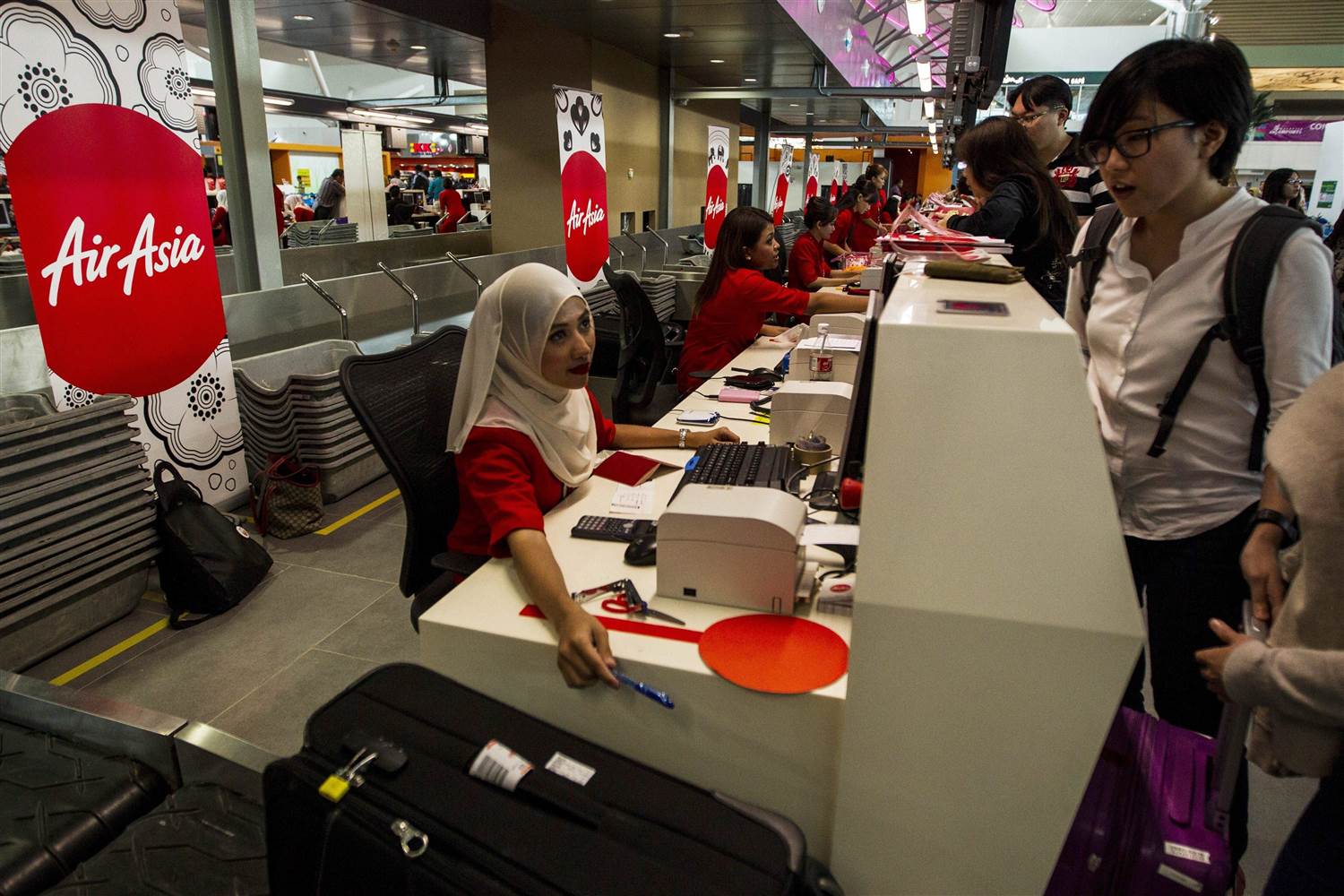
    AirAsia Updates Rebooking Policy

    AirAsia has updated its rebooking policy so that customers with tickets issued on or before 22 March 2020, with a departure date between 23 March and 31 May 2020, can select from the following two options:

    Unlimited Flight Change: Customers can change their ticket to any travel date before 31 October 2020 on the same route for an unlimited number of times without any additional cost subject to seat availability; OR

    Credit Account: Retain the value of the flight booking in the customer’s AirAsia BIG Member account for future travel with AirAsia to be redeemed within 365 calendar days from the issuance date. The travel date of the new booking can fall on any date within the published flight schedule on airasia.com.

    The above information is only applicable for direct online bookings made via airasia.com. For group bookings or those made with travel agents, the traveler must contact their booking agent directly for further assistance.

    As this is a rapidly changing situation, travelers should make sure that their airline has their correct contact information and should carefully monitor their airline’s website and social media accounts for any new updates.

  • Nike E-commerce sales soar during coronavirus crisis

    Nike E-commerce sales soar during coronavirus crisis

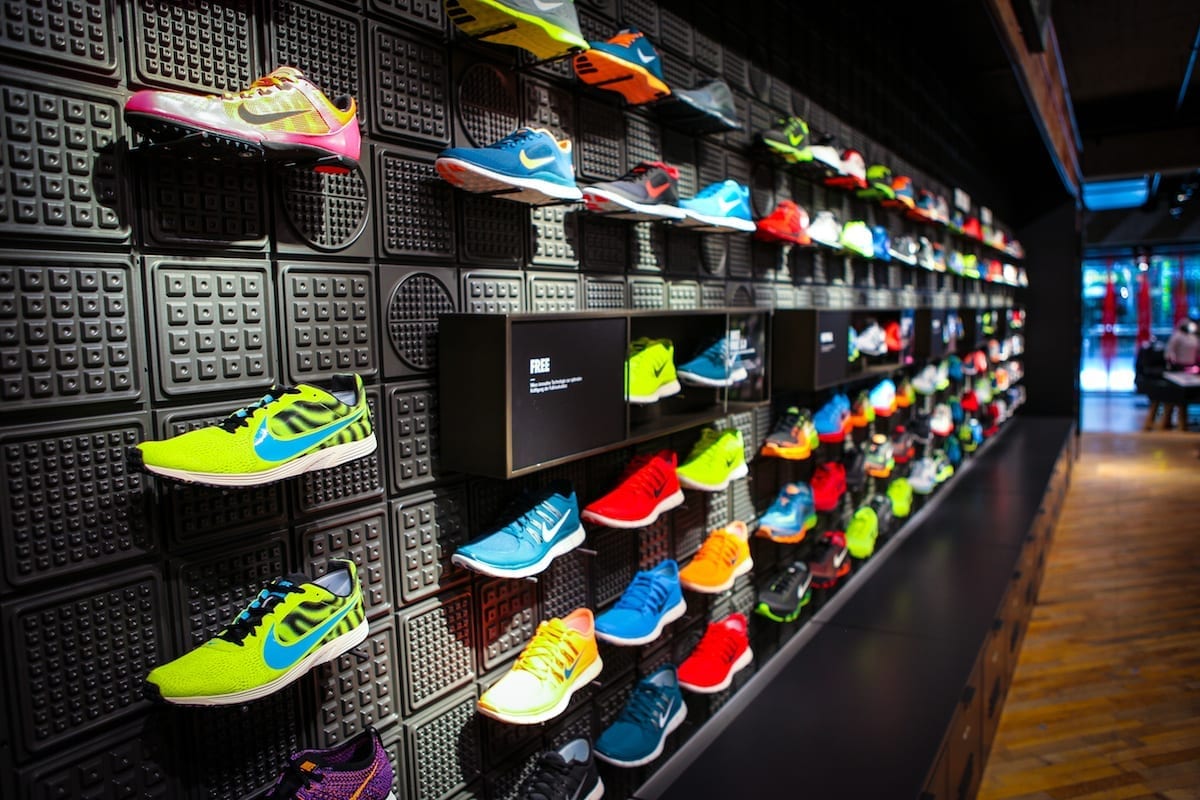
    Nike online sales soared 36 percent in the February quarter, compensating in part for a slump in sales across Mainland China which was in lockdown for much of January and February due to the coronavirus outbreak.

    The strength of online sales gave the retail giant a buffer from stalling brick-and-mortar sales, but it is not just in China that the effect is obvious.

    In an earnings call, Nike EVP and CFO Andy Campion said online sales in every global market grew in excess of 30 percent for both its core brand and sister brand Converse in the three months to February 28. That fuelled growth in both quarterly sales and earnings greater than the company expected.

    “From a digital capability perspective, the investments we’ve made to-date are now proving to be the foundation for our resilience amid challenges and they will be strengths as we emerge,” said Campion.

    “We are still in the early innings of Nike’s digital transformation, but the capabilities we’ve already been building for the future are proving to be the strongest pillars within our business today.

    “These are times in which strong brands get stronger and we’re confident that Nike will come back stronger than ever.”

    Campion told analysts that following its China experience, the company is now seeing similar trends play out in other markets where government lockdowns are resulting in shopping malls and stores being closed to help stem the spread of the virus. Now, consumers are shopping online instead.

    Nike is responding to the digital uptake by using tools that dynamically model demand, planning, allocation and pricing and using its app and membership program to reach out to consumers and encourage them to be active at home, while in lockdown. Those mediums are also offering products and services specifically targeted to various groups of consumers or individuals.

  • McDonald’s logo temporary changed to promote social distancing

    McDonald’s logo temporary changed to promote social distancing

    International fast-food chain McDonald’s logo has been altered in some global markets to emphasize the importance of social distancing during the coronavirus crisis.

    The popular restaurant chain is largely closed for dine-in business in certain hard-hit areas globally but remains open for delivery or takeout. Venues have been closed completely in the UK and Ireland, while only 5 percent of outlets in the US are now closing dining spaces.

    The new McDonald’s logo campaign was unveiled in Brazil, with the golden arches represented in the brand logo separated to remind patrons of the need to keep a distance from each other during the course of the pandemic. The campaign was soon taken up in India.

    “Our customers, employees and communities are counting on us now more than ever to provide them the meaningful support, delicious food and good-paying jobs,” said McDonald’s US president Joe Erlinger.

    A statement from the firm read: “Guidelines have been shared with franchisees and restaurant general managers to support crew in adhering to social distancing best practices while on the job. This includes, among other items, updating configuration of crew on shift and following contactless operations procedures, etc”.

    https://youtu.be/BFgW4S6zOQU

  • Bank of China Partners Refinitiv for AI-Based FX Trading App

    Bank of China Partners Refinitiv for AI-Based FX Trading App

    Developed by the bank’s Digital Asset Management department, the application is the first third-party app from a China-based financial institution on the Eikon platform.

    Bank of China is launching DeepFX, an AI-based forex trading prediction application through Refinitiv’s financial data platform Eikon, the firm announced in a statement on Tuesday.

    The app uses deep learning technology to predict the short-term price movements of major foreign exchange currency pairs, which currently include EUR-USD, AUD-USD, GBP-USD, USD-CAD, USD-JPY and USD-CHF, the announcement said.

    The Lite version of DeepFX provides a 5-minute interval real-time FX trade signal forecasting service, while displaying back-test results within 10 days. The service is available for free through Refinitiv’s App Studio.


  • Apple’s App Store is coming to 20 new countries

    Apple’s App Store is coming to 20 new countries

    Apple announced that the App Store will be expanding to 20 new countries this year, making it available to 175 countries or regions in total. According to Apple’s Developer Agreement those countries are:

    Afghanistan, Gabon, Cote d’lvoire, Georgia, Maldives, Serbia, Bosnia and Herzegovina, Cameroon, Iraq, Kosovo, Libya, Montenegro, Morocco, Mozambique, Myanmar, Nauru, Rwanda, Tonga, Zambia and Vanuatu.

    In its announcement, Apple also informed developers on how to get their apps available in the new countries by completing steps with a recommended deadline of April 10, suggesting that the expansion may happen sometime around that date.

    The App Store – iOS users’ only Marketplace for apps and games – is now getting over half a billion visits per week. To date, developer earnings from sales and in-app purchases are over $155 billion. Between Christmas Eve and New Year’s Eve of 2019, App Store customers spent a record-breaking $1.42 billion.

    In contrast, even though Android has the vast majority of the mobile market, Google has paid only $80 billion to Android developers since the launch of its app marketplace, according to Google’s quarterly earnings reports. This reconfirms the fact that there is much more money to be made by developers on Apple’s ecosystem.

  • Starbucks Korea expands social-distancing plan

    Starbucks Korea expands social-distancing plan

    Starbucks Korea will expand social-distancing measures across its branches nationwide from Thursday, after a successful trial at some stores in Daegu and North Gyeongsang Province.

    The company plans to ensure a safe distance between customers and employees is maintained when ordering by placing safety line stickers in front of checkout counters.

    Furthermore, for a limited time, customers will not be able to bring their own reusable mugs.

    When ordering drinks using individual multi-use cups, customers will still get benefits for being eco-friendly, such as discounts or points, by showing personal cups. However, customers will be provided the drink in a disposable cup. This strategy was introduced in the US a fortnight ago and has since been implemented in many markets across Asia.

    Meanwhile, Starbucks will also conduct campaigns such as asking people to wear masks when ordering, and to dispose of paper straws in trash cans.

  • You might soon unlock your BMW with your iPhone

    You might soon unlock your BMW with your iPhone

    Apple and premium German car manufacturer BMW are seemingly collaborating to bring the CarKey iPhone feature to eligible vehicles of the carmaker. Evidence for this was unraveled in the iOS 14 code, hinting that iPhone users might soon be able to unlock their BMW cars with their iPhones thanks to the CarKey feature. As a reminder, the existence of CarKey itself was revealed in the iOS 13.4 beta back in February.

    Given that BMW was among the very first automakers to adopt Apple’s CarPlay feature a few years back, it would make sense to assume that CarKey could be adopted on upcoming beemers as well.

    It seems that CarKeys could be stored inside the ubiquitous Wallet app and even be shared with other people through iMessage. “Yo, mom, shared me the keys for the car” would sound a whole lot cooler! Code strings suggest that you will not only be able to lock and unlock your vehicle with your device, but also start it remotely. This is already available through the BMW Connected app, but native iOS support would definitely be great. There would seemingly be two ways to unlock the car – either by holding your phone near the NFC-enabled door handle or just having your iPhone in your pocket.

    Apple could use NFC, UWB (ultra-wide band) chip, or a combination of the two. The UWB chip debuted with the iPhone 11-series but has been pretty underused when it comes to features, as it’s currently only used to aid AirDrop discovery.

    On the topic of anti-theft countermeasures, CarKey will enjoy the same level of biometric security that the sensitive data on your iPhone enjoys, but there would seemingly be an option to use CarKey without having to authenticate yourself with a Face ID scan or a PIN code for an even faster experience.

    BMW itself neither denied or acknowledged the rumored functionality. When asked, the company replied rather nonchalantly with “Please understand that at this point we cannot confirm your request nor give you further details. We would like to refer you to our press release, ” which suggests that we could be in for news on the matter very soon.

  • Swiss Payments Firm Expands to Singapore

    Swiss Payments Firm Expands to Singapore

    Zurich-based Netcetera is setting up its 15th office in Singapore as part of its global growth strategy and has appointed a managing director to lead its regional push.

    Despite fierce competition in the region, software and digital payment solutions firm Netcetera has set its sights on the Asia Pacific market with the opening of its Singapore office, calling it «another step towards the East.»

    The firm provides digital solutions for secure payment, mobile banking, mobile contactless payment, digital wallet and 3-D Secure Services for secure online transactions. It had previously serviced Asian clients from its offices in Europe and the Middle East.

    With the Singapore office, the firm can «better respond to their customers’ needs and to find optimal solutions for their business,» the announcement said. In addition, the new location also contributes to the early detection of regional market trends and a better understanding of the market as well as the ability to help shape it.

    Heading its Singapore office will be Kiril Milev, who was appointed managing director, responsible for business development and customer relations.

    Milev, who has been with Netcetera since 2008, was most recently the firm’s managing director for the Middle East.

  • Samsung temporary closing its smartphone and home appliance factory in Brazil

    Samsung temporary closing its smartphone and home appliance factory in Brazil

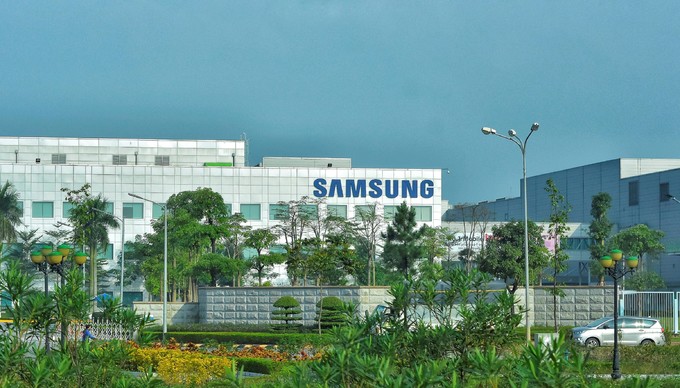
    Another factory falls victim to a global pandemic. As the coronavirus begins spreading rapidly in Latin America, Samsung has decided to shut down its factory in Manaus, Brazil. The measure is temporary and comes after the Brazilian government called out for help in containing the spread of the virus.

    Manaus is situated in the northern part of the country, and the Samsung facility near the city is producing smartphones and home appliances for the local market. The factory will remain closed until Sunday, while the other facility in Campinas, Sao Paulo state, will remain operational, at least for the moment

    There are 1960 confirmed cases of COVID-19 infections in Brazil with 24 deaths. Europe is now at the peak of the pandemic with hundreds of people dying in Italy each day. Researchers think that in countries with warmer climates the virus will slow its spread, but that won’t halt the pandemic.

    The situation in India and Latin America shows some correlation to that prediction. However, governments use the welcomed delay to apply preventive measures. Samsung already closed its biggest smartphone factory in India and it will remain closed until May 25 in response to a request from the Indian government. COVID-19 cases in the country are still under 1000, but officials expect numbers to ramp up fast in the following weeks.

  • JD to launch worldwide new products initiative

    JD to launch worldwide new products initiative

    Chinese e-commerce platform JD plans to help 3000 new products around the world become hot sellers, nurturing more than 1000 new global brands this year.

    The details were announced during the JD Worldwide online conference for merchants, which focused on customer growth, developing third-party business and nurturing merchants in order to support the growth of more international retail in China.

    The group also anticipates helping more than 100 suppliers to achieve RMB100 million in sales this year via monthly promotions designated to push new products.

    Last year an average of more than eight new products were sold on JD Worldwide every minute. Customers displayed a greater consumption-ability during this period, and the platform has more young consumers and consumers from lower-tier cities than in previous years.

    According to the firm, JD Worldwide will focus on building a healthy ecosystem for merchants this year with a more comprehensive after-sale service system and special support for those using JD’s fulfillment services.

    During the coronavirus outbreak, JD’s international supply chain system and continuous logistics service have enabled merchants to supply their products to customers without interruption, with some merchants seeing sales increase by more than 90 percent.

    JD currently has more than 1000 international transportation routes to support overseas merchants.

  • China will drive massive global e-commerce transaction growth by 2024

    China will drive massive global e-commerce transaction growth by 2024

    Chinese growth will drive e-commerce transaction values up 43 per cent to US$4.8 trillion by 2024, according to new reporting by Juniper Research.

    The research showed Chinese e-commerce undergoing 62 per cent value growth over the next four years, bolstering global e-commerce value along with emerging markets in Latin America, Africa and the Middle East, among others.

    The report found that improvements in connectivity will enable the rise of e-commerce in new markets, thus urging payment providers to seek fresh revenue streams in emerging regions to offset slow growth in developed markets – with a particular emphasis on the potential of mobile payments that do not require a linked bank account, as mobile handset penetration is rising faster than banking penetration in young markets.

    “The popularity of mobile wallets is having a disruptive effect,” read material released by the firm, “with physical cards becoming less important to the payments market.”

    Accordingly, the research suggests that card networks must be proactive, by looking beyond the card, becoming involved in open banking initiatives and delivering omnichannel experiences for users.

    “Card networks must leverage their ability to invest in, and forge partnerships with, key players to gain scale in new areas, or they will fail to diversify their revenue streams and will be vulnerable to future disruption,” said research author Susannah Hampton.

    Juniper’s findings are published as Strategies for Payment Providers: Industry Trends, Opportunities & Recommendations 2020-2024.

  • Thai consumers ready to engage with technology instore or via Ecommerce

    Thai consumers ready to engage with technology instore or via Ecommerce

    Seventy percent of Thai consumers prefer to use apps to shop online, according to a study by Wirecard – but they expect a consistent offer across all of a brand’s sales channels.

    According to the report, “consistent cross-channel experiences are vital to consumers” because 90 percent of them go online to research products they are considering buying. And when inside stores, they would rather use an app or the store’s website to research products via their phone rather than use in-store screens or VR booths.

    The Wirecard Global Shopping Report, which covered markets across Asia, Europe and the Americas, concludes that physical stores remain relevant to the modern shopper, but the way in which merchants interact with customers has changed and is a key part of their success.

    Other findings relating to Thai consumers include:

    • 84 percent of consumers surveyed are willing to share personal data in return for incentives.
    • Shoppers are “always-on” so maintaining an up-to-date online store is key for retailers.
    • Consumers will shop online most often while they are relaxing (76 percent), watching TV (39 percent) or in bed (23 percent).
    • 87 percent of Thai shoppers are interested in using biometrics, such as facial recognition or fingerprint, to purchase products both in-store and online.
    • 89 percent are interested in using technologies such as mobile apps, smart mirrors and VR while shopping.

    Markus Eichinger, EVP group strategy at Wirecard, said the research shows Thai consumers clearly desire choice when completing purchases.

    “Consumers shop in many different ways nowadays and this is challenging merchants to meet a wide range of retail demands. A lot of focus is put on pricing, but not necessarily on the flexibility customers seek. A unified commerce strategy, with a focus on a consistent and frictionless buying journey, is integral to offering consumers the experience they would expect from any modern retailer,” he said.

    “In the future, brick and mortar stores will only exist if they are technologically advanced with the latest in-store innovations and a fully integrated e-commerce backend.

    “Retailers that want to engage with their customers via targeted offers, and improve their service across all channels need to leverage customer data. Our report shows that if customers can see a concrete benefit when it comes to providing personal information, they are willing to share it with retailers, thus providing merchants critical data which they can analyze to optimize their offerings and improve customer loyalty,” Eichinger concluded.
  • H&M to supply protective equipment for hospitals

    H&M to supply protective equipment for hospitals

    Sweden fashion retailer H&M is to supply protective equipment to hospitals as they fight the coronavirus outbreak.

    The company said it reached out to the European Union to understand the needs and offer help, which includes opening up its purchasing operations and logistics capabilities.

    “The coronavirus is dramatically affecting each and every one of us,” said Anna Gadda, head of sustainability of H&M. “H&M Group is, like many other organizations, trying our best to help in this extraordinary situation.

    “We see this is as the first step in our efforts to support in any way we can. We are all in this together, and have to approach this as collectively as possible,” she said.

    Recently, the group also donated US$500,000 to the Covid-19 Solidarity Response Fund created by the UN Foundation to support coronavirus prevention

  • Twitter to verify health experts with priority

    Twitter to verify health experts with priority

    Twitter is taking another step in fighting misinformation and highlighting credible sources of info about the ongoing COVID-19 pandemic. The company explained in a tweet that it is “working with global public health authorities to identify experts” and get them verified as soon as possible. The Twitter verification label signifies that a profile is authentic, trusted, and a source of truth for an individual, business or organization.

    In the past, the process of verification was under attack for giving the blue label to radical groups and individuals. The verification program was suspended in 2017 after it verified the organizer of white supremacist rally in Charlottesville, Virginia and afterward the CEO Jack Dorsey called it “broken”. In the current situation, however, the blue badge can help people discern valid information in the high tide of rumors and speculation moving along with the viral wave.

    According to Twitter, the company has already verified hundreds of accounts but apparently there’s more to be done. In a message to health experts, Twitter explained that it will give priority to “accounts that have an email address associated with an authoritative organization or institution”, and added a link to the “How to update your email address” tutorial on Twitter’s help center.

    The company is working on a public-accessible form to help health experts apply directly for verification. “We’ll likely share a link to an intake form soon for experts to fill out to request verification”, commented Twitter product lead Kayvon Beykpour. Other tech companies offered help in providing fast and reliable information about the health situation as well. Facebook opened its Messenger app to developers to help build new messaging solutions for reporting coronavirus-related info. WhatsApp announced that it is opening an information hub in partnership with the WHO, UNICEF, and UNDP.