Blog

  • Samsonite sees third-quarter sales

    Samsonite sees third-quarter sales

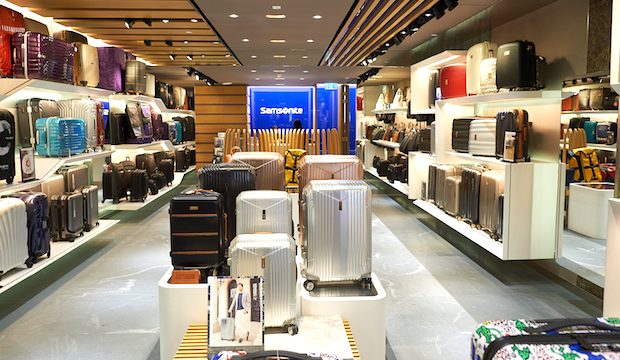
    Luggage company Samsonite’s net sales fell by 0.7 percent in the third quarter, as the US-China tariff war put pressure on the US market and increased distribution expenses affected the company’s gross profit margin.

    In its latest financial report, Samsonite said net sales in the three months to September 30 decreased to US$921.5 million while operating profit declined by 13.4 percent to US$104.9 million.

    Its performance in the nine months to September 30 also declined net sales down by 1.2 percent to US$2.677 billion and operating profit down 28 percent to US$229 million.

    CEO Kyle Gendreau says the decline was partly related to the increased expenses from expanding the brick-and-mortar retail network which took place in 2017 and the first half of last year, particularly in Europe.

    While its overall financial performance was weak, the company was pleased with its performance in Asia with net sales in the region increasing 4 percent to US$333.1 million during the third quarter. The increase was driven by robust constant-currency net-sales gains in China, Japan and India.

    Looking ahead, the company expects “continued uncertainty in the global outlook for the remainder of this year and into 2020 due to a number of geopolitical and macroeconomic factors, including the ongoing trade negotiations between the US and China, Brexit, economic growth slowing in parts of Europe and the recent events in Hong Kong”.

    Though it has expressed uncertainty in its outlook, the company is determined to continue to invest in the business to position itself for long-term growth and improved profitability while maintaining its focus on controlling costs, managing working capital, generating cash and further strengthening the balance sheet.

    The company plans to improve its financial performance by increasing its brick-and-mortar retail profitability, maintaining tight control on non-advertising administration expenses, and enhancing working capital efficiency.

  • Starbucks Chicago opens today

    Starbucks Chicago opens today

    Global coffee chain Starbucks today unveils a giant 35,000sqft Reserve Roastery outlet in Chicago, its largest store in the world to date.

    The five-story Starbucks Chicago store features a unique menu of Starbucks Reserve specialty coffee, boutique Milanese Princi bakery items, and an Arriviamo Bar featuring coffee cocktails Tributes to Chicago abound, including locally inspired craft cocktails, barrel aged coffee and collaborations with local artists and vendors.

    The Starbucks Chicago Reserve Roastery marks the brand’s sixth global Roastery and third in the US. Visitors will be able to see, hear and learn about the journey of coffee through intentional design, while enjoying a menu featuring unique beverages exclusive to this location. The Chicago Roastery joins locations in Seattle, Shanghai, Milan, New York and Tokyo.

    “Over the past five years, we have created the ultimate immersive experience around all-things-coffee in spectacular Starbucks Reserve Roasteries in flagship cities around the world,” said Starbucks CEO Kevin Johnson. “This week we are delighted to open our doors on the sixth global Roastery in an iconic building located on Chicago’s renowned Magnificent Mile.

    “These Roasteries amplify the Starbucks brand, serve as innovation hubs, and create experiences for millions of customers around the world.”

    “The design of the Chicago Roastery was inspired by the iconic Chicago landmark, and the city itself,” said Roastery design & concept for Starbucks VP Jill Enomoto. “We embraced the building’s natural light, married it with shades of classic Starbucks greens and intentionally wove in design features to encourage customer exploration and highlight the love and respect we have for coffee.”

    The Starbucks Chicago Reserve Roastery is a working coffee roastery where Starbucks roasters will be small-batch roasting Starbucks’ rarest single-origin coffees and blends called Starbucks Reserve. The coffee roasted in Chicago will be served exclusively to visitors of the location, available in handcrafted beverages as well as freshly scooped whole bean coffee.

    In a nod to the city’s vibrant history, artwork from local Chicago artists that tell stories and encourage customers to explore can be found throughout the building’s five floors. Customers can also purchase limited-edition merchandise from Chicago-based visual artist Mac Blackout to take home with them.

    There are three coffee bars at the Roastery, which in total offer seven brewing methods, including espresso, pour over, coffee press, siphon, Chemex, Clover and cold brewing:

    Starbucks Reserve Coffee Bar: Upon entering the Roastery, visitors can visit the Reserve coffee bar on the main level, where baristas are crafting classic espresso beverages such as cappuccino, latte and cortado.

    Experiential Coffee Bar: The third floor is home to the Experiential coffee bar which provides customers the opportunity to immerse in the art, science, and theatre of coffee.  It features elevated brew methods and pairings, as well as specialty Roastery creations and brew comparison flights.

    Barrel-Aged Coffee Bar: The barrel-aged coffee bar is found on the fourth floor and showcases a variety of spirit-free coffee beverages whose beans aged in barrels. Here, visitors can explore a menu of cocktail-inspired coffee creations exclusive to the Chicago Roastery, including the Smoked Cold Fashioned (a lightly sweetened whiskey barrel-aged cold brew with aromatic bitters, smoked tableside), Minted Cold Brew (whiskey barrel-aged cold brew, shaken with mint syrup and served over pebble ice) and more.

    On-demand nitrogen gelato

    The Starbucks Chicago Reserve Roastery is the only Starbucks location in the US to offer on-demand liquid nitrogen gelato. Designed to pair with Starbucks Reserve coffee, nitrogen gelato is mixed by hand, with every scoop made on the spot. Nitrogen gelato previously debuted at the Milan Roastery when it opened in September last year.

    Arriviamo cocktail bar

    The Chicago Roastery will feature a dedicated Arriviamo Bar, like the Starbucks Reserve Roastery locations in New York and Milan. Located on the fourth floor, the Arriviamo bar features traditional and unique cocktails, all designed by local mixologists Julia Momose, Annie Beebe-Tron and Rachel Miller. Some of the cocktails feature coffee and tea.
  • Cars to enter airports fee free for 10-15 minutes

    Cars to enter airports fee free for 10-15 minutes

    From 2020, Vietnam’s airports will allow cars to wait 10-15 minutes while dropping or picking up passengers. Each airport will have its specific no-toll timeframe, which will be decided by the government, said Vu The Phiet, General Director of the Airports Corporation of Vietnam (ACV), which manages 21 civilian airports in the country.

    ACV is currently upgrading systems to collect fees digitally, including the function to record the time cars enter and leave the airports.

    For instance, cars entering and leaving Tan Son Nhat or Noi Bai airports will have their license plates photographed while entering. When leaving, if the cars are still within their allowed timeframe, the barrier at the fee collection point will lift on its own, otherwise the cars will have to pay to exit, Phiet said.

    Currently, cars are charged VND15,000 ($0.65) for the first 60 minutes after they enter the airports, and VND5,000 ($0.22) for every 30 minutes thereafter.

  • Davidoff Hong Kong opens cigar flagship

    Davidoff Hong Kong opens cigar flagship

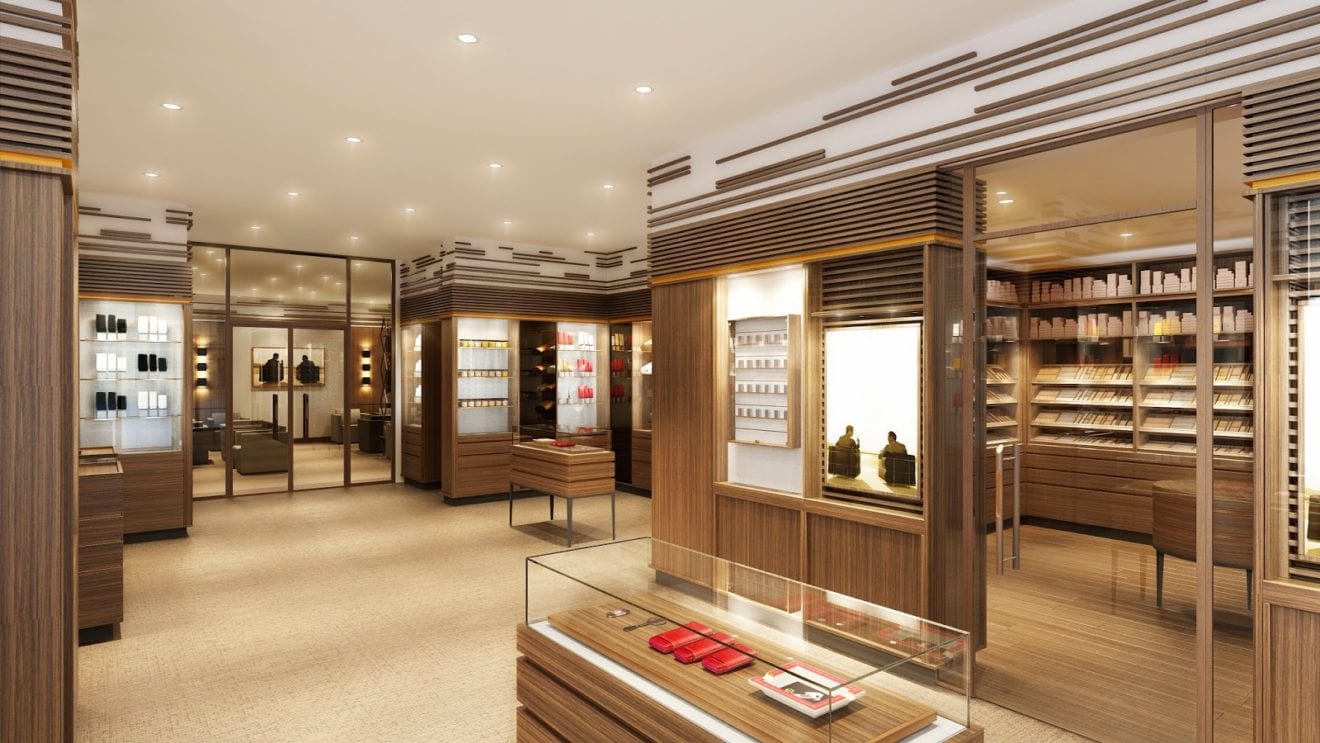
    Swiss tobacco brand Davidoff has launched its Hong Kong flagship in luxury retail complex The Landmark.

    The 580sqft outlet significantly enlarges the brand’s previous space in the mall by more than half its size. The original outlet was the brand’s third best-selling cigar outlet internationally, accounting for more than 25 percent of the brand’s Asian sales.

    “We are delighted to relocate our new flagship store in Hong Kong,” said Davidoff Asia MD Laurent de Rougemont. “The challenge in designing this unique cigar shop was to preserve the company’s history but to continue our mission to delight and surprise our customers worldwide by delivering unique brands and unrivaled retail experiences.”

    “This enlarged new flagship store continues the Davidoff legacy of an inspiring place where aficionados can find exceptionally crafted Discovery Series cigars from different regions, as well as the complex tasting profile of Winston Churchill Collection,” said Davidoff Hong Kong regional manager and store manager Charles Lim.

  • Hong Kong streetwear retailer Popcorn General Store opens in Manila

    Hong Kong streetwear retailer Popcorn General Store opens in Manila

    Hong Kong urban fashion retailer Popcorn General Store has launched in the Philippines at Ayala Mall Manila Bay in Pasay City.

    A PhilStar report lists a range of popular streetwear brands available at the store such as Supreme, ASSC, Chinatown Market, Rip N Dip, Wood Wood, Magic Stick, Ise, FR2, Carrots FDNMTL, and BBC.

    Popcorn also retails lifestyle products such as limited edition phone cases, skateboard decks, lighters, caps and keychains.

  • Burberry shrugs off Hong Kong woes, delivering solid growth

    Burberry shrugs off Hong Kong woes, delivering solid growth

    British fashion house Burberry has reported sales and profit increases in the first half-year, despite the turmoil in Hong Kong, one of its largest international markets.

    “We are pleased with our performance in the half, as we remain on track to deliver the first phase of our strategy,” said Marco Gobbetti, CEO of the Hong Kong-listed fashion company.

    “We delivered financial results in line with guidance despite the decline in Hong Kong and we confirm our outlook for the full year.”

    During the six months to September 30, Burberry achieved comp-store sales growth of 4 percent – or £61 million – to £1.281 billion and adjusted operating profit growth of 15.9 percent to £202 million.

    Gobbetti said customer response to its new products has been positive, delivering strong double-digit growth. “We also continued to strengthen momentum around our brand and transform our distribution.”

    Chloe Collins, senior retail analyst at GlobalData, said credit for Burberry’s turnaround is due to new creative director Riccardo Tisci, as his collections now dominate the product assortment, achieving double-digit growth and now accounting for 70 percent of the range,

    “Tisci’s modern and edgy re-imagining of Burberry’s classic and traditionally British fashion styles, with a heavy focus on the new monogram logo, have transformed the brand, helping it appeal to a younger audience, who will then carry their desire for the brand with them as they age.”

    She said the menswear categories reacted particularly well within the half, with sales lifting by 12.3 percent as Tisci’s new designs incorporate more streetwear elements to capitalize on the athleisure trend. Womenswear performance was also strong, with revenue growing by 7.7 percent, however sales of accessories were disappointing, dropping 2.5 percent.

    “With new styles, including the signature TB bag, reportedly receiving positive reactions, Burberry must heavily promote these via social media and give them prominent positioning in stores to maximise Christmas gifting opportunities and achieve stronger results for the third quarter.”

  • Alibaba Group’s Hong Kong IPO confirmed

    Alibaba Group’s Hong Kong IPO confirmed

    Alibaba Group has launched its Hong Kong public offering of 500,000,000 new ordinary shares on the SEHK, raising up to US$13.4 billion.

    Alibaba plans to use the proceeds from the offering for the implementation of its strategies of driving user growth and engagement, empowering businesses to facilitate digital transformation, and continuing to innovate and invest for the long term.

    The listing in Hong Kong will allow more of the company’s users and stakeholders in the Alibaba digital economy across Asia to invest and participate in Alibaba’s growth. In addition to expanding the company’s overall investor base, the offering will tap into substantial new capital pools in Asia and create a nearly round-the-clock market for global investors to trade Alibaba shares.

    “Alibaba is guided by our mission to make it easy to do business anywhere with the vision to be a good company that lasts for 102 years,” said Alibaba Group chairman and CEO Daniel Zhang.

    “We aim to serve global consumers, of which more than 1 billion will be Chinese consumers, and facilitate more than RMB10 trillion of consumption on our platform within the next five years by continuing to pursue our three strategic pillars of globalisation, domestic consumption and big data powered by cloud computing. Hong Kong is one of the world’s most important financial centres and we are grateful for the opportunity to participate in the future of Hong Kong.”

    The total number of shares available under the Public Retail Offering could be adjusted up to a maximum of 50,000,000 new shares, representing 10 per cent of total shares initially available under the offering. In addition, the company expects to grant the underwriters an over-allotment option to purchase up to an additional 75,000,000 new shares.

    The offer price for the Public Retail Offering will be no more than HKD188 (US$24) per share, which will be traded in board lots of 100 shares each.

    The firm’s American depositary shares will continue to be listed and traded on the New York Stock Exchange.

  • Jollibee Opening Tim Ho Wan restaurants in China

    Jollibee Opening Tim Ho Wan restaurants in China

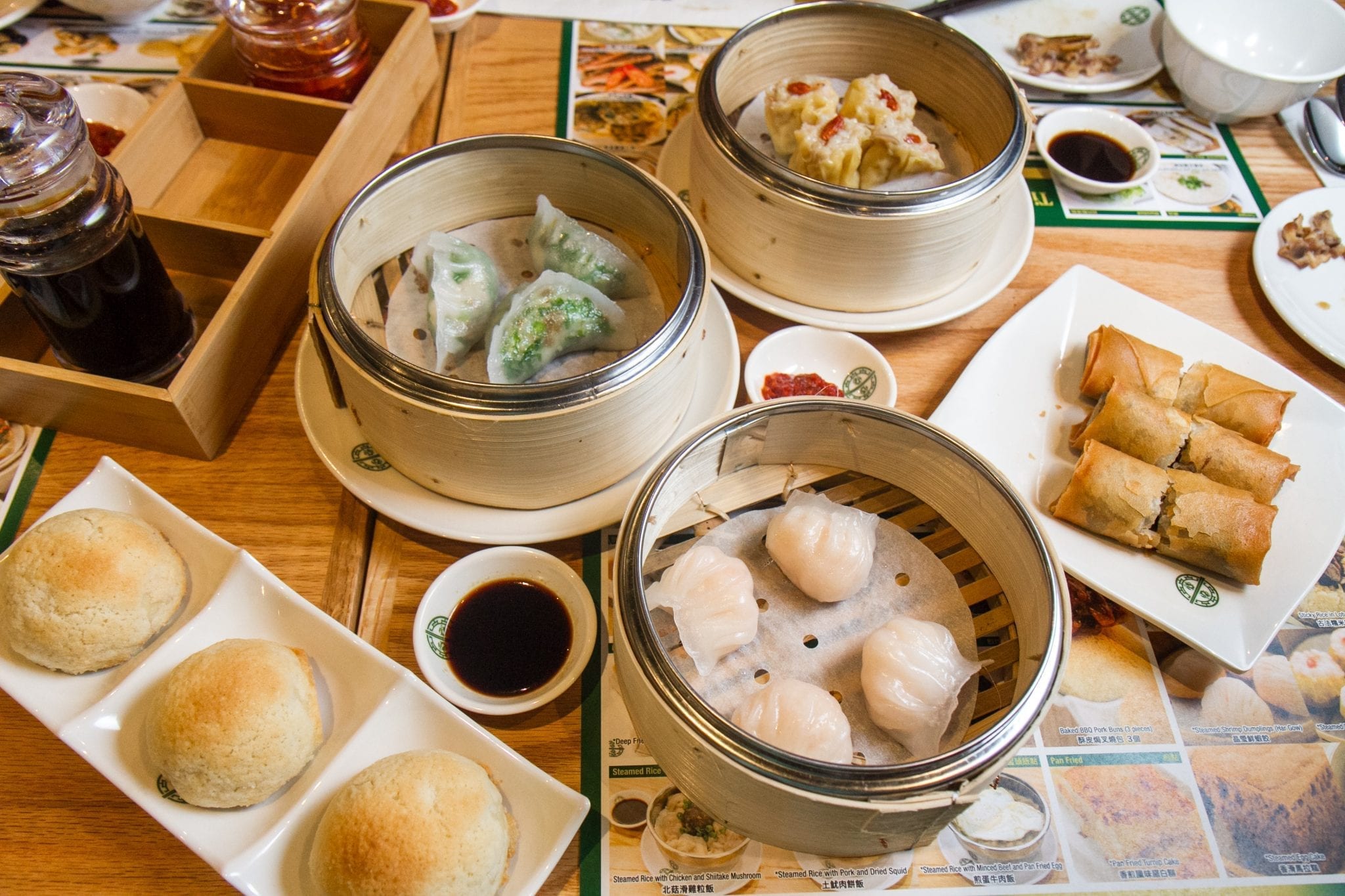
    Filipino restaurant operator Jollibee Foods Corporation (JFC) has signed a joint venture agreement with Dim Sum to operate Tim Ho Wan restaurants in China.

    JFC’s wholly-owned subsidiary Golden Plate will own 60 percent of the joint venture and Dim Sun will own the remaining 40 percent. The two companies have committed to invest US$13 million in the venture, of which up to US$7.8 million will be contributed by GPPL.

    Tim Ho Wan is a dim sum restaurant chain that originated in Hong Kong in 2009 where its Sham Shui Po outlet at 9 Fuk Wing Street has been awarded one Michelin star since 2010.

    A wholly-owned subsidiary of Titan Dining Holdings, Dim Sun already owns and operates Tim Ho Wan restaurants in Singapore.

    Currently, JFC operates three Chinese restaurant brands including Chowking, Yonghe King and Hong Zhuang Yuan. The company said that the three brands combined account for close to 20 percent of its systemwide sales.

    JFC operates 3238 restaurants across the Philippines, making it the largest restaurant operator in the country. Its brands include Jollibee, Chowking, Greenwich, Red Ribbon, Mang Inasal, Burger King and Pho24

    Overseas, JFC has 1451 restaurants across its brands Yonghe King, Hong Zhuang Yuan, Dunkin’ Donuts, Jollibee, Red Ribbon, Chowking, Highlands Coffee, Pho24, Hard Rock and Smashburger.

    Earlier this year, it has acquired Los Angeles-based The Coffee Bean & Tea Leaf.

  • HSBC Partners AllBright in Supporting Female Entrepreneurs

    HSBC Partners AllBright in Supporting Female Entrepreneurs

    While pitching for investment as a founder is difficult, it can be even more challenging for female entrepreneurs. According to the ‘She’s the Business’ –  a report commissioned by HSBC Private Banking that highlights the challenges female entrepreneurs face –  preparing a business plan and dealing with further presentations and negotiations with investors are the two most challenging stages in the pitching process.

    To inspire change and support female entrepreneurs in overcoming challenges during the investment process, HSBC Private Banking has partnered with AllBright. A first for both parties in Hong Kong, this week a ‘pop-up’  was hosted, including pitch courses, investor workshops and a Pitch Day, following success with similar events in the UK and US over the last two years.  The pop-up workshops drew on the Bank and AllBright’s combined commitment and expertise to providing female entrepreneurs with the opportunities and resources needed to grow their businesses.

    The event focused on helping, coaching and mentoring female entrepreneurs, providing them with a wealth of experience, expert advice and access to HSBC’s extensive global connections, including experienced investors. The event featured seven ambitious female entrepreneurs who have founded and headquartered their respective companies in Hong Kong.  They pitched their business to experienced angel investors, high-net-worth individuals and business leaders.

    Siew Meng Tan, Regional Head, HSBC Private Banking, Asia Pacific, said, “We are proud to work with AllBright to bring the Pitch Day Series to Hong Kong. The highly competitive entrepreneurial environment in Hong Kong has produced many successful female entrepreneurs. We believe the event has helped strengthen confidence in the female entrepreneur community, and represents a move in the right direction for the industry and investment landscape in Hong Kong.

    HSBC Private Banking, also a founding partner of The WealthiHer Network, takes an active role in understanding the barriers preventing female entrepreneurs from reaching their full potential. The ‘She’s the Business’ survey revealed that while Hong Kong has the highest proportion of gender balanced investor panels compared to other markets at 81% of all panels, 31% of female entrepreneurs in Hong Kong said they have experienced gender bias when securing capital. Furthermore, they face one of the longest processes for raising capital, averaging 9.7 months. By identifying challenges faced by female entrepreneurs, HSBC Private Banking is committed to providing them with the opportunities and resources they need to grow their business.

    Debbie Wosskow OBE, Co-Founder, AllBright, said, “We are delighted to be partnering with HSBC Private Banking. They bring a wealth of business knowledge, global connections and decades of experience to AllBright’s Pitch Days – helping to achieve our joint ambition of supporting female entrepreneurs.”

    Siew Meng Tan, Regional Head of HSBC Private Banking, Asia Pacific (right) introduces the AllBright x HSBC Private Banking partnership and HSBC Private Banking’s commitment to female founders.

    In her opening remarks, Debbie Wosskow OBE, Co-founder, AllBright, welcomes guests to Hong Kong’s first AllBright x HSBC Private Banking Pitch Day and highlights how female founders will benefit from the AllBright x HSBC Private Banking ‘pop-up’ week.

    Dervla Louli Musgrave, Founder of Compare Retreats, presents her pitch in front of the panel and a room of experienced angel investors, high-net-worth individuals and business leaders.

  • CIMB Ties Up With SESAMi Holding

    CIMB Ties Up With SESAMi Holding

    CIMB Bank Singapore branch on Thursday announced a collaboration with SESAMi Holding to finance digital invoices under an automated workflow.

    Suppliers on SESAMi Holding’s platform will be paid immediately on their outstanding invoices within two business days, as soon as they are on-boarded on to the supply-chain financing program, CIMB Bank and SESAMi Holdings said in a joint statement. SESAMi Holding is an e-procurement platform in Singapore serving the supply chain needs for customers like Singtel, SATS, SIA, and SRC.

    Capital Match, which was acquired by SESAMi Holding, is the re-financing arm leading this initiative. Customer experience is one of our primary focus and the collaboration with SESAMi-Capital Match presents another scalable avenue for us. This is aligned with the government’s framework for e-invoices and call for companies to keep up with innovation, said Victor Lee, CEO of CIMB Group Commercial Banking in a media statement on Thursday.

    Capital Match will be reaching out to the supplier community to initiate this program. «The funding process will be extremely sped up through leveraging on our Early Payment System (EPS) which was launched earlier this year for the SESAMi supplier community. With the supply-chain financing, suppliers only need to submit minimal documents to be on-boarded under the program,” said Sharath Singh, commercial director of Capital Match.

    Our objective is to ensure a cost-efficient solution and non-recourse working capital funding option that supports our customers’ growth, said Lai Ven Li, head of corporate banking at CIMB Singapore.

  • Gamified Banking in Thailand Driving Clients Inflows

    Gamified Banking in Thailand Driving Clients Inflows

    Gamification within Thai banking has proven to be a hit for fintech firm Meniga, which has seen the concept flourish enough to drive clients to top up savings to increase their «level».

    Meniga is focused on developing white-labeled digital user experiences focused on leveraging the power of analytics and transaction data.

    According to Meniga’s APAC head of sales, Kanika Mittal, it had partnered with a Thai financier to power an app that gamified deposits by «leveling up» customers as they saved more in a way akin to popular games like Age of Empire, where users build and upgrade their civilizations.

    When they begin, they are on level one. As they save more they can build a village before upgrading to a town, city and super city, Mittal explained. «The app has a total of 74 levels and it has proven so popular that customers called to increase the savings limit per day to advance.

    A key prerequisite for unlocking the value of transaction data for individual customers is aggregation. While the technology undoubtedly exists, an ecosystem needs to be formed and, in particular, regulations need to be in place to drive industry growth and form trust in the market.

    It is critical to provide consumers and market players a sense of security and safety when such personal data is being shared across banks,» she explained. «That is why regulations play a key role. If it is an organic market for open banking, there will always be hesitation for open banking that is not backed by a regulatory authority.

    Meniga was founded in Iceland within the ruins of the financial crisis when the nation had already seen the worst with three of the top four banks having collapsed. Out of all this chaos, the firm sought to raise awareness about how to manage finances better, not only due to the evident demand for such insights or expertise, but also because «it is the socially responsible thing to do,» Mittal said.

    Proof of its commitment to the value of social responsibility, the firm recently partnered with UN Climate Change to provide customers with data and insights about their impact to the environment. The partnership developed methods to calculate the carbon footprint of users entirely based on their transaction data and the type of products and services consumed.

    Such developments are win-win scenarios,» she added. «That is part of the fabric of this company, based on our roots, and we believe in it.

  • Robocash Group reached the milestone of $ 500 million issued loans

    Robocash Group reached the milestone of $ 500 million issued loans

    Showing a 92% increase year-over-year in the volume of the issued loans in the first nine months in 2019, the company has targeted to hit $ 294 million by the end of the year. Meanwhile, the number of issued loans exceeded 6.5 million. With a preserved strong retention of customers, 75% of that amount has been obtained by repeated clients.
    In Q3 2019, mature companies of the group maintained their predominance in the overall loan portfolio. Thus, Russia had 63% of all loans issued, Kazakhstan – 15% and Spain – 4%. At the same time, the Asian markets that have been in focus for the group since 2017 grew their share from 16% in Q2 2019 up to 19%. Among the latter, the Philippines was leading with 15%.
    With the accelerated expansion, the number of customers of the group increased to 7.9 million. Following the huge demand for access to finance in the emerging markets, the highest dynamic was recorded in Asian countries. With a preserved upward trend in Q3 2019 in the Philippines (+16% QoQ), there was a significant increase in the number of served clients in Vietnam (+98%), Indonesia (+172%) and India (+333%).
    Commenting on the results, Sergey Sedov, Founder and Chief Executive Officer of Robocash Group noted, “Financial technologies are developing at a tremendous speed in Asia. Our case proves the need for relevant services. Take the recent estimate of Google & Temasek on digital lending in Southeast Asia: the loan book that is expected to grow from $23 billion in 2019 to $110 billion by 2025. These figures are not the limit. The growing use of digital solutions helps to narrow the gap in financial inclusion and benefits people in Asia already today. As a company, we are proud to be a part of that process and aspire to provide the fastest and most convenient access to finance no matter the country and any peculiarities.”
  • UPS enables Asian businesses to capture growth opportunities with more service enhancements

    UPS enables Asian businesses to capture growth opportunities with more service enhancements

    UPS announced a series of service enhancements that will benefit up to 1.4 million postal codes across 41 countries and territories in the Asia Pacific region, opening opportunities for businesses to develop more resilient supply chain strategies as they look within the region for growth.

    “Asia is an incredibly dynamic, evolving region, and trade in the region is helping to power the global economy—whether it’s through increased consumption in emerging economies such as Vietnam and the Philippines, or through supply chains that weave their way through the region and around the world,” said Ross McCullough, President, UPS Asia Pacific Region.

    “Businesses need greater agility to respond to the needs of customers and the market with more precision than before, and UPS is helping them to achieve this with faster transit times, a broader service footprint and a balanced portfolio of services.”

    The following enhancements are poised to deliver increased flexibility for businesses and support greater demand in the region:

    • Day-definite guarantee with one day faster transit time for UPS Worldwide Expedited service within Asia, enabling the majority of businesses in the region to enjoy delivery in two business days with a guaranteed delivery date
    • Improved geographic reach of UPS Worldwide Express® services with time-definite deliveries for international shipments to 205 new postal codes in Indonesia, Korea and Taiwan
    • Reduced transit time by one day for businesses exporting from Northern Malaysia to major territories in Asia, Europe and the US; from Northern Thailand to Europe and the US; and from major territories in Asia to China with UPS Worldwide Express® Saver service
    • Expansion of UPS Marketplace Shipping to 10[1] additional Asian markets, offering businesses an automated way to process their e-marketplace orders by streamlining the order management and shipping processes, and reaching more end-customers in other parts of the world

    “With service improvements such as guaranteed delivery timing and shorter transit time for UPS Worldwide Expedited®, most businesses shipping within Asia will now have their shipments delivered in as little as two business days,” McCullough added. “This offers an end-to-end service alternative for freight forwarding shippers in the region looking for a scalable solution as they venture into new markets.”

    These enhancements build upon a number of major investments UPS made in its network across the region earlier this year, including: increasing its Shenzhen Asia Pacific Air Hub’s processing capacity by 50%; expanding the reach of UPS Worldwide Express® morning services to reach Australia, Hong Kong, Japan, Singapore, and South Korea; extending pick-up times by up to five hours for export shipments from China, Japan, Taiwan, and South Korea; and commencing Saturday pick-up services in the U.S., enabling import shipments destined for eight markets in Asia to be delivered one day earlier than before.

  • % Arabica to open four stores in Indonesia

    % Arabica to open four stores in Indonesia

    Bali, a beloved destination for tourists and popular amongst Australians has been setting up the coffee scene with Starbucks opening its largest Southeast Asian location at 20,000 sq ft earlier this year.

    Now, Kyoto-based coffee chain % Arabica has announced plans to enter the Indonesian market with four new store locations by the end of next year. Announced on the company’s Instagram feed, the new franchises will be located in Jakarta and Bali, with two of the Jakarta stores opening at District 8 and Central Park Mall.

    The first Bali store is planned for Ubud during the first quarter of next year, and will be designed by Ubud-based German designer Alexis Dornier, who previously created other % Arabica stores.

    Meanwhile, the independent coffee chain has opened its 44th global store in Hong Kong at K11 Musea designed by Pritzker Prizer winner Rem Koolhaas and David Gianotten in the shape of a golden cube kiosk.

  • Ecco India opens its first store

    Ecco India opens its first store

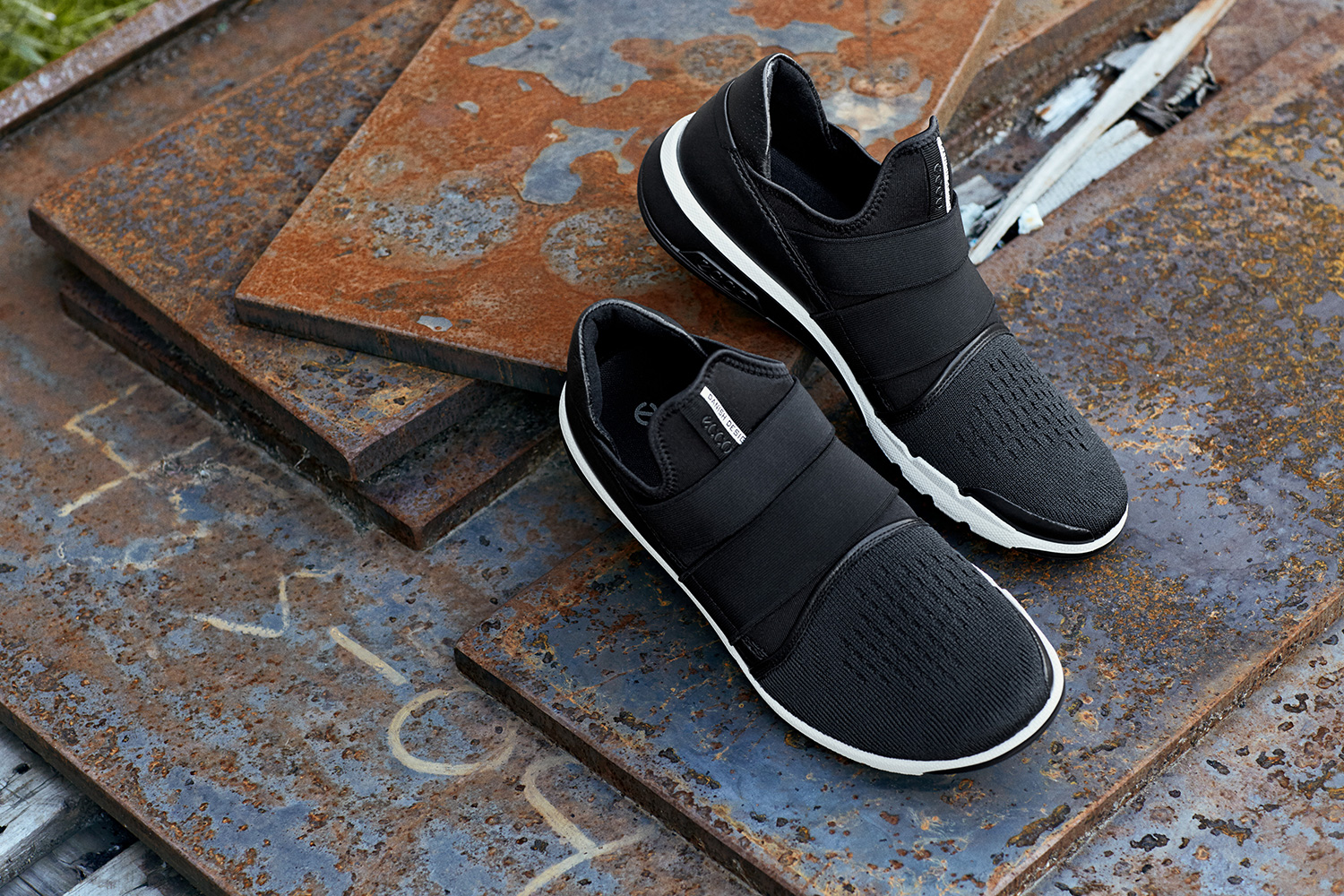
    Ecco India has opened its first store in the country, located at Gurgaon Ambience shopping mall in New Delhi.

    Steen Borgholm, CEO of the Danish shoe and leather goods brand, says the company sees potential in the Indian retail market, despite the challenges.

    “We see strong demand from consumers who know what they want, and who appreciate the quality and consistent brand experience they get from Ecco. We continuously work to understand our customers better, and we hope to be able to convey the passion of our employees and our brand story to them,” he said.

    Ecco India has an expansion strategy which includes opening 20 concept stores in major cities over the next three years. It will also launch an online store in the first quarter of next year, allowing approximately 1.3 billion Indians to shop its products from the website.

    But first, says EVP for global sales, Michel Krol, the company will focus on positioning the brand in India, where the majority of the consumers are price sensitive.

    “We would like to take a long-term strategy to become a successful brand in India. That is why we will start with a small footprint to focus first on brand building so that the Indian consumer understands the brand’s narrative as to why the premium price we charge is justified,” says Krol.

    Founded in Denmark in 163, family-owned Ecco has more than 2250 stores worldwide, along with more than 14,000 points of sale. It owns and manages every aspect of the value chain from tanneries and shoe manufacturing to wholesale and retail activities.