Blog

  • Alibaba confirms purchase of Kaola business

    Alibaba confirms purchase of Kaola business

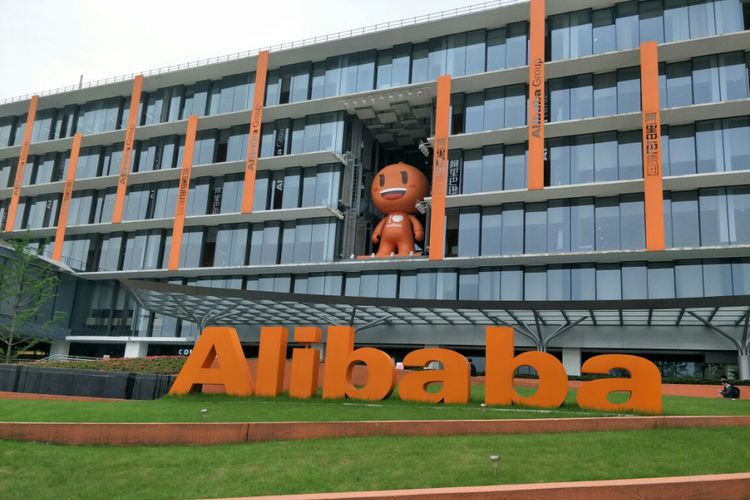
    Alibaba has confirmed it will buy NetEase’s Kaola for about US$2 billion, a deal widely predicted last month.

    Kaola is an import e-commerce platform which has been a rival of Alibaba for some time. Both companies have their roots in Hangzhou.

    Confirming the deal, Alibaba says it plans for Kaola to continue to operate independently under its current brand. Tmall import and export GM Alvin Liu will serve as Kaola’s new CEO.

    “We are pleased to have found a strategic fit for Kaola within Alibaba’s extensive ecosystem, where Kaola will continue to provide Chinese consumers with high-quality import products and services,” said William Ding, CEO of NetEase.

    “At the same time, the completion of this strategic transaction will allow NetEase to focus on its growth strategy, investing in markets that allow us to best leverage our competitive advantages. We remain fully committed to offering our users best-in-class and differentiated online content born from our relentless drive for craftsmanship and innovation.”

    As well as the sale of Kaola, Alibaba, together with Yunfeng, will invest some $700 million in NetEase Cloud Music. The completion of this transaction is subject to certain closing conditions. NetEase will remain the controlling shareholder of NetEase Cloud Music following the closing of this transaction.

    “As the controlling shareholder of NetEase Cloud Music, we will continue to fully support the growth of this business, helping it to realise its strategic goals in the music industry,” said Ding.

    Alibaba CEO Daniel Zhang said his company is confident about the future of China’s import e-commerce market, which it considers remains in its infancy and has great growth potential.

    “We welcome Kaola to the Alibaba family and value NetEase’s contributions in incubating an e-commerce platform with strong import capabilities. With Kaola, we will further elevate import service and experience for Chinese consumers through synergies across the Alibaba ecosystem,” said Zhang.

    “Alibaba also looks forward to becoming a partner in the future development of NetEase Cloud Music and exploring innovative collaboration in the digital entertainment space.”

  • Chinese E-commerce retailer rejects Australian daigou buyers

    Chinese E-commerce retailer rejects Australian daigou buyers

    Daigou buyers from Australia – individuals and groups who buy infant formula and other consumables in offshore retail outlets, selling them at huge mark-up prices in China – have been locked out of one China’s fastest-growing online malls.

    Aomaijia, which boasts more than 30 million registered customers, will not allow individuals or unauthorized distributors to set up online stores selling Australian products. The company instead offers a high level of back-end services to its suppliers, which it says is a far more sustainable business model.

    “Daigou have filled a market need in China,” said Aomaijia Group CEO Maggie Liu; “while they actively promote Australian brands, in reality they operate a rather unsophisticated and inefficient distribution network. The Aomaijia platform was created to give suppliers, like those in Australia, better control of their branding in China but also control over supply chain, distribution, sales volumes and ultimately their profits.”

    The company’s global chief was in Sydney for the official opening of its Australasian procurement and supply chain office. It is the fifth such international office, with other procurement centres in Paris, Los Angeles, Seoul and Tokyo.

    Five Australian consumer product companies – Sukin, Kids Smart, Nestle Australia, B.box and Tasman Ugg – were at the Sydney event, where they signed supply agreements with Aomaijia. They will join a dozen other leading Australian brands, headed by Swisse and Blackmores, which are already available across the e-commerce platform.

    In total Aomaijia sells more than 100,000 product lines across 3,000 individual brands mainly from the US, Europe, Japan, South Korea and Australia.

    Aomaijia connects with its customers across three platforms – a mobile phone app, an online retail site (www.aomygod.com), and a mini sales program operated on the WeChat social media app, which has more than 1 billion users. The company has 14 physical stores in key locations across all of China’s major first-tier cities, with plans to open 100 more over the next year.

    The physical stores give customers the chance to test products, reassuring them of authenticity – a key selling point in China where consumers are increasingly wary of fake products, particularly in supplements, vitamins and infant formulas where Australian and New Zealand brands are very highly regarded.

    “Aomaijia does not just offer product displays,” said Nestle Australia’s head of cross border development Matthiew-Nicolas Quentin. “Chinese consumers are highly demanding, they want to know everything about our products and that’s the role this platform plays.”

  • The Coffee Academics launches world’s first Nitro Coffee Bar

    The Coffee Academics launches world’s first Nitro Coffee Bar

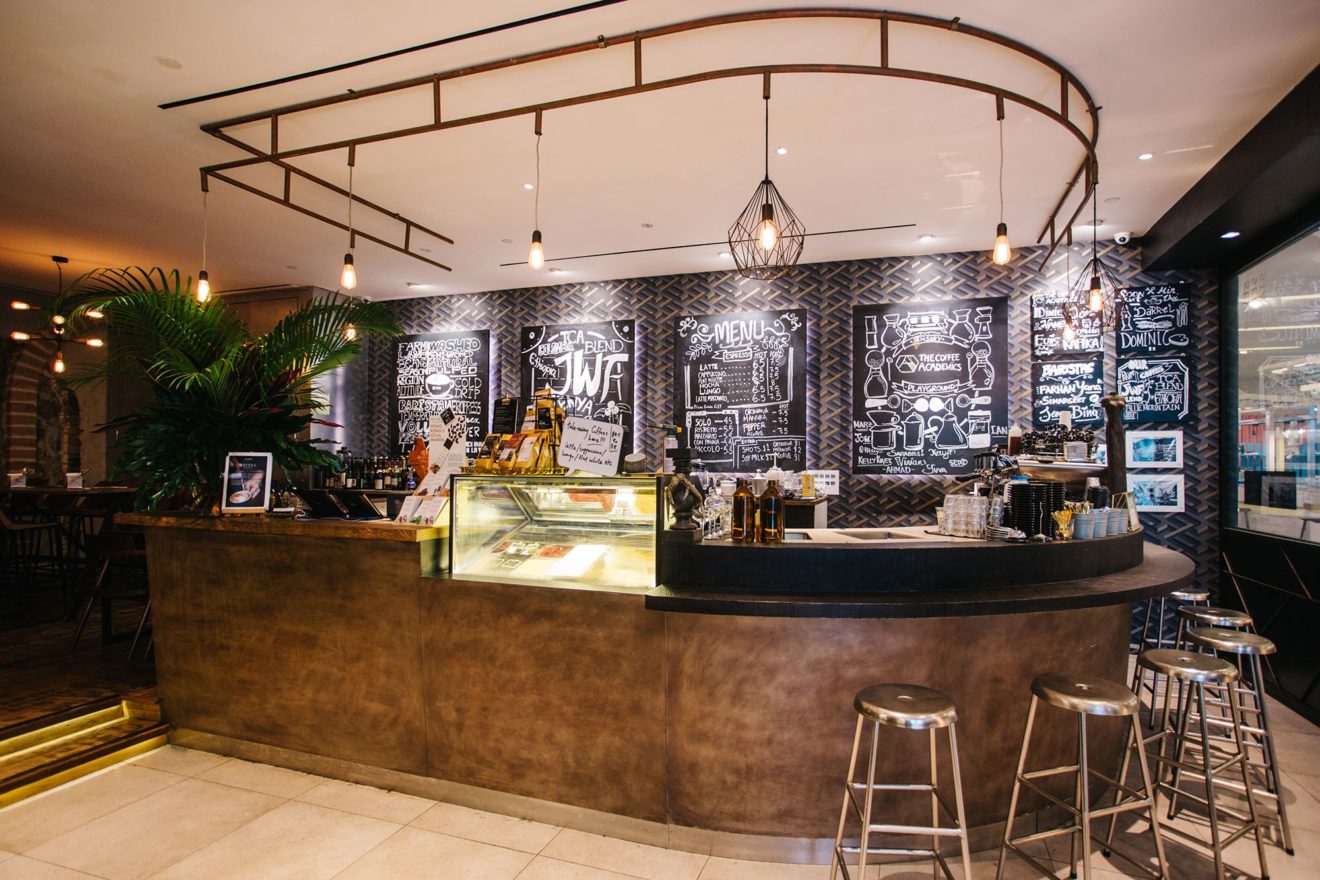
    Hong Kong’s specialty coffee chain The Coffee Academics is launching its latest retail concept the world’s first single-origin Nitro Coffee Bar on September 16 at K11 Musea.

    The Nitro Coffee Bar is the first of its kind to put single-origin specialty coffee at the forefront of product offerings, raising awareness of the specialty coffee value chain. The bar highlights The Coffee Academics’s moves to “drive more value to the source” via direct-trade and other social enterprise programs.

    “The Coffee Academics’ new concept at K11 Musea pushes the boundaries of specialty coffee by incorporating the nitro technology and tapas pairing into the coffeehouse experience,” said The Coffee Academics founder Jennifer Liu.

    In celebration of the opening, The Coffee Academics is offering a rare Yemeni coffee, recently acquired via the largest Yemen coffee auction to-date, with only 1500 cups total – exclusive worldwide at the K11 Musea store. With 60–70 percent of the FOB price going directly to the farmer, The Coffee Academics’ participation in this particular Yemen Coffee Auction was made to deliver a meaningful contribution to the revival of an ancient coffee civilization and the rebuilding of a war-torn nation.

  • Retro-Themed Hyundai 45 Concept Teased Ahead Of Frankfurt Motor Show Debut

    Retro-Themed Hyundai 45 Concept Teased Ahead Of Frankfurt Motor Show Debut

    The future is 8-bit. At least that’s what Hyundai’s new ’45’ concept suggests that was recently teased, ahead of its debut at the upcoming Frankfurt Motor Show on September 10, 2019. Inspired by the automaker’s first model in the 1970s, the 45 fully-electric concept car will act as a symbolic milestone for Hyundai’s future EV design, according to the company. The car that the automaker speaks of is the Hyundai Pony that was introduced in 1975 and was the first mass market car in South Korea. The Hyundai 45 concept not only pays homage to the Pony but also takes a retro design cue or two for its EVs.

    While the teaser does not give out any major details about the Hyundai 45 concept, we do get a clearer look at the silhouette of the car that is more angular and boxy than we thought. The dot-matrix taillights though do standout and certainly something we wouldn’t mind seeing on the production EV cars of the future too. It also sits well with the neo retro theme fo the car, something Honda too explored successfully with its new E, electric compact car.

    Hyundai is known for making some bold styling choices and while its current cars get that ‘Sensuous Sportiness’ design language, this would be a welcome change. We will, of course, get the complete look at the new 45 in a few days from now at Frankfurt and we do expect something radical from the Korean carmaker.

  • BlackBerry To Offer Cybersecurity For Future Jaguar Land Rover Model

    BlackBerry To Offer Cybersecurity For Future Jaguar Land Rover Model

    Jaguar Land Rover and technology firm BlackBerry today announced the expansion of the companies’ corporate partnership to develop next-generation intelligent vehicles for the carmaker. As part of the extended collaboration, the BlackBerry, a trusted security software and services company, will help JLR develop future-ready vehicle safety technology for the automotive market. The company will share its Artificial Intelligence and Machine Learning technologies like – BlackBerry QNX and BlackBerry Cylance, to develop vehicle safety systems, with a range of capabilities like – predictive software maintenance and cybersecurity threat protection.

    For instance, the BlackBerry QNX, an integrating software will be used to help develop Jaguar Land Rover’s next-generation vehicle architecture, making it safer. On the other hand, its consultants and security testing technology, BlackBerry Cybersecurity Consulting services will help identify security vulnerabilities in connected and autonomous vehicles, across the full software library used in a vehicle.

    Speaking about the partnership Ralf D Speth, Jaguar Land Rover CEO, said “Jaguar Land Rover and BlackBerry share a common objective in bringing the most intelligent vehicles to reality. I am delighted that our partnership with BlackBerry continues to go from strength-to-strength, a company whose technology innovations uniquely address the expanding safety needs of the automotive industry.”

    As for John Chen, Executive Chairman & CEO, BlackBerry, he said, “BlackBerry is a trusted partner of the automotive industry because of our heritage and innovations in secure communications. We are pleased to be Jaguar Land Rover’s chosen partner for safety-certified technology, as we advance Artificial Intelligence and Machine Learning technologies to transform automotive safety.”

  • Google Assistant adds new WhatsApp integrations

    Google Assistant adds new WhatsApp integrations

    WhatsApp is the most popular messaging app in the world, although in the U.S. it is third. No matter how you slice it, the Facebook-owned app is extremely popular. And so is Google Assistant. The virtual digital assistant can send text messages through WhatsApp (just say “O.K. Google, send WhatsApp message”) which comes in handy if you are sending a message that you want encrypted. Of course, the recipient of your message must be a WhatsApp member.

    But suppose you want to make a video or voice call using Assistant? Well, it used to be that video calls would automatically go through Duo or even Hangouts. Voice calls simply go through your carrier’s network. But as we pointed out, WhatsApp has a lot of pull. Remember, Facebook paid $21 billion for the messaging app in a deal that closed in 2014. So today Google announced that Assistant will now make voice calls and video calls through the WhatsApp Android app.

    To make a video call through WhatsApp, you can say “Hey Google, WhatsApp video John.” Google didn’t say how to initiate a voice call, but we would guess that it would go something like “Hey Google, WhatsApp call John.” Unfortunately, Google doesn’t go into great details about this with its announcement today, and neither WhatsApp video calls or voice calls worked for us. It could be that Google jumped the gun and let the cat out of the bag too early, or the new WhatsApp integrations are slowly rolling out to Android phones. Regardless, it is the little touches like this that help make Google Assistant the most useful of smartphone-based virtual helpers.

  • Starbucks and Alibaba Launch Voice Ordering and Delivery through Tmall Genie

    Starbucks and Alibaba Launch Voice Ordering and Delivery through Tmall Genie

    Starbucks is taking another step toward evolving the digital customer experience for customers in China by launching voice ordering and delivery capabilities within Alibaba’s smart speaker, Tmall Genie. Customers can now order their favorite Starbucks beverages and food simply by using their voice for delivery within 30-minutes. Leveraging Alibaba’s on-demand food delivery platform, Ele.me, the voice ordering capabilities for Starbucks, further extend the customer experience within Starbucks digital ecosystem.

    The launch of the new service marks the one-year anniversary of Starbucks and Alibaba’s strategic partnership which advances the New Retail infrastructure and digital power in China – one of the fastest-growing markets in the world for coffee consumption. The announcement also builds on several significant collaborations between the two companies that enable a seamless Starbucks Experience for Chinese customers, such as establishing back-of-house kitchens, Star Kitchens, within Alibaba’s Freshippo supermarkets in China.

    “We are thrilled to provide our cutting-edge Artificial Intelligence technology through Tmall Genie to serve Starbucks digitally-savvy customers in China,” said Miffy Chen, general manager at Alibaba A.I. Labs which leads the development of Tmall Genie. “Earlier this year, we launched food order and delivery service through Ele.me in response to our users’ needs for on-demand local services. We’re excited to introduce an even more diverse and enriched experience on our platform through Starbucks voice ordering and provide a direct benefit to Chinese consumers within their daily routine.”

    “The Starbucks feature through Alibaba’s Tmall Genie ushers in a new era of digital customer engagement for Starbucks, leveraging ground-breaking digital technology to create an unprecedented experience that elevates our connection with customers to new heights,” said Molly Liu, vice president and general manager, Digital Ventures, Starbucks China. “We are focused on ensuring that Starbucks voice ordering is truly personal, and we look forward to offering our customers more convenient moments and new opportunities to engage with Starbucks on a single integrated platform as they move throughout the day.”

    Through Alibaba’s Tmall Genie, customers place an order using their voice and can track their order in real-time within the 30-minute delivery timeframe.

    Starbucks® Rewards members also can earn Stars and receive membership updates, including benefits, on the Tmall Genie. Soon, members will be able to receive personalized recommendations when using voice commands to place orders that are tailored to previous order preferences and popular items from Starbucks seasonal menu. As another added benefit, Starbucks fans in China can also listen to the latest Starbucks in-store playlists through Alibaba’s music streaming app, Xiami Music.

  • Tapestry CEO dumped as share price plunges

    Tapestry CEO dumped as share price plunges

    New York-based luxury accessories and lifestyle house Tapestry has ousted its CEO suddenly due to the company’s poor sales results and plunging share price.

    Tapestry – parent of Coach, Stuart Weitzman and Kate Spade – has lost more than half of its value within the last year, from US$50 to $20.44 on Tuesday.

    The company announced overnight that CEO Victor Luis would leave both his executive role and his seat on the board with immediate effect. He has been replaced by Jide Zeitlin as CEO, the board’s current chairman who will continue in that role as well.

    The company has also named Susan Kropf, a current member of the Tapestry board, as a lead independent director.

    Luis has led Tapestry for five years and in its announcement, Zietlin paid tribute to Luis’ achievements.

    “Early in his tenure, he was a critical part of Coach’s development outside of North America, first as president and CEO of Coach Japan and then assuming responsibility for the brand’s entire international organization. Over the past five years as CEO, Victor was instrumental in the successful transformation of Coach and the establishment of Tapestry as New York’s first house of modern luxury lifestyle brands.”

    Luis oversaw the acquisition of luxury footwear brand Stuart Weitzman. However, three weeks ago Tapestry disappointed shareholders and analysts after its latest add-on Kate Spade, showed weak growth. Fourth-quarter profit fell from $212 million to $149 million on sales of $1.5 billion.

    Zeitlin said the board remains committed to Tapestry’s multi-brand model while recognizing the need to sharpen its focus on execution,

    “Given the continued strength and momentum at Coach – the largest brand at Tapestry – our top priority remains driving significantly improved performance at our acquired brands.”

  • Superdry licensing deal signed with IMG

    Superdry licensing deal signed with IMG

    British fashion brand Superdry has appointed IMG to develop a strategic licensing program to extend the brand into select new product and lifestyle categories.

    The Superdry licensing deal will see IMG negotiating partnerships which broaden its product portfolio into such items as luggage and travel-related goods, personal accessories, consumer electronics and sporting goods, in accordance with Superdry’s brand ethos.

    “We look forward to working with IMG and partnering with other brands as Superdry enters the next stage of its growth,” said Superdry CEO and founder Julian Dunkerton. “IMG’s extensive licensing experience with fashion brands makes it the ideal partner and we are excited to explore creative opportunities that best resonate with Superdry’s brand.”

    Superdry is known for its distinctive designs blending vintage Americana with Japanese-inspired graphics. It is a fast-growing brand with a geographically and demographically diverse customer base.

    “With an instantly recognisable identity and a powerful brand personality that embodies fun and individual empowerment,” said IMG’s SVP of licensing Matthew Primack, “we see many opportunities to apply the Superdry style and philosophy to products of relevance and we are delighted to be working with the Superdry team.”

  • Clot opens Juice store at K11 Musea

    Clot opens Juice store at K11 Musea

    Fashion label Clot has opened a Juice store at K11 Musea mall in Tsim Sha Tsui.

    The store opened on Tuesday, featuring a curated selection of brands – including exclusive in-house labels Clot and Clottee, alongside a range of top-tier names such as Fear of God, Alyx, A-Cold-Wall*, 99%is, Needles, White Mountaineering and Ambush.

    The new store will also carry signature streetwear imprints from the likes of Pleasures, Wacko Maria, and P.A.M, as well as lifestyle items from Kuumba and Medicom Toy, amongst others.

    Juice K11 Musea will also feature a sneaker wall with styles from Nike, Adidas, Converse and Vans as well as more niche footwear labels including Hoka and Salomon.

    With a modern design that still incorporates elements from its other local boutiques, the Juice store at K11 Musea will display a rotating selection of modern art and regularly host exclusive events and special releases.

  • Panerai opens pop-up store in China

    Panerai opens pop-up store in China

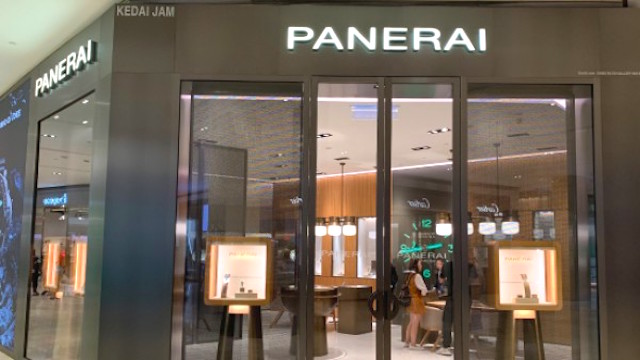
    Florentine high-end sports-watch brand Panerai has opened its first pop-up store in Greater China in Hong Kong’s Harbour City Ocean Centre.

    The 75sqm store follows a new ad-hoc design concept developed by Panerai’s creative director Alvaro Maggini. Guests are plunged into the “new Panerai universe” at the store through VR glasses, engaging in a multi-sensory installation that features dangerous sea creatures in an aquatic habitat of rocks, sand and shells.

    The store is showcasing its latest novelties for the very first time in Hong Kong, focusing on the brand’s Luminor Due blue dial titanium watches.

  • Nissan India Appoints Rakesh Srivastava As Managing Director

    Nissan India Appoints Rakesh Srivastava As Managing Director

    Nissan today announced the appointment of Rakesh Srivastava as Managing Director, Nissan Motor India and will report to Sinan Ozkok, President of Nissan India Operations. Rakesh joins Nissan after having worked as Director in charge of electric vehicle development, JSW Group. Prior to that, Rakesh has held senior management positions at Hyundai Motor India and Maruti Suzuki.

    Sinan Ozkok said, “I am pleased to welcome Rakesh to the Nissan India team. With his rich experience and deep understanding of the Indian market, I am confident he will strengthen our sales and marketing functions and successfully deliver our customer-centric strategy.”

    Nissan Motor India has had its share of ups and downs and now that the company looks to renew its outlook for India, Srivastava brings expertise and also strategy to the table. The company has big plans for India and this includes moving to a future with an electric car portfolio.

    Rakesh Srivastava said, “I am excited by the opportunity to build and strengthen Nissan operations for our customers, partners and employees in India. Nissan is an iconic global brand and its leadership in technology and innovation will be a key driver and differentiator towards delivering value and aspiration to our customers in this competitive market.”

  • StanChart Inks Fintech Tie-Up

    StanChart Inks Fintech Tie-Up

    Digitalization in trade finance continues to gain momentum in Asia with Standard Chartered adding another industry milestone, partnering with tech firm Traydstream to leverage their trade document matching service capabilities.

    In order to help clients shift away from conventionally manual and time-consuming data matching processes, Standard Chartered’s partnership will leverage Traydstream’s platform populated by data and artificial intelligence-based matching tools. The solution aims to prevent trade financing cycle delays and potential impact to working capital needs – an issue made all the more important in the region due to an ongoing trade war.

    Standard Chartered will first offer the document matching service to clients in Singapore before rolling it out to its key trade export markets globally.

    According to Standard Chartered’s global head of documentary trade product management, Samuel Mathew, its decision to partner with Traydstream was due to the tech firm’s platform capabilities and fit with its emerging markets footprint.

    This strategic agreement further builds on the Bank’s export capabilities by allowing our clients to reduce discrepancies in their trade documents with Traydstream’s data and AI-based matching tools,» Mathew said.

    Standard Chartered’s efforts to leverage financial technology in trade finance are not limited to document matching. It is part of an eight-bank alliance that jointly developed «Voltron», a trade finance platform, on which HSBC – one of the developers – recently executed its first yuan-denominated blockchain-based transaction.

  • Uniqlo Billionaire Founder Seeks Woman for Successor

    Uniqlo Billionaire Founder Seeks Woman for Successor

    70-year old Japanese billionaire founder of Uniqlo, Yanai Tadashi, said he prefers to be succeeded by a woman, in a move he foresees will bode better for the region’s largest retailer.

    The job is more suitable for a woman,» said Yanai Tadashi, president and founder of Fast Retailing, which owns Uniqlo as one of its subsidiaries, in a report. «They are persevering, detailed oriented and have an aesthetic sense.

    In addition to succeeding the throne, Yanai also highlighted ambitions to increase the female ratio of senior executives to more than half after reaching 30 percent of management positions last year.

    On the prospects of Maki Akida, an 18-year female veteran powerhouse that managed stores in Japan and China, becoming the successor, Yanai said It’s a possibility.

    Yanai’s expresses his commitments to not only more females in senior positions but also the development of youth and supporting workers in emerging markets. Yet despite the ESG-oriented nature of these remarks, he does not wax lyrical about Fast Retailing’s ethical superiority but rather how such moves are aligned to business needs.

    We’re in the business of selling clothes – it’s not so good that we’re old, he said, on youth.

    And on worker support, the firm will invest $1.8 million in a partnership with the International Labour Organisation (ILO), a United Nations arm, to support factory workers in Indonesia. The ILO will continue exploring ways for Fast Retailing to improve worker protection in other countries where it has contract factories.

    If we expand in a place where incomes are not growing, we cannot sell clothes, Yanai said, highlighting Southeast Asia as a key growth market for the firm.

  • Cost-cutting, focus on profitable sales drive ‘modest improvement Myer

    Cost-cutting, focus on profitable sales drive ‘modest improvement Myer

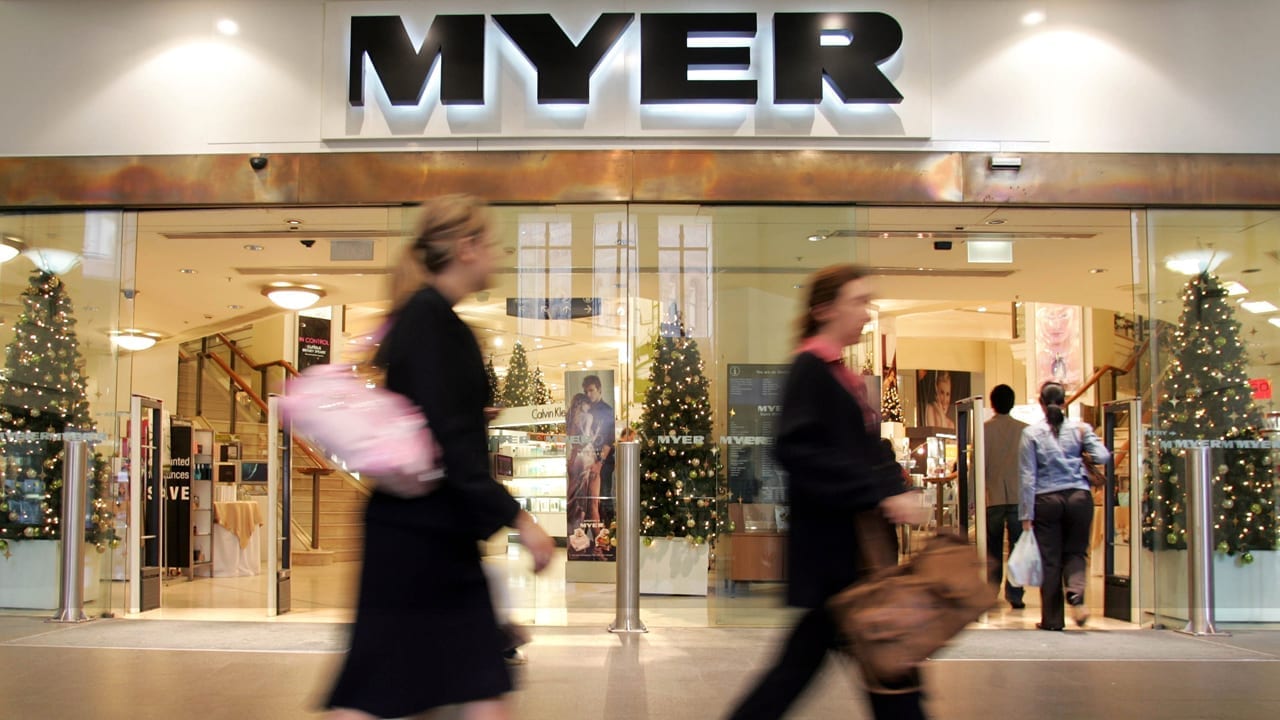
    Myer saw a “modest improvement” in its first full year under CEO and managing director John King’s turnaround plan, despite challenging trading conditions in the second half which tempered some of the department store’s first-half gains.

    Most of the improvement came from reduced costs, primarily rent and wages, rather than an increase in sales, with roughly $33 million cut out of the business over the year ended June 30, 2019.

    Total sales fell 3.5 percent year on year to $2.99 billion in FY19, and comparable-store sales were down 2.9 percent.

    Excluding sales in Apple products, which Myer exited in May, comparable store sales were down 1.3 percent. Both total sales and comparable store sales fell at roughly the same rate as they did in FY18.

    An increased focus on profitable sales, including a shift in the sales mix away from concessions and towards Myer ‘exclusive brands’, contributed to an improvement in operating gross profit margin 38.85 per cent, up 65 basis points year on year. Operating gross profit was $1.2 billion, down 1.9 per cent year on year.

    Excluding implementation costs and individually significant items related to redundancies and lease provisions, Myer posted a 7.2 percent improvement in earnings before interest, tax, depreciation, and amortization.

    Net profit after tax was up 2.2 per cent year on year to $33.2 million.

    King made it clear during an earnings call with analysts and investors that the department store is sticking to the customer-first plan he laid out last September.

    “We will continue to focus on the customer, we’ll continue to deliver against this plan in the best interest of our customers and shareholders,” King said on the call on Thursday.

    “The plan we started is a plan we’re delivering against today, and will be the plan we’ll be delivering against in the coming months.”

    King also announced the appointment of Tony Carr as the company’s new executive general manager of supply chain. Carr was previously head of logistics at ASOS.