Blog

  • Indonesian e-commerce site Tokopedia generates record sales

    Indonesian e-commerce site Tokopedia generates record sales

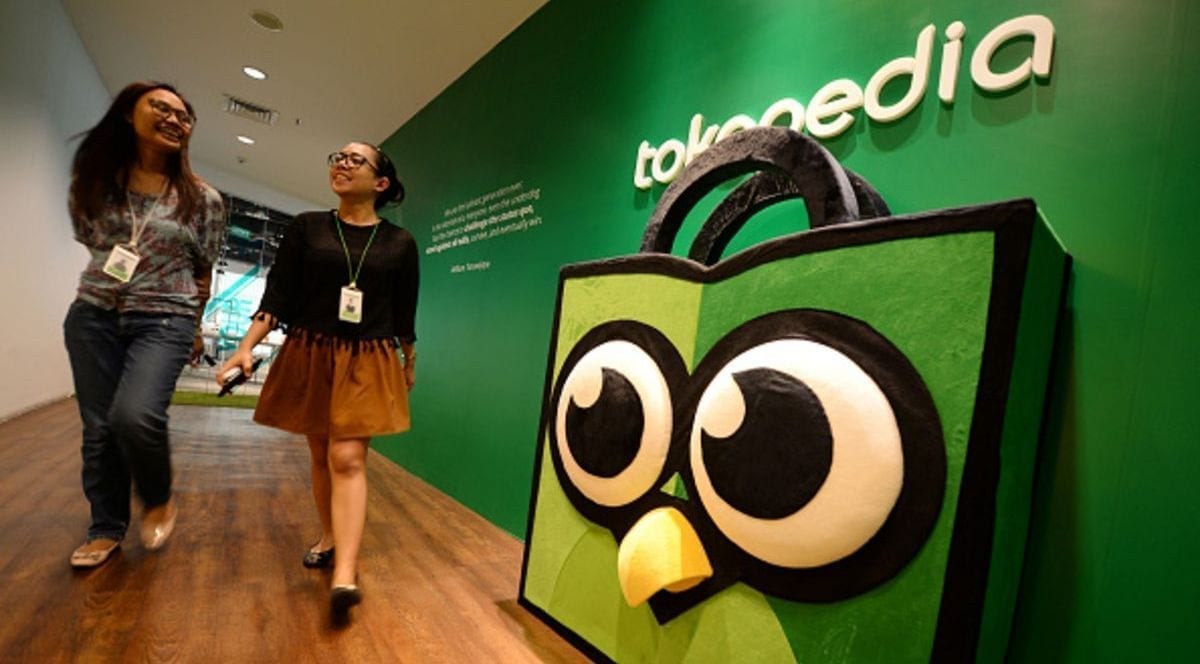
    Tokopedia, an Indonesian e-commerce site backed by SoftBank and Alibaba, said on Wednesday it generated a record $1.3 billion in gross merchandise volume (GMV) during Ramadan sale, amid soaring demand for online retail.

    The company said its biggest sales, recorded on May 17, resulted in a total transaction value that was higher than combined sales from the first six years.

    “Those transactions are happening across 97% of sub-districts in Indonesia and involved 5.9 million sellers,” said Tokopedia founder and CEO William Tanuwijaya.

    The start-up secured $1.1 billion in a funding round in December, led by Japan’s SoftBank Group Vision Fund and Chinese e-commerce giant Alibaba Group Holding Ltd. Sources say Tokopedia is valued at $7 billion.

    Shopping for clothes and gifts during the holy month of Ramadan is a significant part of the culture for Indonesia – the world’s largest Muslim-majority country.

    The Southeast Asian nation of over 260 million people is seen among the most promising global e-commerce markets, buoyed by a younger generation shifting their preference to online shopping.

    The Indonesian internet economy reached $27 billion last year and is poised to grow to $100 billion by 2025, according to Google-Temasek 2018 study.

    However, its logistical challenges are massive. The country’s 17,000 islands are sprinkled across an area bigger than the European Union, with logistical costs swallowing up around a quarter of Indonesia’s gross domestic product.

    Tokopedia’s Ramadan sale success reflects that e-commerce retailers are trying to overcome difficulties faster than expected amid higher usage of smartphones.

    Tanuwijaya told reporters that Tokopedia, which does not have its own inventory, was experimenting with artificial intelligence to predict demand and store stock in advance in partnership with warehouse operators.

    Rivals Bukalapak and Shoppee have not made their Ramadan sales public.

  • Blockchain Platform Zilliqa Partners Singapore Payments Startup

    Blockchain Platform Zilliqa Partners Singapore Payments Startup

    The partnership will enable Xfers to use Zilliqa’s smart contract functionalities and bring about new innovations to its suite of enterprise solutions.

    Blockchain technology firm Zilliqa is partnering Singapore-based fintech startup Xfers to explore the use of payment solutions powered by distributed ledger technology, the company announced at its Zilliqa Day event on Tuesday, which marked its second anniversary.

    The partnership will allow Xfers to benefit from Zilliqa’s SmartContracts infrastructure, bringing efficiencies in cost, transparency and scalability to its platform, which has over 500,000 users in Southeast Asia, the firm said. Working with Zilliqa will bring about new innovations to Xfers’ suite of enterprise solutions, which includes support for payments, disbursements, regulatory compliance, a built-in digital wallet, and more, the firm added.

    Xfers received an e-wallet license from the Monetary Authority of Singapore (MAS) in March, joining EZ-Link Card, Nets CashCard, Nets FlashPay, and CapitaVoucher as MAS-approved Widely Accepted Stored Value Facility (WASVF) providers.

    The license allows Xfers to hold money on behalf of its users, and gives it an edge over other fintech startups, as user deposits are backed by a bank, which guarantees each dollar it holds.

    Launched in 2015, Xfers processed over $260 million in payments in 2018. It is backed by 500 Startups, Golden Gate Ventures and Facebook co-founder Eduardo Saverin.

    Zilliqa, headquartered in London and Singapore, is a public blockchain platform known for use of sharding as an on-chain solution to preserve decentralization and enable greater scalability. Its blockchain is able to process 2,828 transactions per second.

  • Renault India To Double Sales In India By 2021

    Renault India To Double Sales In India By 2021

    Renault India found success with the Duster and even the Kwid in India and now it’s readying to bring in its compact MPV – the Triber – into India. The Triber too, like the Kwid is based on the CMF-A platform and comes with a heavy dose of local content, so prices will be competitive for sure. But Renault India has grand plans for the Triber and it’s made its intention to export the compact MPV to other markets too and with it help the company improve its sales in India too. In fact, the company is looking to double its sales in the country by 2021 and the Triber will play a big role in making this happen. Thierry Bolloré, CEO, Groupe Renault said, “It’s (The Triber) a significant contributor to the progress we want to make in order to double the sales of Renault in India for sure.”

    The Triber is actually a seven-seater tucked under the four-meter mark. At that size, the new Renault Triber is a direct rival to the Datsun GO+ and also the upcoming compact seven-seater from Maruti Suzuki. It gets a completely different design language from its rivals that help make for a roomier cabin. In fact, Renault is comparing the Triber to a number of B-segment hatchbacks, with the French model offering the additional third-row seating that is more practical. Renault also says the new offering will be 20 percent more affordable in terms of ownership than a conventional B-segment hatch.

    But it’s not just the sales in India that will help Renault achieve this target. The company is banking on exports as well, something it has been doing with the Kwid too. Bolloré said, “Export is key because this is a car made in India, for India and having the genes for a great exporter to other markets.”

    Not everything has worked for Renault in India though. Cars like the Lodgy and the Capture have failed to pick up in terms of sales and establish themselves as strong contenders in their respective categories and Renault isn’t shying away from that reality. Bolloré explains, “The mistakes we have done sometimes, well, we have learned from that. We are quite humble you know, and we know it’s necessary, step-by-step, to understand, and to be better and better for sure, Triber is one key contributor.”

    There will be some other contributors, coming fast after the Triber which will help Renault achieve its set target for 2021.

  • BMW X7 And BMW 7 Series Facelift Launch Date Revealed

    BMW X7 And BMW 7 Series Facelift Launch Date Revealed

    BMW has announced that it will be launching the new 7 Series facelift and the all-new X7 SUV in India on July 25, 2019. Talking about the new 7 Series facelift, the most apparent of all the design changes is the massive kidney grille which is 40 percent larger than the one on the outgoing model. The headlights still look sleek and go well with the long bonnet which now looks more sculpted and has even gained muscle along with the fenders. The profile looks almost similar to the outgoing model and there have been subtle changes in the design at the rear.

    The new BMW 7 Series will also get a range of engine options including a new 6.0-liter, V12 motor which churns out 592 bhp and 850 Nm of peak torque and will make its way under the hood of the top-end M760 variant. Then there is the 4.4-liter, V8 motor which produces 516 bhp (up 78 bhp) and 750 Nm of peak torque (100 Nm up) and propels the car to 100 kmph in 3.9 seconds. Finally, the most in-demand of the lot will be the 740L which will now be a plug-in hybrid variant. It will get the same 3.0-liter, in-line six-cylinder engine which produces 276 bhp and 450 Nm of peak torque but will be coupled with an electric motor which will add 111 horses more taking the combined power output to 384 bhp.

    The BMW X7 is an all-new model and it will be the new flagship SUV for BMW, positioned above the X5. The BMW X7 is based on the CLAR platform which also underpins its sedan counterpart- the 7 Series and several other BMW models like the 5 Series and new generation X3. BMW is also developing the next-generation X5 on the same platform. Visually, the new X7 takes design quotient a notch higher with that massive kidney grille, slim LED headlamps and muscular bumper with wheel arches.

    Petrol engine options on the 2019 BMW X7 include the 3.0-liter, in-line six-cylinder petrol with 335 bhp and a 4.4-liter, twin-turbo V8 petrol with 456 bhp. There will also be the 3.0-liter six-cylinder diesel with 256 bhp, along with a more powerful 400 bhp version. A plug-in hybrid version is also said to be in the works, while an M badged model is the one we look forward to. All engines use the 8-speed automatic transmission and get all-wheel drive as standard. The system does come with the option to send power only to the rear wheels, while you get BMW’s Dynamic Handling Package and the Off-Road Package. Upon launch, the BMW X7 will be going up against the Mercedes-Benz GLS, Range Rover Sport and the Audi Q7.

  • Swift Calls for Collaboration on Cross-Border Payments

    Swift Calls for Collaboration on Cross-Border Payments

    Cross-border payments challenges should not be solved with closed loop systems, global payments network Swift said in a call to the payments community, including market infrastructures, banks and fintechs.

    Its white paper, Payments: Looking to the Future,» lays out the financial services firm’s vision of cross-border payments as one that is «seamless and convenient as domestic ones: instant, accessible, ubiquitous, saying the increase in cross-border flows, new technology enabling improvements, and end-customers demanding a better customer experience as changes that are shaping the global payments industry.

    Innovations in domestic retail payments have transformed entire markets, and facilitating the exchange of value beyond tightly knit domestic, single-currency communities is inherently more complex for banks, the paper noted.

    Cooperation by all players in the community is important, because the openness and universality of the envisioned system are unique; the more widely adopted the convention for moving value, the easier the circulation of value – and the more the convention will be used. Banks are key in this, Swift said, asking for the widespread adoption of its global payments innovation (GPI) service.

    According to Swift, API technologies supporting open, agile architectures are supporting the revolution in international payments as they allow fintechs to offer value-add services and banks to differentiate themselves by layering services and products.

    Payments are not an end in themselves – they exist to enable investment, trade and commerce, Swift said.

    Swift launched its GPI service in 2017 to increase the speed, transparency and tracking of cross-border payments. It currently remains optional for banks but its ambition is to create a new standard in cross-border payments, and said it expects it to be the universal standard by 2020.

    In January, it accounted for 55 percent of cross-border payment instructions carried on the network, and about $300 billion in transfers daily.

  • Tencent launches first overseas video streaming in Thailand

    Tencent launches first overseas video streaming in Thailand

    Chinese tech giant Tencent Holdings Ltd launched its first overseas video streaming service in Thailand on Friday, as it ramps up its presence outside China.

    Tencent is diversifying from its core Chinese gaming business, which has been beset by regulatory problems, pushing revenue growth to its slowest-ever in the first quarter.

    Tencent’s existing Thai user base made the country a good first target for its push into Southeast Asia, said Jeff Han, Senior Vice President of Tencent Penguin Pictures, which produces original content for the streaming business.

    “This is the market we need to first enter to try to see whether an overseas launch could be a success for us, so we can continue the challenge,” Han told reporters in a group interview in Bangkok.

    “We have our priority markets… the Chinese-speaking markets, which will be more receptive to our offerings,” he said.

    In Thailand, Tencent Video will be called WeTV and feature original Chinese content from Tencent Penguin Pictures with Thai dubbing, and content created with local partners, Han said.

    He declined to comment how much the company was investing overseas.

    WeTV adds to Tencent’s music streaming service JOOX and the mobile version of PUBG games in Thailand.

    Tencent’s video streaming subscriptions increased 43% in the first quarter of 2019 on an annual basis, contributing to a growth in digital content revenue, according to its latest results.

    Tencent Video in China claims over 89 million subscribers and more than 200 million daily active users.

  • Tokopedia enters wedding industry, buying Bridestory

    Tokopedia enters wedding industry, buying Bridestory

    Indonesian e-commerce platform Tokopedia has acquired local wedding-service marketplace Bridestory, which allows users to plan their big day on their smartphones.

    Bridestory targets the Southeast Asian wedding market, connecting couples with venues, organizers and vendors/service providers in the wedding industry. It has reportedly connected more than 3.5 million customers with at least 27,000 wedding vendors annually.

    “It all started with a web application,” said Bridestory CEO Kevin Mintaraga, “then we slowly saw the change in behavior as people became more mobile-centric. We also wanted to help brides to plan their wedding anywhere and anytime with their smartphone”.

    The Tokopedia acquisition includes Bridestory’s new service, Parent story, which help parents and expecting parents connect with age-specific activity providers for their kids.

    Tokopedia has stated that the site will continue to operate independently, while Kevin Mintaraga will join Tokopedia’s management in a VP role.

  • Apple and Google are the top two most valuable brands in wireless tech

    Apple and Google are the top two most valuable brands in wireless tech

    Quick. Name the most valuable brand name in the world. Apple? nope. Google? That answer is so 2018. According to the 2019 BrandZ Top 100 Most Valuable Global Brands rankings computed by WPP and Kantar, Amazon is the most valuable brand with a value of $315 billion. Since the report considers Amazon to be a retailer, Apple is the leader among tech brands just edging out Google with valuations of $309.5 billion and $309 billion respectively. Google was the most valuable overall brand last year.

    Besides Apple and Google, other wireless giants in the top ten include Microsoft (#4, valued at $251.2 billion), Facebook (#6, $159 billion), and AT&T (#10, $108 billion). The value of Microsoft’s brand rose 25% from last year while more modest gains were seen for Apple (+3%) and Google (+2%). The value of brands in the tech sector rose 4% on an annual basis while telecom providers saw their brands increase by 1%.

    Looking at the remaining names on the list, those with a connection to the wireless industry include Verizon (#11), Xfinity (#20), T-Mobile (#25), China Mobile (#27),  Intel (#36), Samsung (#38), YouTube (#39), Instagram (#44), Adobe (#45), Huawei (#47), Vodafone (#49), LinkedIn (#58), Xiaomi (#74) and HP (#93).

    Xiaomi made the Top 100 for the first time at number 74. The brand is estimated to be worth $19.8 billion. Among the fastest rising brands, Instagram led everyone with a 95% year-over-year increase that took the valuation of the Instagram name to $28.2 billion. Adobe (+57% to $27.9 billion) and LinkedIn (+46% to $22.8 billion) also were among the brands having the largest increase in value from 2018 to 2019.

  • Globe Telecom launches SE Asia’s first 5G broadband service

    Globe Telecom launches SE Asia’s first 5G broadband service

    Philippines’ Globe Telecom Inc on Thursday launched Southeast Asia’s first 5G broadband service, with embattled Huawei Technologies Co Ltd providing the equipment, a win for the Chinese firm despite cybersecurity worries from Western nations.

    The telecoms firm aims to offer high-speed internet to tens of thousands of homes and offices in key urban centres as part of its $1.2 billion capital spending this year, Alberto de Larrazabal, Globe’s chief commercial officer, told reporters.

    Globe would use Huawei’s equipment like radios and modems to deliver 5G quality broadband internet, he added. Huawei and Finland’s Nokia were Globe’s equipment providers for its 4G service.

    The United States had warned that next-generation 5G equipment, which some telecoms experts see as more vulnerable to attack than previous technology, could be exploited by the Chinese government for spying if supplied by Huawei, which the company denies.

    Washington, a treaty ally of Manila, had persuaded governments and telecoms operators to shun Huawei, the world’s largest maker of telecommunications equipment.

    Globe hired independent firms “to ensure that our security protocols are up to date, to make sure privacy and security issues are addressed,” de Larrazabal said.

    Philippine consumers, the world’s top social media users, often get frustrated with slow and choppy internet connections. The Philippines’ mobile internet and fixed broadband speeds lag behind its neighbours, data from Ookla’s Speedtest Global Index showed.

    It ranks 107th among 178 countries in terms of fixed broadband speed at 19.55 megabits per second (Mbps) versus the global average of 59.6 Mbps. Among 140 countries, it ranks 107th in terms of mobile internet speed at 15.10 Mbps, nearly half of the 27.22 Mbps global average.

    Globe is owned by Philippine conglomerate Ayala Corp, with Singapore Telecommunications Ltd holding a minority stake.

  • CIMB Niaga partners Liquid Group to support Bank Indonesia’s QR Code standardisation

    CIMB Niaga partners Liquid Group to support Bank Indonesia’s QR Code standardisation

    PT Bank CIMB Niaga Tbk (“CIMB Niaga”) and Liquid Group today announced a strategic partnership to spearhead cross-border QR payment acceptance between Singapore and Indonesia. The partnership was initiated through their joint participation in Bank Indonesia’s Quick Response Indonesian Standard (QRIS) trial for cross-border payment transactions. The QRIS trial was conducted on May 23, 2019 using the CIMB Niaga’s digital banking product “Go Mobile” carried out at selected merchants located at Terminal 3, Singapore Changi Airport.

    Slated to launch in the 3PrdP quarter of 2019, CIMB Niaga and Liquid Group will enable the acceptance of participating QRIS compliant payment apps and e-wallets at Singapore Changi Airport through Liquid’s integrated QR payments and marketing infrastructure launched back in April this year.

    CIMB Niaga and Liquid Group have successfully completed their proof-of-concept with CIMB Niaga’s Go Mobile application and QRIS compliant payment apps and e-wallets. With the integration of Bank Indonesia’s QRIS code into Liquid Group’s cross-border payments platform, Indonesian travellers will be able to use their preferred local payment apps to make purchases at Changi Airport.

    Furthermore, CIMB Niaga and Liquid Group will be looking at opening the Singapore – Indonesia corridor for QR payments, enabling the acceptance of Singapore’s local payment apps and e-wallets at participating merchants in Indonesia.

    Lani Darmawan, Consumer Banking Director, CIMB Niaga, commented: “We are honoured to be the first bank in Indonesia given the opportunity by Bank Indonesia to conduct a cross-border QRIS payment trial. We believe that this initiative will greatly benefit our customers who can enjoy the ease of transacting abroad, starting with Singapore’s Changi Airport, using our Go Mobile QR app. This also offers a perfect solution to our customers who may not travel aboard with credit cards or large amounts of cash. We see great potential in the adoption of QRIS-supported cross-border payments with an increasing number of people travelling aboard.”

    Lani added:” The Go Mobile application will offer customers an attractive and competitive exchange rate at the point of payment, with the option to draw funds from their savings accounts, e-wallets and credit cards.”

    Jeremy Tan, Chief Executive Officer, Liquid Group, commented: “Accelerating the adoption of QR payments across borders is our key mission and we appreciate the vote of confidence given to us by CIMB Niaga in using Liquid Group’s integrated payments and marketing infrastructure at Changi Airport for their QRIS trial. Further to opening up the Singapore – Hong Kong corridor for QR payments last month, we are thrilled to now offer Indonesian consumers the convenience and benefit of cross-border QR payments starting with those stopping over at Singapore Changi Airport. We look forward to expanding the acceptance of QR payment apps and e-wallets from both Singapore and Indonesia on our cross-border payment platform.”

    Ms Teo Chew Hoon, Group Senior Vice President of Airside Concessions at Changi Airport Group, commented: “We continuously find new ways to elevate the shopping experience for our passengers and make their payment journey a frictionless one.  This collaboration with Liquid Group and CIMB Niaga will make Changi Airport the first retail destination to spearhead the acceptance of cross-border QR payments using Liquid Group’s first-of-its-kind unified QR payment infrastructure.”

    Liquid Group and Joint Electronic Teller Services Limited (“JETCO”) has also announced a strategic partnership to enable cross-border QR payment acceptance in Singapore and Hong Kong earlier in May, a month after the launch of the world’s first integrated QR payments and marketing infrastucture at Changi Airport back in April 2019.

  • Aston Martin Valhalla To Be Featured In The Upcoming 25th James Bond Movie

    Aston Martin Valhalla To Be Featured In The Upcoming 25th James Bond Movie

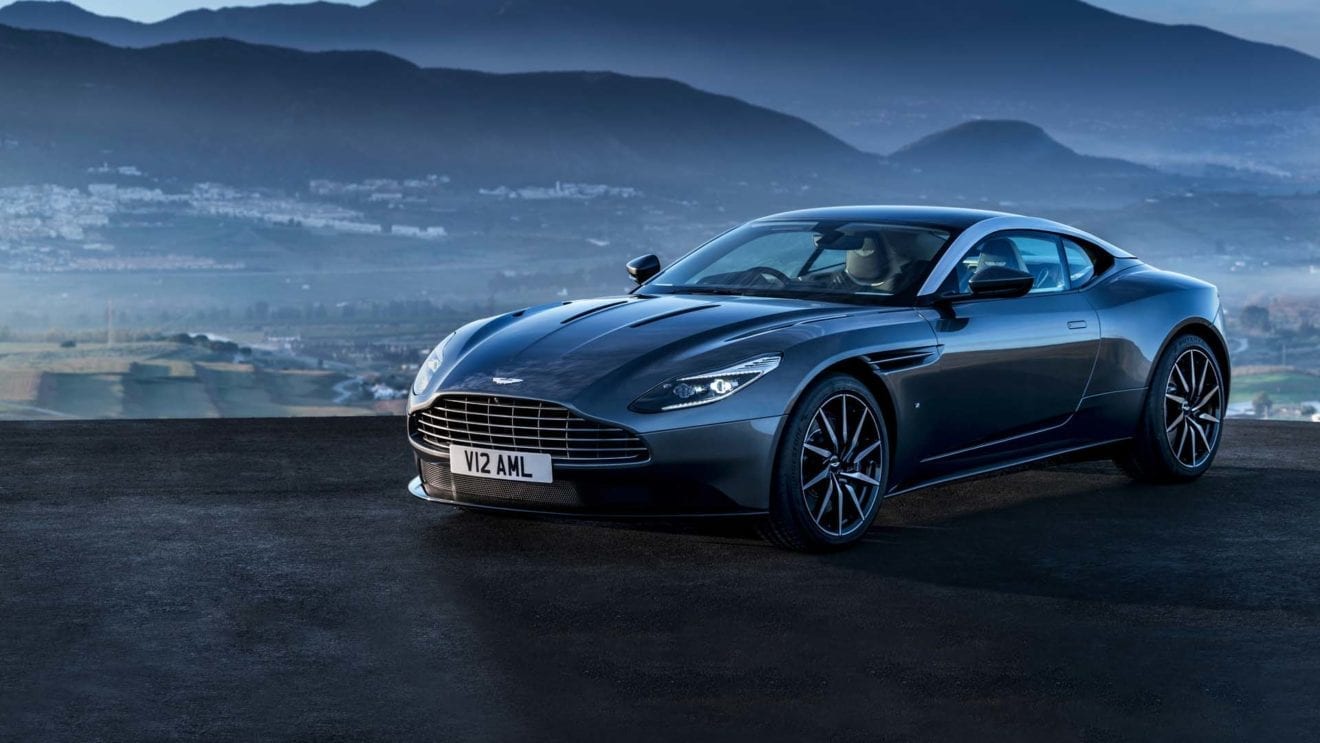
    Further extending its deep connection with the James Bond franchise, Aston Martin has recently revealed the carmaker’s new mid-engined hypercar Valhalla will be a part of the upcoming 25th Bond movie, staring actor Daniel Craig. In addition to the recently unveiled Aston Martin Valhalla, the new 007 movie will also feature the classic Series II V8 Vantage and the iconic DB5. While the Vantage was last seen in a Bond film more than 30 years ago when Timothy Dalton drove it in The Living Daylights, the Aston Martin DB5 has been a series regular driven by almost all major 007s. Last time we saw the DB5 was in the 2015 movie Spectre.

    The new Valhalla will be the first mid-engined Aston Martin car to be driven by a James Bond, and only the second among all. Last time a James Bond character drove a mid-engined car was in the1981 movie For Your Eyes Only, and it was Roger Moore driving the Lotus Esprit Turbo.

    As for the Aston Martin Valhalla, the all-new hypercar will be positioned below the company’s flagship, Valkyrie, which is more track-focused, and instead be a more road-friendly usable everyday car. An outcome of the collaboration between Aston Martin and Red Bull Racing, the Valhalla was earlier known as the AM-RB 003. The car uses a carbon fiber monocoque chassis and is powered by a twin-turbocharged V6, assisted by a battery-powered electric hybrid system. The powertrain system is expected to offer a combined power of up 986 bhp. The exhaust system uses dual outlets, which are positioned on top of the car, similar to the Porsche 918 Spyder.

    While we are likely to see a pre-production model in the movie, the new Aston Martin Valhalla is expected to officially enter production in 2021. It is expected to compete with the upcoming successor of the McLaren P1.

  • Snoopy-themed cafe opens at Kumoya Café

    Snoopy-themed cafe opens at Kumoya Café

    Singapore’s first Snoopy-themed cafe has opened at Kumoya Cafe.

    Open until September, the cafe offers an exclusive Snoopy-themed menu, curated by Kumoya’s kitchen team and Instagram food artist Shirley Wong.

    Featuring dishes include Snoopy’s Doghouse Fantasy Ebi Burger, Sweetest Friend Chocolate Caramel Frappe, and Snoopy-On-A-Donut Iced Lychee Momo Tea, Hand-Cut Truffle Fries, Snoopy Sizzling Seafood Tempura With Japanese Curry Rice, Snoopy Matcha Madness Azuki Lava Cake.

    At the door, there is Snoopy’s doghouse for customers to snap photos with.

    Inside the cafe, Snoopy decals cover the cafe’s walls, with tabletops covered with Peanuts comic strips featuring the beagle and his friends.

    Snoopy merchandise on sale includes Snoopy plush, keychains, pouches and toy figurines.

  • Tse Sui Luen store network expands Again

    Tse Sui Luen store network expands Again

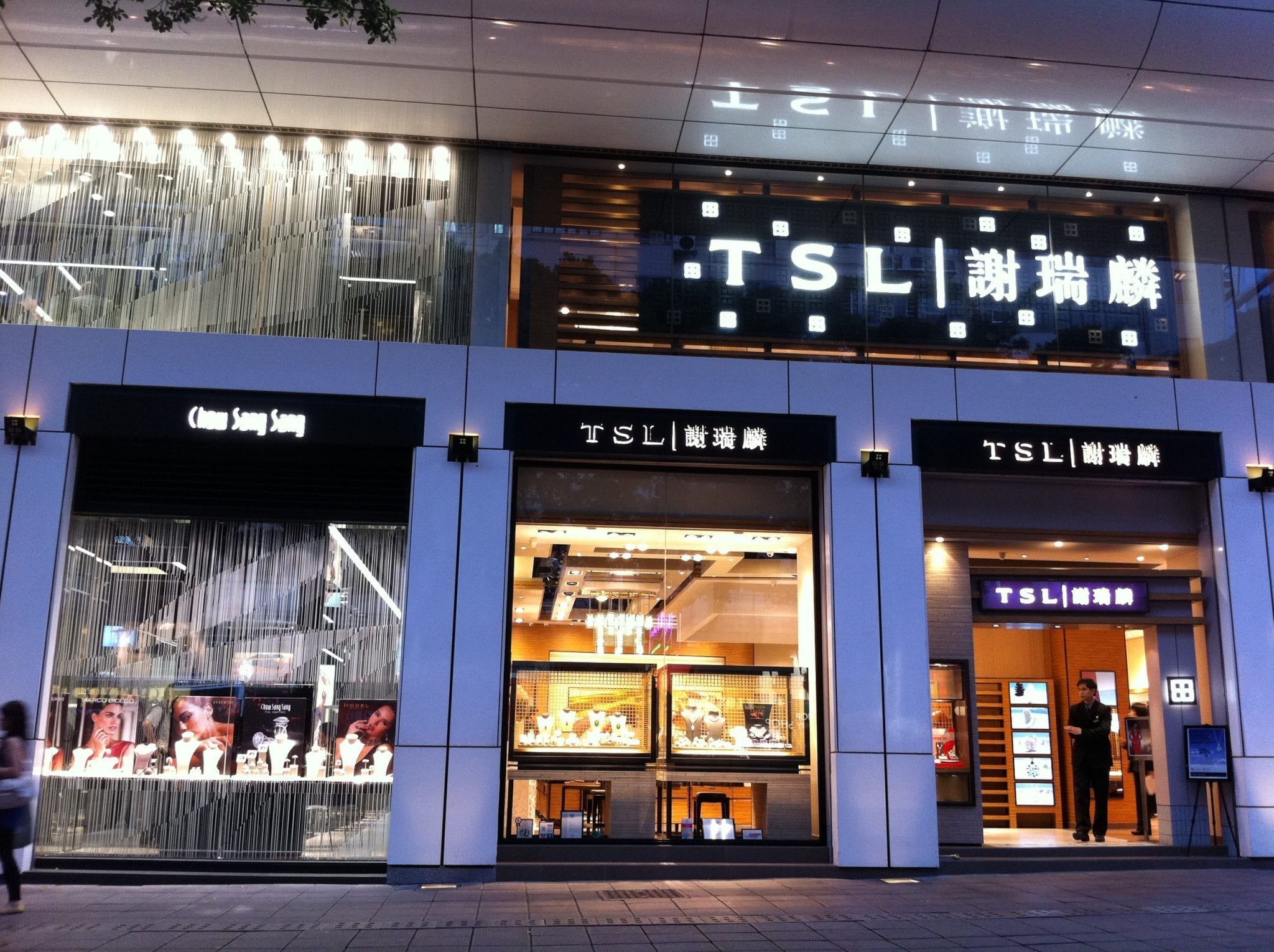
    Hong Kong-headquartered jeweller Tse Sui Luen has reported a 9.6 per cent increase in profit for the full year, despite a marginal 1.7 per cent drop in group turnover.

    Profit attributable to shareholders was HK$54.2 million (US$6.9 million) on sales of $4.065 billion ($521 million).

    The Tse Sui Luen store network grew by 56 during the year, to reach 473.

    Chairman Annie Yau said sales rose in the first half of the year, reflecting the continuing upturn of Hong Kong’s retail sector. “However, conversely, towards the end of the year, the group started to feel the trickle-down effects of the trade dispute between the US and China which has adversely affected the market sentiment and consumer confidence and resulted in the depreciation in the Renminbi – all leading to a slowdown in the global economy and in local retail sales performance.”

    She said the fluctuation of the Renminbi value inevitably brought adverse impact on the second half. “The group is responding to these challenges with unique signature products and reinforcement of our market positioning as ‘Wedding Expert’, all aimed to offset the negative effects…”

    During the year, the group has demonstrated its vision to optimise its retail network across Asia and broaden its international presence through new store openings in Hong Kong, Mainland China and Malaysia. Going forward, we will continue to seize the opportunities for developing existing and new business channels and expanding our retail network in all the regions where we operate, while being cautious and keeping a close watch on any and all changes as and when they occur in the market,” she says.

    Same-store sales growth in Hong Kong and Macau was 2.8 per cent, and as a result of gold product promotions and an expanded product assortment, the average amount per invoice rose by 5.6 per cent.

    Tse Sui Luen took advantage of a general downward trend in store rental rates to improve rental cost effectiveness. It expanded the size of its stores at Times Square in Causeway Bay and Plaza Hollywood in Diamond Hill and opened a new store in MCP Central (Phase II) in Tseung Kwan O.

    Self-operated Tse Sui Luen store growth continued to be a key driver of the group’s Mainland China business, accounting for 36.6 per cent of its turnover during the year. Twelve new self-operated stores and 43 new franchised stores were opened on the mainland, expanding the network from 380 to 435.

    “We will keep on expanding our retail network in Mainland China with the intention of opening an additional 100 new stores over the coming two years,” said Yau.

    In Malaysia, turnover was stable the jeweller opened one new store, at Genting, taking its network there to five.

  • Singaporean shoppers prefer shopping in store

    Singaporean shoppers prefer shopping in store

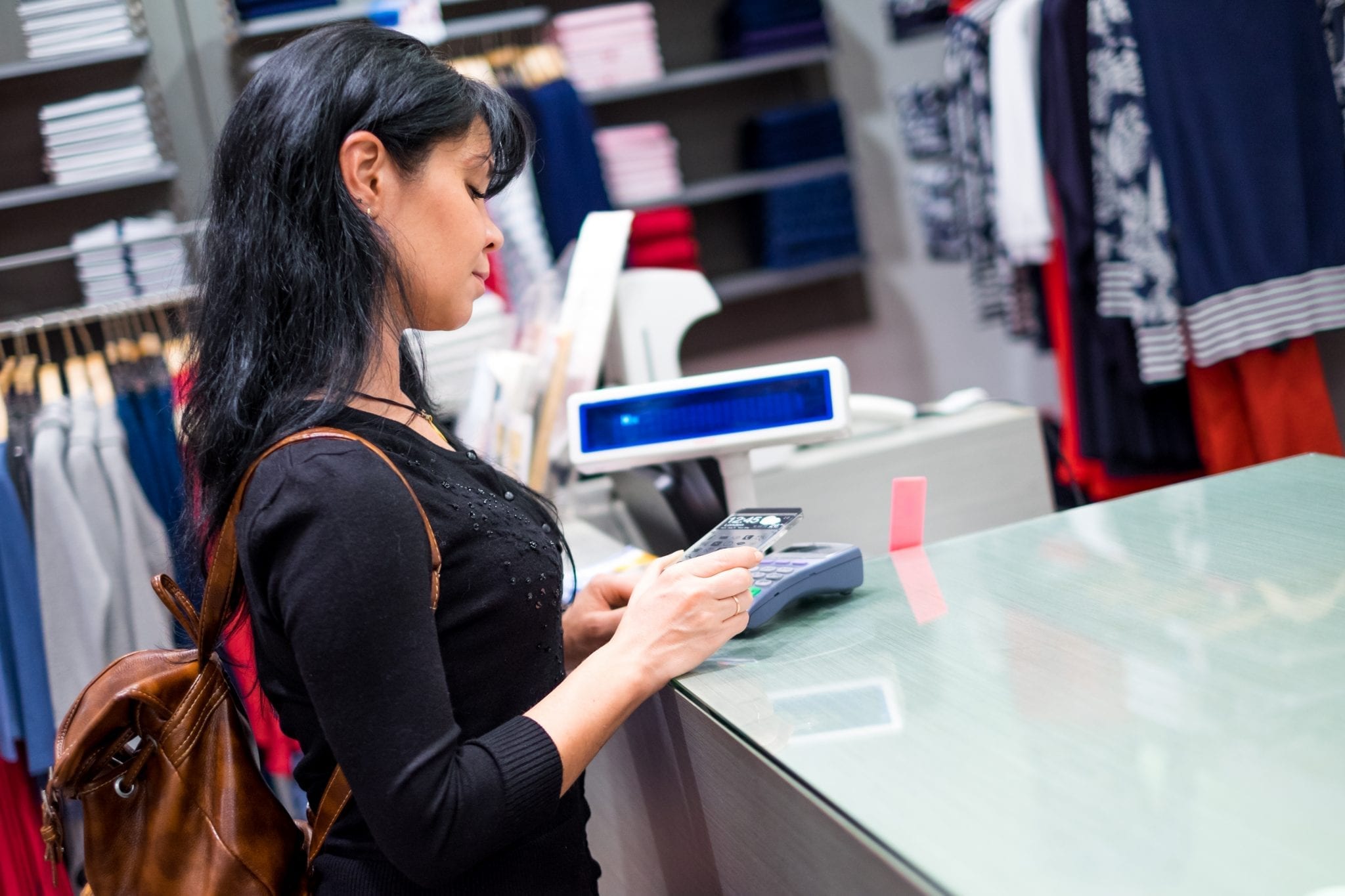
    Singaporean shoppers still prefer in-store shopping, a study by UK mobile tech firm Blis shows.

    The Real Retail Study analysed shopper behaviour in Singapore, and concluded the desire to shop in store is also very much alive, especially when it comes to food and groceries (79 per cent), followed by furniture and home furnishing (69 per cent), and household appliance (61 per cent).

    Consumers are also willing to spend higher amounts when shopping in store, with 81 per cent indicating they will be looking out for in-store deals during the upcoming Great Singapore Sale.

    Four in five local consumers use their mobile phones when shopping in a physical store.

    The most popular reason for doing so is to ‘compare prices for the same item to ensure I am getting the best deal’ (72 per cent), followed by reading other customers’ product reviews.

    Two in three local consumers say they have spent time searching for items on shopping websites but made the final purchase in store. The main reason for doing so is that they ‘like to see the quality of the product before buying’ (56 per cent).

    Sixty-three per cent of local consumers say they have spent time looking for items in stores before purchasing them online. The biggest reason for doing so is that they can ‘sometimes get better deals’ (54 per cent).

    “Our findings show that Singapore consumers still massively value shopping in store, and that any talk about physical retailers being rendered obsolete by e-commerce is premature,” said Richard Andrew, MD for Asia at Blis.

    “Shoppers’ attention and discretionary spending are now being pulled in multiple directions, meaning retail strategy has to evolve. In a mobile-first world, retailers have to master new approaches like location-based data to connect with shoppers at the right place and time to win their hearts, minds and wallets.”

    The study also shows how much Singaporeans love to shop. Forty-five per cent of respondents said they shop because it makes them happy, and nearly half – 49 per cent – consider shopping a hobby. Of them, 55 per cent are women aged 25 to 65.

    When it comes to payment, whether shopping online or offline, Singapore consumers prefer to use credit cards for nearly every purchase of any size. In store, when spending less than $35, cash is preferred.

    “The market in Singapore demonstrates to us that retail isn’t facing its imminent demise, it is simply evolving to keep up with rapidly shifting consumer preferences and behaviours,” Andrew concluded

  • Tsui Wah Singapore to open second restaurant

    Tsui Wah Singapore to open second restaurant

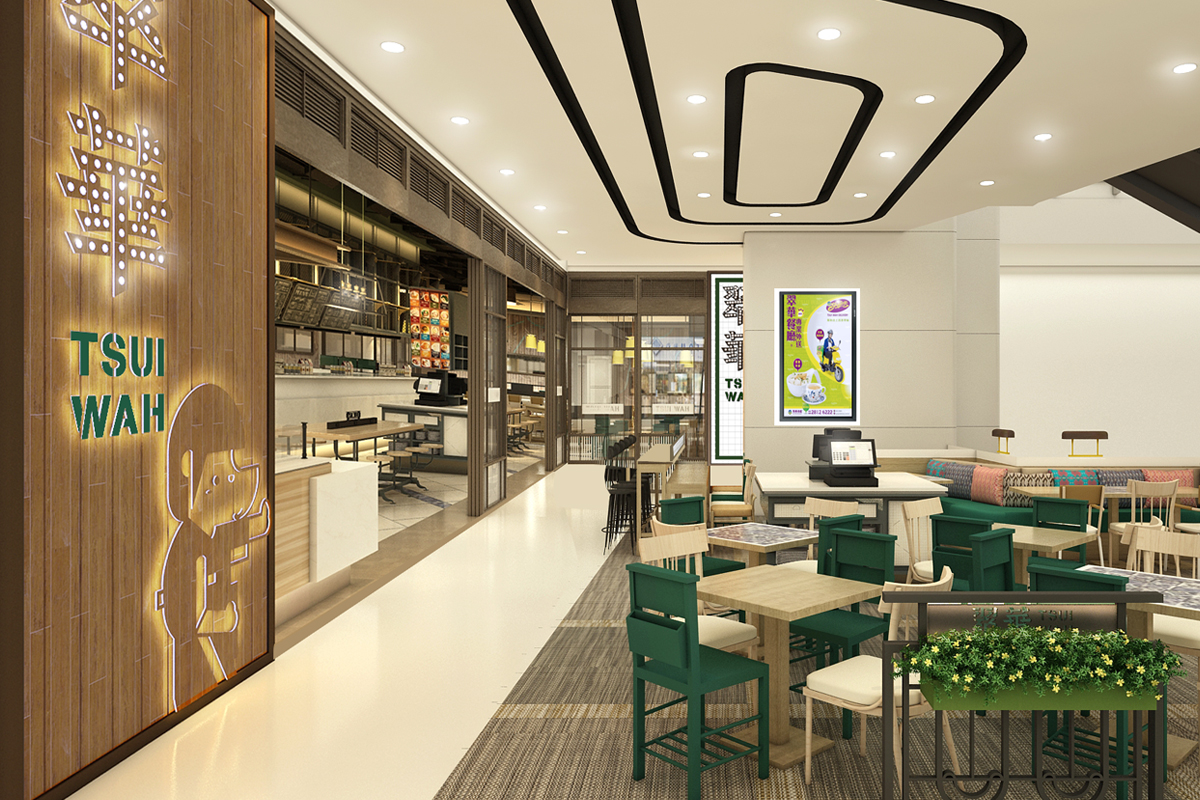
    Tsui Wah Singapore will open a second outlet at Robinsons The Heeren, on Orchard Road.

    No official opening date has been set as yet, but the menu is expected to include signature items such as Swiss Sauce Chicken Wings, Crispy Bun with Sweet Condensed Milk, Kagoshima Style Pork Cartilage with Tossed Instant Noodles, and Milk Tea. Western food such as club sandwiches and French toast will also be available.

    The Hong Kong tea chain arrived in Singapore last June with an outlet at Clarke Quay.

    It is known for its mix of Cantonese cuisine and Western cafe-style fare.