Blog

  • Singapore retail sales lags last Month

    Singapore retail sales lags last Month

    Singapore retail sales slid by 1.5 percent in March, after excluding motor vehicle sales from the data. According to Statistics Singapore, most retail categories recorded lower sales for the month compared with the same period last year. Sales of optical goods and books fell by 6.4 percent and of computers and telecommunications equipment by 4.9 percent.

    Food retailers, watch and jewelry retailers, and department stores reported sales declines of between 4.6 percent and 5.7 percent.

    In contrast, sales of medical goods and toiletries rose by 2.8 percent, due in part to higher demand for cosmetics. Supermarkets and hypermarkets registered sales growth of 0.9 percent.

    Month on month, Singapore retail sales were essentially stable.

    The total market for March was estimated at $3.8 billion, with online sales comprising about 5.3 per cent.

    Year-on-year sales of food and beverage services in Singapore rose by 0.7 percent in March.

    On a seasonally adjusted basis, sales of food and beverage services increased 1.3 percent month on month.

    Total sales value for the sector was $868 million, compared to $863 million in March last year.

  • Maruti Suzuki Announces Service Camp For Fleet And Taxi Owners

    Maruti Suzuki Announces Service Camp For Fleet And Taxi Owners

    Maruti Suzuki has announced a service camp for Fleet and Taxi owners. The camp has been kick-started across all dealer workshops. The company says that Taxi and Fleet operators have higher running and hence their vehicles demand more frequent attention. The campaign then is targeted towards their categorical requirements. The company has advised fleet and taxi owners to visit their nearest authorized service center to avail complimentary car health check and other exciting benefits.

    A complimentary detailed vehicle health check including AC, Brakes, Clutch, Suspension, Battery will be offered. Additionally, seeing the summer vacations coming up in the month of June and July, this campaign ensures that taxi owners are ready to serve the customers during this vacation period. The company had opened the camp last year too and it saw the participation of over 48,000 participants.

  • Batelco completes structural separation

    Batelco completes structural separation

    Bahrain’s Batelco has completed its structural separation into wholesale and retail entities as part of the government’s fourth National Telecommunication Plan.

    Following the separation process, Batelco’s new infrastructure company NBNetco will work with the government to deploy a single national broadband and fiber backhaul infrastructure that will aim to provide all residents of the kingdom with high-speed internet access.

    Meanwhile retail entity Batelco Bahrain will take over the company’s retail and enterprise operations.

    Batelco has appointed Mohamed Bubashait as the CEO of NBNetco, and Mikkel Vinter as the new CEO of Batelco Bahrain.

    Both companies will continue to be owned by Batelco, but will be operated independently.

    The separation process has also involved the restructuring of executive management teams of the separated entities, as well as the separation of operational systems and human resources functions.

    Batelco chairman Sheikh Abdulla bin Khalifa Al Khalifa commented that the company expects that the separation will create new horizons for Batelco and opportunities to invest in digital technology.

  • WhatsApp vulnerability allowed government-grade spyware to be installed

    WhatsApp vulnerability allowed government-grade spyware to be installed

    WhatsApp, one of the most popular messaging apps out there, has once again been the subject of hacking, but this time the method used involves government-grade spyware. Although we have no information that would confirm who’s behind the attack, the spyware used is usually sold to governments.

    The vulnerability discovered by WhatsApp just a few weeks ago would allow a caller to install spyware on the device being called, regardless of whether or not the could be answered.

    The spyware installed was made by Israel-based NSO Group Pegasus, and is usually licensed to governments that want to hack targets of investigations and gain access to multiple aspects of their devices.

    It’s unclear how many Android and iOS devices were affected by the vulnerability, but as you can imagine, anyone with access to the spyware could hack any WhatsApp user. On the bright side, WhatsApp said that it took less than 10 days after it discovered the security issue to patch it. The company also believes that only a relatively small number of users were targeted by the attack.

    This attack has all the hallmarks of a private company known to work with governments to deliver spyware that reportedly takes over the functions of mobile phone operating systems. We have briefed a number of human rights organizations to share the information we can, and to work with them to notify civil society.

    If you have WhatsApp installed on your phone, installing the latest version of the app will render the attack inoperable, even if it was infected with the government-grade spyware.

  • Credit Card spending up in April

    Credit Card spending up in April

    Retail spending on electronic cards rose in April as Kiwis took advantage of the extended holiday period to eat out and take holidays away from home.

    Card spending in April rose 0.6 percent seasonally adjusted after a 0.2 percent decrease in March, according to data from Statistics NZ.

    The increase in credit and debit card spending in April coincided with the timing of Easter and the school holidays.

    “Many employees took three days off to get a 10-day holiday over the Easter and Anzac Day period,” said Sue Chapman, retail statistics manager.

    According to Statistics NZ, retail sales increased despite the reduced trading hours in April.

    In April, spending on eating out and staying away from home (hospitality) rose $6.3 million (0.6 percent) on March, and spending on groceries (consumables) rose $10 million (0.5 percent).

    Apparel sales rose 1.8 percent in April after falling 2.9 percent in March. Fuel was up $17 million (2.8 percent), and durables, up $17 million (1.3 percent), also drove the increase in retail spending.

    Chapman said the increase in fuel spending was due to climbing fuel prices.

    “Fuel prices increased for the fourth consecutive month, after falling late last year,” she said.

    The retail durables industry, which includes furniture, hardware, appliances, and pharmaceutical retailing, bounced back after a 1.7 percent decrease in March.

    Core retail spending, excluding fuel and vehicle spending, saw a 0.5 percent lift following a 0.3 decline in March.

    The total value of electronic card spending, including the two non-retail categories (services and non-retail), saw a 0.4 percent increase in April, following a 0.1 percent fall in March.

    In actual terms, retail spending using electronic cards was $5.3 billion, up to $232 million (4.5 percent) from April 2018.

  • JD Sports celebrates mums on Mums Day

    JD Sports celebrates mums on Mums Day

    JD Sports marked Mother’s Day with a heart-warming video and a social media contest.

    The retailer launched #JDCelebratesMums campaign across Singapore with an “undisputed message; that jobs can come and go, but a mother is irreplaceable”.

    In the 3-minute video on JD Sports’ Instagram account, Atieqa, a JD senior sales advisor, took her mum to her workplace at JD Ion Orchard, where she shared her daily work routine.

    Under the video’s comment section, there was a contest in which participants should share their most memorable moments with their mum.

    One winner won an S$500 JD gift card.

  • NEC to deploy CCTV and traffic management system in India

    NEC to deploy CCTV and traffic management system in India

    NEC Corporation Technologies India (NECTI), an IT and network technologies integrator subsidiary of NEC, has been awarded a contract as the master system integrator for installing CCTV surveillance and traffic management systems in India’s Gurugram City.

    Under the project, selected locations in Gurugram will be fitted with a variety of CCTV cameras to perform traffic enforcement and general surveillance across 115 sectors of Gurugram and Manesar. The project was awarded in March 2019 and is expected to be implemented within this year.

    To support the implementation of a comprehensively integrated video surveillance system, NECTI will set up IP-based outdoor security cameras across various identified locations in the city. The video surveillance system from NEC will help in enforcing traffic discipline through the use of AI-based analytics software such as Automatic Number Plate Recognition (ANPR) and Red Light Violation Detection (RLVD).

    The system will monitor traffic junctions and other sensitive areas to identify traffic offenders and issue alarms. Subsequent e-challans (electronic fines) can be issued to offenders who are captured flouting traffic rules with the help of these systems.

    In the first phase of the project, approximately 1,200 high definitions (HD) and ultra high definition (UHD) cameras are expected to be deployed in over 200 traffic junctions, sending video feeds to monitoring centers 24 hours a day. The project will utilize the dedicated Optical Fiber Backbone currently being laid out by the Guwahati Metropolitan Development Authority (GMDA) using robust ring network topology.

    Cameras deployed in key selected locations will be equipped with facial recognition technology featuring NeoFace Watch, NEC’s flagship facial recognition software platform, to identify persons of interest and other suspicious elements to support law enforcement efforts.

    Commenting on the occasion, Takayuki Inaba, Managing Director, NEC Technologies India, said, “Gurugram, one of Delhi’s major satellite cities, is host to many leading brands and representatives from across the world and is widely acknowledged as a finance and technology hub. We are honored to be awarded this project and contribute to Gurugram’s smart city ambitions.

    The Gurugram Municipal Development Authority added, “The current population of Gurugram is estimated to be close to 2.5 million and is expected to grow rapidly over the next few years. We need to constantly aim and strive to work towards enhancing public welfare, and NEC’s leading position in the field of public safety is paramount behind our decision to work with them. We are hopeful that the successful implementation of this project will propel Gurugram into an attractive city to live, work and visit.”

  • Gucci store closed after staff Measles

    Gucci store closed after staff Measles

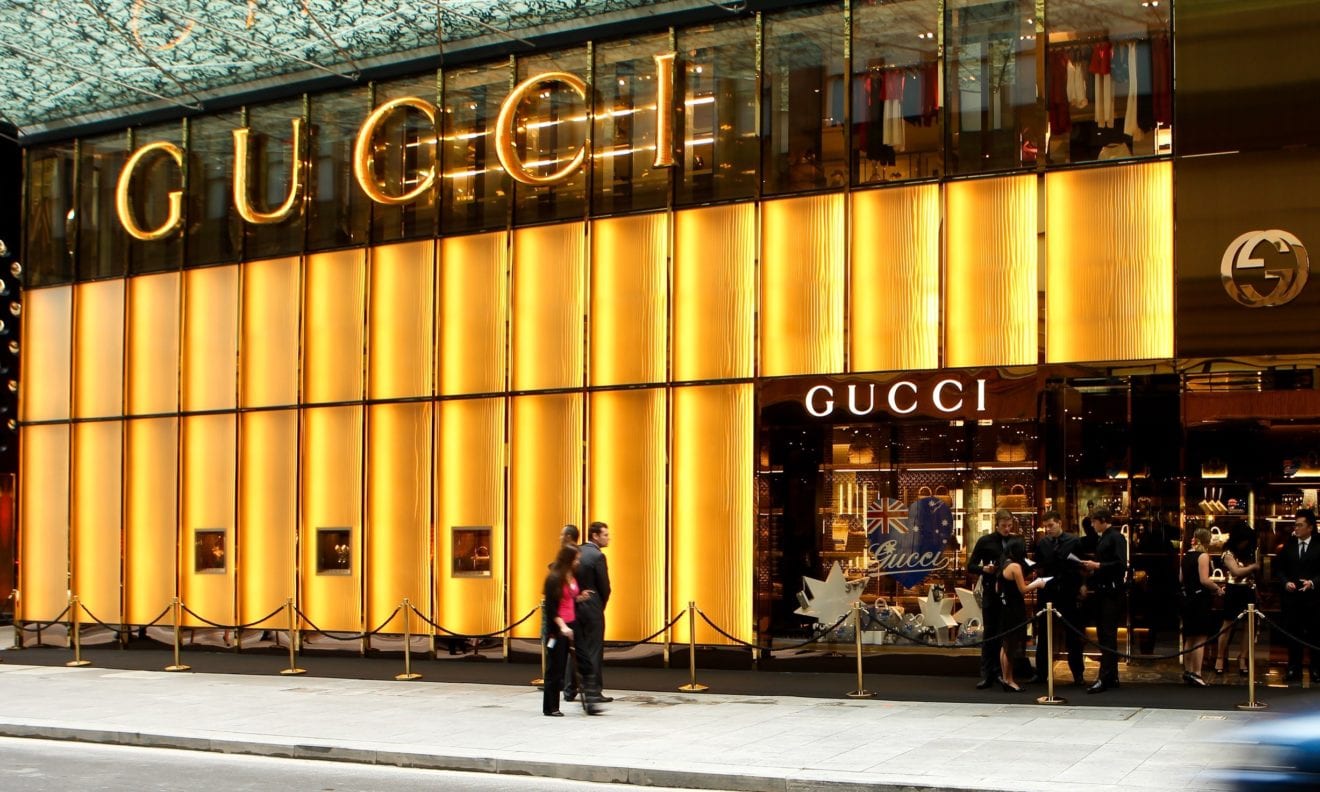
    Gucci’s Harbour City store has been closed for disinfecting after three staff members fell ill with measles within the last week.

    A Harbour City spokeswoman told that store staff advised mall management about the infections last evening and the Canton Road store was closed early.  Gucci’s office at Ocean Centre has also been closed.

    “We are carrying out thorough disinfection and extra cleaning throughout the mall,” the spokeswoman said. “The two washrooms near the store have also been temporarily suspended for disinfection and cleaning.”

    Hong Kong health officials are on high alert as the territory has witnessed a rapid escalation in the number of measles cases reported in recent weeks. Last year, 15 people were reported to have contracted the highly infectious disease, but already this year there have been 73 cases, including 29 people working at Hong Kong International Airport.

    According to the SCMP, the first Gucci staff member, a male aged 30, became ill last Tuesday after flying to Tokyo. He is now back in Hong Kong and recovering in hospital.

    The second and third victims, both women aged 25, have since developed symptoms and are also recovering in hospital.

    The incubation period of measles lasts from seven to 21 days before symptoms are obvious.

    None of the three staff had worked at other Gucci shops and none of their family members have developed symptoms.

  • Hong Kong online retailers ‘ignoring’ Gen Z consumer needs

    Hong Kong online retailers ‘ignoring’ Gen Z consumer needs

    Hong Kong online retailers are ignoring Gen Z consumers, according to a new report on the local payments market by unified commerce platform Tofugear and financial technology firm Wirecard.

    The research found that the territory’s e-commerce sites are not catering to Gen Z consumers when it comes to the payment options they offer.

    In contrast to older millennial and Gen X consumers, credit-card ownership rates among this demographic – those born between 1997 and 2012 – are low. As a result, one in three Gen Z consumers (35 percent) prefer to make online purchases via a cash-on-delivery option.

    The Digital Payments Landscape in Hong Kong 2019 report finds that while Hong Kong online retailers such as Zalora are already catering to this trend, they are in the minority as only around 5 percent of all retailers in the territory offer a cash-on-delivery option for online purchases.

    “Retailers should ignore Gen Z at their own peril,” says Tiffany Lung, retail analyst at Tofugear.  “Much focus has been on millennials, but the consumer behaviors of Gen Z are radically different – particularly when it comes to payment preferences. They think traditional payment methods are as lame as Facebook.”

    Digital wallets such as AlipayHK are also an important means of transaction for this young demographic, with 86 percent using this payment method – typically for purchases of less than HK$500.

    “Rather than passively waiting for years to qualify for a credit card like millennials have done, Gen Z has been much more proactive,” says Lung. “They have turned to digital wallets to solve the barriers they face when it comes to in-store and online payments. I believe this habit will stay with them as they come of age.”

    Based on a survey of 1000 Hongkongers, the report compares the payment habits of Gen Z, millennial and Gen X consumers and finds that while many perceive Hong Kong to be a laggard when it comes to smart payments, there is a genuine willingness to adopt new payment methods such as digital wallets – regardless of the consumer’s age.

    “After years of complacency, the payments ecosystem in Hong Kong is finally waking up to the fact that cash might be knocked off its throne – or at least see its dominance challenged by a plethora of new payment methods,” says Lung.

    Alongside the consumer survey, key players in Hong Kong’s digital payment industry were interviewed including Google Pay, Octopus Card, TNG FinTech Group, BBPOS Merchant Services, as well as online retailers such as Zalora and SkyMart.

  • Australian dollar slides Again

    Australian dollar slides Again

    The Australian dollar has fallen Tuesday, buying 69.45 US cents from 69.75 US cents on Monday.

    Yesterday, the local currency lost ground as the stalemate in Sino-US trade talks clouded the outlook for the Asian giant in its demand for resources.

    The Aussie dollar slipped 0.4 percent to 69.75 US cents on Monday and ever closer to the recent four-month trough at 69.60 US cents.

    China is a major buyer of commodities from Australia so any threat to its trade is considered a potential negative for the currency.

    Investors also use the Aussie as a liquid proxy for China plays, in this case shorting it as well as the yuan.

    Joseph Capurso, a senior currency strategist at CBA, noted that Washington was due to release a “Section 232” report into the national security implications of car imports this week, which could give President Donald Trump more ammunition in his trade disputes.

    “Global stock markets, and global growth-sensitive currencies such as AUD and NZD, may be hit by fears a ‘trade war’ will spread,” Capurso said.

    “Europe, Japan, Korea, and Mexico are major exporters of cars to the US.”

    The Aussie also faces domestic hurdles from data on wages and jobs due this week, where any sign of weakness would fuel wagers on a rate cut by the Reserve Bank of Australia.

    The central bank last week emphasized that further improvement was needed in the labor market to bring unemployment down and lift inflation.

    Wage figures for the first quarter are due on Wednesday and are forecast to show modest growth for the year.

    The jobs report on Thursday is expected to show 14,000 net new hires in April, with the unemployment rate ticking up to 5.1 percent.

    “Downside surprises will raise pricing for a rate cut as soon as June,” added Capurso.

    “The AUD can drop more than one US cent if the labor data disappoints.”

    The futures market implies around a 63 percent chance of a quarter-point cut in July and is almost fully priced for a move in August.

    Yields on three-year bonds are already well below the 1.5 percent cash rate at 1.26 percent, and only just above record lows.

    Three-year bond futures were up one tick at 98.750, while the 10-year contract rose one tick to 98.2700.

  • Volkswagen Plans To Produce Batteries In Germany

    Volkswagen Plans To Produce Batteries In Germany

    Volkswagen will invest almost 1 billion euros ($1.1 billion) in battery cell production at a facility in western Germany and is seeking to simplify the group by spinning off or selling units, the automaker said on Monday. Volkswagen said in a statement after a supervisory board meeting it would set up the battery facility in Lower Saxony under a partnership and would also begin talks on a planned new multibrand plant in Europe. The statement confirms a Reuters report earlier on Monday, on the eve of the company’s annual general meeting.

    Battery cells are a key battleground in the automotive industry as it shifts to electric mobility. Currently the industry chiefly sources its requirements from Asian manufacturers. Volkswagen also said it was looking into options for its MAN Energy Solutions business, which makes large diesel engines for ships and power generators, as well as transmissions maker Renk, including joint ventures, partnerships, a full or partial sale.

    Reuters reported earlier this month that Volkswagen had approached several companies to gauge their interest in buying MAN Energy Solutions, which is expected to achieve a valuation of about 3 billion euros in a potential sale. The moves are part of Volkswagen Chief Executive Herbert Diess’s efforts to slim down and simplify the group which has 12 brands, trucks, buses, motorbikes, cars and electric bicycles as part of its business.

    “Given the ever greater complexity of our industry and the related challenges, it is essential to focus on our core business,” Supervisory Board Chairman Hans Dieter Poetsch said. Volkswagen also said it would resume preparations for an initial public offering (IPO) of its trucks unit Traton, which it put on hold in March due to volatile market conditions.

  • Singtel full-year profit falls 44%

    Singtel full-year profit falls 44%

    Singtel Group has reported a 44% slump in net profit for the financial year ending in March, partly as a result of lower contributions from the group’s regional mobile associates.

    Net profit declined to S$3.10 billion ($2.26 billion), despite revenue remaining stable at S$17.37 billion, and growing 4% in constant currency terms.

    But the bottom line was impacted by an exceptional gain last year arising from the divestment of a 75% stake in NetLink Trust – the company established by Singtel to deploy Singapore’s national broadband network.

    Losses at Indian mobile associate Airtel, a lower contribution from Indonesia’s Telkomsel, and the erosion of revenue from carriage services also contributed to the decline.

    During the fourth quarter, Singtel’s wholly-owned Australian subsidiary Optus reported a 10% increase in revenue, while Singtel’s domestic Singapore business reported 1% higher revenue and 5% higher ebitda.

    “We have executed well to our strategy amid tougher industry, business and economic conditions. The fundamentals of our core business remained strong,” Singtel Group CEO Chua Sock Koong said.

    “We gained market share in mobile across both Singapore and Australia led by our product innovations, content and services that were well-received by customers. Our digital businesses Amobee and Trustwave continued to deepen their capabilities and to scale. Looking ahead, we will accelerate our digitalization efforts to drive better customer experience and improve productivity and cost structure by transforming our processes.”

  • Spotify introduces Instagram-like Stories

    Spotify introduces Instagram-like Stories

    Back in 2016, Spotify teamed up with song lyrics database Genius to bring “Behind the lyrics” annotations to the Spotify app. They appeared as cards and displayed interesting tidbits about various songs, sourced from the Genius platform. Now, Spotify has decided to outright launch a dedicated “Storylines” feature that allows the artists themselves to share behind-the-scenes insights on their songs.

    Similar to Instagram Stories, Spotify’s implementation gives artists complete freedom to share interesting facts about the process of making songs. Storyline cards will appear peeking from the bottom of the Now Playing screen, allowing you to pull up on the card and read it while listening to the song. The card will disappear after some time, though you can stop it from going away by pressing and holding on the screen. Spotify Storylines may be made up of numerous cards containing text, lyrics highlights, and images. Tapping the right side of a card will move to the next part of the story while tapping the left will go back.

    Storylines are going live in the latest update for the Spotify app (version v8.5.5.853, to be exact). Seeing as how the feature is still in its infancy, not many artists seem to be using it. Give it a couple of weeks, though, and you’re sure to see those cards start popping up in songs all over the place.

  • Indonesia’s Kimia Farma eyes Growth into Vietnam

    Indonesia’s Kimia Farma eyes Growth into Vietnam

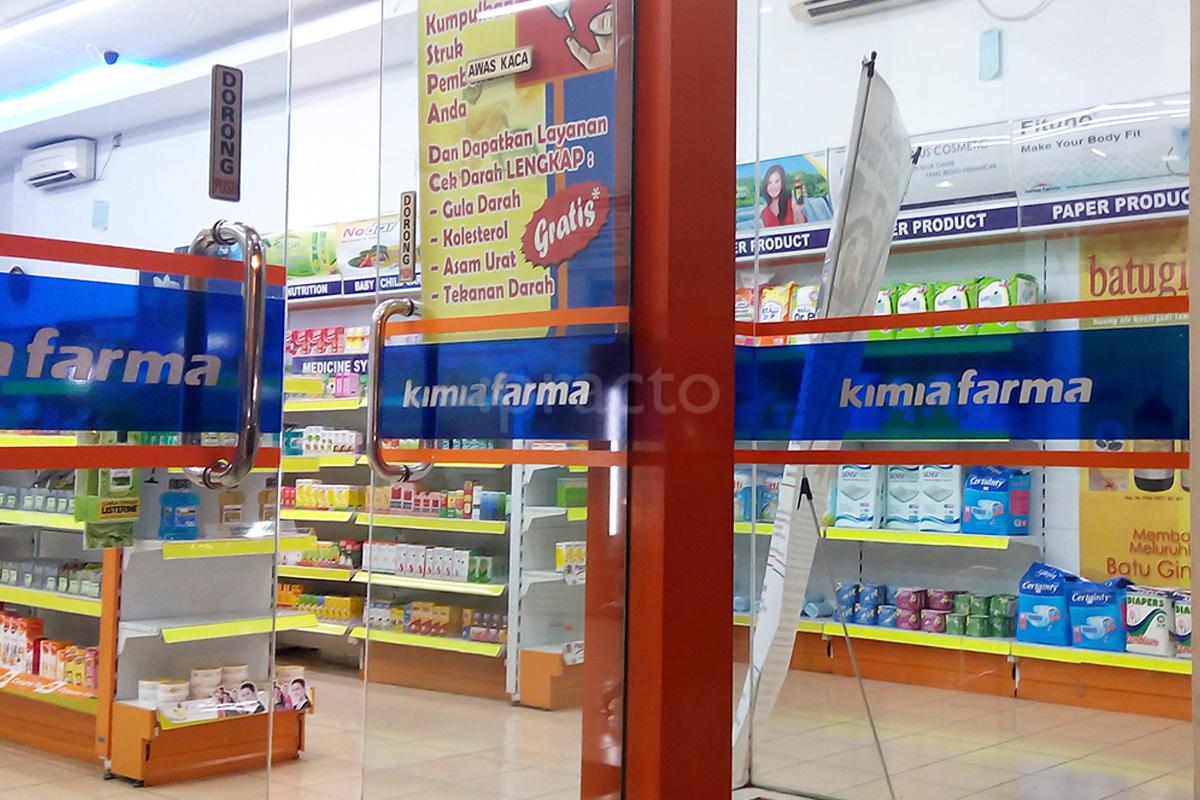
    Indonesian state-owned pharmaceuticals firm Kimia Farma is considering expanding into Vietnam by acquiring a local company. The firm recently invested US$10.26 million in a Saudi Arabian firm, purchasing 60 percent of its shares and renaming it as Kimia Farma Dawaa.

    It is currently investigating Vietnamese regulations to discover whether or not it can own a majority stake in a local firm, a critical factor in securing its investment.

    “It depends on the regulation in the country,” said Kimia Farma finance director IGN Suharta Wijaya. “It the regulation is okay, we will enter the country this year.”

    “If the sales of each Kimia Farma outlet in the country is IDR1.5 billion ($104,877) per month, [the sales of an outlet of the Vietnamese company] could be IDR4 billion per month,” Wijaya added.

    Investment in the pharmaceutical industry is stepping up in Vietnam, with the announcement last week that Vietnam-focussed private equity firm Mekong Capital has issued funding to pharmacy chain Pharmacity.

    With 186 outlets retailing both traditional Vietnamese and Western medicines, Pharmacity is the country’s most widespread network of pharmaceutical products stores, with 1 million subscribers to its loyalty program. The firm is targeting 1000 outlets in Vietnam within two years.

    Reportedly, Kimia Farma is seeking to buy a chain with 400 outlets nationwide.

  • Facebook’s Opens Lawsuit against an app developer

    Facebook’s Opens Lawsuit against an app developer

    Kettle, meet pot. Or perhaps we should say, man bites dog. Either way, it symbolizes news announced on Friday by Facebook. The company, which faces an FTC fine of $3 billion to $5 billion for allegedly using members’ personal data without consent, filed a lawsuit against a company for doing the same thing. The suit was filed this past Friday in California Superior Court for the County of San Mateo against a South Korean company called Rankware.

    Rankware is an app developer; the company and its apps have been suspended from Facebook. Despite the suspension, it appears that the company still has in its possession some Facebook user data. In the suit, Facebook asks the court to demand that Rankware delete the user data it obtained and hints that the defendant might have sold this information to other firms. The social networking company says that Rankware refuses to say who it turned over the user data to, and would not “[p]rovide a full accounting of Facebook user data in its possession.”  The filing adds that while Rankware had agreed contractually to follow Facebook’s rules, it “failed to comply with Facebook’s requests for proof of Rankwave’s compliance with Facebook policies, including an audit.”

    The filing goes on to note that since 2014, Rankware has been “us[ing] Facebook Pages data associated with its apps for its own business purposes, which include providing consulting services to advertisers and marketing companies.” The filing claims that the defendant has generated $9.8 million by selling Facebook members’ user data to advertisers. The social networking firm sent a cease and desist letter to Rankware earlier this year, and while the developer said it did not violate Facebook’s terms of service and policies, it would not provide any proof of this.

    “By filing the lawsuit, we are sending a message to developers that Facebook is serious about enforcing our policies, including requiring developers to cooperate with us during an investigation.”

    The suit says that Rankware’s actions harmed the reputation, public trust and goodwill of Facebook. It seeks an injunction that would prevent Rankware from accessing Facebook’s platform, force the South Korean developer to show proof of its compliance, and delete any user data that it obtained in violation of Facebook’s rules. Despite asking the court to award it financial damages and any money that Rankware received “unjustly,” Facebook says that money isn’t enough to make up for the harm caused by Rankware’s actions.