Blog

  • Consumers willing to pay a premium for 5G

    Consumers willing to pay a premium for 5G

    Despite concerns surrounding the commercial proposition of 5G technology, smartphone users are willing to pay an average of a 20% premium for 5G services, according to Ericsson.

    The company’s latest ConsumerLab report on the 5G consumer potential finds that half of the early adopters would be willing to pay as much as 32% more for 5G.

    But consumers’ willingness to pay a premium for 5G is reliant on operators introducing new use cases and payment models and providing a consistently high uplink and downlink speed, the report finds.

    Meanwhile, 5G is expected to drive usage behaviors that also promise to increase revenues. The study finds that 5G is expected to significantly increase video consumption, both by enabling streaming in higher resolutions and through the increased use of augmented reality, virtual reality, and other new formats.

    Ericsson predicts that one in five smartphone users’ data usage could reach more than 200GB per month over 5G devices by 2025.

    Consumers also expect that 5G will bring additional benefits such as reducing network congestion in dense urban areas and introducing more home broadband choices.

    Based on the research, Ericsson ConsumerLab has drawn up a consumer roadmap of 5G use cases involving 31 different applications and services.

    These applications are divided into six categories – entertainment and media; enhanced mobile broadband; gaming and AR/VR applications; smart home and fixed wireless access; automotive and transportation; and shopping and immersive communications.

    “Trough our research, we have busted four myths about consumers’ views on 5G and answered questions such as whether 5G features will require new types of devices, or whether smartphones will be the silver bullet for 5G,” Ericsson Research head of ConsumerLab Jasmeet Singh Sethi said.

    “Consumers clearly state that they think smartphones are unlikely to be the sole solution for 5G.”


  • Apple looks to open its first store in India

    Apple looks to open its first store in India

    India is a great place for certain phone manufacturers to sell their products, and for others, it is a contradiction that is hard to figure out. With approximately 1.4 billion people in the country, it is the second largest smartphone market in the world after China. But with a per capita income in the country of $1,670 as of 2016, the consumers in the country usually favor lower priced handsets. That explains the success that Xiaomi, with its value for money policy, has had in the country.

    Apple’s business in India has been driven by demand for lower-priced models like the discontinued iPhone SE. To avoid a 20% tariff on imported phones, Apple had manufactured the iPhone SE in India and still produces older devices such as the iPhone 6s and iPhone 7 in the country.  Starting this year, it will also manufacture some of its high-end handsets in the region. Contract manufacturer Foxconn is said to be running quality tests of the iPhone XR in India with mass production of the device expected to start soon.

    More than ever, Apple is looking toward India to generate sales in light of the troubles the company has had over the last year selling iPhones in China. But business now is not booming. Research firm Canalys recently reported that during the first quarter of 2019, iPhone shipments in India declined by 75% year-over-year leaving the firm with just 1% of the country’s smartphone market. But Apple CEO Tim Cook is optimistic. He said during last week’s earnings call that “We have made some adjustments in India and we’ve seen preliminarily some better results there.”

    To help generate sales in India, Apple is planning to open its very first retail store in the market. Expanding the local production of iPhone models in the country is expected to help pave the way for government approval of India’s first Apple Store. The green light could come at the end of this month or early next month when a new government takes over in the country. Canalys analyst Rushabh Doshi says that opening a store before the launch of the 2019 iPhone models later this year will help Apple “restart its Indian growth story.” Doshi says that Apple is caught in a bind in India. On one hand, it wants to lower its prices in order to compete with the likes of Xiaomi and Vivo, but it also wants to maintain its “premium” image.

    “India is a very important market in the long term. It’s a challenging market in the short term, but we’re learning a lot. We plan on going in there with sort of all of our might.”-Tim Cook, CEO, Apple

    Still, last month Apple cut the price of the “more affordable” iPhone XR in the country by 17,000 rupees (equivalent to $244 USD). That phone is now priced in India for 59,000 rupees ($846 at current exchange rates).

    Apple is apparently planning to open its first Apple Store in India at one of several upscale locations in Mumbai, according to anonymous sources cited in the report. Apple will decide on the exact location in the next few weeks. No matter which location it selects, the Indian Apple Store will be in a prestigious area of the country comparable with Apple’s Fifth Avenue store in New York City, the Regent Street location in London and the store on the Champs-Elysees in Paris. This might be part of the game plan designed to keep promoting the iPhone as a premium device in India. But again, for Apple to succeed in the country, it will have to be mindful of its pricing.

  • Apex Legends is coming to mobile

    Apex Legends is coming to mobile

    Respawn’s wildly successful battle royale shooter, Apex Legends, is likely getting a mobile version, EA revealed in its quarterly earnings report. Unsurprisingly, the game was a huge hit and turned into “the fastest-growing franchise we’ve ever had,” the report says.

    During today’s call, the publisher said that it has entered “advanced negotiations to bring Apex Legends to China and to mobile.” This is a strategy that both PUBG and Fortnite—Apex Legends’ biggest competitors in the battle royale genre—followed to great results, so it’s no wonder that EA is looking to replicate their success and keep Apex’s momentum going.

    Fortnite’s approach is unique, however, as it is essentially the exact same game across mobile devices, consoles, and PC, which allows for seamless cross-platform play, while PUBG’s mobile outing is a separate entity that’s limited to smartphones and tablets. Unfortunately, it is yet unclear which approach EA is planning to take with the mobile version of Apex Legends, or when the game is going to release. Seeing as how the publisher has entered an advanced stage of negotiations to port the title to mobile devices, we might see something by the end of this year, though it depends entirely on how scalable the experience is going to be.

    Respawn Entertainment, the game’s developer, further added that it is committed to “updating the game with seasonal updates, with a focus on the quality of content over novelty or speed of release.” This seems to be in an attempt to address complaints that the game is not getting enough new updates.

  • Jaguar Land Rover Sales Decline Last Month

    Jaguar Land Rover Sales Decline Last Month

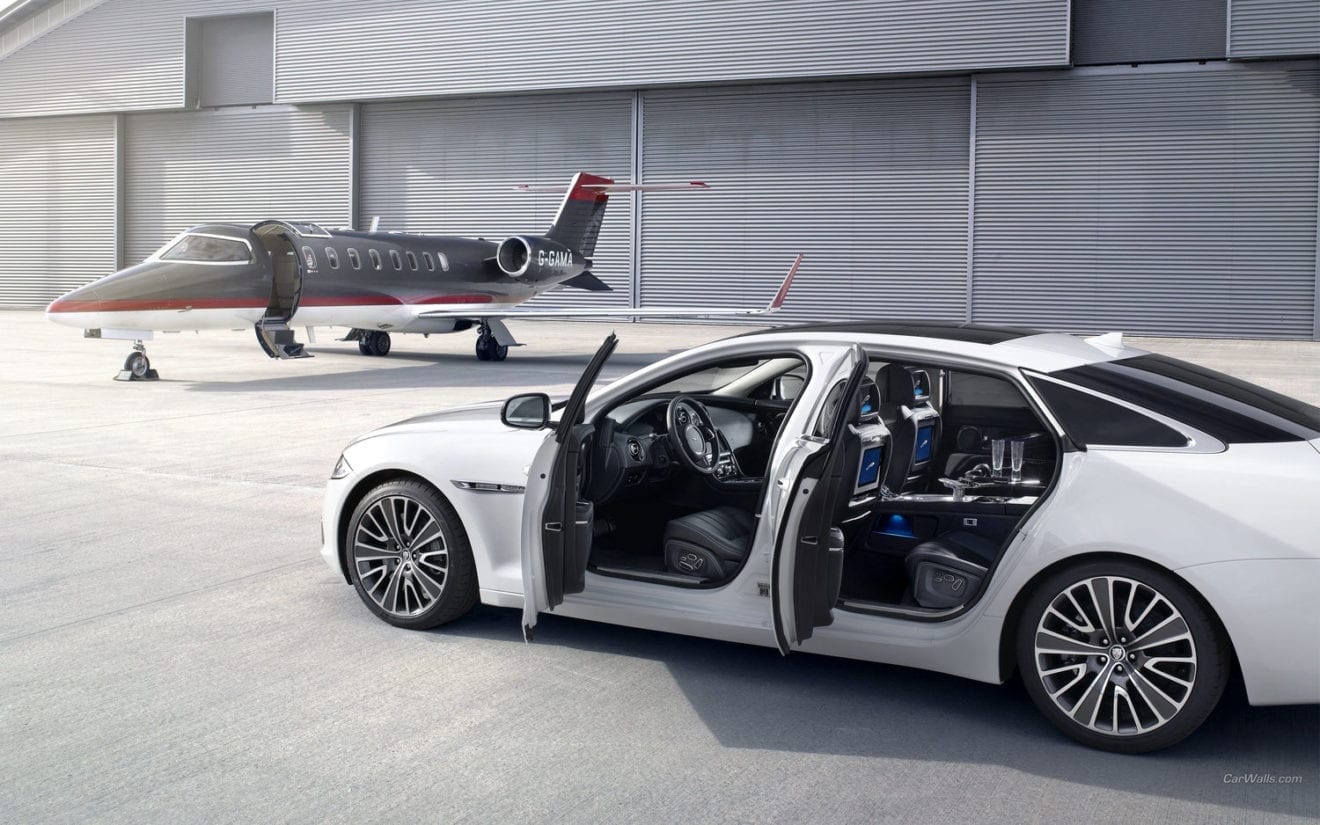
    UK-based auto giant Jaguar Land Rover (JLR) has posted a decline of 13.3 percent in sales for April 2019. The Tata Motors-owned automaker sold 39,185 units last month, a sharp decline in year-on-year volumes when compared to April 2018. The carmaker attributed to the weak demand for its vehicles largely due to the subdued market conditions in China. JLR, did, however, stated that sales of the new Jaguar I-Pace electric SUV and the new generation Range Rover Evoque continued to be encouraging during this period. Markets like the US and the UK also showed impressive growth last month.

    Felix Brautigam, Jaguar Land Rover Chief Commercial Officer, said, “Although this was a tough month for us due to continuing pressures in China, we are delighted to see good growth in the UK and the US. Once again we strongly outperformed the UK market and the US marked its best-ever April sales. This reflects the strength of our brands and continued demand for our unique and evolving product line-up. This month was a historic milestone for Jaguar, with the all-electric Jaguar I-PACE winning an extraordinary hat trick of awards – the 2019 World Car of the Year, World Car Design of the Year and World Green Car – which no car has ever done before.”

    He further added, “This is in addition to scooping the European Car of the Year and the China Green Car of the Year 2019 trophies, to name just a few of the accolades for the I-Pace. We continue to be encouraged by the market response to this incredible vehicle.”

    Retail sales increased in the UK by 12.1 percent, while in North America were raised by 9.6 percent. However, sales in China saw a dramatic drop of 45.7 percent. Sales in overseas markets also slowed down by 22.3 percent with retails in Europe down by 5.5 percent.  Jaguar retail sales in April 2019 stood at  11,462 units, a drop of 13.7 percent year-on-year, while Land Rover sold 27,723 units last month, a drop of 13.1 percent over the same period last year.

    Between January and April 2019, Jaguar Land Rover’s total retail sales stood at 198,101 units, down by 9.1 percent compared to the same period last year.

  • Thai AirAsia parent Q1 operating profit halves

    Thai AirAsia parent Q1 operating profit halves

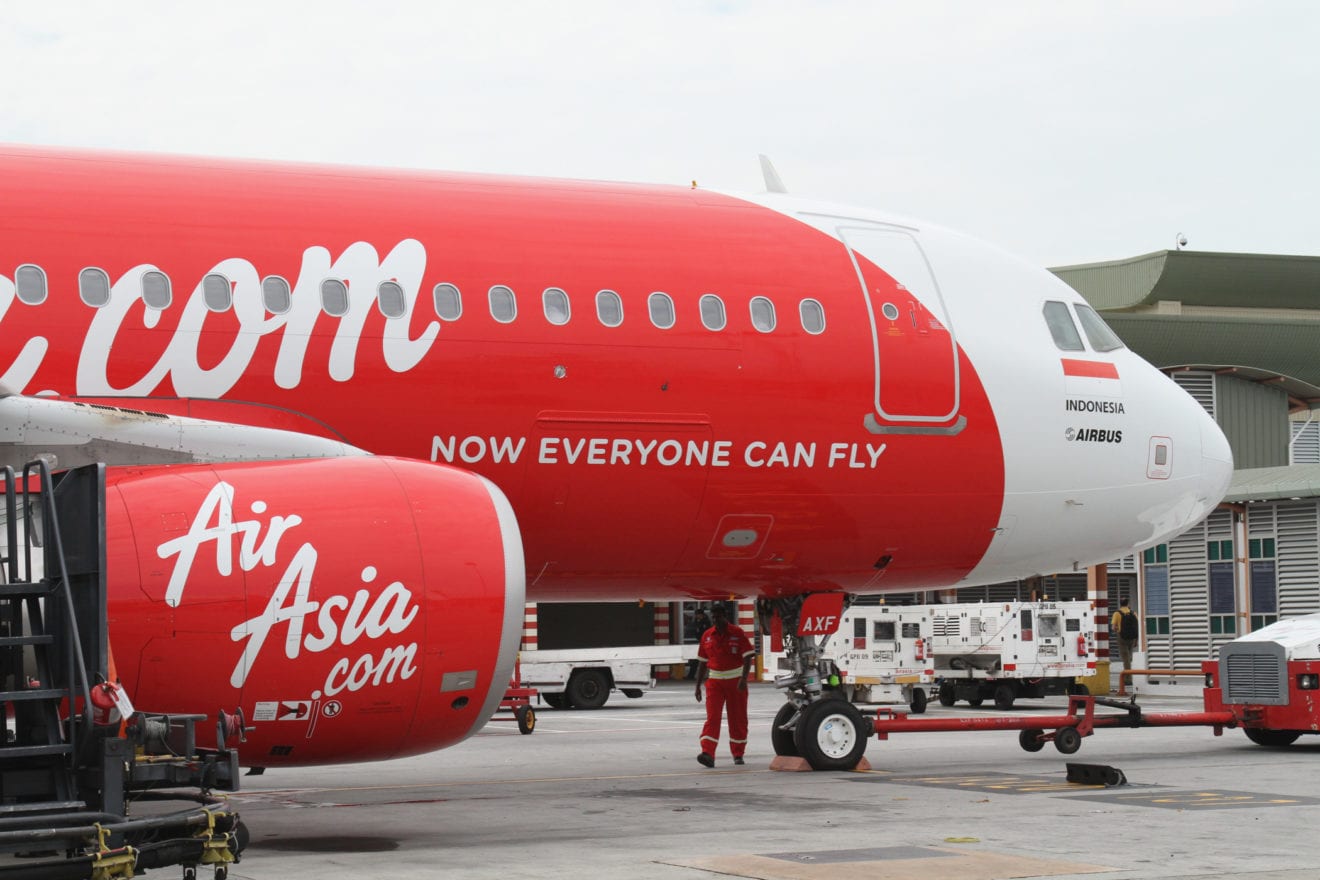
    Revenue for the quarter ended 31 March was flat at Bt11.6 billion, but expenses rose 10% to Bt10.5 billion. Net profit fell 50% to Bt497million. The company says that fuel costs rose during the quarter, as did airport and MRO costs. Despite this, the carrier’s CASK was flat compared with a year ago at Bt1.53 due to a 10% increase in ASKs and a longer average stage length.

    RPKs grew 9%, while load factor was flat at 91%. The carrier’s average fare for the first quarter was Bt1554, down 7%.b Cash and cash equivalents were Bt4.1 billion on 31 March, down from Bt5.97 billion a year earlier.

    In its outlook, the carrier notes that international trade frictions could hurt the global economy and affect exchange rates.

    “As the company has revenues and expenses in various different currencies such as passenger fares, repair, and maintenance as well as aircraft rental, the company has adopted the practice of natural hedging by matching cash expenses and revenues in the same currency as practically possible,” it says.

    It believes that global crude prices could fall in the second half of the year, but has hedged 52% of its 2019 fuel conception at cost of $80 per barrel.

    It adds that Thailand’s tourism industry will remain strong in 2019. It plans to add new routes later this year from Bangkok Don Mueang to new Vietnam destinations such as Can Tho and Nha Trang, as well as the addition of a Chiang Mai-Da Nang service.

    It plans two Cambodia services, Bangkok Don Mueang-Sihanoukville, and Phuket-Phnom Penh. In addition, it will add a Bangkok Don Mueang-Ahmedabad service.

    “This diversified strategy tends to minimize the risk of dependence on the major customer base, enhancing the company and Thai AirAsia’s sustainable revenue growth in the future and maintain its leading low-fare airline in Thailand,” it says.“In 2019, Thai AirAsiamaintains a target of 23.15 million passengers, with a solid load factor at 86%, and plans to acquire more energy efficient aircraft during the year to bring its fleet to 63 aircraft.”

  • Cebu Pacific Q1 profit more than doubles

    Cebu Pacific Q1 profit more than doubles

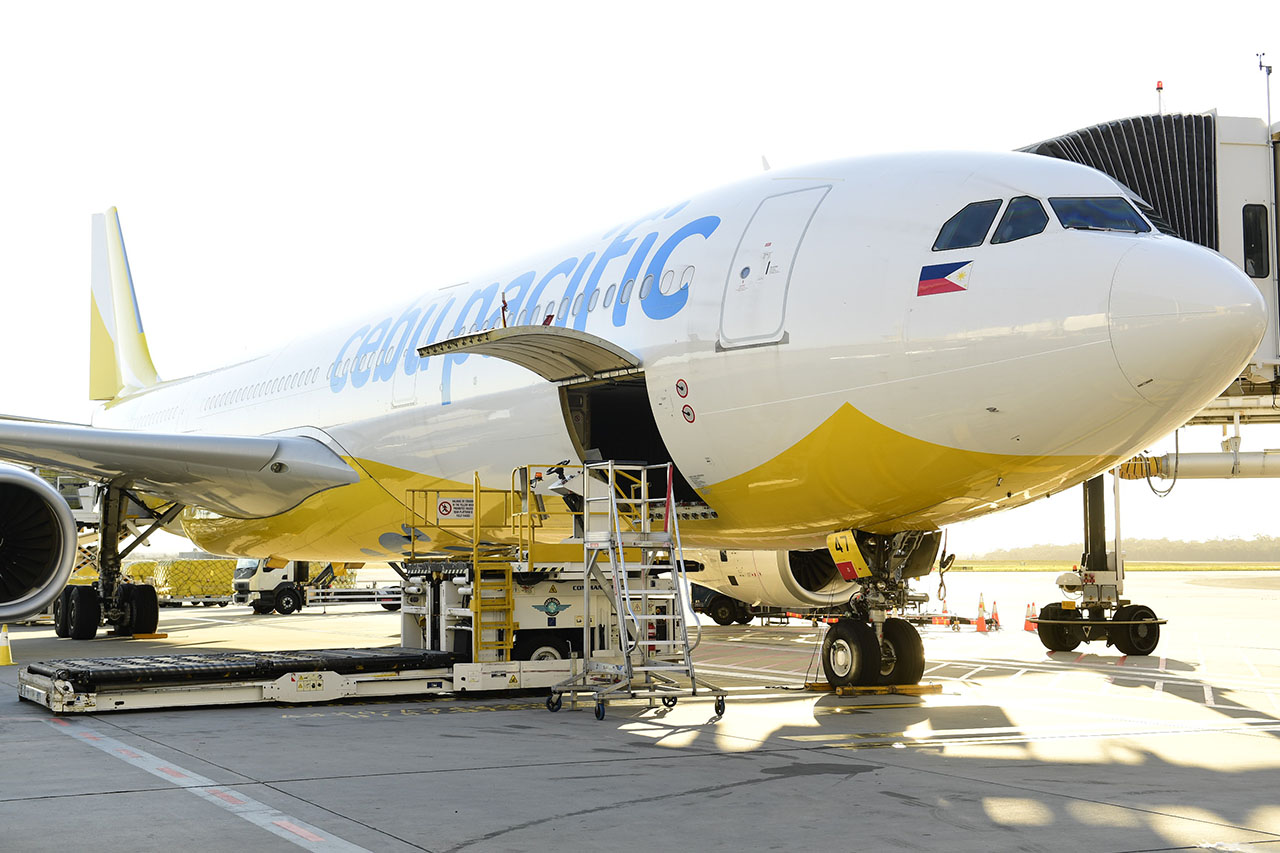
    Budget airline Cebu Pacific saw profit in the first quarter of the year more than doubled on strong demand and as fuel costs, which weighed on earnings in 2018, eased during the period.

    Cebu Pacific, owned by the Gokongwei family’s JG Summit Holdings, said in a stock exchange filing that net income from January to March this year hit P3.43 billion, up more than 138 percent compared to the same period in 2018.

    The airline, which signaled its intention to expand aggressively this year, also saw total revenues hit P21.18 billion, up 16 percent. Most of this came from passenger ticket sales, which rose 14.6 percent to P15.68 billion. Cebu Pacific, which recently took delivery of newer planes such as the next-generation A321neo, saw passenger volume increase 8.5 percent to 5.3 million. Average fares also ticked higher to P2,965, an increase of 5.7 percent.

    The airline also improved cargo revenues by 12.7 percent to P1.44 billion as well as ancillary revenues, which increased 22.7 percent to P4.1 billion.

    As noted, the carrier’s bottom line was propped up by the 4.3-percent decline in oil prices, a major operating expense.

    The company’s flying expenses alone rose 3.8 percent to P7.17 billion mainly as it ramped up operations.

    Overall, operating expenses went up 8.4 percent to P17.34 billion.

    “The increase was driven by its expanded operations, growth in seat capacity from the acquisition of new aircraft and the weakening of the Philippine peso against the US dollar,” Cebu Pacific said in its filing.

  • OCBC Cycle 2019 Expands On Green Initiatives

    OCBC Cycle 2019 Expands On Green Initiatives

    The eleventh edition of OCBC Cycle featured new initiatives associated with the environment, adding on to those implemented last year.  About 6,800 cyclists, ranging from casual riders to competitive athletes, participated in the OCBC Cycle event held on Sunday. The event’s eleventh edition expanded on its green initiatives from previous years.

    Cycling is a green sport.  I am especially glad that, this year, we have planned seven new initiatives associated with OCBC Cycle for the environment. Some are modest in scope, but it is our belief that every small thing we do matters, said Samuel Tsien, Group CEO of OCBC Bank in a media statement.

    Last year, OCBC Cycle engaged the help of the Singapore Sports Hub to recycle the plastic bottles that thirsty cyclists use by the hundreds. With the increased focus on environment conservation efforts, OCBC Cycle retained the bottle-recycling arrangements and expanded on its green initiatives this year.

    These include stopping the usage of single-use plastics in its event pack, replacing trophies for the OCBC Cycle Speedway Championships with reusable steel tumblers and used plastic containers into useful items, such as tote bags and furniture.

    Our event banners will be repurposed to make useful items such as tote bags; we will compost all fruit peels to make fertilizer.  Our goal is to work with the Singapore Environment Council to be the first event in Singapore to achieve the ‘Eco Event’ certification, added Tsien.

  • Instagram test designed to make users more trusting of content

    Instagram test designed to make users more trusting of content

    When Instagram first launched, it was known for the filters that users could apply to their photos, which would then be shared among members. The company was acquired by Facebook in 2012 for a reported $1 billion. Instagram is not as well known as Facebook is for inflaming the passions of subscribers by spreading fake news and political propaganda. Still, a report published says that steps are being taken to prevent the dissemination of false posts over the platform. Instagram is currently running tests with fact checkers.

    Facebook currently employs 52 firms that it has partnered with to conduct fact checks. If content found on a particular Facebook post is proven to be false by one of the fact checkers, the post’s distribution through users’ news feed is reduced. And not surprisingly, Instagram’s policy is basically the same. Stephanie Otway, a spokesperson for the app says, “Our approach to misinformation is the same as Facebook’s — when we find misinfo, rather than remove it, we’ll reduce its distribution.” That means flagged posts will be removed from the Explore tab and the hashtag result page, but it will stay up on the author’s page. That limits the readership of these polarizing posts to those who have made a decision to subscribe to authors who disseminate such information.

    But there is a big difference between the two sites. The content on Instagram is not nearly as news-oriented as it is on Facebook, especially since the platform doesn’t have hyperlinks inside captions or member comments. Thus, the hysteria is more subdued than on Facebook where a single lie could turn millions of members into a foaming at the mouth crazy. So unlike Facebook, photos that are fake won’t be labeled and there will be no warning shown to Instagram members who want to share these images.

    “We all know any kind of images and pictures are a main driver of misinformation in any platform. Alerting those who share (false posts) like they do on Facebook would be best. But perhaps it is only the beginning of their actions there, I suppose. Even though there are plenty of problems regarding misinformation inside Facebook’s many platforms, they are still the ones who are taking the combat of misinformation more seriously.”-Tai Nalon, Director Aos Fatos

    Lees ook:

  • City proposal to slap luxury tax on mobile phones raises hackles

    City proposal to slap luxury tax on mobile phones raises hackles

    HCMC’s proposal to impose a special consumption tax on mobile phones has drawn protests from experts, who said they are not a luxury product. Dr. Nguyen Thanh Binh of the Ministry of Planning and Investment’s Institute of Policy and Development said the proposal should be carefully considered since no other country levies a luxury tax on mobile phones.

    The nature of such a tax is to hit luxury goods or discourage consumption of goods that use up foreign currency for imports or harm the environment or human health, he explained.

    “We have to ask ourselves whether mobile phones are essential or luxury, and what effect it has on the environment and health.”

    Mobiles are now ordinary goods used by everyone, he said.

    The city people’s committee has recently sent to the Ministry of Finance suggestions for a draft proposal on “expanding the tax base and preventing erosion of state revenues.”

    It said mobile phones are not luxury goods but not “very essential” either, and so it wants to regulate consumption to ensure it is “reasonable.”

    It also called on lawmakers to add items such as cameras, perfumes, cosmetics, gaming services, and beauty services to the list of items subject to special consumption tax to target the population segment with above-average income.

    Binh queried this rationale saying the city can simply use income tax for this.

    Nguyen Duc Nghia, chairman of Ho Chi Minh City Tax Agents Club, an association of tax consultants, said the mobile phone has become a commonplace product used by everyone.

    Therefore, a luxury tax would not have the effect of taxing only wealthy individuals and would instead affect everyone, he said.

    Truong Thanh Duc, chairman of Basico law firm, said special consumption tax is normally levied on luxury goods and those that are harmful or which the government wants to discourage people from using.

    In fact, in a quickly developing economy, this tax should be eliminated on many goods since what were once luxury goods gradually become essential items as people become more affluent, he pointed out.

    “Thirty years ago mobile phones were a luxury item but not taxed. Now it has become a popular item, with the number of telephone subscribers equaling the population. Levying a luxury tax on such a good is far from reasonable.”

    Up to 73 percent of the population uses mobile phones, on which 42 percent use smartphones and 50 million people use mobile social media, according to a report by Vietnamese digital advertising firm Adsota earlier this year.

  • Vietnam makes its very first 5G phone call

    Vietnam makes its very first 5G phone call

    Vietnam’s first 5G phone call was made Friday on the network of Viettel, the country’s largest telecommunications company. The trial called, made publicly with the participation of the Ministry of Information and Communications, showed that the speed of Viettel’s 5G mobile network connections reached 1.5-1.7 Gigabits per second, far exceeding the theoretical limit of the 4G network and equivalent to the speed of optical cable.

    Viettel said it will expand the test to Hanoi and Ho Chi Minh City, the nation’s two biggest cities, and expects to launch the commercial service in 2020. The military-run company said it is looking at many pricing plans for commercial 5G services.

    Minister of Information and Communications Nguyen Manh Hung, who led Viettel earlier, said the event marked Vietnam as one of the earliest nations in the world to successfully test the 5G network, after the U.S., Australia, Japan, and South Korea.

    “We all want to take the lead in the fourth industrial revolution and develop information and communications technology so that Vietnamese locals and businesses can compete in the global economy, and therefore, the earlier we launch the 5G service, the better,” he said.

    Viettel became the first firm to receive permission to trial 5G services in January. It was followed by MobiFone.

    Last November, Hung said at a conference that Vietnam should test 5G in 2019 and ensure nationwide coverage by 2020.

    “Vietnam should be one of the first countries to launch the network, at least in Hanoi and HCMC,” he had said. The country had been one of the last in Southeast Asia to roll out 4G services.

    5G is the latest generation of mobile Internet connectivity and should offer much faster speeds and more reliable connections on smartphones and other devices compared to the current 3G and 4G technologies.

  • Ferrari Considering Netflix And esports Involvement

    Ferrari Considering Netflix And esports Involvement

    Ferrari is considering engaging with Netflix on a second Formula One documentary as well as joining the rest of the 10 teams in the esports world championship, team boss Mattia Binotto said on Friday. Ferrari and champions Mercedes did not cooperate on the successful ‘Drive to Survive’ 10-part fly-on-the-wall series filmed by Netflix last season, arguing that they needed to focus on the title battle. When their cars or drivers did feature, it was from the official world feed television footage.”It’s certainly an interesting program. We were not participating last season as Ferrari,” Binotto told reporters at the Spanish Grand Prix, the fifth round of the 21 race championship.

    “We are considering it at the moment. We have not taken our final decision, so it’s something we will do in the next few weeks.”

    Formula One’s managing director Sean Bratches said this month that he expected a second series to go ahead, with filming already underway. Ferrari is the only ones without a presence in the official F1 esports championship, which is in its third season and involves the teams only later in the year. Mercedes won both titles last year, as in the real world.

    Binotto said Ferrari’s stance on that could change as well.

    “Esport is increasing in terms of interest and certainly as Ferrari, we are looking seriously into it,” he said.

    “We are not yet fully committed to the program but it’s something where the discussions are ongoing and we will very soon make our own decision.”

  • 2020 Skoda Superb Facelift Global Debut End of May

    2020 Skoda Superb Facelift Global Debut End of May

    The Superb is the flagship in Skoda’s portfolio and it is planning to present the 2020 facelifted model to the world on a special occasion. IIHF Ice Hockey World Championship is a grand affair for the Czech carmaker and it has signed up for the 27th time as its lead sponsor and will supply 50 fleet cars for the event. Skoda will also seize the opportunity to unveil the 2020 Superb Facelift on May 23, 2019, on the quarter-final match day.

    Pulling off a surprise, Skoda may also introduce the Superb Facelift with a new plug-in hybrid powertrain which was expected in the next-generation model. For the first time in history, Skoda will be offering a hybrid model and we are expecting it to borrow the powertrain from the Volkswagen Passat GTE. The same 1.4-liter, turbocharged TFSI petrol motor which powers the Audi A4 is expected to be coupled with an electric motor in the upcoming Skoda Superb. We have seen the same powertrain earlier at the 2016 Auto Expo in the Volkswagen Passat GTE plug-in-hybrid variant in which it develops 212 bhp and 400 Nm of peak torque. The 2020 Skoda Superb is likely to get it in the same state of tune.

    The car has already been spotted testing and design modifications on the new model will be rather subtle. The front bumper will get a wider air dam along with slightly muscular overhangs and the rear bumper will be revised as well. Moreover, new elements such as full-LED headlamps and new daytime running lights (DRLs) will also be on offer. Expect the rear to have the new widespread Skoda badging instead of the logo.

  • Cebu Pacific’s income jumped 138% to P3.4b in first quarter

    Cebu Pacific’s income jumped 138% to P3.4b in first quarter

    Cebu Air, the operator of low-cost carriers Cebu Pacific and Cebgo, said net income jumped 138.4 percent in the first quarter from a year ago, on the back of strong passenger and cargo revenues. The airline unit of the Gokongwei Group said it posted a net income of P3.4 billion from January to March, up from P1.4 billion it earned in the same period last year. Revenues increased 16 percent in the three-month period to P21.17 billion from P18.26 billion it generated a year earlier.

    Passenger revenues increased 14.6 percent to P15.67 billion from P13.67 billion. The increase was attributed to the 8.5-percent growth in passenger volume to 5.289 million from 4.876 million last year as the group added bigger A321 aircraft to its fleet. The average fare went up 5.7 percent to P2,965 in the first quarter from P2,805 a year ago, contributing to the higher revenues. Cargo revenues grew 12.7 percent to P1.44 billion from P1.279 billion following the increase in both yield and volume of cargo transported in 2019. Operating expenses went up 8.4 percent to P17.34 billion from P15.997 billion a year ago.

    Cebu Air said the increase was driven by expanded operations, growth in seat capacity from the acquisition of new aircraft and the weakening of the Philippine peso against the US dollar. The peso depreciated to 52.36 per US dollar in the first quarter from an average of 51.49 a dollar last year. Flying operations expenses increased 3.8 percent to P7.173 billion from P6.910 billion.  “This was mainly accounted for by the increase in pilot training costs,” CEB said. Fuel expenses also went up as the fuel volume increased by 7.9 percent in the quarter.  The MOPS price of fuel slightly went down to $76.50 per barrel in the first quarter from $79.99 a barrel in the same period last year.

  • Huawei’s first phone with a pop-out camera is Out

    Huawei’s first phone with a pop-out camera is Out

    Over the past year or so Huawei has welcomed the notch with open arms. Nowadays, though, most companies are looking for ways to remove it and, as it turns out, Huawei is no different

    Called the Huawei P Smart Z, the company’s latest smartphone represents both it’s newest offering in the budget segment and its first attempt at an all-screen device that includes no notch or cutout.

    Targeting fans of massive displays, the P Smart Z arrives equipped with a huge 6.6-inch LCD display that boasts a 19.5:9 aspect ratio and a Full-HD+ (2340 x 1080p) resolution. As you’d expect, the huge panel is paired with uniform bezels, the only exception being the chin which is slightly thicker. Also present is a pop-out camera, thus marking the first time Huawei has used such a feature.

    Hidden inside the mechanical module is a 16-megapixel selfie camera that offers an f/2.0 aperture. This is paired over on the rear with a vertically-aligned dual-camera setup. Speaking of which, this includes a 16-megapixel f/1.8 camera paired with a dedicated 2-megapixel depth sensor. Also present is an LED flash.

    While on the topic of the rear, it’s worth pointing out that the Huawei P Smart Z follows in the footsteps of Google’s Pixel devices by adopting a dual-tone rear. But rather than using different materials or textures, Huawei has simply opted for slightly different colors.

    Regarding the internal characteristics of this smartphone, the P Smart Z is equipped with a modified version of the Kirin 710 dubbed the Kirin 710F alongside a respectable 4GB of RAM and 64GB of internal storage. Also present is Android 9 Pie straight out of the box along with the EMUI 9.0 overlay and a large 4,000mAh battery.

    The Huawei P Smart Z can be purchased right now in Italy or Spain for €279. Presumably, sales will eventually expand to other internal markets, but these details are yet to be confirmed.

  • Skoda India Opens Its Largest Workshop Facility In Coimbatore

    Skoda India Opens Its Largest Workshop Facility In Coimbatore

    Skoda Auto today announced opening a new workshop facility in India in association with SGA Cars India, in Coimbatore, Tamil Nadu. The new facility is Skoda Auto’s largest workshop in the country and is spread across 49,585 sq. ft. of the premium service area, equipped with 50 bays, and a capacity to serve 20,000 vehicles per annum. The service workshop also has more than 40 dedicated aftersales personnel, and the company says that it has been built in line with Skoda’s new corporate identity and design.

    Skoda India feels that the new modern workshop facility will further strengthen its position in Tamil Nadu, and help the company achieve a strong foothold in the southern markets. Inaugurating the new state-of-the-art service facility, Zac Hollis, Director – Sales, Service and Marketing, Skoda India, said, “Skoda Auto India is set to strengthen its presence in the southern markets of our nation. The dimensions of the new facility are a reflection of the region’s potential for the brand. We are confident that our partnership with SGA Cars India will play an important role, in scaling up the brand, by offering our patrons a hassle-free ownership experience and utmost peace of mind.”

    Commenting on their partnership with Skoda, Arputharaj, Dealer Principal, SGA Cars India said, “We are delighted to partner with Skoda Auto India to introduce our newly designed workshop facility. The state-of-the-art service infrastructure and optimized business processes will enable us to deliver an unmatched service experience. The advancement of Skoda makes us more confident and committed to our valued customers.”

    Skoda India currently has a network of 64 sales and 62 service outlets across the country. However, as part of its ‘INDIA 2.0’ project, Skoda Auto plans double its dealer network across 50 new cities, over the next 3 years, to further increase the accessibility of the brand. As for some of its customer initiative programmes, the company recently also introduced ‘EasyBuy’, an assured introductory 57 percent buyback value programme for the Skoda Superb model range, at the end of the three-year contractual term. This is in addition to the company’s existing Skoda Shield Plus plan which offers motor insurance, 24×7 roadside assistance, and an extended warranty for all Skoda cars.