Blog

  • Facebook is building a Voice Assistant

    Facebook is building a Voice Assistant

    Sometimes it feels like Facebook has no awareness of its public perception at all. There are already proven stories about how Facebook has been gathering more data than they claim and using that data in ways you might not expect. There are conspiracy theories that Facebook is spying on users and listening to conversations.

    Even so, Facebook built the Portal – a camera that follows you around your room for video chats – and now there are reports that Facebook is building its own voice assistant to compete with Google, Alexa, Siri, and Cortana (and Bixby, if you want to be a completionist about it). The Facebook Portal actually uses Alexa for voice commands, but it seems Facebook has been working on its own voice assistant. Ex-employees from Facebook told that a team in Facebook’s augmented reality and virtual reality group has been quietly working on the project since early 2018.

    There’s no indication of how Facebook would position the assistant, whether in the Facebook app itself or more as a replacement for Alexa in Portal hardware (assuming that hardware line continues.) It’s also unclear how far along Facebook is in building the assistant or even where it’s getting the voice data it would need to build the voice recognition piece.

    Also unclear is whether or not anyone actually wants a Facebook voice assistant. The Portal cameras have been failures by all accounts. Facebook’s last attempt to make a human-powered assistant (M) failed as well. Add to that the general erosion of trust in Facebook, it’s hard to imagine how the company could sell a product that actually does listen to you at all times.

  • AirAsia India Offers Up To 70% Discount On Flight Tickets

    AirAsia India Offers Up To 70% Discount On Flight Tickets

    AirAsia India is offering up to 70 per cent discount on flights tickets, according to the airline’s official website – airasia.com. Bookings under the sale – valid for travel between October 1 and June 2 – can be made till April 28, 2019.
    AirAsia India’s latest offer is applicable on all destinations, the carrier said on its website. The discount is available on selected fare classes and non-peak periods only. In order to avail AirAsia’s offer on flight tickets, customers need to book flight tickets in advance, according to the airline. How to avail AirAsia’s discount on flight tickets:

    1. Pick the preferred AirAsia flight for departure and arrival.

    2. Select the dates stated in the promo travel period.

    3. Choose the preferred flight.

    4. You would get up to 70 per cent off on base fare or 20 per cent discount on premium flatbed category.

    Value pack and premium flex bundled category, DJ carrier code flights and QZ carried code domestic flights are not included in the offer, the airline noted.

    Meanwhile, rival GoAir is offering domestic flight tickets at a starting all-inclusive price of Rs. 1,375 in a limited-period sale, according to the airline’s official website – goair.in. Bookings under the sale – valid for travel till August 31, 2019 – can be made till April 25, 2019.

    IndiGo, on the other hand, has announced six additional daily direct flights from Delhi. The new flights by IndiGo will be operated to and from Allahabad, Bhopal and Patna, with effect from May 25.

    SpiceJet has also announced the introduction of 24 new flights on its domestic network. The daily direct flights introduced by the airline will be operated to connect Mumbai and Delhi with other cities.

  • The North Face shuts down stores

    The North Face shuts down stores

    Outdoor retailer The North Face closed its global headquarters and more than 100 stores in the US and Canada on Monday, April 22, as part of its effort to make Earth Day a global holiday.

    The store closures are the culmination of The North Face’s Explore Mode campaign, which saw the brand partner with musicians, artists and culinary influencers on pop-up events throughout the US.

    The move follows a campaign launched four years ago by fellow US outdoor retailer REI to shut its stores and website on Black Friday and instead encourage customers to #optoutside.

    Before closing its bricks-and-mortar stores in North America, The North Face switched them to Explore Mode, so customers could find resources to spend Earth “off the grid”, including an exploration kit filled with “analog gear to stay present and capture memories without the need for digital devices”.

    “We believe that when people take time to appreciate the Earth, they feel more connected to it and are more likely to protect it,” Tim Bantle, global general manager of lifestyle at The North Face, said.

    “Explore Mode urges us to unplug from our digital lives to connect in real life to the world, each other, and ourselves in the effort to move the world forward.”

    Petition to make Earth Day global holiday

    The North Face was one of 16 organisations, including global brands like Clif and S’Well, that launched a petition with Change.org earlier this month to make Earth Day a national holiday everywhere.

    At the time of this writing, more than 128,600 people had signed the petition, which has a goal to reach 150,000.

    Other retailers, such as Tapestry Inc, also took the opportunity of Earth Day to announce sustainability initiatives.

    As part of its new corporate responsibility goals, the parent company of Coach, Kate Spade and Stuart Weitzman plans to reduce its greenhouse gas emissions by 20 per cent, water usage by 10 per cent and waste in its North American corporate arm by 25 per cent and recycle 75 per cent of its packaging by 2025.

    The company also aims to source 90 per cent of the leather it uses from eco-friendly tanneries and achieve 95 per cent traceability of its raw materials to ensure a transparent supply chain.

  • JD takes major stake in Five Star Appliances

    JD takes major stake in Five Star Appliances

    Chinese online retailer JD is to buy nearly half the shares in electrical goods retailer Jiangsu Five Star Appliance, for US$189 million. Jiayuan Chuangsheng currently holds 93 per cent of the Five Star business and after divesting a 46 per cent stake to JD will remain its largest shareholder with 47 per cent.

    Analysts say the investment will allow JD to boost its online profile and provide consumers with a network of about 300 Five Star Appliance storefronts, in much the same way as archrival Alibaba is building physical retail networks in Mainland China, blurring the boundaries between online and offline retailing.

    With stores primarily located in central and southern China, Five Star Appliances has annual sales of about US$2.7 billion.

    Last year, JD accounted for nearly 40 per cent of China’s home appliance sales, making it the largest retail in the space. Partnering with a brick-and-mortar retail network is likely to boost sales for both parties and protect JD from fast-growing Suniung.com which now accounts for 30 per cent of the market. Tmall is also building a share of the appliance sector, its sales now nudging 25 per cent.

  • TPG-led Group to buy stake in APM Monaco

    TPG-led Group to buy stake in APM Monaco

    American private equity business TPG Capital Management is heading an investment collective to acquire 30 per cent of Hong Kong jeweller APM Monaco.

    While financial details have not been revealed, a person with knowledge of the transaction suggested that the firm’s valuation stands at about US$800 million.

    TPG’s investment will be channelled through a private equity fund it has previously established to focus on Asian investments, which controlled more than $4.6 billion in committed capital as of last February.

    APM Monaco operates around 200 outlets in 26 countries, the majority located in Europe.

  • Google gives more options for Call Blocking

    Google gives more options for Call Blocking

    Google has had the automatic spam call warnings available for a while now, to the point where many we know have simply begun ignoring calls when the Red Screen of Spam pops up on their phone. But, there have also been some missing options in terms of call blocking on Android. Google allowed for blocking specific numbers, but now there are even more options to let users block calls.

    Previously, the only option for blocking calls was to add numbers to a call block list from the Phone app’s Recent calls page, but now there are four new options for blocking calls. If you want, you can block all calls from numbers that aren’t in your contacts list, block calls from private or unknown numbers, or even block calls made from pay phones. That last one is a bit surprising because as mobile phones have taken over and become commonplace, pay phones have slowly been removed from public spaces. There are likely still places around the world with pay phones, but it’s been quite a long time since we’ve seen any in the U.S.

    Oddly enough though, the new options won’t be found in the Phone app. Instead, Google put the new options in the Contacts app all the way at the bottom of the Settings page, under the Manage contacts header. That will give you toggles for the new call block features as well as a list of numbers you’ve already blocked.

  • Change your Instagram password Immidiatly

    Change your Instagram password Immidiatly

    An updated entry made yesterday to a post on the Facebook blog reveals that the company left millions of Instagram passwords in a “readable format.” Originally, Facebook said that “tens of thousands” of Instagram customers were involved. Facebook says that normally its login systems are designed to “mask passwords using techniques that make them unreadable.”

    The good news is, if you believe Facebook, its investigation has shown that no one from inside or outside the company accessed these passwords. Of course, since Facebook updated its original blog post after one month increasing the number of passwords affected, who knows what they might say in another month?

    “In line with security best practices, Facebook masks people’s passwords when they create an account so that no one at the company can see them. In security terms, we ‘hash’ and ‘salt’ the passwords, including using a function called “scrypt” as well as a cryptographic key that lets us irreversibly replace your actual password with a random set of characters. With this technique, we can validate that a person is logging in with the correct password without actually having to store the password in plain text.”-Facebook

    Last month, Facebook admitted that it stored hundreds of millions of passwords in plain text dating back to 2012. At the time, it was estimated that 200 million to 600 million accounts had their passwords exposed to as many as 20,000 Facebook employees.

    Facebook purchased Instagram for approximately $1 billion back in 2012. The company suggests that subscribers to Facebook, Instagram or WhatsApp use two-factor authentication when signing in. Besides entering a password, a code is sent to the subscriber’s smartphone that is also required for a successful login. To set this up, go to the settings menu from your Facebook app and click on “Security and Login.”

  • YouTube Music free on Google Home smart speakers

    YouTube Music free on Google Home smart speakers

    Google has just announced that its YouTube Music service is now available on all Google Home smart speakers. Starting today, those who own a Google Home smart speaker will be able to enjoy all the benefits offered by the music streaming service, but there’s a catch.

    Only the first tier YouTube Music experience is available on Google Home smart speakers, which means you you’ll have to put up with ads. Still, if you don’t mind getting a free, ad-supported music experience on your Google Home, you just need to say “Hey Google, play techno vibes,” and your smart speaker should do the rest.

    But that’s not all, if you upgrade to YouTube Music Premium for $9.99/month, you’ll be getting even more control when listening music on smart speakers in the YouTube Music mobile app. For example, you’ll be able to request specific albums, songs, artists, and playlists on-demand.

    Also, you get access to easy-to-use player controls, including unlimited skips and song replay.Besides the benefits mentioned above, a YouTube Music Premium tier will also let you background play music through the YouTube Music app while using other apps, and allows downloads for offline listening when you’re on the move.

    To start using YouTube Music on your Google Home smart speaker, simply open Account Settings in your Google Home app, go to Services and select Music. Then, choose YouTube Music as the default music service, or you can choose YouTube Music as the default music service during the setup process.

    Now, the free service is available not available everywhere yet, so here are the first countries that will get it starting today: United States, Canada, Mexico, Australia, Great Britain, Ireland, Germany, France, Italy, Spain, Sweden, Norway, Denmark, Japan, Netherlands, and Austria. The good news is Google will bring it to more countries soon, so there’s that.

  • Consumer version of BBM closing in May

    Consumer version of BBM closing in May

    BBM, considered the first messaging service designed for mobile users, will be closing its doors to consumers on May 31st. A note sent to BBM members says that it is “Time to say goodbye.” First used internally by employees of BlackBerry parent Research In Motion, BlackBerry Messenger, as the service was originally called, was publicly launched on August 1st, 2005. For many, it was the main reason to purchase a BlackBerry device.
    With BlackBerry becoming irrelevant in the smartphone market and other messaging apps launching, then BlackBerry CEO Thorsten Heins announced in May 2013 that BBM would be made available to iOS and Android users later that summer. After some false starts (including a fake listing in the Google Play Store, and a leaked version), BBM for Android and iOS was officially released on October 21st, 2013.
    BlackBerry continued trying to play catch up by adding new features to the app including stickers. But outside of Indonesia, where it remains the top mobile messaging app, BBM was considered an afterthought compared to other, more popular apps.
    Three years ago, Indonesia based Emtek acquired the licensing rights to BBM for a six-year period. As part of the $207 million deal, BBM’s servers were moved from Canada to Asia.  While Emtek had the rights to the consumer version of the service, BlackBerry continued to run the enterprise version of BBM. And today, BlackBerry said that it is immediately making BBM Enterprise (BBMe) available to individuals through the Google Play Store and Apple App Store.  The service will be free for 12 months; after that period of time, a six-month subscription will cost $2.49.
    In its press release issued this morning, BlackBerry noted that it is offering BBMe to individuals out of respect for loyal BBM users. The company noted that it was not under any contractual obligation to do this.
  • AirAsia starts system to eliminate boarding passes for domestic flights

    AirAsia starts system to eliminate boarding passes for domestic flights

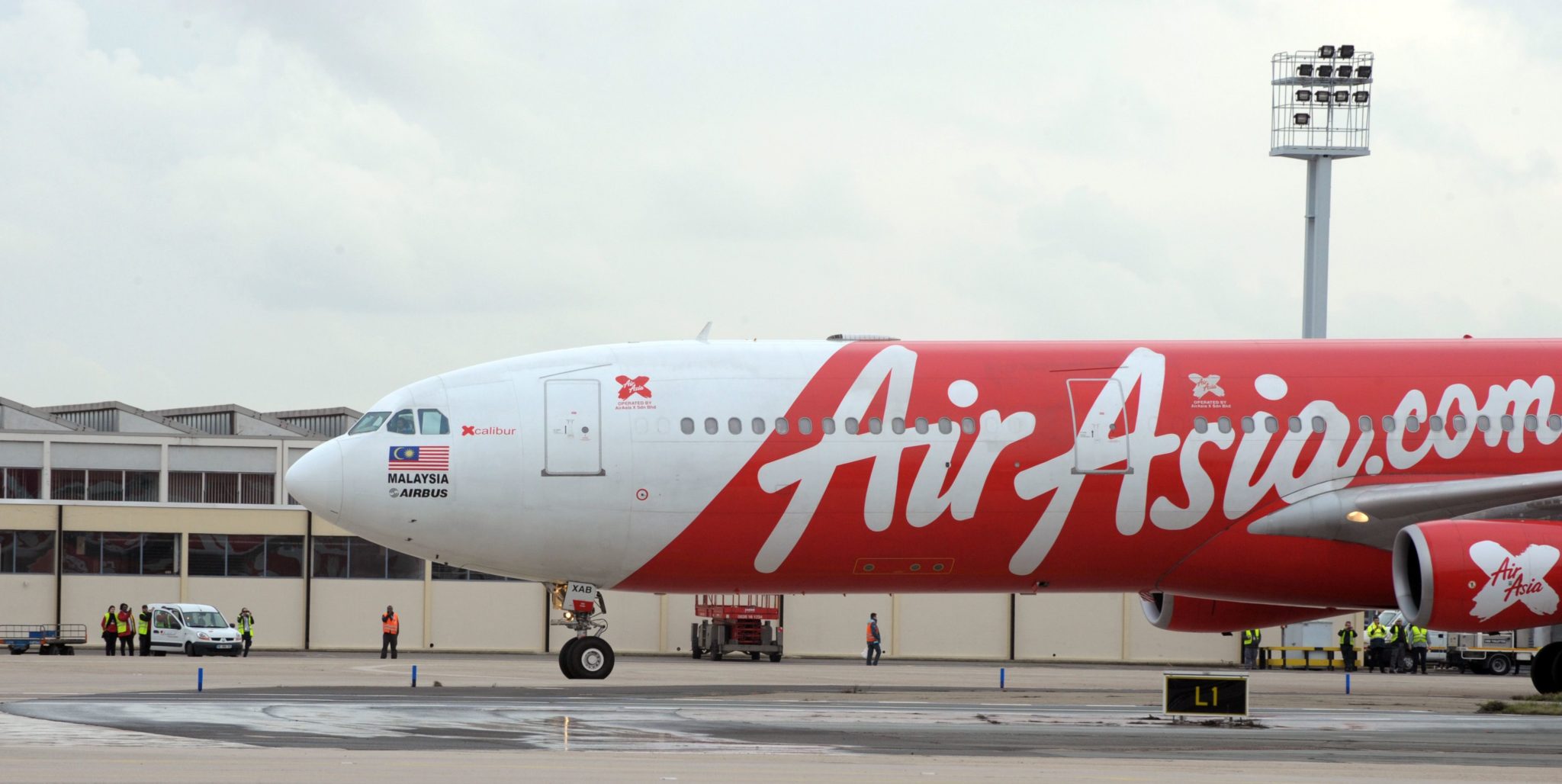
    AirAsia Group Bhd has introduced a one-time verification system for passengers via its FACES @AirAsia mobile app which is designed to eliminate the need for boarding passes and passports.

    FACES is a facial recognition boarding system owned and operated by AirAsia, with the purpose of creating a seamless travel process for guests.

    In a tweet today, AirAsia group chief executive officer Tan Sri Tony Fernandes said passengers will only have to register their faces and passports once on its @AirAsia mobile app.

    Once passengers have scanned their faces and passport details on the app, and AirAsia ground staff have verified them, the passengers will be able to travel seamlessly, he said.

    “Then you are ready to never use a boarding pass again and you can walk through our gates for domestic flights,” he said, adding that the facility is currently available in certain airports like Senai.

    “This can be rolled out in all airports if only we had partners who supported us and all our digital initiatives,” he said.

    This facility follows in the footsteps of British Airways’ (BA) biometric boarding gate trials last year in the US which eliminated the need for boarding passes and passports at boarding.

    Last November, BA began testing self-service boarding gates in Los Angeles Airport that did not require customers to produce either their boarding pass or their passport.

    Instead, passengers only need to look into a camera, wait for their biometric data to be checked against their passport, visa or immigration photos and then walk onto the plane once their identities have been verified.

    The trials were initially limited to those flying out of Los Angeles Airport on BA flights to Heathrow, but are now being tested at several other US airports.

    At 2.57pm, AirAsia rose 1.6% or 4 sen to RM2.53, with 4.29 million shares traded.

  • India’s Kurtees.com Makes Global Debut

    India’s Kurtees.com Makes Global Debut

    Seeking to differentiate itself from India’s crowded menswear space, KURTEES.com has made its global debut. Crafted from 100% Organic Jersey, KURTEES.com brings together traditional Kurtas (Tunics) and Churidars (Trousers) and infuses them with the feel and design of the everyday T-Shirt.

    “For me personally, both the Kurta and the T-Shirt have been go-to garments. There are elements of both that speak to me. The Kurta is quite diaphanous and therefore airy. The T-shirt, is soft, comfortable and has an ability to be paired with a variety of garments”, states Steven Jhangiani, CEO of STARANSA Clothing, parent company of KURTEES.com. “Being based in Singapore as well as Mumbai, I want a garment that is not overtly traditional and want to feel as comfortable wearing this garment from New Delhi to New York, that can take me from a Sunday Brunch to a casual Friday, and everywhere in between. KURTEES.com takes the Kurta, incorporates elements of casual street-style and utilizes familiar T-shirt necklines, Crew Necks to Turtlenecks, V necks to Henley’s, to create a garment that is totally unique yet recognizable”

    Taking advantage of India, and the worlds, growing interest in Organic fabrics, KURTEES.com works closely with suppliers in Tirupur to ensure full visibility into the supply chain, ensuring working conditions are fair and certifications on the fabrics are in place.

    “Organic fabrics, as we all know, have a variety of benefits, not only for the customer but for the farmers and the environment. It was hugely important for us to ensure compliance from our suppliers and to ensure that we were not using the Organic tag as simply a marketing tool and charging our customers extortionately. Our products are very affordably priced, and range from USD 19.50 to USD 31.60” states Jhangiani.

    In 2019, Indian e-commerce is expected to continue its rapid upward trajectory. KURTEES.com seeks to not only to take advantage of this growth but looks at the populous Indian diaspora as an equally important market, as well as those from other cultures that may be interested in an ultra-comfortable garment.

  • New Automotive Technology That Will Come in Handy

    New Automotive Technology That Will Come in Handy

    Automotive giants are working around the clock in developing new technology that will make driving safer and more pleasant for the passengers. The technology is advancing every day at a very fast pace. It seems like every new model that comes up, has something new to offer to the user. This technology is very delicate and must be tested much more thoroughly than any other.

    Brands like Mercedes-Benz, Volkswagen, Toyota, Tesla, Volvo, BMW, and many others are spending millions of dollars on developing and advancing the technology and the features that will make your driving experience much better. In this article, we are going to dig deeper into some of the new high-tech features that will be available on some cars in 2019.

    Steering Avoidance

    At this day and age, many automotive makers are trying their hand at developing driverless vehicles. This technology is so advanced and complicated that we will eventually see fully automated vehicles in the near future. They will have to face tough decisions that for now can be made only by human making. However, automotive makers like Lexus or Volvo are putting steering avoidance systems in their vehicles. This feature will analyze the road ahead and swerve in order to miss the object. This new feature can be at much help to the driver by making faster decisions in order to avoid a collision.

    PreSafe Sound

    This feature that some of the automotive companies like Mercedes-Benz are installing to their vehicles will help you protect your ears in a collision. In other words, the vehicle will play a sound of a particular frequency into the cabin of the vehicle milliseconds before the accident occurs. This will enable your ear to prepare for the loud noise of the crash, which apparently can prevent long term ear damage.

    Road Scanning

    The ride on some vehicles cannot be compromised by the road. So with this road scanning technology, vehicles can see any imperfections on the road and adjust the suspension in order to cope with the bumps. Currently, Mercedes-Benz is putting this feature in their cars and other manufacturers are testing it. With this feature, you will have the perfect ride anytime, anywhere.

    Apple CarPlay and Android Auto

    Vehicle manufacturers are trying to make their products more user-friendly as well as easier to interact with other devices. With Apple CarPlay and Android Auto, you can turn your vehicle’s information screen into the operating system of your phone. Of course, this will provide you with endless opportunities like music, navigation, contacts, messaging and much more. You just need to connect your phone and vehicle and use all the features that your phone has. Although, currently some manufacturers like BMW are offering it wirelessly.

    Wireless Charging

    Many devices from Apple, Samsung, and Google are equipped with wireless charging, that is allowing the vehicle manufacturers to make the center console wireless charging dock. The idea is very simple, yet very effective. You can avoid the sticking out cables and always charge your phone while you drive.

    Semi-Autonomous Driving

    As we mentioned earlier, most of the automotive giants are forcing future with driverless vehicles. Unfortunately, today’s technology vehicles can only support semi-autonomous driving. Truth to be told these vehicles are more automated than autonomous. This will allow you to keep your vehicle between the lines without steering input, as well as automatically accelerate or decelerate. This process will allow the driver to focus on different things while the driving is automated. The future of this technology is still in development and so many factors are in question that is complicated to comprehend.

    Digital Dashboard

    This feature has been in the air for a while, but only for some premium models. Now it seems that every vehicle in the future will have digital gauges. This enables for better visibility as well as user-friendliness. The dashboard has become like a tablet screen that can show many different things rather than the old one.

    These are some of the trending technologies for this year and they are pretty cool. The vehicles are advancing every mount that is hard to keep up. It is important to mention that all this technology comes at a price and now, besides the horsepower of the vehicle, there will be much more extra features that the customer will have to pay for, as well as the maintenance becomes much more expensive than before. More technology means that there is more stuff to go wrong. However, we should use that technology for safer and more enjoyable means of transport.

  • Acne Studios re-opens Tokyo Store

    Acne Studios re-opens Tokyo Store

    Fashion brand Acne Studios has reopened its Shibuya concept store in Tokyo to coincide with the launch of a new collection.

    The company, part-owned by Hong Kong fashion retail operator I.T Group, has released a new range of leather accessories at the Shibuya store in Tokyo, which since 2017 has been used to showcase new collections.

    The 68sqm “project store” was redesigned by Kasthall. Centrestage is a capsule collection which includes new versions of the brand’s two most popular bags, Musubi and Baker, as well as small leather goods, card holders, keychains and wallets.

    The collection will be on sale at the store for the next year.

    The majority shareholding of Acne Studios recently changed, with Oresund, Creades and Pan Capital funds stakes acquired by IDG Capital and I.T Group, reflecting a deliberate strategy to shift focus towards Asia.

    Hong Kong, South Korea and Japan each host a series of Acne Studio stores and there are shops in Beijing, China, with another scheduled to open in Chengdu this month.

  • Chris Pratt and Tumi centrestage at Pacific Place

    Chris Pratt and Tumi centrestage at Pacific Place

    Travel, business and lifestyle accessories brand Tumi will introduce its new campaign for Asia Pacific & Middle East starring Hollywood actor Chris Pratt at Tumi Loft Pacific Place.

    Chris Pratt and Tumi will launch their new collaboration in the region at Pacific Place in Hong Kong on April 30. It will be his first appearance with Tumi Asia Pacific & Middle East, described as “an immersive Tumi brand experience”.

    The new campaign will be unveiled at the event, which includes a journey film documenting preparations for his trip to Hong Kong.

    At the Loft, Pratt will also debut his virtual avatar on the new Tumi Club App. Guests will be able to download the app and use the new augmented reality feature to take virtual selfies with a lifelike Chris Pratt avatar at the Loft. In addition, Tumi Loft guests can use the technology to trigger a special Chris Pratt avatar animation by scanning his poster at the Tumi Loft Pacific Place entrance.

    “I’m blessed to have a job that allows me to travel so much,” said Pratt. “I’ve always trusted Tumi as my go-to luggage on my various trips around the world. I only ever promote products I actually use in real life. This makes Tumi a great fit. Tumi products are sleek, stylish, built to last and have long been my choice for luggage. I look forward to visiting Hong Kong for the first time to launch this special partnership with Tumi Asia and Middle East.”

    “We are thrilled to have Chris Pratt star in our newest campaign for Asia Pacific and Middle East with the iconic Alpha 3 and Alpha Bravo collections,” said creative director Victor Sanz of the Chris Pratt and Tumi partnership. “To us at Tumi, Chris represents a new age of leading men in Hollywood – bold and genuine. Combined with his international appeal, Chris’s personality truly speaks to our growing millennial fanbase.”

  • FCC may ban China Mobile from US market

    FCC may ban China Mobile from US market

    The chairman of the US FCC has urged the agency to reject China Mobile’s applications to provide telecom services in the US market on national security grounds, in the latest salvo in the telecom trade war between China and the US.

    Federal Communications chairman Ajit Pai has released a statement urging his fellow FCC executives to vote for an order that would deny China Mobile’s application during the scheduled vote at its May Open Meeting.

    “Safeguarding our communications networks is critical to our national security. After reviewing the evidence in this proceeding, including the input provided by other federal agencies, it is clear that China Mobile’s application to provide telecommunications services in our country raises substantial and serious national security and law enforcement risks,” Pai’s statement reads.

    “Therefore, I do not believe that approving it would be in the public interest. I hope that my colleagues will join me in voting to reject China Mobile’s application. ”

    The draft order proposed by Pai would stipulate that China Mobile has not demonstrated that its application is in the public interest, but more importantly it would assert that “China Mobile is vulnerable to exploitation, influence, and control by the Chinese government.”

    China Mobile first applied back in September 2011 for a license to provide facilities based and resale telecommunications services between the US and overseas destinations.

    After a long review of the application, agencies within the US government’s Executive Branch recommended in July 2018 that China Mobile deny that application, citing “substantial national security and law enforcement risks that cannot be resolved through a voluntary mitigation agreement.”

    The proposed objection comes the month after Chinese vendor Huawei revealed it was taking the US government to court over an order banning federal agencies from buying its products due to national security fears.