Blog

  • CIMB get permission for banking venture with Philippines

    CIMB get permission for banking venture with Philippines

    CIMB Group Holdings Bhd has obtained the green light to establish its investment banking business in the Philippines. In a filing with Bursa Malaysia, the group said its wholly owned subsidiary CIMB Group Sdn Bhd had on Jan 23 received the relevant approvals from the Securities and Exchange Commission of the Philippines, including the Certificate of Incorporation and Certificate of Registration for an investment house licence.

    The investment banking business in the Philippines will be operated via a 60% shareholding in CIMB Bancom Capital Corporation with the remaining 40% stake to be held by local partners Bancom II Consultants, Inc and PLP Group Holdings, Inc.

    The three parties have entered into a joint venture agreement following the receipt of the approvals.

    CIMB shares went down 1 sen or 0.2% to close at RM5.65 today on 13.4 million shares done.

  • Lotte Mart’s distribution fees scrutinized

    Lotte Mart’s distribution fees scrutinized

    Korea’s antitrust body is examining the practice of retailers unfairly shifting distribution costs to their suppliers. The Fair Trade Commission (FTC) has started evaluation proceedings against Lotte Mart for transferring this burden and charging an onward transportation fee after a product has been delivered. The regulator could fine the retailer 400 billion won ($353.92 million) if it is found to have violated the law. It has the authority to prosecute and punish companies that contravene the Fair Trade Act and other statutes related to anti-competitive practices.

    The FTC’s Distribution Division, which monitors the activities of retailers, submitted an evaluation report, equivalent to a prosecutor’s indictment, to the commission early last month. The document outlined Lotte Mart’s infractions over five years.

    Lotte Mart has until early February to respond.

    This will be the first time the FTC has taken action against a company for shifting distribution costs to suppliers. Lotte Mart’s practice of transferring the costs, commonly known as post-distribution costs, is widespread.

    The action comes amid FTC Chairman Kim Sang-jo’s drive to root out unfair practices in the retail industry.

    Lotte Mart’s shifting of post-distribution cost to suppliers is likely to have far-reaching implications in the industry as the practice is common.

    “When signing a contract, there are requests to supply products at a price three to five percent lower than the actual price to account for the post-distribution costs,” explained Mr. Lee, who operates a company that supplies to retail stores. “It’s not just Lotte. It is common for large retail stores such as Emart, Homeplus, department stores, convenience stores and even e-commerce companies, such as Coupang.”

    The 400 billion won fine, if charged, would be an unprecedented amount. If other companies are fined, the total sum could rise to the trillions.

    “Unlike sales promotion fees, distribution costs have to be paid,” said Mr. Kim, the president of a large food company. “We struggled as it’s impossible to know the exact figure, but the FTC took on this matter for the first time.”

    From the FTC’s perspective, large retail stores use distribution centers for their own benefit, and it is unfair to force suppliers to take on costs incurred after products are delivered to the centers.

    “Suppliers that just want to deliver to distribution centers are forced to deliver to branches,” explained a senior FTC official. “If the final delivery destination is a branch store, the supplier should be able to manage their products as they want at the distribution center, but that is not the case.”

    “From a common-sense perspective, distribution costs apply only until the delivery location, not costs after the delivery,” the official added.

    Other experts disagree with the FTC’s assessment.

    “If the retailer and supplier haven’t agreed on the location of the delivery, the supplier burdening the delivery cost abides by civil law,” said Lee Ho-young, a law professor who specializes antitrust law at Hanyang University.

    Lotte is going all out on its defense, hiring Kim & Chang’s fair-trade team to represent it.

    “In the past, when there weren’t distribution centers, suppliers used to be burdened with the distribution costs,” said a Lotte Mart official. “Post-distribution costs are paid after distribution centers were established.”

    The FTC is looking into other cases.

    “The retail business cannot work if post-distribution costs are shifted to retailers,” said an executive at a large retail company who is in charge of fair trade matters.

    The FTC could make a final decision as early as March.

  • Mainland China, US and Japan fuel I.T Group sales growth

    Mainland China, US and Japan fuel I.T Group sales growth

    I.T Group sales slipped in the company’s home market, but the fashion retailer is achieving high growth in Mainland China, the US and Japan. Unaudited sales data for the three months to November show an 8.5 per cent year-on-year improvement in Japan and the US and 6.8 per cent growth on the mainland. Hong Kong and Macau sales slipped by 1.8 per cent in the same period.

    Figures for the nine months to November are even better in the US and Japan, up 11.1 per cent, while sales growth in the home market reached 4.8 per cent and on the mainland 1 per cent.

    I.T Group operates its own brands, including Chocoolate and 5cm, concept stores Izzue and Double-Park; international brands it has local licences for including Kurt Geiger and Camper; and A Bathing Ape, which the company rescued from Japanese owners in 2011.

    Chairman Sham Kar Wai said “complex macroeconomic conditions” affected the business in all three regions during the third quarter.

    “Our Hong Kong and Macau operations registered negative same-store sales growth as a result of multiple typhoons, and weaker consumption appetite during the period. In contrast, our Mainland China business delivered positive same-store sales growth, and our Japan and  the US regions continued to progress on a positive trend.”

    He said the group continued to execute measures to safeguard its gross margin, including holding back discounting.

    “However, enhancements to gross margin was overshadowed by the negative impact of the depreciation of currencies of our merchandise purchase. As a result, gross margin decreased during the period.”

    Sham Kar Wai said the company has been even more cautious about the overall operating environment over the last few months, as the recent escalation of trade dispute between Mainland China and the US has cast “greater uncertainties on the future economic outlook”. “Moreover, the warm weather in Hong Kong and Macau may further weigh negatively on the consumer spending momentum across the region.”

  • Travel Food Services India introduces the futuristic robot – Mitri

    Travel Food Services India introduces the futuristic robot – Mitri

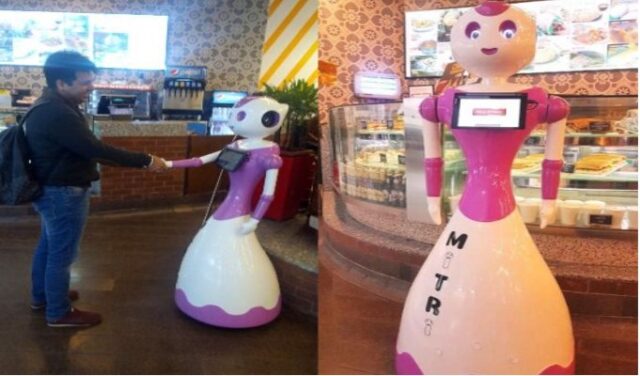
    Travel Food Services (TFS), India’s leading Travel Food and Retail Company, unveils the latest in technology – Mitri, the Robot, to make the experience of travellers interactive and fun. Mitri will be engaging with customers at TFS’s Dilli Streat outlet at Indira Gandhi International Airport, New Delhi, and is the first ever airport installation in the F&B segment.

    Visitors to the Dilli Streat outlet will be met and greeted by Mitri, who will facilitate activities and engage with them by providing menu detail. It would also be offering food recommendations. Mitri is a testament to Travel Food Service’s commitment of enhancing the travel experience in India, and presents a true example of how technology like Artificial Intelligence can help improve customer satisfaction, and drive productivity and sales.

    Commenting on the latest technology, Gaurav Dewan, COO and Business Head, Travel Food Services said, “We are always on the lookout for latest innovative technologies that can enhance the experience and satisfaction of our customers. We are extremely excited to present Mitri at our Dilli Streat outlet at the Delhi Airport. With Mitri being such an innovative and futuristic concept, and given her success, we are hopeful to bringing her to more outlets across India.”

  • Naver says it’s not interested in opening an internet bank

    Naver says it’s not interested in opening an internet bank

    Naver said Monday that it has no plans to launch an internet-only bank, shutting down rumors that the IT giant might open the country’s third such bank after K bank and Kakao Bank. “Although we have reviewed [joining] the internet-only bank business, we decided against it and will not attend the information session regarding internet-only bank licenses on Wednesday,” said a Naver spokesperson.

    “This is the decision we made after giving a lot of thought into whether Naver can be competitive when the domestic internet-banking environment is already so well established and existing internet-only banks K Bank and Kakao Bank are doing well.”

    The announcement comes as a surprise to the industry as Naver has been hailed as one of the likeliest candidates to qualify for a banking permit. Last month, financial authorities announced that they would grant internet-only bank licenses to up to two companies this May in an effort to boost competition in the banking industry. The information session, organized by the Financial Supervisory Service and Financial Services Commission, comes as part of the government’s effort to facilitate the application process.

    Despite government initiatives, however, no major company has yet to directly express an intention to apply for a bank license.

    Game developer NHN Entertainment and booking and shopping platform Interpark – which led a failed effort to apply for a permit in 2015 – have also said they don’t plan on pursuing internet-only banks.

  • Supermarket, apparel sales not looking good in Japan

    Supermarket, apparel sales not looking good in Japan

    Japanese supermarket sales edged down 0.2 per cent in a third consecutive year of declines, according to figures released by an industrial body this week showing last year’s financial performance. The data for last year shows sluggish consumption regardless of the country’s current period of economic growth. Observers have attributed the slump to a low demand for apparel in supermarkets relative to stronger sales in food.

    Apparel sales fell 5.3 per cent, the 27th straight year of declines, influenced by the warm winter and increased competition with retailers online. Food, by comparison, saw 0.4 per cent higher sales with an uptick in prices for vegetables and sweltering summer temperatures.

    While total sales rose 0.5 per cent to ¥12.99 trillion ($118.71 billion) last year, they still fell short of the hoped-for ¥13 trillion mark for the second year in a row.

    “Spending is weak as a deflationary mindset is still deeply rooted among consumers”, said Atsushi Inoue, a senior official of the Japan Chain Store Association.

  • Viettel gets one-year 5G trial license

    Viettel gets one-year 5G trial license

    Vietnam’s largest telecommunications company Viettel has received a license to trial its 5G services. The trial is licensed for a period of one year until January 21 next year. Viettel is the first company in Vietnam to receive this license. The military-owned company is allowed to trial the sevices in Hanoi and HCMC at not more than 73 locations and without charging for the services.

    The company had earmarked $40 million for the development of its own 5G chipset, but was also considering using technology from Ericsson and Nokia, its president and CEO Le Dang Dung said.

    Viettel has around 60 million subscribers in Vietnam and over 30 million more in 10 other countries, predominantly in Asia and Africa.

    Speaking at a seminar on telecoms innovations at the end of 2018, Minister of Information and Communications Nguyen Manh Hung had expressed plans to introduce 5G by 2020, which would make Vietnam one of the first countries to deploy this technology.

    5G is the latest generation in of mobile Internet connectivity, and should offer much faster speeds and more reliable connections on smartphones and other devices compared to the current 3G and 4G technologies.

  • Boom abroad for Hyundai Mobis high-tech car parts

    Boom abroad for Hyundai Mobis high-tech car parts

    Hyundai Mobis said Tuesday it logged $1.7 billion worth of orders for high-tech automotive parts from non-Korean customers last year, setting a new record for overseas sales. High-tech parts include sensors, display and lamps used for self-driving and electric cars. Last year’s figure is a 40 percent jump from $1.2 billion worth of orders in 2017. The parts company has been rapidly expanding its global presence over the years. Orders for high-tech parts from overseas customers totaled just $500 million in 2015.

    The Hyundai affiliate said the record-breaking result is largely due to increasing demand from overseas electric vehicle companies and its focus on developing future car technologies.

    According to Mobis, it received nearly $1 billion worth orders, 60 percent of its total overseas orders, from electric vehicle companies in North America, Europe and China.

    Many electric car companies are start-ups. A Mobis spokesperson said companies at this stage of development tend to be more aggressive when it comes to investment in technology.

    Recently, Mobis signed a deal to supply steering wheel-mounted displays and smart lamps to electric car companies. The products have yet to be commercialized.

    Steering wheel-mounted displays are fit in the center of the wheel.

    Smart lamps will be used for communicating with pedestrians or other cars through the display of light pattern messages.

    The parts maker also signed a contract to supply lateral radars to a North American company. This type of radar extends the sensing coverage of autonomous vehicles.

    The company said it will continue to expand sales of high value-added electronic parts this year as global automakers increasingly rely on digital features to differentiate their products.

  • Taoyuanming Shanghai tests automated stores

    Taoyuanming Shanghai tests automated stores

    Swedish-Chinese firm MobyMart is expanding its automated store format in China in collaboration with Shanghai fruit retailer Taoyuanming. Two stores are operating, one in Hefei and one outside Shanghai. While expansion in the region is the firm’s priority this year, its long-term sights are set on Europe and North America. According to brand co-founder Per Cromwell, MobyMart initially opened a corner-store-format mobile vending platform for coffee, which evolved into MobyMart, a mobile platform for “vending everything”.

    “We found a very visionary fruit retailer in the suburbs of Shanghai, Taoyuanming, and basically they had physical stores but they wanted to have unmanned stores,” said Cromwell.

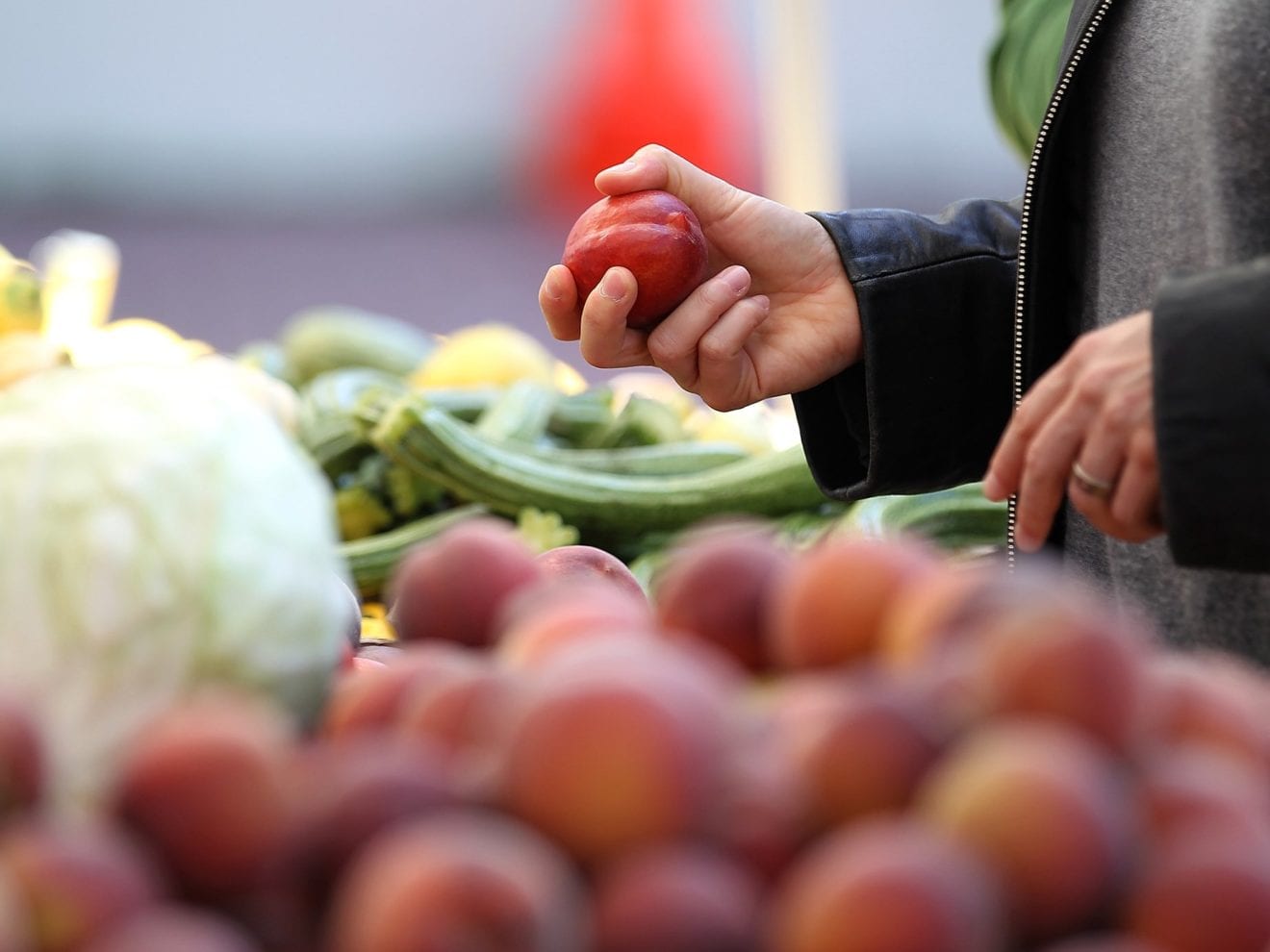
    “We saw that we didn’t actually need to make too many adjustments to our existing system because basically what we had to do was pre-pack all the fruit — we needed to have fixed units and not have people buying by weight … and when we opened it up to the public it was an instant success.”

    The store carries around 50 SKUs at a time.

    Taoyuanming is reportedly so pleased with the results that two more automated stores are scheduled to open early this year, which may be followed by staffless stores if successful.

    The firm’s strategy is to provide a platform to small retailers.

    “If you are for instance a fruit store outside Shanghai and you want to expand from a few stores to 10 stores in your neighbourhood, then you can’t really start buying BingoBoxes because it’s quite complicated and expensive technology,” says Cromwell.

    The MobyMart model relies on customers scanning their product, while cameras and sensors serve as a back-up. This  “very simple technology” allows for opening “a lot of stores at a very low cost,” Cromwell says.

    “It won’t be 100-per-cent staffless because you still need someone circulating the store and making sure everything’s fine and restocked, but one person in one day can operate eight to 10 stores depending on how spread out they are. So you have much more efficiency with the staff you do have.”

    He added that AI and big data will help store operators know what products will be needed at what locations and at what time.

    “If we have a request of some sort, that is something that will also solve the last mile problem,” he said.
    The whole store and system is expected to retail for around US$15,000. MobyMart also has a prototype mobile store with automated driverless vehicle capacity – although its rollout is restricted by legislation around the technology.

  • Oil prices fall on worries fuel demand to stall amid slowing global growth

    Oil prices fall on worries fuel demand to stall amid slowing global growth

    Oil prices declined on Thursday amid lingering concerns over slowing global economic growth that may limit fuel demand and after a surprise build in U.S. crude inventories. International Brent crude oil futures were at $60.89 a barrel at 0352 GMT, down 25 cents, or 0.4 percent, from their last settlement, having closed down 0.6 percent in the previous session.

    U.S. West Texas Intermediate (WTI) crude futures were at $52.40 per barrel, 22 cents lower from their last settlement.

    “Crude oil came under further pressure as concerns of faltering global growth remained at the forefront in investor’s minds,” ANZ Bank said.

    The prospects of future oil demand are getting clouded by the global growth worries, analysts said.

    “With the IMF downgrading 2019/20 and the continued rhetoric from Davos reiterating that they expect global growth to slow down over the next two years, is providing selling pressure in oil,” said Hue Frame, portfolio manager at Frame Funds in Sydney.

    Earlier this week, the International Monetary Fund (IMF) cut its world economic growth forecasts for 2019 and 2020, due to weakness in Europe and some emerging markets.

    Meanwhile, world leaders and top executives are meeting in Davos, Switzerland, this week to discuss how to steer policy amid worries of slowing economic growth, damaging trade wars and Brexit.

    Oil market sentiment was also weakened by an increase in U.S. crude inventories after refineries cut output, data from industry group the American Petroleum Institute showed on Wednesday.

    Crude inventories rose by 6.6 million barrels in the week ended Jan. 18 to 443.6 million, compared with analysts’ expectations for a decrease of 42,000 barrels, the API said. Refinery runs fell by 152,000 barrels per day.

    “Sharp production cuts by OPEC+ have kept crude oil futures supported however as market reports indicate for a marked output reduction in Dec 2018,” said Benjamin Lu, analyst at Phillip Futures.

    “Though oil prices have demonstrated for higher upside potential in the first quarter of 2019, mounting economic challenges will continue to impede exponential gains in the longer term,” Lu added.

  • Hyundai Motor offering a bigger, better Universe

    Hyundai Motor offering a bigger, better Universe

    Hyundai’s Universe is about to get bigger. Hyundai Motor unveiled an updated version of its luxury coach, the Universe, on Tuesday, increasing its size and adding safety features. The updated coach, scheduled for release next March, has an extended wheelbase of 12.5 meters (41 feet), 0.5 meters longer than the existing model. Distance between seats has been increased.

    The vehicle comes with a variety of new safety features applied for the first time in a coach in the local market, such as an engine fire extinguishing system, driver attention warning and a rear-view monitor.

    Hyundai Motor explained that the Universe’s driver attention warning system and smart cruise control are now offered to prevent drowsy driving and other avoidable accidents. The new Universe also has a refreshed exterior design with headlight changes and will be available in three trims.

  • Natural food startup Jus’ Amazin launched in India

    Natural food startup Jus’ Amazin launched in India

    Eyeing the burgeoning US$ 100 billion global natural foods and drinks industry, Jitin Munjal, former Global Director for Sales and Marketing at DuPont has announced his natural nutrition food and beverage venture, Jus’ Amazin Foods and Beverages Pvt. Ltd. Co-founded with his wife, Shilpa Mogilishetty, Jus’ Amazin started in the kitchen, as the couple were developing nutritiously rich natural food products that are delicious, for their son, who is allergic to dairy and soy products. After a lot of R&D, the kitchen experiment has now grown (over the last few months), to be present in 75 retail stores, and 20 e-commerce sites, pan-India.

    Speaking on the venture, Jitin Munjal, Co-founder and CEO of Jus’ Amazin said, “Most packaged food is highly processed, packed with chemicals and low in nutrition, and as consumer awareness about the ill-effects of chemicals in food is growing, they are demanding foods that are natural, nutritious and delicious. While trying to find dairy and soy free foods for our son, we realized how underserved the natural and nutritious food market is in India. Jus Amazin caters to the health and nutrition conscious consumer with natural wholesome foods, which are both delicious and nutritious.”

    Jitin Munjal is a seasoned professional and entrepreneur with more than 20 years of rich experience in Business Management, Marketing, Sales & Distribution, Product Development and in leading global and regional teams. Jitin has received his education from premier institutes such as Indian Institute of Technology Delhi, Indian Institute of Management Ahmedabad, London School of Economics and Political Science, and has worked with blue chip companies such as P&G, Tata Group (as part of the prestigious TAS), Castrol & DuPont. In his last corporate role, Jitin was heading global marketing and sales excellence at DuPont, a leading multinational corporation with interested in varied industries. Shilpa Mogilishetty holds a Masters in Anthropology from the University of Sussex and has worked across the corporate and social sectors, in the areas of Market Research, Media Planning and Change Management.

    Jus’ Amazin’s current product range includes 100 percent natural, gluten free, soy free, dairy free and plant based foods such as nut and seed butters/ spreads (almond butter, organic peanut butter, seed butter and cashew butter). The products are currently available both online at leading e-commerce websites and also in retail stores in Bangalore, Delhi NCR, Mumbai, Pune, Chennai, Hyderabad and Goa. Leading brands such as Foodhall, Spar, BigBasket, Namdhari’s, Modern Bazaar, Loyal World, Amazon, HealthifyMe, FirstCry, HealthKart, Qtrove, The Gourmet Box, among others have partnered with the company.

  • Gold rises as growth concerns, US govt shutdown weigh on dollar

    Gold rises as growth concerns, US govt shutdown weigh on dollar

    Gold prices rose on Thursday as the dollar declined due to concerns the prolonged U.S. government shutdown will limit economic growth at the same global growth is slowing as well. Spot gold was up 0.1 percent at $1,283.31 per ounce, as of 0326 GMT, while U.S. gold futures were down 0.1 percent at $1,282.60 per ounce. “We are seeing a weaker U.S. dollar for the moment, which is in general supportive for gold,” Michael McCarthy, chief market strategist at CMC Markets said.

    However, McCarthy cautioned that bullion price gains are limited by slowing investor buying as indicated by price charts used by technical traders.

    “The issue for gold is there is a very heavy resistance seen around $1,290 and $1,310. A further weakening of the U.S. dollar could be supportive. But, we need something to really push gold through the resistance level,” he said.

    The U.S. dollar index, which measures the greenback against a basket of six major currencies, fell for third day, dropping 0.3 percent during that period. However, Asian shares rose on Thursday after Wall Street managed to end higher.

    On Wednesday, U.S. President Donald Trump said that the United States was doing well in trade talks with China, saying at a White House event that China “very much wants to make a deal.”

    However, a prolonged U.S. government shutdown reminded investors of risks to growth to the economy.

    White House economic adviser Kevin Hassett said in a CNN interview the U.S. economy could see zero growth in the first three months if the partial government shutdown lasts for the whole quarter.

    Meanwhile, investor focus turned to the European Central Bank (ECB), which is widely expected to keep its monetary policy unchanged at its first policy meeting of 2019 that ends later on Thursday.

    Market watchers also expect ECB to acknowledge growing threats to the euro zone economy.

    “The ongoing trade war, Brexit and slow global growth narrative are supportive for gold at present levels, as is Chinese seasonal demand,” MKS PAMP Group said in a research note.

    “That being said, Comex non-commercial and exchange-traded fund (ETF) holdings remain extended, so we expect a bit of tug of war in the short-term between $1,270-$1,300.”

    Holdings of SPDR Gold, the largest gold-based ETF, was at its highest since June 2018.

    Among other metals, palladium, which hit a record high of $1,434.50 an ounce last week on low inventories and rising demand, rose 0.1 percent to $1,348.50 an ounce.

    Silver was down 0.1 percent $15.35 an ounce, while platinum was steady at $795.

  • Tech sector forecast to see slower growth ahead

    Tech sector forecast to see slower growth ahead

    Hong Leong Investment Bank (HLIB) Research anticipates slower growth in the technology sector due to downside risks in the macro environment coupled with waning data trends. However, it expects automotive and Internet of Things (IoT) to take the forefront while smartphone takes a backseat. The research house said in a note that for the first 11 months of 2018 (11M18) global semiconductor sales were outstanding after growing 16%, thanks to the explosive growth of memory followed by discrete and optoelectronics.

    As for 2019, consensus is projecting 3% growth for that segment.

    “However, we see further downside to this projection considering the US-China trade conflict, stagnant smartphone demand, industry-wide inventory adjustment and weaker memory prices,” HLIB said.

    The automotive sector is expected to be the major growth driver for global technology industry supported by its development towards full autonomy. The equipment industry remained solid with billings increasing 11% in 11M18, supported by heavy investments in all regions except Taiwan.

    “However, year-on-year growth has been on a snail’s pace for the past five months, translating into a significant deceleration from past 20 consecutive months’ double-digit growth rates,” the research house explained.

    According to SEMI, this reflected the near-term weakening demand for personal computers, mobile phones and servers as well as pulled back investments in response to recent softening of memory prices.

    “This is in line with its expectation of expansion in capital spending not outpacing sales growth on the long run and potentially lead to industry-wide overcapacity,” said HLIB.

    The research house also highlighted that local semiconductor players may experience strong demand to support the disrupted global supply chain should the procurement levy and technology transfer restriction from US take effect.

    Note that China sources substantial fabrication equipment from US players for its expansionary semiconductor industry towards the “Make in China 2025” vision. Vice versa, US fabless semiconductor players outsource their product fabrication and some are produced in China.

    With strong greenback, HLIB expects tech firms to be marginally boosted thanks to their US dollar-denominated sales while partly offset by the US dollar cost items.

    It estimates the ringgit to be weaker in FY19 with at full-year average of RM4.20 against US dollar.

    Nonetheless, pricier commodities, compounded by stronger US dollar projection, will exert pressures on margins for traditional packaging.

    Maintaining a “neutral” call on the sector, HLIB displayed a cautious stance in the absence of near-term catalyst as it expects global sales and capital spending to grow moderately.

    As for stock picks, it gave Frontken a “buy” call at a target price of RM1.05 on the back of bullish global semiconductor market outlook, robust fab investment, leading edge technology, oil and gas recovery and strong balance sheet.

  • Sunway, Hoi Hup Realty wins land tender in Singapore

    Sunway, Hoi Hup Realty wins land tender in Singapore

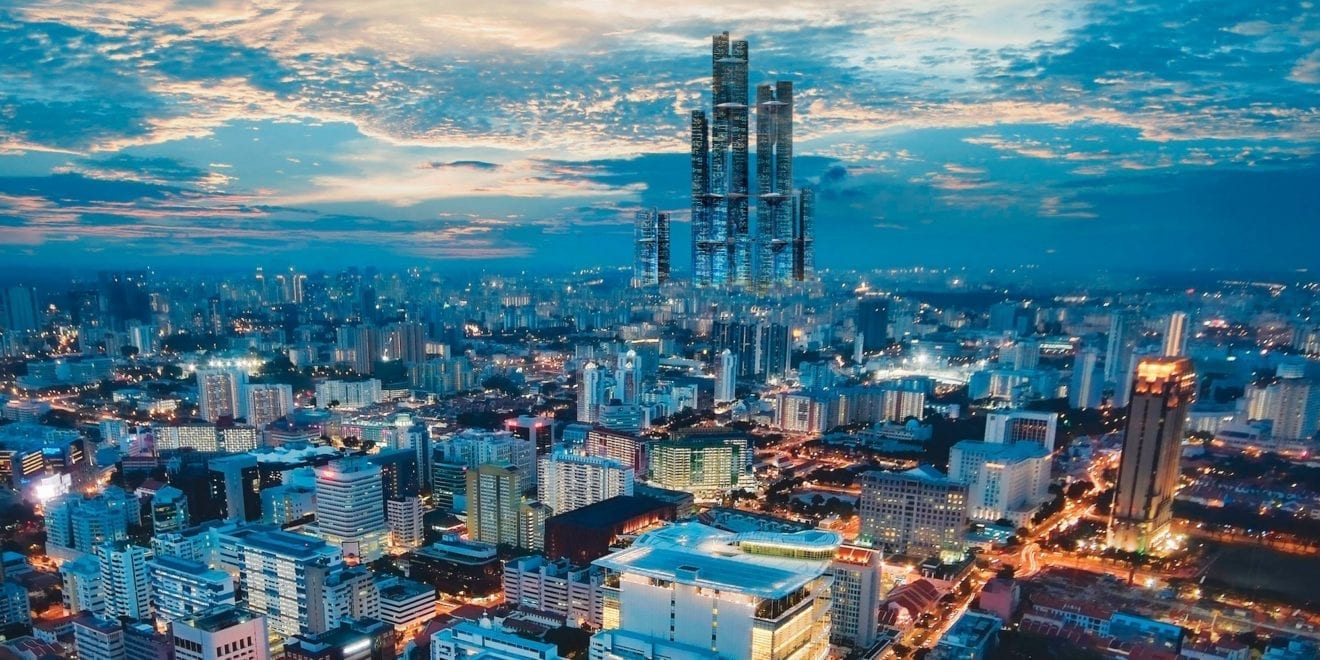
    The Housing and Development Board of Singapore has awarded a parcel of land measuring 2.5ha to Sunway Bhd’s Singaporean unit Sunway Developments Pte Ltd (SDPL) and Hoi Hup Realty Pte Ltd after a successful bid.
    The land is slated for the SG$434.45 million (RM1.32 billion) Executive Condominium Housing Development. The group told the stock exchange that the land located at Tampines Avenue 10 (Lot 7545K MK 28), Tampines, Singapore was awarded to Hoi Hup and SDPL following a successful joint tender submitted by the parties.

    “The land will be acquired by a proposed new joint venture company to be incorporated, in which Hoi Hup or its nominee company(ies) and SDPL will have equity interest in the proportion of 65:35,” it noted.

    The 99-year lease term Executive Condominium Housing Development project is scheduled to go on for 60 months, commencing Jan 22.

    It is expected to contribute positively to the earnings of Sunway Group in the financial year 2023.