Blog

  • Vietnam’s coffee traders cut output forecast by 10 percent

    Vietnam’s coffee traders cut output forecast by 10 percent

    Traders in Vietnam lowered their coffee output forecasts by 10 percent this week as a bumper harvest came to an end. They now expect an output of about 27 million bags of 60 kg each for the 2018/19 crop year that began on Oct. 1, compared with earlier forecasts of 30 million bags. “We are not surprised to see a lower output as stubbornly low domestic prices have discouraged many farmers to fertilize and water their trees, while weather condition was also not supportive,” a trader based in the province of Dak Lak said on Thursday.

    “Farmers in the Central Highlands have harvested all of the fresh beans of the 2018/19 crop year,” he said.

    Farmers in the Central Highlands, the country’s key coffee growing area, sold coffee at 33,500-34,000 dong ($1.44-$1.47) per kg on Thursday, compared with 33,200 dong-33,700 dong a week earlier.

    “Though output is lower, domestic prices have not risen due to external factors, including larger forecasts by foreign agencies,” said another trader based in Ho chi Minh City.

    Vietnam’s coffee exports in January are forecast to be between 150,000 tonnes and 180,000 tonnes, compared with an estimated 160,000 tonnes in December.

    Traders in Vietnam offered 5 percent black and broken grade 2 robusta at a $40 per tonne discount to the March contract, compared with a $45-$50 discount last week.

    Meanwhile, in Indonesia, trading continued to be muted with traders saying premium for the grade 4 defect 80 robusta stayed unchanged for a fourth straight week at $20-$30 to the March contract.

    “Supply may only start coming around April because some areas in Bengkulu will have some harvest then,” said a trader, referring to a province neighbouring Lampung.

    Main robusta harvest in southern Sumatra typically takes place around the mid-year, but a smaller harvest usually happens a few months earlier.

  • BMW Korea fined $13M over emissions

    BMW Korea fined $13M over emissions

    A Seoul court fined BMW Korea 14.5 billion won ($12.9 million) for manipulating documents on emissions to sell some 29,000 vehicles in Korea. The Seoul Central District Court announced Thursday that the local unit of BMW is guilty of violating customs law. The automaker was found guilty of forging emissions test papers from 2011 to obtain certification from the National Institute of Environmental Research under the Environment Ministry that its cars meet local emissions standards. Roughly 29,000 cars were certified this way, according to the court.

    “The automaker has undermined government efforts to improve air quality in Korea,” the court said in a statement. “This also damaged local customers’ trust in BMW.”

    The court also added that BMW Korea took substantial profits over the years due to the manipulation, showing no effort to abide by local laws.

    “The reason for making [carmakers go through] a stringent certification process is because car emissions have substantial impact on air quality,” the court said.

    The Seoul court also found six former and current executives of the automaker involved in the case guilty. Three executives were sentenced to eight to 10 months in jail, with three others given a four to six month suspended sentence with probation.

    On Thursday’s ruling, BMW Korea said in its official statement that the company “will respond following an appropriate legal process after thoroughly reviewing the case,” adding that it cannot give a “detailed answer yet.”

    Last month, the Korean unit of rival German automaker Mercedes-Benz was also found guilty of violating the emissions certification process. The court gave Mercedes a 2.81 billion won fine and handed down an eight-month jail sentence to the executive in charge of emissions certifications. The carmaker was charged for failing to get new certifications after changing some emissions-related parts. Mercedes said it will appeal the ruling.

    In its official statement last month, Mercedes said it was an administrative mistake, adding that it was unintentional.

  • Burberry and Louis Vuitton lose counterfeiting appeal in Singapore

    Burberry and Louis Vuitton lose counterfeiting appeal in Singapore

    Burberry and Louis Vuitton have lost their appeal in a trademark dispute against local transport company Megastar Shipping. The luxury brands alleged that Megastar Shipping had handled counterfeit goods in Singapore that were headed for Indonesia, citing the Trade Marks Act that states a trademark is infringed by any person found to import or export goods using that mark without the proprietor’s consent.

    The upper division of the Singapore Supreme Court found this week that Megastar was not the importer of counterfeit goods shipped from China that were seized in March 2013, and was only intended to handle the goods in transit to their final destination in Indonesia. Megastar Shipping had been listed on seaway bills and arrival notices as the consignee of the goods.

    The appeals court ruled that the protection of IP rights had to be balanced against extending liability for infringement to “honest commercial persons who happened to be tangentially involved” in the shipping of counterfeit goods.

  • LG and Naver are teaming up to make robots better

    LG and Naver are teaming up to make robots better

    LG Electronics and Naver are cooperating on the development of robotic capabilities.

    Their first project will use Naver’s mapping and navigation technology to improve the functionality of LG’s CLOi GuideBot.

    LG’s guiding robot is currently in operation at Incheon International Airport. It escorts travelers to certain destinations within the facility.

    Naver Labs, the research and development arm of the Korean internet portal company, said its eXtended Definition & Dimension Map (xDM) solution will enable LG robots to self-drive indoors even when equipped with low-end sensors.

    The solution integrates Naver’s mapping, navigation and positioning technology to support various location-based services, such as augmented-reality walking navigation and autonomous driving, according to the company. Naver hopes to improve this by using big data collected by LG robots.

    The two companies said they will gradually expand collaboration to other areas of robot development after the first project. The agreement was reached during the Consumer Electronics Show (CES) in Las Vegas and announced Thursday. Both LG and Naver demonstrated their latest robot technologies at the exhibition.

    “One of our biggest achievements during CES was to reach an agreement with LG,” said Seok Sang-ok, head of the robotics team at Naver Labs. “With LG, we will find ways to develop technologies that improve lives.”

    LG has already announced other deals at CES, including a plan to work with Microsoft on autonomous car technology development and an agreement with Apple to source television programming.

  • American fund acquires stake in Vietnamese organic food firm

    American fund acquires stake in Vietnamese organic food firm

    The Seaf Women’s Opportunity Fund has acquired a 30 percent stake in Organica, promising the Vietnam all-round support. While not mentioning the specific investment value, Jennifer Buckley, SEAF’s senior managing director, said the fund will support Organica in operations, distribution, and network expansion. In addition to being a strategic shareholder, the fund will also give Organica a 5-year loan so that it has sufficient resources to finance expansion plans in the future.

    “This is the first organic food company in Vietnam we have decided to invest in, even though the market [for organic products] is still small,” said Jennifer Buckley. She added that if the company performed well, the fund may acquire it in full in the future.

    Pham Phuong Thao, CEO of Organica, said that the current investment will be enough for the company to implement a 2-3 year plan. In particular, it plans to open more retail stores, improve online sales systems, IT systems and human resources, Thao said.

    Organica is an organic groceries chain established in 2013 with the first store in Ho Chi Minh City. It now has 5 stores in Ho Chi Minh City, Hanoi and Da Nang. Currently, the company has 10 farms in the South and the Central Highlands, totalling a combined area of 300 ha.

    SEAF (Small Enterprise Assistance Funds) is an international investment management group that provides growth capital and business assistance to small and medium enterprises (SMEs) in emerging and transition markets.

    It currently operates in 30 countries and has investments in over 300 small businesses.

  • Sa Sa sales drops in HK, Macau

    Sa Sa sales drops in HK, Macau

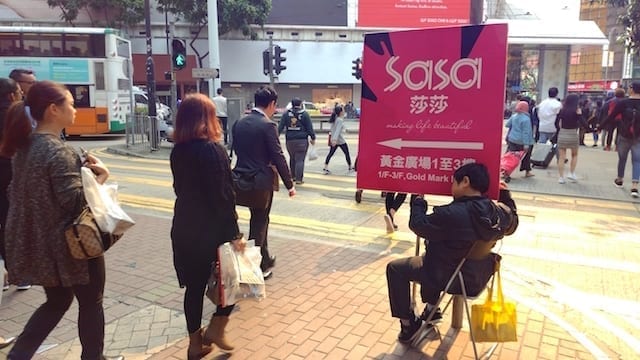
    Sa Sa International sales slipped 2.2 per cent in the latest quarter, with same-store sales in Hong Kong and Macau down 3.7 per cent. The company says that while the transaction volume of mainland tourists rose 5.8 per cent in the three months to December 31, transactions by locals fell 5.2 per cent. However the average sale to tourists fell by 6.1 per cent and just 0.2 per cent to locals.

    Sa Sa International’s retail and wholesale turnover in markets outside Hong Kong and Macau (including Mainland China, Singapore, Malaysia and e-commerce) increased by 1.3 per cent in the third quarter.

    “[Hong Kong] consumer sentiment remained sluggish due to the weaknesses in RMB exchange rate and stock market under the continued shadow of the Sino-US trade war,” said chairman and CEO Simon Kwok in a stock exchange filing.

    “In addition, the new e-commerce law passed by the Chinese government in August came into force early this year and made daigou traders more cautious in running their businesses. The group’s sales performance was affected and negative growth was recorded in both retail sales and same store sales in the Hong Kong and Macau markets in November and December.”

    Kwok said that since the launch of the Hong Kong section of the Express Railway Link, the Group’s SaSa stores located in the Hong Kong West Kowloon station and the neighbouring Tsim Sha Tsui district have been reporting satisfactory sales performance. However, the increased influx of mainland tourists via the new Hong Kong-Zhuhai-Macau Bridge were mainly sightseeing trippers with limited purchasing power and barely contributed to the group’s overall sales in Hong Kong.

    “Nevertheless, the group believes the two mega infrastructure projects will attract more mainland travellers with higher consumption when they are gradually consummated. The group remains optimistic towards the outlook of Hong Kong and Macau markets in the middle to long run under the favourable development of the Greater Bay Area.”

    Kwok said Sa Sa International will strengthen promotional efforts to boost traffic and sales in physical stores to offset a decline in the online-driven daigou business.

    “Digitalisation and information technology enhancement will be sped up to improve operational efficiency and shopping experience. In addition, the group will seize the opportunities brought by the Greater Bay Area to achieve sustainable business development for the group,” he said.

  • Samsung ranks second in 2018 U.S. patent grants

    Samsung ranks second in 2018 U.S. patent grants

    Samsung Electronics grabbed the No. 2 spot in U.S. patent grants among global corporate giants in 2018, industry data showed Thursday. Samsung Electronics, the world’s top smartphone and memory chip maker, received 5,850 U.S. patent grants last year, up 13 from the previous year, according to the data from IFI Claims Patent Services, provider of a top global patent data platform.

    IBM topped the list with 9,100 grants, up 1 percent from a year earlier, maintaining the U.S. company’s position as top patent leader for a 26th consecutive year.

    Canon followed Samsung with 3,056. Intel came next with 2,735 then LG Electronics with 2,474. All registered declines from a year earlier.

    Other Korean firms included Samsung Display, which ranked 14th with 1,948 grants. Hyundai Motor placed 19th with 1,369.

    Last year, U.S. patent grants totaled 308,853, down 3.5 percent from the previous year.

    By country, the United States took up the largest share, at 46 percent, followed by Japan with 16 percent, Korea with 6.5 percent, Germany with 5 percent and China 4 percent.

    China was the only major patenting country to report an on-year increase in the 2018 patent grants.

  • Korea’s Beyond Closet confirms strong potential at Pitti Uomo

    Korea’s Beyond Closet confirms strong potential at Pitti Uomo

    Korean label Beyond Closet, showing for the third time at Pitti Uomo for the ‘Concept Korea’ project, won over the audience with a stylish, highly colourful catwalk show.bThis season perhaps even more so than in the past, Beyond Closet’s self-taught designer Taeyong Ko proved he is truly well-versed in his craft. It is surely not by chance that his menswear label, whose style is defined as “classic, with a twist,” managed to double its multibrand clients from one season to the next, growing from 15 to 30, chiefly in South Korea.

    Taeyong Ko, who in his younger years was a swimming enthusiast, and cut his fashion teeth working in a clothes shop, has managed to create a highly distinctive, recognisable style through a classic wardrobe with a preppy vibe, infused with a touch of slightly humorous extravagance that is never excessive.

    Taeyong Ko’s main strength is his ability to subtly blend genres and to create looks that are as original as they are attractive. His style is all about the way he plays with the accessories and the details which spice up Beyond Closet’s looks, as well as how he mixes and matches materials and registers. As he quipped backstage: “I dress men whose uniqueness lies in their own style.”

    The show’s setting was reminiscent of a military encampment, with tents erected in a desert-like environment, and you could hear a motorbike revving up as the first models strutted out on the catwalk to the notes of Lou Reed’s ‘Walk on the Wild Side’. Trousers gathered at the ankles, woollen check shirts and oversize parkas alternated with Price of Wales suits and navy-style looks, a nod to the theme chosen by Taeyong Ko this season, translating into sailor-style pea-jackets with golden buttons worn over striped tops, small scarves knotted around the models’ necks.

    The mood was both relaxed and elegant, as in the case of the dandy ambling around in tracksuit bottoms and furry mules, sporting a classic tweed jacket, or in tartan trousers and a navy-style cardigan.

    There was an emphasis on snug, ultra-warm items for protection against the cold, like plush coats and boiled-wool tops, fleece sweaters worn under jackets, oversize turtlenecks and curly-wool tracksuit bottoms, not to mention sundry jackets with generous collars and lapels, all strictly fur-lined, and an assortment of quilted trousers and jackets, featuring colourful patchwork fabrics in menswear’s classic printed motifs, like checks and houndstooth patterns.

    The whole collection is made even sharper by the great attention paid to details and colour combinations. For example, the back of a khaki jacket is embellished with a vertical string of golden buttons. Elsewhere, in the guise of knee or elbow pads, Taeyong Ko opted for a kind of rectangular fitted panel, while some of his grey felt shirts featured ample pockets in brightly coloured nylon fleece, gloves in bright yellow leather were matched with a Prince of Wales checks look, and royal blue or velvet flaps livened up a classic trench coat.

    The designer also played with layering and trompe l’oeil effects, as with the Teddy-style sweater whose back morphs into a grey nylon jacket, or the pinstripe jacket which strays into baseball kit territory, sporting the number 27 on the reverse side. Other examples are the overcoat which unexpectedly turns into a wind-breaker or the jacket which becomes an orange waxed top.

  • Ombre Lane India wins seed funding

    Ombre Lane India wins seed funding

    Indian women’s workwear brand Ombre Lane has received seed funding from a group of angel investors. The investment group includes ex-LinkedIn India CEO Akshay Kothari, LinkedIn general counsel Aditi Jha, and director at Bristol-Myers Squibb US Neeraja Balachander. The fashion start-up plans to use the funds to establish Ombre Lane as a go-to destination for modern Indian women seeking to buy functional office-wear styles. Forecasting a five-fold annual growth rate, the brand plans to scale significantly over the next year while staying focused on building the brand.

    The brand, launched by sisters Shweta and Prachi Sharma, launched with the motto of making women feel confident as well as comfortable at work. It conducted extensive surveys to establish average body shapes and sizes of Indian women, finding that more than 70 per cent of Indian women have a pear-shaped body and an average height of 5 feet 2 inches, while more than 75 per cent of Western workwear available on the Indian market is made for a woman with a height of 5 feet 7 inches and the more rectangular body shape common in the west.

    The market for women’s workwear in India is expected to grow in double digits over the next five years. Ombre Lane offers shipping throughout India via its e-commerce platform ombrelane.com.

  • Organic Footwear: Is the Indian consumer ready?

    Organic Footwear: Is the Indian consumer ready?

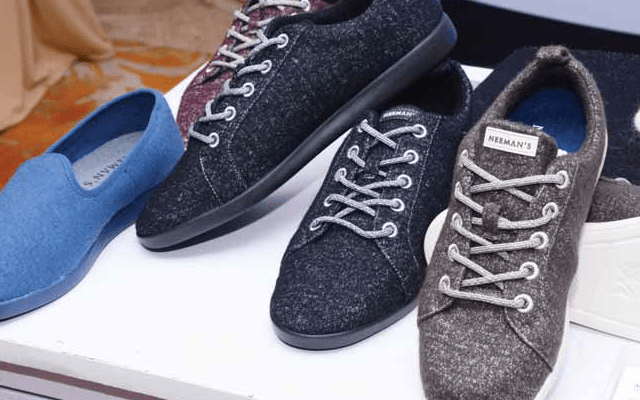
    Footwear brand Neeman’s has partnered with The Woolmark Company – the global authority on wool – to launch a range of shoes made from 100 percent Merino wool. The eco-conscious brand showcased its attractive range of men’s shoes in New Delhi.

    Neeman’s is India’s first footwear brand to use natural, renewable and biodegradable fibre in its shoes. The brand’s footwear collection comprises joggers (multi-functional, lightweight running shoes), classic sneakers with a modern twist, and simple, yet elegant, loafers in subtle colours, fit for all occasions. Its shoes are suitable to wear throughout the year with the ability to withstand every weather condition.

    Celebrating the unique organic inclusion in Indian lifestyle through their exclusive men’s shoes, Taran Chhabra, Founder, Neeman’s explains that it was his own personal struggle to find a shoe that could truly provide all-day comfort. “This led me to look beyond synthetic fibres and my search ended with the naturally versatile Merino wool fibre,” he stated.

    Ajay Pradhan, Marketing Manager, The Woolmark Company, India says, “The Woolmark Company is looking at innovative ways to showcase the versatility of the Merino wool fibre and this collaboration with Neeman’s allows us to do exactly that. Merino wool is the world’s most revolutionary natural fibre that’s trans-seasonal, breathable and has a variety of eco-credentials, making it the perfect addition to your wardrobe be it in the form of luxury apparel or innovative. We cannot wait for consumers to try them and experience the natural benefits and versatility of Merino wool.”

    The Idea Behind Neeman’s

    Neeman’s focuses on two core principles – true comfort and creating a culture of sustainability.

    “We are focused on bringing truly comfortable footwear that looks good, feels good and is good for the planet. Today, when the whole world is talking of organic and natural resources, we decided to take undervalued ‘comfort’ for wearers to the heart of the shoe industry and follow nature’s path of environmental sustainability using natural fibres along with recycled and renewable materials,” Chhabra says.

    While in the pursuit to understand footwear manufacturing, Taran Chhabra had travelled to many footwear manufacturing hubs around the world and what he saw left him perplexed. He found that footwear manufacturing units use too many synthetic materials like nylons, polyesters and leathers and consume a lot of non-renewable resources like petroleum in the manufacturing process. Apart from this, the industry is responsible for emitting a huge amount of carbon dioxide into the atmosphere.

    “According to a recent study, around 10 percent of the carbon dioxide that is emitted in the atmosphere is by footwear units alone. So these things kind of hit me,” he explains.

    As a result, while making Neeman’s, he made a conscious decision to remove everything synthetic and unnecessary, and kept only the stuff that was required to actually make shoes. He chose a natural fiber like Merino wool from Australia in-place of synthetic materials. Merino wool is a superfine and lightweight fiber with features like moisture-wicking and breathable, naturally odour resistant and keeps skin cool and dry even in extreme temperatures.

    “Merino wool comes from Merino sheep, and all it takes is water, sunshine and grass to raise them. So we are not spending any energy, we are not emitting any carbon dioxide into the atmosphere, we are not using any petroleum based oils and we are preserving our environment,” he says.

    Another important component within a shoe is the insole. Traditionally the insole is made of petroleum based foams. Neeman’s also reduced the amount of petroleum based foam with a natural plant-based castor bean oil and recycled rubber.

    A Global Brand

    The shoes—conceptualised in America and designed in London—are made from the finest Merino wool sourced from Australia. The Merino wool then travels to South Korea, where it goes through a proprietary process of combing, drawing, steaming and being made into a fabric. There, three different type of fabrics are being produced, one for the shoe upper, another for the insole and a third for lining the shoe. Then the fabric travels to China, where a highly specialised women-owned shoe manufacturing unit—which has been in operation for the past 30 years—assembles the shoes. After that the shoes finally reach India to be sold.

    Market, Consumer & Retail Strategies

    The opportunity for brands like Neeman’s in India is immense. “The Indian footwear market is very vast. India is the second largest in terms of footwear manufacturing and the third largest in terms of consumption. It is just behind China,” says Chhabra.

    Operating within the premium range, the brand’s target consumers are the one who seek comfort. Precisely, any male from 26 to 40 years is its target customer. “Just by looking at the consumption rate in India, there is a vast segment that looks at economy range but there is still a major segment that looks at premium range and we fall within the premium segment,” he says.

    At present, it is being sold through its website (www.neemans.com). Being a direct-to-consumer, the brand has excellent customer acquisition strategies to share, such as educating its consumers through content on social media. “We plan to travel and organise several demo locations, pop-ups locations within major places where people can come and experience our products,” Chhabra says.

    The brand is taking expansion slowly

    “We aren’t giving our shoes to outlets for now. The focus is to drive people to our website and help them understand what Neeman’s stands for. So right now we are keeping a very close hold on how and where our product is being represented. Right now our focus is India and then may be to spread Neeman’s to different countries within Asia in the next year,” he concludes.


  • Vietnam’s largest airport set for $496 million expansion

    Vietnam’s largest airport set for $496 million expansion

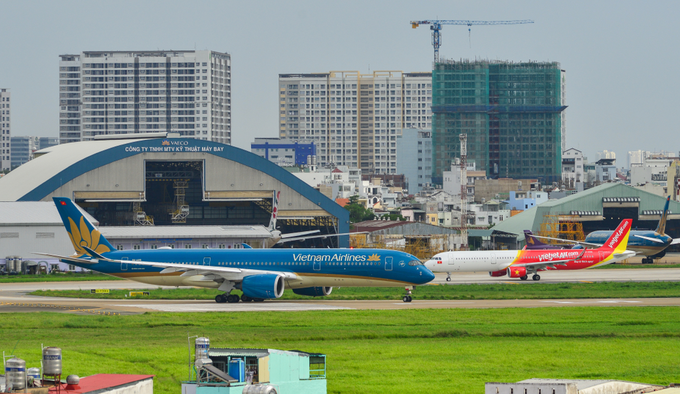
    The Tan Son Nhat Airport could get a third terminal and other facilities at the cost of over $496 million. The Airports Corporation of Vietnam (ACV), which manages and operates civil airports in the country, has submitted to the Ministry of Transport a pre-feasibility report on the construction of a third terminal (T3) at HCMC-based Tan Son Nhat International Airport to reduce overload.

    T3 will be designed to have a capacity of 20 million passengers per year, with total floor area of about 100,000 square meters. ACV proposes to construct in tandem an additional airport apron, a two-lane overhead path, a 5-lane viaduct in front of the terminal and a multi-storey car park. The total cost is estimated at over VND11.43 trillion ($496.18 million).

    The completion of feasibility reports and selection of construction blueprints is set to be finished in February 2020.

    Once T3’s design has been approved, contractors will be chosen via a tendering process so that construction starts in the third quarter of 2020 and can be completed in the second quarter of 2022.

    Because the construction area is located on the Defense Ministry’s land, ACV has suggested allowing a temporary handover of the site in Q1 next year for construction along with completion of necessary legal procedures.

    There are also plans to expand existing terminals T1 and T2 of the Tan Son Nhat airport, raising their combined capacity to 30 million passengers per year.

    The airport currently handles 36 million passengers per year, which is way above its designed capacity of 25 million.

    The Transport Ministry has hired French consulting firm ADPi to work on the plan alongside local firms. The plan proposed by ADPi was approved by the Prime Minister last March and it formed the basis for the new, detailed version.

    ACV has also proposed to the Ministry of Transport that it be assigned as investor for the construction of essential components for the proposed Long Thanh International Airport, including passenger terminal, flying zone (runway, taxiway, apron), and refueling systems.

    ACV chairman Lai Xuan Thanh said that the company is willing to spend between $1-1.5 billion for constructing the first phase of the proposed airport, which is estimated to cost $5.4 billion.

    The Long Thanh Airport, to be built in three phases over three decades, was recently listed by CNN Travel as one of the world’s 16 most exciting airport projects.

    The first phase is scheduled for completion in 2025 when it will be able to handle 25 million passengers annually. The next two phases will be built in 2030-2035 and from 2040-2050.

    The new airport would have an annual capacity of 100 million passengers and five million tons of cargo when completed.

    ACV has announced that in its 2019 plan, the company will spend more than VND10 trillion ($432.71 million) on upgrading and expanding several airports, including Cat Bi in northern Hai Phong City, Vinh in central Nghe An Province, Phu Cat in central Binh Dinh Province, and Noi Bai in Hanoi.

    Most of these upgrades are expected to be completed by the third quarter of 2019.

  • Judge extends Sears lifeline to mid-January

    Judge extends Sears lifeline to mid-January

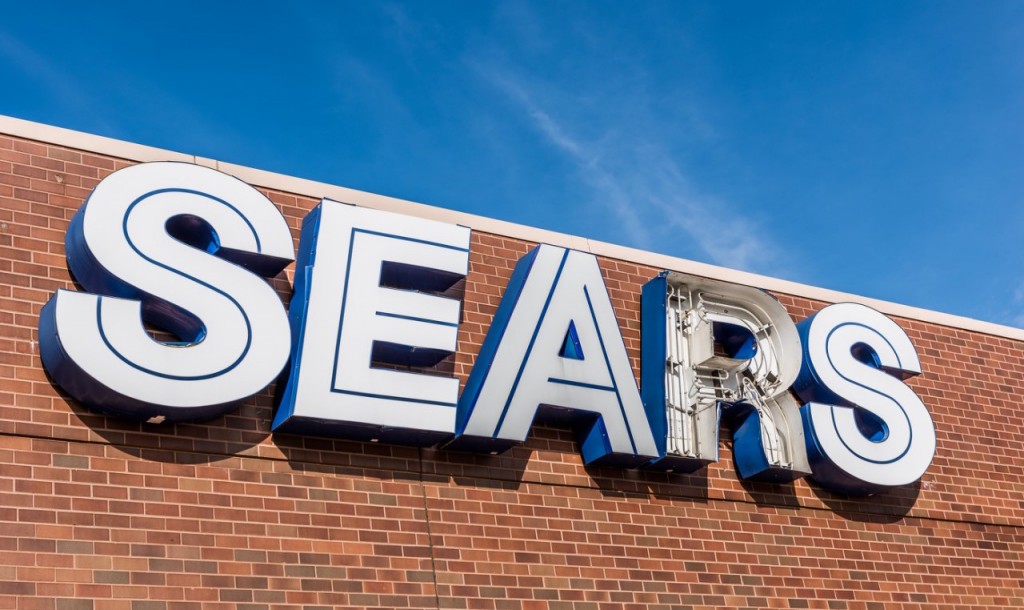
    Embattled US department store Sears has been granted yet another lifeline, with a bankruptcy auction now scheduled for January 14. That will give billionaire hedge fund operator Edward Lampert, Sears biggest shareholder and former CEO, one final opportunity to preserve the business. At Monday’s auction, he will bid against rival parties seeking to liquidate the business, described by GlobalData Retail MD Neil Saunders as “more like a patient in a coma than a fully functioning retailer”.

    Sears filed for Chapter 11 bankruptcy protection in October and the independent directors of the 126-year-old company are seeking its liquidation, seeing it as the only means by which creditors can retrieve some of the $5 billion in debts it owes. Lampert wants the remaining 425 stores trading under the Sears and Kmart banners to remain open, convinced it can return to viable trading.

    Saunders disagrees and says talk of a potential liquidation of the company suggests the much-storied retailer is now at the end of its long road to collapse.

    “Its recent journey to this point has been characterised by incredibly poor strategic decisions, chronic underinvestment, and continuous financial machinations designed to keep the company afloat. All of this impacted trading, which has remained dire.”

    Saunders says while Lampert has worked hard to rescue the remains of his empire, there is simply not enough financial firepower left in the company to persuade investors of his bid. Indeed, the terms of the deal put forward by Lampert would only likely delay the inevitable and make it far more difficult for creditors to extract their money.

    “Moreover, his track record in putting the company on a sound financial footing has been less than impressive, and we believe this has undermined his credibility with stakeholders.”

    Saunders says there may be interest from people who see value in elements of Sears business such as the automotive side, the online operations, the brands, and the various home services. Those operations include brands like Kenmore appliances, DieHard batteries and Wrangler jeans. “As such, parts of Sears could live on even if the company as we know it will disappear.”

    According to The Wall Street Journal, Sears, which merged with rival Kmart in 2005, has been losing money for seven years under Lampert’s leadership. Sine April 2007, the company has shed 200,000 staff, lost $30 billion in shareholder value and closed more than 1700 stores, leaving it with less than 700 now.

    Saunders says Sears will act as a case study in how not to run a retail operation.

    “It also serves as an example that even the once most powerful and cutting edge of brands can easily fail in a retail environment where change and evolution are the order of the day.”

  • Amazon to soon deliver packages right in customer’s garage

    Amazon to soon deliver packages right in customer’s garage

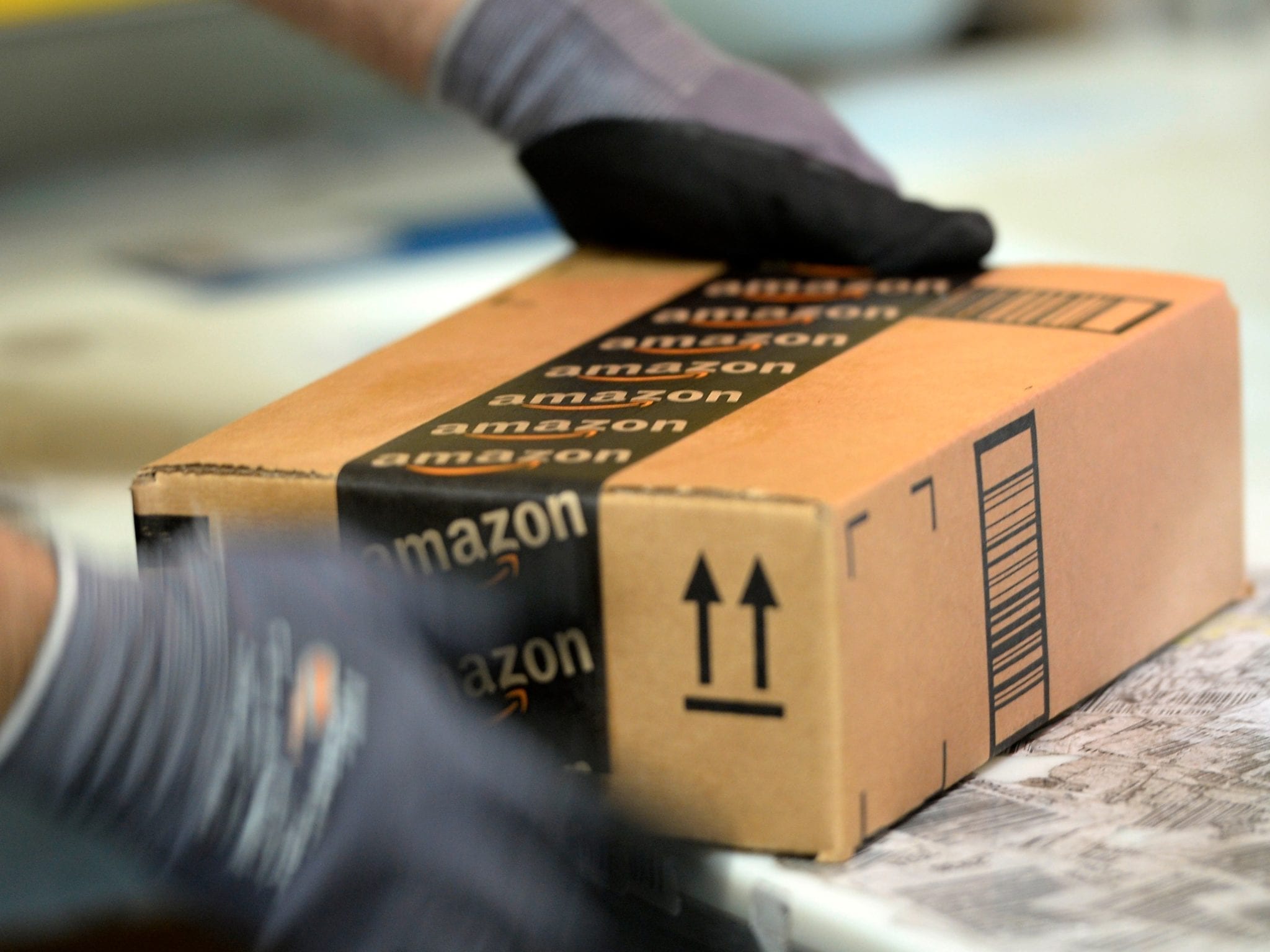
    To enhance its in-home delivery service, Amazon has launched new products and tools within its ‘Key by Amazon’ offering for Prime members, beginning with the US. The online retail giant unveiled ‘Key for Garage’ that will allow customers to monitor and control their garage door via the Key app. “In addition to receiving deliveries at home and in your car, eligible Amazon Prime members will soon be able to get deliveries in their garage,” Amazon said in a statement on Tuesday.

    ‘Key for Garage’ is made possible by integrating Key with CGI’s proprietary ‘myQ-connected’ technology.

    “We started with the idea of in-home package delivery and quickly learned that our customers found peace of mind from the control Key gives them over their most important place – their homes – even when they aren’t there themselves,” said Rohit Shrivastava, GM of Key by Amazon.

    The online retail giant unveiled ‘Key for Garage’ that will allow customers to monitor and control their garage door via the Key app

    Amazon launched ‘Key’ in 2017 and the in-car delivery facility later. The new delivery services are available to Prime customers in some markets at no additional cost.

    Other offerings include the new Schlage Encode Smart Wi-Fi Deadbolt — the first WiFi-enabled smart lock for Key.

    The smart lock offers an innovative option for any customer who wants to experience the magic of a keyless life without any additional hub or hardware.

    “Even with all the advancements in the category, we recognized there was still a gap in simple, secure, high performance and cost-effective, all-in-one access solutions,” said Lee Odess, Vice President, Solutions Providers Business at Allegion, maker of Schlage locks.

    ‘Key for Business’ is a smart fob for drivers delivering Amazon packages to commercial and residential properties.

    “The technology allows building owners and managers to give controlled access to delivery drivers to drop off Amazon packages to their residents, and eliminate the need for building staff to manually give access each time deliveries are made,” said amazon.

    The Schlage Encode Smart Wi-Fi Deadbolt is available for pre-order for US$ 249.99 or US$ 299.99 when bundled with an Amazon Cloud Cam. It will begin shipping to the US customers on March 5.

    Key for Garage will be available in the US in the second quarter.

  • Maybank Malaysia bags ‘The Banker’s Bank’ award

    Maybank Malaysia bags ‘The Banker’s Bank’ award

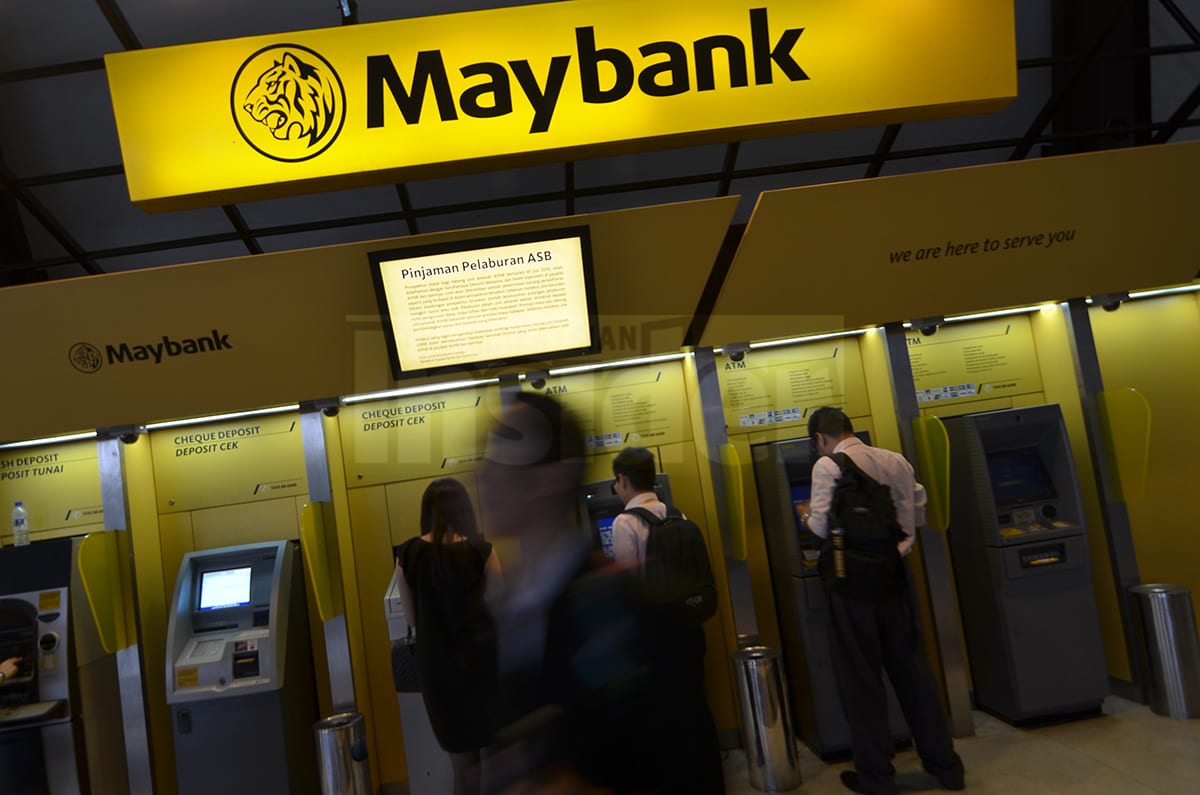
    Malayan Banking Bhd (Maybank) clinched The Banker’s Bank of the Year 2018 in Malaysia award with its fresh thinking on how to provide the best service quality to previously underserved consumers. In a statement, The Banker Editorial said Maybank launched HouzKEY, an innovative rent-to-own product, the first of its kind in Malaysia, recognising a gap in the market to provide services to Islamic banking customers.

    “With a growing demand for affordable homes in the country, Maybank created this alternative solution, which allows for home ownership through a leasing scheme that does not require a deposit.

    “Customers have a flat rate rental payment for five years, and at the end of that time, have the option to purchase the property at a price agreed at the start of the contract, continue to rent with a 2% annual rent increase, or to terminate the contract with no obligation,” it said.

    The scheme is Shariah-compliant, being based on the Ijarah principle of leasing.

    Maybank president/CEO Datuk Abdul Farid Alias said the bedrock of its success is predicated on the bank’s mission of humanising financial services, which drives it to innovate and offer financial solutions that enrich the lives of customers.

  • Shilla duty free open new store

    Shilla duty free open new store

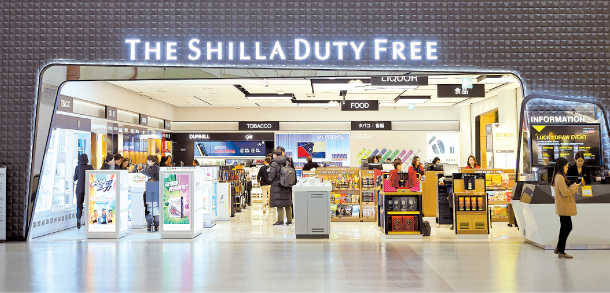
    Shilla Duty Free opens at Gimpo International Airport’s international terminal on Wednesday. The duty-free store run by Hotel Shilla was approved by the government in June last year in a bid against Lotte Duty Free. The duty-free store is renting the place for five years.