Blog

  • ShopBack Partners Petron to Launch Petrol Redemption Programme

    ShopBack Partners Petron to Launch Petrol Redemption Programme

    Malaysians can now utilise cashback from ShopBack every time they refuel at petrol stations. The No.1 Cashback portal in the country recently inked a partnership with Petron Malaysia, becoming the first in the country to allow users to convert cashback to Petron Miles (PMiles) Points and vice versa.

    “Previously, after our users get cashback from their online purchases, they can choose to transfer the cash to their bank accounts or use it to offset Maxis phone bills. The collaboration with Petron is a first for both parties – the first long-term online to offline redemption for ShopBack, and the first offline to online redemption (PMiles Points to cashback) for Petron as well,” says Alvin Gill, Country General Manager of ShopBack Malaysia.

    He mentions that the number of users who accumulated five figures cashback savings through ShopBack is on the rise. Malaysians are getting more familiar with cashback benefits and the company has been exploring opportunities to continue shaping a smarter consumer spending habit offline, of which it feels the priority should be on ways that meet the practical needs of Malaysians’ daily life.

    “It is reported that about 23.9 per cent of Malaysians’ disposable income was spent on petrol, housing and utilities in 2016. Hence we decided to pursue petrol redemption as the second non-cash withdrawal option. ShopBack is excited to launch this with Petron and we definitely look forward to similar collaborations in the future.”

    The PMiles Points redemption option is now available on all ShopBack platforms (web, mobile web, and app).

    To convert cashback to PMiles points, users just need to log onto their accounts, select withdraw – points redemption and thereafter fill in the required information. For every RM10 cashback, users can convert it to 600 PMiles points.

    According to Choong Kum Choy, Head of Retail Business for Petron Malaysia, the collaboration with ShopBack underscores Petron’s commitment to provide the best customer experience for PMiles members. “We are committed to giving our customers the best products, the best service, and the best rewards. Our collaboration with ShopBack gives our PMiles holders more value with the cashback option, while significantly enhancing their shopping experience.”

    Currently, Petron Malaysia has more than 620 service stations in the country. PMiles members can also convert their points at Petron Service Stations Nationwide or download the form from PMiles Website. Every 1000 PMiles points can be converted to RM10 Cashback, which will be credited into the user’s ShopBack account.

  • Thai Airways taps Worldpay for payments innovation

    Thai Airways taps Worldpay for payments innovation

    Thai Airways International (THAI), the flagship carrier airline of Thailand, has selected Worldpay, Inc. (NYSE: WP; LSE: WPY) as its international payments partner, as it targets overseas growth. To support its sustainable growth strategy, THAI needed an experienced partner to help it manage the complexities of cross-border payments and optimise the online booking journey across both mobile and desktop.

    Worldpay, a leader in card and alternative payments with global coverage, was selected for its international reach and unrivalled experience in the airline industry. Worldpay works with 88 of the world’s biggest airlines and has more than 25 years of experience in the sector. Consumer preferences are changing: while flights have traditionally been booked using credit cards, alternative payment methods (APMs) are growing in popularity. With 28 percent of Thai consumers using bank transfers as their preferred method for shopping online, the ability to offer local payment options will allow companies to make the most of Southeast Asia’s second largest economy.

    Additionally, global mCommerce penetration is set to rise from 38 percent in 2018 to 49 percent in 2022, which suggests that mCommerce is on track to overtake desktop sales by 2023. To adapt to this shift, Worldpay will support THAI in widening its breadth of payment methods and transaction currencies to appeal to the changing purchasing patterns of customers. THAI will initially focus its payment optimisation efforts on Australia and Europe – two key markets for the company. In Australia, the carrier’s passenger traffic is growing by two percent year-over-year, while in Europe passenger traffic is growing at a rate of 2.5 percent each year.

    A range of APMs such as iDEAL, Trustly, SOFORT, and Giropay will be rolled out over the coming months to make it easier for European travellers to book online. The THAI payment team will then expand their initiatives to India, China, and the rest of Asia Pacific. Worldpay will also help THAI execute their commercial strategy through advanced data analytics capabilities, which provide rich insight into transaction approval rates and payment costs. This data will enable the airline to expedite new sales strategies and optimise their payments infrastructure with cross-border operations.

    Wiwat Piyawiroj, THAI Executive Vice President, Commercial comments: “Tourism is booming in Thailand, with a 7.7% increase in domestic flights year-over-year for our service. Yet the market is also incredibly competitive, so it is vital to ensure we can best service our customers and their needs. Thanks to Worldpay, we will be able to offer a variety of payment methods that caters to the tastes of travellers all over the world, making it easier for them to book the holidays they want. As we grow, Worldpay will be a vital strategic payments partner and key to our continued success.”

    Phil Pomford, general manager for Asia Pacific, Global Enterprise eCommerce at Worldpay, said: “With global passenger numbers on track to double over the next 20 years, and Thailand forecast to enter the top 10 aviation markets by 2030, it is a hugely exciting time for THAI. We are delighted to support our partner as they continue to grow. Travellers are continuously evolving the ways in which they buy flights, and airlines must keep pace to match these shifting patterns. The airline industry has never been more competitive, and we look forward to helping THAI capitalise upon the opportunities ahead.”

  • India Ancestry opens first store in Kolkata

    India Ancestry opens first store in Kolkata

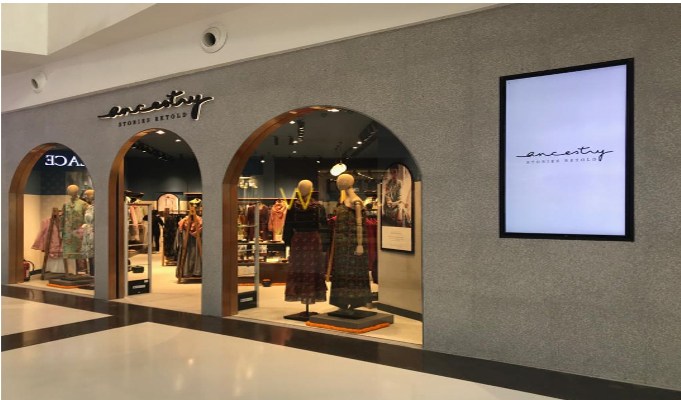
    The newest brand from Future Style Lab, Ancestry, which launched its maiden store in the capital city in May, has recently opened its first store in Kolkata, South City Mall. The brand, which presents a contemporary take on traditional Indian fashion and lifestyle, has earned many accolades in India’s fashion circles already and seems all geared up to woo Kolkatites too.

    Ancestry is inspired by the evolving face of the new age Indian who is self-assured, professionally competent and curious to discover new paths. The brand’s offering, encompassing women’s apparel & accessories, home furnishings, and other lifestyle products, is constantly evolving and is in line with international trends, and yet interestingly rooted in Indian heritage and crafts.

    With pricing that is perfectly suited to any urban Indian’s pockets, Ancestry’s unique collection of dresses, tops, and tunics are created completely using natural fabrics, thereby offering an unmatched quality and fashion sensibilities in that price range. This is one of the key reasons why the brand’s products have nearly flown off the shelves at its current stores in Delhi and Mumbai.

    For the new store launch, Manjula Tiwari, CEO at Future Style Lab, the parent company of Ancestry, said, “Ancestry provides an unparalleled, modern-day experience of old-style Indian artistries, and we’re sure that the brand’s offering will find much love and appreciation with our consumers in Kolkata. We’re truly excited about launching this store, and are thankful to South City Mall for providing us with an impeccable space and opportunity, right in the heart of Kolkata.”

    Ancestry’s tagline #StoriesRetold, perfectly sums up its ethos, for every line of products the brand comes up with tells the story of a particular craft or tradition, but in a way that is suited to the new-age lifestyle.

  • Vietnam’s wind power tariffs attractive, but concern rises

    Vietnam’s wind power tariffs attractive, but concern rises

    Vietnam’s new feed-in tariffs are attracting great interest in wind power, but investors are concerned about grid connection and purchase agreements. The new feed-in tariffs (FIT) are expected to be attractive to domestic and foreign investors, Tommaso Rovatti Studihard, South East Asia sales director for wind power developer Vestas Asia Pacific said.

    The government recently approved tariff revisions under Decision 39 on support mechanisms for the development of wind power.

    The decision, effective from November 1 this year, raises the tariffs from 7.8 US cents per kWh to 8.5 US cents for onshore and 9.8 US cents for offshore generation respectively.

    “Electricity demand will grow at an estimated 8 – 10 percent a year from now to 2030. This represents realistic opportunities for investors,” Studihard said.

    Conjecturing that the national plan envisages adding 1,000 MW of wind power by 2020 and 6,000 MW by 2030, he said the targets are achievable.

    “Vestas is excited about the Vietnamese market, probably this is the most promising market in the Asian region with very good wind resources,” he said.

    Vestas has so far put three wind power projects into operation in Vietnam and plans to have another project come online by 2019 and “do a lot more in the future.”

    Studihard noted that over the next three to five years there are huge opportunities in Vietnam to have some gigawatts of wind power, but the bankability of the power purchase agreement (PPA) remains an issue with many investors, especially international investors, and banks finding it a little difficult to be comfortable with.

    There are no clear termination and force majeure clauses in the PPA, which hinders the attraction of foreign investment, especially from banks and credit institutions, he explained.

    “One more problem is Vietnam’s weak grid capacity, which would become a bottleneck for developing wind and other renewables. The grid needs to be upgraded to tap the great potential Vietnam has for offerable, sustainable and reliable wind power.”

    Bui Van Thinh, CEO of the Thuan Binh Wind Power JSC (TBW), said having gained success in developing the 24MW Phu Lac wind power project in the central province of Binh Thuan, TBW is completing procedures to start construction of a 30MW wind power project in neighboring Ninh Thuan Province.

    But the weak grid capacity is the biggest challenge to expanding renewables like wind and solar power, he said.

    The transmission line near Phu Lac site could handle 100MW, compatible with two 50MW wind power projects.

    Overload capacity is imminent once a solar power project connects with the transmission line, Thinh noted, citing the concerning fact that there are eight solar power projects in the locality approved to connect with the grid.

    “The government should instruct the state-run Electricity of Vietnam (EVN) to install transmission lines to cope with the renewable power projects across the country, especially those in Ninh Thuan and Binh Thuan.”

    Ninh Thuan and Binh Thuan are central provinces that have the greatest potential for renewable energy in the country.

    While 2,000 MW of solar power are proposed to be generated in Ninh Thuan, the local transmission line can only handle a few hundred megawatts. Thus, 110 kV or 220 kV transmission lines need to be installed before pushing the power to the 500kV transmission line and sending it to Ho Chi Minh City or Danang City, Thinh added.

    Nguyen Van Thanh, deputy head of the Ministry of Industry and Trade’s Electricity and Renewable Energy Authority, said demand for energy, wind power in particular, has been growing rapidly.

    The need for ensuring energy security but also sustainable development has changed Vietnam from an energy seller to buyer, with the country’s dependence on imported energy sources also rising, he said.

    Vietnam also faces a shortage of primary energy, with coal imports posing many risks related to supply, price and transportation, he noted.

    “Given that, efficient exploitation of new and renewable sources would play a key role in the country’s socio-economic development, energy security and sustainable development.

    “The country is working diligently to draft policies for the efficient and economical use of energy, diversification of energy sources and increasing application of new and eco-friendly technologies,” Thanh added.

    Under the revised Power Development Plan VII, power stations in the country are expected to generate a total of 60,000 MW by 2020. Of these, coal-fired stations would make the largest proportion of 42.7 percent, followed by hydropower (30.1 percent), gas-fired plants (14.9 percent) and renewable energy sources (9.9 percent).

    By 2030, the total capacity would soar to 129,500 MW, with coal and gas-fired plants accounting for 42.6 percent and 14.7 percent respectively, similar to the figures set for 2020. But the ratio of renewable energy sources is set to double to 21 percent by then.

  • KKR to acquire significant stake in V3, TWG Tea

    KKR to acquire significant stake in V3, TWG Tea

    Private equity company KKR is to invest as much as S$500 million (US$366 million) into V3, the parent of cafe chain TWG Tea and massage chair retailer Osim, to fund regional expansion. In a deal which mixes equity and financing, KKR will take an unspecified “significant stake” in V3, which is effectively valued at S$1.7 billion. V3 is the company which resulted from last year’s restructuring of once-listed Osim International after plans for an IPO were shelved.

    Keith Magnus, chairman of Evercore Asia, which advised V3 on the deal said that the investment by KKR represents a more than 50 per cent increase in enterprise value compared to when the group was taken private.

    “This is a phenomenal premium for [Ron] Sim,” said Magnus.

    Sim remains the chairman, chief executive and controlling shareholder of V3. Sim, who remains chairman, CEO and controlling shareholder of the business added in a statement: “I am extremely pleased to welcome KKR as a significant shareholder in V3. I am confident this investment will position the company for our next phase of growth, starting with the immediate expansion of TWG Tea in Japan and the US and of Osim in China.

    “We would also be looking into M&A opportunities that are earnings accretive.”

    V3 also owns the rights to retail GNC nutritional supplements in Singapore, Malaysia, the Philippines and Taiwan.

    Sim says V3’s revenue cleared S$600 million last year and profit was also up.

  • Samsonite to support global fight against plastic bottles

    Samsonite to support global fight against plastic bottles

    Samsonite has launched an eco luggage collection for Asia made of Recyclex, a material comprising 100 per cent post-consumer recycled plastic (PET) bottles. As part of its public-facing environmental program, Samsonite has been working with one of its suppliers to create sustainable materials suitable for travel and lifestyle products. The company claims its new innovation Recyclex is as durable and reliable as Samsonite’s polyester fabric made from virgin materials, with the added benefit of reducing plastic waste.

    Subrata Dutta, president of Samsonite Asia Pacific said sustainability is a priority that runs through Samsonite’s products.

    “We recognise that travellers are increasingly aware of environmental protection and looking for ways to reduce their environmental footprint … We expect to generate stronger awareness of environmental protection in the market, and will continue to seek opportunities to maximise the use of recycled and recyclable materials in our products and packaging.”

    The products consumed more than 400,000 recycled plastic bottles in Asia. On some items, cork serves as an alternative for the polyurethane trim on the carry handles, logo, ID tag and back protection.

    Over the next two years, Samsonite will launch at least 30 product lines worldwide made from recycled materials such as rPET and recycled polypropylene.

  • Cashless services explode in Vietnam

    Cashless services explode in Vietnam

    Vietnam’s central bank says the value of cashless transactions more than doubled over the first three quarters of 2018. The Department of Payments at the State Bank of Vietnam reported a strong rise in payments over electronic channels between January and September, compared to the same period last year. Accordingly, the value of online payments rose by 18.3 percent, while transactions over mobile apps and e-wallets rose by 126 percent and 161 percent respectively.

    The number of transactions over Internet, mobile and e-wallet channels also rose 33 percent, 30 percent and 28 percent respectively.

    “Mobile payment is becoming a new trend with the rise of technologies such as QR codes, contact and contactless payments, and the tokenization of card information,” said Nghiem Thanh Son, deputy director of the department.

    The first months of 2018 saw the number of users and the value of transactions through electronic channels such as online, mobile and e-wallets rocket at many banks.

    At Sacombank, statistics show that as of October, the number of registrations for online banking reached over 1.3 million accounts and for mobile banking 1.1 million accounts. The total value of transactions per month through both channels exceeded VND108 trillion ($4.63 billion).

    For VietinBank, the country’s second largest lender by assets, the number of internet banking users in the first half of this year surged 114 percent over the same period last year to a total of 1.5 million accounts and VND44.26 trillion ($1.90 billion) in total transaction value.

    Its mobile banking users also reached 1.5 million, engaging in transactions totalling VND64.35 trillion ($2.76 billion) between January and June.

    Over 7 million people are using digital services provided by MBBank. The average transaction value per month reached VND27.4 trillion ($1.17 billion), with digital transactions making up approximately 2.6 million out of 3 million total monthly transactions seen at this bank.

    Nguyen Hoang Minh, deputy director of the State Bank’s HCMC branch, noted that the number of online banking customers has seen average annual increase of 20 percent in recent years.

    Minh said that in order to continue developing non-cash payment channels, credit institutions should pay attention to linking their cashless systems with the public sector, specifically in areas like health, education, payroll and utilities.

    Cashless services should also expand to include online payment options for public services like buses, trains and other smart urban solutions, he said.

  • Singapore Changi Airport extends key DFS

    Singapore Changi Airport extends key DFS

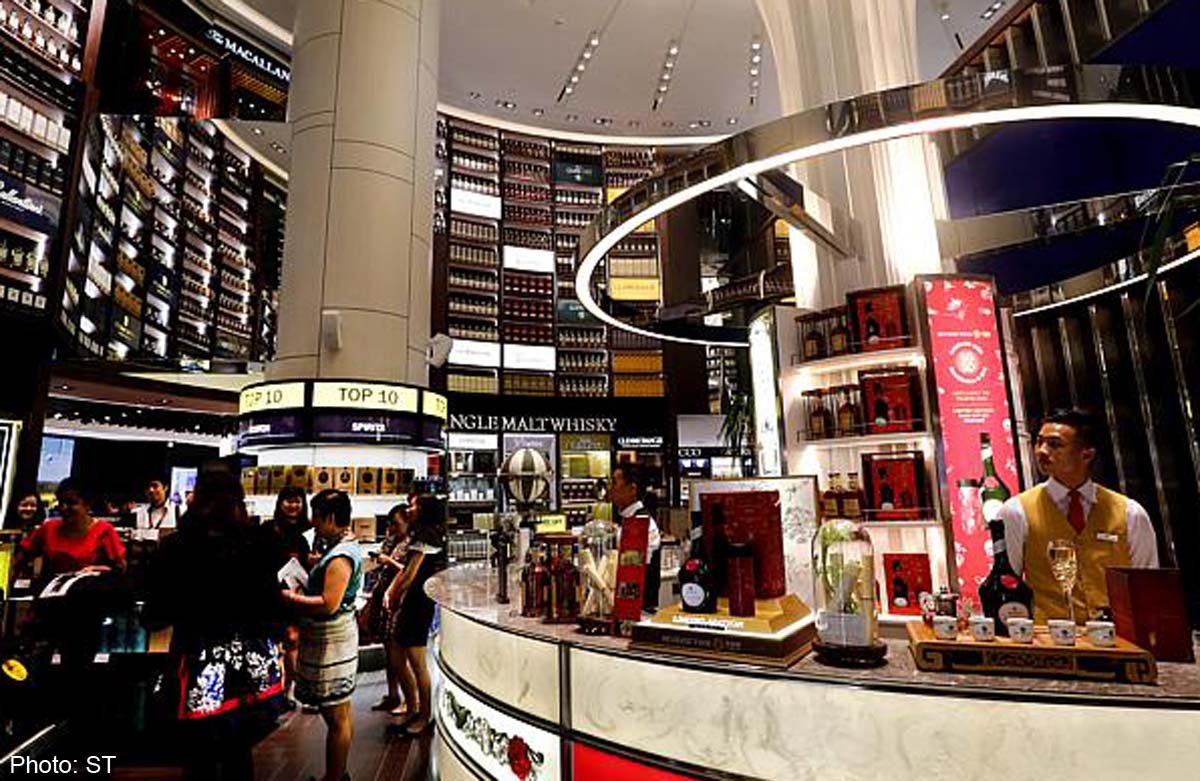
    Key Changi Airport duty-free liquor and beauty concessions held by DFS and Shilla Travel have been extended for two years. The extensions will start from 2020 after the expiration of their current six-year concessions. Over the past four years, the airport’s two core-category concessions have involved pioneering retail concepts including unique duplex stores and the world’s first airport integrated duty-free zone.

    Executive VP of commercial at Changi Lim Peck Hoon said: “We are very pleased to continue our partnership with DFS and The Shilla Duty Free for another two years. Their passion for the travel retail industry continue to deliver new ideas and novel retail concepts at Changi Airport, and were instrumental in driving sales growth over the past four years.”

    A release from the company stated that Changi plans to leverage new technologies and innovations for a seamless retail experience when passengers shop from online to offline, from before they fly to the time they board.
    The extended tenancy terms for the liquor concession will commence from April 9, 2020 until April 8, 2022, covering 18 stores and spanning more than 8000sqm of retail space in Terminals 1, 2, 3 and 4.

    For the beauty concession, the extended tenancy terms will begin from October 1, 2020 to September 30, 2022, covering 22 outlets and spanning more than 7400sqm of retail space across Changi Airport’s four terminals.

  • Samsung to support the Olympics through 2028

    Samsung to support the Olympics through 2028

    Samsung Electronics announced on Tuesday it will extend its partnership with the International Olympic Committee (IOC) through 2028, from the original 2020 end date of the collaboration. The two parties signed an agreement at a ceremony at the Hotel Shilla in central Seoul in the presence of IOC President Thomas Bach and Samsung Electronics Vice Chairman Lee Jae-yong, as well as other executives from the company and officials from the committee.

    Samsung said it will continue as a Worldwide Olympic Partner in the wireless communications equipment and computing equipment category and promote the artificial intelligence (AI), virtual reality (VR), augmented reality (AR) and 5G features of the supplied equipment. Samsung will continue the support beyond the Olympic Games in Tokyo in 2020 through to the Los Angeles 2028 Olympics. The agreement also covers the Youth Olympic Games through 2028.

    Samsung will continue to support the IOC, the national Olympic Committee and the teams, the technology company added. The company will remain a Worldwide Partner of the International Paralympic Committee, extending a relationship that began in 2006.

    In collaboration with the IOC and the Organizing Committees, Samsung plans to continue its Athlete Phone Program. Under this program, it provides Olympic Edition Galaxy phones to all participating Olympic and Paralympic athletes.

    “As part of the agreement, the IOC and Samsung will further develop their strategic digital collaboration to engage young generations around the world in order to promote the power of sport and the values of Olympism,” Samsung said in a statement.

    “As a Worldwide Olympic Partner for the last 22 years, Samsung has been inspired by the spirit of hope, friendship and unity,” said Koh Dong-jin, president and CEO of the IT and mobile communications division at Samsung Electronics. “Through our innovative wireless and computing equipment, which supports AI, VR, AR and 5G technology, we hope to spread the excitement of the games so that fans and athletes around the world can stay connected and share in the journey to achieve greatness at the highest level of sportsmanship.”

  • Korea’s brand Tonymoly inked partnership with Moschino

    Korea’s brand Tonymoly inked partnership with Moschino

    Italian fashion design house Moschino has released a collaboration with South Korean cosmetics brand Tonymoly on a collection of makeup and skincare products. The collection includes a cosmetics line and a few skincare items in sleek black, white, gold and rainbow packaging. The full range will be available from Tonymoly’s US web store throughout December.

    Moschino also collaborated on a reportedly fast-selling fashion line with H&M earlier this year. South Korean cosmetics brand Tonymoly sees the US as a key market in its plan to accelerate international growth.

  • Demand of women’s athleisure wear growing at a rapid pace globally : Lotto

    Demand of women’s athleisure wear growing at a rapid pace globally : Lotto

    Lotto Sport Italia S.P.A, a major name in international sports industry, is nothing less than a household name in India. The brand is manufactured, retailed and licensed by Sports Station Pvt Ltd (SSIPL) in India. The organization has been instrumental in the brilliant re-launch of the brand Lotto Sports in India, making it available across nation.

    According to Shivam Kataria, Vice President, SSIPL Retail, since Lotto has been in India from a very long period of time, either customers have grown up wearing the brand or are aspiring to wear it. “The brand awareness of Lotto is so strong in India that many customers instead of considering it as an Italian brand, think that it is an Indian brand.”

    Abroad, the brand is associated with football and tennis. But it gained its share of popularity in India in the running segment. Slowly and gradually as the Indian market followed international trends and inclined towards the athleisure segment from performance wear, Lotto has also changed its perspective.

    “The Athleisure market is poised to grow 15-20 percent year-on-year. Seeing the immense scope in the category going ahead, Lotto also started changing its outlook towards the market by expanding into the athleisure segment. However, the running segment, football and tennis shoes remain core to the brand,” states Kataria.

    Explaining it further, he says, “A majority of people across the globe have started participating in sports, not for competition but for their well-being, for interaction and for fun. They want sportswear which can be worn in the morning, afternoon and evening. They want to feel comfortable wearing the same shoes in office as well as to a club, and this is the major reason behind the rising demand of athleisure.”

    Another category which has seen a spike in demand at Lotto is women’s wear.

    “Currently, 30 percent revenue is coming from the women’s segment. We are targeting to close this year with 30 percent contribution from women customer including footwear and apparel,” asserts Kataria.

    Target Consumer

    The brand caters to modern-day consumers who consider fitness a lifestyle. It also focuses towards catering to the needs of serious sports enthusiasts. Lotto is also positioned as a brand, which delivers international standard sports merchandise to Indian sport enthusiasts.

    Omnichannel Strategy

    According to Kataria, there are two ways to go Omnichannel – to have your own website or to partner with various e-commerce players. “We have partnered with various e-commerce players as cost of customer acquisition is quite high with our portal.”

    “Omnichannel is still evolving in India and in the next six months to one year, the entire system around Omnichannel is expected to get cemented,” he explains. Going forward, Lotto is planning to introduce their own e-commerce portal.

    “Store integration from an Omnichannel perspective is underway and we can expect it to be fully functional in six months,” he states The brand, which has men’s footwear as the fastest moving category, gets 25 percent contribution to the overall revenue from online business.

    Future Plans

    At present, the brand has 36 EBOs across major locations in Delhi/ NCR, UP, Haryana, Maharashtra, West Bengal, MP, J&K, Uttrakhand and Gujarat. It has presence in over 200+ MBO’s including Sports Station, Reliance Footprints, Pantaloons, and leading e-com portals like Flipkart, Amazon, Snapdeal and Jabong.

    Elaborating on the expansion plans of the brand, Kataria reveals, “This fiscal, we are planning to open more 15 EBOs in North, East and South regions and add another 25-30 stores next fiscal. Our plan is to double the store count in one year’s time.”

    “In the next fiscal we will be adding 100 more SIS. We are also looking forward into new categories like bags, luggage and light fitness equipment,” he adds.

    At the same time, the brand is expanding the categories like women’s wear and apparel. According to Kataria, Tier I and Metro cities are where Lotto’s business is and Tier II and beyond is where its growth lies.

    The brand, which has been growing on 35-40 percent year-on-year, plans to grow at the same scale this fi scal too.

    “The same store sales growth has been flatish or slightly negative as compared to last year. However, we are expecting to see a good season from January onwards,” he says.

    The sportswear brand, which endorses the best of athletes in the sports arena including major names like Luca Toni, David Ferrer, Agnieszka Radwanska, Carla Suarez Navarro, Kevin Anderson and many more, is targeting Rs 150 crore plus revenue in India.

  • Vietnam Airlines eyes stock market listing in 2019

    Vietnam Airlines eyes stock market listing in 2019

    Vietnam Airlines plans to list its shares on the Ho Chi Minh City Stock Exchange next year amidst rising competition of low-cost carriers. “Vietnam Airlines will go public in the first quarter of next year,” its chief executive, Duong Tri Thanh said. “We are making our target the first quarter of next year, and I think it is feasible.”

    But he admitted the final decision rests with the government.

    The carrier’s shares are traded on Hanoi’s Unlisted Public Company Market (UPCoM) and it has a market capitalization of more than $2 billion.

    The government currently owns around 86 percent of Vietnam Airlines, but has said it wants to reduce this to 51 percent by 2020.

    The country’s largest airline by passengers carried now faces rising competition from budget carrier VietJet Aviation and others. Last month Vietjet became the second most valuable airline in Southeast Asia by market cap behind only Singapore Airlines.

    With the domestic market showing signs of saturation, Vietnam Airlines seeks to expand overseas. In October it started a daily service from central Da Nang City to Osaka City to add to the 70 weekly flights from Vietnam to Japan. In 2020 it plans to begin a direct service to the U.S.

    Vietjet launched a daily service from Hanoi to Osaka last month to take its total number of international routes to 64 in 11 countries. It plans to add two more routes to Japan by next month.

    Other airlines are also jostling for market share. Bamboo Airways, Vietnam’s newest airline, received a license last month and is set to make its maiden flight on December 29.

    Experts said the listing of Vietnam Airlines would allow it to compete with other carriers by attracting more investors.

    “This would be a major Vietnamese company joining the stock exchange, which would interest international investors and potentially enable Vietnam Airlines to raise funds more easily to compete with the likes of VietJet and Bamboo,” the Financial Times quoted Tony Foster, a partner at Hanoi law firm Freshfields, as saying.

    Vietnam’s international aviation market, driven by the rapid growth in tourism, has been expanding at more than 30 percent a year, according to the CAPA Centre for Aviation, an Australian consultancy.

    Vietnam welcomed 14.1 million international tourists from January to November, up 21.3 percent year-on-year, according to the General Statistics Office. As many as 11.4 million of them came by plane, up 15.3 percent, it added.

    Vietnamese carriers transported 45.1 million passengers between January and November, up 11.9 percent year-on-year, and 369.2 million tons of goods, up 18.6 percent, according to the General Statistics Office.

    There are five carriers in Vietnam: Vietnam Airlines, Vietjet Air, Bamboo Airways, Jetstar Pacific and VASCO. Vietnam Airlines owns VASCO and has a 70 percent stake in Jetstar Pacific.

  • Hong Kong retail rent rises (too) fast

    Hong Kong retail rent rises (too) fast

    Prime Hong Kong street-shop rents rose 4 per cent in the first three quarters of this year, ahead of the up-to 3 per cent rise prediction by Savills a year ago. In a third-quarter real estate briefing released yesterday, Savills said shopping-centre retail rents, which Savills expected would fall as much as 5 per cent, have actually risen 2 per cent year to date.

    Savills expects prime Hong Kong street-shop rents and shopping centre rents will rise by about 2 per cent next year.

    “In the retail market, despite the headwinds of a weaker RMB, more competition from regional cities and elevated new supply in the New Territories, rents will rise modestly,” the company predicted.

    “New infrastructure in the form of the High Speed Rail Link and the Macau Bridge will improve accessibility for mainlanders, while domestic consumption expenditure is expected to remain reasonably robust. Online retail continues to make limited gains in the Hong Kong market.”

    Savills said prime street shops proved the only real estate category in Hong Kong to post a decline in sale value on a per square foot basis, falling 3 per cent – a stark contrast to the 10-12 per cent rise in flatted factories and warehouses, and 8 per cent rise in luxury apartments.

    The company predicts prices for prime high street shops are likely to fall by up to 5 per cent next year.

  • Zomato India to expand food delivery business to 100 cities

    Zomato India to expand food delivery business to 100 cities

    Online restaurant guide and food ordering firm Zomato on Friday said it is expanding food delivery services to 100 cities over the next week.

    The company’s food delivery services are currently present across 93 cities and lists over 75,000 restaurants on the platform, Zomato said in a statement.

    “… the food delivery business is ramping up really well with the growth in main markets, as well as the reception in tier II tier III cities,” Deepinder Goyal, Founder and CEO, Zomato said.

    Founded by Goyal and Pankaj Chaddah in 2008, Zomato is a restaurant search and discovery platform providing in-depth information for over 1.4 million restaurants across 24 countries and serves more than 50 million users every month.

  • Vingroup’s smartphone launched soon

    Vingroup’s smartphone launched soon

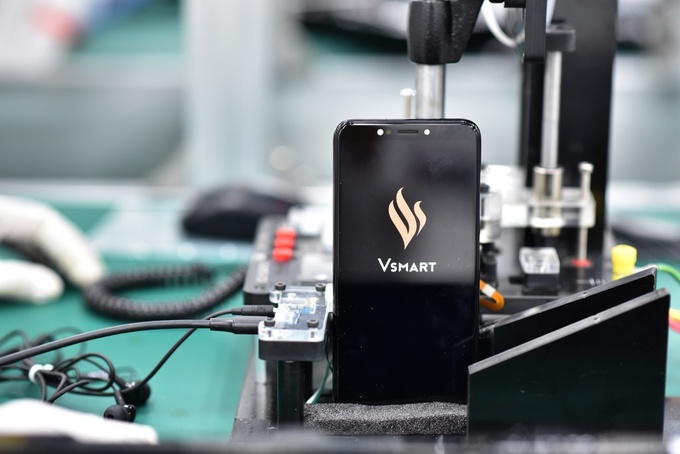
    Vietnam’s largest private conglomerate, Vingroup, will introduce its first smartphones on December 14 as part of its tech expansion. The company will launch four new models under the brand name “Vsmart,” at the Landmark 81 skyscraper in Ho Chi Minh City.

    The phones are produced at Vingroup’s factory in the northern city of Hai Phong, which is capable of making five million phones a year in its first phase of operations, a Vingroup statement said.

    The company will utilize Spanish experts for product development as it owns 51 percent of Spanish technology firm BQ.

    “We hope that Vsmart phones, alongside VinFast cars, will contribute to the development of Vietnam industry and bring Vietnamese brands to the world,” said Nguyen Viet Quang, vice chairman and chief executive officer of Vingroup.

    Vingroup became the country’s first full-fledged domestic car maker two months ago, introducing three new car models. In June, it established the VinSmart Co. to produce smartphones and other smart electronic devices with a registered capital of VND3 trillion ($131.54 million).

    VinSmart is also working with Qualcomm and Google’s Alphabet Inc to “update to the most advanced technology in the smartphone sector,” the statement said.

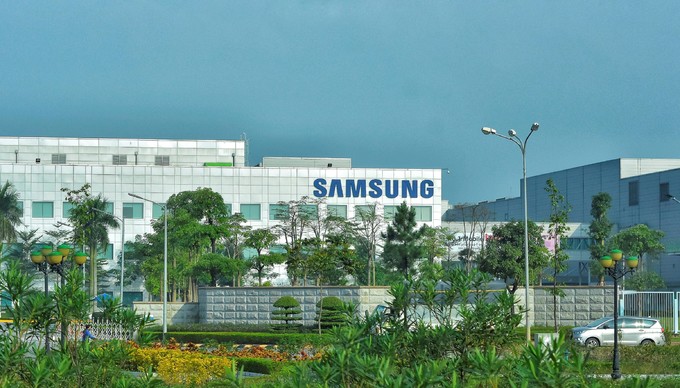
    The company will be the newest phone maker seeking success in Vietnam, a country of 95 million people. The market is currently dominated by Samsung and Apple phones. Vietnam is the largest smartphone production base for Samsung Electronics.

    Vingroup said its VinSmart factory will also produce smart TVs and other smart products in the future.