Blog

  • Telkomsel to adopt Kinetica analytics platform

    Telkomsel to adopt Kinetica analytics platform

    Indonesia’s Telkomsel has arranged to adopt the Kinetica advanced analytics platform to help it transform the customer experience for its users.

    The operator will use the Kinetica engine and NVIDIA graphics processing units (GPUs) to enable real-time analytics, location-based visualization and AI capabilities.

    Telkomsel plans to use thee capabilities to deliver data-driven customer experiences and to enable real-time financial and business reporting.

    “The rapid growth in mobile devices, digital users, and the micro-services nature of prepaid across the Indonesian market has led to exponentially more data generated than ever before,” Telkomsel CIO Montgomery Hong said.

    “This influx of extreme data presents a massive opportunity to develop new, personalized, digital lifestyle experiences for Indonesian consumers. Unlike traditional database solutions, the Kinetica engine is purpose-built for extreme data and provides real-time data analysis and location intelligence across our business, from prepaid and postpaid mobile, to digital lifestyle services (video, gaming, music), to mobile financial services, and digital advertising for starters.”

  • BSNL helping to transform Nokia’s Chennai factory

    BSNL helping to transform Nokia’s Chennai factory

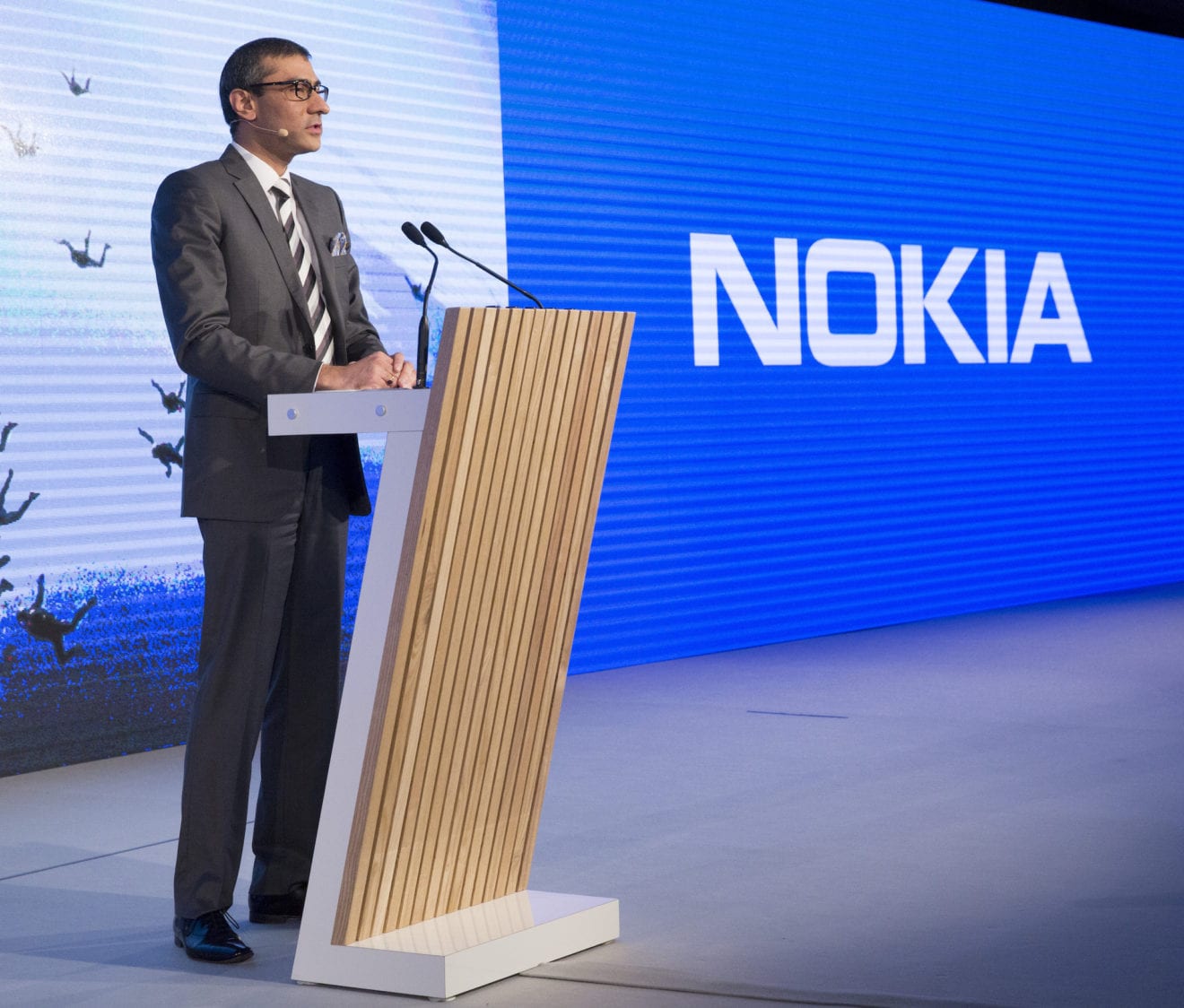
    Nokia and Indian state owned operator BSNL have announced a collaboration to use LTE technology to improve operational efficiency at Nokia’s Chennai manufacturing plant.

    The project, which the companies are billing as India’s first real world application of the Industry 4.0 concept, will see Nokia’s Chennai factory adopt advanced technologies to enhance operations and increase productivity.

    These technologies will include augmented and virtual reality, connected robotics, AI, big data analytics and IoT capability.

    Nokia deployed the LTE network using its Micro Core Network and Multi-access Edge Computing platform.

    Nokia and BSNL aim to use the project to demonstrate the ability to leverage automation across industries, and how the experience can be replicated in sectors such as oil and gas, mining, public safety and disaster management.

    BSNL has undertaken several initiatives to ensure India keeps pace with 5G evolution globally. Nokia is already one of our key partners in developing the 5G ecosystem, and now we are exploring use cases such as Industry 4.0 that can benefit tremendously with 5G,” BSNL chairman and managing director Anupam Srivastava said.

    “This network deployment for Industry 4.0 at Nokia’s Chennai factory that can be scaled to 5G demonstrates our preparedness to take advantage of new opportunities that will emerge with 5G and IoT in India.”

  • StarHub pursuing network sharing to cut costs

    StarHub pursuing network sharing to cut costs

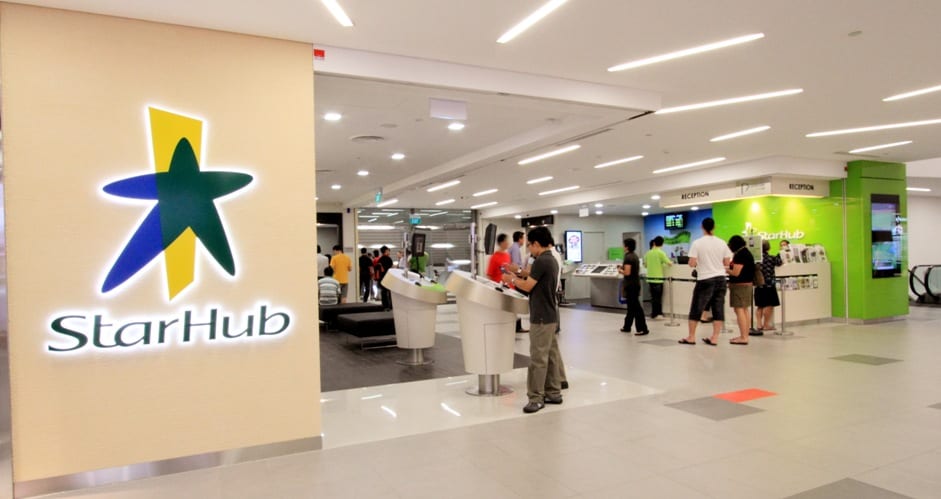
    Singapore’s StarHub has revealed it is pursuing network sharing arrangements to further cut costs, after announcing a planned 12% reduction in the operator’s workforce.

    The operator could reach a commercial network sharing agreement shortly and be reaping financial benefits by the end of next year, the company’s CEO Peter Kaliaropoulos.

    The company’s new CEO, who took his position in July, said sharing of facilities is a necessity once an industry hits maturity.

    StarHub and smaller rival M1 have already indicated that they are evaluating further collaboration on mobile infrastructure sharing to reduce costs.

    Earlier this month, StarHub announced it will cut 300 jobs as part of cost reduction efforts aimed at saving S$210 million ($152.3 million) over the next three calendar years.

    According to the report, Kaliaropoulos believes StarHub needs to be leaner and more agile and focus its resources on growth areas such as its enterprise business.

    The company is under particular pressure due to the recent entry of Australia’s TPG as Singapore’s fourth mobile operator. Kaliaropoulos warned that the Singapore market may not be large enough to sustain four mobile operators, hinting that the smallest player may find it difficult to survive.

  • SISCC taps XSite Modular for subsea cable landing stations

    SISCC taps XSite Modular for subsea cable landing stations

    Solomon Islands Submarine Cable Company Limited (SISCC) has contracted prefabrication consultant and critical infrastructure building design builder XSite Modular to build four modular cable landing stations in the Pacific nation.

    The new cable landing stations will be deployed in Honiara, Auki, Noro, and Taro, and will form part of the Solomon Islands’ planned new subsea cable network infrastructure.

    This network will include the Coral Sea Cable System, a 4,000km cable system linking the Solomon Islands with Papua New Guinea and Australia. The network is being funded by the Australian government and will be operated by Australia’s Vocus Group. It will be the first subsea cable to directly reach the Solomon Islands.

    In addition, the 730km Solomon Islands Domestic Network (SIDN) will connect Taro, Noro and Auki with SISCC’s international hub in Honiara. This cable is also being funded by the Australian government as part of its development assistance program.

    SISCC has agreed to provide the landing party infrastructure for the two cable projects as part of the agreements between the Australian, Solomon Islands and Papua New Guinea governments.

    “XSite’s modular approach made design and construction of the structures easily customizable and able to meet both the strict delivery and budget demands of this ambitious project,” SISCC CEO Keir Preedy said.

    “Most crucially, XSite provides best-in-class and proven building techniques that offer the safety and reliability guarantees that are simply without compromise. We’re pleased to have them as our partner in developing and implementing this critical infrastructure for the Solomon Islands.”

  • Foot Locker’s Newest Store Features a Barber Shop and Gaming Zone

    Foot Locker’s Newest Store Features a Barber Shop and Gaming Zone

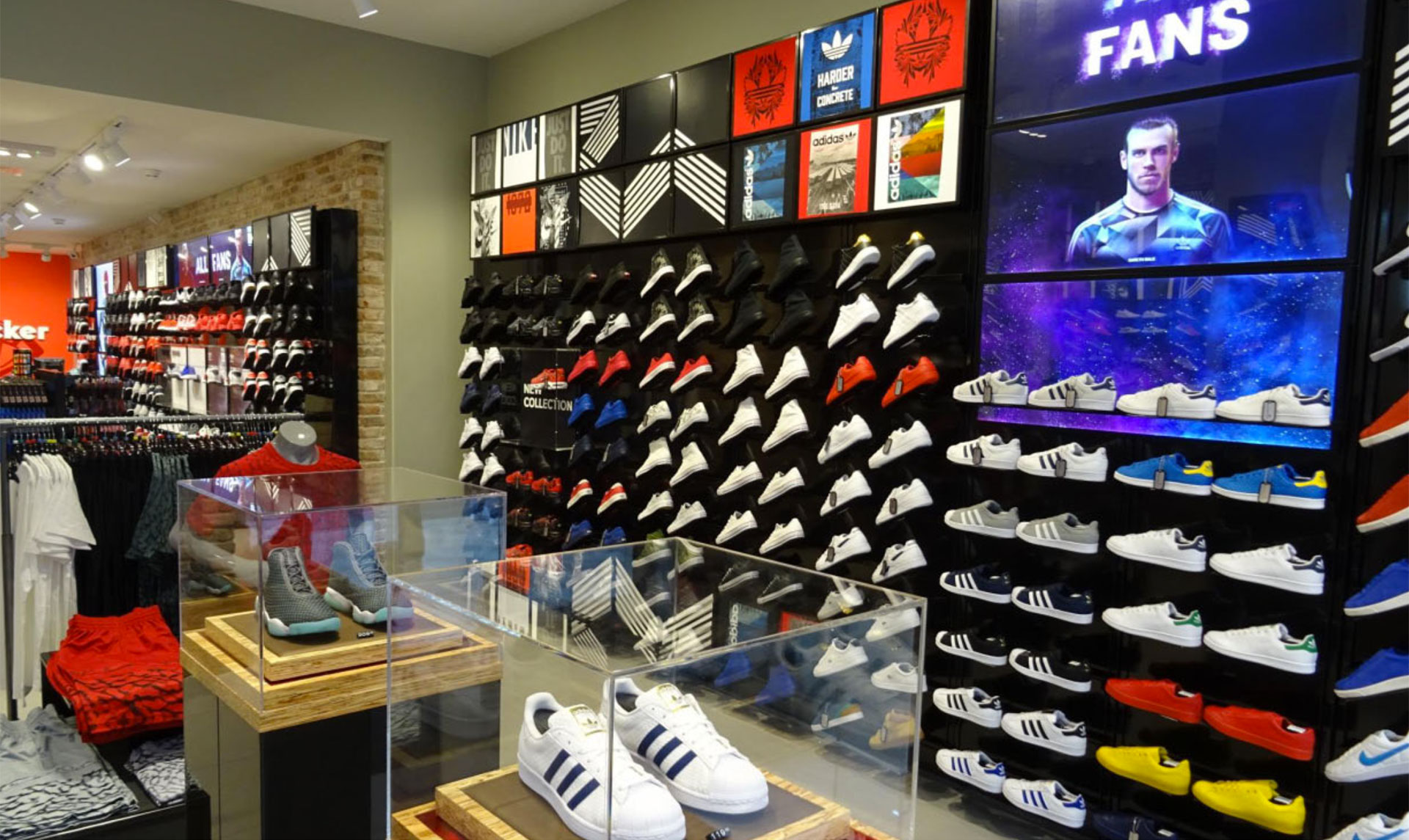
    Foot Locker is diving headfirst into experiential retail with the debut of its Hong Kong “power store,” a 26,000-square-foot sneakerhead paradise where shoppers can get a haircut or hang out and play Xbox in between trying on shoes.

    Located in the city’s bustling Kowloon shopping district, the store is one of four the company plans to open throughout Asia in the 2018 fiscal year, with three in Singapore and one in Malaysia rounding out the pack. Only the Hong Kong location, however, qualifies as a power store, which Foot Locker’s chairman and CEO Dick Johnson described on the company’s last earnings call as an effort “in key markets to create more immersive and community-oriented customer experiences.”

    Power stores in Liverpool, England, and Oxford Street in London likewise feature collaborations with local artists, on-site barber shops, sneaker cleanings and gaming zones, all designed to enhance the in-store experience at a time when many sneaker fans do much of their shopping online or via app.

    The company is betting on its new Asia outposts to help drive sales as its growth in the U.S. and Europe have flagged slightly in recent quarters. It is also launching e-commerce in Singapore for the first time, complementing its in-store offerings.

    Throughout the year, the company plans to open 45 new stores and close 120 less profitable locations, and Johnson said power stores are in the works for the domestic market, with the Detroit area up first. The trick, he said, is finding “the right property, the right lease terms and the right construction period to make it happen.”

  • 2018 Porsche Cayenne India Revealed

    2018 Porsche Cayenne India Revealed

    We’d told you a long time back that the 2018 Porsche Cayenne is all set to land on Indian soil this year. Though the launch has been delayed to the festive season, the company was planning to launch the car in the middle of the year. However, the third generation of the SUV is all set to grace our shores today. Bookings for the new Porsche Cayenne Turbo had already started in September and the first batch of cars will be delivered this year. The all-new model boasts of a new and more agile platform, more powerful engines and for the first time, the option of a hybrid powertrain as well.

    The 2018 Porsche Cayenne SUV gets a host of upgrades over its predecessor including a revised chassis, and a separated link design for the front axle and a multi-link rear axle. The latter though is offered as optional, but further improves the agility on the car. Visually too, the Cayenne has evolved and gets a sharper looking appearance while keeping the appearance similar. The SUV now comes with the Porsche Dynamic Light System (PLDS) or LED Matrix Beam headlights, which also include PDLS.

    In terms of power, the new generation Porsche Cayenne will be offered in a range of engine options including V6 and V8. The standard version will use a 3.0-litre single-turbo V6 with 335 bhp and 450 Nm of peak torque, while the Cayenne S will draw power from the 2.9-litre twin-turbo V6 that produces 433 bhp and 550 Nm of peak torque. The 2018 Cayenne Turbo packs in 542 bhp and 770 Nm of peak torque from a 4.0-litre bi-turbo V8 engine, and is capable of hitting a top speed of 286 kmph.

  • TomTom loses Volvo contract

    TomTom loses Volvo contract

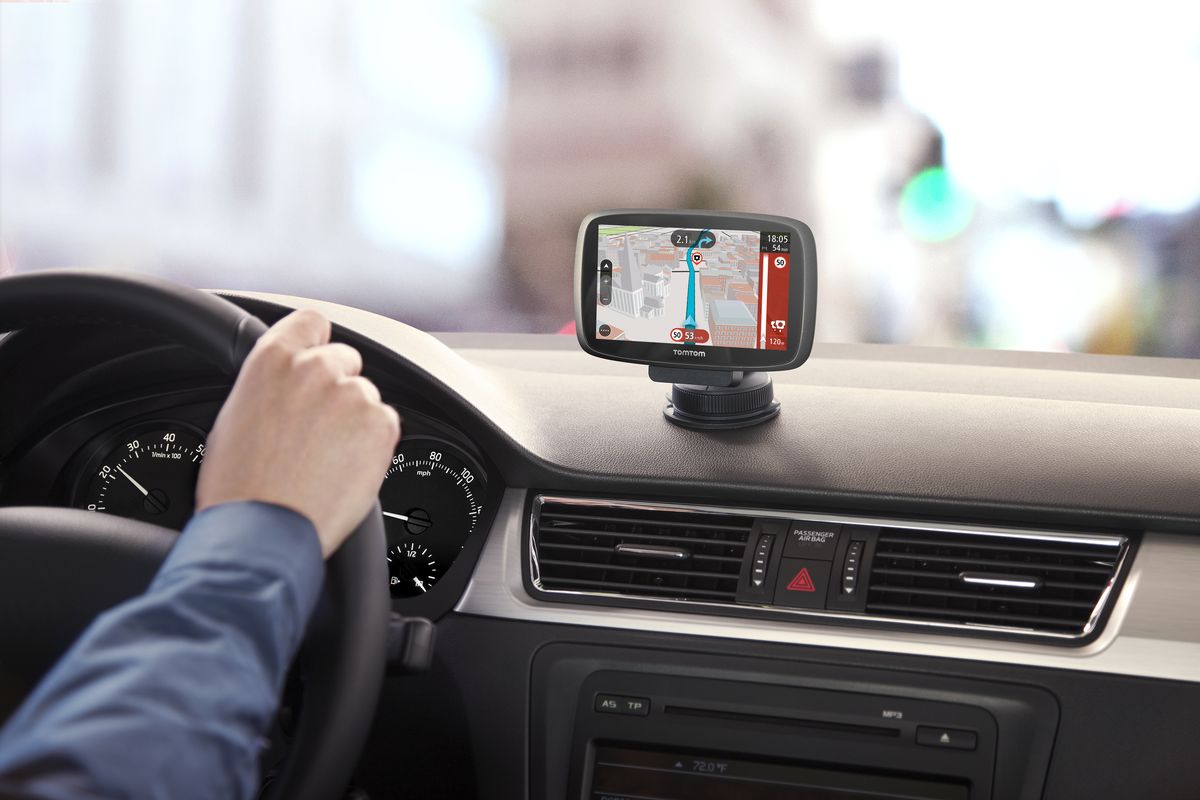
    Dutch navigation firm TomTom said on Tuesday it had lost a contract with automaker Volvo. The company said the contract to provide location and navigation services to Volvo, which was announced in 2016, had been ended before it was due to go into force in 2019. That fed into concerns of critics who said a deal Google made last month with Renault, another TomTom customer, meant the company risked being relegated to third place in its main market, with lower margins.

    Volvo could not immediately be reached for comment on the contract. ING analysts said in a trading note that they believe the Swedish automaker had switched to Google, rather than the current leading player in the navigation market, HERE.

    “Now that Google is making inroads, the mapping business has become a three-player market with TomTom, HERE and Google, which is clearly less attractive for TomTom than the two-player market it was before,” they said.

    TomTom shares lost a quarter of their value in one day on Sept. 18 after Google announced a far-reaching supply deal with a group of automakers including Renault, Nissan and Mitsubishi.

    Though the Volvo news knocked shares lower, TomTom reported better than expected third-quarter results on Tuesday, with core earnings rising to €62.4 million euro ($72.2 million) from $41.1 million a year earlier.

    Group sales were slightly higher at $254 million euros, from $253 million in the third quarter of 2017.

    While sales of the company’s traditional satellite navigation devices continued to fall, that was offset by sales to automakers and map licensing to customers Apple and Uber. The company also raised its full-year revenue outlook to $984 million from $955 million.

    TomTom this month announced plans to sell its fleet management business, saying it would instead focus its energy on making digital maps used in highly automated driving — the business on which it has pinned its future.

    It said it has seen “strong interest” for the fleet subsidiary, valued at roughly $810 million.

    Harold Goddijn, CEO and co-founder, said recent new deals with PSA Group and BMW showed the viability of the company’s products.

  • Real Singapore retail sales rise 2.4 per cent in August

    Real Singapore retail sales rise 2.4 per cent in August

    Singapore retail sales rose 2.4 per cent in August, after excluding the impact of motor vehicles on the figure. Including vehicles, retail sales posted a year-on-year decline of 0.4 per cent. They rose 2 per cent month on month, excluding cars.

    By category, August delivered a mixed bag for retailers, year on year. Jewellers drove the watches and gem sector up 6.3 per cent while apparel and footwear sales rose 6 per cent. Recreational goods rose 4.4 per cent and sales in department stores by 3.3 per cent.

    But sales of computers and phones dropped 3.8 per cent, partly due to declining computer sales. Food retailers experienced a 3.5 per cent decline and optical goods and book vendors, 2.3 per cent.

    Petrol stations had the highest movement, up 10.4 per cent, reflecting high fuel prices.

    The total of Singapore retail sales in August, including motor vehicles, was estimated at S$3.8 billion, of which online sales accounted for 4.6 per cent.

    Sales of food & beverage services from restaurants, cafes and fast-food retailers, increased 3.2 per cent in August, reaching $728 million.

  • LVMH names Sophie Brocart as CEO of Jean Patou

    LVMH names Sophie Brocart as CEO of Jean Patou

    Last month, LVMH named Guillaume Henry new Creative Director of Jean Patou. Guillaume Henry is coming back to Fashion Week, resurrecting the Jean Patou maison with LVMH’s backing. The former creative director of Carven and Nina Ricci was handpicked by LVMH’s Sidney Toledano for the role and is expected to debut his vision for Jean Patou in 2019.

    To support Guillaume Henry, LVMH has announced Sophie Brocart as CEO.

    These changes are in preparation of a global brand transformation.

    “Jean Patou is a very exciting project. It is just at the beginning, but we are all there to support Guillaume Henry’s creativity,” Brocart said to FashionNetwork.com.

    Born in 1880 in Normandy, Jean Patou, the son of a tanner and nephew to a furrier was well experienced in the area of design before deciding to venture out on his own and open a small dressmaking salon in Paris in 1912 . Success came quickly to Patou who sold his entire 1914 collection to a single American buyer, however, he was forced to put his craft on hold when he was mobilized in August of the same year for World War I. Reopening his salon in 1919, Patou began to work on eliminating the flapper look and on improving the design for sportswear.

    Patou began the tradition of previewing his fashion collections to the press and it was also Patou who invented the first designer label—the pockets of his creations were embroidered with the letters “J” and “P”.

    Brocart will leave her position at Kirkwood and LVMH will announce her substitute.  She will keep her position as head of mentoring at LVMH, as she believes that talents need to be cultivated and it is very interesting to see people growing.

    Brocart joins Patou from Nicholas Kirkwood, where she has been CEO of the London shoe designer for the past four years. The appointment marks a meteoric rise for Brocart, who has been the mentor in chief of young talent within the LVMH orbit, notably guiding the winners the LVMH Prize. She also worked with Jonathan Anderson, after LVMH took a substantial stake in the Northern Irishman’s signature business, J. W. Anderson.

    While at Kirkwood, she was instrumental in developing the fledgling house, which last month staged its debut show in London Fashion Week. A brilliant piece of staging entitled Evidence, a vision of a dystopian universe on a set crammed with laptops, fridges, graffiti and monitors on which an 18-year-old “positive hacker” from California showed 360-degree images of Kirkwood’s new footwear – notably his new floral posh punk boots. In a word, Brocart is an out-of-the-box-thinking executive.

    Her appointment is very much on-trend with LVMH, which likes to move around and promote decision-makers from within its own ranks. Also last month, the group named Jenny Galimberti, the former communications director of Louis Vuitton, to be the new CEO of J.W. Anderson.

  • Malaysia, Japan in talks on Asian aircraft project

    Malaysia, Japan in talks on Asian aircraft project

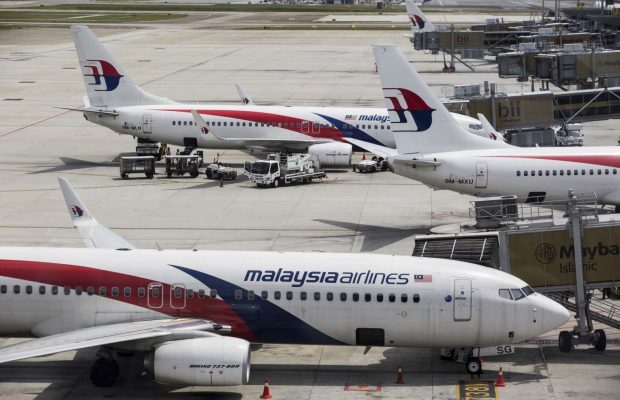
    Malaysia is in discussions with the Japanese government for an Asian aircraft project, which is still at the ideation stage, with Malaysia looking at possibly supplying components. Entrepreneur Development Minister Datuk Seri Mohd Redzuan Yusof said the idea, envisioned to be like Airbus, for an Asian aircraft came from the Japanese government.

    “They (Japanese government) invited us to consider participating in the Asian aircraft project in view that we have the base here in relation to what we do to support the global aircraft industry, namely CTRM (Composites Technology Research Malaysia Sdn Bhd) is supplying tier 2 (aerospace parts) to Airbus. That will become our base to open up more if the ideation from Japan do materialise in the near future,” he told a press conference at the Malaysian Economic Summit 2018 today.

    He said it has not prepared the framework of its understanding between the various countries in Asia for the project, given that there is only an ideation coined.

    Adding that it has yet to have the first meeting, he hopes the next engagement will be held in late November in Japan.

    “I interacted with the Japanese counterpart. They coined the idea of having an Asian aircraft using the entrepreneurship kind of approach to develop this vendor (system), which is already in the industry, expand their capacity and capability, reaching certain level then combining our resources and technology to realise (this project).”

    Meanwhile, he said the Ministry of Entrepreneur Development (MED) is reviewing all the policies and initiatives regarding the development of entrepreneurs and SMEs with the intent to make it more holistic, integrated and targeted.

    Mohd Redzuan said it is the ministry’s mission to widen and coordinate entrepreneurial activities to be more targeted, inclusive, encompassing all segments of society including the B40s and M40s.

    “MED will focus among others on providing proper training and facilitation for entrepreneurs based on industry needs such as business advisory, loans and funding to stimulate the interest of potential and new entrepreneurs to establish their own startups. At the same time, assistance will be extended to them to ensure growth and sustainability of their businesses,” he said.

    He said it is the mandate of MED to provide support and facilitation to local entrepreneurs so that they may move forward and withstand the competition and challenges of the global market.

  • Vera Wang Launched Bridal Jewelry With Chow Tai Fook

    Chinese-American fashion designer Vera Wang and Chow Tai Fook, the jeweller, have collaborated on a fine jewellery collection to launch this week in China. Hong Kong will follow. The Vera Wang Love collection targets modern Chinese brides with a penchant for diamonds, casting pieces in 18K gold and platinum – including engagement rings, wedding bands, and fine fashion items in precious stones. The diamonds used are traceable and nano-inscribed for individual identification.

    Vera Wang said the sophistication, quality, technical capabilities and vast consumer reach of Chow Tai Fook enabled her to create both wedding and fashion signature pieces at the highest quality from the attainable to the most exclusive.

    Kent Wong, Chow Tai Fook’s MD, added: “The intrinsic value of “traceable” marks carried by T Mark diamonds perfectly aligns with Vera’s design philosophy, resulting in beautiful, modern pieces of jewellery.”

    The Vera Wang and Chow Tai Fook collection debuts October 19 at Chow Tai Fook stores in Shanghai, further expanding to Beijing, Chengdu, Hong Kong and other cities later.

  • Jil Sander unveils new store format in Tokyo

    Jil Sander unveils new store format in Tokyo

    German fashion label Jil Sander has introduced a new store format in Tokyo. The Onward Luxury Group-owned brand has inaugurated the new 268sqm flagship in the fashionable Omotesando district with a redesigned interiors concept that will be used to revamp the label’s existing stores worldwide.

    The new store interior design is the work of British architect John Pawson, who has adopted the minimalist essence of the brand’s fashion aesthetic in the new format – using limestone and cherry wood features and a large glass facade – and showcasing just one or two looks at a time.

    Jil Sander operates 11 stores worldwide, including a flagship in Paris. A new opening in Moscow is planned for next year.


  • JD.com’s green initiative for sustainable consumption

    JD.com’s green initiative for sustainable consumption

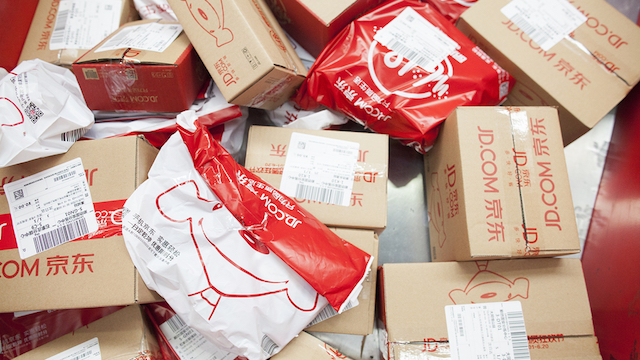
    JD.com, China’s largest retailer, the World Wide Fund for Nature (WWF) and The China Children and Teenagers’ Fund (CCTF) are partnering to launch a second annual Green Planet-Sustainable Week, raising awareness about sustainable consumption in the world’s most populous nation. The seven-day program, which kicked off this week, will reinforce JD’s commitment to help the retail industry develop more sustainably, reducing the impact of China’s booming consumption on the environment.

    For the event, JD will promote pollution reduction through the use of reusable shopping bags, created from the fabric of discarded apparel in response to a call from WWF to reduce pollution caused by plastics. The bags, which are also regularly used in JD operations, will be distributed free during the event and include RFID Chips that can be scanned as coupons in offline stores through JD’s partners.

    JD’s Green Planet-Sustainable Week also kicks off a new clothing drive for the company’s recycling program. Taking advantage of its nationwide in-house logistics network, which covers 99% of China’s population, JD will collect both used and unused clothing from customers either to be sent to recycling facilities or distributed to those in need. Proceeds will be donated to lower-income families, people with disabilities and charity groups. Last year, a similar drive led to the collection of nearly 400,000 items, or 20 tons, of clothing, from 150 million people in four cities. This year’s program will expand to cover 47 cities.

    Customers will be able to trade in major appliances for recycling as well, by third-party companies through JD’s platform. The appliances will be disassembled, after which parts will be used for repairs, helping to reduce the waste generated by household appliances as well as pollution created by their production. Working with JD’s charity affiliate, JD Foundation, the participating companies will donate a portion of any proceeds to support charitable activities on behalf of customers, while customers are eligible for payment for their used devices, plus coupons from JD in exchange for the trade-ins.

    Meanwhile, all logistics information for tracing donations and trade-ins are available through JD.com’s proprietary supply chain management technology.

    “The spectacular rise of Chinese consumption has been a major force behind the country’s incredible economic story but has also contributed to unprecedented environmental challenges,” said Zhonghao Jin, Head of Market Practice, WWF China. He believes this week’s activities will help “raise consumer awareness and accelerate the mainstreaming of sustainable consumption.”

    Libo Ma, head of the CSR department at JD.com disclosed the company is in the midst of an effort to convert its entire vehicle fleet to new energy vehicles while being involved in other efforts to reduce emissions. The company is also is developing biodegradable packaging to further reduce waste in the supply chain.

  • Malaysia to focus more on pollution charge on single-use plastics by 2021

    Malaysia to focus more on pollution charge on single-use plastics by 2021

    The government is working towards implementing a pollution charge for single-use plastics which will be imposed on fixed premises at a rate of 20 sen or higher, to be determined by state governments through local councils. They include premises such as hypermarkets, supermarkets, department stores, convenience stores, fast food restaurants, petrol station convenience store, chain stores and pharmacies.

    Minister of Energy, Science, Technology and Climate Change Yeo Bee Yin said the federal government is giving state governments the liberty to determine the rate, and to decide the implementation time frame between 2019 until 2021, marking the first phase of the Roadmap Towards Zero Single-Use Plastics 2018-2030, which was launched in conjunction with the Greentech & Eco Products Exhibition & Conference Malaysia (IGEM 2018) today.

    “We have already engaged with the ruling government states as well as the opposition states. Everyone has already agreed to the plan and said they want to do this as well together,” she said at the event.

    Yeo said the goal is to address the lack of uniformity in the use of single-use plastics with such initiatives already being in effect in some states and result in the improvement and increase in the production and use of bio-degradable bags.
    She believes the charges will not be passed on consumers but instead encourage a change in behaviour and lead to people eventually using shopping bags.

    Yeo said the money collected from the levy will be ploughed back for green initiatives, creating awareness and reusable shopping bags.

    Phase two of the roadmap which will go on between 2022 and 2025 may see the levy being extended to manufacturers and non-fixed premises.

    Meanwhile, the government has cancelled 155.7256 megawatts (MW) of renewable energy feed-in tariff (FiT) projects due to unfavourable response in September 2018 and instead opened up 114.5682 MW FiT projects for qualified applicants.

    Additionally, the Sustainable Energy Development Authority of Malaysia rolled out the country’s first solar photovoltaic (PV) monitoring system, which is a database connected to grid’s nationwide meant to monitor the performance of solar PVs on a real-time basis.

    Keeping up with that, the country’s first insurance plan for solar PVs was launched this week.

    The initiative is under Seda in collaboration with Allianz Malaysia Bhd and the Malaysian Photovoltaic Industry Association. This scheme is aimed at protecting residential solar PV users.

    On another note, the government will introduce Building Energy Intensity labelling as part of its efforts to promote voluntary adoption of energy efficiency in the building sector. This is along with a renewed push for the adoption of energy performance contracting for government buildings next year.

    Yeo said capital for the retrofitting projects will be derived from the private sector, with any cost savings derived to be shared between both parties.
    She said there can be savings if the government is able to save some 20% of its annual electricity costs. This in turn will translate into a return of investment and profit for investors.

  • Fast Retailing profit soars, mainly Uniqlo

    Fast Retailing profit soars, mainly Uniqlo

    Uniqlo parent Fast Retailing has reported a record full-year profit, due to strong growth in Asia and lessening losses in the US. And the company says current year performance to date suggests even better results lie ahead. Fast Retailing profit rose 34 per cent to US$2.11 billion in the year to August.

    In July the company reported a solid third-quarter, again based on strong sales across Asian markets. Across the first nine months, sales outside Japan rose 28 per cent year on year and operating profit outside Japan soared 65 per cent, driven largely by Uniqlo Asia.

    Online sales were also strong as the Uniqlo brand expanded its reach to new markets.