Blog

  • Online lending booms in Vietnam, but lack of regulations

    Online lending booms in Vietnam, but lack of regulations

    It is easy these days to find a site for online lending and borrow quickly with simple procedures. Companies have entered the peer to peer (P2P) online lending realm that directly connects borrowers, whether individuals or companies, with lenders, and get up to 2,000 customers a day, Can Van Luc, chief economist of the state-owned creditor BIDV, said.

    This lending format does not require the involvement of an intermediary. It is flourishing because there are always people who have need for loans or want to lend money, and the rapid growth of technology precludes the need to go through intermediary financial institutions, he said.

    “This model has several strong points, including low cost and quick disbursement time, but the worry is it is easy for investors to make use of it for other purposes. There are many lenders who come to the P2P platform not to find borrowers but to invest in other fields and the relationship between the suppliers of the platform, borrowers and lenders is unclear due to the lack of a legal framework.”

    And because of this, lenders have been using gangs to recover their loans and put up their interest rates much higher than the legal cap set by the State Bank of Vietnam.

    Luc said there is a risk for both borrowers and lenders.

    He said authorities need to create a legal framework for this model soon to meet the strong demand in the market for credit.

    Economist Nguyen Tri Hieu argued authorities should create legal regulations related to contracts, interest rate, fees, and other aspects to avoid problems.

    Nguyen Thi Hong, Deputy Governor of the central bank, told a government meeting early this month that online lending has more or less turned into loan sharking.

    It is a no-go area for the central bank but it would monitor and make recommendations to the government to regulate the market, she said.

  • Vietnam’s FastGo app looks to speed across borders

    Vietnam’s FastGo app looks to speed across borders

    FastGo CEO Nguyen Huu Tuat told on Friday that the app will have its own payment system and will “personalize” promotion deals that will match customers’ interests.

    “Our goal is to reach 30 percent of the market share after six months in these two countries,” he said.

    Explaining the choice of these two countries for the company’s first overseas expansion, Tuat said he wanted to start with the easiest neighboring countries to tap.

    “After looking at their national policies as well as the market’s current competitiveness, we believe that Indonesia and Myanmar would be the perfect destinations,” he said.

    “We also have strategic partners, networks and business strategies for us to be successful in these countries.”

    The company is in the process of hiring staff and renting facilities.

    After launching in Hanoi on June 12, the app is now available in Da Nang and Saigon.

    FastGo last month said it has 15,000 taxi and motorbike partner drivers in Hanoi and Ho Chi Minh City, but they are still not a common sight on the streets, unlike the ubiquitous red and green uniforms of Go-Viet and Grab drivers.

    Tuat said he wants FastGo to become one of Southeast Asia’s top 3 ride-hailing apps in the future.

    The company hopes to make its service available in 20 cities in Vietnam and five other Southeast Asian markets, including the Philippines, Cambodia and Thailand, by the end of next year.

  • Huawei lays out AI roadmap

    Huawei lays out AI roadmap

    AI has disrupted many industries and enterprises in recent years.  Huawei believes AI will soon become a “general-purpose technology”, which combines different technologies like cloud, IoT, and big data to help tackle existing and future problems.

    The ICT solutions provider unveils its AI strategy and AI portfolio at the recent Huawei Connect conference in Shanghai.

    “AI offers new business opportunities, strengthens our products and services to become more competitive and future-oriented, and improves our internal operational management and efficiency,” said Eric Xu, rotating chairman at Huawei.

    10 changes shaping the future

    Huawei has identified 10 changes that will help shape the future of AI. They are faster model training; abundant and affordable computing power; AI deployment in different scenarios and the protection of user privacy; data-efficient, energy-efficient, and explainable algorithms; AI automation especially during processes like data labeling, data collection, and model design; practical applications to meet the needs of real-world execution; real-time and closed-loop system; multi-tech synergy between AI and other technologies; one-stop platform; and talent availability.

    Five areas of AI focus

    To pave the way for these changes, Huawei has unveiled its AI strategy in five areas of focus—AI research investment, full-stack AI portfolio, open ecosystem and talent, existing portfolio enhancement, and operational efficiency in Huawei.

    “Our AI strategy is to invest in basic research and talent development, build a full-stack and all-scenario AI portfolio, and foster an open global ecosystem,” said Xu.

    Huawei’s full-stack AI portfolio includes chips, chip enablement, a training and inference framework, and application enablement. Its portfolio can be deployed in various scenarios including public clouds, private clouds, edge computing in all forms, industrial IoT devices, and consumer devices, according to Huawei.

    On the chip level, Huawei announced the launch of two chips—Ascend 910 and Ascend 310, which are touted to accelerate AI adoption in different industries. Xu touted that Ascend 910 has the world’s greatest computing density in a single chip, which can be applied in large-scale distributed training system. Ascend 310 is an efficient AI chip for low-power computing. The chips will be deployed to offer cloud services to customers next year. Its AI portfolio also includes an AI acceleration card, AI server, and AI appliance.

    To foster an open global ecosystem, Huawei aims to develop industry and business alliances with one million AI developers and partners over the next three years. “We believe this target can be achieved through our talent training program, full-stack AI portfolio, and technical collaboration,” said William Xu, chief strategy marketing officer at Huawei.

  • AirAsia wins IDC Digital Transformation award

    AirAsia wins IDC Digital Transformation award

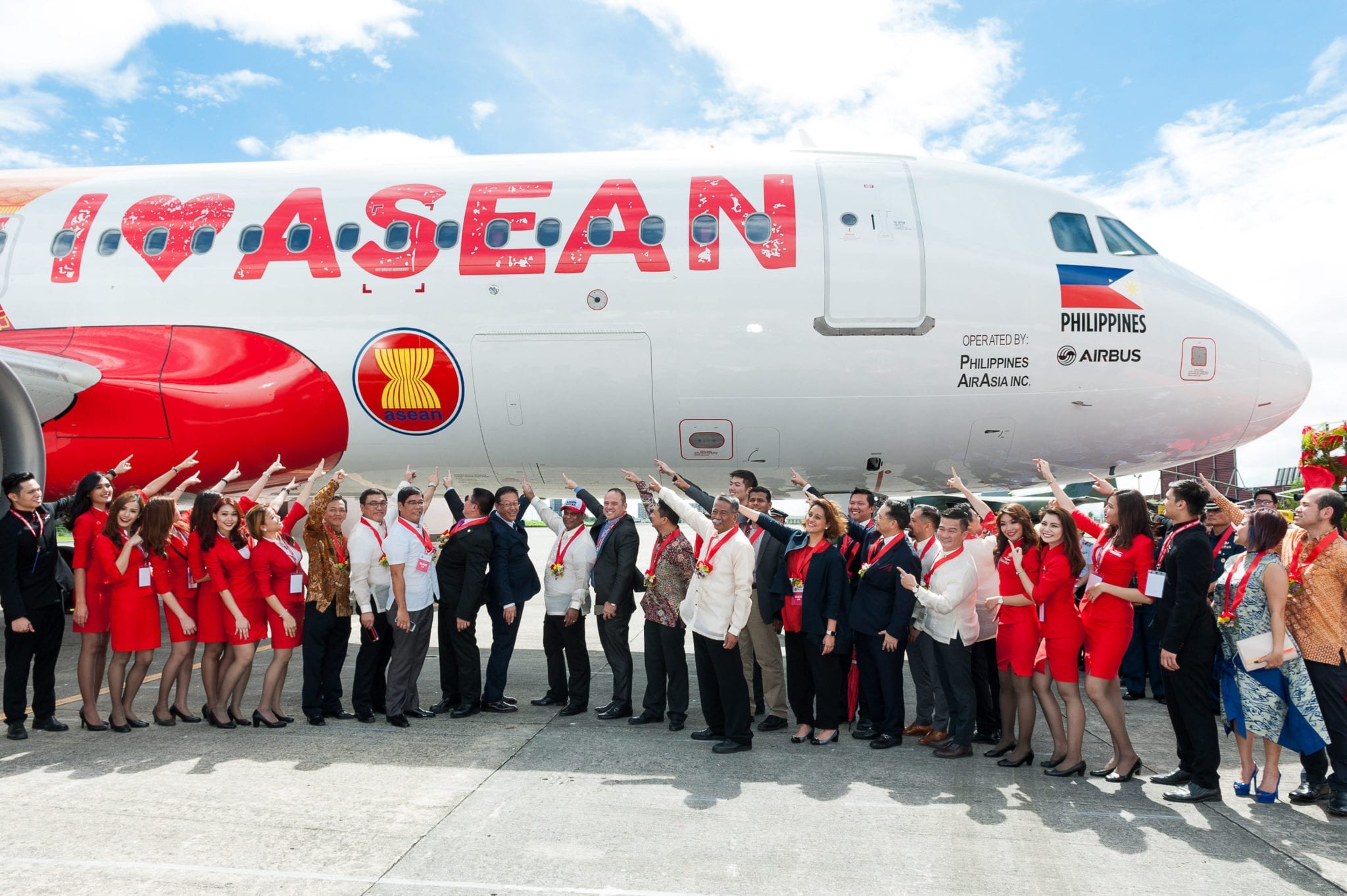
    AirAsia was named Operating Model Master for Malaysia at the IDC Digital Transformation Awards (IDC DXa).

    In a press statement, it said, the award honours companies that have enabled discernible and measurable excellence in their ability to make business operations more responsive and effective by leveraging digitally connected products/services, assets, people and trading partners.

    AirAsia won the award for its deployment of Alibaba Cloud’s Content Delivery Network (CDN) and Web Application Firewall (WAF) solutions to distinguish legitimate customers from crawlers and bots that negatively impacted bookings and revenue, and reduce massive traffic flows from bots that led to additional operational costs.

    Using CDN in China, the airline was able to improve the latency and Round Trip Time (RTT) of airasia.com, and optimise traffic to the website based on user profiles.

    AirAsia also worked with Alibaba security teams to block illicit traffic using an extensive database of known hackers and their patterns, before customising rules and applying them to the WAF.

    The award was presented during the IDC Digital Transformation Summit 2018 held in Aloft Kuala Lumpur Sentral on Tuesday.

    AirAsia Group chief information officer Declan Hogan said, “We tried many security tools, with limited success, prior to moving to Alibaba.

    “Only Alibaba made a consistent, long-lasting impact, and they proved that they’re willing to take the risk to try it. And we appreciate that they were willing to make the investment to prove that they have the technology that
    works.”

    IDC DXa honours the achievements of organisations that have successfully planned and executed the digital transformation of one or multiple areas of their business through the application of digital and disruptive technologies.

  • Globe gets nod to roll out small cells in Metro Manila

    Globe gets nod to roll out small cells in Metro Manila

    The Philippines’ Globe Telecom has arranged special dispensation from the authorities in Metro Manila to allow it to expedite the deployment of over 120 cell sites to improve coverage of the major thoroughfares of Metro Manila.

    The operator has entered a groundbreaking agreement with the Metro Manila Development Authority (MMDA) that will allow it to install small cell antennas along the thoroughfares without needing to secure individual construction permits.

    The regular approval process involves an average of 25 permits from local government units and takes around eight months to complete, according to Globe CEO Ernest Cu.

    “Securing various permits for the construction of telco infrastructure such as cell sites has long been a major challenge of the industry,” he said.

    “We want to thank MMDA for sharing our vision of a connected Philippines by allowing us to deploy sites faster, thus improving mobile experience at the heart of Metro Manila.”

    As part of the agreement, Globe has also agreed to provide logistical support for the MMDA’s critical traffic management operations. The operator deployed wireless infrastructure at the MMDA’s flood control facilities in 2016, and that year also started providing free Wi-Fi service at MRT stations in the city.

  • Spark launches flexible pricing broadband plan

    Spark launches flexible pricing broadband plan

    New Zealand operator Spark has moved to differentiate its broadband offerings by launching a new unlimited fiber broadband plan that offers consumers discounts on months they use less data.

    The company’s “Unplan” branded fiber broadband plan offers unlimited bandwidth for NZ$85 ($55.50) per month.

    But on months where consumers use less than 60GB of data this price reduces to NZ$65, and for months where 60GB to 120GB of data is consumed it reduced to NZ$75.

    An entertainment plan is also available for an additional NZ$10 per month that comes with 6 months of free Netflix and a subscription to the Spark-owned Lightbox SVOD service for the life of the plan.

    The offer is also available via Spark’s fixed wireless broadband service, but restrictions will apply on usage of over 300GB of data in a single month of regular usage of 180GB in an average month.

    “We think it’s a fairer way of offering broadband, as it reflects our customers’ needs. This is the first broadband plan in New Zealand that flexes to reflect customers’ data usage – and it has the potential to save our customers a lot of money,” Spark consumer lead Joe Goddard said.

    “It’s also the first plan that’s only available on new generation broadband options of wireless broadband and fiber.”

  • Telenor, PT&T interested in Philippines third telco bid

    Telenor, PT&T interested in Philippines third telco bid

    At least six companies have purchased the bid documents related to the selection process for the Philippines’ third telco.

    A representative of the nation’s telecoms regulator NTC told local media on Tuesday that Telenor and three local ventures, as well as another company that has asked not to be named, had purchased bid documents for the selection process.

    Local fixed line operator Philippine Telegraph and Telephone (PT&T) has affirmed its interest in joining the fray by purchasing the documents.

    The fixed line operator has evaluated the terms of the bid documents and found them acceptable, and believes it has a strong chance of winning as the only local company that can satisfy the requirements, PT&T’s CEO James Velasquez told the publication.

    More potential applicants may purchase bid documents in the coming days.

    Bidders will have until between November 5 and November 7 to submit their bids for the beauty contest style selection process, and the winning applicant could be announced by as early as the same month.

    Any overseas company winning the license will need to partner with at least one local company to comply with the nation’s limits on foreign ownership of telecoms operations.

  • AirAsia lends helping hand to Sulawesi victims with #ToIDwithLove fund

    AirAsia lends helping hand to Sulawesi victims with #ToIDwithLove fund

    AirAsia has launched a relief fund to offer support for Palu which was struck by an earthquake and tsunami on 28 September this year.

    The #ToIDwithLove fund will be collecting donations until 31 October 2018 and all donations will be chanelled to Yayasan Arkom Indonesia to help rebuild homes and improve disaster resilience in affected areas. AirAsia will match the total public collection, which will be announced in January 2019.

    Additionally, the airline will also carry out phased onboard cash collections, beginning with AirAsia Malaysia, followed by AirAsia Thailand, AirAsia Indonesia, AirAsia X Malaysia, AirAsia X Thailand and AirAsia X Indonesia flights until the end of the month. More airlines in the group will follow suit.

    Those who wish to donate may do so online via AirAsia Foundation, the airline’s philanthropic arm, at airasiafoundation.com/relieffund.

    Group CEO Tony Fernandes said it has been an “incredibly tough year” for Indonesia, which has been beset by one deadly disaster after another.

    “Our hearts go out to all those who have suffered unimaginable losses as a result. As an ASEAN airline, we share a close bond with the communities we serve, and we want to do our part to help those in need. Through this donation drive, we hope to raise enough money to make a positive contribution to rebuilding efforts, so please give freely. Every dollar counts,” he added.

    Prime Minister of Malaysia Dr Mahathir Bin Mohamad recently called for ASEAN countries to help Indonesia as it begins the task of restoration following the cataclysmic earthquake and tsunami in Central Sulawesi. In response, Astro Malaysia and Maxis also kickstarted a campaign to help raise funds to Tabung Bencana Gempa Bumi & Tsunami Sulawesi, making a joint contribution of RM5 million.

  • Blockchain Yet to Prove Its Use to the World according to Jack Ma

    Blockchain Yet to Prove Its Use to the World according to Jack Ma

    Alibaba chief Jack Ma thinks blockchain tech is pretty meaningless – unless it helps us transform the manufacturing industry and protect the environment.

    In a keynote at World Artificial Intelligence Conference in China, the star entrepreneur shared his beliefs that budding technologies like blockchain, artificial intelligence (AI), and the Internet of Things (IoT) have yet to prove their utility to the world.

    For the record, while he did touch on blockchain, Ma focused his speech on some common misconceptions about AI and what role the technology can play in the future.

    Although the entrepreneur stopped short of revealing whether and how Alibaba intends to integrate blockchain into its services, it appears the company is no stranger to distributed ledger tech (DLT). Indeed, reports suggest Alibaba and IBM hold 90 percent of all DLT-related patents worldwide.

    “The data age is major opportunity for manufacturers to reform the industry,” Ma said at the conference. “But blockchain and IoT will be meaningless tech unless they can promote the transformation of the manufacturing industry, and the evolution of the society towards a greener and more inclusive direction.”

    Still, it turns out that wasn’t enough to stop Alibaba – and fellow Chinese tech giants Baidu and Tencent – from banning all cryptocurrency-related activities from its platform. A search for the two forums named “Digital Currency Bar” and “Virtual Currency Bar” shows that they have been temporarily closed in accordance with relevant laws, regulations, and policies.

    On the other hand, Alibaba and Tencent are cracking down on cryptocurrency transactions on their mobile payment services.

    WeChat, Tencent’s social media, messenger services, and mobile payments app, banned a series of cryptocurrency media outlets for spreading hype in violation of Chinese law.

    Now, Tencent has said in a statement that the company will also ban cryptocurrency trading on WeChat. The company will monitor daily transactions in real-time and block any cryptocurrency trading related activity.

    Alibaba Group’s Ant Financial said that it will take similar measures on its mobile payments app Alipay. The company will restrict or block all accounts that indulge in cryptocurrency trading.

  • Webscales must team with telcos on atmospheric satellite projects

    Webscales must team with telcos on atmospheric satellite projects

    The summer of 2018 brought different fates to moves by Facebook and Google to offer broadband services using high-flying drones and balloons (atmospheric satellites) to the unserved in remote rural areas.

    GlobalData, feels that webscales need to partner with telcos globally to address the affordability challenge of reaching out to the unconnected in rural markets with atmospheric satellites.

    Atmospheric satellites fit in the space between true satellites commonly used for communications and ground-based networks. Their theoretical advantage over satellites is much lower cost. Launching a balloon or a drone and equipping it with a radio base station represents a much cheaper way of covering large swaths of land. Considering one-third of the world population remains unconnected, the lower costs associated with balloon- or drone-based coverage is compelling.

    However in June 2018, following several setbacks over a period of four years, Facebook abandoned developing its own high-flying solar-powered drones (Aquila project) for delivering internet. However, the California-based social media giant said that it will focus on working with partners like Airbus on high altitude platform station (HAPS) system, which is capable of beaming down high-speed internet.

    On the other hand Alphabet, the parent company of another social media company, turned its Project Loon balloon broadband initiative into an independent company and announced its first commercial project with partly-state owned Telkom Kenya in July 2018. The partners plan to launch balloon-based 4G/LTE services commercially to parts of central Kenya, starting from 2019.

    Loon’s pilot with Telkom Kenya may provide the clearest test of whether atmospheric satellites can really work. This puts pressure on Loon to demonstrate it has a viable technology.

    “Things get more complicated when the practical challenges of covering the unconnected masses with drone- or balloon-based mobile signals are considered,” GlobalData telecom technology and software analyst Emir Halilovic said.

    “For starters, the potential customers for services provided from atmospheric satellites are not concentrated in one part of the world; rather, they are spread across remote, rural, or tribal areas, in many different countries and continents.”

    Truly addressing this group would require the participation of multiple operators in dozens of countries. Moreover, most of the unconnected usually do not live outside areas where they can get mobile service; they just cannot afford a mobile plan. Drones and balloons do little to address the ’affordability’ challenge.

    Halilovic concludes: “Still, there are reasons to continue to pursue atmospheric satellites to provide coverage to the underserved rural communities, which could use internet connection to improve access to medical services in isolated locations, for example. Another use case for atmospheric satellites is quick restoration of communication services in natural disasters. Telcos should therefore continue to test atmospheric satellites to support development of such services.”

  • SBI Ripple Asia’s Moneytap Opens in Japan

    SBI Ripple Asia’s Moneytap Opens in Japan

    Japanese banks has power over more than 80% of Japan’s money-related resources. Presently, those banks have started utilizing a purchaser driven retail installments application controlled by Ripple’s blockchain innovation. A consortium of 61 Japanese banks are presently utilizing Ripple’s blockchain innovation.

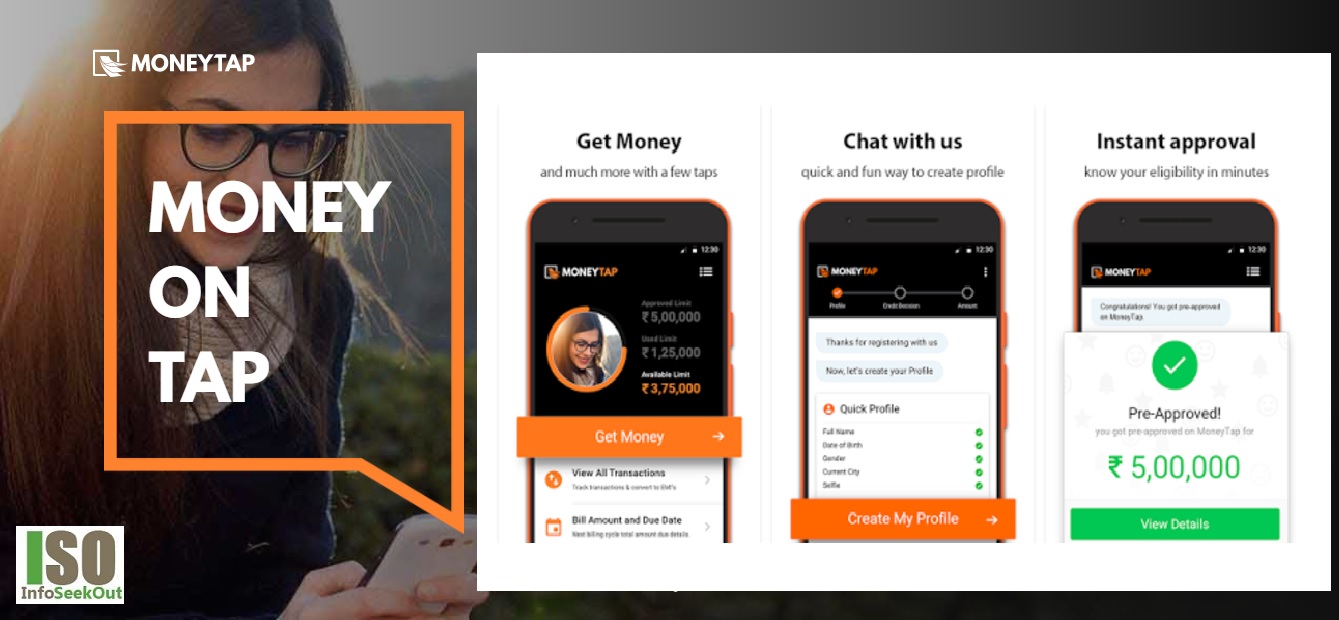
    The application is called MoneyTap. With MoneyTap, Japanese banks can perform less expensive, less demanding exchanges between themselves. The framework replaces Japan’s decades-old clearing house framework and is relied upon to promptly bring down expenses and conduct less demanding exchanges among Japan’s biggest monetary organizations. Any Japanese client can download the MoneyTap application today for iOS or Android. Purchasers can utilize it to finish free exchanges. We can consider it the Venmo of Japan.

    The news was affirmed by Ripple. Amid Ripple’s Swell meeting, the organization affirmed that three monetary establishments were at that point utilizing Ripple’s XRP-fueled xRapid innovation to encourage less expensive, less demanding universal exchanges. Swell’s Japanese savings association was first declared not long ago. Back in March, the organization declared that SBI Ripple Asia would utilize Ripple’s blockchain innovation to encourage residential bank movements in Japan.

    ALSO READ:  Esports Gold ICO Investors Lock-in Ethereum Price

    The installment convention is MoneyTap. The application will empower constant, round-the-year residential cash exchanges between ledgers utilizing xCurrent, Ripple’s venture blockchain arrangement, as indicated by the SBI Ripple Asia site. The application can process installments utilizing a straightforward QR code. You can likewise enter the beneficiary’s telephone number to send installment. The MoneyTap application is accessible on the two iOS and Android.

    Be that as it may, three banks have particularly declared help for Ripple’s MoneyTap application, including Suruga Bank, SBI Net Sumishin Bank, and Resona Bank. Each of the three banks intend to utilize MoneyTap and xCurrent to encourage zero-cost exchanges between them.

    ALSO READ:  Taiwanese Airline, Far Eastern Air Transport, Accepts Bitcoin

    Clients will pay to utilize the installment exchange convention is the point at which they’re asking for an arrival of assets. In that circumstance, members will be required to pay a little expense. Other than that circumstance, notwithstanding, MoneyTap will be free for Japanese saving money clients to utilize.

    In the interim, outside of Japan, Ripple has cooperated with Banco Santander to dispatch One Pay FX, which is likewise controlled by xCurrent.

  • Naver unveils cutting-edge location tech for smarter mobility

    Naver unveils cutting-edge location tech for smarter mobility

    From indoor navigation using augmented reality to ultra-high definition mapping technology for autonomous driving, South Korean internet giant Naver is developing a range of location-tracking technologies it believes will form the backbone of new offline services in the future.

    Some of these technologies were unveiled Thursday at Naver’s annual developer’s conference Deview 2018 held in Seoul, organized to showcase the Korean portal site operator’s future tech development direction each year.

    Stressing “location” as the most important cue for context in a physical space, Naver Chief Technology Officer Song Chang-hyun said Naver’s in-house research lab is developing and testing out an array of location and mobility-based technologies that will serve as the backbone of new, real-world services
    “If technology can fix mobility problems in the physical space, it will inevitably lead to the development of new services. And the underlying platform technology for any location and mobility problem is mapping,” Song said in a keynote speech during the conference.

    In line with this vision, Naver plans to open source the Naver Maps Enterprise application programming interface to developers next month. The soon-to-be-free mapping API includes including point of interest data and navigation data, which most smaller ICT firms find difficult to build and maintain.

    The Korean internet giant also introduced for the first time the eXtended Definition & Dimension Map, or xDM, platform which includes high-dimension mapping, localization and navigation technologies to guide people and self-driving vehicles in not just outdoor, but also indoor settings.

    For instance, Naver utilized its xDM platform to build an AR navigation system that guides people through indoor spaces without GPS access, using just a smartphone camera. On a smartphone, walking direction signs and messages would be overlaid on top of real-life pathways as captured by the camera.

    The company also showcased the latest updates in its robotics technology development, which had taken center stage at last year’s Deview conference.
    This service is slated to debut soon, via a partnership with Incheon Airport. This week, Naver signed a memorandum of understanding with the airport’s operator to launch an indoor AR navigation app that would guide airport passengers to their respective destinations inside the airport.

    “We plan to open source our xDM platform in the form of API and SDK so that they can be used for various location-based service development and mobility research in the future. We plan to continue improving xDM so it can grow into Korea’s top location and mobility platform,” Song said.

    In addition, Naver Labs is developing technologies for self-driving cars, including a high-definition map that combines high-definition aerial maps and mobile mapping devices to build intricate, real-time maps even in crowded urban centers where GPS access is partly blocked out.

    M1, an autonomous indoor mapping robot that creates intricate 3D maps while moving by laser-scanning its surroundings with a 360-degree camera, and Around, a self-driving robot that navigates itself by accessing M1’s mapping data via the cloud, are undergoing commercialization procedures via a partnership with Hyundai Heavy Industries Holdings.

    Aircart, an electric book cart equipped with a module that amplifies human power to make pushing the cart significantly easier, is preparing for commercial deployment at local libraries in partnership with Samsong Caster.

    Naver’s robotics lab is also continuing research and development efforts with Seoul-based Korea Tech Co. to develop robotic cable-driven arms with humanlike sensitivities called Ambidex. Weighing just 2.6 kilograms, the robot’s core motors are placed near the torque and transfers power down to the lower arms and fingers via flexible, lightweight cable wires.

    Looking ahead, Naver plans to showcase its fleet of robots at the Consumer Electronics Show in Las Vegas in January next year, marking its first-ever attendance at the global electronics conventio


  • Samsung launches Galaxy A9 with rear quad camera

    Samsung launches Galaxy A9 with rear quad camera

    Samsung Electronics on Thursday unveiled the world’s first smartphone with four rear cameras, packed with new features to capture moments more effectively.  The Galaxy A9 debuted at a launch event held in Kuala Lumpur, Malaysia, highlighting the first rear quad camera built for a world driven by visual communication.

    “Building on our legacy in smartphone camera development, we’re introducing next-generation technology across our entire Galaxy portfolio to give more consumers the opportunity to experience cutting-edge innovation,” said Samsung smartphone chief Koh Dong-jin. “We’re excited to deliver on this promise and debut world-leading smartphone camera technology with the Galaxy A9.”

    The Galaxy A9 with a 6.3-inch AMOLED display is packed with Samsung’s best camera innovations, Koh added.

    The rear quad camera, with four lenses on the back of the smartphone, allows users to get close, with a 2x optical zoom feature for detailed close-up shots even from far away.

    The 24-megapixel main lens captures clearer and brighter images in both bright and low-light conditions, while the ultrawide lens and the scene optimizer allow users to shoot scenes more like a professional.

    In addition, the camera’s AI Scene Recognition feature allows users to identify subjects and adjust settings accordingly for the best photo, in an instant.

    The Galaxy A9 comes with a 3,800-milliampere-hour battery, allowing an all-day performance. The new phone also provides 128 gigabytes of storage and up to 512 gigabytes of expandable memory for storing high-quality images and visual content.

    It will be released globally starting in November, in unique colors: Caviar Black, Lemonade Blue and Bubblegum Pink.

    The A9 also boasts a sleek and ergonomic design that fits in one hand with a curved back made of 3D glass for a luxurious comfortable feel, the company said.

    Smartphones with five cameras are becoming a major trend in the market.

    LG Electronics unveiled the V40 ThinQ smartphone with three cameras on the rear and two on the front on Thursday.

  • UPS Expands My Choice Service in Asia to Facilitate Intensifying E-commerce Demand

    UPS Expands My Choice Service in Asia to Facilitate Intensifying E-commerce Demand

    Today announced the global expansion of UPS My Choice service to 96 additional countries and territories, bringing the total to 112 served. With the entrance into countries and regions in Asia Pacific, Africa, the Indian Subcontinent, Caribbean and Central and South America, Middle East and Oceania, and an expansion in Europe, this package-delivery management service has the ability to help more busy consumers and consignees around the world to track, schedule, and redirect their packages—just in time for the peak holiday shipping season.

    In Asia Pacific, UPS My Choice will be introduced in 13 markets, including Australia, China, Japan, Malaysia, Philippines, Singapore, South Korea, Taiwan, Thailand, and Vietnam. This expansion, the largest since the service was launched seven years ago, comes as membership in UPS My Choice crosses the 52 million-member mark worldwide. This combination of scale and geography provides shippers a distinct advantage as cross-border shopping increases.

    Every UPS My Choice user will have access to e-mail and text notifications that a delivery is on its way, a day before delivery alert and a delivery notification. In countries and territories where technology allows delivery change options, users can route packages to another address, opt to hold the delivery or reschedule for delivery on another day.

    The expansion, which takes UPS My Choice service far beyond the original 16-country-and-territory footprint, comes in two phases: The first brought the service to 48 additional locations worldwide over the summer. Phase two, which includes another 48 countries and territories, begins this month.

    This service expansion is reflective of the impact e-commerce is having on global and intra-Asia trade. According to the 2018 global UPS Pulse of the Online Shopper™ study, consumers in Asia are increasingly shopping beyond their own borders to buy from overseas retailers, with 55 percent of respondents indicating that they had made one or more international e-commerce purchases within the three months prior to the survey. Among those, 77 percent were purchased from retailers based in Asia.

    “While UPS has offered package tracking for more than a quarter of a century, we know that consumers today expect even more flexibility, control and convenience,” said Ross McCullough, President, UPS Asia Pacific Region. “The expansion of UPS My Choice into Asia, and other regions of the world, will equip both shippers and consumers with the tools they need to keep businesses and personal schedules running more smoothly, leading to a happier and easier transaction for everyone involved. With a new member signing up for UPS My Choice every four seconds, it’s easy to see that the benefits are valuable to online shoppers.”

  • Philip Morris to begin selling Korean-made heated tobacco unit

    Philip Morris to begin selling Korean-made heated tobacco unit

    Philip Morris Korea Inc. said Thursday that it will begin selling its tobacco sticks, called Heets, produced at its factory in South Korea later this month.

    To this point, Philip Morris Korea imported Heets for sale in South Korea.

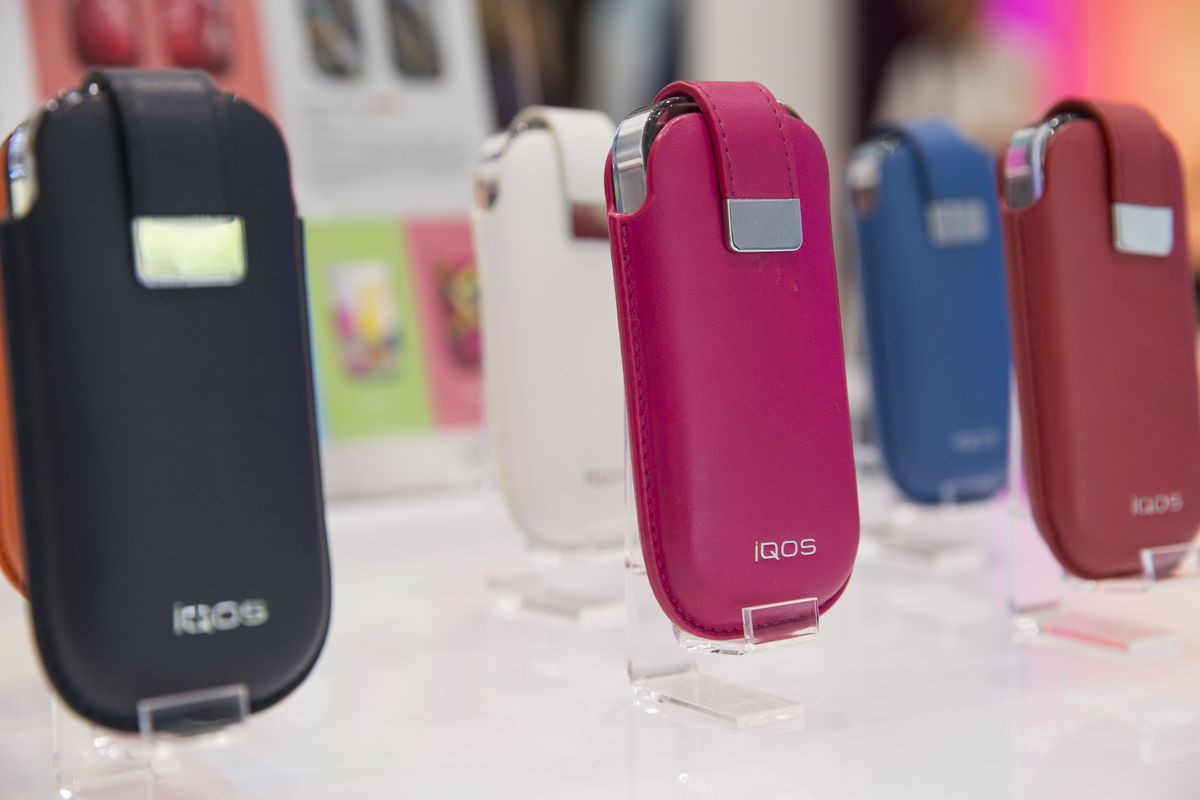
    Philip Morris Korea has expanded its production facility in Yangsan, the first facility in Asia to manufacture heated tobacco units for its tobacco heating device IQOS. Yangsan is a city located about 420 kilometers southeast of Seoul.

    The share of Heets, tobacco sticks exclusively for IQOS, was reported at 8.1 percent of South Korea’s total tobacco market in August.