Blog

  • Hong Kong yoy August retail sales rose

    Hong Kong yoy August retail sales rose

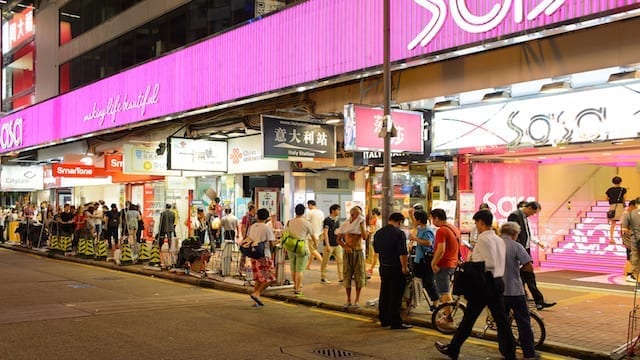
    Hong Kong August retail sales surged 9.5 per cent ahead of last year according to figures from the Census and Statistics Department (C&SD).

    The figure marked an improvement of the revised 7.8 per cent recorded in July and year to date, growth is running at 12.2 per cent year on year.

    A government spokesman said the increase in Hong Kong August retail sales was buttressed by solid local demand and visible growth in visitor arrivals.

    But the spokesman warned that while favourable job and income conditions and sustained growth in inbound tourism should support the retail sector in the short term, the government will “closely monitor how consumer sentiment will be affected by the external headwinds in the period ahead”.

    After netting out the effect of price changes year on year, Hong Kong August retail sales increased by 8.1 per cent. For the first eight months of this year, inflation-adjusted total retail sales increased by 10.6 per cent, estimates the C&SD.

    Predictably, the growth was fuelled by tourist-driven categories, with jewellery, watches and valuable gifts sales up 21.6 per cent. Cosmetics sales were up 16.3 per cent, footwear and accessories by 13.6 per cent, department store turnover rose 11.7 per cent and Chinese medicines and herbs improved by 9.3 per cent. Apparel sales rose by a more modest 5.7 per cent.

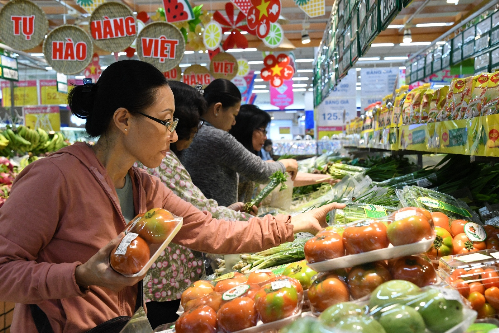
    Categories of goods not affected by tourists fared less well, with supermarket sales up by a mere 0.3 per cent, food and alcohol by 6.3 per cent, furniture sales up 5.5 per cent and eyewear sales by 2.8 per cent.

    The only categories to record a downturn were electrical and consumer durable goods, which fell by 3.5 per cent, and newspapers and books, down 2.3 per cent.

  • Samsung opens biggest store ever in India

    Samsung opens biggest store ever in India

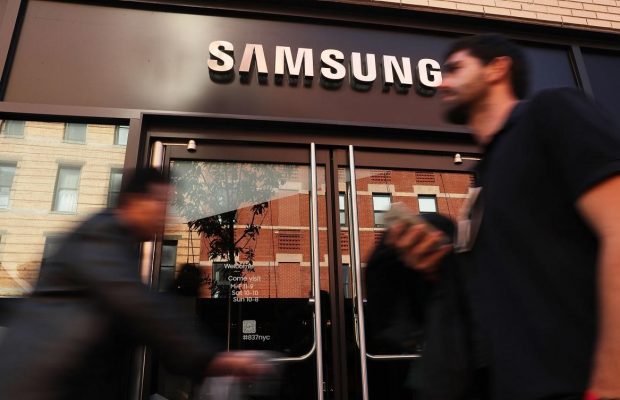
    South Korea’s Samsung Electronics announced the opening of the world’s largest mobile experience centre in Bengaluru.

    Located in the iconic Opera House building situated on Brigade Road, the new India flagship is the smartphone maker’s largest mobile experience centre.

    Dubbed “Samsung Opera House”, the renovated and redesigned retail space houses a mix of “technology, lifestyle and innovation to offer people unique experiences,” according to the Seoul headquartered Samsung, in a press release.

    Restored over two years, the store’s Opera House façade retains its original look and feel. On the inside, a modern experiential space has been developed with extensive use of modern technology.

    The store showcases Samsung’s full line-up of smartphones and wearable devices at the experience centre alongside flagship consumer electronics products such as smart tvs, ovens and refrigerators

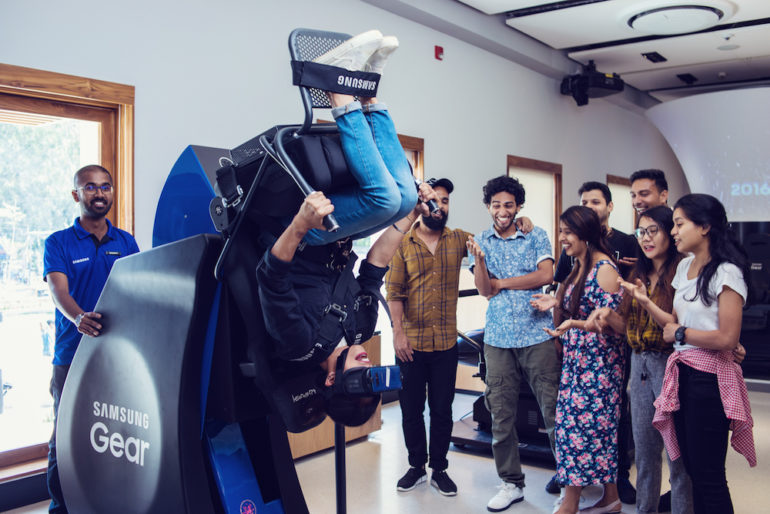
    Harnessing the brand’s #DiscoverTomorrowToday mantra, Indian shoppers can also expect a differentiated product experience, centred on virtual reality and artificial intelligence, as well as the internet of things.

    VR experiences include a 4D Sway Chair and the Whiplash Pulsar 4D chair that makes 360 degrees three-dimensional movements, designed to simulate a fighter pilot doing extreme aircraft stunts, or experience a space battle, or a roller coaster ride.

    Consumers can also pre-book the centre’s home theatre zone for watching movies and shows.

    “Today’s consumers, especially millennials, seek unique experiences. They want to interact with the brand, touch, feel and create. This is what Samsung Opera House is about.

    We have curated never seen before experiences that will excite people of all age groups alike. Opera House will also organize workshops, activities and events, bringing together Samsung’s innovations with people’s passions. We are proud of the transformation that this place has seen,” HC Hong, President & CEO, Samsung SouthWest Asia, said.

    Samsung selected Bengaluru as host city given its notoriety as India’s tech capital, which has attracted many Millennials and tech-savvy consumers to the area.

    The new store in India comes two months after Samsung inaugurated the world’s largest mobile factory in Noida in July this year, reinforcing the company’s commitment to India.


  • Malaysia’s GDP growth to moderate to 4.9% for 2018

    Malaysia’s GDP growth to moderate to 4.9% for 2018

    Malaysia’s economic growth is expected to ease to 4.9% in 2018, as export growth slows and lower public investment following the cancellation of major infrastructure projects, said World Bank chief economist for the East Asia and Pacific region Sudhir Shetty.

    As a highly open economy, he said Malaysia will continue to face substantial risks relating to uncertainty in the external environment.

    Heightened financial market volatility either triggered by shifting monetary policy expectations in advanced economies could spread across emerging economies, including Malaysia.

    Another key risk relates to the escalation in protectionist tendencies and trade tensions in some major economies that could have an adverse impact on Malaysia, given its high level of integration with global markets.

  • Elephant Grounds Is Opening In Manila soon

    Elephant Grounds Is Opening In Manila soon

    Hong Kong coffee shop Elephant Grounds will open in the Philippines.

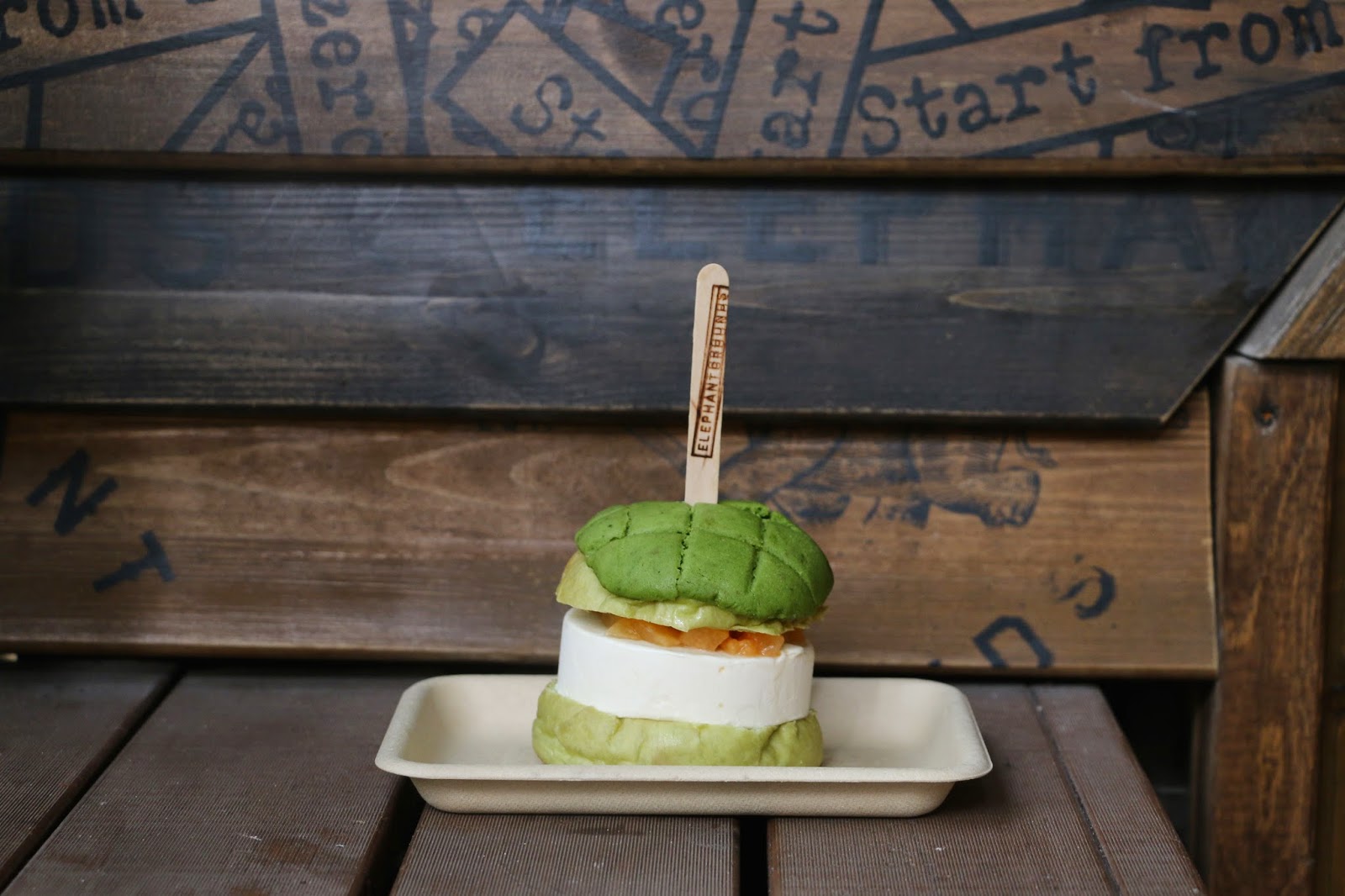
    The popular micro-roaster and cafe, which launched in 2013, has five locations in Hong Kong. It is known for its wooden decor, garden-inspired interiors, bakery items and ice-cream sandwiches.

    The chain will open its first branch in the Philippines at One Bonifacio High Street Mall, Bonifacio Global City, by the end of this year.

  • Vietnam’s U18 liquor sales ban impractical, experts say

    Vietnam’s U18 liquor sales ban impractical, experts say

    Experts say it will be difficult to implement an age-based ban on selling liquor, better options are needed.

    They are also saying that an emphasis on education and raising awareness will have greater impact in dealing with the problem of liquor abuse.

    A draft bill on the prevention of dangers of alcohol being compiled by the Ministry of Health proposes a number of prohibitions, including: promotion in any manner of liquor with alcohol content of 15 degrees or above; usage of positive phrases like “medicinal alcohol”, “nutritious alcohol” on product labels; advertising of alcohol during television prime time (6-9 p.m.); sale of alcohol to persons under 18; and sale of alcohol on the internet.

    Kieu Anh Vu of law firm KAV Lawyers said it was very necessary to bring legal measures against the dangers of alcohol, because the harm it was causing was indisputable.

    Vu said he supported the draft bill’s ban on alcohol consumption by government officials, civil servants, and employees during working hours or between shifts during the working day; by operators of motorized vehicles; and by people under 18.

    “These regulations are appropriate to ensure social order, safety and health of the community,” he said.

    However, Vu was concerned about how age checks would be carried out. “Will vendors have the right to check people’s age by looking at their identity cards, or just by asking questions?”

    Psychologist Nguyen An Chat, on the same page as Vu, also questioned how alcohol sellers could correctly verify the age of each individual.

    “Some 15 year olds look very mature while some 20 year olds can look underage. Would everyone wishing to purchase alcohol have to produce identity documents?” he wondered.

    An online right?

    Lawyer Vu Tien Vinh, director of Bao An Law Firm, said: “Buying alcohol over the Internet is more convenient than going to shops or supermarkets. If online sale is prohibited, people can and will continue to buy alcohol through traditional channels.

    Vinh said that in reality, it was too easy for buyers to obtain alcohol via traditional channels such as supermarkets and other dealers. When consumers can buy alcohol anytime, anywhere, the ban on online sales will not have much of an impact on its consumption, he said.

    “Detecting online transactions on the sale of alcohol to punish with fines is very difficult. It will not be hard for consumers to get around this regulation,” Vinh added.

    Sociologist Trinh Hoa Binh concurred, saying identification of illegal alcohol sales online was very hard to do.

    “Internet sales are the current trend. Will the prohibition of selling alcohol online go against this?” asked psychologist researcher Nguyen An Chat.

    Given the implementation difficulties, Binh proposed that instead of prohibitive regulations, authorities should instead start with education, build a set of cultural values for the modern Vietnamese society that discourages alcohol abuse.

    Chat supported this. He said education should begin at home and continue in schools so that each person was aware of the danger of drinking, so that people would exercise restraint and control their consumption.

    Psychologist Khuat Thu Hong said many countries have faced difficulties in implementing regulations prohibiting or restricting the sale/use of alcohol, but over time, strict compliance has become the norm.

    “In Vietnam, for these regulations to be implemented well, close monitoring and regular communication on the harms of alcohol will be essential for the people to understand and co-operate,” said Hong.

    In Vietnam, about 800 deaths per year are related to the use of alcohol, including beer. Almost 30 percent of social order disruption cases are also related to alcohol consumption.

    In 2017, Vietnamese people spent close to $4 billion on alcohol. The cost of dealing with alcohol-related traffic accidents was  estimated at about one percent of the GDP the same year.

    The alcohol industry contributes about VND50 trillion ($2.17 billion) to the state budget a year and provides about 220,000 jobs directly or indirectly.
  • Xiaomi opens world’s largest Mi Home store in Wuhan, China

    Xiaomi opens world’s largest Mi Home store in Wuhan, China

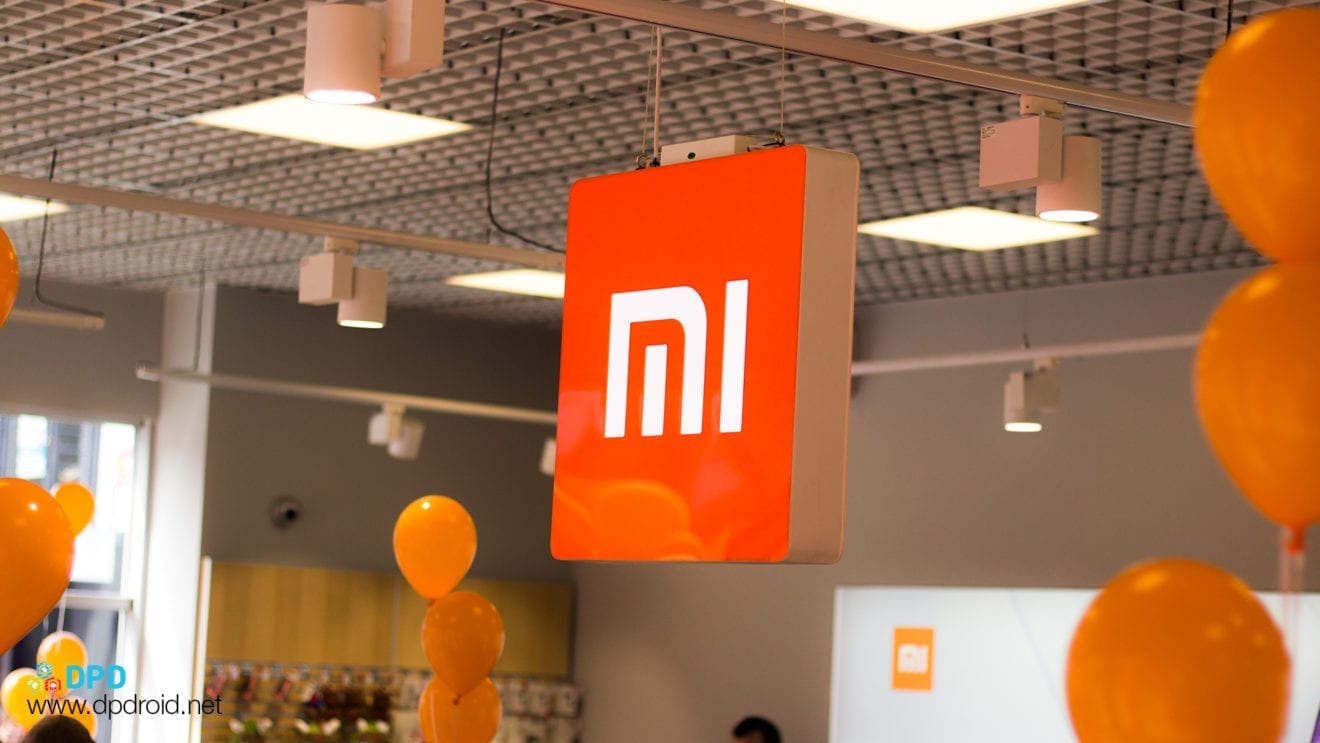
    Chinese electronics brand Xiaomi has opened its largest Mi Home store in Wuhan.

    The new location, launched shortly after the firm reached its target of 100 Mi Home stores in China, features a smart home demo zone that showcases a range of its products in a home-use environment. Sales assistants are on-hand in Xiaomi’s stores to guide customers in the use of the devices on sale and to process payments without waiting in queues.

    Xiaomi now targets expansion to 200 Mi Home locations in China by the end of the year and 1000 by 2020. It will also bring the number of authorised dealers to 2000 over the next three months. Following the opening of the Mi Home store in Wuhan, the company aims to extend its retail network to cover all quality business districts across the country by the end of this year.

    The brand’s physical stores are seen as a move to counter those of competing brands.

    Robust handset sales have recently seen Xiaomi reverse a RMB12 billion (US$1.75 billion) loss during the fourth quarter of its financial year ended June last year to a profit of RMB14.6 billion ($2.1 billion) in the same period this year.

  • SK Telecom puts its smart speakers in Paradise

    SK Telecom puts its smart speakers in Paradise

    SK Telecom will develop artificial intelligence-based (AI) hospitality services for the Paradise Hotel Busan, the mobile carrier said Wednesday.

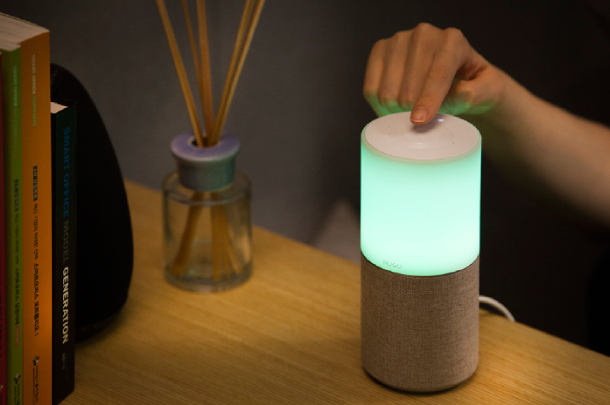
    The company hopes to use its AI technology to improve various hospitality services offered at the hotel, located near Busan’s famed Haeundae Beach. It will start by placing the latest version of its voice-powered smart speaker Nugu, dubbed the Nugu Candle, in about 100 hotel rooms this year.

    The Nugu Candle, released in July, offers more mood-lighting options than its predecessors in 17 different colors from its own light-emitting diodes (LED).

    The device can answer customers’ verbal inquiries about hotel facilities and tourist information about surrounding areas.

    The device will also be used in restaurants and wine bars inside the hotel. The smart speaker is not capable of controlling lamps in the room or curtains yet, a spokesperson from the mobile carrier said.

    But the partnership could expand to offering more AI-based hospitality services in the future, and the device will be given software upgrades to support new features.

    “We will keep striving to make sure AI becomes a natural part of our customers’ lives,” said Park Myung-soon, head of SK Telecom’s AI business unit.

    It’s not the first time Nugu has been placed in hotels. An earlier version of Nugu is being used at the Walkerhill Hotel in eastern Seoul. The company placed Nugu in all 250 rooms at the Walkerhill about two weeks ago, according to the company.

    That device can control some room settings, like temperature, through voice commands.

    KT is the mobile carrier’s largest competitor in putting AI technology into hotels. KT introduced a hotel version of its GiGA Genie smart speaker in July.

    The hotel version has a 10.8-inch display and it understands English, unlike the original GiGA Genie for homes. It can control lighting, room temperature, televisions and order things from the front desk on voice commands. The hotel version is currently being used in the Novotel Ambassador Hotel & Residence in Dongdaemun and L’escape Hotel in central Seoul.

    Kim Chae-hee, senior vice president of KT’s AI business unit, at a press event held in July said KT will continue to target hotels as customers increasingly look for services that don’t require them to interact with hotel staff face to face.

  • Harvey Norman to open 50 more stores in Malaysia

    Harvey Norman to open 50 more stores in Malaysia

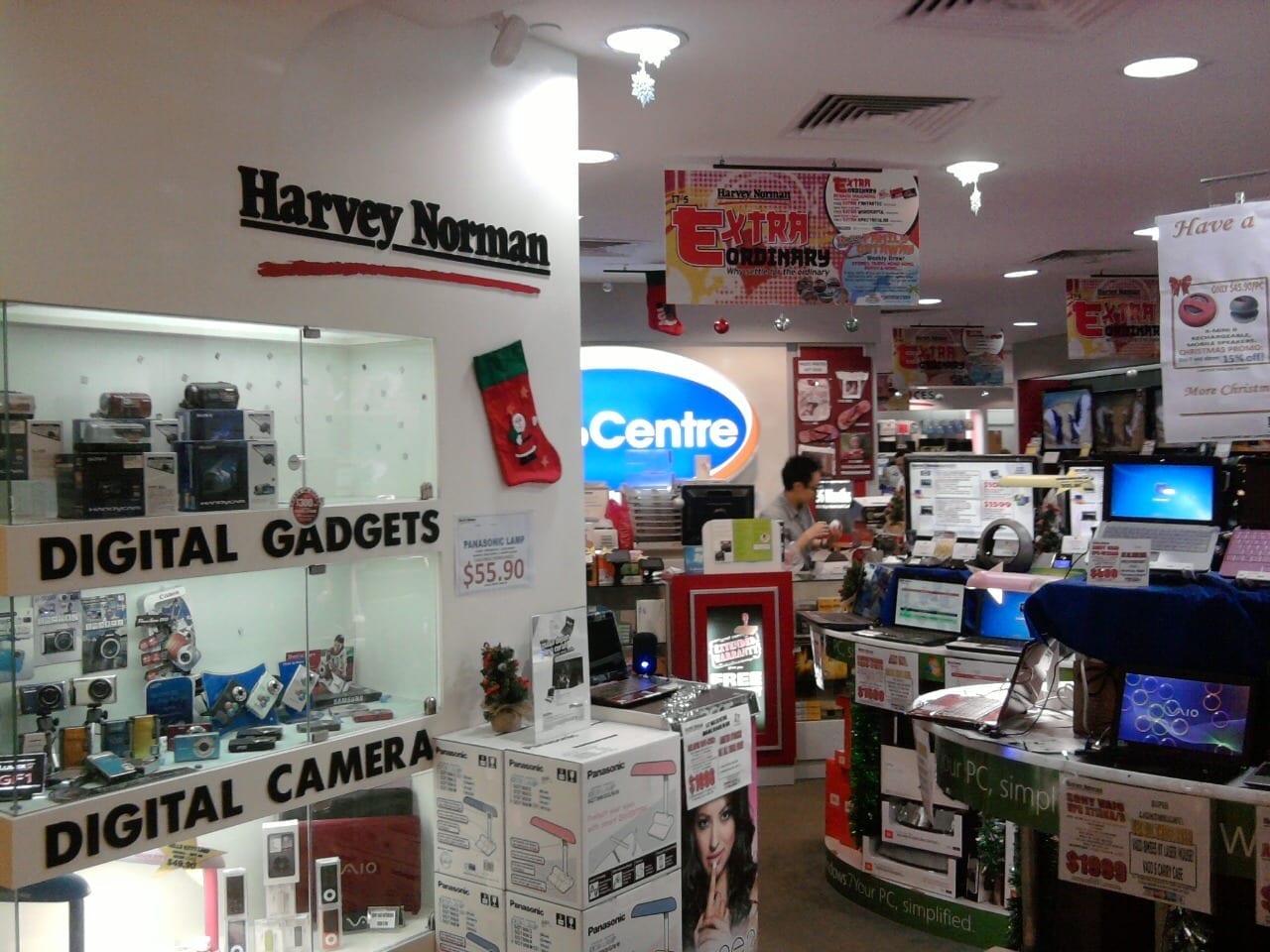
    Australian furniture and appliance retailer Harvey Norman plans to open 34 stores in Malaysia, taking its network there to 50.

    In a commentary accompanying the company’s recent Australian results filing, Harvey Norman said it was planning substantial investment outside Australia where markets offered greater growth potential.

    The company indicated it would open as many as 18 of its own stores overseas by 2020, taking its offshore network to 107. More stores would likely open on a franchised model.

    Malaysia is a primary target given the country’s population has been growing at a rate of 400,000 people per year since 2010 and currently totals about 32 million. It believes the market can sustain 50 Harvey Norman stores by 2023.

    Asia stores accounted for about AUD$500 million (US$362 million) in sales in the latest financial year.

  • IDEAS: Lack of technology, skills transfer from China to Malaysia

    IDEAS: Lack of technology, skills transfer from China to Malaysia

    While Malaysia has benefited from China’s foreign direct investment (FDI) in terms of financing and capacity, the social and environmental impacts of these investments should be looked into as well.

    The Institute for Democracy and Economic Affairs’ (IDEAS) research paper entitled “Impacts of Investment from China in Malaysia on the Local Economy” said there is a lack of technology and skills transfer from China to Malaysia, which the think tank highlighted as being crucial.

    IDEAS director of research and development Laurence Todd said there are instances of Chinese companies favouring Chinese labour and subcontractors over local ones.

    Having said that, he noted that evidence from other countries suggests FDI is most beneficial when there is a high level of technology and knowledge transfer but this requires the involvement of human capital.

    “There are indications that Chinese firms do not always provide opportunities for such transfers, particularly to local SMEs,” he said.

  • Vietnamese experts sound alarm over US-China trade war impacts again

    Vietnamese experts sound alarm over US-China trade war impacts again

    Low-tech, polluting FDI firms will try to set up shop in Vietnam as the U.S.-China trade war escalates, experts have warned.

    Nguyen Bich Lam, head of the General Statistics Office, said that small-scale Chinese firms are likely to eye a shift to Vietnam to avoid high tariffs imposed by the U.S.

    Such firms typically use pollution causing technology, he said, adding that there have been previous warnings about such FDI projects.

    The latest escalation of the U.S.-China trade war only heightens this possibility, he noted.

    Vietnam needs to carefully inspect projects which were registered in the last nine months with capital lower than $1 million to prevent those with outdate technologies from harming Vietnam’s natural environment, Lam added.

    Echoing Lam, Le Dang Doanh, former director of the Central Institute for Economic Management under the Ministry of Planning and Investment, said that a number of these companies have already entered Vietnam in recent years.

    It is the responsibility of the ministry to say no to FDI projects that can harm the environment, he said.

    Lam emphasized: “At this time, Vietnam needs to filter out FDI projects, not accepting them at any cost as it did 30 years ago.”

    Other experts expressed concerns that Vietnam could end up becoming a dumping ground for Chinese goods.

    Economist Nguyen Tri Hieu said that China might seek to dump its goods on Vietnam to avoid Donald Trump’s tariffs.

    Cheaper Chinese goods competing with Vietnamese goods will not benefit Vietnam’s economy, he said.

    Meanwhile, industry insiders have expressed fears that China might borrow the “made in Vietnam” label to dodge U.S. tariffs.

    Diep Thanh Kiet, vice chairman of the Vietnam Leather, Footwear and Handbag Association (LEFASO), said there was a “very high” possibility that Chinese bags would be exported to the U.S. through Vietnam.

    Chinese businesses can do this by easily setting up a factory in Vietnam with a budget of only $200,000 to manufacture products with materials imported from China, he told local media.

    If this cannot be controlled, there could be grave consequences for Vietnamese textile firms since “the U.S. might apply the same tariffs as they have done on China,” Kiet said.

    The U.S. slapped tariffs of 10 percent on $200 billion worth of Chinese goods on September 24, and Beijing immediately retaliated with tariffs at 5 and 10 percent on $60 billion worth of U.S. products.

    The two countries have already slapped tariffs on $50 billion worth of each other’s goods earlier this year.

  • H&M India sales jump 49 pc in June-August qtr to Rs 352 crore

    H&M India sales jump 49 pc in June-August qtr to Rs 352 crore

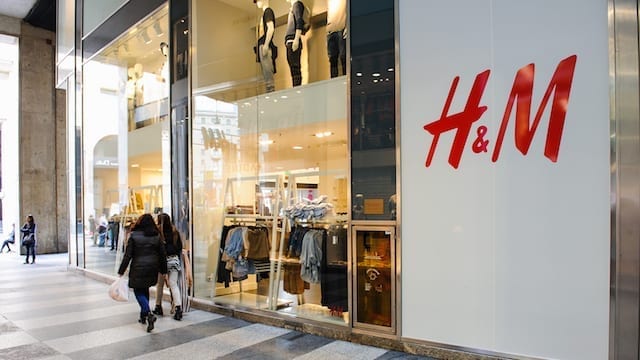
    Swedish fashion retailer Hennes & Mauritz (H&M) posted a 49 percent growth in sales in India to 428 million Swedish Krona (around Rs 352 crore) in June-August quarter of 2018.

    While, for the nine-month period (December 2017 to August 2018) H&M India sales reported a 34 percent growth to 1,124 million Swedish Krona (around Rs 924 crore) including VAT compared to the corresponding period.

    H&M, which follows December-November financial year, has added 7 stores during the last nine months in India, totalling to a network of 34 stores.

    The company had posted sales of 178,817 million Swedish Krona in December-August, H&M said in a nine-month report.

    In the June-August quarter, H&M reported a global sales of 64,800 million Swedish Krona.

    During the quarter, H&M’s online sales increased by 32 percent, it added.

    “The group’s online sales increased by more than 30 percent in the third quarter. Today H&M online is in 47 markets and we are continuing at full speed to roll out online globally to all our existing store markets as well as to other markets,” said H&M CEO Karl-Johan Persson.

    During the three-month period, Germany was the highest contributor with 9,851 million Swedish Krona sales, followed by USA with 6,869 million Swedish Krona sales. H&M operates 458 and 559 stores in Germany and USA, respectively.

    While, China had a sales of 3,225 million Swedish Krona during the June-August quarter of 2018, where it operates 522 stores.

  • Filipino chocolate brand to open store in Tokyo

    Filipino chocolate brand to open store in Tokyo

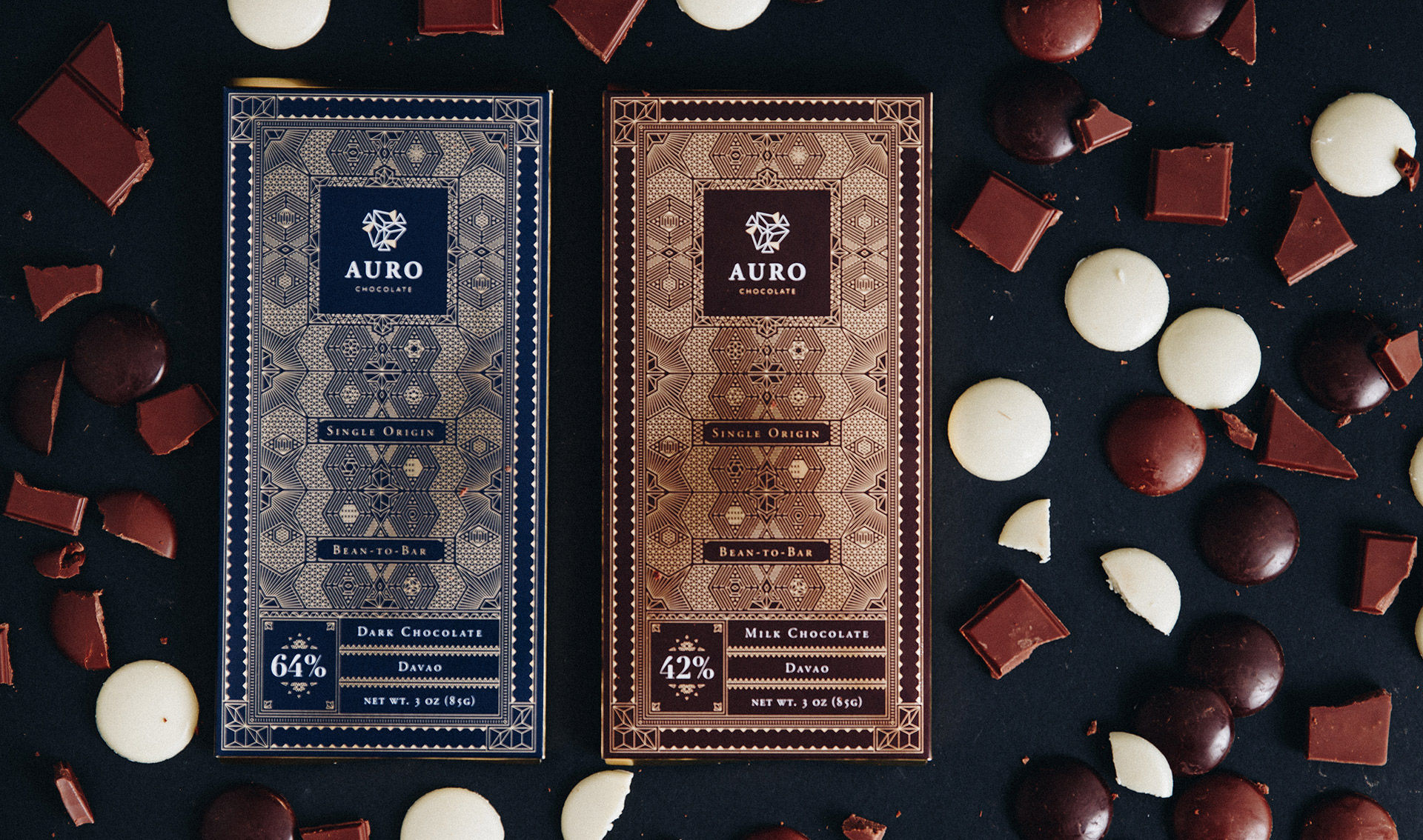
    Filipino chocolate brand Auro is expanding to Japan.

    The first Auro Chocolate store will open on October 7 in Frenity House in Shibuya City, a special ward of Tokyo. The brand was discovered during a trip to the Philippines by the father of the founder of Japanese distributor Kotowari, which is now exclusively representing the brand in Japan.

    Co-founder Mark Ocampo said: “They discovered us through social media. He bought all these chocolates from the Philippines and took them to Japan. They tried all the chocolates they had and chose us.”

    Kotowari will manage the approximately 20-30sqm Auro store in addition to promoting the brand in local hotels and restaurants. The said the deciding factor in distributing the Auro brand is the direct relationship between the chocolatier and the cacao farmers who supply beans. Auro assists the farmers with business administration training and quality control, helping to improve their quality of life.

  • E-Mart to open first outlet in Hanoi

    E-Mart to open first outlet in Hanoi

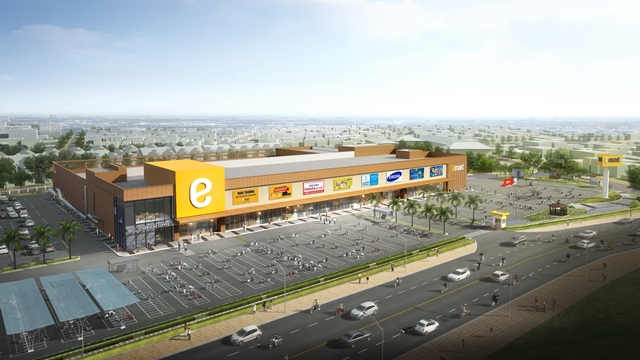
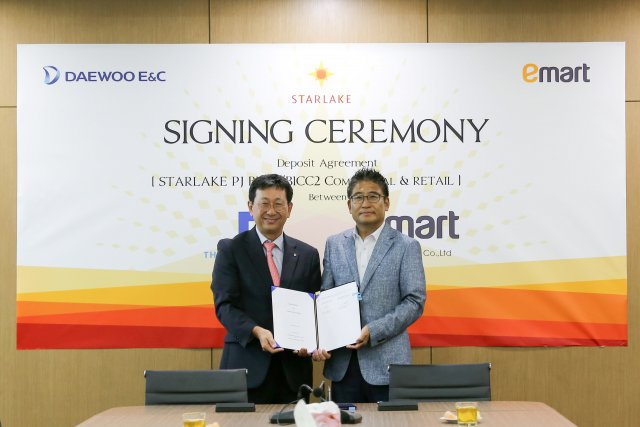
    South Korean retail group E-Mart is to build its first hypermarket in Hanoi’s StarLake urban area.

    According to StarLake, E-Mart and THT Development have signed an agreement to transfer two commercial land lots within StarLake Project, for an area of 1.86 million sqm in Hanoi’s Tay Ho (West Lake) district.

    In late 2015, E-Mart opened first location in Vietnam, on a 3ha site in Go Vap district, in Ho Chi Minh City, investing up to US$60 million.

    After exiting China, E-Mart plans to open 50 stores in Vietnam during the next five years.

    Another South Korean retail and entertainment group CJ has also deposited an agreement with THT for two land lots at StarLake Project.

    CJ plans to open CGV cinemas, a Tous les Jours bakery, and FMCG businesses there.

  • Bang & Olufsen made a Brown Bear speaker inspired by a Line character

    Bang & Olufsen made a Brown Bear speaker inspired by a Line character

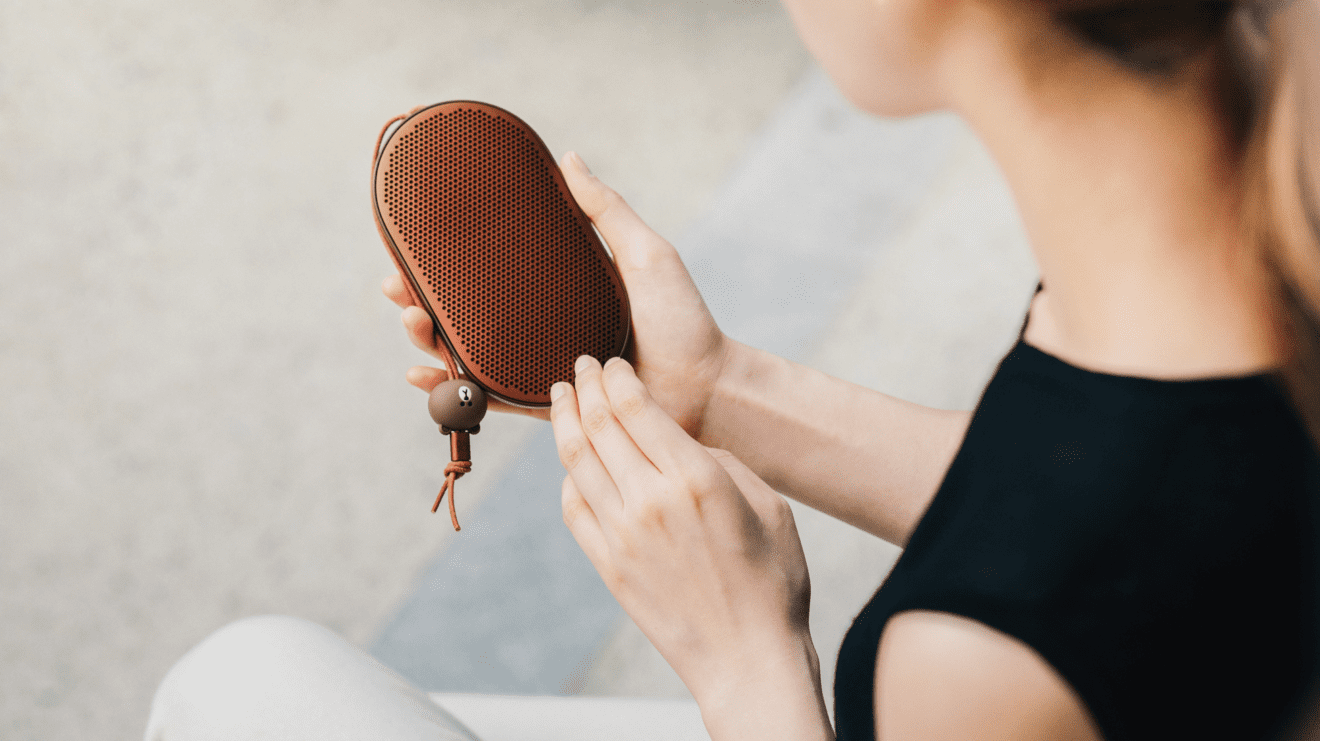
    Messaging platform Line has partnered with consumer electronics firm Bang & Olufsen to release a Brown-Bear themed speaker.

    The collaboration attests to the popularity of the chat app within Asia and of its proprietary characters, which are in familiar daily use amongst those who communicate via the platform. Brown Bear is a well-loved character in Line’s cartoon cast.

    Line character merchandise already sells in 108 countries, with a flagship store for Line-themed products in New York’s Times Square.

    The Bluetooth speaker, based on the firm’s Beoplay P2 model, is controlled by taps and shakes rather than button presses, and is brown with a featured Brown Bear accessory. It has been given a limited release with only 5000 units made, distributed in East Asia and the US both online and at a few retail outlets.

    Last month, Line partnered with DJI to create a Brown Bear-themed drone.

    View gallery of how the speaker looked like below (5 images) :

  • CIMB to accept payments from six mobile wallets

    CIMB to accept payments from six mobile wallets

    CIMB Bank Bhd will be accepting Quick Response (QR) Payment from six major mobile wallets at its terminals, enabling it to tap into an estimated customer base of about 4.5 million in Malaysia and 520 million registered mainland Chinese.

    This is the first in the market QR payment acceptance for six mobile wallet systems are accepted on a single terminal. The six mobile wallet partners are Alipay, Touch & Go Digital, Boost, KiplePay, Mcash, and Vcash.

    CIMB has partnered with GHL Systems Bhd, a leading payments company in Malaysia and Asean, to introduce the CIMB’s multi-QR terminal acceptance points for both merchants and customers.

    CIMB Group Consumer Banking CEO Samir Gupta said that this move will not only fulfil its customers and merchants’ needs, but also help develop the cashless payment ecosystem in Malaysia, in support of Bank Negara’s vision in promoting a cashless society.

    “We are delighted to enable CIMB merchants to process multiple QR codes via GHL’s unique single payment facility/gateway. Our multi-channel model is not just convenient but also cost-saving to CIMB’s merchants as multiple QR settlements are streamlined into a single payments provider,” said GHL Group CEO Danny Leong.

    The payment method is already available at certain outlets of House of Leather, NSK and Super Seven.