Blog

  • Europe turns on Facebook, Google for digital tax revamp

    Europe turns on Facebook, Google for digital tax revamp

    With public coffers still strained years after the worst of the debt crisis, EU leaders have agreed to tackle the question, spurred on by French President Emmanuel Macron who has slammed the likes of Google, Facebook and Apple as the “freeloaders of the modern world”.

    As recently as March, five of the world’s top 10 valued companies were Silicon Valley behemoths: Apple, Google’s Alphabet, Microsoft, Amazon and Facebook. (Germany’s SAP was Europe’s biggest and 56th on the global list).

    But tax rules today are designed for yesterday’s economy when U.S. multinationals — such as General Motors, IBM or McDonald’s– entered countries loudly, with new factories, jobs and more taxes for the taking.

    These firms had what tax specialists call “permanent establishment”, when companies showed a clear physical presence measured and taxed through tangible, real world assets.

    But today in most EU nations, the U.S. tech titans exist almost exclusively in the virtual world, their services piped through apps to smart phones and tablets from designers and data servers oceans away.

    Ghost-like, Silicon Valley has turned Europe’s economies upside down, but often with just a skeleton staff and some office space in markets with millions of users or customers.

    Nation-less 

    According to EU law, to operate across Europe, multinationals have almost total liberty to choose a home country of their choosing. Not surprisingly, they choose small, low tax nations such as Ireland, the Netherlands or Luxembourg.

    Thus, it is through Ireland that Facebook draws its wealth from millions of accounts across Europe. There are 33 million accounts in France and 31 million in Germany, according to recent data.

    While users enjoy the platform, Facebook tracks likes, comments and page views and sells the data to companies who then target consumers.

    But unlike the economy of old, Facebook sells its data to French companies not from France but from a great, nation-less elsewhere, with no phone number, address or physical “presence” for a customer who probably cares little.

    It is in states like Ireland, whose official tax rate of 12.5 percent is the lowest in Europe, that the giants have parked their EU headquarters and book profits from revenues made across the bloc.

    Indeed, actual revenues from advertising are minimal in France and Germany, but at Facebook HQ Ireland they grew to 7.9 billion euros, even though the vast majority does not come from the tiny EU island-nation of a mere 2.5 million users.

    Google follows the same pattern: in Germany in 2015, it had a little over 71 million users, in France just over 55 million. But in both nations, revenues are minimal.

    Yet, in Ireland, where the number of search engine users is less than five million, revenues for Google-parent Alphabet reached 22.6 billion euros in 2015.

    According to an analysis by Paul Tang, a specialist on tax issues at the European Parliament, France lost 741 million euros in tax revenue and Germany 889 million euros between 2013 and 2015 due to so-called “tax planning” by Google and Facebook.

    ‘No transparency’

    The Organisation for Economic Cooperation and Development believes that such tax schemes cost governments around the world as much as $240 billion a year in lost revenue, according to a 2015 estimate.

    “The actual activity of each company, including U.S. tech giants, is not known,” said Manon Aubry, spokeswoman for the NGO Oxfam.

    “Beyond the number of accounts or users in each country, it would be necessary to know in the case of Google for example, the amount of advertising sales in each country. We do not have it.”

    For car-ride smartphone service Uber, “we need to know the number of rides, but we don’t have it,” she said.

    “One of the first issues, therefore, is that of transparency: to rule that large companies publish data on activities and taxes paid in all the countries where they are present.”

    To the European Commission, the digital shortfall on tax is clear. The effective tax rate on the profit of digital giants in the EU averages only nine percent, while that of traditional companies exceeds 20 percent, it said.

    ‘Political crap’ 

    Apple, also based in Ireland, became one of the EU’s most emblematic tax cases when Competition Commissioner Margarethe Vestager ordered the iconic iPhone maker to pay 13 billion euros in back-taxes.

    Vestager said the U.S. giant had benefitted from illegal state aid, a gift from Ireland in exchange for choosing Dublin as its headquarters, with thousands of jobs at stake in the deal.

    Brussels says Dublin’s red carpet treatment accorded Apple an effective corporate tax rate of one percent on its European profits in 2003 — a rate that decreased to a scant 0.005 percent in 2014 — just a fraction of the official rate.

    “It’s total political crap,” Apple chief executive Tim Cook barked at the time.

    Undeterred, Vestager has gone after similar arrangements, such as those revealed in the Luxleaks scandal that exposed deals struck between Luxembourg and a long list of multinationals, including online U.S. retail giant Amazon.

    Faced with this situation, several solutions are under study.

    Driven by Macron, France has proposed an unusual idea that has so far divided Europe: tax the U.S. tech giants on sales generated in each European country, rather than on the profits that are cycled through low-tax countries.

    France says this proposal, presented by French Finance Minister Bruno Le Maire in September, has received the support of some 20 countries, including Germany, Italy and Spain.

    But there is fierce opposition from states like Cyprus, Malta, Ireland or Luxembourg — countries that have linked their EU membership to low corporate tax and thus transformed their economies from rural backwaters to financial hubs in a globalised world.

    Global, not EU, solution 

    Member states now agree that the problem would be best addressed at the international level, in the G20 or by the OECD, in order to prevent a high-tech exodus from the EU.

    Caught by surprise by the French initiative, the European Commission announced at the end of September that it will also propose solutions in 2018.

    Ideally, Brussels agrees that there needs to be a major reform of international tax rules, which would establish a closer link between the way value is created and the place where it is taxed.

    Without rejecting the French proposal, the commission wants to dust off an old project from 2011 — for a long time deadlocked because of the differences among the 28.

    Relaunched in October 2016, the idea has one of the most cumbersome acronyms ever to come out of Brussels: the Common Consolidated Corporate Tax Base or CCCTB — an ambitious bid to consolidate a company’s tax base across the EU.

    This draft legislation is currently being examined by the 28 EU member states and taxation of the digital economy could easily be included in the scope of the rules that may be adopted.

    Under the plan, all multinationals operating in the EU with total sales of more than 750 million euros would be fixed at only one place of taxation, with one tax administration.

    However, this tax would be distributed in all the countries where the company operates, and not according to the level of booked profit in each of these states, but according to the level of activity.

    This level of activity in each member state would be measured using a combination of factors, including the number of employees, the importance of tangible assets (buildings, machinery, etc.) and sales.

    French MEP Alain Lamassoure, co-rapporteur of the project, proposes to add a fourth idea: the volume of personal data collected and used by a digital platform wherever its services are used.

    But in Europe, all is made infinitely more complicated since the adoption of new European legislation on tax matters requiring unanimity of the EU’s current 28 members.

    In addition to these European proposals, the OECD is working on a global solution, which it must present to the G20 finance ministers at their next meeting in April in Washington.

    This initiative would have the merit of including Europe as well as the United States, Japan and emerging countries.

    Until last October, the United States had dragged its feet in efforts to better tax its national champions, but changed attitude. Specifically, it agreed to set up a working group with France in the OECD.

    “The Americans are in the same situation as us: their own tax system is not adapted to the current economy and they too are experiencing very substantial revenue losses that must be compensated,” EU economics commissioner Pierre Moscovici said.

    “Taxation of the U.S. tech giants is a global problem and the answer should be as well.”

  • Volkswagen to invest $27 billion in core brand until 2022

    Volkswagen to invest $27 billion in core brand until 2022

    Volkswagen will invest 22.8 billion euros ($26.9 billion) in its main car brand over the next five years, it said on Saturday, a day after it announced a spending program aimed at bolstering its position as a maker of electric cars.

    Most of that sum, around 14 billion euros, will be spent in Germany, Volkswagen said, adding that one of the key measures included a 1 billion euro injection to transform the carmaker’s Zwickau plant into a pure e-mobility facility.

    “The investment package which has now been adopted will give a decisive boost to the largest product and technology offensive in the history of the brand,” Herbert Diess, Chief Executive of the Volkswagen brand and a VW management board member, said.

    Analysts see reviving the VW brand, which has long suffered from high staff and development costs, as crucial to the group’s ability to recover from a diesel emissions scandal that has gripped the carmaker. [nL8N1N51ST]

    The investments unveiled on Saturday are part of Volkswagen’s 72 billion euro spending plan for the 2018-2022 period that was announced on Friday.

  • Japan’s FamilyMart to go to Outer Space

    Japan’s FamilyMart to go to Outer Space

    Japan’s FamilyMart is going to great heights for promotion – in fact, as far as space.

    The Japanese convenience store franchise is joining airline JAL as a sponsor for an artificial “shooting star” project that involves a satellite dropping pellets that will make a display as they burn up on re-entering the atmosphere.

    It will be a world first produced by Ale, a company founded and run by former investment banker and mother-of-two Lena Okajima, who has a PhD in astronomy. A trial run of its satellite will likely be held in 2019 over the Setouchi (Seto Inland Sea) area of Hiroshima prefecture.

    Its pellets will be designed to burn brighter and longer than natural shooting stars in a colour of the client’s choosing. The display, lasting between five and 10 seconds, will be visible within a 100km radius.

    For its “Shooting Star Challenge”, a satellite will be placed in orbit about 500km above Australia. From there it will release pellets toward Japan. These will take about 15 minutes to fall to a height of 60km above Setouchi and begin to burn. This part of Hiroshima was chosen as the test site for its popularity, scenery and clear skies.

    A single 60cm satellite is expected to hold up to 400 pellets, which it is hoped will last until the end of the craft’s year in orbit. As well as providing a pyrotechnic display, the project will also gather data on upper-atmosphere physics.

  • Shiseido Japan and China sales jump, despite Q3 net loss

    Shiseido Japan and China sales jump, despite Q3 net loss

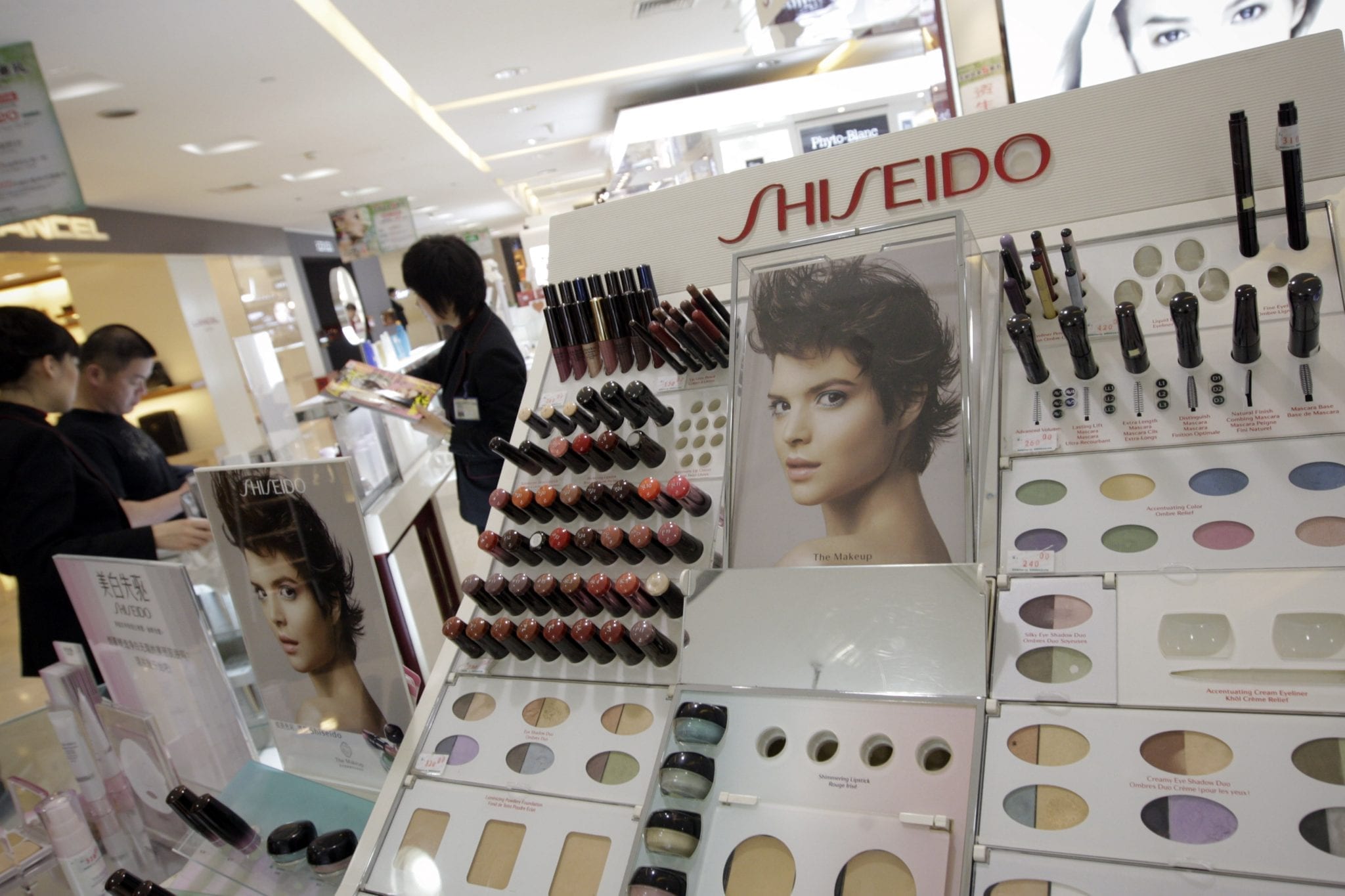
    Shiseido published a third quarter net loss, despite notable growth for the first nine months of 2017, pushed on by Asia revenues, particularly in Japan and China.

    The Japanese cosmetics group said combined turnover over the nine months rose 17.4% to 731.2 billion yen, close to 6 billion euros, according to a press release.

    However, depreciation of assets related to its struggling American subsidiary Bare Escentuals pushed Shiseido into a net loss of 17 billion yen over the nine months, compared to a net profit of 37.2 billion yen the year before,

    For the same period, operating profit jumped 82.4% to 70.7 billion yen over nine months (567 million euros), highlighting the US subsidiary sale’s negative impact on profits.

    Japan remained its strongest market, accounting for 44% of sales and revenues surged in China – which makes up 14% of total sales –as well as the rest of Asia, which continued to grow at a constant rate, said the press release.

    Conversely, European growth remained weak and sales slowed in the Americas, making up13.5% of total turnover.

    Looking ahead, Shiseido is predicting a modest annual net improvement of 5 billion yen (38 million euros).

    Earlier in the month, Shiseido relinquished firm Zotos— its Professional business division in North America to consumer goods firm Henkel for $485 million, saying at the time it plans to hone in on Asia’s professional market.

    Shiseido said in a press release the group would use the funds gained from the Zotos sales “to further pursue its strategic objectives of continuing to nurture its Prestige brands, reinforcing production capability and other activities.”

    Earlier in 2017, Shiseido appointed Nathalie Broussard to the newly created post of Scientific Communications Director EMEA, with the mission of bolstering relationships with the science and technology community in Europe, the Middle East and Africa.

  • Alibaba, Auchan, Sun Art partnership goal in China market

    Alibaba, Auchan, Sun Art partnership goal in China market

    A new Alibaba, Auchan, Sun Art partnership will further strengthen Alibaba’s efforts to integrate online and offline, say analysts.

    China’s Alibaba Group Holding, France’s Auchan Retail and Taiwan’s Ruentex Group have formed a strategic alliance to bring together their online and offline expertise to explore opportunities in China’s food-retail sector.

    As part of the deal, Alibaba is investing HK$22.4 billion (US$2.8 billion) to obtain an aggregate direct and indirect stake of 36.16 per cent in Chinese food retailer Sun Art Retail Group by acquiring shares from Ruentex.

    Auchan Retail is also increasing its stake in Sun Art, with the transaction giving it, Alibaba and Ruentex about 36.18, 36.16 and 4.67 per cent economic interest respectively in the multi-format offline food retailer.

    Sun Art had a total gross floor area of about 12 million sqm in China at June 30. It has 446 hypermarkets as large as 17,000sqm across China under the Auchan and RT-Mart banners. It also has superstores and unmanned stores under the Auchan Minute brand.

    Alibaba says the alliance reflects its “new retail” concept, while Auchan Retail says it aligns with its “Auchan changes lives” vision.

    Alibaba Group CEO Daniel Zhang says the move aims to redefine traditional retail through digital transformation. “Physical stores serve an indispensable role in the consumer journey, and should be enhanced through data-driven technology and personalised services in the digital economy.”

    ‘Positive impact’

    “Bringing together the leaders of instore retail and of online retail will allow us to offer hundreds of millions of Chinese consumers a fully integrated, world-class shopping experience,” says CEO Wilhelm Hubner of Auchan Retail, which has a presence in 17 countries with 3715 points of sale.

    “Consumer demands have changed tremendously with the rapid growth of the mobile internet, and Sun Art is also trying to move from offline to online,” says Ruentex Group vice-chairman Peter Huang.

    “I think this deal will have a positive impact for all involved,” says OC&C Strategy Consultants associate partner Veronica Wang.

    “It will further strengthen Alibaba’s efforts to integrate online and offline,” says Wang. “Alibaba has been quite aggressive in investing offline in the past two to three years with its continuous investments in the likes of retailer Suning and mall company Intime, as well as its own launch of Hema supermarkets.”

    She says the alliance could help Sun Art build digital capabilities, with the company trying to tap into e-commerce and build an O2O business since 2014, but with limited success. “Feiniu.com was the first attempt, which is still losing money after three years, and Sun Art launched cashier-free self-service convenience stores this year which are still in the stage of trial and error.”

    OC&C associate partner Steven Kwok says the move is no surprise “especially when retailers in general are finding that grocery retailing, unlike other categories thus far, has encountered greater barriers to the shift online”.

    He says Sun Art’s reach across China not only gives Alibaba an enhanced distribution network, but also serves as a testing ground for digital initiatives.

  • Ikea Malaysia’s third store attracts more Singaporeans

    Ikea Malaysia’s third store attracts more Singaporeans

    Ikea Malaysia’s new third store in Johor Baru has attracted crowds of shoppers who hopped over the border from Singapore attracted by cheaper prices.

    Southeast Asia retail director Mike King says Ikea Tebrau is accessible to about 1.8 million Malaysians living within a 60-minute drive from the outlet. It is also 16km from the Woodlands Checkpoint, but some Singaporeans who drove across the causeway at the weekend faced congestion lasting up to two hours.

    Before too long, Ikea Tebrau’s 1771 parking bays were fully occupied, with some customers resorting to parking illegally along the main road outside the store, which is the largest in Southeast Asia at 46,730sqm.

    With 54 showrooms, the store offers more than 8000 home-furnishing products. It has a 750-seat restaurant featuring the brand’s signature Swedish meatballs, and this was packed on Sunday from 11am until 3pm, with some customers queueing two hours to enter.

    Meanwhile, in another Singapore connection, the BBH Singapore agency created a humorous campaign for the new store with the tagline “Now, there’s choice”.

    The campaign features four videos, supported by digital, TV, print, outdoor and radio.

    Capturing everyday domestic life, the films were shot by Argentinian director Augusto G Zapiola.

  • Deliveroo Singapore plans its own restaurant

    Deliveroo Singapore plans its own restaurant


    Food-delivery service Deliveroo Singapore may soon run its own table-service restaurant, a potential first for a delivery app.

    The London-based startup, which launched into Singapore in late 2015, will open remote kitchens across the island next year, one of which could evolve into a fast-casual eatery, The Business Times reports.

    Known as Deliveroo Editions, these remote kitchens produce food for delivery only. They house multiple restaurant brands under one roof and can quickly make meals on order and access zones where particular restaurants do not have a presence.

    Deliveroo unsuccessfully applied for a dine-in permit at its Katong Editions site, its first kitchen, with the concept of a casual-dining food court with an alfresco area where customers could have dishes from any onsite restaurant. Now the company will explore the dine-in concept at its new Editions sites. It will also consider offering pick-up services, allowing customers to place orders through the app then collect their meals from one of the sites.

    GM Siddharth Shanker says the new Editions sites are likely to be in the heartlands. “It’s a data-driven bet. The first decision is usually where to open, which depends on restaurants and cuisines already in the area. The second is what restaurants to take on to the site, which will depend on food trends in the area.”

    He says that because Editions are designed for delivery only, the average time taken for food to reach customers is 23 minutes, shaving about 10 minutes off Deliveroo’s citywide average delivery time.

    The Katong Editions site is home to five restaurants. Each has its own kitchen and pays zero rent or utility fees. Instead, they pay a cut of their revenues to Deliveroo in exchange for using the space.

    Singapore is the first market outside London to have the Deliveroo Editions concept.

  • Singapore Q3 GDP Growth Seen Revised up on Exports Boon

    Singapore Q3 GDP Growth Seen Revised up on Exports Boon

    Year-on-year, third quarter final gross domestic product (GDP) was forecast to show growth of 5.0 percent, according to the poll’s median estimate of 11 economists, an improvement from the 2.9 percent growth for April-June.

    The data will be released on Thursday, November 23.

    “Growth prospects are getting brighter for the Singapore economy after two years of sub-par performance,” analysts at ANZ bank said in a research note to clients.

    Recent data pointed to a more broad based recovery for the city-state, dispelling previous worries that Singapore was too dependent on its tech products.

    Earlier on Friday, Singapore reported that its exports rose the most in 2-1/2 years in October, thanks to growth in both its electronics and non-electronics exports.

    “The composition of growth (in 2018) is going to be more balanced,” compared to that so far this year, said Credit Suisse economist, Michael Wan.

    Singapore and other trade-dependent Asian economies enjoyed a strong tailwind from improved global demand in the past year, particularly for electronics products and components such as semiconductors.

    “This year was more about exports, but as we move to 2018, you would see more support from things like retail sales and private consumption,” Wan said.

    The positive growth and inflationary impulse from the trade sector has raised the prospect of tighter monetary policy next year.

    The Monetary Authority of Singapore held policy steady last month but changed a reference to maintaining current settings for an extended period, a shift that analysts said created room for a tightening next year.

    “We expect the Monetary Authority of Singapore (MAS) to exit from their neutral policy stance at their October 2018 meeting,” ANZ analysts said.

    Reuters

  • Azzedine Alaïa dies at the age of 77

    Azzedine Alaïa dies at the age of 77

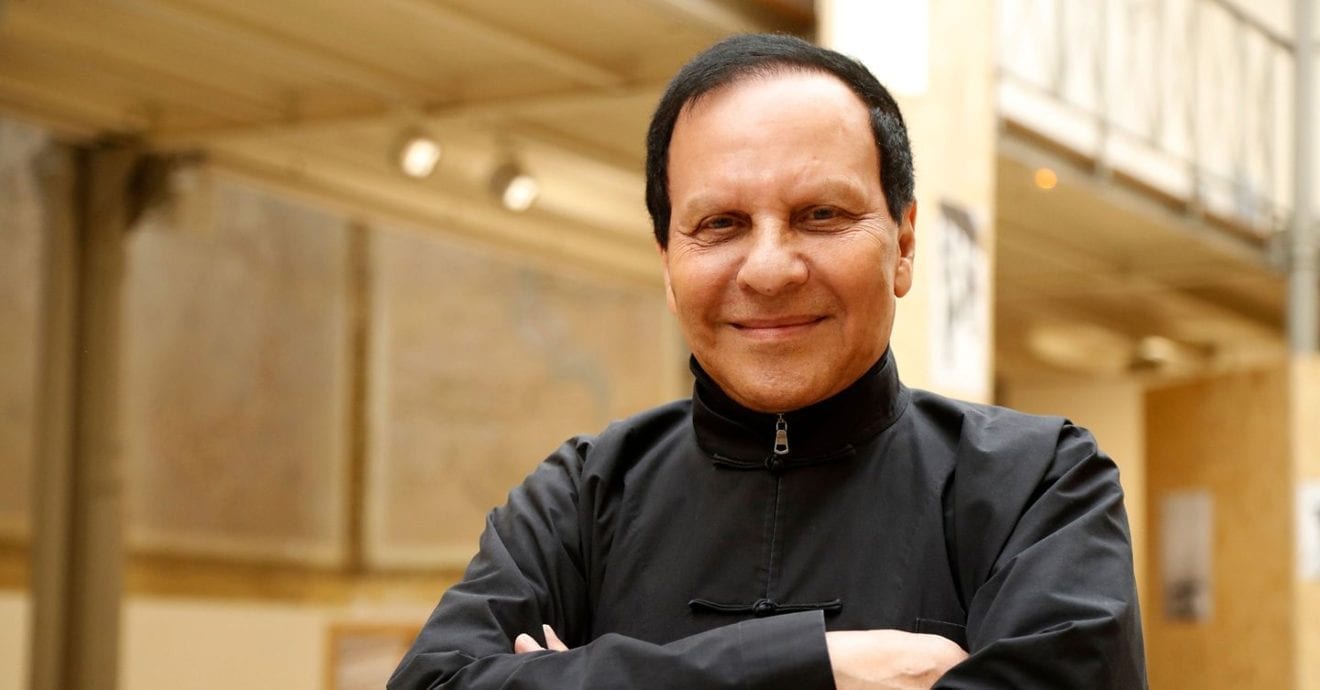
    Alaïa was one of the industry’s few designers willing to follow his own conventions and ignore fashion schedules, creating his collections at his own pace.

    His ability to do so stemmed from his prodigious talent and fashion’s seemingly insatiable appetite for his designs.

    His skill at cutting and his idiosyncratic takes on classic silhouettes have made Alaïa popular for decades; his designs remain the aspirational zenith for many.

    “It is with great sadness that I learned of the passing of Azzedine Alaïa,” François-Henri Pinault, Kering’s chairman and chief executive, told BoF. “In the fashion world, he was a great, a major couturier. Everything was at the top with him: couture, art, the standards he aimed at, his dedication to his work, his mastering of techniques, and all the women he dressed. He was an artisan in the noble sense of the term, and a man fiercely attached to his freedom. He was a friend.”

    Alaïa’s love of fashion began through his reading of Vogue at a young age.

    Lying about his age to attend the École des Beaux-Arts in Tunis, he began working as a dressmaker after graduating, before electing to move to Paris in 1957.

    There he started his career at Christian Dior as a tailleur, but soon moved to work for Guy Laroche for two seasons and then on to Thierry Mugler.

    He opened his first atelier in his Rue de Bellechasse apartment in the late 1970s, from which he dressed his private clientele, which included Marie-Hélène de Rothschild, Louise Lévêque de Vilmorin and Greta Garbo.

    In 1980 he produced his first ready-to-wear collection, which was championed by the then doyennes of fashion, Melka Tréanton of Depeche Mode and Nicole Crassat of French Elle, who both regularly featured his work in their respective magazines.

    That same year the designer moved to larger premises in Paris and by 1988 Alaïa had opened boutiques in Beverly Hills and New York, and was soon dubbed the “King of Cling” by the media.

    During the mid-’90s Alaïa partially retired from the fashion scene for personal reasons.

    In 2000, Alaïa signed a partnership with the Prada Group. He then bought his brand back from the group in 2007 before entering an agreement with Richemont.

  • More stores for Berluti Asia

    More stores for Berluti Asia

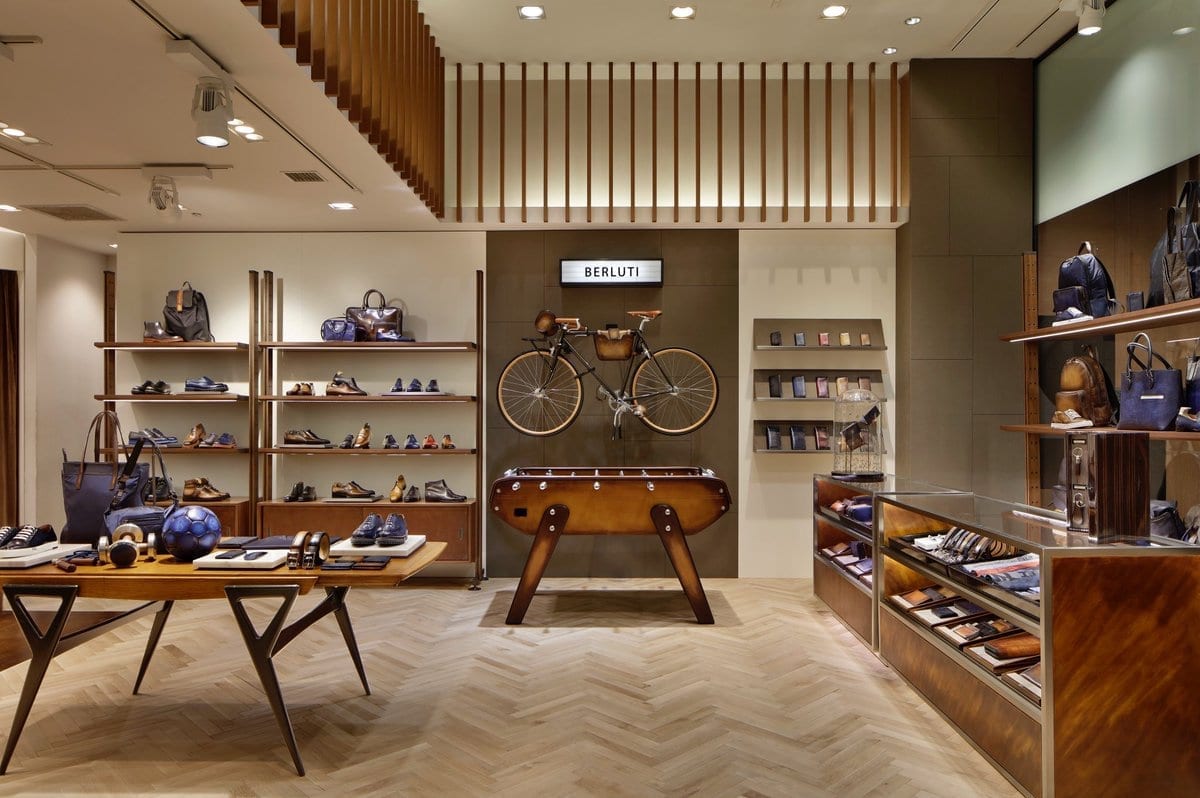
    Berluti Asia will open in India before year’s end, to be followed by a third store in Macau next year.

    It has stores in Macau Galaxy (pictured) and Macau One Central, with the third location yet to be revealed.

    In India, it is being introduced through an exclusive partnership with luxury retail group Bequest, reports Fashion Network. Bequest has exclusive rights in India already for such brands as Bang & Olufsen, and also has plans to expand the presence of UK cosmetics brand Molton Brown and Paris-based perfume house Creed.

    “Berluti is our first association with LVMH,” says Bequest group CEO Gaganmeet Singh. “We are also in advanced talks with Brunello Cucinelli and other brands.”

    Berluti will launch at Emporio mall in Delhi.

    The luxury shoe brand, which has 53 monobrand stores internationally, was founded in Paris in 1895, adding menswear to its range in 2011 as well as a bespoke service. Bought by LVMH in 2012, ,the label started to roll out globally the following year with stores in Shanghai and Tokyo as well as London and New York.

    In September last year the label appointed Colombian ready-to-wear fashion designer Haider Ackermann as creative director.

    His collections are working well with clients in all geographical areas, says Berluti CEO Antoine Arnault. “Chinese clients are swarming back, and Japan too is going very well.”

  • In search of Arabica in Vietnam’s war-scarred soil

    In search of Arabica in Vietnam’s war-scarred soil

    Quang Tri is one of the poorest provinces in Vietnam. Straddling the D.M.Z. that cut Vietnam in half during the American War, the province was pounded by one of the heaviest bombardments in history, and 80 percent of its soil was poisoned with landmines.

    Much has changed over the decades, but Quang Tri’s residents continue to fight the legacy of the war as well as the poverty that overshadows the lives of many.

    Bordered by the sea on one side and the Sepon River separating Vietnam and Laos on the other, Quang Tri’s driving force for economic development is agriculture. But farmers here frequently bear the brunt of the harsh monsoon season, and the rugged terrain only makes it harder to grow crops.

    Up in the highland district of Huong Hoa, which witnessed some of the deadliest days of the war during the battle of Khe Sanh, hundreds of farmers are joining forces to produce premium arabica beans, a surprisingly rare move in a country widely seen as a coffee giant.

    Growing arabica in Vietnam

    Coffee production has contributed greatly to Vietnam’s economic transformation in the post Doi Moi (renovation) period since 1986. Vietnam is now the second largest coffee exporter in the world after Brazil.

    But statistics from Vietnam’s General Customs Department last year showed that robusta accounted for nearly 80 percent of exports, while arabica staggered to less than 5 percent.

    Robusta beans, though considered cheaper and of lower quality than arabica, are hardier and can still thrive in difficult conditions, making them ideal for cultivation in Vietnam. But robusta beans, mainly ground to make instant coffee, are not often found in high-end chains across the world, which favor the high-quality arabica.

    In the world’s second biggest robusta producer, arabica can only be found in the northern and central highlands due to the tough requirements in terms of altitude, soil and temperature required to cultivate the variety.

    Will Frith, a coffee specialist who has done much research on Vietnamese arabica coffee, said robusta dominates Vietnam’s exports as it is much easier to grow at low elevations, has higher disease and pest resistance and has much higher crop yield.

    “Robusta has easier requirements on the market, so defects are more tolerated by buyers, who are usually buying for large commodity companies not looking for high quality,” he said.

    “Arabica is more susceptible to disease and pests, and as the highlands begin to warm up, these pests will travel up to higher elevations and make it more difficult to manage good quality arabica plants. Only the most quality-oriented growers who have good buyers will continue to grow quality arabica,” Will added.

    In Vietnam, unskilled and fragmented labor are major hurdles to growing coffee that meets international requirements. At the same time, shifting cultivation can also be a problem in Vietnam’s rural areas, as it takes an average of three years to harvest coffee, which can prompt poor farmers to abandon it for other short-term alternatives.

    According to an annual coffee country report released last May by the USDA’s Foreign Agriculture Service, as coffee prices fall, more Vietnamese coffee farmers will switch to cash crops such as black pepper, avocado or passion fruit to generate higher incomes.

    Smallholdings are also struggling to reach out to buyers. Many coffee roasters have strict requirements about the quality of the coffee beans, and traders can reject deliveries if they do not meet the 4C standard, which is a baseline level aimed at sustainable coffee production and sourcing. While most 4C robusta beans come from Vietnam, 4C arabica beans are mainly sourced from Brazil or Columbia.

    Land of arabica

    In Quang Tri, coffee accounts for a third of the province’s total plantations at nearly 5,000 hectares, according to a report released last April by the provincial People’s Committee. In just a decade, Quang Tri has been transformed into a hub for arabica coffee, accounting for one seventh of the country’s total arabica production.

    In Huong Hoa District alone, 90 percent of families rely on coffee to make a living.

    Coffee plants were originally brought to Quang Tri by the French, said Nguyen Nhat An, project team leader of the Vietnam branch of the Mekong Institute. “In the beginning, they grew liberica, then residents here switched to robusta. Liberica has a low value yield, while robusta cannot thrive in this soil. Out of the three beans, arabica has proven to be the most suitable.”

    The Mekong Institute (MI), an intergovernmental organization that supports sustainable economic and social development in the Greater Mekong Sub-region, came up with an initiative to support coffee farmers in Quang Tri under the Regional and Local Economic Development – East West Economic Corridor project (RLED-EWEC), by building a model that connects farmers with a fertilizer company, a processing company and an agricultural bank in order to produce coffee that reaches the 4C standard.

    The goal is to bring “systemic and sustainable changes in the coffee sector” in Quang Tri, the MI says, as the project targets poor provinces along the economic corridor under a masterplan to help them integrate into the ASEAN Economic Community.

    An said the group’s focus on coffee is based on its potential to transform local economic development. At the same time, “sustainable coffee production” is part of Quang Tri’s strategic agricultural plan, drawing a state budget of up to $11 million within the period from 2017 to 2025.

    After a few years of research in the area, the MI decided to launch the project that promises to transform the lives of Quang Tri’s coffee farmers. It started off with 40 farmers in 2014, and later expanded to 470 in 2017, with around 22 percent of its members coming from poor families and nearly one third from the Pacoh and Bru-Van Kieu ethnic minorities.

    Ho La Ngang, a Pacoh farmer in Huong Phung Commune, Huong Hoa, said some of the difficulties that farmers often face are capital and fertilizer, which can account for up to 35 percent of total production costs.

    “Just five or six years ago, I was working in the field and only making enough for a subsistent living,” he added. “But then in 2002, after being employed at another plantation, I followed other families and started growing coffee on my own 10 hectares of land.”

    Smallholding farmers often relied on loans to buy fertilizer, which can be harmful due to the high interest rates.

    The MI’s model helps farmers access loans from an agricultural bank at low interest rates that enable them to buy the fertilizer they need from a partner company. These companies are also providing training on the proper use of fertilizer.

    Le Tuan Dung, director of Binh Dien Fertilizer JSC, said his company delivers fertilizer directly to farmers in remote areas, selling for around $417 per ton, while the market price stands at $456/ton. “But it’s more like a win-win model,” he said. “The distribution chain used to be very cumbersome, and farmers suffered. The MI’s intervention helps them cut indirect costs.”

    “Traders used to come to us directly but would only offer below market price for our coffee,” said 58-year-old farmer Nguyen Huu Xao. Xao said the MI is encouraging smallholders in his commune to work in groups while offering training to produce clean coffee cherries and helping farmers to sell them directly to processors rather than traders.

    The initiative may be new as it only started in 2014, but farmers have been reporting certain changes to their coffee output and practices. “I’m able to sell my coffee for 5-8 percent more now,” Xao said, adding that he had no experience of growing coffee before he moved to Huong Hoa.

    “After joining the farmers group, I was trained about market prices and fertilizer costs, and was able to get a loan from the bank,” he added.

    According to the MI’s 2016 report, the initiative to establish a four-party cooperative model capitalizes on the interdependencies between actors in the value chain, enabling 99 farmers to take out bank loans and increasing incomes for both farmers and processors.

    But more importantly, by aiming at a sustainable sourcing and production chain, the ultimate objective is to ensure food security in the region.

    “In 2015 we suffered major losses. The coffee cherries were threatened by pests and there were a lot of droughts, so productivity was low and the coffee price fluctuated,” said Tran Ngoc Vu, 42, a coffee plantation owner.

    A viable option? 

    In reality, it might take years to see more radical transformations to the lives of farmers in Huong Hoa, as most still struggle to make ends meet growing arabica in a robusta-dominated country.

    “The reasons could be that the quality of the coffee here only stops at being acceptable, mainly due to the low altitude,” An said. “Additionally, the arabica we grow here is the catimor strain, which is the lowest quality variety of arabica.”

    As part of the coffee value chain, Dung’s fertilizer company also relies on farmers’ coffee output to protect his company’s profits. “Unlike other countries in the region, our farmers are not supported by protectionist policies, and as a result, Vietnamese farmers often have to sell their crops at really low prices.”

    “Not to mention how climate change can also have a huge impact on productivity,” he added.

    In 2015, Vietnam’s coffee farmers suffered major losses as exports dropped by 40 percent due to rising temperatures and drought. Intensive pesticide use, deforestation and monocropping have also left coffee crops more vulnerable to climate change, land degradation and depleted water resources, according to the Guardian.

    The prolonged drought had a major impact on provinces across the Central Highlands, which produces 60 percent of Vietnam’s coffee exports.

    Quang Tri’s farmers did not escape the fall-out, Nguyen Huu Hao shared, and many growers in Huong Hoa fell into debt and were forced to switch to turmeric, ginger or black pepper.

    “Most farmers are still in debt with the banks, and many do not know if they’ll be able to take out more loans due to the losses from previous crops ,” An said. “So what the MI wants to achieve is to support sustainable development by making the market work for the poor.”

    Yet within the market, Quang Tri coffee is still traded at lower prices in compared with arabica in Da Lat or Son La, experts say.

    Will, the coffee specialist, said Quang Tri has favorable conditions to grow coffee but has not yet been as developed in terms of quality compared with Da Lat or Son La, and it is also more difficult to access. But there is “good quality arabica from Quang Tri,” he emphasized. “4C standards are nearly impossible to achieve at the prices that buyers are willing to pay, so it’s not worth it to the majority of growers.”

    “Until price corrections are made in the market, this problem will remain for all growing areas. Training is lacking and inconsistent, so it’s difficult to collect a consistent supply of high quality arabica, thus compounding the problem in a vicious cycle,” Will said.

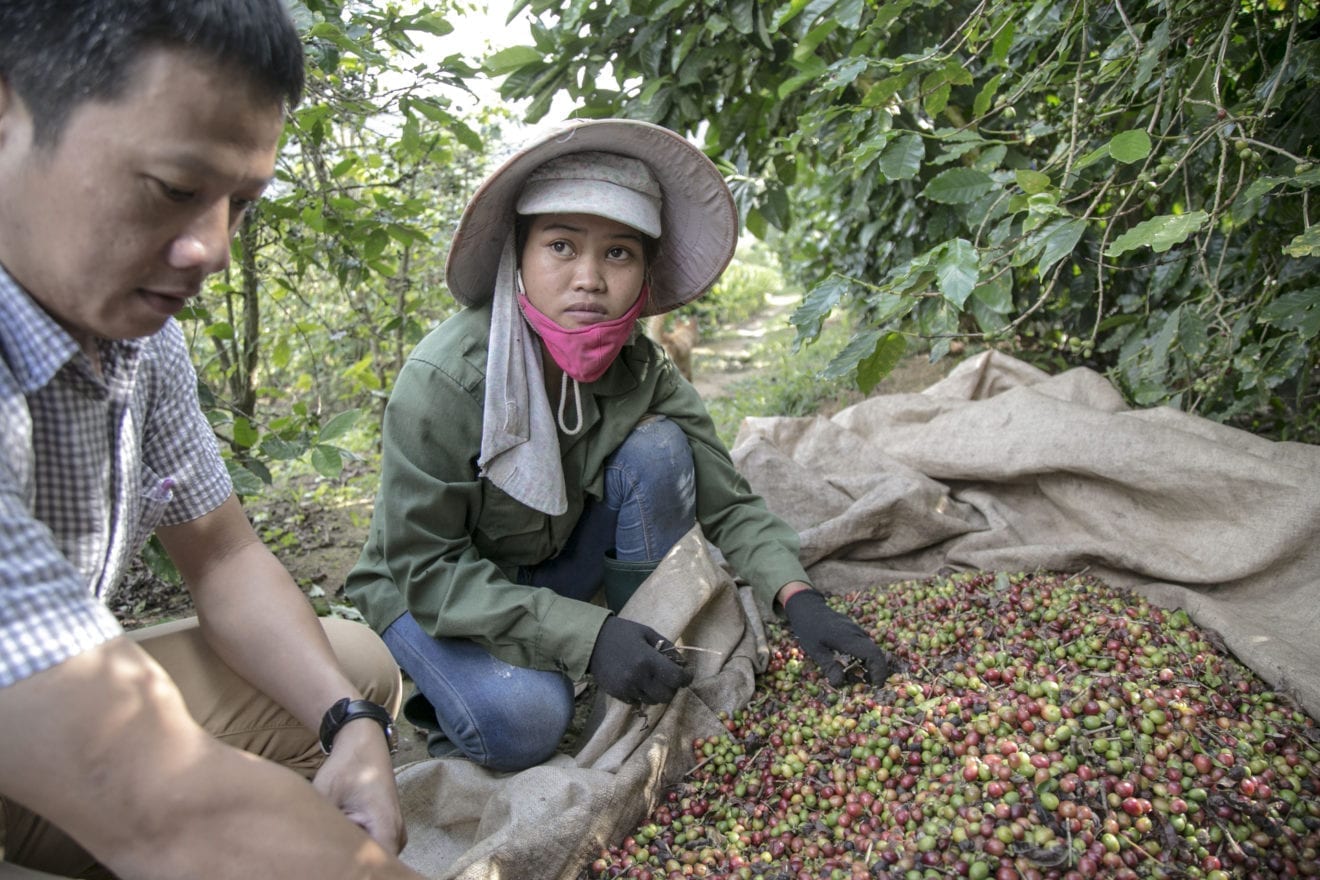
    “I earn VND4 mln/month ($176) harvesting coffee cherries. But normally, I’m a farmer in the plains,” said Nguyen Thi Lien, 59.

    Huong Phung farmers are being taught how to produce “clean coffee” that reaches the 4C standard, which includes avoiding soaking or mixing foreign matters to increase the weight, practices that can affect the quality of the coffee beans, and explain why Vietnamese coffee beans are sold at low prices internationally.

    Nearly half of the families in Huong Hoa District come from ethnic minority groups including the Pacoh and Bru-Van Kieu. Most are poor or extremely poor and, for a long time, have been accustomed to switching crops. But Ho La Ngang, a Pacoh coffee farmer, says 70 percent of the Pacoh here are now growing coffee thanks to encouragement from local authorities.

    Trucks are sent to collect harvested cherries and deliver them to processors, which saves the farmers time and money.

    One of the reasons why Quang Tri coffee only fetches a low price is because there are only a few local processing factories. An said the Mekong Institute’s long-term goal is to boost trade and investment in the region to help farmers gain access to regional and international markets.

    Inside a coffee processing factory in Quang Tri. The coffee cherries will later be transported to Hanoi for roasting and packaging.

  • South Korea eyes artificial intelligence partners in BC

    South Korea eyes artificial intelligence partners in BC

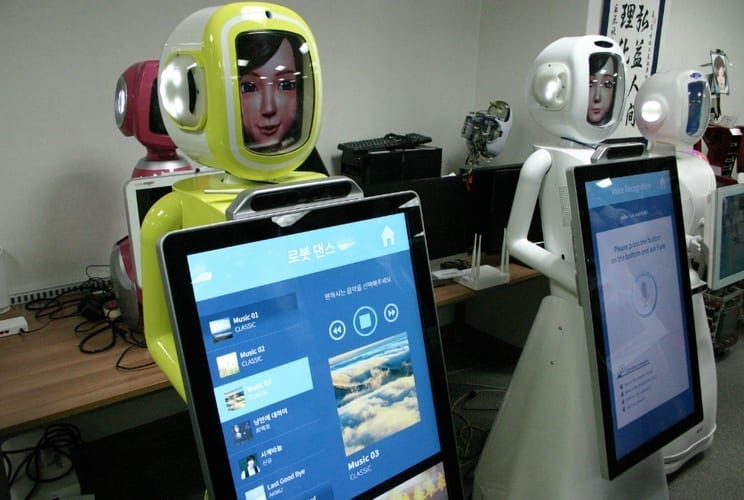
    Future Robot’s latest model at the company’s headquarters in Seongnam, near Seoul, South Korea. The company creates “social AI”: robots that interact with people by interpreting emotional responses, either through facial expressions or tone of speech, and then respond with emotive answers | Chuck Chiang

    At Seoul’s Incheon International Airport – one of the world’s largest international flight hubs – two new “stars” are capturing the attention of passengers who cross their paths.

    They’re not stars of “K-pop,” South Korea’s increasingly ubiquitous cultural exports of boy bands and girl groups that are now household names in most of Asia. Rather, they are robots – one that guides passengers to their flights by scanning their boarding passes, another a giant Roomba-like floor cleaner that asks politely, in Korean and English, to pass pedestrians in the machine’s cleaning path.

    “Where are you going? Have a nice flight!” the robot says cheerfully when a passenger leaves the view of its camera, while another group of travellers inevitably blocks the robot’s path and starts a new wave of photo-taking and hand-waving. (The scene bears a striking resemblance to one of the futuristic scenarios introduced in the Vancouver International Airport’s solicitation for public opinions for its 2037 master plan, although airport representatives said no robots are planned at this time.)

    This is the next industrial revolution as envisioned by leading observers around the world: the advent of artificial intelligence (AI) not only in people’s daily lives, but also in the overall global economy. And South Korea, deeming itself several years behind industry leaders like China and the United States, is looking for like-minded partners such as Canada to help it get back in the race.

    “It’s very hard for Canada and Korea to develop [large-scale] AI technologies in isolation from other markets,” said Kim Deogtae of the Korea Artificial Intelligence Association, who is also a university professor and president of his own AI tech firm DTWARE Inc. “But I do think that there’s an opportunity for companies on the two sides to co-operate, preferably with corresponding government support.”

    That partnership can happen in a number of ways, Kim said. Either Canadian investors can bring Korean-developed technologies like Incheon airport’s robots (made by conglomerate LG) to the North American and European markets through the North American Free Trade Agreement and the Canada-European Union Comprehensive Economic and Trade Agreement  or B.C.-based AI developers and startups can use South Korea’s market access to China, Japan and Southeast Asia to expand.

    B.C. and the rest of Canada can also be the answer for South Korea’s lack of AI-development talent. Kim said the East Asian nation struggles in that area because its traditional education system focuses on memorization rather than critical thinking.

    Canada, in turn, could be a partner in directly supplying AI developers or providing adequate space for Korean students to study the technology.

    “It is difficult to develop high-level AI in the Korean educational environment,” he said. “But Korean students are diligent and fast-learning; that is our strength. So if there’s an environment to learn AI, I believe Koreans will be fast to adopt and excel … and we have to look overseas.”

    The key, Kim said, would be to join forces to overcome each side’s smaller domestic market for sales, capital and talent when compared with the aforementioned “big two,” China and the U.S.

    There are already cases happening in other parts of Canada: a month ago, Korean conglomerate Samsung (KRX:005930) announced it will open its own AI research laboratory in Montreal after three years of working with Canadian teams.

    Major players from other countries have also started moving into Canada to mine its AI-technology talent. Google’s (Nasdaq:GOOGL) DeepMind research team – based in Great Britain – chose Edmonton as its first international lab in July. All this is happening with the backdrop of $125 million in earmarked Canadian federal funding for attracting AI development to Canada, as outlined in the federal Liberal government’s 2017 budget.

    Most of Ottawa’s effort is concentrated in three metropolitan areas: Edmonton, Montreal and Toronto-Waterloo. But one executive from a Vancouver financial technology (fintech) company that uses AI in its proprietary platform connecting lenders and borrowers said B.C. does have its niche in that sector, and it is up to B.C. companies to spearhead collaborations in markets like South Korea.

    “It’s important for anyone who’s not well known in the global market to go out and explain the model and its value proposition,” said Alex Mateesco, CEO of Lendery, which plans to open an office in South Korea to expand its lending platform to Asia.

    “I don’t think we should expect other people to know us more than what we know about ourselves. We have to do our own parts to be present internationally … because if we don’t take initiative on that market [fintech], someone else will go carve it out.”

    Focusing on a niche market to excel is a good idea for Vancouver’s AI sector, said the CEO of one of South Korea’s leading AI startups. Song Sekyong, who has built Future Robot Co. Ltd. from its launch in 2009 to a company with a market valuation of US$20 million this year, said it was able to succeed by carving out a space within AI that’s underserved by American and Chinese companies, which tend to focus on massive, cloud-storage-based systems that process an enormous amount of data over a wide network. Two examples of the latter are Google’s AlphaGo and Amazon’s (Nasdaq:AMZN) AWS.

    Song’s company, however, found its market in creating “social AI”: robots that interact with people by interpreting emotional responses, either through facial expressions or tone of speech, and then responding in kind with emotive answers. In some cases, these “soul-ware” robots even have animated faces to respond with their own emotive reactions.

    Up to 30 of these robots will be deployed at the 2018 Pyeongchang Winter Olympic Games. Other applications could include seniors care, personal organizer/living assistance and front-line customer service in various retail settings.

    “Most people think of AI as one thing,” Song said. “But that’s not true. It’s a lot more than just Amazon and Google, and there are a lot of variations within the potential market. What interests us is how we can apply AI so that people and AI live together and having the technology fill a very human need – a ‘warm’ technology, if you will.”

    Song, whose company employs approximately 35 people, is anticipating Future Robot’s valuation to double next year and hit US$100 million by 2025.

    He is also eyeing an initial public offering in a western market – again, an area that could bring Future Robot’s brand to Canada. But Song also noted that he and other AI developers are aware of some people’s fear of AI and its potential to eliminate human jobs. To those concerns, Song said it’s not that jobs will disappear with AI, but rather they will transform.

    “If you look at history, technology shifts and labour trends have always happened in tandem,” he said, noting AI will require a large number of programmers and technicians to maintain. “A robot can replace human labour, but it can’t replace a human being.”

    Lendery’s Mateesco added that any B.C. companies looking to jump into transpacific AI co-operation deals must always consider the human element to achieve market acceptance.

    “The mistake a lot of companies make is to push a technology and make it a top-down decision, which can be hard on consumers who are not ready. The point of technology is to serve people, to make lives more comfortable; so you have to let people decide what makes them comfortable.”

    cchiang@biv.com

    @BIVnews

    Note: Some interviews conducted for the story were completed at Invest Korea in Seoul, for which the reporter’s airfare and accommodations were provided by the Korea Trade-Investment Promotion Agency.

  • Daimler to invest $755 million in China for electric car, battery production

    Daimler to invest $755 million in China for electric car, battery production

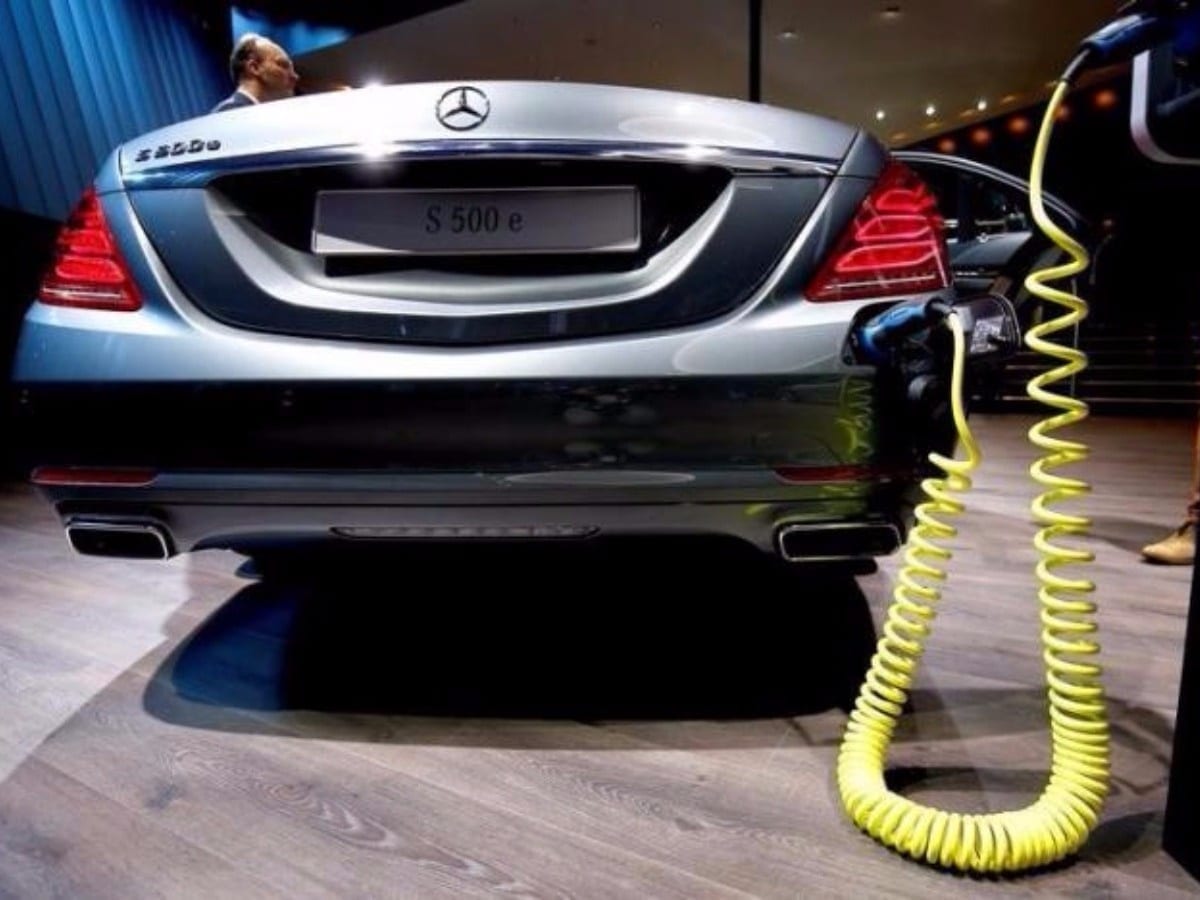
    Germany’s Daimler AG plans to invest 5 billion yuan ($755 million) in China for factory capacity to manufacture electric cars and the batteries that power them, part of an effort to help its Mercedes-Benz and Smart brands comply with the country’s green car production and sales quotas.

    Hubertus Troska, head of Daimler’s greater China operations, told reporters that the investment was part of Daimler’s previously announced 10 billion euros ($11.8 billion) global green car initiative.

    China has set strict quotas for electric and plug-in hybrid cars that come into effect from 2019. It has an ambitious target of 2 million NEV sales by 2020 and has signaled longer-term it will phase out the sale of conventional petrol-engine cars.

    This seismic shift towards NEVs has prompted a flurry of electric car deals and new launches as manufacturers worldwide race for a share of the world’s largest auto market.

  • Why SingPost’s logistics segment is a drag to its growth

    Why SingPost’s logistics segment is a drag to its growth

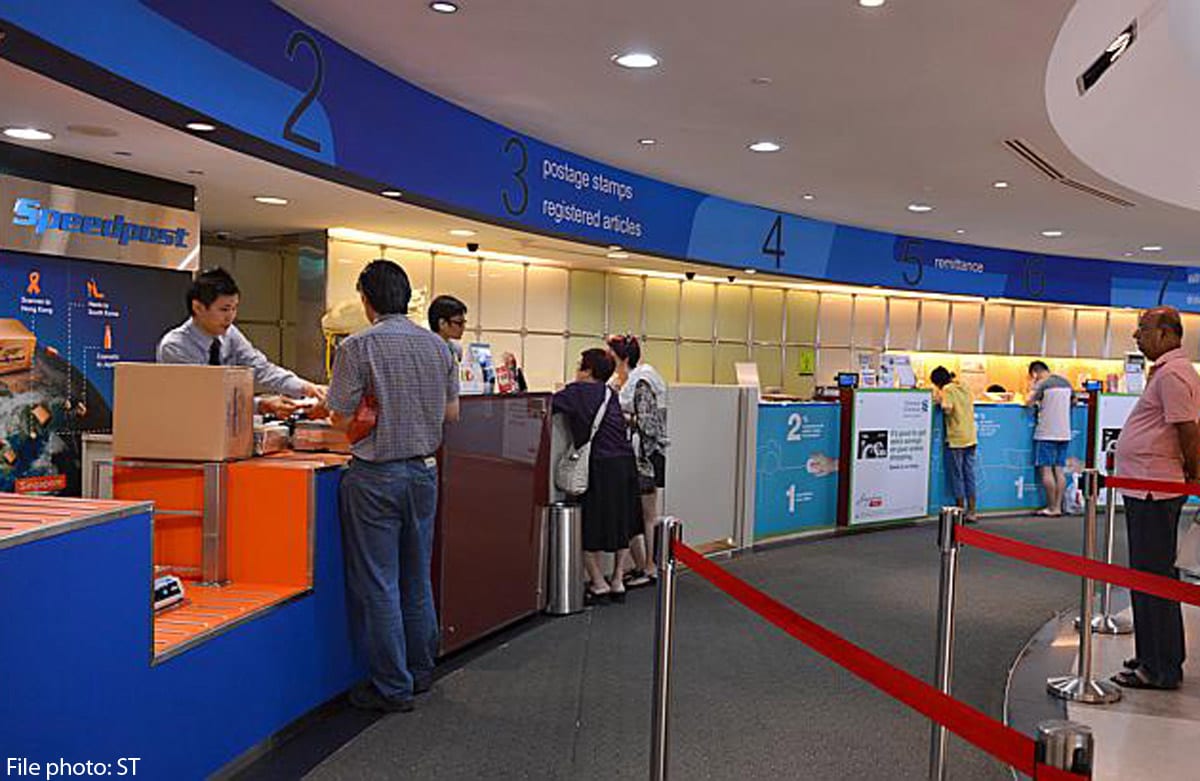
    Intense pricing competition resulted in losses. Singapore Post’s (SingPost) logistics segment went into the red as operating profits turned into a loss of $4.2m in Q2.

    According to Maybank Kim Eng, even excluding provisions, the operating profit would have been $1m, which is much lower than the operating profit of $5m for 1Q2017.

    The segment was in bad debt for a key customer, Quantium Solutions HK.

    Intense pricing competition has also resulted in the loss of business.

    Further weakening of logistics segment could offset the turnaround of mail and logistics segments.

    Whilst the logistics business turned into a weight for the company’s earnings, the drag should still be manageable, the bank said. SingPost’s mail, e-commerce, and associate earnings could still gain momentum, Maybank Kim Eng said.

  • Luxury first-class suites coming to Singapore Airlines A380s

    Luxury first-class suites coming to Singapore Airlines A380s

    Luxury suites are coming to Singapore Airlines’ fleet of A380s. Starting in December, the carrier will offer passengers the option of flying in six suites configured on the plane’s upper deck.

    “Intimate privacy” is how the the airline describes the suites in a news release. Each will feature a lie-flat bed and a leather chair, upholstered by Italy’s Poltrona Frau, that reclines too. This way you don’t have to deconstruct your bed if you want to sit up and read or work on your laptop.

    Amenities include a 32-inch monitor, a private closet, an amenity box to stow your small items, mood lighting and two lavatories, one with a vanity.

    The suites will debut in December on five new aircraft; 14 existing planes will be retrofitted with the suites. Price tag for the redesign of 19 A380s: about $850 million, the airline’s release said.