Blog

  • China star performer for L’Occitane International

    China star performer for L’Occitane International

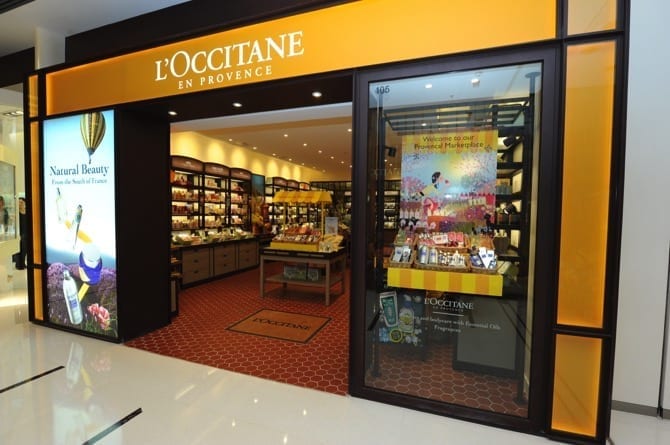
    With 26.9 per cent growth in sales, China led the charge for wellbeing company L’Occitane International for the three months to the end of June.

    China had same-store sales growth of 14.7 per cent, with “staggering” 250 per cent first-quarter growth for marketplaces, says the company. A marketing campaign with Chinese artist Lu Han launched in May drew traffic online and offline.

    In Japan, sales growth remained healthy at 4 per cent in local currency, with same-store sales growth of 2.4 per cent. The company’s e-commerce channel performed well, helped by new Line promotion campaigns and “encouraging” growth by emerging brand Melvita.

    Travel-retail and distribution channels were the main props for Hong Kong’s sales growth of 2.9 per cent.

    Overall group net sales grew to €279.5 million (US$325.7 million) by 4.1 per cent at reported rates and 2.7 per cent at constant rates, both rates an improvement from the financial year ended March 31.

    Web sell-out channels (own e-commerce and marketplaces) delivered “encouraging” growth of 27.3 per cent to reach 13.2 per cent of total sell-out sales.

    During the first quarter, sell-out sales accounted for 73.8 per cent of net sales, amounting to €206.4 million. This was growth of 3 per cent at reported rates or 1.5 per cent at constant rates. Major growth drivers were new and renovated stores, marketplaces, and its cafe and spa businesses.

    Same-store sales for the period eased by 0.6 per cent, an improvement from the 1.3 per cent drop for the same period last year, thanks to double-digit same-store growth in China.

    Sell-in sales at €73.2 million accounted for 26.2 per cent of total sales, an increase of 6.2 per cent at constant exchange rates. The company says this was primarily driven by dynamic growth in distribution, travel retail, B2B and web-partner channels of the L’Occitane brand. Emerging brands also drove overall sales growth.

    The group maintained its selective global retail expansion with four store openings during the quarter, compared with 23 for the same period last year. Twenty stores were refurbished (13 during the same period last year).

  • H&M continues New Zealand expansion

    H&M continues New Zealand expansion

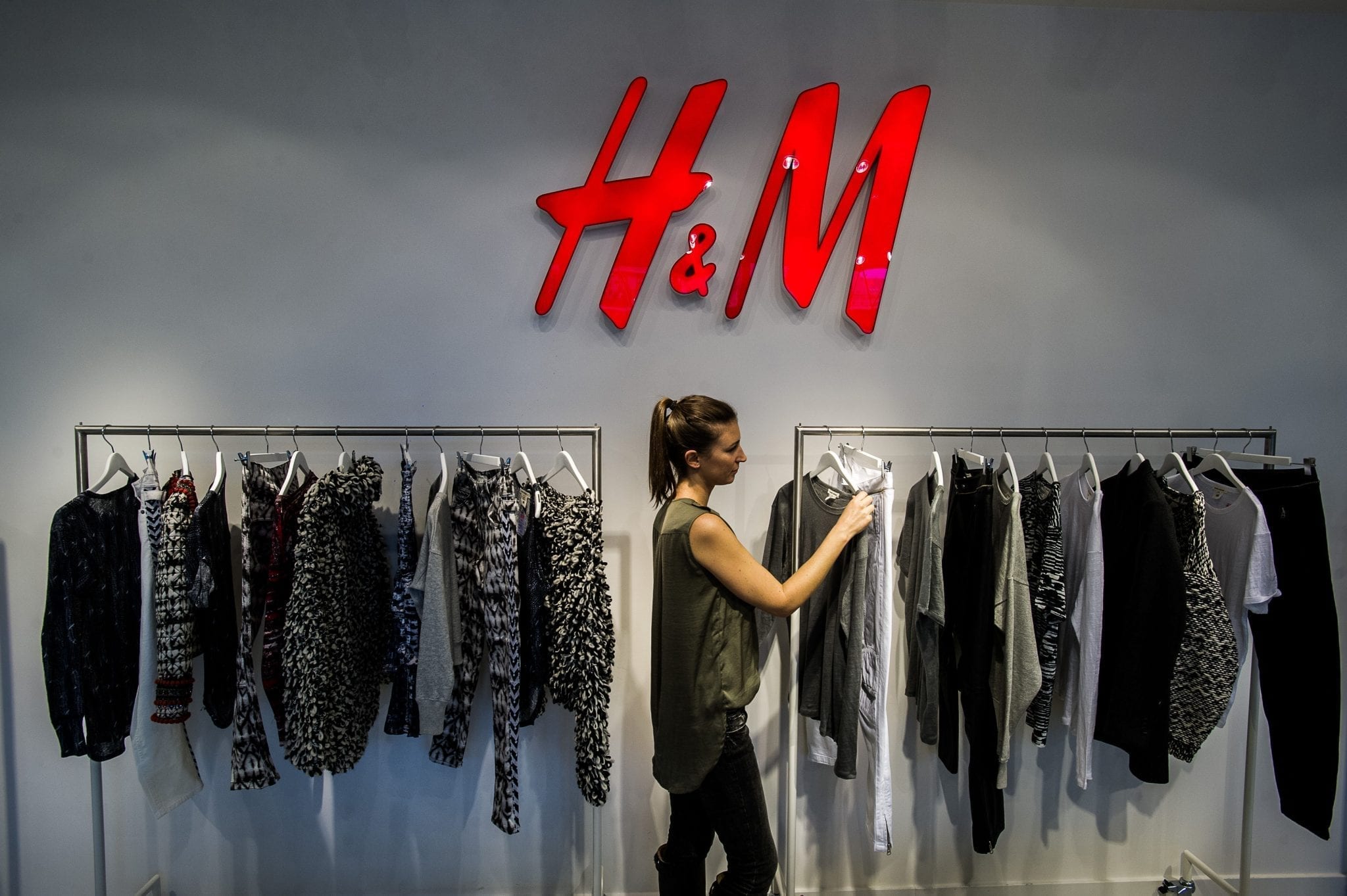
    Swedish fast fashion chain, Hennes & Mauritz AB (H&M), has confirmed its second store in New Zealand will open on September 9.

    Located at The Crossing in Christchurch’s CBD, the new location follows the opening of H&M at Sylvia Park Shopping Centre in Auckland last October.

    Spanning 2535 square metres and set over two levels; the Christchurch store will house apparel, underwear and accessories for men, women, kids and baby, as well as being the first H&M store in New Zealand to offer the Home concept.

    “We are also looking forward to introducing our H&M Home concept to our customers for the first time and cannot wait to see the response on opening day,” said Hans Andersson, Australia & New Zealand Country Manager for H&M.

    The global fashion chain entered the New Zealand market in 2016 with the opening of its first store in Sylvia Park Shopping Centre, Auckland, and will open its first store in Wellington at Queensgate Shopping Centre later this year.

    In its most recent results, H&M saw revenue including VAT increase by 7 per cent in local currencies during June compared to the same month the previous year.

    The total number of stores in the group amounted to 4,517 at the end of June compared to 4,095 the previous year.

    In its recent half-year results, sales, including VAT, grew by 9 per cent to SEK113.907 billion (US$13.4 billion) for its first half.

    Meanwhile, H&M said it will no longer publish monthly sales figures, instead opting to report its results on a quarterly basis and begin holding capital market days for company shareholders.

    Karl-Johan Persson, CEO of H&M, said that a month is “far too short a period over which to assess how sales are developing and in fact, a single month’s sales can actually be misleading, since calendar and weather effects – among other things – may significantly affect the outcome.”

  • Facebook shares hit record high as mobile ad sales soar

    Facebook shares hit record high as mobile ad sales soar

    And within weeks, Facebook is expected to start a video service that will include scripted shows, a sharp change for a business built on user-generated content.

    Facebook Inc’s mobile advertising business grew by more than 50 percent in the second quarter, the company said in its earnings report on Wednesday, as the social network continued to establish itself as the venue of choice for an ever-growing array of online advertisers.

    Shares in Facebook, owner of four of the most popular mobile services in the world, rose more than 4 percent to about $173 in after-hours trading. Through Wednesday’s close, the stock price had climbed nearly 44 percent this year.

    Facebook, which now has more than 2 billion regular users, has been squeezing more ads into its Facebook News Feed while adding more ads to its photo-sharing app Instagram, which has more than 700 million users.

    With money cascading from those two services, Chief Executive Mark Zuckerberg said the company was turning attention to monetizing its two messaging services, Messenger and WhatsApp, which have more than 1 billion users each.

    “I want to see us move a little faster here but I’m confident that we’re going to get this right over the long term,” Zuckerberg said in a conference call with analysts.

    The company also is accelerating its push into video, an effort aimed at taking advertising dollars from the television industry and increasing the time people spend on Facebook.

    Within weeks, Facebook is expected to start a video service that will include scripted shows, a sharp change for a business built on user-generated content.

    Zuckerberg said video would be a significant driver of Facebook’s business in the next two to three years.

    With those possibilities still on the horizon, Facebook said total revenue rose 44.8 percent to $9.32 billion in the second quarter of the year. That beat the average forecast of $9.20 billion among analysts tracked by Thomson Reuters I/B/E/S.

    Growth was even steeper in mobile advertising, which increased to nearly $8 billion.

    “In mobile we’re continuing to see great strengths,” Facebook Chief Financial Officer David Wehner said in a phone interview with Reuters. “We’re seeing more and more ad dollars getting allocated to mobile, and we think that trend will continue.”

    “KILLING IT ON MOBILE”

    Mobile ad revenue accounted for 87 percent of the company’s total advertising revenue of $9.16 billion in the latest quarter, up from 84 percent a year earlier.

    “They’re killing it on mobile,” Needham & Co analyst Laura Martin said, referring to Facebook’s suite of apps. “They are the de facto mobile advertising monopolies and that’s a really big deal.”

    Martin said she sees no weaknesses in Facebook’s business.

    Facebook and Alphabet Inc own half of the online advertising market worldwide, and Facebook’s revenue growth this quarter outshone Alphabet, the owner of YouTube and Google.

    Alphabet on Monday reported a 21 percent increase in quarterly revenue, although it started the quarter from a larger base than Facebook did.

    Facebook has not said how much of its revenue is attributable to its Instagram unit, although the photo-sharing app has become a greater focus of its business.

    “Clearly, the biggest driver of growth is, overall, Facebook News Feed,” Wehner said. “Instagram is making a contribution and an increasing contribution.”

    But investors want Facebook to find additional revenue streams because the company has warned it is hitting maximum ad load in the News Feed, potentially slowing its overall growth.

    So far that has not happened.

    “They kept warning about ad load, but the ad load continues to be strong,” said Ivan Feinseth, research director at Tigress Financial Partners. “I still think ad revenue will grow, because more advertisers are adapting to this platform because there are so many people out there.”

    The popularity of Instagram also has put pressure on Snapchat, the app owned by Snap Inc. Instagram has added features similar to Snapchat’s and Snap’s stock on Wednesday closed at an all-time low of $13.40.

    Facebook said about 2.01 billion people were using its service monthly as of June 30, up 17 percent from a year earlier.

  • Singtel adds virtual Visa account to Dash app

    Singtel adds virtual Visa account to Dash app

    Singtel has introduced a new virtual Visa account on its all-in-one mobile payments app Dash.

    New and existing Dash customers now receive a Dash Visa Virtual Account that can be used for mobile payments at over 50,000 merchant points across the island.

    To start paying on their mobile, customers can sign in on the Dash app and top-up their Dash Visa accounts and start using them at Dash merchants and on local e-commerce sites such as Qoo10, Zalora and HungryGoWhere.

    Customers with compatible NFC-enabled Android smartphones will also be able to pay using their Dash Visa accounts wherever Visa payWave is accepted.

    Singtel also announced future plans for Dash to be included in global wallets such as Apple Pay, and enable QR code payments to expand into hawker centres. In addition to Nanyang Polytechnic, Ngee Ann Polytechnic and Singapore Polytechnic, Dash is also working towards adding more educational institutions to its merchant list to widen its reach in the youth segment.

    But Forrester predicts that the future of mobile wallets will go far beyond mobile payments. Chinese digital juggernauts Alipay and WeChat have morphed their mobile wallets into rich customer engagement platforms. But even then, these functionalities will by no means guarantee their success in markets outside China.

    In a new report, Forrester senior analyst Xiaofeng Wang said market-entry obstacles like different business cultures, consumer behaviors, and regulations make it unlikely that Alipay and WeChat will operate directly in other markets beyond targeting Chinese travelers.

    However, the successful marketing use cases developed on Alipay and WeChat Wallet will inspire third-party players like Apple and PayPal to morph their mobile wallets into more powerful customer engagement platforms.

    Wang lists three trends that will shape the mobile wallet market in the future. Emerging mobile wallets will develop features similar to Alipay and WeChat. “We expect mobile wallet innovations to happen more quickly in emerging markets with less legacy and competition. Paytm in India is a good example,” she elaborated.

    Mainstream mobile wallets will add customer engagement features. For example, to help its mobile wallet attract more traffic to offline stores, PayPal added features like “stores nearby” and “order ahead.”

    Space will open up for third-party providers. The West’s different ecosystem creates added competition for its mobile wallet players, and gives third-party providers opportunities to add customer engagement features and offerings to Western mobile wallets and uncover the potential of marketing.

  • Vietnam’s fuel imports may drop as Dung Quat oil refinery tax cut finally felt

    Vietnam’s fuel imports may drop as Dung Quat oil refinery tax cut finally felt

    Lower tax will help boost 2017 Dung Quat output by 20 percent. Vietnam’s fuel imports may drop as the effects of a tax cut on sales of gasoline and diesel fuel from the country’s Dung Quat oil refinery start to be felt as earlier term contracts expire.

    Vietnam’s government allowed Dung Quat’s operator Binh Son Refining and Oil Co, starting on January 1, to lower its tariff on domestic gasoline sales to 10 percent from 20 percent while the tax on other oil products including diesel was lifted, Binh Son Chief Executive Officer Tran Ngoc Nguyen said on Monday.

    The reduction allowed Binh Son to match the current 10 percent tax on gasoline imports from South Korea established under a free-trade agreement (FTA) and the tax-free status for diesel sales from countries in the Association of Southeast Asian countries (ASEAN) under a different FTA.

    “Before January, taxes on Binh Son’s oil products are always … higher than imported products, making our product prices high and they cannot be sold,” Nguyen told.

    The lower taxes are expected to reduce imports of gasoline and diesel into Vietnam, denting overall profit margins for the oil products, four fuel traders told on Monday.

    While the tax reduction was effective from January, local importers had already agreed to long-term fuel contracts with Binh Son in December, meaning they missed the lower taxes, the four traders said.

    The tariff reductions were announced in September but would only apply to contracts signed in 2017, said Nguyen.

    Dung Quat’s full-year production this year is expected to reach 6.1 million tons per year, equivalent to about 122,000 barrels per day (bpd), nearly 20 percent higher than its initial target as a result of the lower taxes, said Nguyen.

    The refinery, currently Vietnam’s only operating refinery, has a total capacity of 6.5 million tons per year.

  • DHL sharpens capabilities in China

    DHL sharpens capabilities in China

    Deutsche Post DHL Group is growing its established China operations to further sharpen capabilities as multi-national companies, small and medium-sized merchants and end-consumers alike demand more from logistics providers in the fast growing e-commerce sector. DHL shared insights at a press conference in Shanghai coinciding with FC Bayern Munich’s Summer Tour. As the official logistics and e-commerce partner, DHL launched FC Bayern Munich’s online store on Tmall Global in 2015 and continues to deliver official merchandise to fans in China.

    Figures show that the Asia-Pacific e-commerce market is led by China, accounting for two thirds of sales generated in 2016. With US$469 billion market size, China is by far the world’s biggest and fastest growing e-commerce market. The country’s cross border e-commerce is estimated to be worth US$839 billion by 2021 and expected to grow at 20.1% from 2015 to 20201, with huge opportunities both in the segment of low value items and high value items.

    “Our strategic aspiration is to become the leader in e-commerce-related logistics, with the Asia-Pacific region and especially China playing a crucial role in our strategy. Offering our customers worldwide flexible, innovative and eco-friendly delivery solutions is necessary to consolidate this development. By means of the innovations and green logistics solutions we brought to market, we are set to help Asian retailers grow and exploit the opportunities e-commerce offers,” said Juergen Gerdes, Board Member Post – eCommerce – Parcel at Deutsche Post DHL Group.

    Combining strengths
    Each of DPDHL Group’s well-established divisions in China offer unrivalled networks. The company helps e-commerce merchants with a full suite of logistics and value-added services ensuring goods are delivered in a manner that is compliant with local laws, avoiding unforeseen penalties and delays.

    DHL-Sinotrans, the Group’s international express joint-venture established in 1986 has developed the largest international express services network in China covering 80% of China’s major population and business centres. To cater to business-to-consumer (B2C) deliveries, the company rolled out On Demand Delivery to allow deliveries to be made at pre-arranged times and locations. In the e-commerce sector, the international express service is primarily used by customers for the delivery of high end, higher value goods where speed and guaranteed transit times are of paramount consideration.

    DHL Global Forwarding operates 37 branches, five Air freight Gateways and six Ocean freight Gateways in China2. The world’s leading air, ocean freight service provider, has also pioneered an extensive network of rail solutions through China to Europe. Extended by ferry to Japan, Korea, Taiwan, and by road to Vietnam, Thailand, Malaysia, Singapore, DHL Global Forwarding China’s multimodal network leverages China’s rail network to allow a two-way flow of goods between Asia and Europe through a viable alternative solution which is cheaper than traditional air and faster than ocean freight.

  • Konecranes wins contract to supply a new customer in Indonesia

    Konecranes won a contract for the delivery of an Automated RTG (ARTG) system to a new customer, PT Prima Multi Terminal, a subsidiary of PT Pelabuhan Indonesia I. The ordered ARTG system includes eight ARTG cranes with associated software, interfaces and services. The new order also comprises three Ship-to-Shore (STS) cranes.

    The ordered ARTG system and the STS cranes will be delivered to the greenfield container terminal in Kuala Tanjung Port, North Sumatera. The terminal is prioritizing digitization right from the beginning and highlighted the importance of transparency, scalability and maintainability on top of the core function of handling containers cost-effectively.

    “We are delighted to collaborate with the world’s leading automated container crane supplier and are looking forward to executing the project successfully before starting to serve our customers in a most efficient way at the end of 2018,” says Hosadi Sikumbang, President Director of PT Prima Multi Terminal.

    Indonesia is a strategically important country for Konecranes, which has been operating there for 18 years. The government of Indonesia is carrying out a nationwide freight transport program to improve the movement of goods through the country’s vast waterways. With its products and services, Konecranes is poised to contribute to the country’s drive to become a global top ten economy by 2025.

    “We thank PT Prima Multi Terminal for placing their confidence in Konecranes and look forward to being part of their success story. The value our customers perceive from our automation system is delivered through elimination of unintended crane movements, reduced energy and maintenance bills, and increased productivity,” says Janne Eklund, Konecranes Sales Director, Port Cranes, Asia Pacific.

    The new ARTG system will be delivered at the end of 2018 and comprises:

    · Eight all-electric, automated Konecranes 16-wheel RTGs with Active Load Control and GPS Autosteering
    · Four Remote Operating Stations (ROSs)
    · Truck guidance systems
    · Intelligent gates for the container stacks
    · Interface for miscellaneous container yard infrastructure
    · Automation software, including the interface to the Terminal Operating System
    · TRUCONNECT® remote service, which gives the customer 24/7 access to Konecranes’ global network of crane experts

    The three Konecranes STS cranes of Post Panamax size will have an outreach of 48m and will be delivered 2 months before the ARTG system.

  • Amazon launches Prime Now in Singapore

    Amazon.com has today formally announced the launch of Prime Now in Singapore, following an industry tip yesterday the service was about to be introduced.

    Prime Now offers free two-hour delivery on tens of thousands of items right that can be ordered via smartphone app. These include eggs, beer, ice cream, baby strollers, toys, consumer electronics.

    Also available are local favourites such as MamyPoko diapers, Milo, Scotch-Brite and Tiger Balm, as well as products from such brands as L’Oreal, Pampers and Samsung.

    Free two-hour delivery is offered for orders of S$40 (US$30) or more.

    Singapore Economic Development Board assistant MD Kiren Kumar says Amazon has launched a new operating model for the service, using data and technology to achieve greater efficiency.

    “With Prime Now, Amazon will also play a key role in training and equipping our local ecosystem and workforce with cross-disciplinary digital capabilities. This is an excellent example of a global technology company contributing to Singapore’s ambition to be a smart nation where businesses can innovate and create new value for the world.”

    While Prime Now is an exclusive service for members of Amazon Prime, a membership program to launch in Singapore soon, for a limited time consumers can try it without membership. Also for a limited time, shoppers using a Visa credit card will receive $20 off their first Prime Now order. There is a promotional code for other customers to receive a $10 discount on their first order.

    Since launching in New York in December 2014, Prime Now has expanded to more than 50 cities in nine countries, including Tokyo. The Prime Now app is available for Android and iOS devices.

  • Tata Motors launches new range of CVs in Philippines

    Tata Motors launches new range of CVs in Philippines

    Commercial vehicle manufacturer Tata Motors, has launched a range of commercial vehicles in Philippines.

    The company is making headway in the Philippines market through a distribution agreement with local partners Pilipinas Taj Autogroup, Inc., an important business conglomerate engaged in the local distribution of motor vehicles, says a company statement.

    Through this partnership, Tata Motors will commence the supply of its commercial vehicle brands – the Tata Prima Range of Tractor Trailers and Tippers, the LPT range of light, medium and heavy trucks, SFC 407, and the mini trucks range of Ace and Super Ace.

    Besides Philippines, Tata Motors commercial vehicles are present across several South-East Asian markets including Malaysia, Vietnam, Indonesia, and Thailand with manufacturing facilities in Vietnam, Thailand and Malaysia.

    Rudrarup Maitra, Head (International Business), Commercial Vehicles, Tata Motors said, “Philippines is one of our key markets in South-East Asia and we are delighted to be a part of one of the fastest growing ASEAN nations. With years of experience in the commercial vehicle business, we at Tata Motors have analyzed and understood our customers well and are dedicated to providing them with best-in-class products and services. We are confident that through our trusted partnership with Pilipinas Taj Autogroup, Inc., we will be successful in establishing a long-term relationship with our customers.”

    Jon Fernandez, Jr., President of Pilipinas Taj Autogroup, Inc., said, “We, at Pilipinas Taj Autogroup, Inc., are proud to partner with Tata Motors to offer customers with sturdy and reliable vehicles.”

    “We are looking forward to this new opportunity and are committed to catering to the commercial vehicle market with India’s largest and most trusted automobile brand here in the Philippines. We will closely work with Tata Motors to ensure customers here get the finest vehicles and services, that not only match their requirements but also their business needs,” he added.

    Tata Motors entered the Philippines market in 2014 with cars and small commercial vehicles. The low cost of ownership and availability of Diesel vehicles appealed to this market.

  • Louis Moinet watches pay tribute to Singapore

    Louis Moinet watches pay tribute to Singapore

    A range of limited-edition watches that pay tribute to the history and tradition of Singapore are being launched by Swiss brand Louis Moinet.

    FreshOut.Today reports the watches will be revealed on Singapore’s National Day, August 9, the city state’s 52nd birthday.

    Louis Moinet says the special timepieces mix Swiss precision with Singaporean soul.

    “Two different continents and cultures merge in this project as a tribute to Singaporean history,” says the company.

    The limited-edition collection comprises 84 pieces with decorative elements that reference symbols and the past of the Lion City.

    Features such as the ArtScience Museum, Gardens by the Bay, Marina Bay Sands Hotel and the Singapore Flyer are engraved across the lower part of the dial, and over skyline the moon faces five small stars, a reference to the flag of Singapore.

    An opening in the dial reveals part of the inner workings. “This also shows the passing of time and powerfully represents and allows us to reflect on each second of Singapore’s independence,” says the company.

    Available in Louis Moinet stainless-steel (65 pieces) and 18k rose-gold Neo cases (19 pieces), the watch has been created in co-operation with Wealth Solutions Singapore, a branch of the Polish company specialising in creating collector items, and the Singapore Watch Club.

  • Maruti, Hyundai rule passenger vehicle sales in June

    Maruti, Hyundai rule passenger vehicle sales in June

    Country’s top two carmakers Maruti Suzuki India and Hyundai Motor India dominated the Indian passenger vehicle sales segment last month with their models occupying all the slots in the top ten list.

    While car market leader Maruti has seven of its models in the list, rival Hyundai Motor India has three of its models in the top ten selling list of last month.

    Toyota Kirloskar Motor’s Innova and Renault Kwid which were there in the June 2016 list have failed to find place in this year’s top ten list.

    According to the latest data from Society of Indian Automobile Manufacturers (SIAM), Maruti’s Alto retained the top position in June with 14,856 units, as against 15,750 units in June last year.

    Hyundai’s compact car Grand i10 stood at second position with 12,317 units. It was at third position in June 2016, with 12,678 unit sales.

    Maruti’s compact sedan Dzire occupied the third position with sale of 12,050 units as compared with 15,560 units in June last year.

    The car market leader’s compact hatchback Wagon R stood at fourth position with sale of 10,668 units during the last month.

    Hyundai’s Elite i20 stood at fifth position last month with 10,609 units. The company had sold 8,990 units of the vehicle in the same period last year.

    Maruti’s Swift retained sixth position with 9,902 units in June. It had sold 9,033 units in the same month of the last year.

    The carmaker’s premium hatchback Baleno stood at seventh position with sale of 9,057 units last month, while compact SUV Vitara Brezza with sale of 8,293 units took eighth position in June.

    Hyundai’s Creta retained ninth position with sale of 6,436 units in June. It sold 7,700 units in the same month last year.

    Maruti’s hatchback Celerio stood at tenth place with sale of 6,375 units.

  • Vietnam-Australia rice cooperation in fine shape

    Vietnam-Australia rice cooperation in fine shape

    Deputy Prime Minister Vuong Dinh Hue, during his visit to the Australia, told a meeting with Australian businesses on July 24 that Vietnam can supply all types of rice in bulk to the country.

    Vietnam’s rice exports to Australia reached 220,000 tonnes last year, an increase of 50 per cent compared to 2015 and accounting for 4.5 per cent of all trade with the country.

    Mr. Rob Gordon, CEO of Sunrice, the world’s largest rice and food processor, said that some Vietnamese enterprises have exported micronutrient rice to islands in the Pacific Ocean under orders from Sunrice.

    He also suggested the Vietnam Government permit Sunrice to expand its business in Vietnam, transfer technology, and share its experience in rice production in a closed process with Vietnamese enterprises.

    Deputy PM Hue appreciated Sunrice’s goodwill and affirmed that the Vietnamese Government would direct the Ministry of Industry and Trade and the Ministry of Agriculture and Rural Development to cooperate with the company to support Vietnamese rice producers.

    Besides rice, Australian enterprises are also keen on other sectors in Vietnam such as tourism. Vietnam is becoming a popular holiday destination for many Australians, with 50,000 expected each year in the near future.

    Vietnam is now Australia’s 15th largest trade partner, with two-way trade of over $10 billion, while Australian investment in Vietnam has boomed over recent years. In the first six months of this year, Australian investors invested over $95.7 million in 27 projects in Vietnam (both new projects and additional capital in existing projects).

    The United Nations’ Food and Agriculture Organization (FAO) predicted in June that Vietnam would be among the Top 5 countries in terms of rice volumes this year. The five are China (with more than 142 million tons), India (over 110 million tons), Indonesia, Bangladesh, and Vietnam.

    Global rice volumes are likely to increase by 0.7 per cent this year compared to last year, to more than 502 million tons, according to the Food Potential report published by the FAO, due to policies promoting production in Asia and the recovery of production in South America and Australia.

    Vietnam exported nearly 4.9 million tons of rice last year worth $2.1 billion, a decline of 25.5 per cent and 20.5 per cent, respectively, against 2015.

  • DHL bolsters transport solutions with real-time freight visibility platform

    DHL bolsters transport solutions with real-time freight visibility platform

    DHL Supply Chain continues to engage the latest technology to enhance supply chain efficiency for its customers. The newest technology for the Transportation Sector is a patented technology called MacroPoint that will give DHL the ability to provide customers with real-time shipment status updates using predictive analytics and proactive alerts within the supply chain.

    The real-time freight visibility platform is just one of many technology enhancements DHL has made to its global transportation services offering. The company has also invested in technologies that provide transportation business intelligence and end-to-end supply chain visibility. They include: DHL Resilience360, an innovative cloud-based supply chain risk management platform that helps companies visualize, track and protect their business operations, and Connected View, a web portal that allows companies to query the status of shipments, warehouse orders, inventory snapshots and purchase orders.

    “Our focus is on our customers and we’re constantly looking for new ways to help them simplify their transportation management and optimize their transportation costs,” said Jim Monkmeyer, President of Transportation, DHL Supply Chain. “It all boils down to a commitment to innovation. That’s how we stay ahead of shifts in the marketplace so we can help our customers think beyond today’s shipment.”

    DHL Supply Chain offers comprehensive transportation management solutions, freight brokerage, dedicated fleet services and Lead Logistics Partner (LLP) capabilities around the world. DHL Supply Chain also provides customer focused solutions for a wide range of inbound, manufacturing, warehouse, distribution and outbound operations.

    DHL is the leading global brand in the logistics industry. Our DHL family of divisions offer an unrivalled portfolio of logistics services ranging from national and international parcel delivery, ecommerce shipping and fulfillment solutions, international express, road, air and ocean transport to industrial supply chain management. With about 350,000 employees in more than 220 countries and territories worldwide, DHL connects people and businesses securely and reliably, enabling global trade flows. With specialized solutions for growth markets and industries including technology, life sciences and healthcare, energy, automotive and retail, a proven commitment to corporate responsibility and an unrivalled presence in developing markets, DHL is decisively positioned as “The logistics company for the world”.

    DHL is part of Deutsche Post DHL Group. The Group generated revenues of more than 57 billion euros in 2016.

  • Amazon to raise the bar in Australian delivery

    Amazon to raise the bar in Australian delivery

    The arrival of Amazon will catalyse an uplift in consumer expectations around the speed, price and reliability of retail delivery, putting pressure on businesses to improve supply chain practices to remain competitive.

    That’s the message from Greencross chief information officer (CIO) Paul Kennedy, who isn’t buying the typical arguments against the viability of best practice delivery in Australia.

    “We like to use excuses,” he told an audience at Online Retailer on Wednesday. “We say Australia’s big, or that it’s not very densely populated…some of those things are true, but two-thirds of Australia’s population live within a day’s drive of Melbourne or Sydney.”

    “If you have distribution in those cities you should be able to get out to customers within a day…there are things within the retailers control, if it can get out of your DC the day it’s ordered then it has got a lot better chance of getting to customers the next day.

    “We need to focus on our internal teams, on order by here, ship it by there, get it to the customer by there,” he said.

    Kennedy, one of the architects behind John Lewis’ omnichannel strategy in the UK and former CIO of APG & Co., believes it’s only a matter of time before on-demand or so-called ‘uberised’ delivery becomes widespread in the Australian market

    He expects Amazon’s entry to propel the market towards that reality, redefining what Australian consumers see as acceptable offer.

    “You can overplay the Amazon threat, but you can’t overplay customer expectations – they’ll continue to go up and we need to respond to it.

    “That’s the most notable difference between sites in the UK and Australia. They’ll say, ‘order it by there and it’ll get delivered by here’,” Kennedy explained.

    Greencross, which owns pet supplies retailer Pet barn, is one of many publicly listed companies to have been thrown under a cloud in recent months, having had its earnings guidance cut by UBS earlier this year.

    Its share price is down almost 15 per cent since January as uncertainty over the impact of Amazon’s entry, as well as macroeconomic headwinds, continue to weigh on the market.

    It makes Kennedy, who was poached from APG & Co in late 2015, all the more important. As he says, supply chain may not be the sexiest part of retail, but it is where the money is made.

    He expects stores to be the cornerstone of logistical success for established retailers in an Amazon enabled environment, advising retailers to implement omnichannel strategies that leverage pre-existing assets.

    But there remains a disparity between what customers say they want and what they are willing to pay for it, Kennedy said.

    “Lots of people talk about same day delivery, lots of couriers do it, lots of vendors offer it and every customer will tell you they want it.

    “It’s a good idea, and I can see why in some sectors it’s really valuable, but the big challenge is that customers just don’t want to pay for it,” he said.

    Kennedy cautioned against investing too heavily in ultra-fast delivery services, noting that investing in same-day as a premium offer only makes sense if an adequate number of customers are prepared to pay for it.

    There are, however, ways to make it work. Kennedy agrees that the prime model has been successful in helping Amazon justify free same day, or next day delivery in many parts of the US and UK, and that a subscription/replenishment model has its place.

    “If you have replenished able items it might make sense to say, ‘sign up for $50 a year and we’ll cover your freight under this arrangement for the whole year’…we already do subscription dog food and that sort of thing, but for most retailers with less frequent purchases it would be a harder argument.”

  • Cebu Pacific Air adds new domestic link from Cebu

    Cebu Pacific Air adds new domestic link from Cebu

    Cebu Pacific Air has launched its latest domestic route from Cebu. On 26 July the carrier began a three times weekly service on the 232-kilometre link to Masbate (MBT). Operated by CebGo using its ATR 72-500s, flights will operate on Mondays, Wednesdays and Fridays.

    Cebu Pacific now serves 22 domestic destinations from Cebu which range in sector length from 105 to 467 kilometres. This is now the carrier’s second route to Masbate as it already offers daily flights from Manila.