Blog

  • Dollar on the Rise: U.S. Currency Soars Against Dong in Unofficial Markets

    Dollar on the Rise: U.S. Currency Soars Against Dong in Unofficial Markets

    The value of the U.S. dollar experienced a rise against the Vietnamese dong in the black market during Saturday’s early trading hours, following a slight increase against other significant currencies in the previous trading session. The U.S. dollar saw a 0.03% increase from its Friday value, reaching approximately VND27,149 at informal exchange venues. Meanwhile, Vietcombank held a steady exchange rate at VND26,384.

    Vietnamese State Bank’s Reference Rate

    The Vietnamese State Bank held its reference rate firmly at VND25,128.

    Global Perspective

    On a global scale, the dollar index, a measurement of the U.S. currency’s performance against six competitor currencies, experienced an increase of 0.08% to land at 98.03 on Friday.

    Elsewhere, the Japanese yen weakened against the U.S. dollar, with investors keeping a watchful eye for any possible interventions to bolster the currency. Market analysts suggest that year-end trading, a time when trading volumes are typically lower, presents an ideal opportunity for monetary authorities to act.

    Investor Outlook

    Investors are gearing up for 2026, with a particular focus on whether the U.S. Federal Reserve will reduce interest rates and, if so, by what margins. Market traders anticipate at least two rate cuts throughout the year, although they are not expecting the Federal Reserve to make a move before June.

    The central bank has projected an additional cut for the coming year, but differing opinions among decision-makers have left investors feeling uncertain about the future monetary policy.

    Questions & Answers

    How has the U.S. dollar performed against the Vietnamese dong recently?
    The U.S. dollar has seen an increase in value against the Vietnamese dong, especially in early trading hours on Saturday in the black market.

    What is the global perspective on the U.S. dollar’s performance?
    Globally, the dollar index, which measures the U.S. currency against six other major currencies, has seen an increase of 0.08%, reaching 98.03 by the end of Friday.

    What is the investor outlook for 2026 regarding the U.S. Federal Reserve’s actions?
    Investors are anticipating at least two interest rate cuts by the U.S. Federal Reserve in 2026, with no action expected before June. However, differing opinions among decision-makers have caused some uncertainty about future monetary policies.

  • Vinpearl CEO Dang Thanh Thuy Steps Down: A Turn of Tide in Vietnam’s Hospitality Giant

    Vinpearl CEO Dang Thanh Thuy Steps Down: A Turn of Tide in Vietnam’s Hospitality Giant

    Dang Thanh Thuy has stepped down from her position as chief executive officer of Vinpearl, Vingroup’s resort division. Despite her resignation, Thuy continues to hold a seat on the organization’s board. Vinpearl has not yet announced a successor or the reasons behind Thuy’s departure.

    Background of Dang Thanh Thuy

    Thuy, 56, holds a Bachelor’s degree in literature. She joined the ranks of Vinpearl in 2004 and has held significant positions in the company over the years. She served as the chairman of Vinpearl from January 2023 to March 2024, and from 2012 to 2016, she was the deputy CEO of Vingroup.

    Vinpearl’s Status in the Hospitality Industry

    Vinpearl stands as one of the foremost hospitality brands in Vietnam, boasting an impressive portfolio of 48 hotels, resorts, theme parks, and golf courses spread across 18 provinces and cities.

    Financial Performance

    In the third quarter of 2025, Vinpearl reported revenues of VND3.09 trillion (US$117.5 million), marking a 40.7% decrease year-on-year. The company’s post-tax profits stood at VND169 billion, falling 66.6%. Furthermore, its profits for the first nine months of the year saw a drastic decline, plummeting by 86%.

    Vinpearl is primarily owned by Vingroup, with an ownership stake of 85%. The conglomerate’s chairman is renowned billionaire, Pham Nhat Vuong.

    Questions & Answers

    Who was the previous CEO of Vinpearl?
    Dang Thanh Thuy was the former CEO of Vinpearl.

    What significant positions did Dang Thanh Thuy hold in Vinpearl and Vingroup?
    Dang Thanh Thuy served as the chairman of Vinpearl from January 2023 to March 2024 and was the deputy CEO of Vingroup from 2012 to 2016.

    What was the financial performance of Vinpearl in the third quarter of 2025?
    In the third quarter of 2025, Vinpearl reported revenues of VND3.09 trillion (US$117.5 million), a 40.7% decrease year-on-year. The company’s post-tax profits stood at VND169 billion, a decrease of 66.6%.

  • Vietnam Gasoline Prices Tumble: Global Market Shifts Trigger Unexpected Fuel Cost Decline

    Vietnam Gasoline Prices Tumble: Global Market Shifts Trigger Unexpected Fuel Cost Decline

    On Thursday, Vietnam witnessed a decrease in gasoline prices, continuing the downward trend from the previous week, in line with the global slump in fuel costs. The nation’s common fuel, RON95, experienced a 3.16% decrease, bringing it down to VND19,000. Meanwhile, Biofuel E5 RON92 saw a reduction of 2.7%, lowering its price to VND18,710.

    Diesel Cost Also Declines

    Diesel, another commonly used fuel, wasn’t immune to the trend. The fuel’s price also tapered off, albeit at a slower pace. The cost of diesel fell by 1.26%, bringing it to VND17,250.

    Global Oil Market Influences

    The global oil market has been volatile over the past week. This volatility has been shaped by a number of geopolitical factors, including the potential for a peace agreement between Russia and Ukraine, as well as ongoing tensions between the U.S. and Venezuela. These factors have influenced fuel prices worldwide, including in Vietnam.

    Notably, the price of RON95 on the global market dropped by 4.1%, settling at $74.4 per barrel. Meanwhile, diesel saw a slightly smaller decrease of 1.5%.

    Questions & Answers

    What caused the drop in Vietnam’s fuel prices?
    The decline in fuel prices in Vietnam is a reflection of the global drop in fuel costs, influenced by factors such as potential peace talks between Russia and Ukraine and tensions between the U.S. and Venezuela.

    Which fuels have been most affected?
    The common fuel RON95 saw a significant decrease of 3.16%, while Biofuel E5 RON92 fell by 2.7%. Diesel also saw a decrease, though it was smaller, at 1.26%.

    What were the global price changes for these fuels?
    On the global market, RON95 dropped 4.1% to $74.4 per barrel, while the price of diesel fell by 1.5%.

  • Hanoi-HCMC Soars High: World’s 4th Busiest Flight Route for Second Year Running

    Hanoi-HCMC Soars High: World’s 4th Busiest Flight Route for Second Year Running

    The flight route between Hanoi and Ho Chi Minh City (HCMC) once again ranked as the fourth busiest worldwide in 2025, boasting a seat capacity of 11.07 million, according to data from an aviation intelligence firm. The route saw a 4% increase in seat numbers from the previous year.

    Consistent Top Contender

    The Hanoi-HCMC route has consistently held a position in the top ten busiest flight routes over the past eight years. Notably, this was its fourth consecutive year in the fourth position.

    The average cost of a one-way flight along this route decreased by 11% in 2025, with the current average ticket price sitting at $67. This is highly competitive due to the presence of six carriers operating the route in 2025.

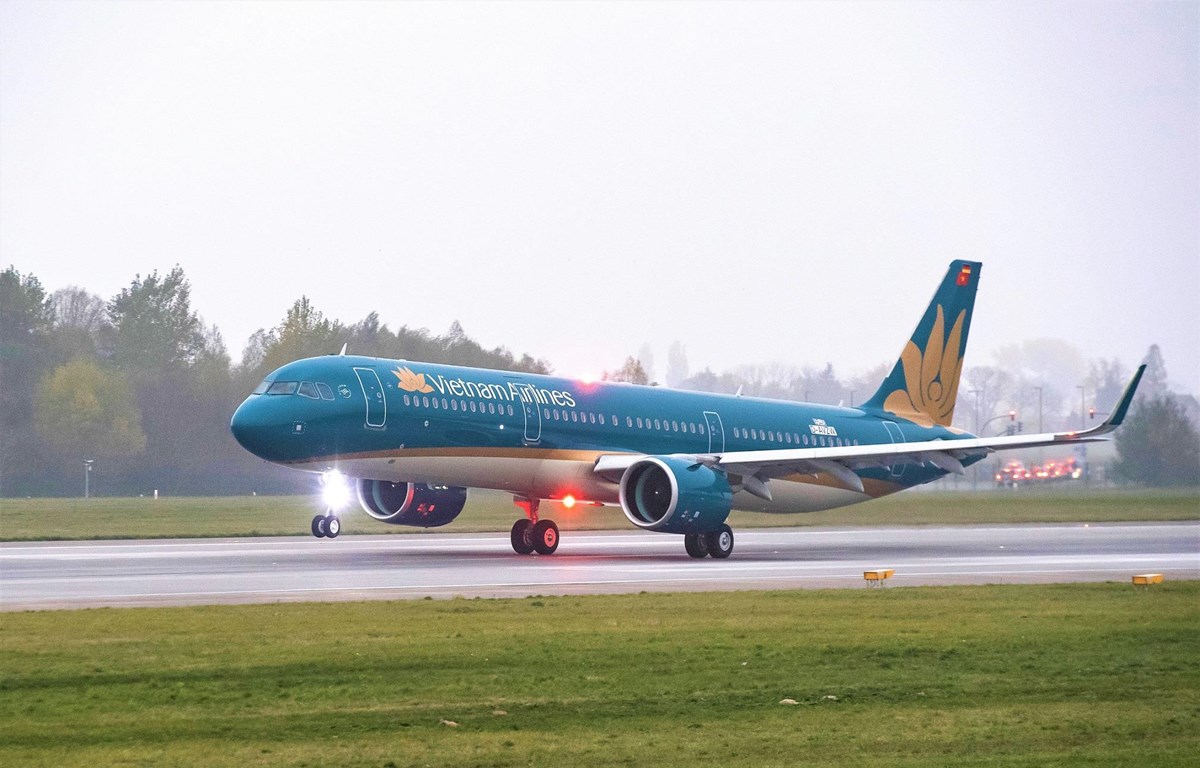
    Vietnam Airlines and Vietjet are the main operators on this 1,000-km route, providing several daily flights. The recent addition of Sun PhuQuoc Airways in the last quarter has added to the competition on this route. Other service providers on this sector include Bamboo Airways, Pacific Airlines, and Vietravel Airlines.

    Global Ranking: Top Five Busiest Flight Routes in 2025

    When it comes to the world’s busiest flight routes in 2025, the top five remain largely unchanged from the previous year. South Korea’s Jeju International-Seoul Gimpo route takes the lead with 14.38 million seats, followed by Japan’s Sapporo New Chitose-Tokyo Haneda with 12 million seats and Fukuoka-Tokyo Haneda with 11.5 million seats.

    Saudi Arabia’s Jeddah-Riyadh route, with a seat capacity of 9.8 million, has dethroned Australia’s Melbourne-Sydney route (8.9 million seats) to claim the fifth spot. Interestingly, the Jeddah-Riyadh route also reported the fastest growth, with a 13% increase in seat capacity. It is also the only non-Asia-Pacific route in the top ten.

    Questions & Answers

    What was the fourth busiest flight route in 2025?
    The flight route between Hanoi and Ho Chi Minh City ranked as the fourth busiest flight route in 2025.

    Which flight routes were the busiest in 2025?
    The busiest flight routes were South Korea’s Jeju International-Seoul Gimpo, Japan’s Sapporo New Chitose-Tokyo Haneda, Fukuoka-Tokyo Haneda, Vietnam’s Hanoi-HCMC, and Saudi Arabia’s Jeddah-Riyadh.

    Which route showed the fastest growth in 2025?
    Saudi Arabia’s Jeddah-Riyadh route reported the fastest growth, with a 13% increase in seat capacity.

  • Singapore’s Fingular Fortifies Asian Presence with New Fintech Hub in Malaysia

    Singapore’s Fingular Fortifies Asian Presence with New Fintech Hub in Malaysia

    Fingular, a renowned Singaporean fintech firm, has expanded its Southeast Asian footprint by inaugurating a new operational hub in Malaysia. This recent development represents a strategic move in Fingular’s overall plan to establish a globally integrated fintech platform.

    Strengthening Scalable Growth and Engagement

    The Singaporean group’s venture into Malaysia manifests its prime focus on scalable growth, talent mobility, and a deeper connection with local markets in Asia. The fresh hub in Kuala Lumpur presents not only a shared workspace for the Malaysian team but also for employees across Fingular’s international network.

    Fingular’s personnel stationed in different countries will be given the opportunity to work from the Malaysian office on both short and long-term basis. This tactic signifies a broader industry shift to hybrid operational models that prioritize productivity and cross-border knowledge transfer.

    Global Expansion Through Local Presence

    Fingular, with its headquarters in Singapore and another team hub in Serbia, believes in establishing a physical presence in each market it operates. The firm embeds teams locally to better understand cultural variances, user behavior, and regulatory environments. This is a vital approach for fintech companies looking for sustainable growth in emerging markets.

    People-centric Expansion

    Maxim Chernushchenko, the founder and CEO of Fingular, has expressed that the strategy behind the new hub surpasses mere geographic expansion. He asserts that global expansion is as much about people as it is about markets. Their aim is to ensure teams feel connected, supported, and inspired, regardless of their work location. The creation of spaces that promote collaboration and personal growth is integral to how the company develops and scales its products.

    Speed and Adaptability

    Fingular, founded in October 2021, manages a wide range of fully digital financial products, including consumer financing, investments, and savings. With its presence in markets like Indonesia, Malaysia, and India, Fingular focuses on rapid deployment, made possible by a technology stack that aids it in launching in new countries within three months. This operational speed positions Fingular competitively in regions where the scope for digital financial inclusion is yet to be fully explored.

    Strategic Implications

    For investors and industry watchers, the launch of the Malaysia hub signifies Fingular’s determination to balance aggressive market expansion with organizational cohesion. As the fintech competition escalates across Asia, Fingular’s emphasis on talent infrastructure and local market immersion could be as crucial as capital deployment in driving long-term value creation.

    Questions & Answers

    What is the purpose of Fingular’s new hub in Malaysia?
    The Malaysia hub serves as a shared space for the local Malaysian team and members from Fingular’s international network. It represents a move towards hybrid operational models that blend remote flexibility with in-person collaboration.

    What is Fingular’s approach to global expansion?
    Fingular believes in carrying out global expansion by establishing a physical presence in each market it operates. The firm aims to better understand cultural nuances, user behavior, and regulatory environments by embedding teams locally.

    What is unique about Fingular’s operational speed?
    Fingular places emphasis on rapid deployment, facilitated by a technology stack that allows it to launch in new countries within three months. This operational speed provides Fingular a competitive edge in regions where digital financial inclusion is underexplored.

  • Dreame Technology Marks Hong Kong Debut with Groundbreaking Flagship Store: A New Era for Smart Home Appliances

    Dreame Technology Marks Hong Kong Debut with Groundbreaking Flagship Store: A New Era for Smart Home Appliances

    Dreame Technology, the renowned smart home appliance brand, has recently unveiled its premiere flagship store in Hong Kong, thereby amplifying its foothold in the physical retail sector.

    The flagship store is strategically situated at Mira Place in Tsim Sha Tsui, where it proudly displays the full range of Dreame’s offerings. This includes a diverse mix of products such as robot vacuum cleaners, wet-and-dry floor cleaners, cord-free stick vacuums, hair care gadgets, and air purification equipment.

    An Experience-Centric Retail Space

    Designed with a focus on customer experience, Dreame’s flagship store encourages customers to physically try out their products. This hands-on approach not only offers customers an interactive product experience but also provides them with a comprehensive understanding of the product’s functionality.

    Apart from its extensive range of floor-care solutions, the store also introduces a plethora of personal care and air treatment products to the Hong Kong market. These new introductions include high-speed hair dryers and an all-in-one air purifier.

    The Inception of Dreame’s Physical Retail Journey

    Dreame initially made its foray into the Hong Kong market through various online platforms and third-party retailers. However, the launch of the flagship store signifies a firm commitment from Dreame towards delivering premium retail experiences. It also highlights their quest for direct consumer engagement and their pursuit of long-term growth in significant urban markets.

    Questions & Answers

    What is the significance of Dreame’s flagship store in Hong Kong?
    The flagship store signifies Dreame’s commitment towards delivering premium retail experiences and direct consumer engagement. It also highlights their focus on long-term growth in urban markets.

    What products does the Dreame flagship store offer?
    The flagship store offers a diverse range of products including robot vacuum cleaners, wet-and-dry floor cleaners, cord-free stick vacuums, hair care gadgets, and air purification equipment.

    How does Dreame’s flagship store enhance the customer’s shopping experience?
    The flagship store is designed as an experiential space, allowing customers to physically try out products. This hands-on approach provides customers with an interactive product experience and a comprehensive understanding of the product’s functionality.

  • Animate Revives Anime Merch Magic in Hong Kong: New Store Promises Authentic Japanese Shopping Experience

    Animate Revives Anime Merch Magic in Hong Kong: New Store Promises Authentic Japanese Shopping Experience

    Animate, a popular retailer of Japanese anime merchandise, has made a comeback in Hong Kong by inaugurating a new store in Mong Kok. This move comes a few years after it shut down its previous location.

    The retailer initially launched in Mong Kok back in 2012 and managed to operate for nearly eight years before closing its doors in 2020. Alongside the store closure, Animate Cafe, also recognized as Youme Cafe, ceased operations as well.

    The latest Animate outlet is situated on the fourth floor of the TOP (This Is Our Place) shopping mall in Mong Kok. The company disclosed that the decision to operate the store under a direct management model will permit swifter access to new anime merchandise. This includes not only peripherals but also manga and audiovisual products.

    Additionally, the revamped operation model will expediently hasten product launch timelines. It will also offer customers a shopping experience more akin to Animate’s stores in Japan.

    Animate expressed optimism about the new store serving as a communication hub for anime enthusiasts in Hong Kong. The company anticipates it will attract a larger number of both local and international visitors.

    Questions & Answers

    What is the significance of Animate choosing a direct management model for its new store?
    Adopting a direct management model allows Animate to provide faster access to the latest anime merchandise. It also expedites product launch timelines, enhancing the overall shopping experience for customers.

    Where is the new Animate store located?
    The new Animate store is located on the fourth floor of the TOP (This Is Our Place) shopping mall in Mong Kok, Hong Kong.

    What does Animate hope for its new store in Hong Kong?
    Animate has great expectations for its new store to become a communication hub for anime fans in Hong Kong. It also aims to attract a larger number of both local and overseas visitors.

  • Louis Vuitton Revolutionizes Luxury Shopping with Visionary Journeys Concept Store in Seoul

    Louis Vuitton Revolutionizes Luxury Shopping with Visionary Journeys Concept Store in Seoul

    Louis Vuitton is embracing a fresh approach to brick-and-mortar retail with the unveiling of a multi-faceted concept space in the heart of Seoul. This innovative project, known as Visionary Journeys Seoul, blends retail, exhibition, and culinary experiences, demonstrating a significant shift away from the conventional flagship model.

    The Space and Its Purpose

    Situated within LV The Place Seoul, located inside Shinsegae The Reserve in Jung-gu, Visionary Journeys Seoul expands over six floors. This distinct venue has been meticulously designed to foster a chronological, immersive journey. It seamlessly integrates product showcases with carefully selected items from Louis Vuitton’s rich archives.

    Three of the floors are dedicated to exhibitions. Curated by Shohei Shigematsu from OMA, these areas provide visitors with a comprehensive overview of Louis Vuitton’s illustrious history and its evolution as a prominent design house.

    More than Just Retail

    In addition to the retail and exhibition spaces, Visionary Journeys Seoul houses Le Café Louis Vuitton and a full-service restaurant, JP at Louis Vuitton. The café is helmed by renowned pastry chef Maxime Frédéric, while JP at Louis Vuitton is under the culinary direction of acclaimed chef Junghyun Park.

    This opening in Seoul is part of a wider trend for Louis Vuitton. The luxury brand has previously launched similar experiential concept spaces in various cities, including Shanghai and Bangkok.

    Questions & Answers

    What is Visionary Journeys Seoul?
    It’s a multi-level concept space launched by Louis Vuitton, combining the experiences of retail, exhibition, and dining. It’s a part of Louis Vuitton’s new approach to physical stores and is located in Seoul.

    Who designed the exhibition floors at Visionary Journeys Seoul?
    Shohei Shigematsu from OMA curated the three exhibition floor levels, presenting an overview of Louis Vuitton’s history and design evolution.

    What culinary experiences does Visionary Journeys Seoul offer?
    The venue houses Le Café Louis Vuitton, where pastry chef Maxime Frédéric showcases his creations, and a full-service restaurant, JP at Louis Vuitton, under the direction of chef Junghyun Park.

  • Coupang in Hot Water: US Investor Lawsuit Challenges South Korea’s E-commerce Giant over Massive Data Breach

    Coupang in Hot Water: US Investor Lawsuit Challenges South Korea’s E-commerce Giant over Massive Data Breach

    South Korea’s major e-commerce entity, Coupang, is facing a class-action lawsuit from investors in a US court over alleged violations of securities laws. The lawsuit is in relation to a significant cybersecurity breach that led to the exposure of personal information of over 33 million customers.

     The Allegations

    The class-action lawsuit, instigated last week in a California federal court, accuses Coupang, its CEO and chairman, Bom Kim, and its CFO, Gaurav Anand, of misleading investors about the company’s data security measures and failing to disclose the breach promptly.

    Coupang, often referred to as South Korea’s answer to Amazon, expressed regret over the unauthorized data access that led to the breach of personal information last month. Following the aftermath of the breach, Park Dae-jun, CEO of the subsidiary Coupang Corp, decided to step down earlier this month.

    In response to the breach, Coupang has stated its intent to enhance its security measures to prevent any future data leaks.

     Response from Coupang and Legal Representation

    As of now, Coupang and the legal counsel representing the investor who initiated the lawsuit on the 18th of December have not offered any comments.

    Coupang, a global operation with offices in California and other cities across the US, dominates South Korea’s e-commerce market. The company offers services ranging from same-day delivery to video streaming and food delivery. The recent data breach has triggered investigations in South Korea.

     Details of the Breach

    According to the lawsuit, Coupang discovered on November 18th that a former employee had illicitly retained access to its internal systems for several months. As a result, customer names, email addresses, delivery addresses, and some order histories were compromised. Coupang has assured that no payment details or login credentials were exposed in the breach.

    The lawsuit also alleges that Coupang failed to disclose the breach in compliance with US securities rules in a timely manner.

    The lawsuit further contends that Coupang’s US regulatory filings downplayed the company’s susceptibility to cyberattacks and exaggerated its protective measures. The plaintiff is seeking damages for investors who acquired Coupang securities between August 6th and December 16th.

    Questions & Answers

    What are the allegations raised against Coupang in the class-action lawsuit?
    The lawsuit alleges that Coupang misled investors about its data security measures and failed to disclose a major cybersecurity breach promptly.

    What was the impact of the data breach?
    The breach led to the unauthorized exposure of personal information of over 33 million customers, including names, email addresses, delivery addresses, and some order histories.

    What is the relief sought in the lawsuit?
    The plaintiff is seeking damages for investors who acquired Coupang securities between August 6th and December 16th.

  • Philippines Bolsters Domestic Sugar Industry with Extended Import Ban till December 2026

    Philippines Bolsters Domestic Sugar Industry with Extended Import Ban till December 2026

    The Philippine government has prolonged its prohibition on sugar imports until December 2026, given the strong domestic supply. This strategic decision is designed to provide ongoing support for local farmers and producers and maintain market stability.

    Decision Based on Sugar Production and Demand Outlook

    Agriculture Secretary Francisco Tiu Laurel stated that the decision to extend the ban was influenced by the present prospects for sugar production and consumer demand. The initial ban, which was implemented from mid-October 2025 until mid-2026, was deemed necessary due to the anticipated rise in domestic raw sugar production for the 2024-2025 crop year, as indicated by actual inventory data.

    Regulation of Molasses Imports

    In addition to the sugar import ban, the Department of Agriculture and the Sugar Regulatory Administration are in the process of establishing a long-overdue regulatory framework for the import of molasses. According to Tiu Laurel, this move will offer further protection to the domestic producers.

    Questions & Answers

    Why has the Philippine government decided to extend the sugar import ban?
    The ban has been extended in order to protect local farmers and producers and maintain market stability, given the strong domestic supply of sugar.

    What factors influenced this decision?
    The decision was based on the current outlook for sugar production and demand. An expected increase in domestic raw sugar output for the 2024–2025 crop year also contributed to this decision.

    What additional measures are being taken to protect domestic producers?
    The Department of Agriculture and the Sugar Regulatory Administration are preparing a regulatory framework for molasses imports. This move is intended to provide further protection to domestic producers.

  • Indonesia’s Wealthy on Tax Radar as Government Battles Soaring Budget Deficit

    Indonesia’s Wealthy on Tax Radar as Government Battles Soaring Budget Deficit

    The Indonesian government is increasing its tax scrutiny on its wealthy residents and large corporations in light of a significant national budget deficit. This action is part of a broader initiative to enhance tax collections amidst a challenging year for revenue in Southeast Asia’s most substantial economy. The current budget deficit is closing in on the 3% of GDP ceiling.

    Intensified Tax Scrutiny

    Large corporations, especially those under local magnate control, have been requested to provide additional tax payments in 2025. Some family-owned businesses have been asked to contribute over US$5 million.

    Circumstances grew more complicated when a subset of these firms resisted the new demands. Tax authorities then proposed a compromise, suggesting companies pay 30% of the requested amount. The calculation method for this figure, however, was not disclosed.

    Finance Ministry’s Director-General of Taxes, Bimo Wijayanto, verified the summoning of high-net-worth taxpayers. In a press briefing on December 18, he described the move as a standard procedure meant to make tax data more accurate. He also mentioned that this initiative offers taxpayers an opportunity to provide explanations, voluntarily rectify their tax returns, and ensure compliance.

    The exact number of individuals and businesses contacted for this matter remains unknown.

    The “Hunting in a Zoo” Phenomenon

    End-of-year drives to boost tax revenue are not uncommon in Indonesia. Critics and business leaders often refer to this as “hunting in a zoo.” This metaphor refers to the tendency to focus on a small group of large, formal taxpayers who are easier to track, rather than broadening compliance across the country’s expansive informal economy.

    According to data from the Finance Ministry, tax receipts are currently significantly below targets. Collections up to the end of November amounted to 79% of a decreased full-year aim, a drop from nearly 90% over the same period the previous year.

    Experts believe that weak collections, coupled with subdued economic conditions and softer commodity prices, have led to Indonesia’s budget deficit forecast hitting 2.78% of GDP. This estimate is the highest in two decades, excluding the years affected by the COVID-19 pandemic.

    Questions & Answers

    Why is the Indonesian government increasing tax scrutiny on wealthy individuals and corporations?
    The government is trying to address a significant national budget deficit by enhancing tax collections.

    What compromise has been proposed to companies resisting additional tax payments?
    The tax authorities have suggested that these companies pay 30% of the requested amount.

    How are end-of-year efforts to increase tax revenue perceived in Indonesia?
    These efforts are often referred to as “hunting in a zoo,” indicating a focus on a small pool of large, formal taxpayers rather than seeking to expand compliance across the country’s vast informal economy.

  • China Strikes Gold: Largest Undersea Gold Deposit in Asia Discovered

    China Strikes Gold: Largest Undersea Gold Deposit in Asia Discovered

    China recently announced the discovery of an undersea gold deposit, touted as the largest in Asia. This remarkable find further augments the existing troves of the precious metal, following other significant discoveries earlier this year.

    New Gold Reserves Discovered

    The newly discovered gold deposit is situated off the coast of Laizhou in Yantai, Shandong Province. This addition has notably increased Laizhou’s confirmed gold reserves to over 3,900 tonnes (137.57 million ounces), making up approximately 26% of China’s total reserves. However, the exact size of this undersea deposit has not been disclosed by officials.

    Recent Discoveries

    In the past month, the nation revealed the discovery of its first super-large, low-grade gold deposit in Liaoning province. The confirmed reserves of this find amount to 1,444.49 tonnes (50.95 million ounces). The Ministry of Natural Resources has stated that this is the largest single gold deposit found since the establishment of the People’s Republic of China in 1949.

    Adding to this, officials also announced the discovery of a gold deposit in the Kunlun Mountains, near the western border of the Xinjiang Uygur autonomous region in November. This deposit is estimated to have reserves of more than 1,000 tonnes (35.27 million ounces).

    In 2023, Shandong Province reported identifying approximately a quarter of the nation’s gold reserves, including over 3,500 tonnes (123.46 million ounces) on the Jiaodong Peninsula, which is recognized as the world’s third-largest gold mining belt.

    China’s Gold Production Status

    Despite being the world’s largest producer of gold ore, producing 377 tonnes (13.3 million ounces) last year according to the China Gold Association, China trails behind South Africa, Australia, and Russia in terms of proven reserves.

    China invested CNY115.99 billion (US$16.47 billion) in geological exploration last year. Since the initiation of its current five-year plan in 2021, the total investment in mineral exploration is nearing CNY450 billion. This has led to the discovery of 150 mineral deposits, as reported by the Ministry of Natural Resources.

    Impact on Gold Prices

    These discoveries are expected to influence global gold prices which continue to rise, driven by currency fluctuations, geopolitical tensions, and hefty purchases by central banks, particularly in emerging markets looking to diversify their reserves.

    Spot gold was trading at US$4,407 per ounce at the time of reporting, marking a 68% increase since the start of the year.

    Questions & Answers

    Where is the newly discovered undersea gold deposit located?
    The undersea gold deposit has been discovered off the coast of Laizhou in Yantai, Shandong Province, China.

    What is the significance of the recent gold discoveries in China?
    These discoveries have considerably increased China’s total gold reserves and position it as one of the leading global producers of the precious metal.

    How are these gold discoveries expected to influence global gold prices?
    The recent discoveries are likely to impact global gold prices, which are already rising due to factors like currency volatility, geopolitical tensions, and heavy purchases by central banks.

  • Ida Liu, Ex-Citi Veteran, Takes Reigns as HSBC Private Bank’s Global CEO: A New Era of Cross-Border Wealth Management

    Ida Liu, Ex-Citi Veteran, Takes Reigns as HSBC Private Bank’s Global CEO: A New Era of Cross-Border Wealth Management

    Former Citi veteran, Ida Liu, has been announced as the new Global CEO of HSBC Private Bank, effective from January 5, 2026. This strategic move aims to enhance the bank’s leadership among ultra-high net worth clients, bolster cross-border connectivity in primary wealth corridors, and spur the global growth of the private banking sector.

    Ida Liu will report to Barry O’Byrne, the CEO of HSBC International Wealth and Premier Banking, in her new role. With 25 years of diverse professional experience, Liu brings a wealth of knowledge to her new position. Her career spans 18 years at Citi, where she most recently served as the global head of Citi Private Bank. Liu has also made a mark outside of the financial sector, previously holding an executive role at the fashion brand, Vivienne Tam.

    Barry O’Byrne expressed his enthusiasm about Liu joining the HSBC team. He praised her profound expertise in strategic wealth advisory, operational transformation, and business growth. Moreover, he lauded her consistent track record of producing results.

    O’Byrne stated, “Ida Liu’s appointment reflects our ambition to further strengthen the Private Bank as the partner of choice for the world’s most sophisticated entrepreneurs and families.” He expressed confidence that her deep expertise and consistent performance would be instrumental in achieving this goal.

    Questions & Answers

    Who is the new Global CEO of HSBC Private Bank?
    Ida Liu, a former veteran of Citi, has been announced as the new Global CEO of HSBC Private Bank.

    When will Ida Liu assume her new role?
    Ida Liu will take over as the Global CEO of HSBC Private Bank from January 5, 2026.

    What are the key responsibilities Ida Liu will undertake in her new role?
    As the Global CEO, Liu will focus on enhancing the bank’s leadership among ultra-high net worth clients, bolstering cross-border connectivity in primary wealth corridors, and accelerating the global growth of the private banking sector.

  • Wi-Fi 7 Revolution: Ushering in the New Era of High-Speed, High-Capacity Connectivity

    Wi-Fi 7 Revolution: Ushering in the New Era of High-Speed, High-Capacity Connectivity

    The progressive evolution of digital ecosystems and escalating user demands for seamless high-speed connectivity have pushed Wi-Fi technology to new frontiers. The next significant milestone in wireless networking is the emergence of Wi-Fi 7, grounded in the IEEE 802.11be standard. Compared to its predecessors — Wi-Fi 6 and Wi-Fi 6E, Wi-Fi 7 brings to the table appreciable enhancements in speed, reliability, capacity and responsiveness.

    Dissecting the Capabilities of Wi-Fi 7

    Wi-Fi 7, or Wi-Fi CERTIFIED 7™, represents the most sophisticated generation of Wi-Fi technology to date. It builds on the base established by its predecessors, offering capabilities designed to meet the rigours of increasingly demanding digital environments. The prime objective of Wi-Fi 7 is to amplify data throughput, latency, and network efficiency to support a broad range of applications, from immersive media to mission-critical enterprise systems.

    Wi-Fi 7 is distinguished by a range of technological advances, including wider channel bandwidth of up to 320 MHz that doubles the maximum channel width of Wi-Fi 6 and 6E, facilitating significantly higher raw data rates. Multi-link operation (MLO) enables devices to use multiple frequency bands simultaneously (2.4 GHz, 5 GHz, and 6 GHz) to improve throughput, reliability, and latency by dispersing traffic across several links. Wi-Fi 7 uses higher modulation through 4096-QAM to pack more data into each transmission, thereby increasing efficiency and overall throughput compared to earlier standards. Multi-user handling is also improved, enabled by enhanced MU-MIMO and OFDMA techniques that allow more devices to share the network simultaneously without performance degradation. Collectively, these advances can deliver theoretical peak speeds surpassing 30 Gbps, a substantial leap over Wi-Fi 6E, and much lower effective latency suited to real-time applications.

    Implications for the Consumer Market

    For consumers, Wi-Fi 7 has the potential to redefine the home wireless experience by addressing the proliferation of connected devices and the surging demand for high-bandwidth use cases. A key benefit for consumers will be improved support for 4K/8K video streaming, cloud gaming, and immersive media such as augmented reality (AR) and virtual reality (VR). With wider channels and increased throughput, Wi-Fi 7 can stream ultra-high-definition content with fewer buffering interruptions, particularly in homes with multiple users and devices.

    Smart homes are also witnessing a rapid increase in device density, from security cameras to smart appliances. Wi-Fi 7’s multi-user management and deterministic latency ensure these IoT devices can function reliably alongside high-data-rate traffic. Wi-Fi 7 also offers features that reduce power consumption in battery-powered devices by coordinating communication windows more efficiently.

    Wi-Fi 7 and the Enterprise Market

    However, despite the promise, the rollout of Wi-Fi 7 in the consumer market faces challenges. The full benefits of Wi-Fi 7 require both routers/access points and client devices to support the standard. Early products may only implement basic features, and device compatibility remains limited. Upgrading the infrastructure can also be costly, as households may have to replace legacy Wi-Fi equipment to unleash the full potential of Wi-Fi 7 speeds and capabilities.

    For enterprises, Wi-Fi 7 offers opportunities beyond simply improving network performance. It can act as the backbone for digital transformation initiatives that depend on robust, high-capacity wireless connectivity. Modern workplaces often have thousands of connected devices that place heavy demands on network infrastructure. Wi-Fi 7’s increased capacity and advanced interference mitigation ensure stable performance even under heavy load, reducing network bottlenecks common in large offices or campuses.

    Support for IoT and Industrial Systems

    Industries such as manufacturing, logistics, and healthcare increasingly rely on connected devices for automation, inventory tracking, telemedicine, and robotic systems. Wi-Fi 7’s enhanced reliability and scalability make it well-suited for these applications, where deterministic performance is mission-critical. However, enterprises face real challenges in planning for the adoption of Wi-Fi 7. Legacy infrastructure can bottleneck performance and undermine the theoretical benefits of Wi-Fi 7.


    Security and Future Proofing

    Wi-Fi 7 supports enhanced security protocols such as WPA3, providing protection against modern threats. As digital demands escalate, driven by cloud computing, collaboration tools, AI, and immersive content, enterprise networks that adopt Wi-Fi 7 can ensure their infrastructure supports next-generation use cases without compromising performance.

    While Wi-Fi 7 promises to drive digital transformation by enabling scalable, high-performance networks, it’s adoption will be gradual. Compatibility, cost, and infrastructure readiness remain barriers. However, as device ecosystems grow and digital demands intensify, Wi-Fi 7 is set to become the infrastructure backbone for the next era of connected living and working.

    Questions & Answers

    What makes Wi-Fi 7 different from its predecessors?
    Wi-Fi 7 offers substantial improvements in speed, reliability, capacity, and responsiveness compared with previous generations. It’s distinguished by advances such as wider channel bandwidth, multi-link operation, higher modulation, and improved multi-user handling.

    How does Wi-Fi 7 benefit the consumer market?
    Wi-Fi 7 enhances the home wireless experience by supporting a proliferation of connected devices and high-bandwidth uses such as 4K/8K video streaming, cloud gaming, and immersive media. It also improves the functionality of IoT devices and reduces power consumption in battery-powered devices.

    What challenges do enterprises face in adopting Wi-Fi 7?
    Enterprises face challenges in planning for the adoption of Wi-Fi 7, including compatibility and cost issues and the readiness of existing infrastructure. Legacy infrastructure can bottleneck performance and undermine the theoretical benefits of Wi-Fi 7.

  • Telkomsat Joins Forces with Space42: A Game-changing Leap Towards Universal 5G D2D Connectivity

    Telkomsat Joins Forces with Space42: A Game-changing Leap Towards Universal 5G D2D Connectivity

    Space42 and PT Telkom Satelit Indonesia (Telkomsat) have agreed upon a memorandum of understanding (MoU) that intends to investigate the potential of direct-to-device (D2D) connectivity collaboration. The partnership will utilize Equatys, a joint initiative of Space42 and Viasat, which was created to ensure seamless 5G connectivity across both satellite and terrestrial networks. This partnership aligns with the objectives of both companies to enhance D2D connectivity beyond conventional infrastructure, leading to a unified communication experience.

    Equatys: Bridging Connectivity Gaps

    Equatys was launched in September 2025 to solve connectivity issues by implementing a 3GPP Release 17+ non-terrestrial network (NTN) framework. It supports over 100MHz of harmonized global mobile satellite services (MSS) spectrum, which allows standard smartphones and IoT devices to connect directly with satellites. This extends seamless 5G access to over 180 markets globally.

    Exploring Potential Collaboration Areas

    The MoU signed by Telkomsat and Space42 is a commitment to explore potential collaboration areas related to NTN and D2D connectivity. This includes examining the possibilities of technical integration to assess the feasibility of technical, commercial, and regulatory cooperation related to D2D and satellite-enabled communication services. This will involve adjusting network infrastructure to ensure a seamless handover between terrestrial and satellite systems without the need for additional hardware and setting service benchmarks for latency, bandwidth, and reliability. Moreover, the partnership will also help to develop new 5G NTN capabilities, ensure local regulatory and security compliance, and uphold data privacy to meet both regional and international standards.

    Joint Innovation Labs and Pilot Programs

    In addition to the above, joint innovation labs and pilot programs will be established to test new technologies, enhance service capabilities, conduct field trials, and assess interoperability with existing 4G and 5G networks. Equatys will be the medium through which Telkomsat can provide improved user experiences, supporting its leading market position as a technology provider.

    Executives’ Statements

    Ali Al Hashemi, CEO of Space Services at Space42, highlighted the importance of this partnership, stating that Equatys represents the future of global connectivity as it addresses current gaps that leave billions unserved by terrestrial networks. On the other hand, Lukman Hakim Abd Rauf, CEO of Telkomsat, reiterated that satellite-based connectivity is crucial to the national network architecture, especially to ensure reliable communication in distant areas.

    The Future of Universal Connectivity

    Operating as a shared “space tower” company, Equatys uses a multi-tenant towerco model that minimizes redundant capital expenditure while offering cost-efficient capacity to multiple operators. Its architecture is designed to serve three market segments through a scalable, infrastructure-grade network, namely D2D, IoT, and MSS. By incorporating this scalable infrastructure with Telkomsat’s accessible markets, Equatys will transition from a mere concept to a commercial venture, transforming universal connectivity into a shared growth opportunity.

    Questions & Answers

    What is the purpose of the partnership between Space42 and Telkomsat?
    The partnership aims to explore potential collaboration areas related to non-terrestrial network (NTN) and direct-to-device (D2D) connectivity.

    What is Equatys and what is its role in this partnership?
    Equatys is a joint initiative between Space42 and Viasat designed to provide seamless 5G connectivity across both satellite and terrestrial networks. It will be a key tool in this partnership, allowing Telkomsat to offer enhanced user experiences.

    What is the significance of this partnership?
    The collaboration between Space42 and Telkomsat represents a new model for universal connectivity and has the potential to transform universal connectivity into a shared growth opportunity.