Blog

  • Jollibee Japan opening confirmed

    Jollibee Japan opening confirmed

    Following a signing ceremony in Japan last month, founder Tony Tan Caktiong of Filipino fast-food franchise Jollibee says the group may open stores in Japan in 2018.

    Attending the Jollibee Japan ceremony were the leaders of Jollibee Foods and egg producer Ise Foods, as well as President Rodrigo Roa Duterte.

    Caktiong says he plans to open the franchise to cater to Filipinos either living or visiting Japan, as well as introduce the meals to the Japanese community. He has partnered with Ise Foods in Japan to ensure the food meets local expectations.

    Included in the Jollibee Japan partnership is the setting up of poultry farms in Manila, with the eggs to be used for the hamburger and breakfast meals Jollibee will be serving.

  • Internet Retailing Expo Indonesia Gears Up to Connect Indonesia’s Stakeholders

    Internet Retailing Expo Indonesia Gears Up to Connect Indonesia’s Stakeholders

    The Internet Retailing Expo (IRX) Indonesia, is gearing up to return with a loud bang. The 2ndedition of IRX Indonesia, to be held from 18 to 19 January next year at the Pullman Jakarta Central Park, will once again become the meeting place for marketplaces, multi-channel retailers and online retailers to meet their key suppliers and learn through peer knowledge sharing and best practice implementation case studies.

    IRX Indonesia was launched due to the huge potential of the internet retailing market, as it has started to grow significantly within Indonesia in the recent years.

    In 2017, IRX Indonesia is expected to attract 2000 visitors to an even more diverse exhibition with plenty of value-packed on-floor sessions and 75 leading solution providers in the areas of digital infrastructure and innovation, digital payments, last mile fulfilment and many others. More than 80 multichannel and ecommerce retailers will be sharing knowledge and experience during the six conferences sessions, workshops and clinics at IRX Indonesia 2017. All these under the themes of Connected Store of the Future, Payments & Security, Insight & Experience, Digital Sales & Marketing, Digital Merchandising, Multichannel Operations & Fulfilment.

    “IRX is the leading multichannel event in the retail calendar and takes place every March at the NEC Birmingham, United Kingdom. The UK is the most sophisticated internet retailing market globally. With over 200 exhibitors and 5000 visitors to the show, IRX welcomes retailers and technology providers from across the multichannel landscape,” said Richard Ireland, Managing Director, Asia, Clarion Events Pte Ltd. “Following its great success in 2016, IRX will be running its second show in Jakarta, Indonesia in January 2017 and plans to bring some of the expertise gained from the UK to Indonesia. Our event plans to help retailers looking to establish, along their journey to grow their online retail strategies.”

    Visitors to the event can expect industry tracks featuring a distinguished speaker panel of local and international industry who’s who, including, among others, Roy N. Mandey, Chairman, APRINDO; Ravi Kumar, COO, PT. MAP; Catherine Sutjahyo, CEO, Alfacart.com; Adrian Suherman, CEO, Lippo Digital Group; Aruni Therese Abeyesundere, Chief Marketing Officer, Pizza Hut;; Simon Torring, Regional Head of Merchandising (Digital), Sephora Digital SEA, Ankit Porwal, Business Director, L’Oreal Paris Indonesia; Ashley Amanna, Head of ECommerce, L’Oreal Indonesia; Pankaj Khushani, Head of Media Technology Solutions – SEA, India & Korea, Google; Rizkie Maulana Putra, Head of ECommerce Development, Samsung Electronics Indonesia; Tabah Yudhananto, Marketing Technologist, Digital Marketing, CRM Senior Manager, Blibli.com; and Cam Walker, CEO Indonesia, iflix.

    The conference will feature 6 streams alongside e-Commerce clinics and workshops on the exhibition floor. Special highlights for the event include SME Forum: “Building capabilities in a digital age”; CMO Forum: “The way marketers engage customers”; CEO Panel Discussion: “Omni Channel retailing: Digital Transformation, Customer First”; E-Commerce University; E-Commerce Clinics; Start-up & Innovation Zone: “Enabling Business value with Digital Transformation”; Indonesia – China Cross-Border Ecommerce Pavilion; and 3D VR Shopping Experience.

    IRX Indonesia will feature 50+ exhibitors including 8Commerce, Asian Delker Logistics, ATEX, Cashlez, Detrack, E2Pay, Egentic, ICUBE, Innovecto, Midtrans, MooCommerce, PaketID, Priceza, PT Kam and Kam, PT Kioson Komersial Indonesia, and SAP, and sponsors including BCA, Accenture, Telkom Indonesia, PT Pos Logistics Indonesia, Akamai, Anchanto, Go-Jek, Magento, Manhattan Associates, At Internet, aCommerce, Alto, FedEx, Gift Card Indonesia, Intramega Global, netCORE, Sprooki, and JNE.


  • Retail loss for APAC retailers to peak this holiday season

    Retail loss for APAC retailers to peak this holiday season

    Retailers in the Asia-Pacific region will experience both their highest sales and shrink distributions during the holiday season, according to the 2016 Retail Holiday Season Global Forecast.

    The report boldly predicts that 32 percent of the losses of the region’s retailers will  be due to internal and external theft, with apparel, children’s toys, holiday foods, electronics and cosmetics emerging the favorites among thieves.

    Theft from internal sources (primarily via employee theft and other sales reducing activities) and external factors (primarily via shoplifting/organized retail crime), which is referred to as shrink by retailers, are also forecast to reach 28 percent of annual retail sales.

    The study, underwritten by an independent grant from Checkpoint SystemsInc., was carried out by Ernie Deyle, a retail loss prevention analyst, and provides an analytical view of business risks that major retailers face during this holiday season.

    The 13 markets covered in the report include North America, Europe and Asia, and include the US, Belgium, France, Germany, Italy, Netherlands, Portugal, Spain, UK, Australia, mainland China, Hong Kong and Japan.

    “Building holiday inventories earlier and specifically for high-risk items may lead to increased sales reduction pressures, such as markdowns and shrink throughout the fourth-quarter,” said Mark Gentle, Vice President — Merchandise Availability Solutions Asia Pacific, Checkpoint Systems.

    According to the study, Australia is expected to record the highest shrink loss for this holiday season among all the Asia-Pacific markets surveyed at 35 percent, followed by Japan (31 percent), mainland China (30 percent) and Hong Kong (30 percent). The rate is more than 30 percent higher than the first two quarters of the year.

    In the Asia-Pacific region, the cost of retail loss to shoppers in 2016, as absorbed or passed on from retailers, is expected to be $32 per person on average, of which one-third will be incurred during the holiday season. These increases in losses place an enormous burden on retailers and, ultimately, on honest consumers who pay for it in higher prices.

    “For most retailers, wholesalers and distributors, inventory — including the space to store it — is the largest single cost of doing business. While reducing inventory means lower costs, insufficient inventory leads to out of stock situations, lost sales and unhappy customers. Therefore balancing these two factors is critical to profitability and growth, particularly in omnichannel environments,” said Gentle.

    “The use of advanced data analytic tools, inventory management strategies, along with technologies such as RFID will provide retailers with enhanced visibility to track merchandise as it moves through the supply chain to distribution centers, retail backrooms, and store shelves, helping retailers reduce losses due to shrink and other causes, ultimately increasing the financial contribution of each item.”

  • Marks & Spencer plans to close all stores in Chinese mainland after profits plunged

    Marks & Spencer plans to close all stores in Chinese mainland after profits plunged

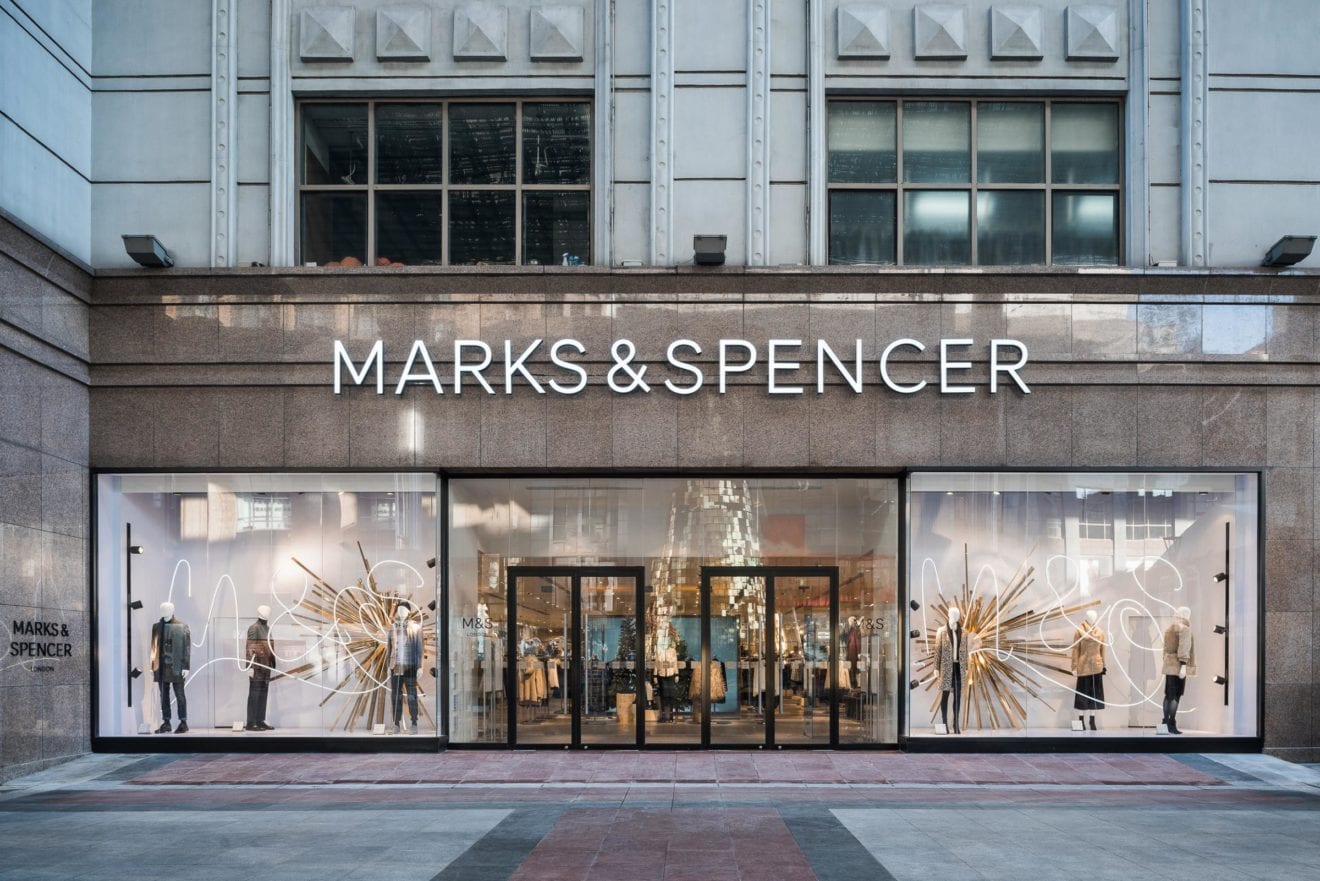
    UK retailer Marks & Spencer announced on Wednesday that it will pull out of the Chinese mainland market and close all the 10 stores amid shrinking profits, according to a statement the company sent to the Global Times on Wednesday.

    “Our review has shown that our stores in Chinese mainland continue to make losses and as result we can no longer trade with a store presence in the Chinese market,” Adam Colton, managing director of Greater China at Marks & Spencer, said in the statement.

    The company didn’t disclose sales revenues in the Chinese mainland market.

    An employee at an Marks & Spencer store in Beijing told the Global Times on Wednesday that he feels sorry about the closures because business in Beijing was quite good and there were a lot of loyal customers. He did not know when his last day of work would be. The 1,500-square Beijing flagship store at the Place shopping mall was opened in December 2015.

    Intensified competition and relatively high prices were the main reasons behind Marks & Spencer’s retreat from Chinese mainland, experts noted.

    “In Chinese mainland, the traditional UK brand did not have much appeal for Chinese consumers. For example, the prices in its food shops were a bit more expensive than even imported food stores,” Wang Xinmiao, a Beijing-based retail industry analyst, told the Global Times on Wednesday.

    In addition, the company did not have much time to cultivate brand awareness and a loyal customer base because the Chinese apparel market had already been saturated with “fast fashion” international brands, such as Zara, H&M, GAP, and Uniqlo, which marched into the Chinese mainland market much earlier than Marks & Spencer, Wang said.

    In contrast, the UK retailer has built a profitable wholly-owned business in Hong Kong in large part because it entered the market as early as 1988, the statement noted. Marks & Spencer is planning to expand its business in Hong Kong by opening more food stores in the near future.

    A customer said he came on purpose to the Beijing shop here after he has known the closure news. He has lived in UK for years and he trusts M&S, and he will shop in Hong Kong after the end of business here.

    The UK retailer has been losing ground in other international markets. In addition to its closures on the Chinese mainland, the company outlined plans to shutter 53 stores in 10 international markets, including seven in France, while pulling out of Belgium, Estonia, Hungary and Lithuania.

    In the first half of 2016, the company’s pre-tax profit plummeted 88 percent to 25.1 million pounds ($ 31.39million), down from 216 million pounds in the same period a year ago, as reported by BBC on Wednesday.

  • Korean wealthy individuals to jointly buy a Homeplus store

    Korean wealthy individuals to jointly buy a Homeplus store

    A group of affluent individuals would come up with 90 billion won ($75.5 million) to jointly own a Homeplus Co. superstore outlet in the suburban city of Pyeongchon, Gyeonggi Province, evidence that retail investors are joining their institutional counterparts in search for alternative investment options amid prolonged low-interest rate environment.

    According to investment industry on Tuesday, Vestas Investment Management Co. was named as a preferred bidder to buy Homeplus’s Pyeongchon branch from Alpha Asset Management Co. The purchase price is expected to reach about 90 billion won.

    homeplus

    Vestas, a Seoul-based investment manager that specializes in real estate investment, will be creating a private equity fund in hands with wealthy retail investors for the takeover deal, raising 30 billion won through the individual investors and borrowing the remainder from financial institutions.

    The investment manager tapped demand from retail investors through preferred client service centers of banks and brokerage houses in affluent neighborhoods in Seoul last week. There are many clients who are seeking medium-risk and medium-return private equity investment products amid low-interest rate environment and they are willing to invest up to billions of wons, said a preferred client service center officer who asked to be unnamed.

    The elite client banking and brokerage service centers are planning to offer the real estate private equity fund from mid-November until the end of this year. The fund limits the number of retail investors to 49, requiring each individual to invest roughly 600 million won in average. Vestas Investment Management expects its real estate private equity fund to become popular among well-to-do retail investors as it carries lower risk compared to securities and delivers higher profits than bonds. This would be one of very few cases in Korea that a small group of rich individuals taking over a large-sized hypermarket by creating a real estate fund, market experts said.

    The Homeplus Pyeongchon branch is in Pyeongchon, a new town located on the southern outskirt of Seoul. The superstore with a total area of 28,582 square meters is four floors high above ground and two floors below. Sitting near a large-sized residential district with easy access to public transportations, the hypermarket outlet has steadily generated profits since it opened in 2008. The retail outlet is attached to a 12-year lease contract with household name Homeplus and it expects to deliver profits with annual return rate of between 5 and 6 percent.

  • Alibaba Singles’ Day to extend beyond mainland China

    Alibaba Singles’ Day to extend beyond mainland China

    Alibaba’s Singles’ Day – now dubbed 11.11.Global Shopping Festival – is set to expand into international territories for the first time this year.

    The online retail giant founded by Jack Ma plans to use the celebrations around the event and its catalogue of data to target shoppers in Hong Kong and Taiwan.

    Next year, Alibaba plans to target Southeast Asia too.

    The sales-shopping frenzy, which is poised to lure millions of Chinese buyers and has been extended to 24 days, commences on Friday morning.

    American singer Katy Perry and boy band One Direction have been lined up to perform at the countdown gala in Shenzhen, near Hong Kong, on Thursday.

    The biggest Singles’ Day yet

    Chinese websites are preparing to smash Singles’ Day records

    Singles’ Day began seven years ago and involved only 27 merchants, but since then the event has ballooned.

    Last year Singles’ Day raked in $14.3bn in sales, more than the combined online sales over the five-day period covering Thanksgiving, Black Friday and Cyber Monday in the US – $11.1bn.

    Chinese websites are preparing to smash singles day records

    According to global delivery firm Fastline International, Singles’ Day sales will soar by 50% this year – rocketing to $21.45bn and eclipsing Black Friday.

    “Such is the growth in China’s home shopping market,” said Fastline head of consumer research David Jinks.

    “Long gone are the days when Singles’ Day was only celebrated by single male students at Nanjing University. Today it is the biggest sales day on the planet.”

    While the event was not originally invented by Alibaba, the retailer has made it a fixture of the retail calendar.

    Based on an anti-Valentine’s concept, Singles’ Day launches on November 11 (11.11) because of its four single digits. It was historically a shopping day for singles, but is popular now with bachelors and couples alike.

    Singles’ Day and other similar events such as 8.8 have driven the growth of Alibaba, which reported a 55% sales increase in its third-quarter results last month.

  • Food Retail Market Analysis, Size, Share, Development and Demand Forecast to 2020

    Geographically, Asia Pacific dominated the global food retail market in 2014; it is then followed by Europe. Growth of food retail market in Asia Pacific …

  • AEON Provides Privileges for Northern Customer at the 11th Money Expo Chiangmai 2016

    AEON Provides Privileges for Northern Customer at the 11th Money Expo Chiangmai 2016

    AEON Thana Sinsap (Thailand) Public Company Limited will be offering information on its different financial services and special promotions at the 11th Money Expo Chiangmai 2016. Services include Personal Loan, Your Cash, Cash Withdrawal, AEON Credit Cards and Member Cards application service.

    AEON customers who make financial transactions at the expo will also be in with a chance to win a 1-Baht gold necklace, John Lang Ford Bag or AEON Umbrella. Furthermore, AEON customers who has the financial transaction that meet AEON’s conditions will receive Caggioni Luggage or Big C Gift Voucher valued at 2,000 Baht maximum. Additionally, AEON is giving a special interest 0% installment on gold.

    The 11th Money Expo Chiangmai 2016 will be held from Nov 18 – 20, 2016 at Chiangmai Hall, Central Plaza Chiangmai Airport. 

  • China October vehicle sales rise 20% at 2.2 million

    China October vehicle sales rise 20% at 2.2 million

    Passenger vehicle sales in China to retail customers rose 20 percent in October from a year earlier, the China Passenger Car Association (CPCA) said on Tuesday.

    Auto retail sales totalled 2.2 million vehicles in October, CPCA said in a statement on its website. For January-October, passenger car sales rose 15.2 percent versus the same period in 2015, it said.

    The China Association of Automobile Manufacturers, whose statistics are generally viewed as the benchmark for the industry, is due to report wholesale data for October on Thursday.

    The CPCA predicted 13 percent growth in passenger car sales for 2016, state media reported earlier on Tuesday.

  • Vietnam & South Korean businesses signed 10 contracts

    Vietnam & South Korean businesses signed 10 contracts

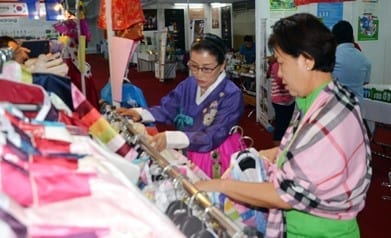
    The five-day fair themed “Viet Nam-South Korea Cooperation for Mutual Development” was held in the southern province of Ba Ria-Vung Tau.

    Truong Van Thoi, director of the provincial Trade Promotion Centre, said the event attracted some 40,000 visitors who spent over VNĐ6.5 billion.

    Wooden furniture businesses earned the highest revenue totalling VNĐ1.7 billion, followed by firms in textile, garments and the retail sector.

    Meanwhile, South Korean companies posted total revenue of some VNĐ1.1 billion.

    The fair facilitated local enterprises and businesses of both sides to foster their trade promotion activities, share market information and exchange experiences, helping them find suitable partners.

    The event featured 348 booths showcasing products of 194 firms, including 84 from Ba Ria-Vung Tau and 35 from outh Korea.

    Participants brought to the fair various items, including wooden products, handicrafts, interior décor and garments, as well as seafood, plant varieties, cosmetics and other consumer goods.

  • SIA delays launch of Jakarta-Sydney route after Indonesia withdraws approval

    SIA delays launch of Jakarta-Sydney route after Indonesia withdraws approval

    Flag carrier Singapore Airlines (SIA) said on Wednesday (Nov 9) it has delayed plans to launch a new route linking Singapore, Jakarta and Sydney, after Indonesia withdrew its approval due to runway maintenance work.

    The airline had earlier announced that it planned to launch the thrice-weekly Singapore-Jakarta-Sydney route on Nov 23. SIA said Indonesia’s civil aviation authorities had issued written approval, and the airline had secured the necessary airport slots.

    However, Indonesian authorities have informed the airline that they are now unable to approve the flights due to runway maintenance work at Jakarta’s Soekarno-Hatta International Airport, SIA said. The runway work also affects other airlines, it added.

    In response to media queries, the Civil Aviation Authority of Singapore (CAAS) said it was aware of the delay in the launch of the new route.

    “SIA’s new service will enhance air connectivity between Singapore, Jakarta and Sydney, which will facilitate people and trade flows between these cities,” CAAS said.

    “We hope the Indonesian civil aviation authorities can give approval for this new service as soon as possible so that it can be launched.”

    SIA said it will contact customers with bookings on the route and transfer them to other flights. “The airline apologises for the inconvenience caused to our customers,” it said.

  • Indonesia eyes electricity exports to neighboring countries

    Indonesia eyes electricity exports to neighboring countries

    Indonesia plans to sell electricity to Malaysia, Thailand and Singapore as the government is targeting greater profitability from several coal mine-mouth power plants that are anticipated to soon be completed in Sumatra.

    National Development Planning Board (Bappenas) head Bambang Brodjonegoro said the plan was feasible as the power plants would have excess capacity.

    “We can sell the electricity abroad via underwater cables,” the former finance minister said during the ASEAN G2B Infrastructure Investment Forum in Jakarta on Tuesday.

    Bambang said electricity demands were huge in peninsular Malaysia and southern Thailand, where Indonesia could meet those demands at competitive prices.

    “As long as Sumatra’s electricity needs are fulfilled, we can export the excess capacity,” he added.

    President Joko “Jokowi” Widodo’s administration is targeting to complete its ongoing 35,000 megawatt (MW) electricity procurement program by 2019. Of the target, 7,800 MW will be supplied from mine-mouth power plants.

  • PNG plans to open flight route to Papua

    PNG plans to open flight route to Papua

    Papua New Guinea has reiterated its plan to open a flight route from Mount Hagen to Jayapura during a meeting of the Border Liaison Officers held in Port Moresby, an Indonesian official said.

    Papua New Guinea will soon realize its plan but has not set a specific date for it, Director for East Asia and the Pacific at the Indonesian Foreign Ministry, Edy Yusuf, said on Tuesday.

    Yusuf said the Indonesian government is prepared to help realize the plan soon.

    “Indonesia is ready to help Papua New Guinea realize the plan since there is no flight from Papua to Papua New Guinea,” he added.

    The head of the Indonesian delegation to the meeting, Klemen Tinal, who is also the deputy governor of Papua, shared Yusufs view and expressed the hope that the plan would come to fruition soon.

    Most citizens of Papua New Guinea who live in Vanimo visit Indonesia by land through borders between Wutung in Papua New Guinea and Skouw in Indonesia, as well as by sea, he informed.

    If the plan to open the flight route is realized, they will no longer need to travel to Papua by land or sea, he stressed.

  • AsiaInfo strengthens cloud computing portfolio

    AsiaInfo strengthens cloud computing portfolio

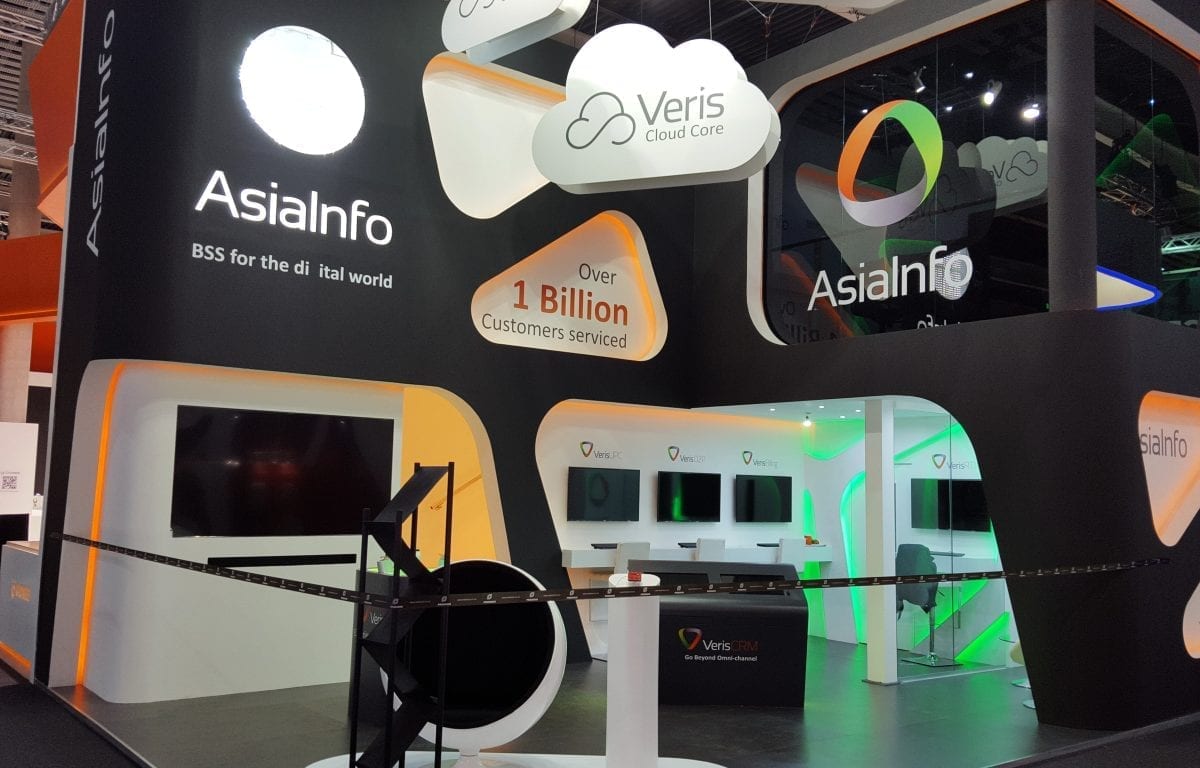
    Chinese telecoms IT software company AsiaInfo has signed a strategic co-operation agreement with Alibaba Cloud, the cloud computing arm of Alibaba Group.

    The two companies said they will work together on projects and jointly promote China as a center of excellence for cloud computing services and innovation.

    The partnership will also see the pair share a wide range of resources and jointly build a more open cloud ecosystem to form the basis of a comprehensive portfolio of cloud-based services.

    AsiaInfo said the company is stepping up its transition from a supplier of IT solutions to telco service providers, to a specialist in enabling digital business transformation for operators, their partners and other enterprises.

    Cloud-based delivery platforms and exchanges play a key role in the company’s vision of the industrial and business-led Internet, and the partnership with Alibaba Cloud will enable the company to continue to develop and deliver advanced operator and business solutions, the company added.

    “We are entering a new era of the internet. An era where people and things become customers, where service providers and businesses become operators, and where cloud-based business technology platforms will form both the backbone and the brains of the digital network,” said AsiaInfo CEO Michael Wu.

    “Our partnership with Alibaba Cloud will ensure we stay at the forefront of developments and provide innovative and ground-breaking solutions to our customers.”

  • Low-end smartphones hinder music streaming business

    Low-end smartphones hinder music streaming business

    Music streaming is quickly becoming a favored service, offering Indonesia’s music-seeking public a legal means to access music. However, with a majority of Indonesians possessing low-end smartphones, the outlook may not be as rosy as some think.

    According to a new report by McKinsey, the prevalence of low-cost smartphones among mass market consumers in Asia, including Indonesia, has hindered the take-up of music streaming apps.

    Indonesia experienced a particularly busy time for music streaming services in the first half, with the entrance of foreign-based names such as Spotify, Apple Music, Yonder Music and JOOX coming in around the same period, tapping into the potentials and eagerness of the largest Southeast Asian digital market.

    Services that previously entered and operated in Indonesia include Guvera, Deezer and Rdio, which closed operations in November last year.

    It turns out that 34.7 percent of Indonesians listen to JOOX, followed by 12 percent with Musixmatch, 10.2 percent with SoundCloud, 10.1 percent with Langit Musik and 9.8 percent with Spotify, the report shows.

    However, “in markets such as Indonesia, low-end smartphones cost as little as [US]$75 per device. These devices are slower and possess less memory capacity than other smartphones, posing a dilemma for music streaming services”, the report said.

    “They can optimize music streaming apps for these lower-end smartphones at the cost of functionality that is critical to the customer experience of more affluent consumers or retain the full functionality of streaming apps to maximize the customer experience for affluent customers at the cost of limited access to mass market consumers.”

    Among the most popular smartphone brands in Indonesia in the second quarter of 2016 were Samsung, OPPO, Asus, Advan and Lenovo, all of which offer low-end smartphones.

    Services usually offer an “offline” option, through which listeners can download certain tracks onto their phone for internet-less listening. Usually, streaming relies on an internet connection, making online connectivity necessary.

    Many services offer rates that have adjusted with the market’s emphasis on affordability, with fees as low as Rp 35,000 ($2.67) to Rp 50,000 per month, and varying payment methods aside from the usual credit card option.

    To make their products affordable and wide-ranging, the services partnered with telecom companies, with partnerships including Spotify with Indosat Ooredoo, Yonder with XL Axiata and JOOX and Guvera with Telkomsel.

    However, in terms of low-end smartphone capacity, some services are confident that their apps will give listeners optimum quality regardless of weak Indonesian bandwidth or poor connectivity in some areas.

    For one, Guvera operations and marketing director Onny Robert said that because its service primarily targeted “users who prefer not to pay for their music”, its bundling plans included latching onto smartphones themselves such as Lenovo devices in order to secure listeners.

    After evaluating field connections, Onny said Guvera was able to deliver a capable service even at 3G speed.

    “Bandwidth or phone capacity won’t really matter to Guvera users because our app is practically small in size, 20 megabytes, and because it is bundled with Lenovo devices, it will drive more interest into using our service,” he said recently.

    Guvera has 1.5 million active subscribers, with under-25s dominating their demographics.

    Yonder Music CEO Adam Kidron earlier said the service aimed to further cultivate the music streaming tradition and make it more affordable and accessible.

    Spotify, meanwhile, has seen its users stream over 100 billion minutes of local and international music and listen to an average of 90 minutes of music per day, since its launch in March.