Blog

  • American franchise coffee house interested in kerinci coffee

    American franchise coffee house interested in kerinci coffee

    An American franchise coffee house is interested in arabica kayu aro coffee from Kerinci district, Jambi province, the Head of Processing and Marketing of Crops at Jambi’s Plantation Office, Arsyad Nur, said on Wednesday.

    “This coffee won the national coffee contest,” he added.

    Currently, the coffee house, which has franchises around the world, is exploring the possibility to cooperate with arabica coffee farmers in Kerinci.

    In Jambi, Nur noted, arabica kerinci only grows in Kayu Aro, which is a plateau situated at a height of 1,400-1,700 meters above sea level.

    “One coffee rod can produce eight kilograms of coffee beans at the most. Within two weeks, the local farmers can produce 20 tons of arabica kerinci coffee beans,” he informed.

    According to him, the arabica kerinci plantations are spread over 1,500 hectares.

    The local administration is working to register arabica kerinci with the Directorate General of Intellectual Property Rights at the Ministry of Law and Human Rights in order to obtain legal protection of Geographical Indications (GI).

    “Arabica Kerinci has specific characteristics that deserve to get GI categorisation,” Nur pointed out.

    Besides arabica kerinci, he added, the district has robusta merangin and liberika tungkal coffee. “Liberika Tungkal grows at an elevation of 0-100 meter above sea level,” he explained.

  • Indonesian capital’s airport opens $560 million terminal

    Indonesian capital’s airport opens $560 million terminal

    The Indonesian capital’s airport opened a new terminal Tuesday after years of operating at far above its passenger capacity.

    Domestic flights for national carrier Garuda began operating in the morning from Soekarno-Hatta airport’s steel and glass $560 million Terminal 3. Its international flights will shift to the new terminal next month.

    Other airlines will gradually move their flights to the terminal and the airport company plans to start refurbishing two old terminals, built in 1984 and 1992, later this year.

    Indonesia, an archipelago of more than 250 million people, is one of world’s fastest growing air travel markets.

    But many international airlines bypass the capital Jakarta in favor of modern, high-capacity airports at Bangkok, Singapore or Kuala Lumpur for their Southeast Asian stopovers.

    The airport operator and government hopes the new terminal, and a third runway that is under development, will change that.

    Budi Karya Sumadi, Indonesia’s transport minister and former president of the airport company, said “this terminal was built to change the image of the capital Jakarta.”

    Soekarno-Hatta airport will be able to handle 62 million passengers a year once the renovated terminals are fully operational again in early 2018. The airport handled about 54 million passengers last year, making it the 18th busiest in the world, according to Airports Council International.

    An electric train from the airport to the city is slated for completion in early 2017.

  • Telstra to invest $2.3b to improve the customer experience

    Telstra to invest $2.3b to improve the customer experience

    Australia’s Telstra has revealed plans to invest up to A$3 billion ($2.3 billion) over the next few years on improving the customer experience following a wave of recent network outages.

    The operator has revealed plans to increase its capex to sales ratio to 18%, the highest since the operator was building its 3G network in the 2008-09 financial year.

    Telstra CEO Andrew Penn said the investments include plans for consumers, SMBs, domestic and international enterprise users, governments and wholesale customers, as well as both fixed and mobile networks.

    Short term actions to address frequent customer complaints will be followed by more significant and longer term investments aimed at digitising to improve the customer experience and reducing costs.

    “There are a number of immediate actions that we believe will improve customer experiences. We will simplify products and platforms – we need to retire old technology and systems that slow down and complicate how customers are served,” Penn said.

    He said investments will be aimed at evolving the network with new technologies including virtualization and increased automation. The company aims to develop a flexible, software-defined network architecture.

    The move comes as Telstra seeks to win back customers following a series of hardware-related network outages that were heavily reported in Australian media.

    Telstra had already committed A$50 million towards installing new monitoring equipment and improving the capacity of its mobile network to handle large volumes of simultaneous re-registrations.

  • Facebook moves to circumvent ad blockers

    Facebook moves to circumvent ad blockers

    Facebook is looking to stop playing ball with ad blockers.

    On Tuesday, Facebook tweaked its desktop website in a way that renders traditional ad blocking useless. The company redesigned its ad formats to improve ad performance and expanded its controls so that users get to see those ads that are relevant.

    In addition, Facebook noted that its desktop users using ad blocking software will now be able to see ads nonetheless. It can do this because the ads are housed in the company’s own ecosystem.

    According to the Facebook’s blog, the social media giant has “introduced tools to help people control their experience, improved how we decide which ads to show and created new ad formats that complement, rather than detract from, people’s experience online.”

    Facebook claims that ads can be useful in finding new products and experiences, but that the way ads are being served is the main problem. The company argues that many users are installing ad blockers to avoid disruptive, slow-loading and irrelevant ads.

    Facebook also noted that some ad blocking vendors are accepting money to unblock specific ads. As such, the company feels that it goes against its company ethos of keeping its services free and using ads to support journalism.

    It’s a bold move by Facebook and obviously aimed at protecting its own revenue base – which is largely ad based. It may only be a matter of time for other social media and internet platforms to follow and find other ways around ad blocking software in the name of good user experience.

    So Facebook has made its move; now, it is up to users who are fed up with online ads to react.

  • Netcracker acquires CoralTree

    Netcracker acquires CoralTree

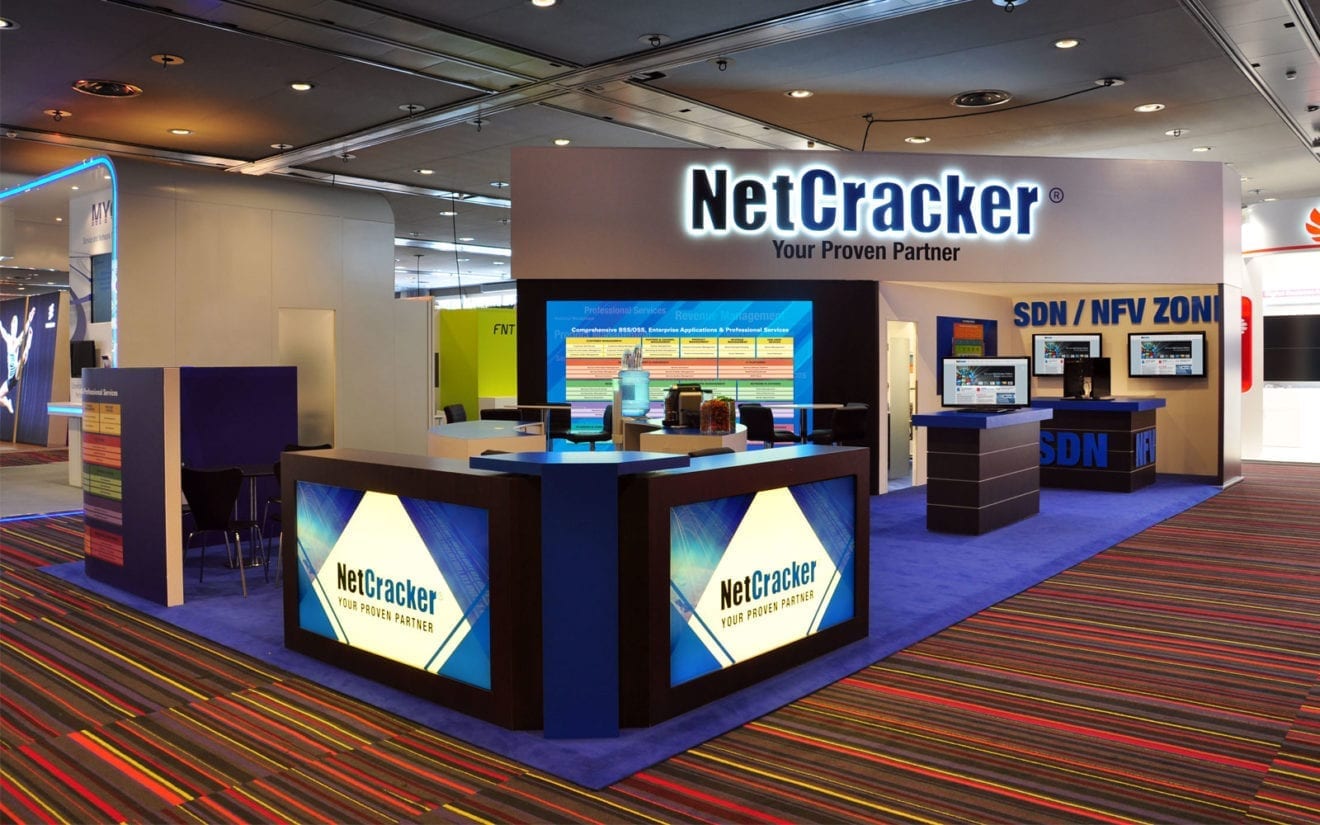
    Netcracker Technology has completed the acquisition of CoralTree Systems, a provider of converged solutions for European service providers.

    The acquisition includes CoralTree’s technology solutions and skilled resources in systems integration, business operations support and other professional services.

    CoralTree’s solutions also include technology assets in video activation, BSS and OSS which complement Netcracker’s solution portfolio.

    Netcracker has seen significant business growth and market momentum during the past 18 months due to its involvement in large-scale transformation projects that enable operators around the world to become digital service providers.

    The acquisition of CoralTree Systems will enable Netcracker to support this growth and further accelerate the delivery of similar strategic projects worldwide, the company said.

    The acquisition of CoralTree Systems brings two key complementary assets to Netcracker. First is a skilled workforce experienced in delivering and operating large projects across video as well as BSS and OSS domains, helping European cable operators, service providers and enterprises become digital service providers.

    Second is a portfolio of video activation solutions and tools for delivering and improving digital services and customer experience across video, BSS and OSS domains.

    “CoralTree’s outstanding workforce and technology toolsets perfectly complement Netcracker’s own assets and the combination of these two companies will deepen our relationships with customers around the world,” said Andrew Feinberg, president and CEO of Netcracker Technology.

  • Indosat Ooredoo, Fortumo bring direct carrier billing to Indonesia

    Indosat Ooredoo, Fortumo bring direct carrier billing to Indonesia

    Indosat Ooredoo has partnered with mobile payments platform provider Fortumo to launch direct carrier billing in Indonesia.

    The partnership is expected to enable the Indonesian mobile operator’s 69.8 million subscribers make online payments by charging purchases to their mobile account, without the need to use a credit card.

    “This strategic collaboration with Fortumo will bring more benefits to Indosat Ooredoo customers and allow transactions at a wider network of merchants,” said Prashant Gokarn, chief of new business and innovation at Indosat Ooredoo. “We look forward to continuing to provide innovation that brings more value to our customers as part of our goal to become a leading digital telco.”

    Fortumo’s direct carrier billing platform is used by leading app stores (Google Play, Windows Phone Store), digital media companies (Sony, HOOQ, Gaana) and gaming companies (EA Mobile, Gameloft, Kinguin, Rovio).

    To enable global carrier billing for these merchants, Fortumo has partnered with more than 350 mobile operators across the world.

    “Connecting with Fortumo gives mobile operators immediate access to additional revenue from all the segments of the digital industry,” said Siddharth Sahi, VP of business development and carrier relations at Fortumo.

    The two companies cite data which show that there are over 65 million smartphone owners in Indonesia, but less than 5 million people have access to credit cards.

    They said this meant that a majority of the digital population cannot make online payments. As a consequence, digital merchants lose out on revenue from a majority of the population. Carrier billing resolves this problem by allowing any mobile phone owner (both prepaid and postpaid) to make payments through Fortumo.

  • Jollibee sales strongest in years

    Jollibee sales strongest in years

    Jollibee Foods Corp (JFC) has reported that its system-wide sales grew by 15.1 per cent in the second quarter compared to sales for the same period of 2015.

    For the first half of the year, sales of the Philippines’ largest foodservice company grew by 14.9 per cent to Php71 billion, while revenues grew 13.7 per cent to Php54 billion, compared with the first half of 2015. In the same period, profits rose by 14.8 per cent to Php3.1 billion from Php2.7 billion.

    JFC CEO Ernesto Tanmantiong said the Philippine business, which accounts for at least 80 per cent of the company’s worldwide sales, has been experiencing its strongest organic growth in many years.

    Tanmantiong said all brands performed ‘very well’ and he attributes the record growth to continued improvement in product quality and value offering supported by focused marketing campaigns, store expansion and renovation, low inflation rate, healthy growth of the country’s economy and election-related spending.

    Sales growth in the Philippines accelerated to 17.9 per cent in the second quarter, with brands growing in double digits.

    “Our business abroad had mixed performance. Southeast Asia grew by 37 per cent, led by Singapore with 56 per cent and Vietnam with 49 per cent. The Middle East rose by 17 per cent and the US increased by 11 per cent. China’s sales decreased by 5.7 per cent due to competitive pressure on Yonghe King, our largest brand there,” said Tanmantiong.

    “We look forward to a strong recovery of our Yonghe King business in the months ahead with the launch of new products with high value and taste scores supported by strong marketing campaigns and continuously building  a significant business in the People’s Republic of China and other parts  of the world.”

    JFC CFO Ysmael Baysa said:  “We look forward to continued strong profit growth while preparing for likely higher inflation rate in 2017 in the Philippines and other parts of the world and improving the profitability of our joint venture businesses.”

    JFC has a 50 per cent  interest in the following joint ventures with the number of stores indicated: Highlands Coffee (Vietnam, Philippines) 131, Pho 24 (Vietnam, Indonesia, Cambodia, Korea and Australia) 32, 12 Hotpot (China) 20, others 8; and a 40 per cent interest in Smashburger that has 366 outlets, mostly in the US.

    As of June 30, JFC was operating 2528 restaurant outlets in the country: Jollibee 939, Chowking 457, Greenwich 237, Red Ribbon 378, Mang Inasal 455 and Burger King 62. Abroad, it had 655 stores: Yonghe King (China) 321, Hong Zhuang Yuan (China) 40, San Pin Wang (China) 59, Dunkin’ Donuts (China) 4, Jollibee 151 (US 33, Vietnam 79, Brunei 14, Saudi Arabia 10, Qatar 2, Kuwait 4, Hong Kong 1, Singapore 4,  Bahrain 1 and UAE 3), Red Ribbon in the US 33, Chowking 44 (US 16, UAE 20, Qatar 4, Oman 2, Kuwait 1 and Saudi Arabia 1), Jinja Bar (US) 3.

    The JFC Group has 3183 stores worldwide.

  • Topmot Vietnam receives seed funding

    Topmot Vietnam receives seed funding

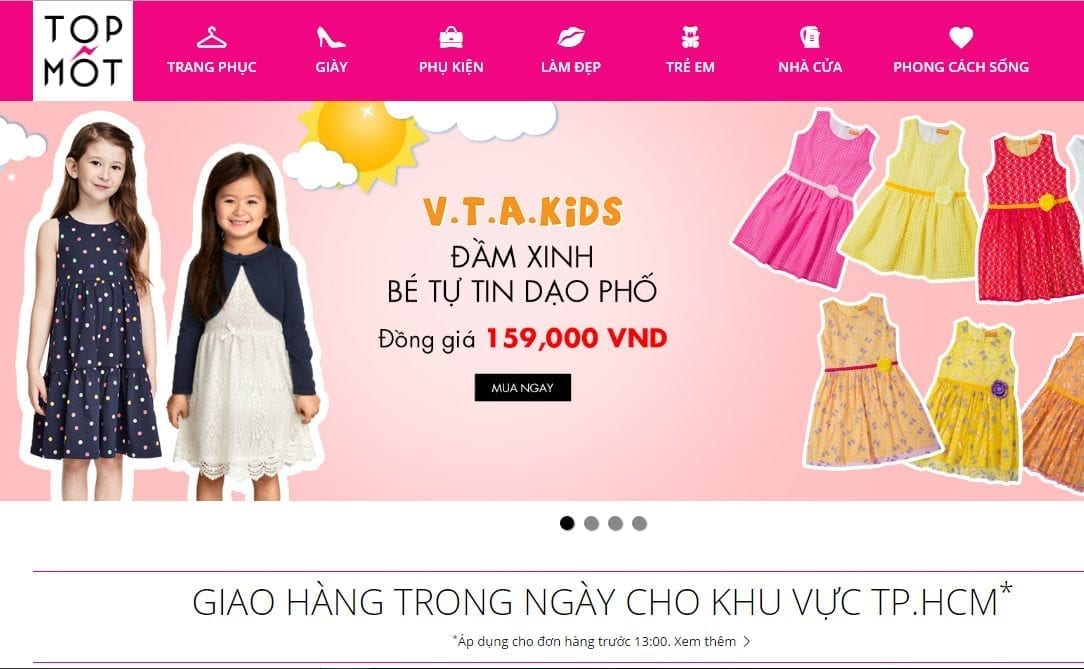
    Right after the closure of its sibling eCommerce model Lingo, Topmot Vietnam has received US$1 million from investors in Asia, Europe and the US.

    The funding proves that despite many online failures in Vietnam to date, there is still interest in eCommerce startups.

    “Ecommerce in Vietnam is indeed not easy, specifically for B2C businesses that require a sizable up-front investment to be able to process and fulfill orders in a professional manner,” CEO Erik Jonsson said.

    Topmot Vietnam has launched an iOS application to help it expand to farther areas besides Hanoi and Ho Chi Minh City. There are still opportunities in Vietnam market where people prefer to pay in cash and the logistics network remains immature.

    “eCommerce in Vietnam is not a sprint, it’s a marathon, and we have to be disciplined and focussed in each step of the way,” Jonsson added.

    Jonsson, a former Zalora CEO, and deputy CEO of VinGroup’s eCommerce, founded Topmot Vietnam in late 2015. Topmot’s model is different to conventional eCommerce sites, focused on flash sales and aiming to help suppliers clear excess and end-of-season inventories.

    The site has built a strong customer network in second-tier cities like Can Tho, Vung Tau, Da Nang and Hai Phong, attracted by high discounts.

    With 40 campaigns a week, starting at 10am everyday and lasting for five days, Topmot usually sells out of its products only a few hours after launch. Fastest-selling products come from international brands such as Shiseido, Converse, Puma and Pedro, as well as local brands such as Gosto, Kujean and Bitis.

    While the defunct Lingo site’s business largely came from shoppers using desktop or laptop computers, Topmot’s traffic from mobile devices has increased 70 per cent since its launch last year.

  • 24 boats partcipating in Sail Indonesia arrive in Alor

    24 boats partcipating in Sail Indonesia arrive in Alor

    Twenty four boats of Sail Indonesia participants arrived in Alor, East Nusa Tenggara on Thursday afternoon, and will travel to a number of destinations in Alor District.

    “The Board of Alor District government and the community welcomed the Sail Indonesia participants today,” Secretary of the Department of Tourism and Creative Economy of Alor District, Adifa Yunus, told Antara before the opening of the 10th Alor Expo in Kalabahi on Tuesday.

    He said tens of participants from various countries will attend the 10th Alor Expo and undertake some cultural tourism Alor District for several days.

    “Sail Indonesia participants, who will be in Alor till August 13, will visit various tourist destinations which have natural beauty and a rich culture. They will also see some marine tourism in Pantar Strait,” he added.

    Rosemarie from Berlin, Germany, one of the participants who has been following Sail Indonesia from Darwin, Australia, observed that it was her first visit and she was deeply fascinated with the nature and culture of Alor.

    “I came for the first time with my husband on a Salmon boat from Kupang. Now I have arrived in Alor to follow the Alor Expo,” she told Antara before the opening of the 10th Alor Expo.

    During her stay in Alor, Rosemarie with her husband and other colleagues participating in the sailing event, will visit various tourist destinations in Alor and will especially try snorkeling in the Pantar Strait.

    “I have been hearing a lot from the people and the media about the underwater natural beauty of Alor and wanted to undertake snorkeling before heading off to any other place,” she informed.

    Rosemarie gushed that she was amazed with the local culture, and termed it a unique and exotic wealth.

    “This is a valuable opportunity I have got in life. Ever since I first came to Alor, I have witnessed firsthand the cultural and natural wealth that a traveler can find here,” she remarked.

    After a visit to various tourist destinations in Alor, she proceeded to Labuan Bajo, as did her other colleagues in the Sail Indonesia, to see the unique species of Komodo, called one of the wonders of the world.

    Sail Indonesia participants aboard 42 boats are currently visiting various tourist destinations in East Nusa Tenggara after they moved out of the city of Kupang. While 24 participant sail boats came to Alor, other participants are visiting various tourist destinations such as Labuan Bajo Flores, Wini in Pulau Timor and Sumba.

  • Two more Kuala Lumpur malls opening

    Two more Kuala Lumpur malls opening

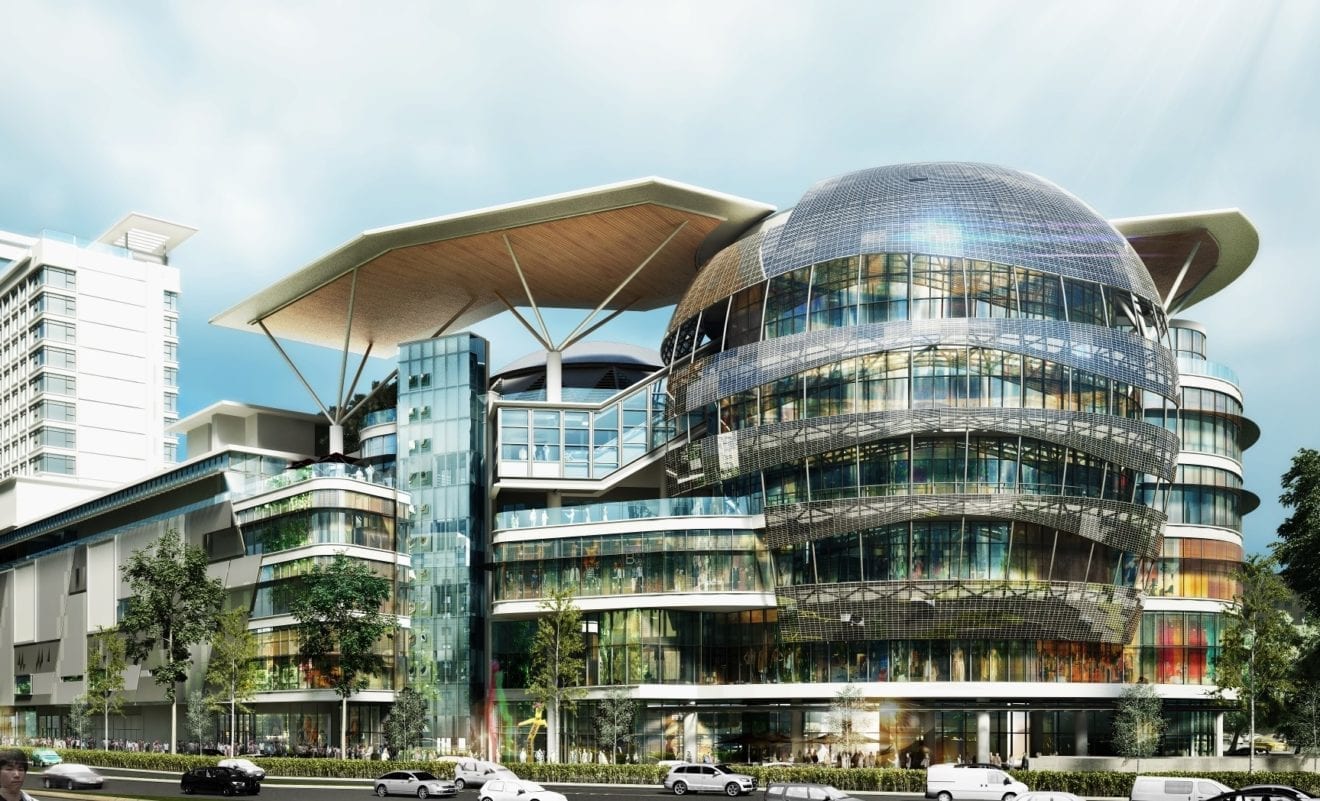
    Two Kuala Lumpur malls, collectively offering more than 2 million sqft (185,806 sqm) in net lettable area, will open in Cheras, Klang Valley, by the end of the year.

    Moreover, the MyTown Shopping Centre (below picture) and Sunway Velocity Mall (above picture) will be just 800m away from each other.

    Cheras already has the Aeon Maluri shopping centre and Cheras Leisure Mall, with The Tun Razak Exchange also on the horizon, reports The Star.

    MyTown is being developed by Boustead Ikano while Sunway Velocity Mall is a Sunway Groupproperty. MyTown will be structurally linked to Ikea Cheras, the largest outlet mall in Malaysia.
    With a population of 800,000 people, Cheras is an “ample market”, says Sunway Shopping Malls & Theme Parks CEO HC Chan.

    myTown mall Malaysia

    “Fundamentally, the real issue is the absence of lifestyle and experiential malls in Cheras – Sunway Velocity Mall fills this void. I am looking from a quality rather than a quantity perspective… we are addressing this from multiple angles.”

    Boustead Ikano GM Jo Hogsander agrees there is demand for more retail space, especially in Cheras. He says that when the MRT line opens it will ease traffic congestion and boost accessibility to the mall.

    “Game changer”

    Chan also sees the MRT as a “game changer”. “Two out of six MRT stations in Cheras will serve Sunway Velocity, which translates to a capacity of about 400,000 passengers a day.”
    He says Sunway Velocity Mall would not only compete, but also complement the MyTown Shopping Centre.

    “Competition is healthy, but in the longer term we will complement each other. Just look at the Bukit Bintang area and the number of malls there. It’s thriving because it gives consumers a choice.”
    Despite the number of malls in the Klang Valley, Hogsander says they are still crowded, even on a weekday afternoon.

    “I went to our competitors on a Thursday afternoon and couldn’t find a parking space. I then went to another competitor and had to do laps to find parking – and these are big shopping centres with more than 6000 parking bays.”

    Sunway Velocity Mall and MyTown Shopping Centre will open on October 28 and November 15 respectively, 18 days apart. Both malls boast 6500 parking bays.

    Sunway will have a NLA of 1 million sqft and accommodate 500 shops, while MyTown will have 460 stores on 1.1 million sqft of space.

    Sunway Velocity Mall’s anchor tenants include Harvey Norman, Parkson, TGV Cinemas and Toys’R’Us, while MyTown has secured such brands as Golden Screen Cinema, Mango, Uniqlo and Village Grocer.

  • Tough road for New Look

    Tough road for New Look

    Following a robust few years of market outperformance and share gains, the start of New Look’s 2016-17 financial year is a major disappointment.

    While weakened consumer confidence and unseasonal weather dampened shopper appetite to spend on clothing & footwear, New Look has underperformed the market and lost share over the period.

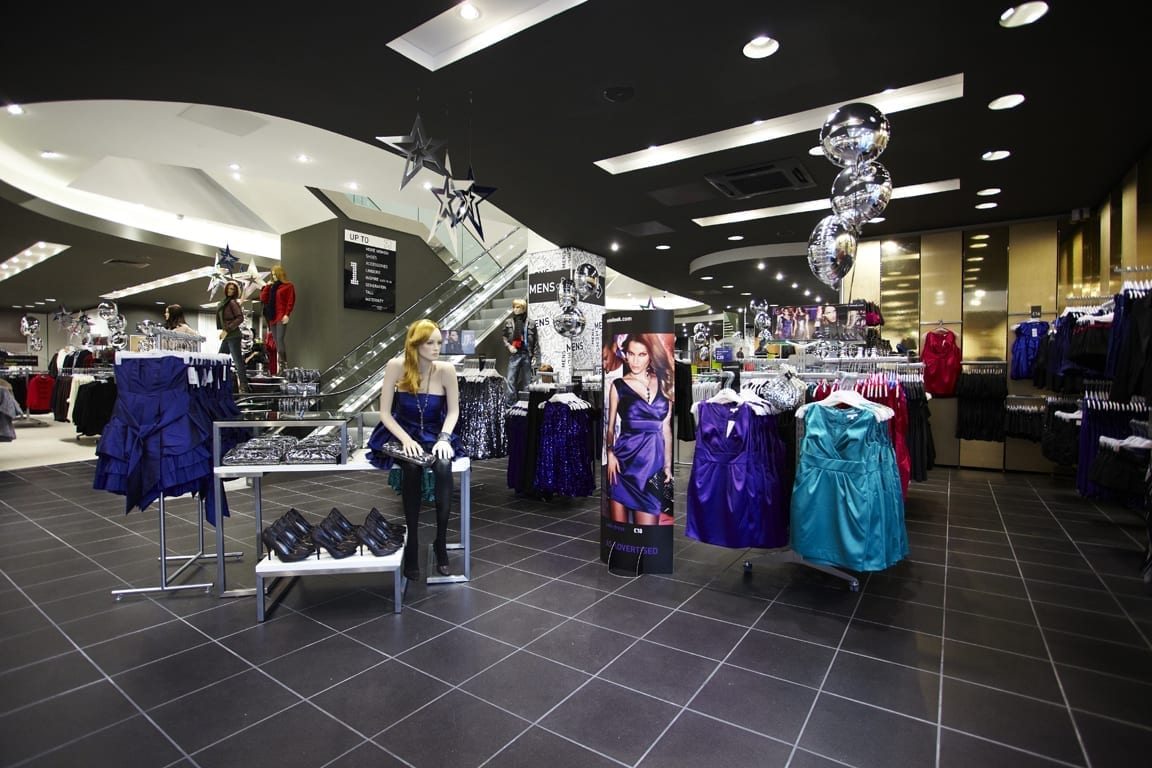
    Despite a 35.5 per cent fall in underlying operating profit to £30.5 million, the retailer has continued to invest in its strategic growth areas, namely menswear and China. Menswear sales growth of 21 per cent dramatically outperformed following further rollout of the men’s standalone format. Moreover, as it builds a bigger customer following New Look is able to improve its menswear proposition via insight gained on most browsed and shopped styles and customer feedback – ensuring its collection is continually enhanced and better targeted to its core audience.

    While New Look has the opportunity to grow its share of the UK menswear market organically, given that it is a less saturated and outperforming segment of the clothing market, it should also be targeting share from rivals such as River Island, Burton, Blue Inc and Topman.

    Verdict forecasts a more challenging couple of years for the clothing market than what we had forecast back in January. While Brexit will impact spend across the home sectors more so than in clothing, the likelihood of squeezed disposable incomes, rising food & grocery prices and price inflation in clothing will restrict consumer’s ability to purchase higher volumes of discretionary clothing purchases.

    Retailers will therefore have to work that much harder to stimulate spend. However, New Look’s value positioning and go-to appeal for both essentials and fashion will put it at an advantage over some of its mid-market competitors.

  • MBK plans second community mall

    MBK plans second community mall

    Thai developer MBK plans to spend 500 to 800 million baht (US$14 to 23 million) building a community mall in Pathum Thani province next year.

    President/chief executive Suvait Theeravachirakul says the mall will be opposite Bangkradi Industrial Estate in Pathum Thani.

    It is the company’s second community mall following The Nine Center in Bangkok. The new property will occupy a corner of an MBK site where it is developing the Riverdale Golf & Country Club and the Park Riverdale townhouse project.

    It is envisaged the mall will serve residential projects inside an eight to 10 km radius, and MBK is also looking at the feasibility of developing a mix-used complex.

    Meanwhile, The Nine Center has proven successful through its differentiation from other community malls nearby, says MBK shopping centre department MD Somphol Tripopnart. Its revenue last year was 225 million baht. About 12,000 shoppers visit the centre each day and the company plans to spend 10 million baht to improve its landscaping this year.

  • South Korean e-commerce site ‘Ticket Monster’ starts luxury car sales

    South Korean e-commerce site ‘Ticket Monster’ starts luxury car sales

    South Korea’s major e-commerce site, Ticket Monster on Monday said it has started sales of British luxury car brand Jaguar. Ticket Monster put on sales of 20 Jaguar XE Portfolios and R-Sports on Monday morning, marking them down 7 million won (US$6,317) from the regular retail prices to 48.1 million won and 46 million won, respectively. The two models were sold out in three hours, the company said.

    Ticket Monster said it could sell all of the vehicles on the first day because it offered the best available price and even promised a refund if it was not the cheapest.

    “Although new cars have been sold by overseas online shopping malls, it is the first time that a Korean e-commerce site sells new cars online,” a company official said. Consumers made a one-time payment on the website and will take over the vehicles from designated dealers or visit dealer shops, officials said. Ticket Monster said the latest move was aimed at changing customers’ expectations and leading the new trend in the highly competitive market.

    “The sales of imported cars is part of Ticket Monster’s efforts to change the retail paradigm,” Ha Sung-won, the chief operating officer of Ticket Monster, said.

  • Politics could add to forces working against Korean cosmetics industry

    Politics could add to forces working against Korean cosmetics industry

    Last week the Korean government announced plan to impose duty free limits to stop third party sales of cosmetics in China, and now, in an unrelated move, the China government’s threats to retaliate over Korea’s deployment of new military defence technology seems to be adding to investor fears.

    Korea has taken a decision to deploy a Terminal High Altitude Area Defence (THAAD) battery, which some experts believe is one of the reasons why investors a dumping shares in Korean companies, a sector that is heavily reliant on exports to China.

    Raising the bar on visas and sanitary regulations

    In the first move, perceived to be a retaliatory step by China authorities, officials recently closed a visa agency catering to Koreans, something that will make it harder for Korean companies to obtain multiple entry visas for doing business in China.

    On top of this, the China trade authorities have also stepped up sanitary regulations governing Korean beauty products, a move that is also likely to put a damper on exports of certain products and make the whole process more difficult.

    “Cosmetics and entertainment stocks have plummeted as China has begun taking steps against Korean companies and individuals doing business on the mainland,” said Daniel Cho, head of research at Daishin Securities, speaking to the Korean Times.

    “The recent decline was largely engineered by the potential THAAD backlash.”

    Those duty free regulations

    Simultaneously, speculation has been growing about the impact of proposed duty free regulations, which are being drawn up to protect the industry, but some experts say this has already had an impact on investors and the value of shares in the country’s big beauty players.

    Last week the Korean customs authorities notified all Korean duty-free retail operators, which include three major operators, that each customer would be limited to buy no more than 50 cosmetic and fragrance products.

    The main objective behind the clamp down is to cut out on the emerging market for cosmetics then be sold on to third-party brokers, and then resold on to other retail channels.

    News of the limit was leaked on the previous Friday and when the Korean Stock Exchange re-opened for trading on Monday, stock prices dropped significantly, with Amore Pacific share prices falling over 2% and LG Household & Health falling 6%.

    In the last few years the rise and rise of Korean cosmetics companies has been attributed to a huge appetite from the China market, but with prices of the products being much higher in China, consumers have taken to shopping holidays in Korea to stock up.

    China drives duty-free cosmetics sales

    Sales of Korean cosmetics have been boosted by chic advertising campaigns, Korean pop and a product innovation pipeline that boasts some of the most cutting edge products available anywhere in the world.

    A large part of this success has been the huge influx of tourism from China, many of whom are going on ‘shopping holidays’ with the main aim of buying up their favourite Korean cosmetic products at a cheaper price than they would pay in China.

    Current figures show that cosmetics make up the lion’s share of Korea’s largest duty free retail chain, Lotte, accounting for 58.9% of sales in the first quarter of this year, and that 70.8% of the company’s overall sales came from Chinese visitors. This up from 63.3% compared to the previous year.
  • Sainsbury’s taps into China’s love of British products through Tmall

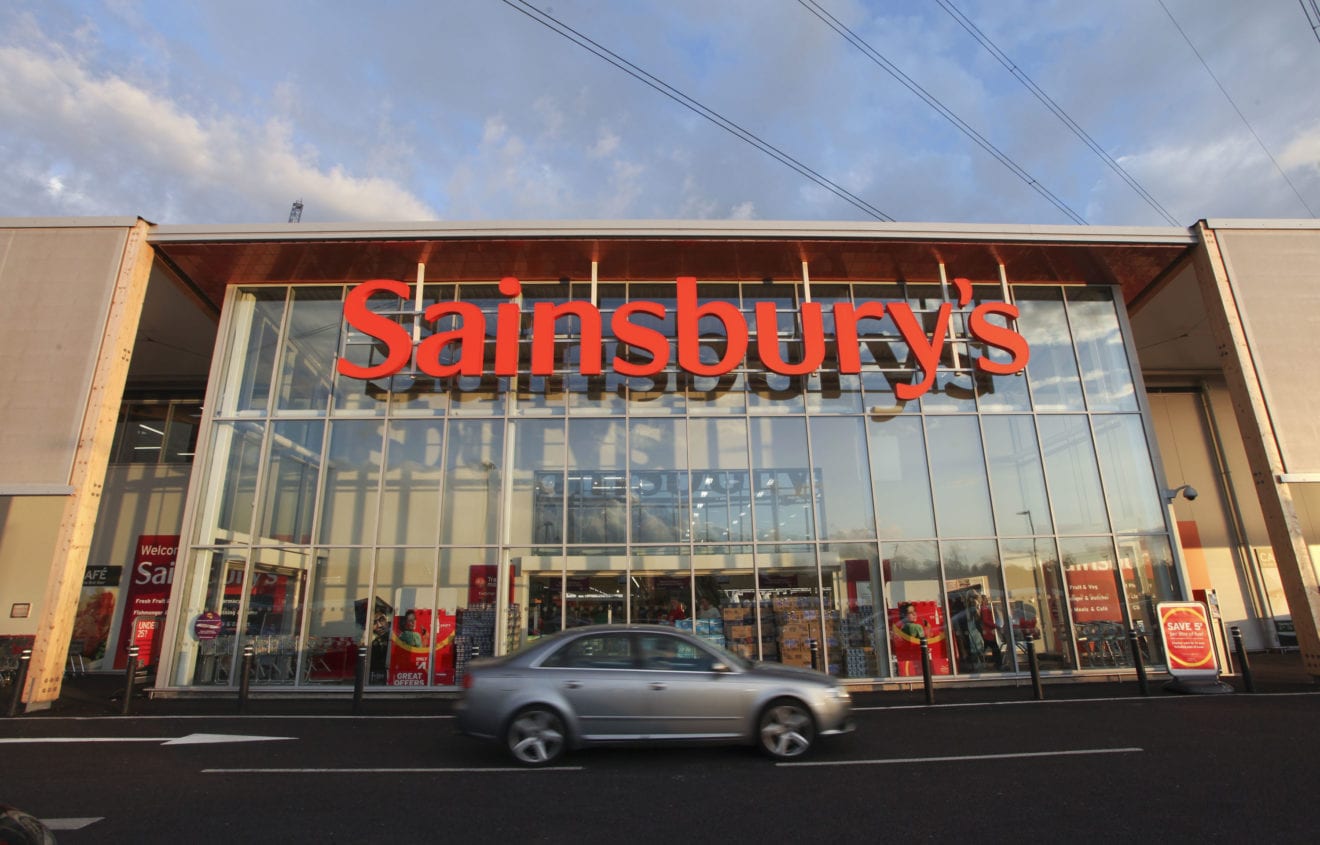
    Sainsbury’s taps into China’s love of British products through Tmall

    The move comes after the British retailer trialled the web marketplace for less than a year and claimed the test was a success. It will now sell over 100 own-label products across four categories—British breakfast, drinks, organic and baby—on Tmall, and has plans to add further ranges later this year.

    With online Chinese sales dominated by key promotional sales events, Sainsbury’s was the only international retailer to be given a “Super Brand Day” on Tmall during the annual 8.8 Tmall Global Shopping Festival on August 8.

    “Many customers want to replicate tastes and occasions that they have enjoyed or heard about through international travel. Products to make a British breakfast and English afternoon tea have therefore proved hits,” said John Rogers, chief financial officer of Sainsbury’s,

    Rogers added that granola, tea, shortbread and UHT milk have been among the sales channel’s top-selling lines to date.

    “Our trial with Tmall has enabled us to learn a lot about China’s huge digital market, including the importance of sales events such as Singles’ Day and 8.8,” he added..

    “Alibaba’s expertise in the rapidly growing Chinese digital consumer market will be a huge asset to us as we grow and develop our business in China.”

    Amee Chande, Alibaba’s managing director in Britain and Ireland, said that a famous British brand like Sainsbury’s was “a key addition to our ecosystem” as it built brand awareness, directly engaged a new audience and met the evolving food demands of Chinese consumers.

    “Our collaboration is introducing the large and growing Chinese consumer class to a new range of products to enhance their daily lives,” said Chande.