Blog

  • Indonesia, France to Boost Economic Cooperation

    Indonesia, France to Boost Economic Cooperation

    Indonesian Coordinating Minister for Economic Affairs Nasution said Indonesia is ready to explore economic cooperation with France.

    He mentioned that France is a strategic trading partner for Indonesia.

    Nasution made the statement during a meeting with French Ambassador to Indonesia H.E. Mrs. Corrine Breuzé, on Friday, (July 29).

    “I believe that the economy of Indonesia and France are complementary. Therefore, it is important to increase economic cooperation in several sectors,” he said on Saturday (30/7).

    Based on data released by the Ministry of Trade in 2015, the total trade volume between Indonesia and France amounted to US $ 2.3 billion. This figure decreased by 9.4 percent compared to that of the previous period, which reached US $ 2.35 billion, while French investment realization in Indonesia was US $ 131.6 million for 197 projects.

    The business that is in great demand among French investors in Indonesia are among others, transportation, communications, electricity, gas, water, food industry, chemical and pharmaceutical goods sectors.

    Nasution further said the investment realization bilateral cooperation between Indonesia and France in the future could be further increased and spread particularly in ​​eastern Indonesia.

    Therefore, in order to boost the value of the investment, the Indonesian Government has made a breakthrough through a series of Economic Policy Package issued since September 2015.

    “This package contains a variety of policies ranging from streamlining the investment license, the revised negative list of investment, the acceleration of infrastructure development and more,” the minister said.

  • CIMB’s Indonesian unit posts big jump in profit

    CIMB’s Indonesian unit posts big jump in profit

    CIMB Group Holdings Bhd’s 97.9% owned Indonesia-based subsidiary PT Bank CIMB Niaga Tbk, boosted its unaudited consolidated net profit by 318.2% to 736 billion rupiah (RM228.4mil) for the six-month period ended June 30, 2016 (H1).

    The fifth largest bank in Indonesia by assets said in a statement that the higher net profit, which translated to earnings per share of 29.29 rupiah, was due to a 4.8% rise in net interest income (NII) to 5.81 trillion rupiah (RM1.81bil), a 24.1% jump in non-interest income to 1.46 trillion rupiah (RM453mil) and a 7.9% fall in provision expense.

    Its president director Tigor M. Siahaan said: “Despite the challenging environment, our H1 top line performance continued to improve. The 4.8% year-on-year (y-o-y) NII growth was recorded against a decline in interest expense, while non-interest income was 24.1% higher y-o-y due to better treasury and capital markets businesses.”

    He said CIMB Niaga maintained good control over its operating expenses which fell by 1.2% y-o-y.

    “In addition, the provisions for non-performing loans had gradually improved.”

    As the bank retained a conservative growth strategy, total gross loans were lower y-o-y at 175.34 trillion rupiah (RM54.41bil) as at June 30.

    Despite the slower overall growth in CIMB Niaga’s loans, selected business segments recorded encouraging performance.

    The personal and multipurpose loans business grew 9.2% y-o-y through the bank’s X-tra Dana product, while the credit card segment posted a 25.5% y-o-y growth to 7.18 trillion rupiah (RM2.23bil).

    As at end June 2016, the bank had issued over 2.1 million credit cards, an increase of 13.4% from a year earlier.

    To date, CIMB Niaga is the third largest credit card issuer in Indonesia, in addition to being the fifth largest bank with total assets of 239.38 trillion rupiah (RM74.33bil).

    Its current account savings account (CASA) grew 5.7% y-o-y to 93.21 trillion rupiah as at June 30, with the CASA ratio rising 457 basis points (bps) y-o-y to 51.99%.

    The loan to deposit ratio was higher at 96.54% at end-June 2016 compared to 95.81% in the same period last year.

    The Indonesian government has appointed CIMB Niaga as a perception bank assigned to accommodate funds repatriated by taxpayers who are participating in Indonesia’s tax amnesty programme.

    “With additional liquidity available through the programme, the national banking industry, CIMB Niaga included, will have greater capacity to disburse loans to various sectors,” Tigor said.

    CIMB Niaga’s capital adequacy ratio strengthened y-o-y to 17.62% as at June 30.

    “We will continue to selectively increase our assets with a key focus on cost management and asset quality.

    “We started 2016 on a more positive note and seen the potential of gradual improvement in the second half of the year, backed by numerous macroprudential government fiscal and monetary policies to stimulate sustainable economic growth,” added Tigor.

  • Korean retail sales rise

    Korean retail sales rise

    Korea retail sales rose in June according to government data measuring major department stores and discount chains.

    The government said the year-on-year increase was fuelled by more holidays.

    The combined sales of three department stores – Hyundai, Lotte and Shinsegae – increased 11.8 per cent on-year in June, while those of major discount retailers – E-Mart, Lotte Mart and Home Plus – edged up 0.9 per cent during the same period, according to the data compiled by the Ministry of Trade, Industry and Energy.

    The ministry said sales went up as the number of holidays increased by one day from a year earlier.

    Sales at convenience stores jumped 18 per cent on-year last month, boosted by “a dramatic rise in food sales”, mostly of instant food. Convenience stores have retained double-digit growth rates since the last quarter of 2014 amid rising single-person households.

    The number of single-person households was estimated at 5.06 million in 2015, 7.7 times higher than the 661,000 households of 1985, according to the report by the state-run Korea Institute for Health and Social Affairs.

    Meanwhile, sales at hypermarkets, mostly run by large retailers, slid 7.8 per cent on-year.


  • Flipkart trumps rivals in Jabong bid

    Flipkart trumps rivals in Jabong bid

    A year ago, Jabong’s founders turned down $700 million plus from Amazon; this week they sold for $70 million to Flipkart’s Myntra.

    Indian eCommerce site Flipkart has sealed a shock deal to acquire Jabong, the nation’s third largest online fashion retailer.

    The news came just a day after rival bidder Snapdeal presumed it had won the battle.

    Flipkart’s success is expected to provide a crucial advantage in its battle to ‘own’ the clothing eCommerce space, giving it an advantage of scale and local knowledge in fighting off US-based Amazon.

    Flipkart’s subsidiary Myntra will reportedly pay US$70 million for the troubled Jabong business. That’s a fraction of an offer from Amazon in early 2015 which valued Jabong at between $700 million and $1 billion.

    “The acquisition…. holds an important lesson to all investors and entrepreneurs,” observed Harsimran Julka of Tech in Asia. “Exit when you don’t want to sell.”

    Jabong is one a growing group of failing Southeast Asian eCommerce websites owned by Germany’s Rocket Internet which has witnessed the value of its businesses shrink dramatically over the last 12 to 18 months. It has sold off Foodpanda, Zalora and Lazada websites in several regional markets in a bid to stem growing losses.

    “The acquisition of Jabong is a natural step in our journey to be India’s largest fashion platform,” said Ananth Narayanan, CEO of Myntra. “We see significant synergies between the two companies especially on brand relationships and consumer experience.”

    Julka wrote that in buying Jabong, Myntra will acquire one of the best sourcing systems, catalogs, and loyal customer bases, especially amongst women buyers, within India.

    “With Myntra’s app-only experiment going kaput last year, the company lost a lot of traction in India.

    “The buyout will also give a boost to profitability of Flipkart, as the fashion category is the most profitable of all eCommerce segments, with gross margins as high as 80 per cent.”

  • CapitaLand Retail China Trust property income rises

    CapitaLand Retail China Trust property income rises

    CapitaLand’s China retail venture has had a strong half year, despite the tepid retail sector.

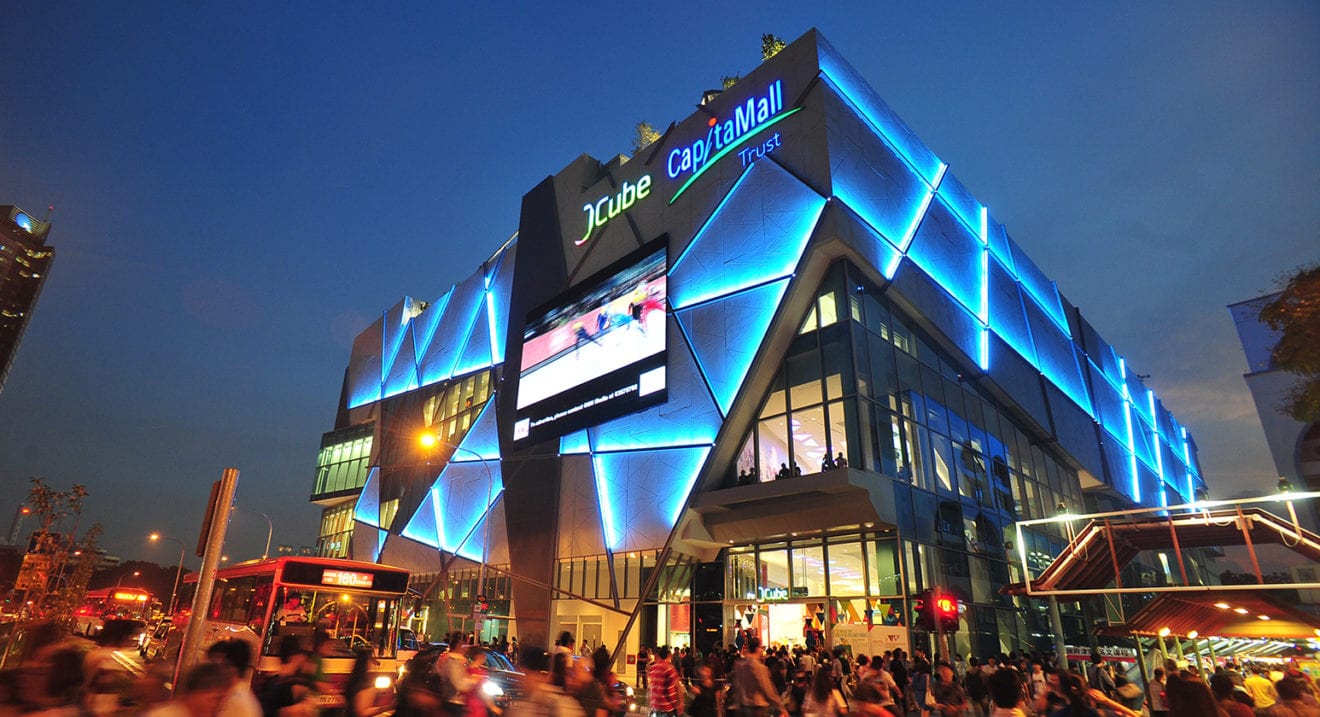
    CapitaLand Retail China Trust Management, which manages CapitaLand Retail China Trust , has achieved net property income of RMB339.3 million (US$50.92 million) for the six months to June 30, up 4.6 per cent from the same period last year.

    Chairman Victor Liew says that with China’s steady growth spurring domestic economic activities, “we continue to be positive on China’s long-term retail growth prospects”.

    CEO Tony Tan says occupancy was steady at 94.9 per cent for the group’s malls for the half-year.

    “We continued to enhance our malls by introducing popular brands and keeping abreast of consumer trends,” he says, citing the opening of the Famiku VR experience centre in CapitaMall Qibao.

    Danish jewellery brand Pandora will soon be opening at CapitaMall Xizhimen, and new F&B brands include Xiao Niu Niu in CapitaMall Xizhimen and Xing Yang Hainanese Chicken Rice in CapitaMall Qibao.

    Meanwhile, CapitaMall Saihan has had its facade upgraded, with similar work almost complete on CapitaMall Wangjing and CapitaMall Qibao to be similarly upgraded this year.

  • Huawei retail plans 15,000 new stores

    Huawei retail plans 15,000 new stores

    Smartphone maker Huawei plans to open 15,000 retail stores internationally this year in a bid for a record-high shipment of smartphones and greater sales of premium-priced models.

    “We are optimistic and confident about reaching our target shipment of 140 million smartphones this year,” says its business group CEO Richard Yu Chengdong. That would mark a 30 per cent increase in smartphone shipments from 108 million units last year.

    Yu says the Huawei retail store expansion would help drive sales of its high-end smartphones in the US$500 to US$600 range.

    Huawei’s retail arm had 35,000 of its own stores around the world at the end of May, up 116 per cent year on year. It has 11,000 stores in mainland China, 6500 stores across the rest of Asia, 6200 in Europe and 1500 in South America. This compares with Apple’s 484 retail outlets in fewer than 20 countries.

    Huawai  is represented in more than 170 countries and territories, supported by a growing number of third-party shops. These include outlets in shopping malls and stores owned by mobile network operators like China Mobile.

    Its smartphone shipments grew 25 per cent year on year to 60.56 million units in the first six months of this year. Sales generated by the company’s consumer business group in the first half jumped 41 per cent to 77.4 billion yuan (US$11.6 billion), with more than half from overseas markets.

    Data from market research firm GFK shows that Huawei’s share of the global smartphone market reached 11.4 per cent at the end of May. Its share of the premium smartphone market was 25.7 per cent, up from 15.2 per cent at the end of March.

    The Shenzhen-based firm, which also sells network equipment to telecommunications service providers and other enterprises, reported this week that its total revenue in the first half of this year jumped 40 per cent to 245.5 billion yuan, up from 175.9 billion yuan for the same period last year.

  • Thaihot Plaza Fuzhou opens

    Thaihot Plaza Fuzhou opens

    New York-based Laguarda.Low Architects has designed a retail development in central Fuzhou, China.

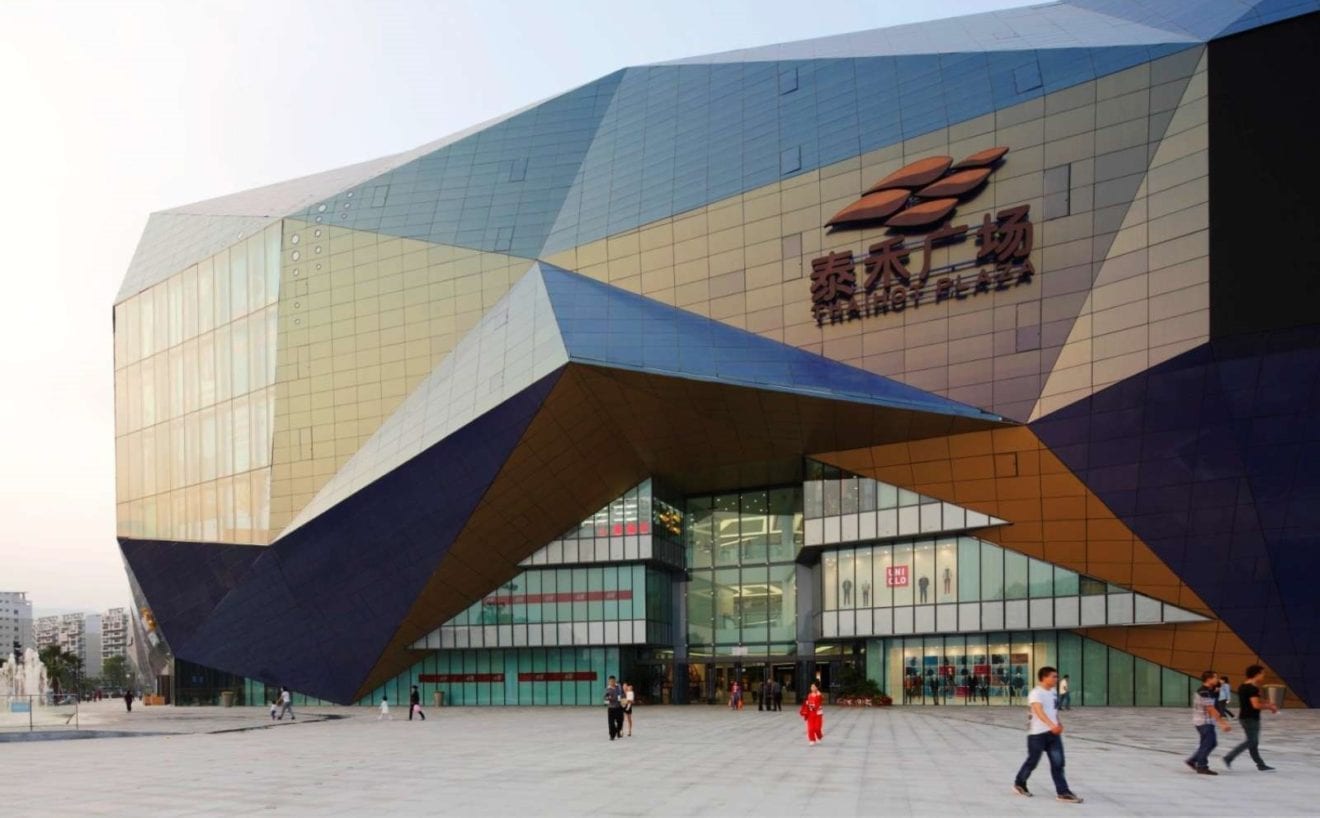
    At a major intersection in the city centre, Thaihot Plaza Fuzhou is a 1.4 million sqft (130,064 sqm) retail centre with a six-storey luxury shopping mall to the south, a public plaza, and three levels of outdoor shops and restaurants to the north.

    Fuzhou-Wusibei-Thaihot-Plaza-by-SPARK-03

    “We sought to create a luxurious yet inviting environment, offering convenience, comfort, and lifestyle amenities,” says Laguarda.Low principal John Low.

    Thaihot Plaza Fuzhou is orientated to various transit modes and is near a growing residential and commercial district. Attractions at the complex include an automated fountain with synchronised lighting and music, and an Imax theatre.

    Thaihot Plaza - Fuzhou China 2

    The plaza serves as the central social space of the development. Three levels of shops and restaurants surround the open-air space with views of the surrounding city. Contiguous glass storefronts, wide stairs with integrated lighting and a large LED display above the mall entrance promote activity throughout the space.

    A curvilinear skylight with horizontal and vertical glazed surfaces covers the grand atrium of the mall, filling all six levels with daylight. Above the delicate glass volume, a metal skin wraps the building.

    Thaihot Plaza - Fuzhou China 3

    Top-grade natural and manufactured materials were used in both the interior and exterior of the mixed-use complex, creating an environment of luxury experience for shoppers, says Low. Granite paving and facades, aluminium-framed storefronts with glass canopies, glass and stainless-steel railings, and red-clay tile and zinc are woven into the design.

    Laguarda.Low Architects also designed the just-launched six-storey CapitaMall Xinduxin shopping centre in Qingdao, which comprises a six-level above-ground retail centre, two levels of below-ground retail, and two levels of underground parking.

    Thaihot Plaza - Fuzhou China 1

  • Social Commerce blossoms on mobile Taobao

    Social Commerce blossoms on mobile Taobao

    On the way to becoming the world’s largest e-tailing market (US$590 billion in 2015), online shopping in China has become a highly social activity.

    Wary Chinese consumers don’t swallow advertising at face value and they don’t take vendors at their word – they check the internet for product reviews, swap links to favoured products and seek out third-party opinions, especially those of people they trust. According to a recent McKinsey report, two-thirds of China’s consumers cite recommendations from families and friends as the most important factor in purchasing decisions. In the US, only one out of three people say the same.

    In other words, in China, shopping is also sharing. So pronounced is this trend that Alibaba Group, owner of China’s largest online marketplaces, insists it’s not so much in the e-commerce business these days as it is in the social commerce business. And since more sharing equals more sales, the company is doing everything it can to make it easier for users to interact with one another when shopping online – going beyond offering the standard eCommerce fare of user-generated product recommendations and ratings by establishing online communities, encouraging shoppers to share photos of their latest online purchases and even adding monetary incentives to encourage greater social participation.

    The tip of the social-commerce spear is Mobile Taobao, Alibaba’s hugely popular mobile shopping app. With 369 million monthly active users, Mobile Taobao is “not only China’s, but the world’s largest social commerce platform,” according to Jiang Fan, who leads Mobile Taobao’s business at Alibaba.

    The app, which offers access to Alibaba shopping sites Taobao Marketplace, Tmall.com and Juhuasuan, generates up to 20 million product reviews every day, and involves 5 million users sharing content with friends. Users “like to share whatever they find- fun things, fun merchandise – with their friends through social media,” Jiang said last month during an investor conference at Alibaba headquarters in Hangzhou, China. “We don’t view ourselves [merely] as a shopping app,” he said. “Our community is not only about us serving the consumers, but consumers themselves helping each other.”

    To drive greater customer engagement, Mobile Taobao has been developing new social commerce features within the app. One such addition is the hosting of special interest groups calledquanzi(circles) where hobbyists and other like-minded individuals can talk about their pastimes and favourite products. Taobao says it now hosts more than 1000 circles covering interests such as wedding planning, fishing, infant care and many others.

    “We want to get people together to allow them to discuss and generate content that can serve more people,” said Zhang Jiehan, a Taobao product manager.

    Photo sharing is also a hit with users, said Jiang. “Every day after [mobile shoppers] complete their transactions they like to share what they’ve bought,” he said, “so we have a specific app for buyers to show off their products.” This feature currently generates about 1.5 million daily reviews, he added.

    One of the most popular social functions on Mobile Taobao is a Q&A feature called Wendajia (ask others) that lets shoppers with questions about a particular product get answers from members of the Taobao community. Wendajia helps free consumers from the drudgery of combing randomly through product reviews or resorting to asking sometimes biased and unhelpful vendors for answers. “The essence here is mutual assistance,” Zhang said. “The new feature builds a direct and effective communication channel between people who have purchased and people who want to purchase.”

    Crowdsourced Q&As have been around for a while, of course. But Wendajia is innovative in the way Taobao identifies and proactively reaches out to users who can provide feedback. When a buyer submits a question, Taobao employs big data and a sophisticated algorithm to spot members of the online community who are most likely qualified to answer the question, typically those who have recently purchased the product. After zeroing in on up to 12 potential candidates, the system then sends out messages to their smartphones soliciting responses.

    Wendajia has proven to be a boon to buyers because they don’t have to wait hours or days for fellow shoppers to stumble on their questions and provide answers. One-fourth of all questions are answered within one minute and 60 per cent of questions within 10 minutes, Jiang said.

    “This greatly optimises the pre-shopping decision process,” he said. Every day, it receives as many as 1 million questions, and 2 million consumers participated in answering.

    China’s widespread adoption of smartphones and the reach of the mobile internet has undoubtedly contributed to the growth of social commerce by making participation easy, ubiquitous and dynamic. Still, Mobile Taobao isn’t relying solely on user enthusiasm and social goodwill to foster greater user involvement.

    Last year, Alibaba rolled out a program to encourage bloggers, writers and noteworthy online expertsto post content on Mobile Taobao by paying them small sales commissions for product recommendations that lead to purchases. More recently, Taobao began offering similar incentives for the general public to encourage social participation.

    Through an upgrade to Taobao’s existing membership program, which previously awarded points only for online spending, users can earn additional points by posting product reviews and links, answering consumer questions and interacting with the Taobao community in other ways. While there are no cash awards, amassing points entitles users to benefits such as coupons for car-hailing app Didi Chuxing and service upgrades such as late check-out times at participating hotels.

    In social-media-crazed China, such perks may not be necessary. Just being part of the conversation seems to be enough to keep people involved. According to media research firm ComScore, the average Mobile Taobao user spends more than 25 minutes a day on the app, compared with Amazon Mobile’s nine minutes.

    As Taobao shopper Cici Wang notes, social-commerce features like Wendajia have value “because of the volunteer work offered by ordinary users, which makes it trustworthy.” Indeed, having armies of consumers keeping each other informed and vendors honest is seen as a positive development as e-commerce morphs into social commerce, says Zhang, the Taobao product manager. Digital word-of-mouth provides merchants with continuous feedback and compels them to maintain quality products and services.

    “In the long term, it drives healthy growth of the platform,” Zhang said.

  • China smartphone demand grows 17pc

    China smartphone demand grows 17pc

    China smartphone demand grew 17 per cent last month, according to technology research company Counterpoint’s monthly Market Pulse.

    It was the best-ever June in terms of sell-through for smartphones, despite the overall market having modest growth for the second quarter ending June 31.

    “The competitive environment in the world’s leading smartphone market has taken an interesting turn as domestic brands have significantly ramped up their positions in the smartphone market,” says research director James Yan.

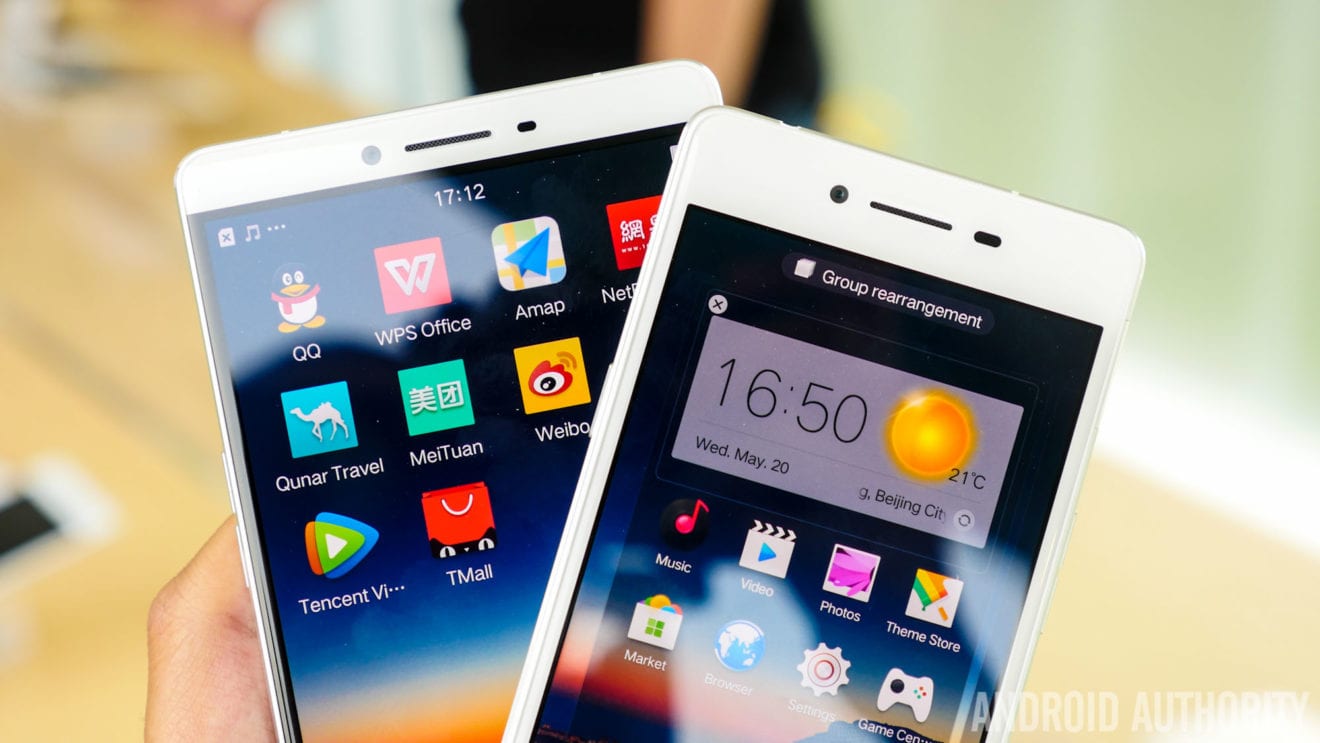
    Oppo became the top-selling brand in China for the first time ever in June, surpassing Huawei, Apple and Xiaomi with a 23 per cent market share and sales volumes leapfrogging 337 per cent.

    Also owned by the BBK group, Vivo also had a strong performance with the launch of a new model. Together, the sister brands captured a third of the Chinese smartphone market, up from a combined 13 per cent in the same month last year.
    Meanwhile, Apple’s market share slipped to 2014 levels.

    Counterpoint research director Neil Shah says Oppo adopted a simple but effective strategy – going after the offline market, which still contributes more than 70 per cent of total sales in China.

    “Aggressive marketing, promotions and sponsorships, greater offline retail penetration beyond tier-two and tier-three cities, better retail margins, dealer support and, above all, innovative smartphone designs have helped Oppo drive its sales in the past 18 months.”

    The brand had also focussed on design and key features such as camera, battery technology and materials.

  • Damco expands Hub-In-Transit in Malaysia

    Damco expands Hub-In-Transit in Malaysia

    Damco, the global third party logistics provider, has expanded its Hub-in-Transit programme by establishing new hubs in Malaysia, United Arab Emirates and Morocco.

    Damco’s Hub-in-Transit programme allows companies to postpone their decisions on the final delivery date and final destination, by using container trans-shipment hubs as decoupling points in the supply chain.

    Anthony Elwine, Damco’s Global Head of Chemical & Industrial, explains: “Damco customers have used our Hub-in-Transit solution successfully to improve service to their customers while decreasing costs. We have now developed three additional hub locations to help them serve even more markets, and reap similar benefits.

    “Chemical sector clients have been early users of the programme, but the service is also suitable for other products, such as steels and textiles, or FMCG/CPG.”

    The service is especially of interest to companies with limited on-site storage capacity where production operations are large-scale, continuous processes. Those companies may be forced to ship their products based on assumptions about the best place and time of delivery.

    Hub-in-Transit enables the companies to make full use of carrier free-time by using strategically located trans-shipment hubs as virtual warehouses for goods.

    By doing so, the companies will be able to lower their costs-to-serve whilst increasing logistics flexibility towards their end-customers.

    Damco’s Hub-In-Transit programme:  The benefits

    • Use carrier free-time at strategically located trans-shipment hubs as a virtual warehouse for your goods
    • Increase flexibility to respond to changing customer demand by postponing your decisions on the final destination and delivery date of shipments
    • De-consolidate shipments if needed
    • Respond faster to your customers and increase your speed-to-market
    • Increase service levels as a result of more reliable point-of-destination deliveries
    • Reduce costs by eliminating the need for storage at origin or destination
    • Keep full end-to-end visibility and control of your cargo from the place of manufacturing to your end customer
  • Official debut for Fred Perry Vietnam

    Official debut for Fred Perry Vietnam

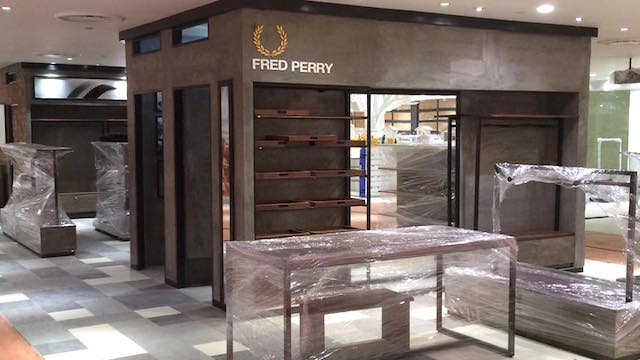
    Tennis-inspired clothing brand Fred Perry is to open its first official store in Vietnam this month.

    The subcultural fashion line announced last week on its Fred Perry Vietnam Facebook page that the new store will be located on Level 3 of the refurbished and expanded Saigon Center in District 1. The centre, which includes Japanese department store Takashimaya, will open on July 30 and fitout of the Fred Perry store is expected to be completed in time.

    fred perry vietnam

    Alongside the success of crossing from sportswear to streetwear fashion, the brand has a subcultural music appeal internationally. To celebrate the official opening of the first Fred Perry Vietnam shop, a live party will be held on Friday, August 5 at Piu Piu Bar.

    Fred Perry is a clothing line founded by the Wimbledon champion Fred Perry in 1952, and become popular internationally since. The brand is now owned by Japan-based company Hit Union.

    In Vietnam, the brand is famous for its shoes and classic polo shirts. The official arrival of Fred Perry in Vietnam will come as great news for Vietnamese fans. For years, they have shopped “laurel wreath” products online and through hand-carried importation services – always with a high chance of ending up with fake merchandise.

  • Indonesia`s economy improves

    Indonesia`s economy improves

    The central Bank of Indonesia has said that Indonesia’s economy will continuously improve, along with the stability of the economy, the continuation of fiscal stimulus, and the implementation of structural reforms.

    “In the medium-term, Indonesias economic growth will be higher, more inclusive, and more sustainable,” the Director of Economic and Monetary Policy at Bank of Indonesia, Solikin M Juhro, said here on Thursday.

    He noted the consistent implementation of structural reforms is a key to the improvement of the domestic economic outlook.

    According to Solikin, amid various external and domestic challenges, Indonesias economic performance during 2015 recorded a positive development.

    The macroeconomic stability becomes better, and the stability of the financial system has been maintained, he added.

    “After being slow, the nation’s economic growth began to increase in the second half of 2015,” Solikin said.

    He explained that such success was supported by the Bank of Indonesias policies, as well as close coordination with the government in safeguarding the economic stability, promoting economic growth, and accelerating structural reforms.

    Further, according to Solikin, the consistent implementation of structural reforms should be continued through the optimization of infrastructure developments, such as roads, electricity, and irrigation, including the development of human resources.

    “The economy of Indonesia keeps growing at a rate of 4.8 to 5.5 percent. We are able to grow above 6 percent, if we apply economy diversifications,” he added.

  • Hi Brunch Philippines to debut in Robinsons

    Hi Brunch Philippines to debut in Robinsons

    Expanding for the first time outside its home market of Korea, cafe chain Hi Brunch is set to make the Philippines its number three market.

    Korean food franchisor Sim Woo has partnered with Filipino-American entrepreneur Susan Barlin, for the Hi Brunch Philippines and Southeast Asia franchises. Barlin is a real estate executive who also owns a multi-level marketing business.

    Hi Brunch Philippines will offer porridge and desserts along with coffee.

    Formed in 2015, Sim’s holding company Midang FC already has 250 stores in Korea and two in Tokyo. The company is eyeing franchise stores Taipei, Taiwan, Kazakhstan, China, and Southeast Asia, particularly Singapore, Indonesia and Malaysia.

    Hi Brunch Philippines is set to open a store in Robinsons Galleria in two to three months.

    It will also open in Bonifacio Global City, Alabang, Tagaytay and Cebu. Barlin said the master franchise in the Philippines will open six company-owned stores among the 25 outlets planned for one year.

    Barlin said the food will be prepared in Korea and shipped frozen to the Philippines for cooking. Authentic Korean dessert bingsu (snow ice flakes topped with sweets) will also be offered at Hi Brunch.

    “We will not only import but we’ll make things here,” Sim said, adding that if food products are available in the Philippines, these may be locally sourced. For example, for the snow ice flakes, fresh Philippine mangoes are better than frozen, he said.

  • Philippines prepares for nationwide rollout of 911 hotline

    Philippines prepares for nationwide rollout of 911 hotline

    The Philippines’ Department of Interior and Local Government (DILG), operators, private organizations, media partners and other government agencies have started testing the nation’s new 911 emergency hotline.

    The new emergency hotline will be rolled out nationwide on August 1. The new service was made possible by an agreement signed by the the different government agencies including the DILG, Department of Information and Communications Technology (DICT), and National Telecommunications Commission (NTC).

    The agencies were responding to the instruction of newly elected President Rodrigo Duterte to designate a number people can call in response to a national disaster.

    Other signing agencies were the Foundation for Crime Prevention (FCP), Philippine Information Agency (PIA), and the Kapisanan ng mga Brodkaster ng Pilipinas (KBP).

    The agreement covers the transition to make the existing 117 hotline and the new 911 emergency hotlines accessible to call for the general public through each party’s respective networks.

    The DILG said the existing 117 hotline will be utilized for 911 hotline operation starting next month. The current hotline has 15 seats, 43 agents and database of Philippine National Police (PNP) units, including their mobile, local government Units and its emergency numbers and teleconference capability.

    Retired General Eliseo Rio Jr. of the Department of Information and Communications Technology (DICT) and currently consultant to 117, said that after August 1, the current 15 seats will increase to 30 and the existing 43 call center agents will be increased to 90.

    The country’s two leading telecommunications players – PLDT and Globe Telecom – both expressed support for the government project. In a statement, Globe’s Legal Counsel Froilan Castelo said the company is ready to comply with the government directive to provide access to 911 and 8888 numbers for government emergency hotline and complaint hotline.

    Globe has long used the 8888 number as its own customer hotline. However, the company will give way to the government request and will instead change to a new hotline number for its more than 57 million customers.

    At the start of the testing period last week, DILG Secretary Ismael Sueno reportedly called 911 twice using a landline and a cellular phone in the presence of officials from concerned agencies to see how the operation will flow.

    The test calls – as well as the simulation exercises that will be made between July 21 to July 31 – seek to close possible gaps that will be encountered once 911 goes public.

  • SoftBank lifts June quarter profit by 19.1%

    SoftBank lifts June quarter profit by 19.1%

    Japan’s SoftBank lifted its net profit for the June quarter by 19.1% year-on-year to 254.16 billion yen ($2.42 billion), largely as a result of solid growth from the company’s domestic telecoms business.

    Domestic telecoms service revenue grew 5.4% to 761.8 trillion yen following steady growth of the operator’s SoftBank Hikari fiber service. Total FTTH subscribers grew to 2.24 million, from 1.72 million in the previous quarter.

    The company meanwhile grew its mobile subscriber base by 580,000 year-on-year to 32.15 million, with smartphone and tablet subscribers outweighing net losses for feature phones.

    Total ARPU declined by 50 yen to 4,610 yen, but service ARPU increased by 40 yen to 560 yen, reflecting an increase in the number of subscribers to the operator’s content services.

    Revenues from SoftBank’s US subsidiary Sprint meanwhile declined 9.6% year-on-year to 848.09 billion yen, but remained largely flat in US dollar terms.

    SoftBank CEO Masayoshi Son assured reporters at an event announcing the company’s results that Sprint is about to turn into a revenue generator for the company after multiple quarters of negatively affecting the company’s results.

    SoftBank paid $21.6 billion to acquire control of Sprint in 2013, and the company has repeatedly insisted that Sprint’s fortunes are about to turn around.

    Now SoftBank is planning another big bet. The operator recently arranged to acquire chipmaker ARM for $31 billion to pursue opportunities in the emerging IoT sector, which Son believes will be the “biggest paradigm shift in human history.”