Blog

  • Japan’s Mitsui & Co picks up minority stake in Singapore retailer Triple

    Japan’s Mitsui & Co picks up minority stake in Singapore retailer Triple

    Mitsui & Co, one of Japan’s largest general trading companies, has invested in Singaporean apparel retailer Triple, taking a minority stake in the omni-channel sports and lifestyle retailer that operates brand stores, shop-in-shop operations, wholesale distribution and e-commerce in key Southeast Asian countries.

    Dating back to 1876, Mitsui & Co is a Japanese company largely involved in the energy sector, though it also has businesses in fields ranging from chemicals and iron and steel, to transportation and communications systems and food products and services. It operates over 140 offices in 65 countries.

    Triple was launched in September 2013, primarily as a wholesaler for American sportswear brand Under Armour. It maintains exclusive distributorship for the brand in nine Southeast Asian countries.

    According to Triple’s CEO, Michael Binger, talks between both parties had gone on for approximately six to eight months before the deal was completed on May 18. Binger also said that Mitsui and Triple were hoping to leverage on the partnership to drive their expansion into e-commerce.

    “Mitsui’s current strategy focuses on brand marketing in downstream sector, among which sports and lifestyle is the key category judging from the global trend. Establishing the retail network in rapidly growing market such as South-east Asia is regarded as the key element to leverage this brand marketing strategy. Triple’s participation is the best fit to these points” said Toshi Sakurai, general manager of the consumer service business department of Mitsui & Co (Asia Pacific).

    Triple has opened five Under Armour stores and shop-in-shop outlets in Singapore, three in the Philippines and three in Malaysia, all within shopping malls in prime locations. Store expansion in core markets – Singapore, Malaysia and Thailand – will see four additional store open in 2015 and five to six stores in 2016.

    Triple also plans to enter Indonesia, Brunei and Vietnam via a network of partner stores and shop-in- shop executions. They intend to open five to six new stores and approximately 10 shop-in-shop locations tin 2016. By end-2018, Triple forecasts it will have a total store network of approximately 35 locations, including shop-in-shop executions for the Under Armour brand exclusively.

    Leveraging on their current landlord relations, Triple also hopes to expand their selection of brands and increase their overall number of stores. The global apparel market is estimated to be worth around US$1.7 trillion, with 6 percent annual growth.

    Southeast Asia is particularly dynamic with a 10 percent annual growth rate. This is due to an expanding consumer market and the growth of middle-class consumers. Coupled with greater interest in health and wellness, the sportswear category has emerged as a key driver for the apparel market.

    Commenting on the deal, Binger said, “Triple sees Mitsui as a strong long-term strategic partner with good complementary strengths. Mitsui has a network of relations with brands that are not yet represented in South-east Asia, and with the wide business interests of Mitsui and Triple’s rapid growth, there will be other areas of cooperation, including logistics.”
  • One card to hold up to 20 retailers’ rebates

    One card to hold up to 20 retailers’ rebates

    For the last 30 years, Nets has been working towards turning Singapore into a cashless society, and it will continue to do so for the next 30 years and beyond, said its head honcho.

    The payment network, whose name stands for the Network for Electronic Transfers Singapore, has several plans up its sleeve this year – its 30th anniversary.

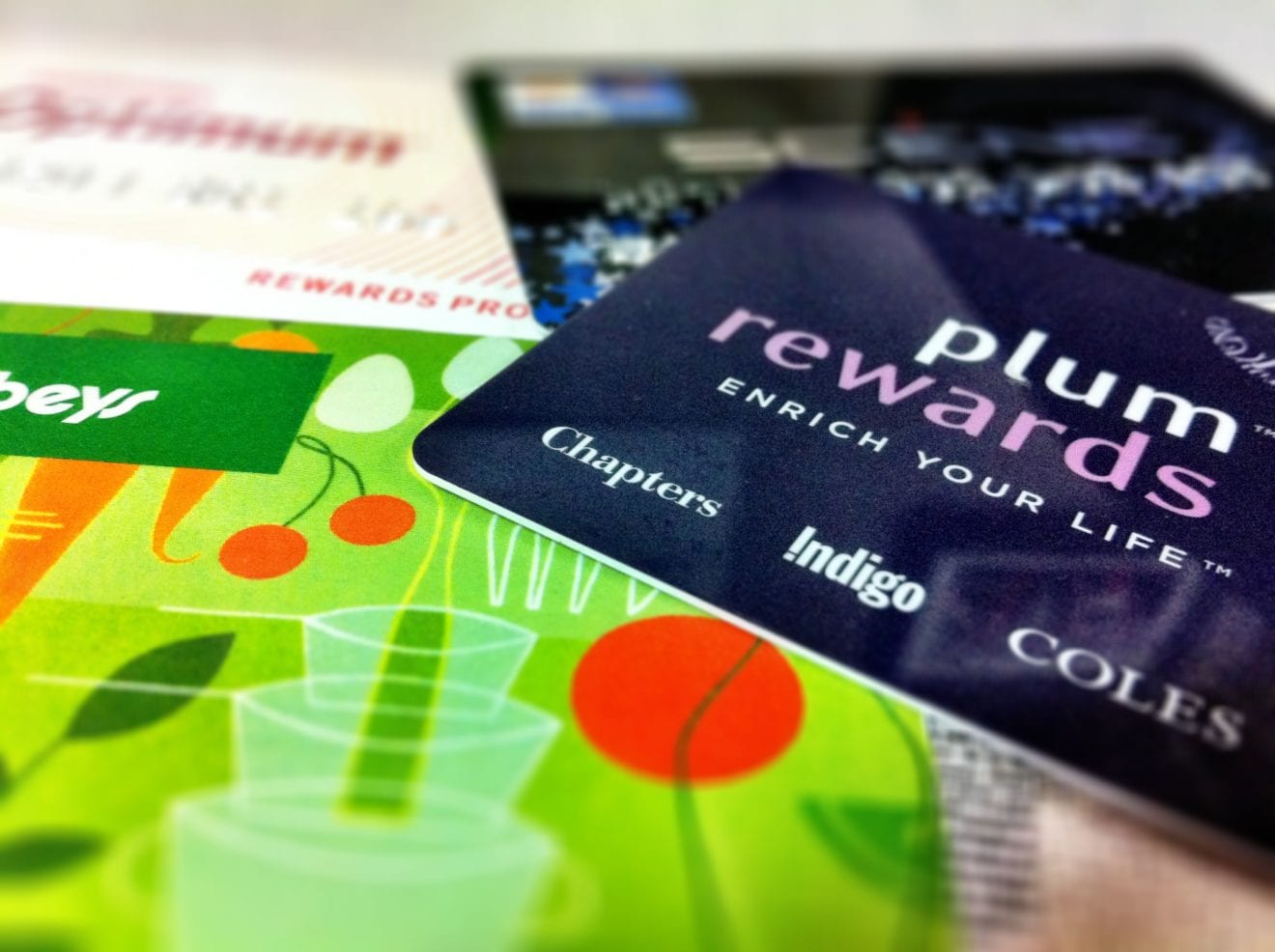
    Besides unveiling a virtual CashCard for motorists today, Nets developed a platform that will allow a single card to hold rebate dollars from different merhants, for instance.

    Consumers will also be able to top up their cards via an app by Nets, which already tracks transactions, by the end of this year.

    In an exclusive interview, Nets chief executive Jeffrey Goh said the firm is working with various food court operators to launch their prepaid cards on the FlashPay platform, like a co-branded Toast Box FlashPay card that was recently launched.

    The next step is to combine these various prepaid cards into one, through Nets retailer stored value programme (RSVP), he said.

    “Theoretically, one card can support up to 20 merchants and can be used for anything, even for loyalty points.”

    He has even thought about working with insurers to offer solutions when a card is lost, and the easy recovery of points or stored-value, for instance. Mr Goh said: “Consumers shouldn’t fear losing their card as everything is captured electronically and insurance can pay for it.”

    An app offered by Nets already reads a consumer’s transactions across all FlashPay cards he owns.

    Nets is going one step further, to allow consumers to top up cards using near field communication phones by the end of this year, with the service now in the testing stage, he said.

    The payment network may also revamp its e-payment portal to be faster and for a better customer experience.

    The aim is to turn Singapore into a cashless society, but Nets still has its challenges.

    At Bedok Interchange Hawker Centre and Beo Crescent Market and Food Centre near Havelock Road, stalls using Nets terminals have said FlashPay usage by customers was slow.

    Mr Goh said: “To change consumer behaviour takes about three to five years, and Nets is prepared to continue to invest in that, just like how paying bills via the AXS machine wasn’t a natural progression.”

    He said Nets main goal at its formation in 1985 was to drive cashless retail payments.

    “For the last 30 years, we’ve been quite successful; 70 per cent of retailers in shopping centres and 60 per cent of neighbourhood stores accept Nets.

    “It’s the last push now to get 90 per cent acceptance across the neighbourhood stores and shopping centres.”

    The plan is for every cash transaction to be replaced by Nets, he said.

    “My father’s generation used cash, our generation uses cards, and the next will definitely use virtual payments, so Nets is re-looking its strategy as it goes into the e-payments market,” Mr Goh said.

  • Starbucks baristas in China and Japan

    Starbucks baristas in China and Japan

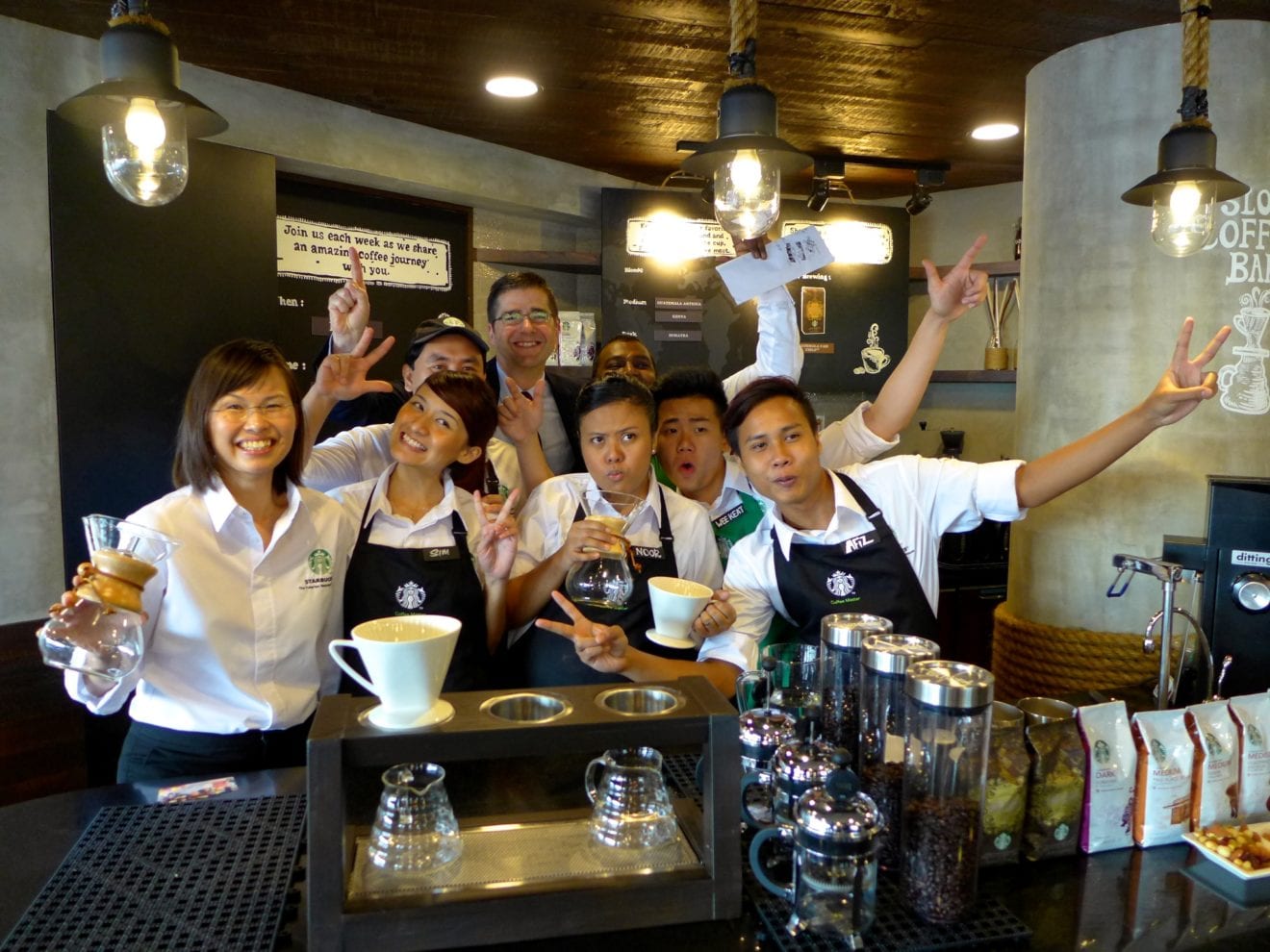
    From sourcing and roasting to crafting and innovating, Starbucks partners (employees) are passionate about brewing and handcrafting the world’s best coffee beverages. Starbucks baristas in China and Japan recently celebrated coffee artistry through competitions in pour-over brewing and latte art.

    The Starbucks coffee journey began in Asia nearly 20 years ago, with the company’s first store outside of North America opening in Tokyo in 1996, followed later in 1999 with the first store at the Beijing World Trade Centre. It started with the introduction of a cup of fresh-brewed coffee, followed by educating customers on the joy and indulgence of enjoying a handcrafted cup of espresso beverage, such as the Café Latte and Café Mocha.

    Today, customers in Japan and China have even more ways to enjoy their favorite cup of Starbucks coffee – through pour-over brewing or latte art – at more than 1,000 stores and more than 1,600 stores in Japan and China, respectively.

    Craftsmanship and Artistry in Each Cup of Starbucks Coffee

    “Every cup of Starbucks coffee, whether it’s our fresh brew or an espresso beverage, starts with sourcing the finest coffees from around the world. By extending our offerings to include the pour-over and latte art, we are showcasing these quality ingredients in a full-flavored coffee beverage,” said Belinda Wong, president, Starbucks China.  “More significantly, the craftsmanship and artistry that goes into each cup of Starbucks pour-over or latte art is highlighted in an exceptional way. We are excited to share this experience with our customers in China.”

    Most recently, Starbucks wrapped up the final event of its Starbuck China Third Annual Latte Art Throwdown Tour and Second Annual Pour-Over Competition, which covered six cities, including Shenzhen, Guangzhou, Xian, Beijing, Tianjin and Shanghai. A total of 79 Starbucks China baristas competed in the competitions.

    The idea of the tour and competitions began about three years ago as a way to build excitement and momentum around the launch of latte art as a standard offering in China.  Today, the tour and the competition leading up to these events has become a celebration of partners’ coffee artistry and genuine passion for coffee.

    “It was especially symbolic that while a group of our China partners were in Sumatra experiencing the ‘first 10 feet’ of the coffee bean journey, this competition was celebrating the work that our partners do every day to deliver the ‘last 10 feet’,” said Jeff Miller, vice president, retail and operations, Starbucks China. “I am certain that if the farmers could see how our baristas honor their work through the care they put into brewing these coffees, whether in a latte or a cup of pour-over, they would be as proud as we are.”

    The top four winners from each Starbucks China region will travel later this year to Chengdu to attend the Starbucks China National Latte Art and Pour-Over competitions.  These events will coincide with the China Coffee Ambassador Cup, where the winner will be crowned Starbucks China Coffee Ambassador, representing the pinnacle of coffee expertise.

    “As the leading coffee company in China, I am so excited to represent my North China region partners at this national competition. This is a dream come true for me and a firm demonstration of our dedication to only deliver the perfect Starbucks coffee beverage to our customers every time they visit our stores,” added Kevin Zhang from the Starbucks Beijing Kerry Center flagship store.

    Coffee Has Become an Important Part of ‘the Japanese way of life’

    In Japan, Starbucks partners also challenged each other and showcased their coffee passion and talent with the best baristas at the Starbucks Coffee Japan Annual Leadership Conference. As part of this gathering, Starbucks hosted the second “We Connect Cup” – a competition to demonstrate and highlight how Starbucks partners exercise the best services, operation, and connections with customers.

    “Since the opening of our first store in Ginza, coffee has become such an important part of the Japanese way of life,” said Jun Sekine, ceo, Starbucks Coffee Japan. “Over the past 19 years, our baristas have been pulling perfect espresso beverages for our customers, sharing our passion for the world’s most premium Starbucks Reserve coffee, and building individual moments of connections with customers. We want to continue to elevate their coffee experience whenever they come to a Starbucks store.”

    At the second We Connect Cup competition, Starbucks Coffee Japan partners from 13 regions pit their coffee skills and expertise in three categories – operational excellence, beverage routine and service basics.

    “It’s by perfecting these three combinations that will make Starbucks world class customer service vision a reality in Japan,” added Masayo Mameta, partner at the Starbucks Fukuoka University Hospital store.

  • Jaguar Land Rover profits down on slowing demand in China

    Jaguar Land Rover profits down on slowing demand in China

    Jaguar Land Rover became the latest casualty of a slowdown in Chinese auto demand, reporting its steepest drop in quarterly profit in two years after retail deliveries slumped in the world’s largest vehicle market.

    Profit fell 33 percent to 302 million pounds (US$465-million) in the three months ended March, the biggest decline since the quarter ended March 2013. That contributed to a worse-than-estimated drop in earnings at its parent, India’s Tata Motors, which also faced a prolonged slump in demand for commercial vehicles in its home market. Shares of Tata Motors declined.

    The result underscores the reliance of global automakers on China to drive profit growth and the extent of the slowdown in luxury demand after the government’s campaign to stamp out graft and extravagance. Jaguar Land Rover said the introduction of new models, and conditions in China and Russia, may lead to lower margins this year.

    “We see a certain slowdown in the market and we read that many competitors are going to reduce prices,” Ralf Speth, chief executive of Jaguar Land Rover, said on a call with investors. “I can assure you that we will not be the very first ones to reduce prices because we’re convinced we bring color to the Chinese market.”

    Jaguar Land Rover’s retail sales volume declined in the quarter, with deliveries in China falling 20 per cent. The company is seeing a changing Chinese market with more pricing pressure in more segments than in the past, Jaguar Land Rover chief financial officer Kenneth Gregor said on a separate call.

    China’s slowing economy has prompted BMW to cut production and prices in the country. Intense competition is putting pressure on prices, and the automaker doesn’t expect this trend to be reversed in the short term, Friedrich Eichiner, chief financial officer of BMW, said on May 6.

    General Motors cut its prices in China after reporting a decline in deliveries there last month, joining Volkswagen in stepping up discounts. Foreign automakers have also come under increasing pressure from local brands that are gaining market share by offering cheaper sport-utility vehicles.

    Besides discounts, foreign automakers are offering incentives such as subsidized insurance, zero down payment, interest-free financing and higher trade-in prices, according to Sanford C. Bernstein.

    Passenger-vehicle sales rose at the slowest pace in five months in April, with most of the expansion coming from local brands. Vehicle sales in China this year may rise by less than the 7 per cent projected in January, the China Association of Automobile Manufacturers said last month.

    Jaguar has said it plans to unveil 12 new products, including upgrades and variants, this year. A new version of its XF sedan will be introduced in 2015 and the F- PACE crossover in 2016, Speth said yesterday.

    “Jaguar Land Rover is more dependent on China than any other original equipment manufacturer, thanks to extraordinarily high pricing,” Max Warburton, an analyst at Sanford C. Bernstein in Singapore who rates the Tata Motors stock the equivalent of a hold, wrote in a note to clients today. “Slowing premium growth, deteriorating pricing, and falling dealer profitability in China are all issues.”

  • DHL providing E2E logistics for FC Bayern Munich’s online store

    DHL providing E2E logistics for FC Bayern Munich’s online store

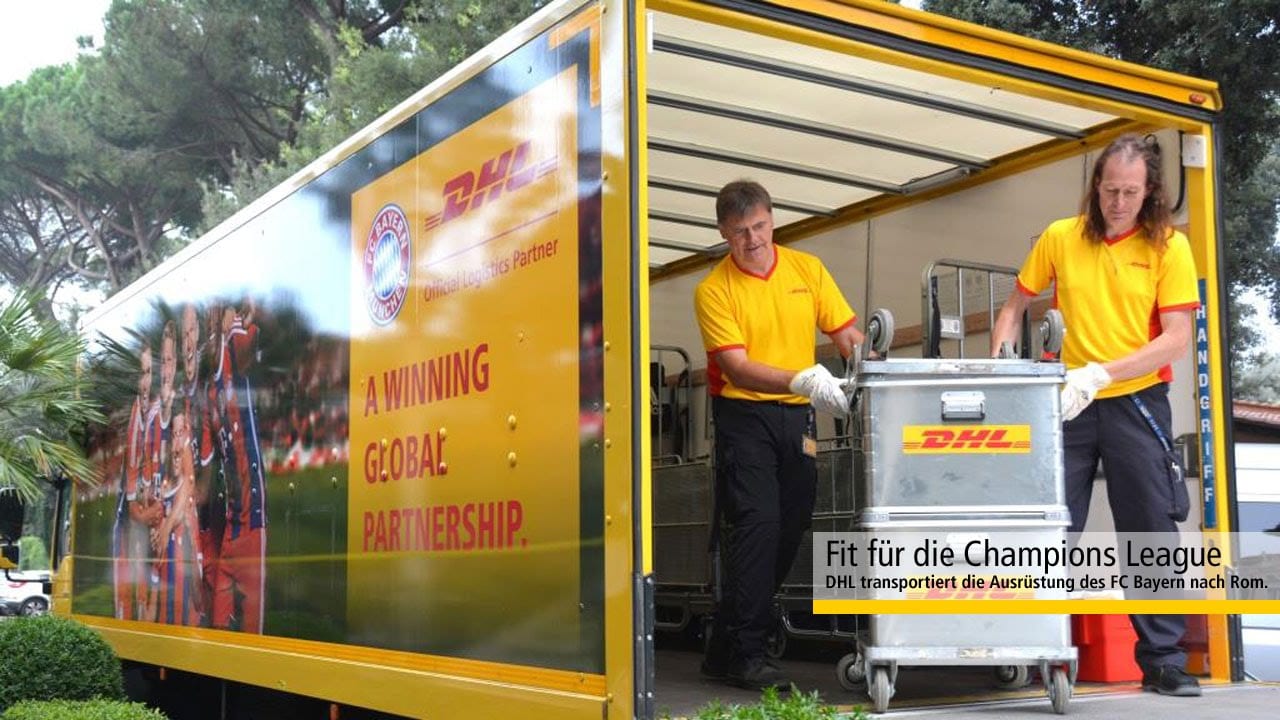
    FC Bayern Munich is working with Alibaba’s Tmall Global and DHL eCommerce to launch an official FC Bayern Munich online flagship store for consumers in China.

    Through the new online store (https://fcb.tmall.hk), fans in China can now order a FC Bayern Munich jersey with their favourite player’s name and also purchase a variety of fan merchandise as well as “traditional German and Bavarian products”.

    Karl-Heinz Rummenigge, Executive Board Chairman of FC Bayern Munich, said: “Making our fan merchandise accessible is crucial to connect with our fans in China.”

    Jörg Wacker, Executive Board Member Internationalization and Strategy of FC Bayern Munich, added: “China continues to be our key focus market and plays an important role in our internationalization strategy. For our market entry in China, Tmall Global is the best platform since many of our fans already use the platform today. Together with our strategic partner DHL, we will ensure a fast delivery. This store is a big first step in expanding our touch points with our Chinese fan base and we will interact with our fans even more during our Audi Summer Tour China in July this year.“

    Jeff Zhang, President of China Retail Marketplaces of Alibaba Group, commented: “FC Bayern Munich, as one of the first football clubs launching their exclusive online flagship store on Tmall Global, will greatly reflect the diversity of brands and goods on the platform.”

    The six-year partnership between DHL and FC Bayern Munich will see DHL acting as the club’s exclusive logistics partner and full service provider for international e-commerce starting in China in 2015 with a planned roll-out across the Asia-Pacific region. DHL eCommerce will manage many aspects of FC Bayern Munich’s merchandising in China – working with Tmall Global on product listing, order management, fulfillment of orders, local distribution and returns, local customer service and market entry support.

    Thomas Kipp, CEO of DHL eCommerce, said: “There couldn’t be a better opportunity to demonstrate our expertise in e-commerce such as fulfillment and end-to-end delivery than launching the online flagship store of the world’s biggest football club, FC Bayern Munich, on the world’s biggest marketplace in China. We also have the added bonus to work even more closely with Tmall Global, China’s leading online retail platform.”

    FC Bayern Munich are one of the world’s biggest football clubs with over 255,000 members. They are also one of the most successful, having won five Champions League Titles, three Club World Cup trophies as well as 25 national championships. FC Bayern Munich are planning to return to China for a summer tour in July, when they will play three games: in Beijing, Shanghai and Guangzhou.

  • E-Land ready to rumble for a duty-free license

    E-Land ready to rumble for a duty-free license

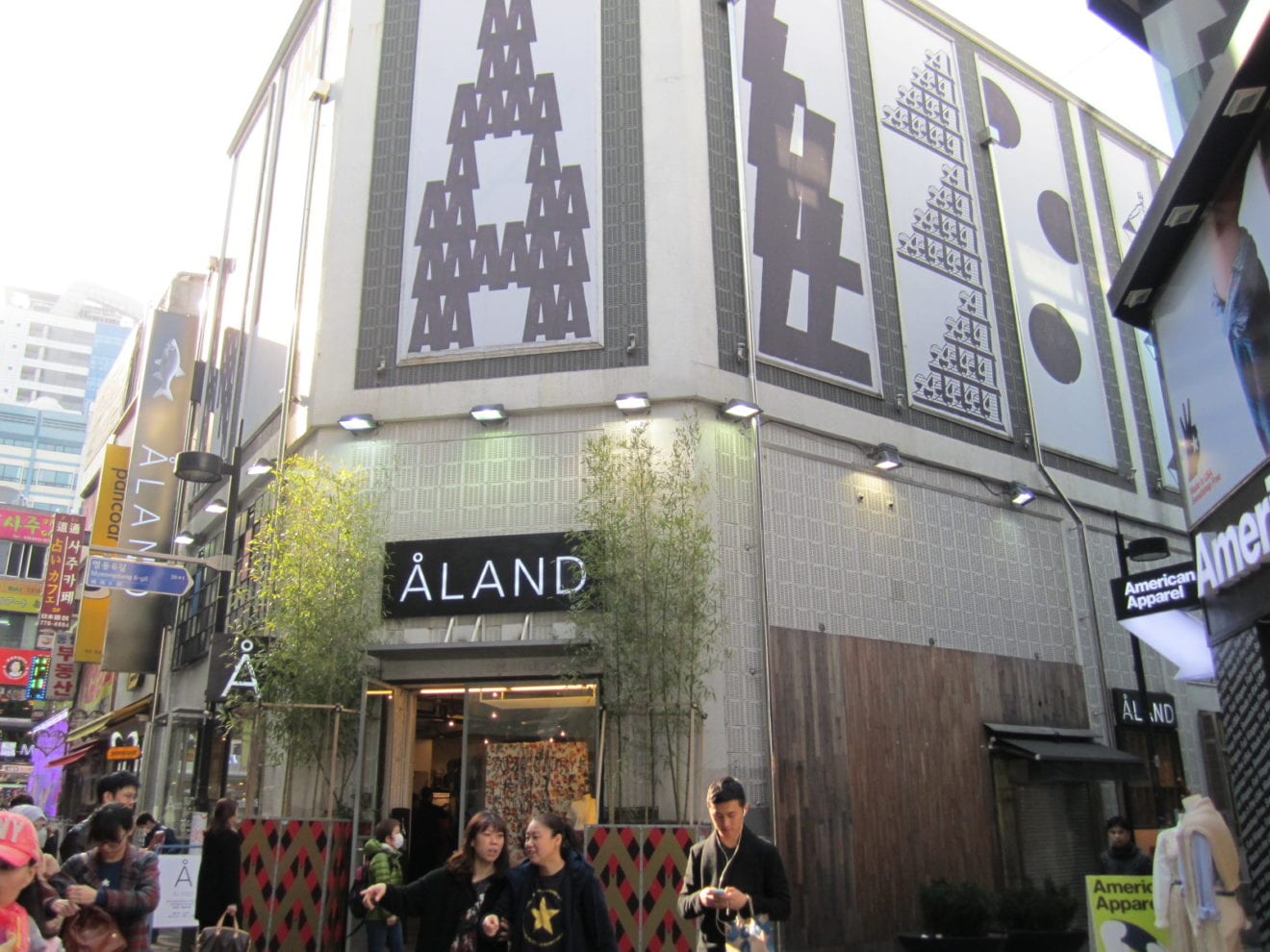
    Just a few days shy of the deadline to apply for a Seoul duty-free business license, E-Land announced plans to join the fray.

    The conglomerate, whose businesses span from retail and fashion to restaurants, said Thursday that it plans to build a duty-free shop at a property near the hip Hongik University area in Mapo District, northwestern Seoul, where it is currently working with GS Engineering & Construction to build a luxury hotel.

    The company will collaborate with the area’s 20,000 shop owners, street performers and artists to give a new perspective on duty-free shopping, setting itself apart from other competitors that have located their shops in larger, more commercial areas with other big-brand stores.

    It has plans to build an outdoor performance arena by the shop where young artists, independent bands and even K-pop stars will be invited to perform daily. E-Land will also work with the district’s well-known shops and restaurants to draw more foreign tourists to the neighborhood, the company said.

    It recently signed a memorandum of understanding (MOU) with Wanda Tourism and Dufry Duty Free for collaborations on its duty-free business. Wanda Tourism, a unit of Wanda Group, is one of the biggest tour agencies in China, and E-Land expects the partnership to help bring in more than 1 million VIP customers from the country per year. Dufry, a Swiss duty-free franchise and the world’s biggest duty-free store operator with over 2,000 worldwide, will share luxury retailing strategies with E-Land.

    “Around 70 percent of local duty-free sales come from the Chinese,” said an E-Land official. “As an influential brand in China with over 20 years of Chinese retail experience under our belt, we will expand the size of the local duty-free market.”

    The company currently operates 44 brands and 7,300 stores in China, ranging from restaurants to shops specializing in fast fashion brands.

    Competition for duty-free licenses is getting fiercer by the day, with almost every major conglomerate – including Lotte, Shinsegae, Hyundai, Samsung-affiliate Shilla, SK Networks and Hanwha – having submitted a bid.

    Sluggish sales at other retail outlets, including department stores and discount retail chains, have forced companies to shift their focus to duty free, which offers double-digit profit margins and growing sales. According to the Korea Customs Service, Korea’s duty-free market was worth 8 trillion won ($7.2 billion) as of last year, compared to 4.8 trillion won in 2010.

    Korea Customs Service is scheduled to make a decision about the licenses in July, two of which will be given to conglomerates and one to a midsize firm.

  • Bangkok retail lags in expansion

    Bangkok retail lags in expansion

    Space in core areas of Tokyo remained highly sought after despite the mixed signals in the economy and an increase in the sales-tax rate introduced in April, 2014.

    Singapore followed Tokyo with 58 new retail brands while Taipei came in fourth, climbing seven places from 2013’s new entrants’ rankings with 49 new brands last year compared with 29 the year before. Other cities in the region making up the top 15 markets included Hong Kong with 45 new entrants, Beijing with 34 and Manila with 24.

    London retained its position as the world’s most international shopping destination with 57.9 per cent of international retailers present there, which was closely followed by Dubai with 55.7 per cent of international retailers present and Shanghai with 53.4 per cent.

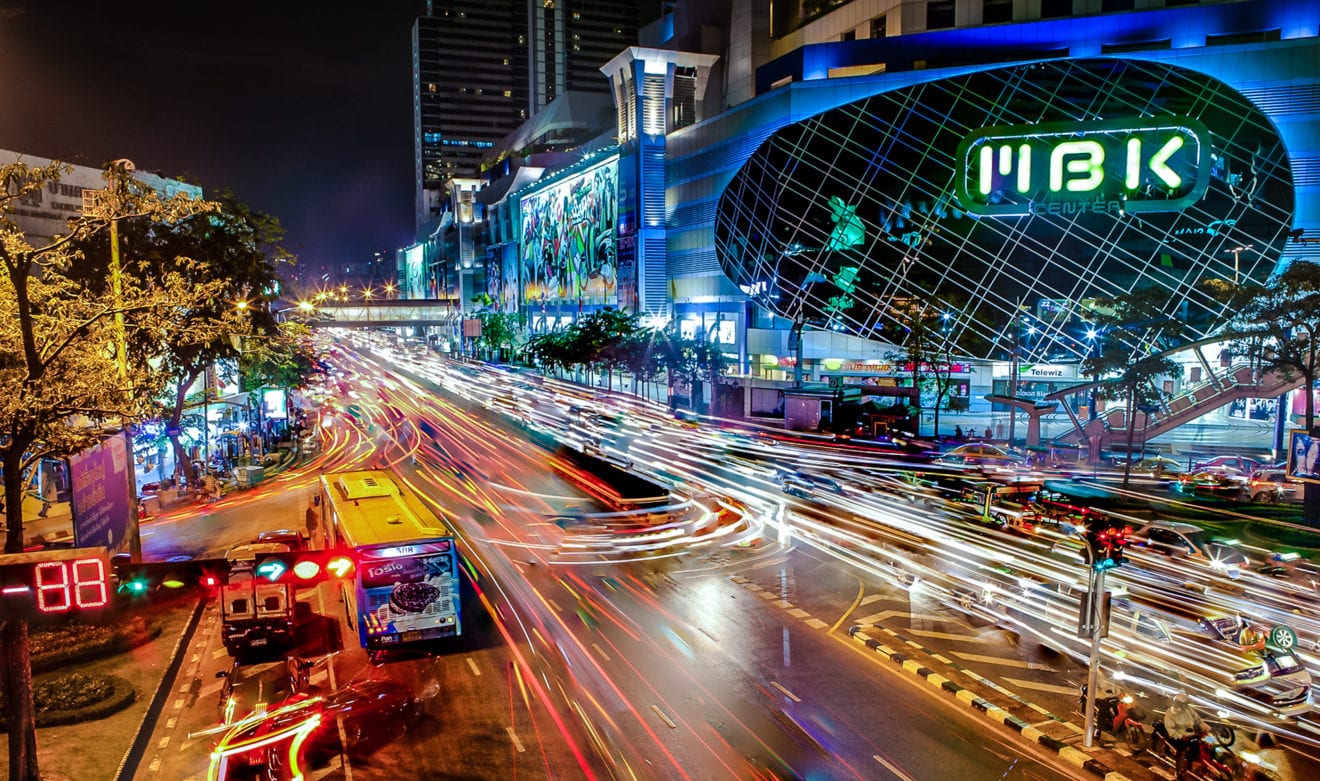
    James Pitchon, head of research and consulting at CBRE Thailand, said that in the first quarter of this year, the total Bangkok retail supply was 6.8 million square metres, increasing by 7.8 per cent year on year. The volume of occupied retail space increased by 4.8 per cent.

    The largest new retail development in the quarter was the 50,000sqm EmQuartier luxury shopping mall on Sukhumvit Road.

    Jonathan Hsu, head of occupier markets research for CBRE Asia Pacific, said the continued desire for expansion into new cities remained high for international brands.

    “We are seeing a great deal of expansion into Asia and in particular into Tokyo, Singapore and Taipei.”

  • Alibaba signs Equinix deal to take on Amazon’s cloud

    Alibaba signs Equinix deal to take on Amazon’s cloud

    Equinix deal gives Alibaba a better cloud story for multi-nationals wanting to do business in the U.S. and China. It might also be worrisome to U.S. cloud powers who want that business.

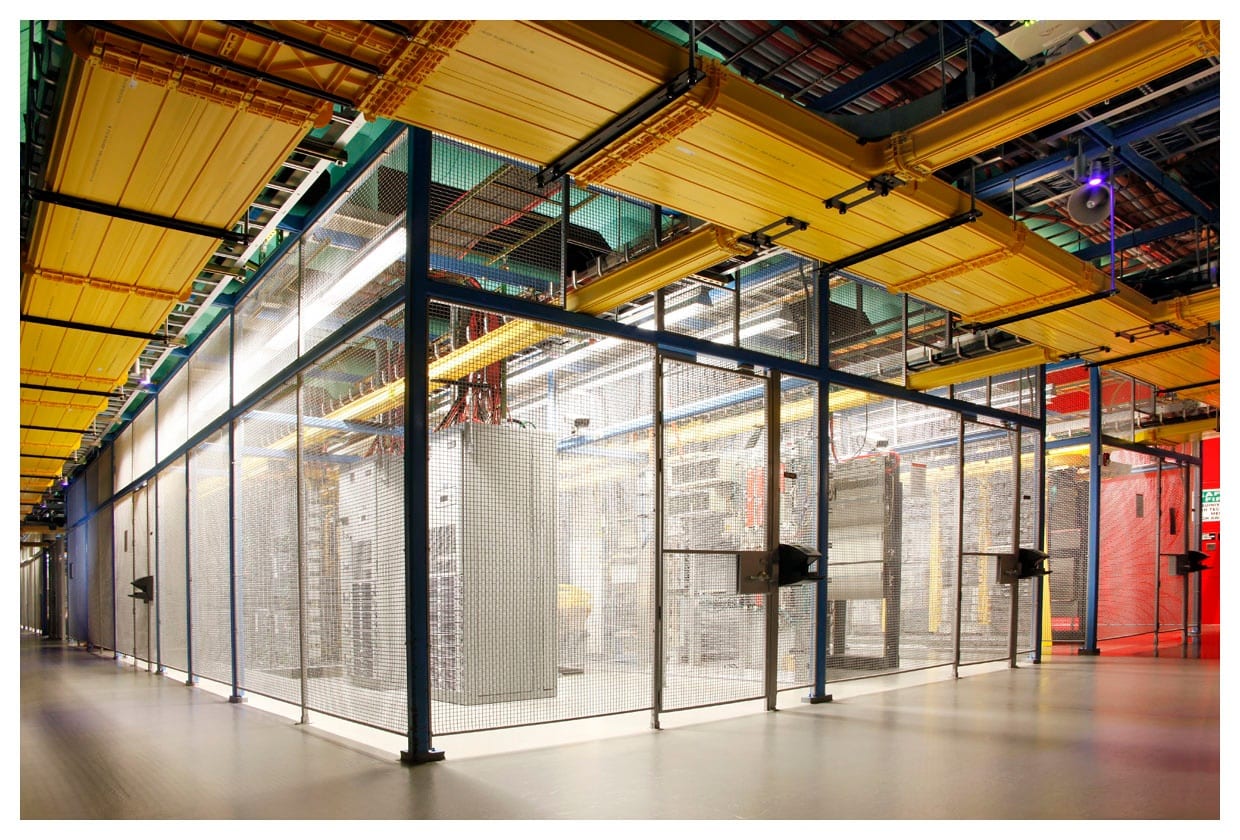
    Chinese retail giant Alibaba is going bigger in cloud thanks to a new partnership with Equinix, which operates more than 105 data centers around the world.

    The stated goal is to make it easier for multi-national corporations in the U.S. to conduct business in China and vice versa. Aliyun, is Alibaba’s cloud computing arm, just as Amazon Web Services is Amazon’s the cloud computing arm. Initially, Alibaba’s cloud services will be offered via Equinix Cloud Exchange facilities in Hong Kong and Silicon Valley, with additional rollouts planned for other Equinix sites worldwide, said Chris Sharp, vice president of innovation for Equinix, Redwood Shores, Calif.

    There is plenty of headroom for expansion in this deal. Equinix has data centers in 33 countries and many other interconnection points where different providers can hook into each others’ services. Even cloud providers that run their own data centers plug into Equinix interconnection facilities so they can offer fast links to outside services. Equinix will also gain 40 more data centers across Europe via its recently announced plan to acquire Telecity for $3.6 billion.

    U.S.-based cloud giants, especially Amazon, will doubtless watch the Alibaba-Equinix news carefully. Alibaba dominates the market in China, much as Amazon does in the U.S. In March, Aliyun opened its first stateside data center stateside at an undisclosed Silicon Valley site while Amazon opened up its first data center in China in late 2013.

    Alibaba and Alyun could be viewed as mirror images of Amazon and AWS so it’ s not hard to predict growing contention between the two camps as AWS pushes more into China via its new Beijing region and Aliyun does likewise in the U.S.

    Per its IPO filing last year, Alibaba claimed more than 980,000 “direct and indirect” cloud computing customers at the end of 2013. Last November, Amazon said AWS has more than a million “active” users.

    For its fourth quarter ending March 31, 2015, Alibaba’s cloud revenue came in at $63 million, up 82% from the year-ago quarter. For the full fiscal year, cloud revenue was $205 million, up 64% from last year.

    Amazon, which has been in the cloud business for nine years, broke out cloud results for the first time in its first quarter, also ending March 31. It logged $1.57 billion in cloud revenue, up 49% from the previous year. Operating income was $265 million for the quarter, up from $245 million a year ago. Chairman and CEO Jeff Bezos claimed the cloud represented a fast-growing $5 billion-a-year annual business.

    As for whether Amazon should be worried about Alibaba/Alyun’s incursion on its home turf, Ariel Tseitlin, a former Netflix executive who worked a lot with AWS, doesn’t think so. “AWS just has so many feature and services. Right now, the biggest threats to AWS are number one Microsoft and number two Google” he noted.

    More generally, the entrance of another viable contender in cloud is a good thing for customers, said Tseitlin, who is now a partner with Scale Venture Partners, a Foster City, Calif. based VC firm.

  • Powa takes tablet POS to Japan

    Powa takes tablet POS to Japan

    As the demand for tablet and mobile-based point of sale solutions accelerates across the Asia Pacific region, Powa Technologies today announced that S-Cubism Technologies has become the first Japanese-based POS software provider to complete integration with its PowaPOS tablet-based hardware.

    The full-featured solution will use its EC-Orange POS for iPad and Windows, and is available from Billing System Corporation, a leading payment gateway and reseller. Billing System Corporation is also a reseller of PowaTag, Powa’s innovative mobile payment enablement application that turns any point of contact into a point of sale.

    “Powa has created the most sophisticated and revolutionary fixed tablet point of sale platform available, which will help us serve the growing demand for tablet-based solutions,” said Kenji Hosoda, CTO, S-Cubism Technologies. “The fully integrated hardware and advanced SDK combine to help us create a solution that will easily meet the needs of the Japanese retail marketplace.”

    PowaPOS is the first point of sale platform purpose built for tablet-based payments. Its fully integrated design rids merchants of the need for mismatched peripherals and provides industry-leading ease of set-up. Features include a built in thermal printer, 2D QR/barcode scanner, orientation sensor, as well as the optional PowaPOS Cash Drawer – all in a compact footprint and powered by a single cord. With its advanced SDK, PowaPOS is the only tablet-based platform to easily integrate with all POS software applications across all operating systems. The PowaPOS SDK also supports third party payment devices, including NFC/Apple Pay devices, and enables instant integration with PowaTag.

    “Powa Technologies’ PowaPOS and PowaTag solutions are truly revolutionary in the retail marketplace today,” said Toshihiko Eda, President & CEO of Billing System Corporation. “The innovative PowaPOS platform is the ideal component to help us deliver a complete POS and payments solution to existing customers, and open up new markets for us in Japan, as many retailers seek a tablet-based solution for the very first time.”

    EC-Orange POS is a next generation POS software solution, available for iPad and Windows tablets. Features include payment processing, inventory management, customer relationship management, promotions support, and sales analysis. With more than 4,200 stores across Japan already using EC-Orange POS, S-Cubism is one of the country’s leading POS software providers.

    “Powa’s partnerships with Billing System Corporation and S-Cubism Technologies provides retailers in Japan with a fully integrated tablet POS solution to run their businesses, complete with an unmatched ‘out of the box’ hardware experience,” said Zvi Mitlanski, SVP & GM, Asia Pacific, PowaPOS. “With this integration, PowaPOS continues to expand its global footprint, with a significant step forward in providing next generation tablet-based payments to the retail end-user in Japan.”

  • D.Phone Forms Mobile Phone Retail Partnership With Letv

    D.Phone Forms Mobile Phone Retail Partnership With Letv

    Letv and D.Phone announced a deal for D.Phone to open Letv experience zones in its over 4,000 outlets across China.

    Those experience zones will become pre-sales and post-sales service sites of Letv products, which are mainly super phone and super TV products. Financial terms of the arrangement were not released.

    Letv’s LePar sales vice president Zhang Zhiwei said that D.Phone will not keep any stock of goods. Instead, the related deliveries will be provided by LePar. So, D.Phone will only play the role of having experience stores and the product purchases still need to be completed via the Internet. LePar is a partnership project launched by Letv.

    By cooperating with Letv, D.Phone will gain commissions from the sales of Letv smart devices, accessories and derivatives. It can also gain income from post-sales services. In addition, as a partner of Letv, the company will have the opportunity to subscribe to possible equity of Letv.

    As a traditional 3C channel, D.Phone is transforming itself to a service provider. The company hopes to use its offline network channels to provide complete O2O services to the technology industry. Meanwhile, Letv wants to establish an experience center ecosystem via the nationwide offline channel of D.Phone that allows users to experience the products before purchasing them online.

  • Korean Retailer Coupang Gets $1 Billion Investment

    Korean Retailer Coupang Gets $1 Billion Investment

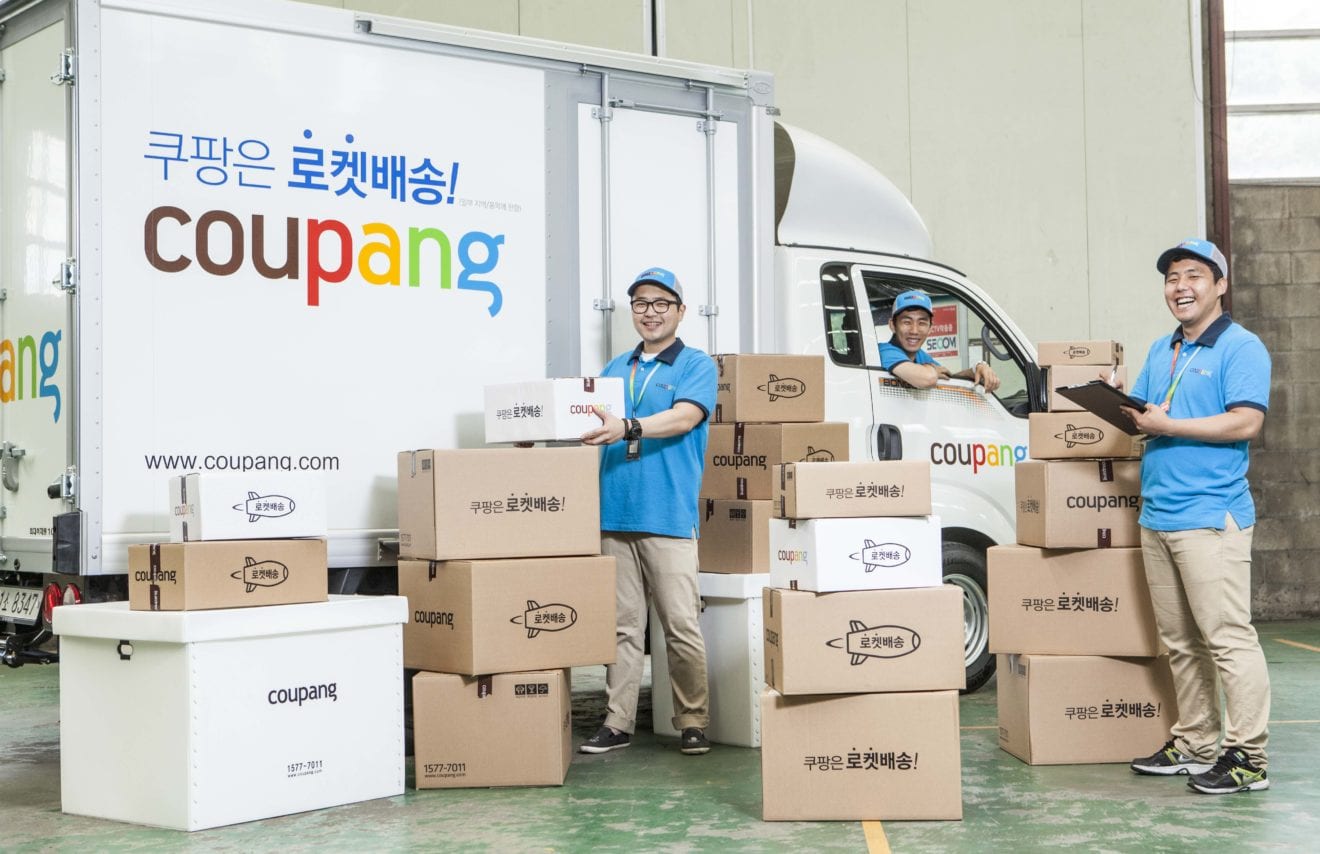
    SoftBank Corp. and Coupang have announced a definitive agreement under which a subsidiary of SoftBank will invest $1 billion in Coupang, the largest and fastest growing standalone ecommerce player in Korea. The investment is expected to close at the beginning of July, and will bring the total amount of funding raised by Coupang over the past year to nearly $1.5 billion.

    This funding will fuel Coupang’s innovations in its end-to-end fulfillment service, same-day delivery network and leading mobile applications that will extend Coupang’s leadership in the future. Coupang will also expand its R&D offices in Silicon Valley, Seattle, Shanghai and Seoul.

    Driven by an unprecedented level of mobile engagement and its revolutionary delivery service, Coupang has become one of the world’s most disruptive ecommerce companies. With more than 25 million mobile application downloads and the highest number of active users, the company is the leading mobile commerce player in Korea. Today, mobile sales account for over 75% of the company’s revenue and over 85% of its total traffic.

    “We welcome SoftBank as a long-term partner and look forward to leveraging their global expertise and vast network to further accelerate our growth,” said Bom Kim, Founder and CEO of Coupang. “This milestone investment from one of the greatest IT investors in the world provides even more financial strength and flexibility to expand our operations and redefine what a great end-to-end customer online shopping experience is all about.”

    Nikesh Arora, Vice Chairman of SoftBank Corp., said Coupang is one of the fastest-growing and most disruptive Internet companies in the world.

    “Coupang is setting a new standard for how ecommerce can and should be done across the globe with its innovative technologies and approach to same-day delivery, mobile commerce, and customer service,” Arora said. “We look forward to working with Bom Kim and his talented team and are excited to support their continued expansion.”

    Coupang’s explosive growth is powered by its cutting-edge delivery service, built on its proprietary technology infrastructure. With unmatched retail selection, the largest end-to-end fulfillment operations in Korea and a home-grown fleet of “Coupang Men” to enable last-mile delivery, its monthly direct retail revenues have more than tripled in the past six months.

  • Burmese social network MySQUAR eyes Aim flotation

    Burmese social network MySQUAR eyes Aim flotation

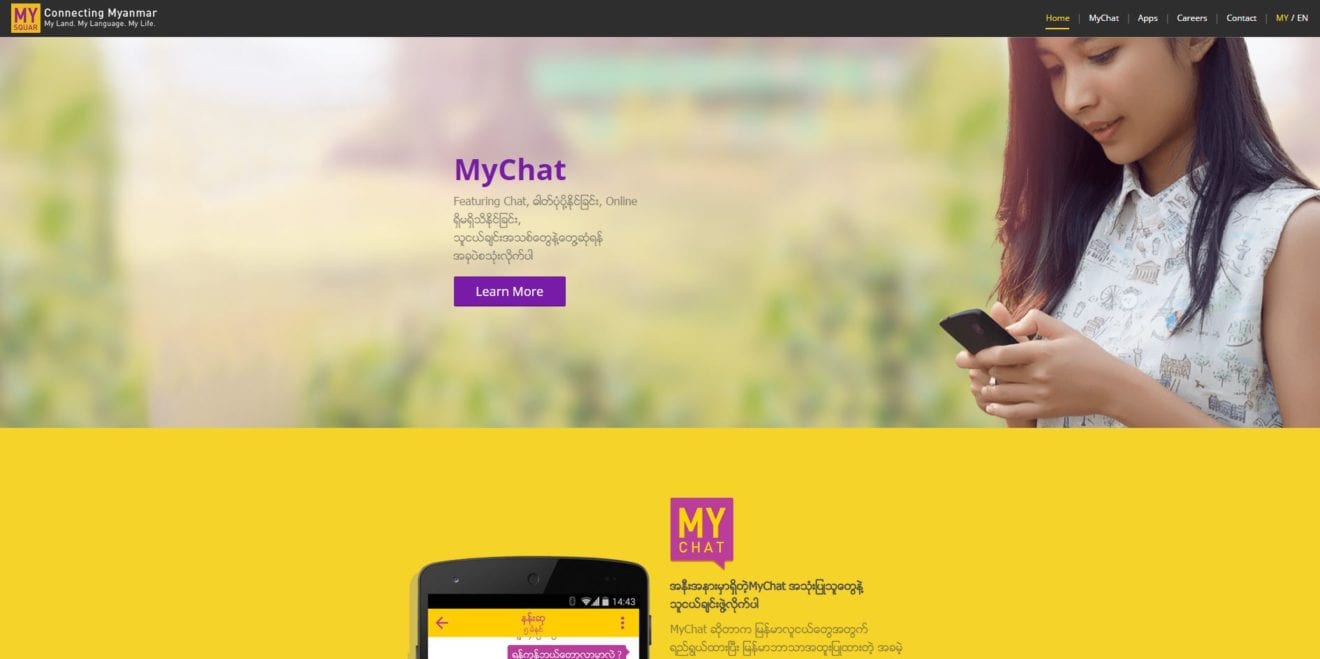
    The future is bright in Myanmar, even if it is not as Orange as the French telecoms company might have liked. It is more a lurid yellow with puce-tinted characters in local Burmese script, according to MySQUAR, the social media business which hopes to float on the Alternative Investment Market in a fortnight.

    The Burmese start-up is raising about £2m to piggyback off the impressive growth in mobile communication in Myanmar and build a local-language business of messaging applications and online games. Nearly 700,000 Burmese citizens already use its MyChat app, and that could be more than 1m by December if all goes to plan.

    MySQUAR is just one of the many small businesses hoping to cash in on Myanmar’s economic revival after its release from half a century of military rule and censorship. Five years ago a fraction of a per cent of Myanmar’s population — of which nearly half are under the age of 24 — had access to a mobile phone. Now Myanmar’s economy is growing at about 8 per cent a year, say analysts, and by the end of 2015 a third could have phones.

    The government hopes that by 2016 more than three-quarters of the country will have network coverage. Two years ago it invited the likes of Orange and Vodafone to tender for licences to roll out mobile services across the country. Norway’s Telenor and Ooredoo of Qatar won the tender and this month Telenor said it had already picked up 6.4m customers and was “unexpectedly” in profit. The average revenue per user is more than four times greater than in India or Pakistan, it added.

    “We are sitting on top of all that telecom expansion,” says Eric Schaer, MySQUAR’s chief executive, a US-born former banker and citizen of Comoros who lives in both Vietnam and Singapore.

    Yes MySquar has rivals, including Facebook, but while the literacy rate is extremely high, very few people speak or write English. MySQUAR is the only one allowing Burmese people to chat in the local lingo, says Mr Schaer.

    That said, Myanmar is still a very poor, largely rural country without access to road, rail or reliable electricity supplies where less than 10 per cent of the people have bank accounts. Democracy is young, cronyism prevails and the country is split by factions and disputes over land rights. Companies are not governed by the norms that western investors are used to and the cost of doing business is unpredictable and high. In August, for example, Telenor reported evidence of the use of child labour by suppliers.

    Mr Schaer says stoutly “[business] has all been quite straightforward. We have not had challenges.” So far.

    Broker Beaufort Securities has discounted assumed cash flows to reach a value of about £23m for the company. But MySQUAR’s services are free for now while it builds its customer base and it will not start to charge users for add-on services or advertisers for space for a while. MySQUAR will not generate cash for months, if not years. The profits may come after that. Then again, they may not.

    MySQUAR is a start-up in the real sense of the word and high risk. The purple prose is beguiling, but the company’s future may be more black and white.

    Financiers are forever repackaging centuries’ old products and services, and rebranding them with the latest buzzword. Often it is just a way of charging another layer of fees for another layer of intermediation. Today’s buzzword is “crowdfunding”. It bestows a wow factor on the most pedestrian capital raising.

    Or so Darwin Strategic, majority owned by Henderson, hopes. It claims to have pioneered crowdfunding for public companies. Its second customer is Aim-quoted Kea Petroleum, the New Zealand explorer trying to raise £3m from private investors at 1p a share via Darwin’s PrimaryBid.com. Anand Sambasivan, Darwin’s boss, says PrimaryBid is not brokering any old equity placing. The difference is that retail investors can bid for shares directly from companies. “We fill the gap in bank lending for small companies and give retail investors access to share placings,” he says.

    Kea’s shares tell their own tale. They have fallen from above 30p in under a year and are trading at 0.875p in the market. Paying as much as 1p smacks of that old saying, “a fool and his money are soon parted”.


  • Singapore rides omnichannel wave

    Singapore rides omnichannel wave

    Online and offline sales in Singapore are growing in tandem as omnichannel is becoming an integral part of shopping culture in Asia.

    Data compiled by online couponing website Flipit.com show that 85% of Singaporeans shop in-store at least once a month while 49% shop online with a similar frequency.

    But the preference is for bricks and mortar, Digital Market Asia reported, as more than half of Singaporeans (56%) like to shop in-store in one of the city state’s 105 malls, where they appreciate being able to touch and feel products as well as eat and drink and socialise.

    The fact that malls are increasingly integrating channels also helps, with click-and-collect facilities, for example, being supplemented with “click-and-mortar” stores where shoppers can use barcodes to save items to an online shopping cart.

    “Shopping trends are constantly evolving, but you can always guarantee that Singapore will be one step ahead,” said Willem Nout, Project Manager at Flipit.com.

    “Singaporeans just love to shop – plain and simple!” he said, adding that seeing shopping as a pastime rather than a necessity was “exactly the kind of attitude that guarantees to keep physical stores out of the red zone”.

    Amazingly, Singapore has double the retail space per person of Australia, despite being 10,000 times smaller.

    It is also among the world’s leading markets for retail expansion, according to a report by real estate services firm CBRE, attracting 58 new global brands last year – double the number of 2013 and second only to Tokyo.

    These entrants were mostly in the food and beverage sector, reported Inside Retail Asia, followed by apparel and accessories chains. And the Shoppes at Marina Bay Sands was a favoured location thanks to the high numbers of affluent customers visiting the connected casino facilities.

    Brandon Famous, senior managing director for retail occupier advisory & transaction services at CBRE, echoed Nout when he said that consumers continued to “view the physical store as their preferred mode of purchase and perhaps more importantly, as a point of social interaction”.

    “Consumers view shopping as a leisure activity and the continued expansion of brands and the development/improvement of shopping locations gives them the opportunity to embrace this,” he added. Data sourced from Digital Market Asia, Inside Retail Asia, CBRE; additional content by Warc staff

  • Retail movies for Millennials

    Retail movies for Millennials

    With many on-line publications funded by invasive adverts, it typically looks like web surfers are being bought one thing each different minute.

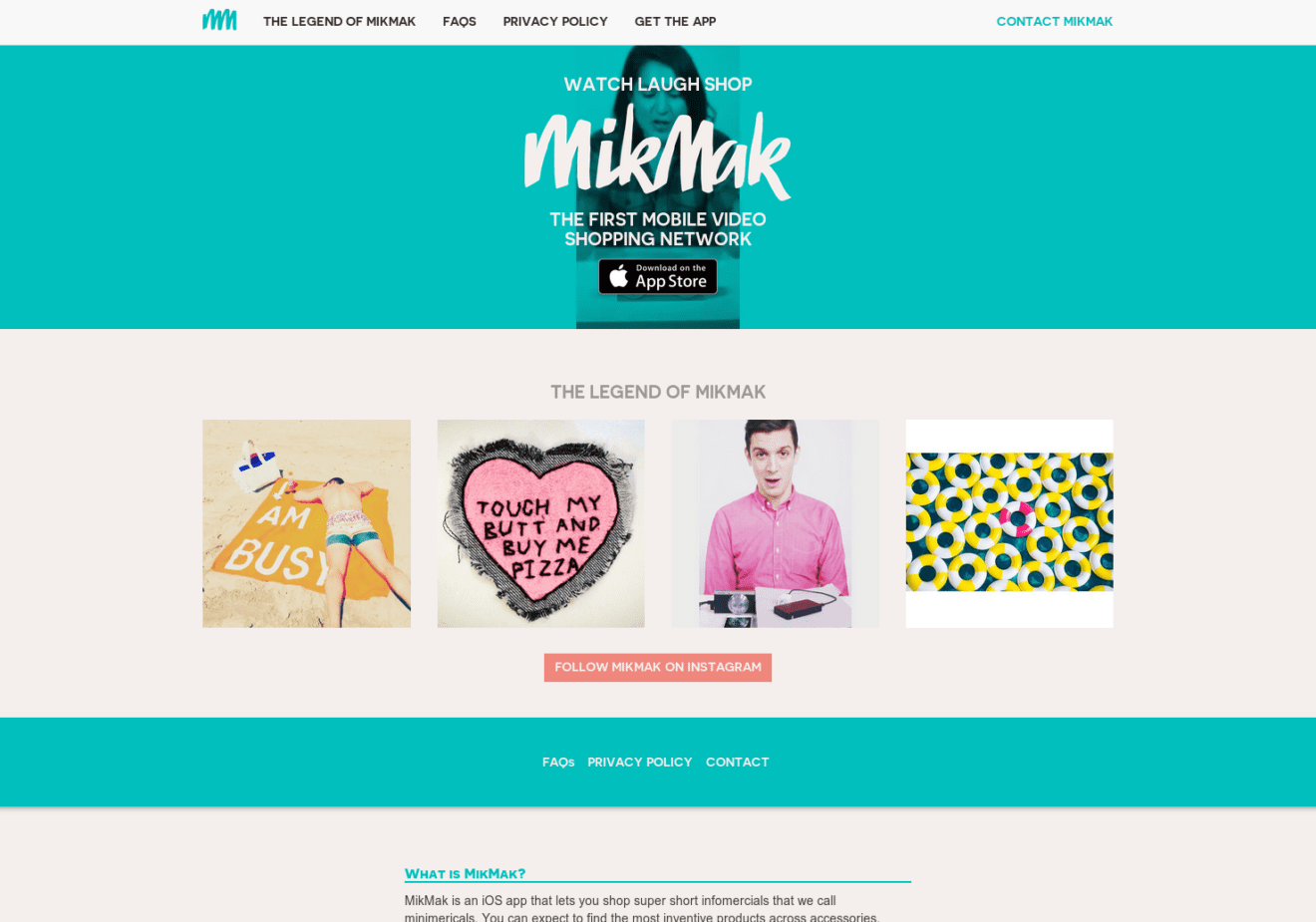
    Making a extra lively, participatory purchasing expertise is a brand new app referred to as MikMak. The app embraces the age of cellular promoting by giving the house buying community a 21st century smartphone makeover. MikMak is a cellular video buying channel aimed toward millennials, that creates infomercial fashion retail movies for every product it promotes.

    To start, customers obtain the free app and create an account. Then, they will browse by product sort, and watch a ‘minimercial’ for every merchandise they like. There are a selection of equipment, devices, residence items and extra — all for beneath US$100 — and new movies are uploaded nightly. All the products promoted might be purchased inside the app.

    MikMak is presently in Beta and the corporate behind it — based by Rachel Tipograph — is creating a variety of movies for every product in various types. Gadgets are sometimes introduced by comedians from the stand-up circuit, with tones starting from honest and critical to comical and gimmicky — as a way to confirm which sits greatest with their viewers. Every clip is thirty seconds lengthy and the group can produce as much as 25 in in the future on a really small finances.

    Is there potential for extra cellular buying channels for different audiences?

  • Jumei buys into Korean cosmetics model

    Jumei buys into Korean cosmetics model

    Chinese language on-line magnificence merchandise retailer Jumei Worldwide has purchased a minority stake in Korean magnificence model It’S Pores and skin.

    It’S Pores and skin is described as “a status Korean magnificence model that has turn into very fashionable amongst Chinese language shoppers”.

    Leo Ou Chen, founder and CEO of Jumei, stated  the recognition of Korean magnificence merchandise in China has grown quickly over the previous few years.

    “With an in depth catalogue of status merchandise, It’S Sin is a perfect companion for Jumei to collaborate with as we construct Jumei International into the most important cross border eCommerce platform in China.

    “It’S Pores and skin will drastically profit from the rising measurement and scale of our platform,” he concluded.

    Jumei, listed on the NYSE, is China’s main on-line retailer of magnificence merchandise as measured by gross merchandise quantity, with a market share of 22.1 per cent in 2013.