Blog

  • New Prada Bangkok store unveiled

    New Prada Bangkok store unveiled

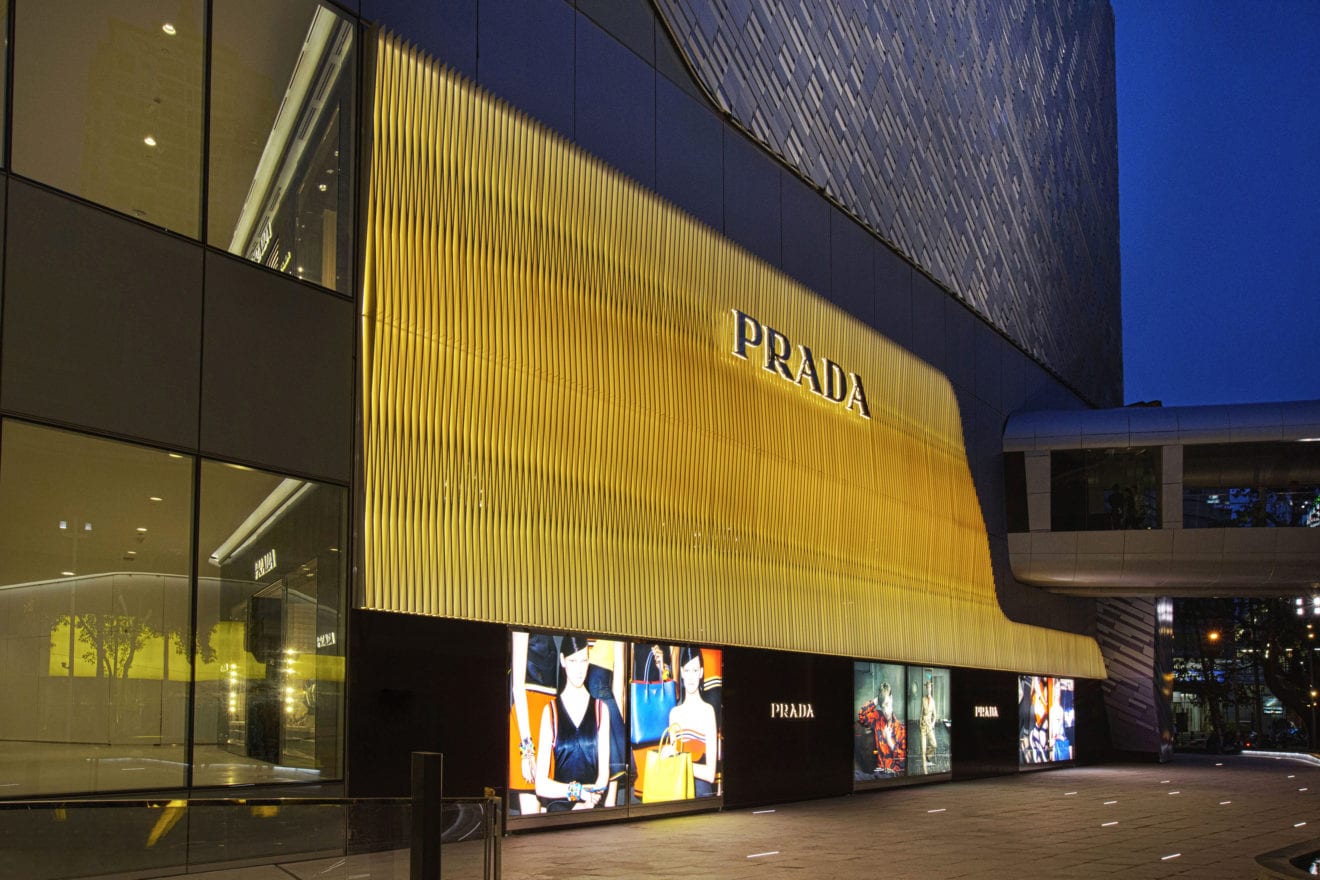
    Prada has strengthened its Bangkok presence opening a new 440 sqm store in The Mall Group’s new EmQuartier shopping centre.

    The store, designed by architect Roberto Baciocchi, comprises a single level destination and houses the women’s and men’s ready-to-wear, leather goods, accessories and footwear collections.

    Prada Bangkok EmQuartier 415-4

    The external façade stretches some 40 metres and blends into the mall’s modern architectural composition: a white canvas curtain enclosed in a crystal box and flanked by large light boxes creates a sophisticated atmosphere. Slim strips of black granite with polished steel profiles frame the large entrances, windows and light boxes.

    The first entrance, defined by the signature black-and-white marble chequered flooring, opens on an area housing the women’s leather goods and accessories collections. The space is characterised by green fabric-clad walls with sleek polished steel and crystal display cases. Polished steel counters with drawers covered in coloured saffiano leather complete the furnishing.

    Prada Bangkok EmQuartier 415-3

    The next space is defined by an intimate atmosphere, with green fabric-clad walls and transparent perspex display units exalting the display of the women’s ready-to-wear collections. The footwear collections are nestled in elegant alcoves that recall Prada’s trademark display niches. Green velvet ‘Clover Leaf’ sofas, designed by Verner Panton and reproduced exclusively for Prada, crystal tables and display counters embellished with coloured saffiano leather elements enrich the space.

    Prada Bangkok EmQuartier 415-4

    The entrance to the area devoted to men leads to a space characterised by the distinctive black-and-white marble chequered flooring and ebony-clad walls with precious polished steel display cases, hosting the men’s leather goods and accessories collections. The area dedicated to the ready-to-wear and footwear collections is defined by ebony floorboards and walls, ‘pony skin carpeting’ and coloured ostrich leather sofas.

    Prada Bangkok EmQuartier 415-5

    Additional furnishings, such as polished steel display units and counters with drawers covered in coloured saffiano leather, complete the setting.

  • World-class EmQuartier Bangkok unveiled

    World-class EmQuartier Bangkok unveiled

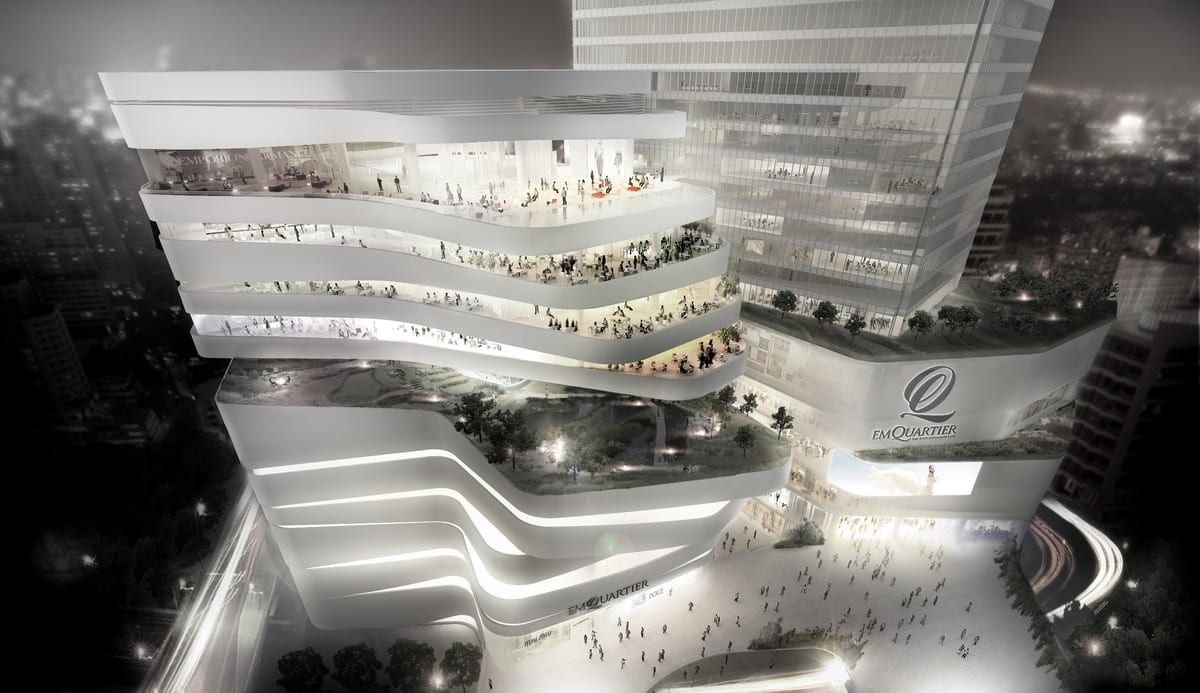
    Thailand’s The Mall Group has budgeted a massive US$15 million to launch its premium EM District.

    The first stage is the unveiling of The EmQuartier which it says will position Sukhumvit as “a world-class fashion destination”.

    In collaboration with more than 400 world-class brands and leading Thai brands, a fashion event with more than 200 models – Fashion Extraordinaire – showcased “groundbreaking fashion and urban lifestyle in a stunning new shopping complex”.To mark the shopping experience, prizes worth over 30 million baht will be up for grabs.

    Management of The Mall Group and The Emporium Group led by Supaluck Umpujh, Krissada Umpujh, Paibul Kanokwattanawan, and Kreignsak Tantiphipop, along with business partners, retailers, business owners, executive-level managers, celebrities and local socialites joined the festivities.

    Supaluck Umpujh, vice chairwoman of The Mall Group and chairman of The Emporium Group said a budget of 500 million baht ($15 million) has been allocated to celebrating The EM District’s opening, designed to provide Bangkok with “a stunning experience”.

    EmQuartier Thailand

    The four-month-long celebration which started on March 27 will run until July 31 and is divided into three concepts for three periods, starting with Fashion Extraordinaire, Dining Extraordinaire, and ending with World Extraordinaire.

    For Fashion Extraordinaire, The EM District collaborated with labels including super brands, world-class brands and leading Thai brands to establish itself as the ultimate fashion centre. Brands including Louis Vuitton, Chanel, Dior, Prada, Cartier, Dolce & Gabbana, Celine, Fendi, Gucci, Valentino, Chloe, Loewe, Miu Miu, Salvatore Ferragamo, Burberry, Emporio Armani, Club 21 and many more.

    As a fashion centre, The EmQuartier is home to many leading brands. The Q Stadium is a concept store with trendy clothes and accessories that were carefully selected from around the world. Over 4000 sqm, the urban-wear multi-label World-class fashion centre store’s design concept is ‘the urban playground’ to cater to the city lifestyle of those with sophisticated style.

    More than 50 brands at Q Stadium include Adidas Neo, The Adjective, Carnival, Fly London, Leisure Project Store, Penfield, Superdry, Travel Fox and Vanquish.

    Qurator is the ultimate Thai designer showcase, housing more than 60 leading Thai designer brands on a 6000 sqm space. There are items by established and up-and-coming Thai designers, “so Qurator is not just a store, but also an incubator of ideas and creativity for the Thai fashion industry,” said the company in a statement. New collections are showcased at Qurator for the first time.

    EmQuartier Thailand 2

    The Atelier on G floor, Emporium Department Store was unveiled last December, and is a multi-fashion brand store with leading fashion brands from around the world coveted by fashionistas.

    And Another Story is a new concept store with a variety of products designed by designers from around the world. These products are unique and affordable. There are 160 popular brands from around the world, of which 70 are exclusive brands from abroad and 30 make up a special collection of Thai brands. On a 900 sqm at A building, The EmQuartier, Another Story is divided into six zones.

    Customers can design their own one-of-a-kind stationery to take home at the Stationery zone. The Yellow Korner zone is a gallery filled with work of artists from around the world. The Home & Décor zone offers a variety of home and décor products in many styles. Beach & Resort wear zone offers day looks clothes for mix and match. The Café Zone offers a relaxing city type café, while the Workshop Zone is for people wishing to create unique items.

    The EmQuartier is Bangkok’s newest and most comprehensive centre of food, including ingredients, prepared meals and restaurants and includes the Gourmet Market supermarket which carries a variety of products from around the globe. On an 8000 sqm space, the Gourmet Market has more than 40,000 products, with additional products from Asia and Europe. Snacks, ingredients, fruits and fresh food are sourced from around the world.

    Quartier Food Hall at The EmQuartier features a wide array of international cuisines, making it the one-stop shop food hall in Sukhumvit with Thai, Chinese, Japanese, Korean, Singaporean, Taiwanese, Australian, American and New Zealand food available on a 7000 sqm space that includes restaurants, a food court, and take-home shops.

    A Shopping Extraordinaire promotion offers prizes worth more than 30 million baht. For every 2000 baht spent, shoppers receive a coupon for a chance to win one of four amazing prizes: Park 24 condominium, Porsche Macan, Mercedes-Benz CLS, and Veranda Residence Pattaya condominium. There are other prizes as well, all of which are available when meeting shopping terms until July 31, 2015.

    EmQuartier Thailand 3

    The EM District features a range of Premier Collections in partnership with international and local brands. Here is the full list:

    • Louis Vuitton: Special collection ‘Monogram Rouge Noir’ by Nicolas Ghesquiere.
    • Cartier: ‘Cartier Tradition’ collection with piece carefully selected from around the world.
    • Bvlgari: High Jewelry collection extraordinary for celebrating launch The EM District.
    • Dolce & Gabbana: Special collection with exclusive Runway Pieces.
    • Saint Laurent: Exclusive Spring Summer Collection and precious skin bag limited quantity.
    • Valentino: First flagship store that offers a full range men and women collection, also the VIP lounge.
    • Céline: The first and only new concept boutique in Thailand with Ready-to-wear collection from runway.
    • Loewe: Spanish leather goods brand presents runway collection by Jonathan Anderson.
    • Jimmy Choo: The first and only in the world ‘Candy Clutch – Bangkok’ limited edition and men collections boutique in Thailand.
    • Chloe: ‘Drew’ in limited edition Gold/Nude, Exclusive piece ordered for The EM District opening.
    • Proenza Schouler: ‘PS1 Tiny Woodblock’ exclusive collection
    • Paul Smith: T-Shirt ‘Bangkok Edition’ Exclusively by Sir Paul Smith.
    • DVF: Jewellery launch collection inspired by the chic bohemian.
    • Issey Miyake Bao Bao: Japanese fashion brand with limited edition bag collection.
    • MCM: The first boutique in Thailand and special collection “MCM Ekocycle Project”, a collaboration between Will-i-am and Coca-Cola.
    • Coach: “Coach Swagger” patchwork special collection.
    • A Bathing Ape: The first boutique in Thailand and special Baby Milo x Hello Kitty collection.
    • Veilebrequin: Swimming trunks made of 24K gold.
    • Sephora: Special eye shadow collection from a collaboration with well-known jewelry designer Shourouk.
    • Qurator: Special designs, available exclusively at The EmQuartier by Thai designers from over 60 brands.EmQuartier Thailand 4
  • Alibaba thinks small

    Alibaba thinks small

    Smaller orders and microloans to retailers have boosted Alibaba’s business-to-business eCommerce trade.

    The Chinese internet giant’s sales on its 1688.com site are up significantly as suppliers are offering customers more flexible ways to place small and customised orders through Alibaba’s Tao Factory program, which also allows retailers to apply for loan finance to make purchases.

    The program, which is geared toward retailers who also sell through Alibaba’s Taobao.com and Tmall.com retail eCommerce sites, includes a system through which suppliers automatically replenish a retailer’s inventory of particular products when they fall below specified levels.

    Alibaba has declined to say if a similar program will be made available to international buyers on Alibaba.com, the company’s global wholesale marketplace that connects Chinese manufacturers with retailers and wholesalers around the world.

    Tao Factory also is set up to let buyers and suppliers share information about production capabilities and consumer demand, enabling retailers and suppliers to match special orders with production schedules.

    Through the program, small as well as large factories are receiving more sales, according to AliResearch, a research affiliate of Alibaba. In 2014, the total transaction volume on 1688.com was US$22.7 billion. Figures for the previous year were not immediately available.

    Factories involved in the program are flexible regarding order volume and can turn around orders quickly, Alibaba says. For example, retailers can place orders just one week ahead of their expected arrival date.

    This is especially useful for retailers looking to offer big discounts on high-traffic online shopping days such as Singles’ Day, the high profile shopping holiday that occurs every November 11. Some called last year’s Singles’ Day China’s “Black Tuesday” because the huge sales surge makes retailers profitable for the year. Alibaba reported that consumers purchased $9.3 billion worth of goods on Singles’ Day last year, just on Alibaba sites like Taobao and Tmall, up 60 per cent from the $5.8 billion of a year earlier.

    The minimum order size through Tao Factory is just 30 units, a number which allows retailers to test demand before ordering hundreds of items, minimising the risk of overstocking a product and eliminating storage costs, says Alibaba.

    Outside of the Tao Factory program, most factories require a minimum order of 5000 items, according to AliResearch.

    To promote the advantages to retailers of purchasing through the Tao Factory program, manufacturers and other suppliers selling through 1688.com have begun advertising how quickly they can manufacture products. Some have lowered the minimum quantity of items retailers must order, allowing retailers to maximise their sales opportunity and minimise the risk of overstocking unpopular goods, Alibaba says.

    Launched in December 2013, Tao Factory is named after Alibaba’s retail marketplace, Taobao.com, which is China’s largest retail e-marketplace.

    Tao Factory includes 11,500 factories and 19,624 production lines, many of them located in southern China’s Pearl River Delta region, particularly in the manufacturing hub city of Dongguan. These manufacturers can see their retailer customers’ inventory levels on Taobao.com and Tmall.com, Alibaba’s two retail online shopping portals.

    Once a customer’s stock falls to or below a previously identified minimum, Tao Factory recognises that change in its order processing system and starts working to fill an order for more products for the customer. By connecting retailers’ inventory levels to the factory that manufactures their products, Tao Factory frees up retailers from having to call the factory, talk to a manager and order more items, Alibaba says. Alibaba guarantees that a customer’s entire stock will be manufactured in one week or less.

    Chao Yi, director of the Tao Factory program, says factories that benefit the most from Alibaba’s initiative have between 50 and 100 employees. Guangzhou Qianku Clothing Co, for example, receives more than 1 million yuan (US$162,721) in orders through Tao Factory per month, he says.

    For companies looking to place orders through Tao Factory, Alibaba offers microloans, and gives these smaller business owners several months to pay back the cost of their first few orders. The maximum loan size is 1 million yuan (US$162,721), and there is no minimum.

  • Kintetsu Osaka targets foreigners

    Kintetsu Osaka targets foreigners

    Kintetsu Department Store, located in Osaka’s tallest building, has launched a program to attract tourists.

    Like most Japanese retailers – and especially department stores – Kintetsu Osaka is battling to maintain sales and growth in a depressed economy with a steadily declining population.  Many retailers are developing programs to attract more foreign customers – with even convenience store network 7-Eleven launching duty free sales in selected stores for customers who can show a foreign passport.

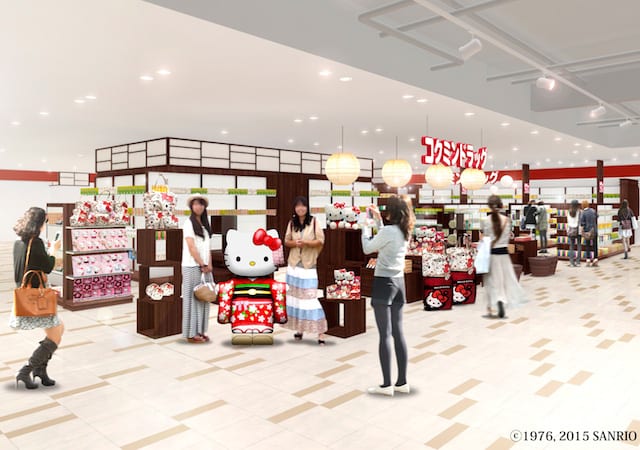
    From April 20, Kintetsu’s main Osaka store in Abeno Harukas Tower will open a new ‘Foreign Customers’ Salon’ and Kokumin’ drugstore in the Wing Building. The new salon is designed to attract more foreign tourists by providing tailored customer services.

    Abeno Harukas -Trickart 415

    The new salon consists of two sections – an 80sqm ‘Service Salon’ which provides services such as duty-free procedures and luggage check-in and a 500sqm ‘Experience Salon’, which offers traditional Japanese experiences.

    Both salons will feature bonsais, traditional gravels and washbasins and provide foreign customers with a Japanese-styled, relaxing space. The drugstore offers popular Japanese products, pharmaceuticals and cosmetics.

    The service salon will provide duty-free procedures, guest coupons, complimentary beverages, smartphone charging, internet connection, a shopping escort service with an interpreter (reservation required),  luggage check-in, delivery of purchased articles to hotels (Osaka Marriott Miyako Hotel, Tennoji Miyako Hotel, Sheraton Miyako Hotel Osaka) or the airport, sightseeing tours and ATMs.

    The Foreign Customers’ Salon, includes Japanese tea tasting, Tanabata star festival decorations, traditional crafting, electronic beauty products testing and seasonal events.

    The Kokumin drugstore will showcase not only ordinary pharmaceutical products but also electronic beauty products, home appliances, Hello Kitty products and other popular Japanese products.

    Abeno Harukas -kumin 415

    Storewide, the company will offer translation services through human interpreters and a QR Translator allowing shoppers to scan a QR code and read translated information on their smartphones.

    Kintetsu Department Store Chain’s Main Store Abeno Harukas is the first department store to have this new service, available in 10 languages.

    In other initiatives, in-store signboards, floor guides and brochures are now in multiple languages.

  • More men shop Korean department stores

    More men shop Korean department stores

    Department stores were once considered the ‘exclusive domain of women’ in many Asian countries.

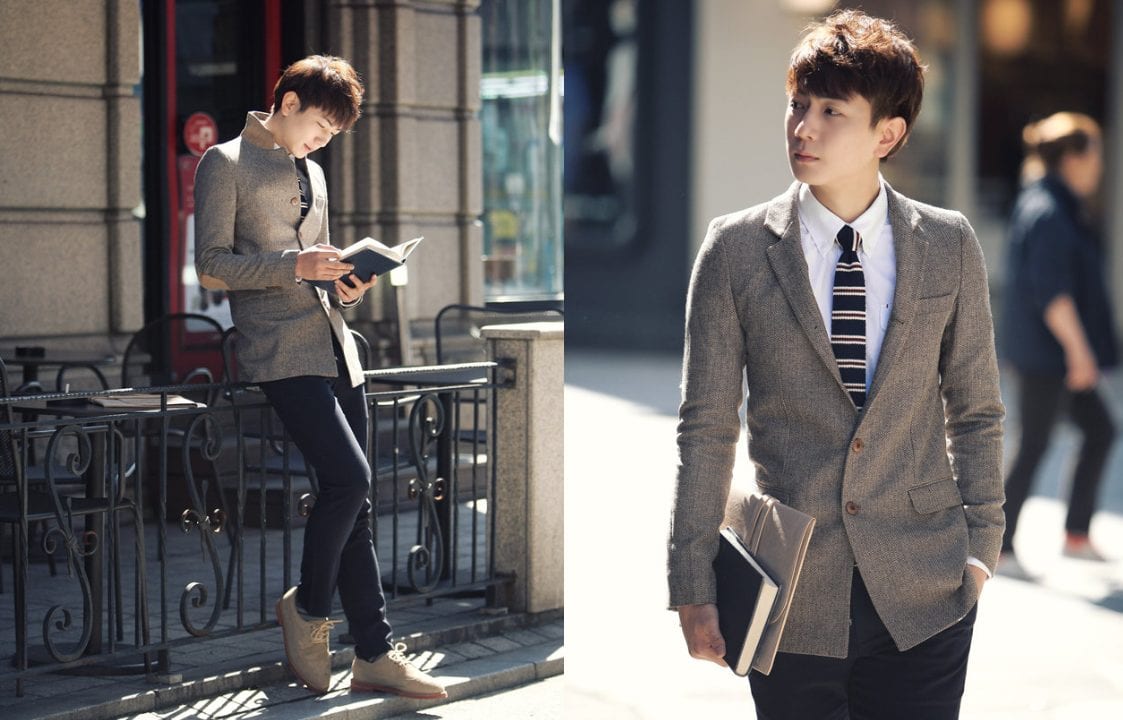
    However, in Korea the ranks of men who enjoy shopping at luxurious stores are increasing.

    In addition, as more women are turning to overseas direct purchases or online shopping malls, Korea’s retail giants are attracting male shoppers by increasing hobby supplies and custom-made suits.

    According to Lotte Department Store, the proportion of male shoppers increased to 27 per cent this year, up four percentage points from 2010. Compared to the 26 per cent recorded at the end of last year, it rose by one percentage point in just three months. Sales of accessories for men more than doubled over the past five years.

    The Korean department store attributed the increase in male shoppers to a surge in male interest for cosmetics and clothes, as well as a renewed focus on enjoying hobbies and leisure activities.

    To cater to a growing number of male shoppers, the retailer has introduced stores that specialize in male apparel and accessories.

    Lotte opened “Curiosity of Renoma,” a hobby shop selling selected kidult products last December at its premium outlet in Gwangmyeong, and the shop is selling 150 million won worth of products monthly. At its Avenuel World Tower branch, it set up a camera shop named ‘el Camera’ selling cameras and related accessories to attract male shoppers interested in photography.

    Meanwhile, at its Jamsil branch, it opened a custom-made suit shop called “IFG”, which offers various suits priced from 300,000 won to 1,500,000, won and targets male shoppers aged 30 to 60.

    An official at Lotte said: “We plan to continue to expand stores specialising in products for men since we believe their potential buying power is huge.”


  • Muji confirms Sydney

    Muji confirms Sydney

    Japanese retailer, Muji, has confirmed it will open its first Sydney store at The Galeries shopping centre, on May 14.

    The Galeries’ store will be Muji’s third store in Australia, with the first launching in November 2013 at Chadstone Shopping Centre, followed by Emporium Melbourne in April 2014.

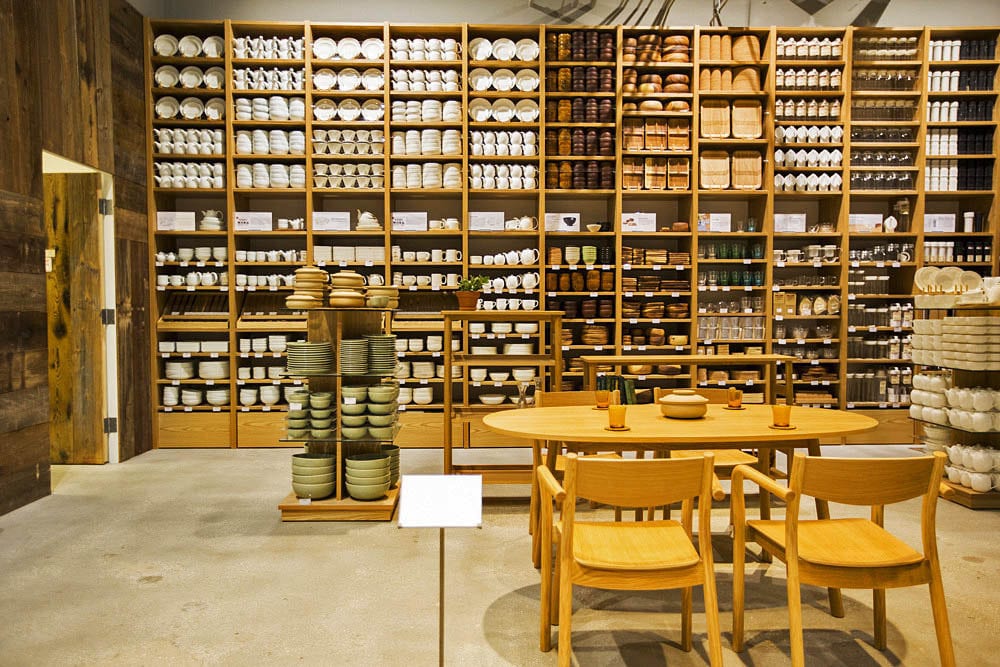
    The new store covers a total space of 1344.62sqm with 1022.84sqm floor space, and will stock Muji’s range of men’s, women’s and children’s apparel, and accessories, furniture, homewares, skincare products, stationery, bedding, and travel goods.

    Victor Gaspar, GM of Ipoh Management Services, is thrilled to welcome Muji to The Galeries.

    “The much anticipated flagship Sydney store reinforces The Galeries’ ongoing pursuit of an unique, world class cultural offering. This is the first of a number of new openings planned at The Galeries this year, which promises to enhance the unique retail experience already offered to our customers.”

    Muji Australia’s MD, Takuo Nagahara, says he looks forward to the launch in Sydney and expanding Muji nationwide.

    “We look forward to further developing and sharing our brand concept and activities with people across Australia.” Nagahara says.

    The Galeries’ store will bring Muji to a total of 703 stores worldwide.

    The company is planning to open additional stores in Australia as well as an online store in the future.

    In 1980, Muji was established as a private brand of Seiyu, beginning with a limited range of 40 products.

    These products were the antithesis to the trend at that time, when Japanese consumers placed too much emphasis on brand name products, paying premium price for the brand name rather than the value of the product itself.

    Muji is derived from its Japanese name, ‘Mujirushi Ryohin’, which means ‘no brand quality goods,’ and the products are characterised by their simple aesthetic and eco friendly minimal packaging.

  • China’s new powerhouse: China60

    China’s new powerhouse: China60

    A new generation of emerging Chinese cities represents a whole new frontier for real estate development, according to a study released by JLL this week.

    China60, a comprehensive research report that assesses the nature of real estate opportunities across 60 of China’s most important secondary and tertiary cities, maps out China’s emerging business locations and identifies the drivers that are shaping China’s city hierarchy.

    Tianjin city, pictured above, heads the list. (Refer to the infographic below for more demographic information on the 60 cities).

    The cities comprising China60 equate to the world’s second-largest economy in terms of purchasing power and despite the economic slowdown, are projected to contribute 15 per cent of global growth over the next decade.

    “As China60 cities enter a new era of competitiveness, domestically and globally, ‘city brand-building’ will be a defining theme over the next few years,” explains KK Fung, MD for JLL Greater China.

    “Quality of life, cultural assets, and environmental considerations are coming to the fore as these cities compete for talent and businesses. The real estate industry will play an important role in making the China60 cities liveable, resilient, and sustainable.”

    Fung says these cities are emerging as the new growth engines at a time when China is transitioning from fast growth to smart growth.

    “This ‘New Normal’, marked by lower but more sustainable economic growth, means that decision makers in the commercial property industry need to reassess their strategic choices in the light of higher-value growth, which will boost demand for modern commercial real estate across the China60 cities,” he said.

    In retail, with a huge influx of new shopping malls, the rapid adoption of e-commerce is also quickly driving the retail sector into uncharted territory.

    “But the sector will blaze its own trail as bricks-and-mortar facilities grow in tandem with omni-channel and experiential retailing.”

    Jeremy Kelly, JLL’s director in Global Research, said while much of the growth is coming from secondary and tertiary cities in Southwest, Northwest and Central China, the rise of mega city-regions is adding a new complexity to China’s urbanisation.

    “Satellite cities in the Yangtze River Delta region, in particular, have shown remarkable growth, thanks to dynamic private enterprises, advanced supply chains, and strong intra-regional connectivity.

    “The macro fundamentals to deliver ongoing strong demand for all major commercial real estate sectors over the next few years are evident, and China60 has tremendous capacity to absorb any excess commercial real estate space over the medium term. The demand for office, retail, warehousing, and hotel space will rise in tandem with the shift of economic development towards expanding the service sector.” said Kelly.

    “However, following years of rapid economic expansion, China60 cities are currently facing a short-term oversupply. As these markets mature, investors will require stronger discipline and much more robust planning and decision-making.”

    The continued growth of the consumer class, now numbering 130 million people in the China60 cities, means the Chinese economy is driven more than ever by domestic consumption. Logistics warehousing will continue to provide exceptional long-term growth opportunities in the China60, underpinned by demand from traditional retail distribution, as well as due to rapid growth in eCommerce and multi-channel retailing.

    In the office sector, as the expansion of large private Chinese companies, such as Alibaba, Huawei, and Tencent, reaches a positive tipping point, they are now a distinctly more visible driver of Grade A office demand within the China60. Tier 1.5 markets in particular will benefit from the shift towards high-value activities, and have a favourable outlook for absorption.

    In contrast, the hospitality sector has been impacted most severely by the ‘New Normal’ and will go through a period of wholesale structural change as it repositions for future growth, says JLL, which expects the sector to become leaner and fitter.

    “It will likely provide some favourable buying opportunities for investors over the next two to three years. Mid-scale and select-service chains are growing quickly.”

    china60-from-fast-growth-to-smart-growth-1-638

  • Starbucks Indonesia to double network

    Starbucks Indonesia to double network

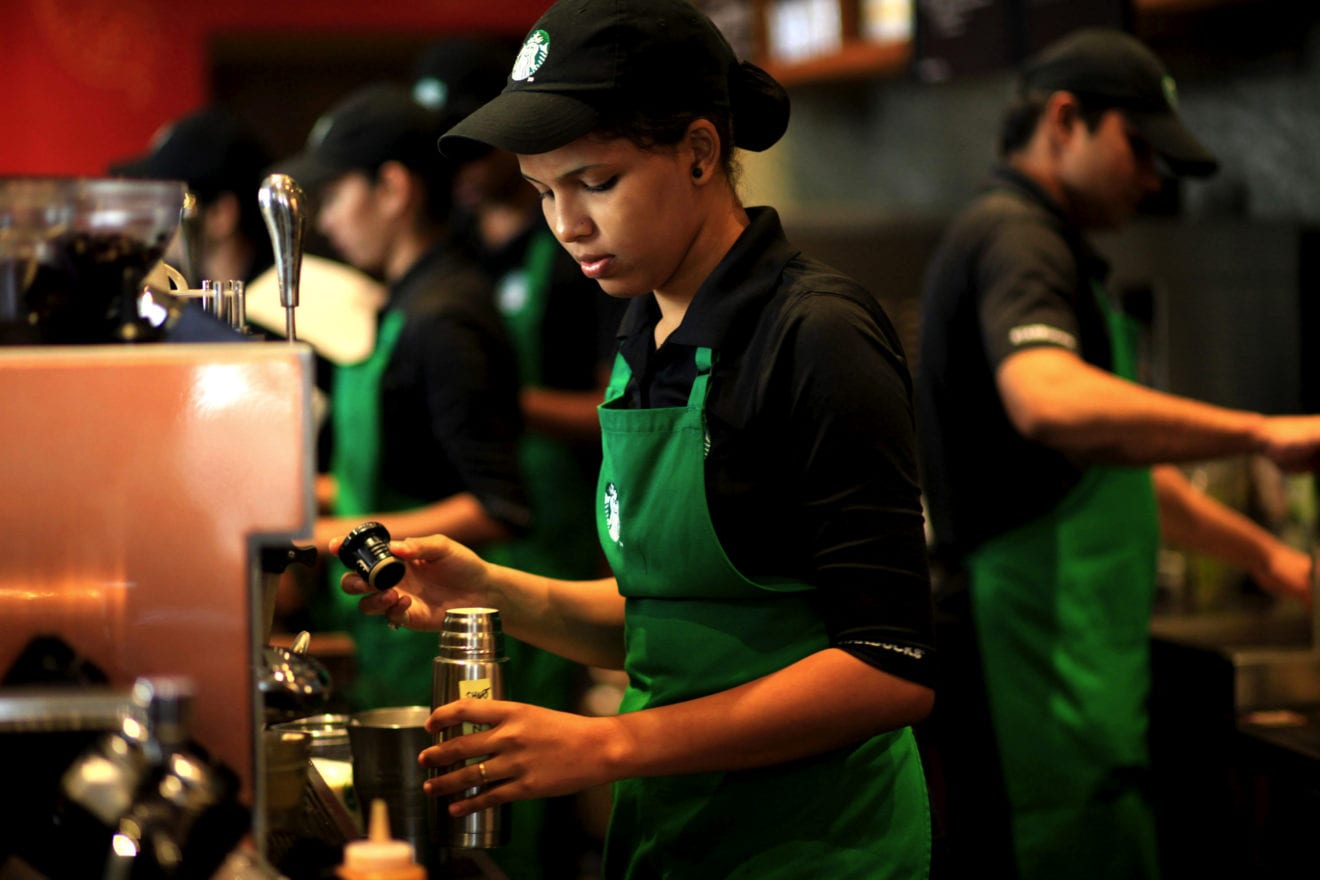
    Starbucks Indonesia plans to double its current 200-strong store network within five years.

    In an interview with Indonesia Real Time, Starbucks Indonesia COO Anthony Cottan says demand is growing for the American-based global coffee giant’s products – and so, too, is Indonesia’s middle class.

    Starbucks made its Indonesian debut in 2002, opening its first store in the luxury Jakarta mall Plaza Indonesia. It now has cafes in 13 of the nation’s larger cities, located in shopping centres, airports, hospitals and motorway laybys.

    Cottan said the company plans to introduce bubble tea in June in a trial in several stores and is planning its first ‘Community store’, which, like those in markets like Thailand and Korea, will return a share of profits to community causes.

    He said it was great that Indonesians are adopting more of a coffee cultures.

    “More people are doing it and taking a deeper level of interest. I love all these independent coffee shops; they have great coffee. They roast it fresh, using Indonesian beans most of the time.”

    Starbucks Indonesia is trying to make its global culture relevant to the Indonesian market, Cottan said.

    “We try to make each [cafe] relevant to its neighborhood. The [outlet] in Grand Indonesia Mall has a very Batavia feel about it. The one we have in Stasiun Kota (in central Jakarta)… has an industrial look. So just because we’re a big company doesn’t mean that we can’t build with some consciousness and some connection to heritage. That makes it more exciting,” he told Indonesia Real Time.

  • Ex-Yahoo exec joins JD.com

    Ex-Yahoo exec joins JD.com

    JD.com, China’s largest online direct sales company, has appointed former Yahoo! executive Chen Zhang as senior VP.

    Zhang will head research & development for JD Mall, reporting to Haoyu Shen, JD Mall’s CEO.

    Zhang has been recruited to oversee JD Mall’s R&D staff, focusing on research that will enhance the company’s mobile applications, cloud computing and big data infrastructure. Daxue Li, who heads JD.com’s R&D team, will leave the company to pursue personal interests after a transitionary period but continue as an advisor to JD.com.

    At Yahoo, Zhang established and led the company’s Beijing Global Research & Development Center. In this role, he specialised in research related to personalisation, advertising, mobile and cloud computing technologies. During his 18 years at Yahoo, he held a number of other senior roles, and led the development of the hugely successful Yahoo Messenger product.

    “Chen is one of the most experienced executives in his field, not just in China, but globally,” said CEO Shen.

    “His breadth of experience has relevance right across our business, and we are confident he will have an immediate and lasting impact on our growth.”

    Zhang said he believes JD.com is one of the most innovative companies in the industry, led by a team that truly understands how technology can drive strategic success.

    JD.com, Inc. is a leading online direct sales company in China, with seven fulfillment centers and 123 warehouses in 40 cities and 3210 delivery and pick-up stations across China.

  • Superdry teams with Idris Elba

    Superdry teams with Idris Elba

    SuperGroup, UK-based parent of the faux Japanese Superdry brand, has signed up Idris Elba to help it re-launch in the US market.

    Elba is the star of the popular US crime show The Wire and the British BBC crime drama Luther, starred in the movies Mandela and Marvel’s Thor, and is repeatedly rumoured as a future James Bond.

    SuperGroup says it has signed Elba to create an exclusive new autumn winter collection for 2015.

    The company has revealed few other details but CEO Euan Sutherland said Elba’s high profile will help relaunch the Superdry brand in the all important North American market.

    Sutherland said Superdry’s prime target market remained aged 18 to 24, but many early converts to the brand have “grown up with” it. At 42, Elba will appeal to that older generation of shopper as well.

    “He epitomises what we are: British, grounded and cool,” said Sutherland.

    SuperGroup recently bought back the exclusive marketing rights to Superdry in the US, Canada and Mexico, paying £22.3 million to prematurely end the 30 year deal. With just 15 stores it sold £20 million worth of apparel in those markets last year, but lost £5 million doing so.

    “Idris Elba is a big man in the US and he will automatically reposition Superdry in people’s minds,” said Sutherland.

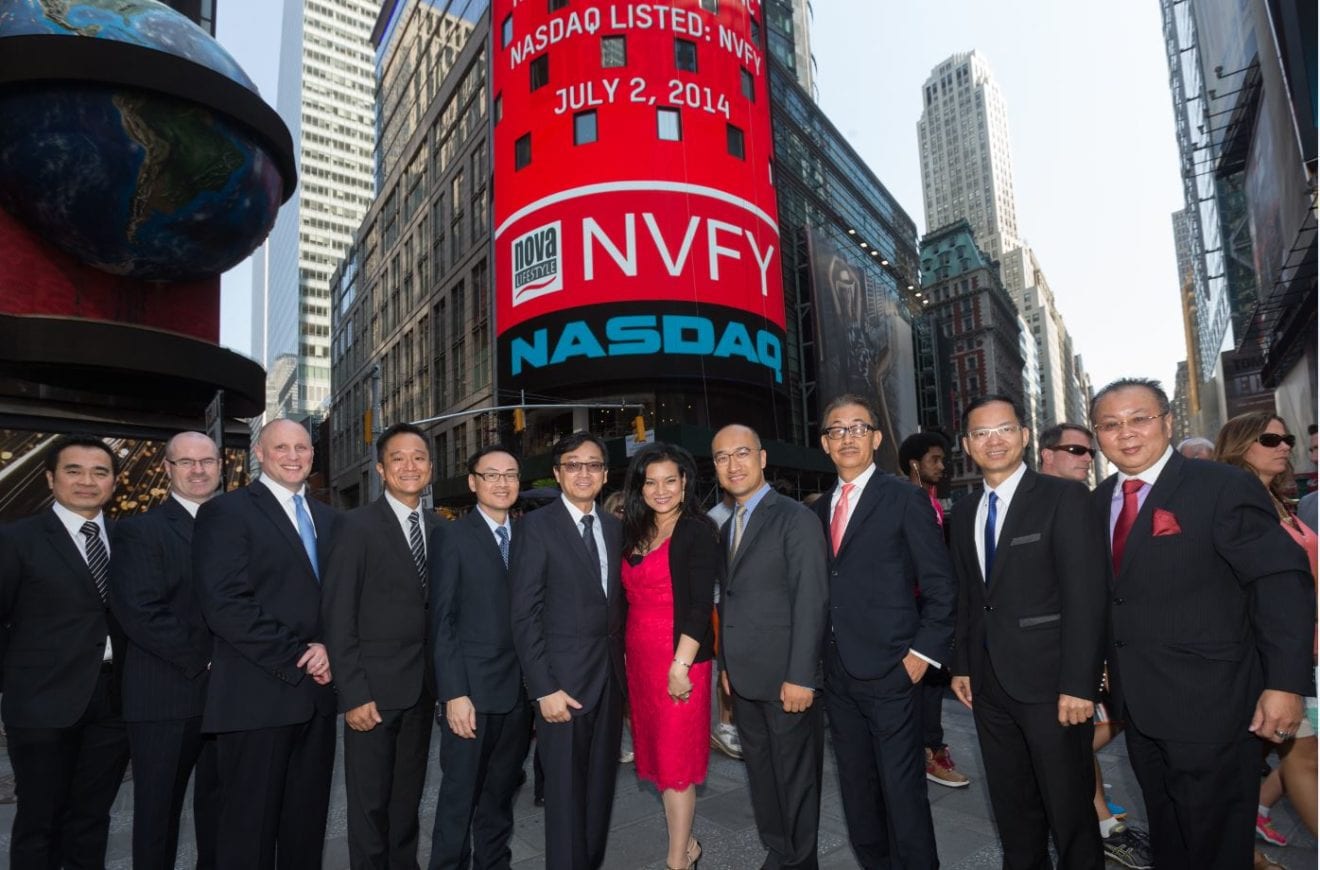
  • Nova LifeStyle boosts China focus

    Nova LifeStyle boosts China focus

    US furniture designer, manufacturer and distributor Nova LifeStyle sees China as a key growth market as it feels a pinch in Europe.

    The company finished 2014 recording a 26 per cent year-on-year increase in net sales to US$98.7 million, with growth was primarily driven by a 46 per cent increase in sales in North America and 14 per cent in Asia Pacific, partially offset by a 20 per cent decline in Europe.

    Its gross profit was $19.4 million, also an increase of 26 per cent. Net income for the California-based, Nasdaq-listed company was $8.6 million.

    In China, overall sales increased by six per cent to $17 million, largely due to the opening of seven new franchised stores in the nation.

    “Throughout 2014, Nova LifeStyle implemented strategic initiatives to expand sales and distribution in China, a key growth market,” the company said in its earnings statement.

    Nova LifeStyle boosted sales on Alibaba’s B2C sites, TMall and JD.com and signed a franchise partnership with the Ablejoy Company of China, to provide Nova products to its 200-strong retail store network.

    Nova LifeStyle initiated shipping to Ablejoy in the third quarter of 2014 and will continue to supply current and future franchise stores. The company also successfully began manufacturing and shipping to Ikea China.

    Sales in other parts of Asia Pacific, including Hong Kong, Australia, and other countries, increased 46 per cent to $5.89 million in 2014.

    The company said it expects the China and US markets to contribute to top-line growth in the year ahead.

    “Sales in Asia increased significantly and we view the supply agreement with Ikea China as a testament to the quality of our products and manufacturing capabilities,” said CEO Jeffrey Wong.

    “We are witnessing the expansion of the retail furniture market in China as the growing middle class, increasing urbanisation and increased consumer spending fuel higher demand for household goods and furniture.

    “Due to our efforts in 2014, we believe that Nova LifeStyle is well positioned to take full advantage of any upturns in the global economy, both in Asia and in the domestic market,” concluded Wong.

    Nova’s products are made in the US, Europe, and Asia and include LifeStyle brands such as Diamond Sofa, Colorful World, Giorgio Mobili, Nova QwiK, and Bright Swallow International.

  • Fashion startup LimeRoad wins funding

    Fashion startup LimeRoad wins funding

    Suchi Mukherjee gave birth to both her second child and her start-up in 2012. In fact, she was on maternity leave when she started up LimeRoad, a fashion eCommerce site targeted at Indian women. Today, it is one of the biggest success stories by a woman entrepreneur in India.

    LimeRoad has just raised US$30 million from Tiger Global, Matrix Partners, and Lightspeed Venture Partners in series C funding. The same investors had pumped US$15 million into the fast-growing fashion portal less than a year ago. Earlier, at inception, Matrix and Lightspeed had invested US$5 million.

    LimeRoad combines fashion eCommerce with social discovery. The site features user-generated ‘looks’ which mix and match interesting combinations of apparel and accessories. It encourages users to experiment with ‘looks’, such as a fusion of Indian and Western styles in wearing a modern crop-top with a traditional saree or finding a dupatta [light Indian women’s scarf] to go with denims and T-shirt.

    A user can build collections of styles in scrapbooks on the site, which others can browse for ideas. LimeRoad’s algorithms rank the scrapbooks to make the most relevant and popular of them easier to find.

    Limeroad-scrapbook 315

    “Women from across the country are using scrapbooks as a medium for self-expression… As a result, over 80 per cent of our orders come from organic traffic,” says LimeRoad CEO and co-founder Suchi Mukherjee, in a statement on the funding.

    “The uniqueness of LimeRoad lies in the passionate user base and the mission of providing an engaging platform for smaller brands to thrive,” adds Lee Fixel, managing partner at Tiger Global.

    Suchi Mukherjee, who studied finance at the London School of Economics, worked for eBay in London before becoming an entrepreneur. Her co-founders in LimeRoad include Prashant Malik, who was earlier with Facebook, and Ankush Mehra, who headed the supply chain at Reliance Hypermarkets.

    Fashion discovery is a hot space in India. Just last week, another fashion portal Roposo raised US$5 million in series A investment. This too was led by Tiger Global, along with participation from Binny Bansal, co-founder of eCommerce biggie Flipkart.

    Started by three IIT Delhi alumni, Roposo is derived from ‘apropos’, alluding to its pitch on making the search for fashion products more relevant to user needs.

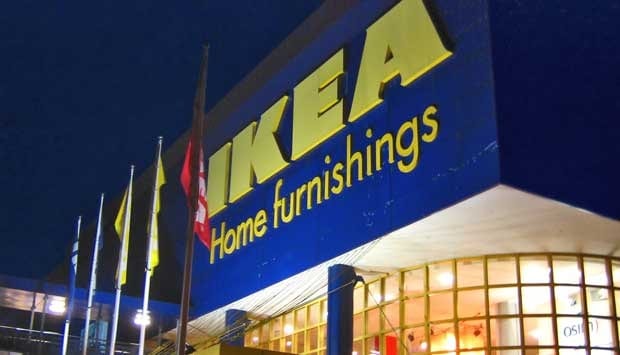
  • Ikea Korea boosts furniture sector

    Ikea Korea boosts furniture sector

    Before the opening of the first Ikea store in Korea last year, Korean furniture companies were worried about the threat posed by the Swedish behemoth.

    Many industry observers said the impact of Ikea in Korea would be felt across the industry.

    Without a doubt, Ikea has been big hit in Korea over its first 100 days trading According to Ikea Korea, it welcomed 2.2 million customers as of March 18, and local shoppers had signed up for 300,000 “Ikea Family” memberships. Visitors praised the reasonable price tags and practical designs, and most said that they planned to revisit the store.

    However, 100 days after Ikea Korea’s debut, the real winners are Korea’s major furniture makers, who are laughing all the way to the bank thanks to the “Ikea effect”, which has helped them attract more customers.

    Sales at Hanssem, the largest furniture maker in Korea, reached 1.32 trillion won last year, a 31.5 per cent increase over the previous year. Similarly, Hyundai Livart’s revenue increased 15.92 per cent to 643 billion won last year.

    Ironically, their shops near Ikea’s Gwangmyeong store saw increases in customer visits in January and February this year. During this period, the revenue of Livart’s Gwangmyeong branch increased 27 per cent, while Hanssem’s Gwangmyeong store saw a 10 per cent increase in sales over the same period of the previous year.

    An official at Hanssem said: “The sales increase at the store was thanks to Ikea. Seventy per cent of customers visiting our Gwangmyeong branch came from Ikea. Those who could not find what they wanted at Ikea visited our store looking for alternatives. It’s the ‘Ikea attraction.’”

    To cope with the Swedish giant’s low-prices and do-it-yourself marketing power, local furniture makers armed themselves with “high quality and service” as their core competitiveness. Hanssem tried to reduce its production costs through automation and standardisation of parts. In addition, it opened its sixth flagship store, and focused on improving its customer service.

    Livart, Korea’s second largest furniture company, implemented an aggressive marketing strategy aimed at younger generation buyers looking for mid- and low-priced products. It strengthened its online sales channel, broadening its offerings to include kitchen and office furniture.

    At the center of their efforts to increase revenue against the threat of Ikea are free delivery and assembly services.

    Ikea visitors calculate the price of the products, delivery charge and unseen cost of DIY together. For example, Ikea’s Brimnes triple dresser (78cm x 95cm) costs 99,000 won, but a similar sized Hanssem triple dresser (80cm x 73cm) sells for 109,000 won. One can save 10,000 won when buying the Ikea product. However, Ikea customers also need to pay 29,900 won for delivery and 40,000 won for assembly, if they require those services.

    Choi Yang-ha, CEO and vice chairman of Hanssem, said: “Ikea is famous for its reasonable pricing and wide variety of products. However, if customers use its delivery and assembly services, its price competitiveness falls behind Korean competitors. We have our own strategy, offering free delivery and assembly services, and providing products through various distribution channels.”

    However, smaller furniture makers have been left in the cold, as they do not produce products of interest to typical Ikea visitors. As a result, small furniture shop owners have seen their revenue fall 71.8 per cent since Ikea’s Gwangmyeong store opened.

    To support small sized furniture manufacturers, Gyeonggi Province plans to invest a total of 87.5 billion won to raise its competitiveness and to revitalize the furniture industry in the province.

  • JD.com crowdfunding concept launched

    JD.com crowdfunding concept launched

    Chinese eCommerce company JD.com, has unveiled a series of initiatives to help finance, develop and promote the creation of start-ups in China.

    The new JD Equity Crowdfunding platform, which builds upon JD.com’s success in internet finance, is expected to be China’s largest equity crowdfunding platform upon its launch this week.

    “JD Equity Crowdfunding, which expands the range of offerings from JD Crowdfunding, will leverage JD.com’s nationwide brand and reputation for authenticity in the eCommerce space to give China’s entrepreneurs access to a broad set of potential early-stage investors,” the company said in a release.

    “The new platform will provide a unique range of training and support options for companies throughout the entire start-up lifecycle, giving entrepreneurs a greater chance at success.”

    JD.com says the initiatives, anchored by JD Equity Crowdfunding, will help to create an ecosystem supporting start-ups from the funding through the online sales stages of development. In addition to capital through crowdfunding, companies will have access new training courses provided by JD.com and seasoned investors and entrepreneurs, as well as to the company’s broader Internet financing tools. I

    And they will be able to sell their products through the company’s eCommerce platform, leveraging JD.com’s last-mile delivery network and reputation for trust and reliability.

    The first 11 companies to raise funds on the JD Equity Crowdfunding platform include Thunderobot, Fastwheel and WeBuzz, which respectively focus on the areas of gaming laptops, personal transportation devices and social media.

    “I know from personal experience how important it is for entrepreneurs to have access to knowledge and early funding,” said Richard Liu, founder and CEO of JD.com. “As the leader in Chinese e-commerce, JD.com is ideally positioned to create a premium platform to give China’s early-stage companies access to resources and seed capital from a broad range of investors. We look forward to creating innovation and value for investors, consumers and start-ups.”

    Under the JD Equity Crowdfunding model, each investment project will be led by a professional investment manager, from either a venture capital (VC) firm or from a company with similar experience, who will be responsible for working directly with the investee companies and ensuring clear and transparent communications with investors. Participating VCs who will help develop JD.com’s ecosystem for start-up companies include Capital Today, ZhenFund and Sequoia Capital. As part of the program, JD.com will take a small equity stake in the projects that successfully raise funding through JD Equity Crowdfunding.

  • Miu Miu Japan opens new flagship

    Miu Miu Japan opens new flagship

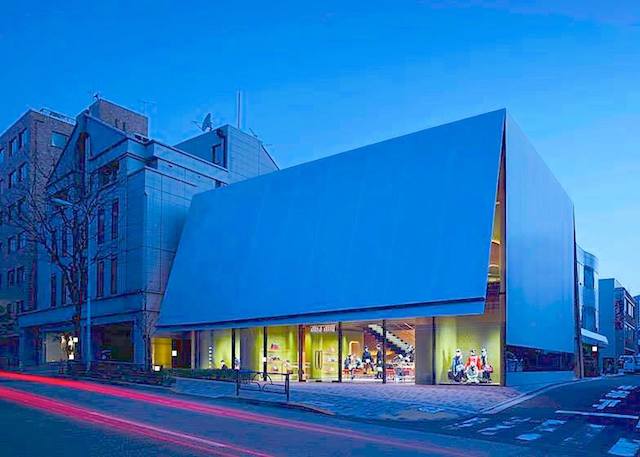
    Prada brand Miu Miu has unveiled a new project with Swiss architects Herzog & de Meuron, the centrepiece of its Japanese operations.

    The 720 sqm building on Miyuki St in the Aoyama District of Tokyo will be the cornerstone of the brand’s Japanese activities. Based in Paris, Miu Miu was established by Miuccia Prada in 1993 as a platform for design explorations beyond her legendary Prada line. Since opening its first boutique in Aoyama in 1999, Miu Miu has maintained a significant presence in Japan and now has 23 boutiques across the country including nine in Tokyo.

    Miu Miu Aoyama Tokyo 415

    Prada says the new building continues the company’s tradition of collaboration with world-class architects and re-emphasises Miu Miu Japan’s dedication to the Japanese market.

    The project for Miu Miu is sited diagonally across the street from the Prada Tokyo Epicenter – also designed by Herzog & de Meuron – in an elegant neighborhood that has, over the past two decades, become a showplace of architectural invention. In contrast to the transparency of the all-glass Prada building, however, the understated metallic surface of the Miu Miu façade is opaque, which lends a more intimate feel.

    Miu Miu in Aoyama Tokyo 415

    The architects say: “Contrary to expectations for a site that is home to so many luxury brands, Miyuki St in Aoyama Tokyo is not particularly beautiful or elegant. The architecture is heterogeneous – a hodgepodge of freestanding buildings of different heights and shapes, with neither historical tradition nor common standards.

    “Never meant to be a space of its own, the street is a purely technical and functional link between Omotesando and the Aoyama Reien cemetery farther down the road. Despite single trees here and there, the atmosphere is not inviting, like a boulevard or a plaza. Tokyo is pure, quintessential city, its territory exploited to the full with absolutely no leeway for the individuality that we take for granted in European cities.

    Miu Miu in Aoyama Tokyo.415

    “We already noticed this over 10 years ago when we were planning the glass building for Prada Aoyama,” they continued.

    “At that time, we were interested in counteracting the situation – on one hand, by placing a small plaza to the side of the building, and on the other, by making the structure completely see-through so that one can see into the interior from all sides and can also look out from inside at specifically targeted views of the city.

    “Over the past decade, the distinctive building has become a much-frequented location and it was therefore important to Prada, our client Prada Japan and also to us as architects to take this into account in planning the Miu Miu store located in the immediate vicinity on the opposite side of the street. We started out by trying several different architectural typologies. Since zoning regulations called for less height, we explored the potential of a smaller, more intimate building. We used the following thoughts to channel our ideas: more like a home than a department store, more hidden than open, more understated than extravagant, more opaque than transparent.

    Miu Miu in Aoyama, Tokyo 415

    “The typological model that best suited these considerations and specifications was a box placed directly at the level of the street, its cover slightly open to mark the entrance and allow pedestrians to look inside. Only then do they realise that the building is a shop.

    “Here, under the oversized canopy, the two-storey interior is visible at a single glance, as if the volume had been sliced open with a big knife, turning the inside out. The rounded, soft edges of the copper surfaces inside meet with the razor-sharp steel corners on the outside of the metal box, while the cave-like niches clad in brocade face the central space of the shop like loges in a theatre.

    “The shop on two tall storeys not only presents enticing goods on tables and in display cases; it is also like a spacious and comfortable home with inviting sofas and armchairs.”

    The façade has neither logo nor pomp; it is a polished, mirror-smooth surface, as if one single giant brushstroke had swept smooth the ordinarily matte surface of the steel panelled façade. This surface attracts the gaze and curiosity of passing pedestrians. But instead of affording a view inside, as in a shop window, the gaze is inverted; instead of the anticipated see-through window, viewers encounter self-reflection.

    Miu Miu in Aoyama Tokyo 415.