Blog

  • China drives Osaka duty free boom

    China drives Osaka duty free boom

    Osaka department stores are reporting three times the usual duty free sales to foreigners over Lunar New Year.

    Chinese shoppers may be curtailing spending at home, but they’re still splurging when they travel – as they are doing in increasing numbers within Asia.

    An executive from the Osaka Takashimaya department stores said duty-free sales in the week to Tuesday, when Lunar New Year ended, were 3.5 times the rate of last year.

    More and more Chinese took their holidays in Osaka this year due to a boost in the number of flights by budget carriers from mainland China, Hong Kong and Taiwan.

    The most popular items purchased were Hello Kitty merchandise, especially stationery, Japanese whisky and confectionery.

    At the Kintetsu Department Store Co’s flagship in Abeno Hurakas, Japan’s tallest building, duty-free sales quintupled. There, cosmetics were the most popular category.

    Other department stores reported sales increases of four to four point five times.

  • Savills to tenant Carrefour China

    Savills to tenant Carrefour China

    Savills has signed an agreement with Carrefour to sign up tenants for its new Siyuan Plaza, Carrefour’s first shopping centre in China.

    Siyuan Plaza is located at Siyuan bridge in the Chaoyang district, in the core of Wangjing commercial region. With a total leasable area of 35,000 sqm, it includes one underground floor and three floors above ground. It will integrate about 80 lifestyle stores, one food court, 20 restaurants, an 11,600 sqm Carrefour supermarket and a 5000 sqm Decathlon sports retail outlet.

    Brands signed so far include C&A, Uniqlo, La Chapelle, Starbucks, Burger King, Baskin Robbins, Papa Johns, and Xiabu Xiabu.

  • Bossini bucks the blues

    Bossini bucks the blues

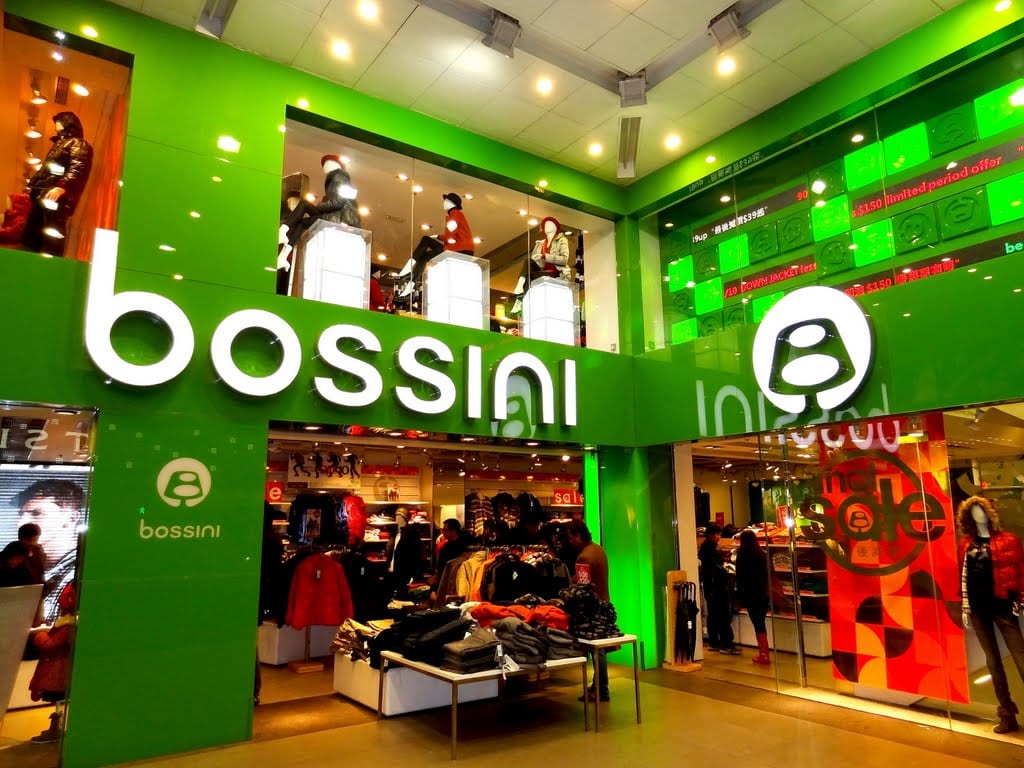
    Hong Kong fast fashion chain Bossini has reported a modest boost in sales in the half year to December.

    Group revenue increased by four per cent year-on-year to HK$1,319 million (US$170,056,190) and gross profit for the period under review was HK$665 million (US$85,737,200)

    Gross margin was slightly improved, up by one percentage point to 50 per cent. And the group reduced its inventory turnover by a full week – from 99 days to 92 days.

    In its earnings statement, the company said the result was achieved “despite challenging economic and political factors”.

    “Record-high sales were registered in the Hong Kong and Macau retail operation, an achievement with 22 consecutive quarters of positive same-store sales growth. A milestone was achieved for mainland China operations as our efforts to increase shop productivity and adopt stringent cost control measures in the preceding financial year helped us to achieve a turnaround in operating profit and achieve seven consecutive quarters of positive same-store gross profit growth.”

    Bossini said Taiwan also recorded an improved performance, helped by ongoing efforts to enhance shop productivity and implement cost-control measures, which led to the fifth consecutive quarter of positive same-store sales growth.

    “During the six months under review, the group maintained a cautious approach to expansion in the face of ongoing global uncertainty. The group had presence in 35 countries and regions worldwide as of December 31. The overall store count decreased by 13 against the previous year to 949, of which 268 were directly managed and 681 were franchised.

    CEO Edmund Mak said that although the US economy is expected to follow a stable growth trajectory in the year ahead, growth in mainland China is expected to slow further.

    “The apparel retailing sector remains highly competitive throughout the region. Nevertheless, the group is confident in pursuing the appropriate strategies to mitigate external risks.

    “We will focus on continuing to streamline productivity in our existing stores, enhancing both efficiency and our overall services in order to provide memorable and vital shopping experiences which reinforce our dynamic and energetic brand image.

    “In mainland China, Taiwan and Singapore, meanwhile, we will continue to implement best practice solutions which have proven successful in our Hong Kong operation. We will also continue to expand our footprint in export markets which show good potential for growth and to partner with well-known brands to launch co-branded and licensed clothing and merchandise that extends and enhances our brand visibility and stature.”

    Mak concluded: “Going forward, the group will continue to create appealing, competitive and quality everyday wear that drives sustainable growth, profitability and customer satisfaction. With a firm focus on our “be happy” core brand value, we will continue to strengthen our competitive edge and endeavour to enhance the value we offer to our shareholders.”

  • Google unveils 2 affordable smartphones in Philippines

    Google unveils 2 affordable smartphones in Philippines

    Google unveiled two affordable smartphones in the Philippines built from the Android One program, a global initiative to bring high-quality smartphones to emerging markets.

    The two phones, developed by local manufacturers Cherry Mobile and MyPhone, will retail for PHP5,000 (USD113.4) in the coming weeks.

    Caesar Sengupta, Vice President, Product Management, Google, said the Philippines is the sixth country in Asia where the Android One program was rolled out, after India, Bangladesh, Nepal, Sri Lanka and Indonesia.

    Android One phones come with the latest version of Android Lollipop and the two phones that will sell in the Philippines will both have 4.5” FWVGA display, Cortex A7 1.3 GHz Quad-Core processor, 1GB RAM, 2 SIM card slots, and front and rear facing cameras and 4GB and 8GB storage (expandable to 32GB).

    Sengupta said Google is also working to reduce data costs for Android One users in the Philippines. For one, the data compression feature on the Android One Chrome browser helps compress the amount of data flowing between the phone and the Internet.

    The Philippines is one of the few countries where YouTube users can take videos offline to watch later during periods of low or no Internet connectivity.

    Telecommunications companies Smart Communications Inc, and Sun Celluar are pitching in effort to make the mobile experience better for users through free over-the-air (OTA) updates to the Android operating system and certain amounts of app downloads from Google Play for the first six months.

    Globe Telecom, on the other hand will be working with Android One users to better access the Internet through its network.

    Ken Lingan, Google’s Country Manager for the Philippines, said during the launch that the country now has over 44 million Internet users. The projection is that by 2016 there would be 66 million Filipinos online.

    “Currently, the Philippines is already the second largest Internet market in Southeast Asia, the 6th largest in Asia. The numbers are growing. There is a massive potential that we see for e-commerce and growing content online because as we see more Filipinos going to the Internet primarily through a mobile device,” he said.

    Sengupta said that it is part of Google’s mission to help connect the four billion or so people around the world who still do not have access to smartphones and are not yet online, mostly in emerging markets like the Philippines.

    “There are lots of first smartphone users do not really get a very nice experience with their gadgets, the software are pretty old and connectivity is expensive and the bandwidth limited,” Sengupta added. “We put together this programming called Android One as an integrated approach to try to solve these problems.”

    Mobile Internet in the Philippines is growing 112 percent year-on-year. By the end of this year, Google expects 50 percent of the population with smartphones. This growth is largely being powered by Android.


  • McDonald’s Philippines marries value meals with mobile access

    McDonald’s Philippines marries value meals with mobile access

    McDonald’s Philippines has partnered with mobile services provider Smart Communications in its latest marketing promo to encourage customers to purchase value meals.

    Every order of any McDonald’s Value Meal plus fries or sundae comes with a free Smart messaging coupon that gives customers a whole day of unlimited text and unlimited access to mobile chat apps.

    The Philippines has about 102.8 million mobile subscriptions in 2013 or over 100 percent of the population, according to data from the International Telecommunications Union (ITU). Most people, however, are on prepaid subscription.

    The Smart messaging coupons to be given away with the meals gives a prepaid subscriber all-day access to SMS and chat apps such as Facebook Messenger, Line, Viber, WeChat and Whatapp – without need for WiFi connection.

    “Our subscribers can expect more perks and freebies as we move toward further enriching their mobile lifestyle,” said Joel Lumanlan, Smart Prepaid head.

  • Giant Chengdu book store opens

    Giant Chengdu book store opens

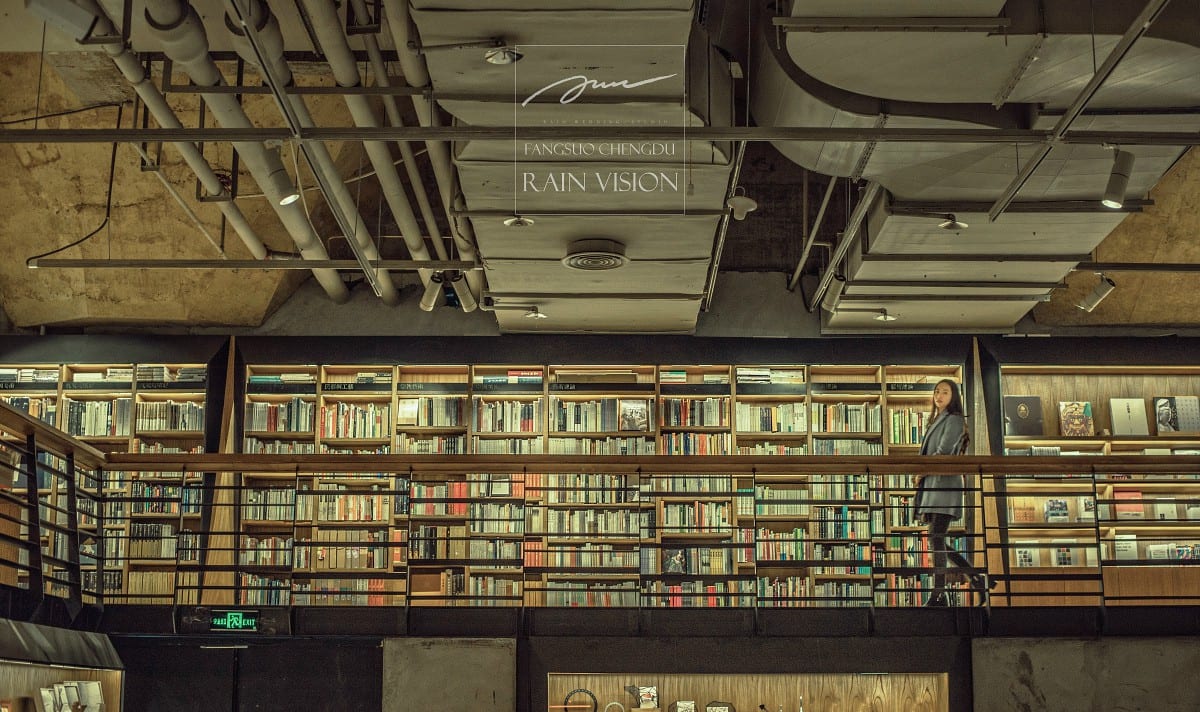
    Award-winning book retailer Fang Suo Commune has opened another stunning store – this time in Chengdu, China.

    Two more are planned later this year – one in Chongqing in March and another in Qingdao later in the year. It is already planning a Shanghai store for 2017.

    Fang Suo Chengdu 1- 215

    The original Fang Suo Commune store, in Guangzhou was named the world’s best retail store in 2013 in the prestigious World Retail Congress Awards. According to Chinese news reports the store turns over as much as 1.5 million yuan (US$240,000) a day, although books account for just 35 per cent of that figure.

    The Fang Suo concept is more than a retail store. The founders want to encourage shoppers to relax and ‘hang out’ in store, as well as to shop. It features a cafe, a home living collection and space for cultural events.

    Fang Suo Commune Chengdu 3 - 215

    The 4000sqm Chengdu store officially opened at the end of January but during a two-month long ‘soft opening’ it attracted between 7000 and 20,000 visitors per day – twice the number of Guangzhou.

    “A brick-and-mortar bookstore that only sells books is unable to survive in the digital age,” Fang Suo Commune chief consultant Liao Mei-li said at the Chengdu opening ceremony.
    “However, what’s amazing about the book industry is that it can do crossovers with many other industries such as beverages and movies. There is a market for such cross-industry bookstores,” Liao said.

    Fang suo commune Chengdu 2- 215

    “To achieve business success, a cross-industry bookstore needs a big enough scale. But most importantly, we need a professional team to operate it. The leading members in Fang Suo’s team all have more than a decade of experience in the book or retail industry,” Liao said.

    The two-storey store, located in Taikoo Li Mall, features a 100 metre long display of books on either side of a giant room and handcrafts selected from all over the world on display tables in the centre.

  • Giant Matahari Mall online planned

    Giant Matahari Mall online planned

    Indonesian industrial conglomerate Lippo Group is to invest US$500 million creating “the Alibaba of Indonesia”.

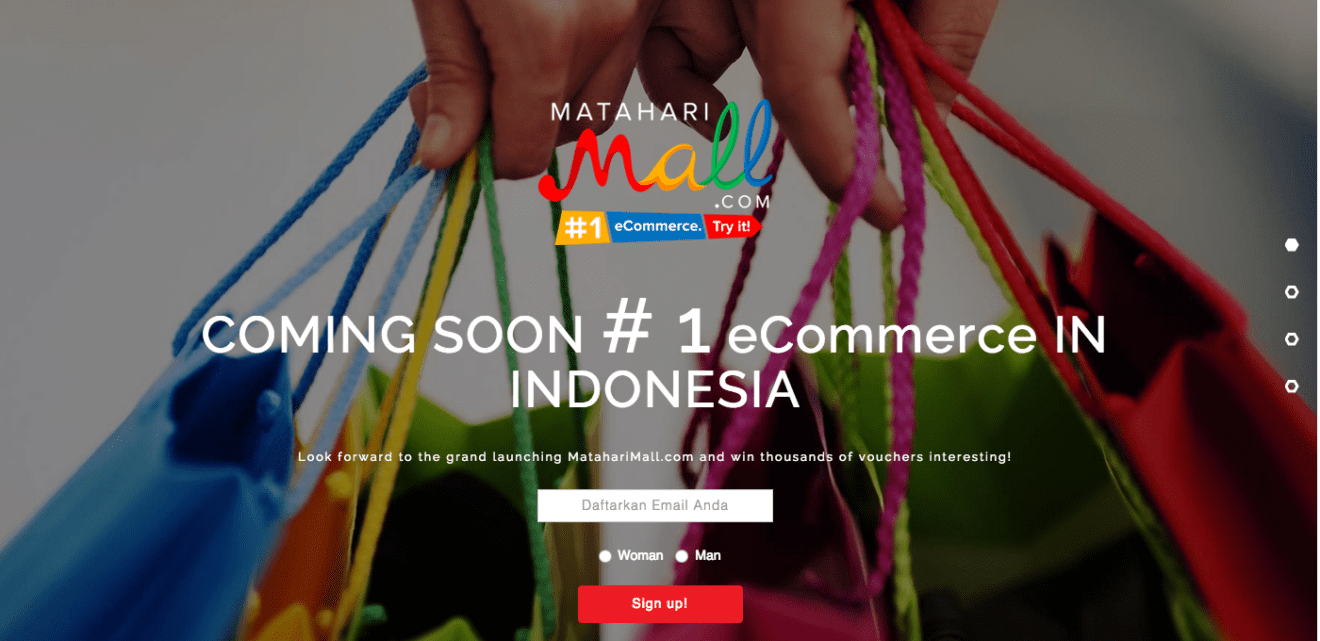
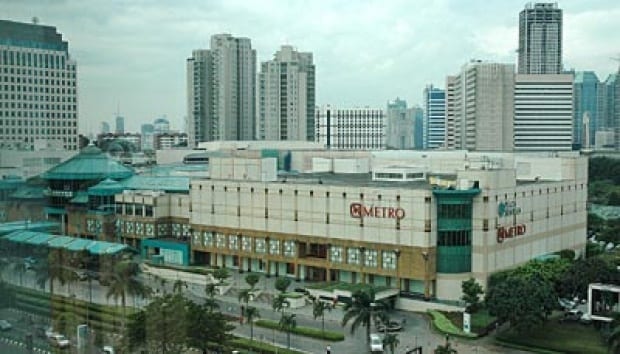
    The Indonesian mall will bear the Matahari department store brand name, MatahariMall replicating and expanding the nation’s largest department store’s bricks and mortar offer online.

    Lippo Group is one of Indonesia’s largest and diversified corporations, which owns Matahari hypermarkets, department stores and some 60 shopping centres. It says it will invest the internet funds into the Matahari Mall online over a two to three year period as it strives to create the nation’s largest eCommerce site, turning over US$1 billion annually.

    Lippo Group representative John Riady described eCommerce in southeast Asia as “a US$100 billion opportunity”.

    “We want to become ‘the Alibaba of Indonesia’,” he told a media briefing.

    “Indonesia is the last remaining, large underpenetrated eCommerce market in Asia. MatahariMall is the single largest eCommerce opportunity today.

    “Our vision is to build the most powerful ecosystem that brings together buyers and sellers to do business anytime and anywhere.”

    Five years from now, Lippo wants to achieve US$25 billion in sales from its Matahari operations, 80 per cent of that from its bricks & mortar stores, 20 per cent online.

    Tech In Asia reports that prior to Lippo’s announcement the largest single commitment to eCommerce in Indonesia was $100 million from SoftBank and Sequoia Capital into Tokopedia.

    Lippo is effectively putting MatahariMall will into head-on competition with Rocket Internet’s Lazada, southeast Asia’s strongest online retailer.

    MatahariMall will sell goods spanning the fashion, beauty, electronics, home, groceries, books and entertainment categories, and more. Customers will be able to purchase online and collect in a Matahari store.

    Matahari Department Stores CEO Michael Remsen says Indonesian eCommerce will grow 10-fold over the next five years.

    “Together with MatahariMall, we are committed to the future of ecommerce. All of our suppliers and partners are 100 per cent behind us,” he said.

    The site will go live in March.

  • Prada Vietnam makes debut

    Prada Vietnam makes debut

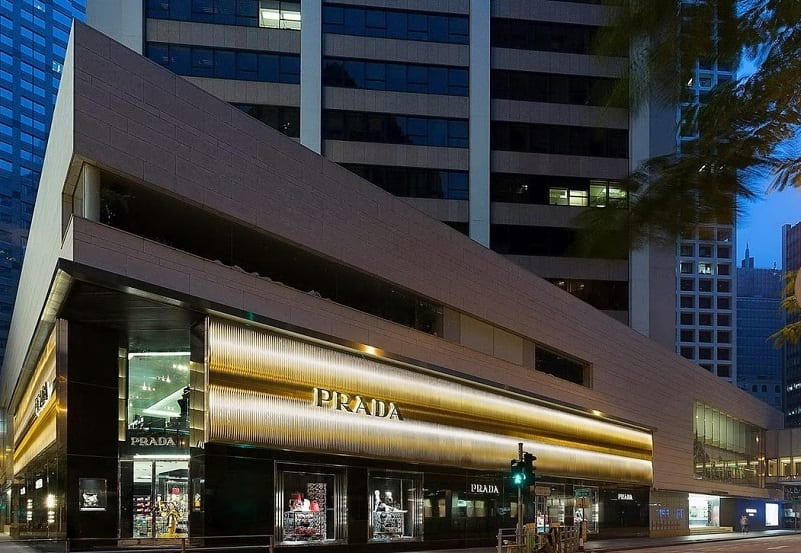
    Italian luxury brand Prada has opened its first store in Vietnam – in Hanoi.

    Prada Vietnam has debuted in Hoan Kiem, the capital city’s premier shopping strip

    Designed by architect Roberto Baciocchi, the store covers a total area of 360 sqm on a single level and houses the women’s and men’s leather goods, accessories and footwear collections.

    The store is strategically located on the corner of one of Hanoi’s historic buildings overlooking the renowned August Revolution Square. White stone pillars and a series of windows and light boxes inserted into black marble volumes set the rhythm of the external façade.

    The entrance overlooking the square is enhanced by a large canopy extending over it. The interior comprises a succession of spaces, each featuring a different atmosphere.

    The area housing the women’s leather goods collection is defined by the signature black and white marble chequered flooring – a legacy of Prada’s identity worldwide – and green fabric-clad walls with cut-in niches exalting the display of the products.

    In the space dedicated to women’s small leather goods and accessories, black marble-clad walls create an elegant atmosphere. Polished steel display counters with drawers covered in coloured saffiano leather complete the furnishing.

    The area hosting women’s footwear is characterised by beige carpeting, green velvet sofas and walls with Prada’s iconic display niches. The space devoted to men features masculine materials and finishes: ebony floorboards and walls, dark brown carpeting and cotto-coloured leather sofas.

    Polished steel display cases and counters with drawers covered in coloured saffiano leather complete the setting.

  • New concept for Pizza Hut Hong Kong

    New concept for Pizza Hut Hong Kong

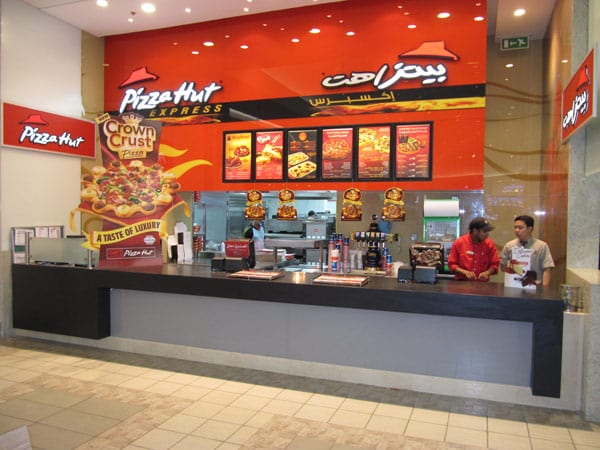
    Yum! Brands has unveiled a new concept store in Hong Kong – Pizza Hut Super Delco.

    The delivery-based, eat-in store model features smaller scale fast casual or a convenient eat-in area with seating for 30-50 customers. The company believes the new store model is ideal for locations with high traffic and in dense residential areas.

    In place of the stark, plastic look of the last generation of fast food stores, Pizza Hut Hong Kong Super Delco features cast iron ‘star-burst’ chandeliers, mosaic, light-wood tables and rustic grasses arranged amidst artisan olive oil bottles. In the words of Yum!, it looks more like a character-filled coffee bar than a pizza restaurant.

    Designed to create “a relaxing and intimate ambiance”, the new Super Delco offers “a flavorful oasis from the hectic lifestyle of millennials living in Hong Kong”, says Yum!.

    Pizza Hut Hong Kong is aiming to be the city’s ‘most loved’ pizza brand and the chain already boasts more than 100 outlets. It is one of the few Super Delco located anywhere in the world.

    Richard Leong, CEO of Pizza Hut Hong Kong, is excited about the opportunities the Delco Model store will bring to the region.

    “Pizza Hut Super Delco is a new business channel that will continue to be an engine of growth for us as the Hong Kong restaurant space becomes more competitive and the neighborhood dining scene is evolving. We also need to cater to a younger millennial generation seeking for a convenient meal replacement.”

    The Super Delco design was intentional as research showed that millennials in Hong Kong are looking for a relaxing place to enjoy a cup of coffee or tea and light meals (e.g. Panini or cake) during weekends in their neighborhood.

    It’s not just the design of the new Super Delco that’s infused with flavour: the menu brings new dishes, offering solutions for small groups or individuals with a focus on pasta, rice and mini-pizza.

    Dishes already proving popular among local customers include the Chinese New Year Pizza – Cheesy 7 Fiesta in the shape of a flower, and in Taiwan, the Pineapple Bun Stuffed Crust Pizza.

    “The overwhelming amount of encouraging responses to the new store opening has given the Hong Kong Pizza Hut team confidence in this exciting new venture,” Yum! said in a statement.

    More Super Delcos will now be opened in Hong Kong during the year.

  • Ethan Allen China boost

    Ethan Allen China boost

    American home furnishings brand Ethan Allen China has opened its 75th store Chinese store – an elegant, multi-level flagship in Haikou, Hainan’s capital.

    The US-based company shares the retail space with Markor Home Furnishings, its partner throughout the Chinese market.

    The design of the 25,000 sqft store the partnership’s “new generation” retail direction, with a stately and classical façade, and marble-clad interiors throughout. A second “new generation” flagship is planned for Beijing later this year.

    “We are taking the retail experience to the next level,” said Farooq Kathwari, CEO.

    Ethan Allen is in the midst of a product re-invention, introducing new styles and increasing its commitment to producing them in North America. The brand, which now makes over two-thirds of its products in its own workshops in North America, has found an enthusiastic clientele in China, said Kathwari.

    “This is a market that cares deeply about quality and has a passion for classic American style. Needless to say, we feel right at home here.”

    The brand is steadily expanding its retail footprint and has opened 11 new Design Centers in the last year, in key domestic markets like Houston, Las Vegas and Marlton, New Jersey and internationally in Dubai and Doha.

    During the next 12 months, 13 more stores will open, with the company continuing to focus on China.

    “As an American brand, we draw upon influences from all over the world, which is one of the many things that continue to keep Ethan Allen so relevant all over the world,” said Kathwari,

    Ethan Allen was founded in 1932 and today describes itself as a leading international home fashion brand doing business throughout North America, Europe, Asia and the Middle East.

  • Prada opens new store in Auckland

    Prada opens new store in Auckland

    Prada recently opened a new store on Queen Street in Auckland, establishing a presence in the city’s prestigious shopping district.

    The new space, designed by architect Roberto Baciocchi, covers a total area of 350 square metres, spread over two floors, and houses the women’s and men’s ready-to-wear, leather goods, accessories and footwear collections.

    The external façade appears as a single large glass wall overlooking the street. The ground and first floor windows are framed by slim black marble profiles.

    The space dedicated to men features masculine materials and finishes: ebony floorboards and walls, palladium and crystal display cases defined by saffiano detailing in bright blue hues and light cotto-coloured leather sofas.

  • Thai retail plays key role in rebound

    Thai retail plays key role in rebound

    Thailand’s retail industry is expected to grow by 5-10 percent this year from THB1.55 trillion (USD47.6 billion) last year as local consumption recovers.

    Suwit Kingkaew, a senior vice-president of CP All Plc, operator of the 7-Eleven convenience store chain, yesterday said local consumption was improving, and the momentum was expected to continue throughout 2015.

    Retail growth this year will come partly from greater exports to Cambodia, Laos, Myanmar and Vietnam. Last year GDP in those countries grew by 7-8%, while Thai exports to them rose by 14-18%.

  • Why GM hired 8,000 programmers

    Why GM hired 8,000 programmers

    Car Maker brought much of its technology in-house to make custom software; selling trucks online

  • Moratorium on new malls leads to retail space shortage in Indonesia

    Moratorium on new malls leads to retail space shortage in Indonesia

    The retail space market in Jakarta anticipates limited future supply due to a moratorium policy for new mall development, a global property consultant company Savills PCI Research said in a report released on Wednesday.

    The capital city put in place the mall development moratorium in late 2011 under then governor Fauzi Bowo, after the city experienced a boom in mall construction, triggering concerns that it may lead to deteriorating quality of life, through greater traffic jams and less public space.

    In September 2013, Fauzi’s successor Joko Widodo extended the moratorium, but the current governor, Basuki Tjahaja Purnama, has not outright banned mall developments, saying as long as the new development does not exacerbate traffic congestion, he will allow it to go ahead.

  • Optus boosted by customer growth

    Optus boosted by customer growth

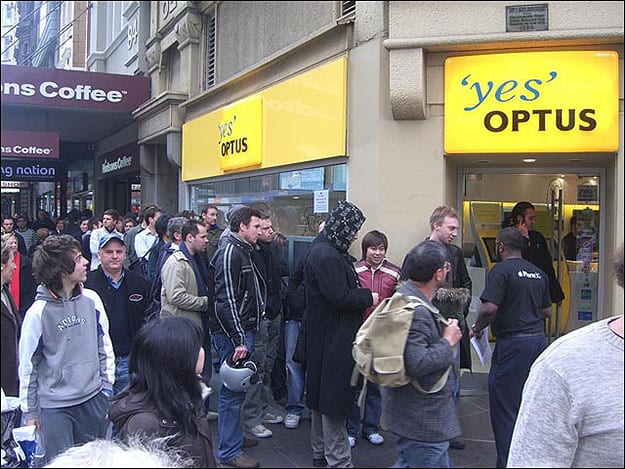
    New customers spending more on data have boosted revenue for Optus, but the telco continues to be outpaced by Telstra.

    Australia’s second largest telco achieved a 6 percent rise in revenue in the three months to December, as it added 100,000 mobile customers to 8.25 million.

    Data revenue rose 12 percent, as more customers moved to the company’s 4G network and new handsets, including the iPhone 6, were released.