Blog

  • Deutsche Bank Launches Advisory Board with Henry Kissinger

    Deutsche Bank Launches Advisory Board with Henry Kissinger

    Deutsche Bank’s Management Board has created a new Global Advisory Board comprising experts from business, academia and politics.

    The Board’s task it is to advise the Management Board on fundamental macroeconomic, geopolitical and technological developments that have a significant impact on the bank’s operating environment, the bank announced in a media release Wednesday.

    The Management Board appointed Paul Achleitner, former Chairman of the bank’s Supervisory Board, as the founding Chairman of the Global Advisory Board. Other members are:

    • Henry Kissinger, former US Secretary of State
    • Eric Schmidt, former CEO of Google and Executive Chairman of Alphabet
    • Indra Nooyi, member of the Board of Directors of Amazon, member of the Supervisory Board of Philips, former Chair and CEO of PepsiCo
    • Rafael Reif, President of the Massachusetts Institute of Technology (MIT)
    • Jim Hagemann Snabe, Chairman of the Supervisory Board of Siemens, former Co-CEO of SAP

    The Global Advisory Board meets for the first time this Wednesday in New York. In the future, there will be two official meetings per year. Advisory Board members are also available to the Management Board with their advice between the meetings.

    Regular guests at the Advisory Board meetings will be Deutsche Bank Supervisory Board Chairman Alexander Wynaendts, Chief Executive Officer Christian Sewing and Chief Economist David Folkerts-Landau.

    Technological Revolution

    «Economic activity is shaped more than ever by the technological revolution of our time. The Advisory Board will develop ideas and proposals on how the bank and its clients can best navigate this environment, manage risks and seize the opportunities that arise,» Board Chairman Achleitner said.

  • A2 Milk takes Care A2+ to court over a trademark dispute

    A2 Milk takes Care A2+ to court over a trademark dispute

    A2 Milk Company has taken legal action in the Federal Court against an Australian competitor, Care A2 Plus, and its associated companies for infringing its trademarks.

    In a filing, A2 Milk sought a permanent injunction restraining Care A2 Plus from selling or advertising its products with A2 Milk’s registered trademarks in Australia.

    “The A2 Milk Company protects its intellectual property rights, including trademarks. We will not be commenting further at this stage given the matter is before the court,” an A2 Milk spokesman told The Australian.

    The company lodged the case one week after A2 Milk’s lawyers sent a cease and desist letter to Care A2 Plus – which had already launched its own Federal Court action to “strike out” the trademarks concerned.

    A2 Milk has taken action against several other companies in Australia and abroad in the past to prevent them from using the term A2 in their brand names or marketing.

  • The Evolution of Online Casinos

    The Evolution of Online Casinos

    Change is inevitable in the dynamic industry of online gambling. Because of the ever-increasing number of competitors and the innovative new approaches taken by upstarts, the gaming industry is in a perpetual state of evolution. We will examine the development of internet casinos in this article.

    How Online Gambling Came to Be

    It was in the late 90s that many major corporations flooded the market, sparking the industry’s explosive growth. These businesses pioneered the internet gambling market thanks to their extensive background in the land-based gambling sector. They added new features, including reward programs and bonuses, encouraging people to try out online casinos.

    The start of the 2000s was a game changer for the evolution of online gambling establishments. When live dealer games got introduced, gamers could communicate with other gamers in live time. This added a new level of realism and excitement to gambling online.

    The internet gambling market is booming right now. Today, it is effortless for a potential bettor to locate the best online casinos—casinos that offer a wide variety of entertaining options, secure environment to wager in, generous incentives, prompt payouts, overall excellent service, and a commitment to keeping their word. They provide several gaming options, bonus deals, and special offers to retain customers. 

    Developments In the World of Online Gambling

    Live Dealer Games

    This game allows players to engage with a live dealer, creating a more personal and authentic experience. Live dealer games are top-rated among big spenders because their limits are typically higher than other standard casino games.

    Mobile Wagering 

    Gamer’s access to and use of casino games is one area that has undergone a radical transformation. A small handful of games were available to gamers during the period and were all available solely on computers. Most individuals still used dial-up connections when online casinos became available.

    Gamers are increasingly turning to mobile devices, such as tablets and smartphones, to place bets on various games. Because of this, several casinos now provide mobile-optimized variants of their apps and web pages.

    Gaming in HTML 5

    The transition from Flash to HTML5 gambling was the subsequent significant development for online casinos. This resulted in quicker response times, improved visuals, and more consistent platform gameplay.

    Deposit Bonus

    Online casinos have realized the merit of distributing incentives to new signups. It had a profound impact on the vast majority of internet users. This is especially true for deposit bonuses, which have spread throughout numerous virtual casinos. This is an excellent option for those looking to increase their playing funds.

    What’s Next for Online Casinos?

    Virtual casinos will likely do well in the years ahead. Their popularity will rise as modern tech and innovation are used in casinos. Brand-new features and games are regularly being added to the best online casinos. This is an excellent time for one to start wagering in online casinos.

    Final Thoughts

    When mobile casinos first appeared online, they were only available on a handful of handsets; today, however, many provide games tailored for mobile devices such as tablets and smartphones.  

    Technologies like cloud technology hold great promise for the game industry’s future. Poker and blackjack are just a couple examples of the many casino games that anyone can play on any gadget at the time of their liking.

  • E-Commerce Trends to Watch in 2022

    E-Commerce Trends to Watch in 2022

    Not only does e-commerce represent the largest single commercial retail sector, but also one of the fastest evolving. With new technologies, modalities and platforms emerging constantly, it can be challenging to stay ahead of the curve.

    If you’re a business looking to keep up with the latest movements in e-commerce in 2022 and beyond, take a look at these prevailing trends below and explore ways of integrating them into your operations.

    Let Customers Have Their Say

    The standards for accountability and customer feedback have developed significantly over the past decade. Now, more than ever, consumers are turning to third party review platforms to assess the quality of service and support provided by your organization.

    In line with the maxim that “if you can’t beat them, join them”, a beneficial strategy is to assist your customers in leaving reviews on these platforms. Not only does this cast your store in a beneficial light by demonstrating that you’re open to criticism and accountability, but it enables users to more quickly vet your brand for customer satisfaction.

    While some many argue this can be a double-edged sword, particularly if your business has struggled with achieving satisfactory ratings in the past, the reality is that the likes of Trustpilot and Yelp are now part of the ecosystem of modern e-commerce and any steps you can make to facilitate that process are going to beneficial to your brand identity and impact in the long run.

    Online Comparison Platforms (OCPs)

    OCPs have been among the fastest growing e-commerce sectors in the 21st century, and for good reason. With so much choice now available to consumers, an entire industry has grown up around pairing down the options and providing targeted recommendations for customers accosted with information overload.

    Online comparison platforms are mostly closely associated in people’s minds with securities and investments, and it’s true that, to date, the largest and most recognisable platforms belonging to this sector have been focused on connecting people with good rates on financing.

    Yet if one looks further afield, it becomes easy to see that online comparison platforms exist, and are operating, within diverse market sectors around the world. One of the most popular applications for these platforms is in retail, with companies like Amazon Marketplace and Pricerunner vying to connect online shoppers with the best deals and offers on thousands of products, from consumer electronics to apparel.

    Elsewhere, online comparison platforms have emerged as a leading means by which iGaming aficionados select providers to patronize. For example, Emiratis looking for recommendations on the best online casinos in the UAE have come to rely on ArabianBetting as a leading resource of this information.

    This is because this platform not only collates the best casinos available in their market, but, like other comparison platforms, aims to connect them with the most competitive deal – in this respect in the form of special promotions and sign-up bonuses.

    Give Patrons Payment Options

    The emergence of e-wallets, Fintech banks, and cryptocurrencies have all contributed to impacting people’s spending habits online. While, in the past, it was reasonable to simply provide a secure card payment processor for your customers to use when paying at check-out, increasingly nowadays people have to expect a wider array of options.

    While we wouldn’t recommend a brand offer payments in crypto unless it makes up a key part of their marketing strategy, offering alternative payment providers like PayPal, Venmo and CashApp can go a long way in decreasing friction for customers shopping from their smartphones.

    Additionally, the rise of Buy Now, Pay Later platforms like Klarna mean that such financing options have come to be expected as the norm in certain sectors such as apparel.

    Failing to match features like these if they’re offered by your rivals is a sure-fire way to drive business away from your brand.

    Sustainable Focus

    Any e-commerce brand worth their salt in 2022 must be doing more than paying lip service to sustainability and green values.

    There are many ways that brands can decrease their carbon footprint and environmental impact, from substituting wasteful packaging for recycled cardboard, to offering bundled deliveries or store pick-ups to decrease emissions.

    Consumers are coming to expect these measures, and signaling your commitment to improving sustainability can be a determining factor in attracting new customers to your platform.


    Words: 721

  • Huawei Mate 50 Pro Has the Best Smartphone Camera and the Highest Score in the History of DXOMARK

    The new king of mobile photography has arrived!

    The HUAWEI Mate 50 Pro has the best smartphone camera and the highest score in the history of DXOMARK.

    The Leading Mobile Photography Smartphone Currently Available on the Market

    Top-notch 50 MP camera with ultra-aperture, and the world’s first physically adjustable aperture in 10 levels, starting from f/1.4, top performance, and the highest mobile camera test score in the history of DXOMARK testing… yes, these are all epithets we can announce Huawei Mate 50 Pro. Achieving an outstanding score of 149 points, the Mate 50 Pro has officially taken the position of the best flagship smartphone for mobile photography currently available on the market apart from excelling in numerous other categories and having several stand-out characteristics; e.g. SuperHold – with quick app launches, nimble operations, and smooth web browsing (which is a great ground for engaging with the best online betting sites in Sri Lanka), you can both get going keep going quickly.

    Huawei’s latest flagship passed the DXOMARK test of the world’s leading quality assessment laboratory with flying colors and left all the biggest competitors in the industry far behind with its superior overall performance and mobile photography features.

    Huawei Returned to First Place in the DXOMARK Ranking

    The latest DXOMARK ranking clearly shows that the new Mate 50 Pro is equipped with the best mobile camera available on the market. This flagship comes with a 50MP ultra-aperture camera and the world’s first 10-level physically adjustable aperture and includes key improvements in the optical system, mechanical structure, imaging, and image processing technology. Mate’s camera with ultra and physically adjustable aperture, which ranges from f/1.4 up to 4.0, in combination with the XD Fusion Pro image drive can set the quality of photos taken with this smartphone almost to the level of those taken with a DSLR camera.

    The prestigious portal highly praised both the technical and photographic capabilities of the latest Huawei model, giving it a total record score of 149 points. The Mate 50 Pro’s photo score of 149 points is based on outstanding performance overall as well as excellent results in the exposure, focus, and texture/noise categories.

    Pro in Every Way

    In addition to proven powerful camera capabilities, the new Mate 50 Pro comes with the distinctive design signature of the Mate series, which is minimalistic-inspired by axial symmetry. For the first time, the elegant Clous de Paris design of the pyramid pattern, which is characteristic of expensive watches, is also used. In addition to the elegant black and silver shades that are the first to come to the local market, the Mate 50 Pro is also launched in a special version made of orange vegan leather that comes with “Kunlun glass”, which makes this version extremely strong. The official durability of Kunlun glass is also confirmed by the Swiss SGS five-star glass drop resistance certification, making it the first smartphone ever to receive this certification.

    Huawei Mate 50 Pro features cutting-edge technology that significantly improves performance, and is also the first Huawei device to run on EMUI 13, which brings simplified handling of operating systems and daily interactions with simple one-touch navigation.

    Huawei Mate 50 Pro can now be ordered in the black shade in pre-order at a price of HRK 9,999 with an interesting gift. You can find more information about the device and sales locations on the brand’s website, while the full review and DXOMARK test results can be found at the link: https://www.dxomark.com/smartphones/Huawei/Mate-50-Pro.

    The Significance of DXOMARK

    A commercial website called DXOMARK, which is presently stylized as DXOMARK, bills itself as an impartial benchmark that scientifically examines smartphones, lenses, and cameras. For example, let’s portray how DXOMARK composes a camera sensor rating.

    The RAW image captured by the camera’s sensor is measured by the DXOMARK Sensor Score for a number of critical image quality characteristics. The combined score is a secret calculation of the following three sub-scores:

    • A Portrait score is a measurement of color depth in bits;
    • Dynamic range expressed as a Landscape score and expressed in pauses of dynamic range;
    • Sports score for low-light performance, expressed as an ISO equivalent.

    The resolution a camera generates when partnered with a specific lens is measured using another metric called the Perceptual MegaPix (P-MPix), which is specified as the measure of a sharpness measurement. When assessing the sharpness of a camera and a lens, according to DXOMARK, P-MPix is a more precise and pertinent statistic for photographers to take into account.

    Many independent news outlets and specialized media websites use DXOMARK scores, which would include: The Washington Post, The New York Times, China Daily, Forbes, Wired, TechRadar, CNET, The Verge, GSM Arena, Tom’s Guide, Sohu, and Sina.

  • First made-in-Vietnam flying car to hit market in 2024

    First made-in-Vietnam flying car to hit market in 2024

    Hanoi company Airlios has demonstrated a flying electric car which it plans to sell commercially in 2024.

    The single seater, also called Airlios, could fly vertically to reach 10 meters within 10 seconds and then fly at speeds of 100 kilometers per hour, the company said at a recent exhibition.

    It can rise to as high as 120 meters, the same height as a 44-story building. It has eight batteries that are fully charged in seven to nine minutes at 30-kilowatt charging stations.

    It is mostly made of aluminum alloy and carbon fiber, and can fly both automatically and manually.

    A prototype has successfully flown 33 kilometers in 20 minutes at a height of below 120 meters. It has been tested for 100 hours and 1,000 kilometers.

    “The project is now 70-80% complete,” Mai Thien Vu, the company’s chief technology officer, told VnExpress.

    “We plan to launch the maiden flight of the commercial version of Airlios by the end of 2023.”

    Managers and engineers at Airlios began thinking about making flying cars five years ago, he added.

    If it is launched as scheduled, Airlios could become the first flying car in Southeast Asia.

    The standard version will cost around $81,000 compared to, for instance, $92,000 for Swedish brand Jetson.

    Airlios will also offer other models costing up to $99,000.

    Many startups in a number of countries have started working on flying cars though there have been few commercial launches yet.

    Singapore, Malaysia and Indonesia plan to launch flying taxi services in future.

  • Bonchon stays in the Korean fried chicken game in Vietnam

    Bonchon stays in the Korean fried chicken game in Vietnam

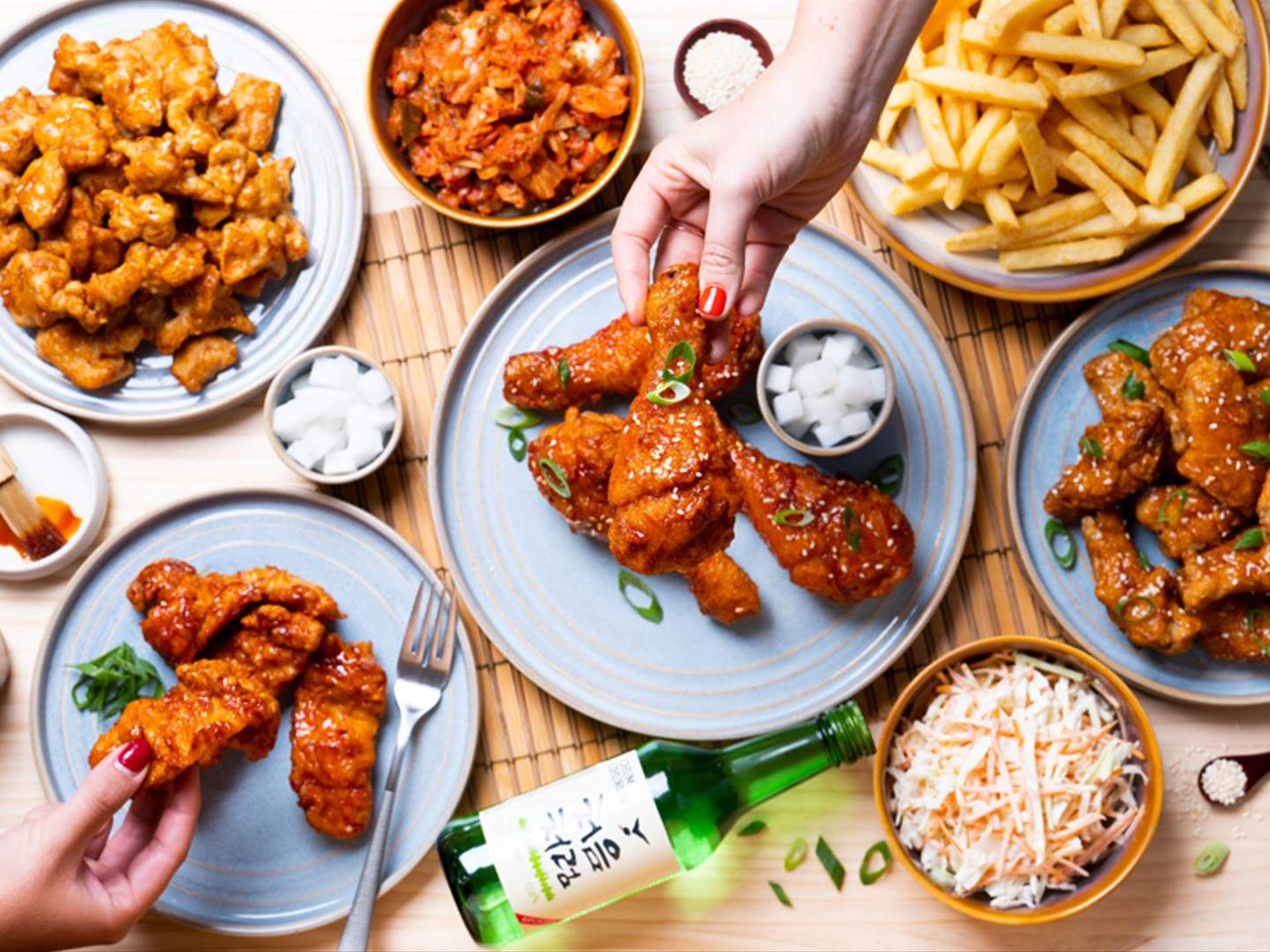
    Bonchon, the global restaurant concept known for its Korean fried chicken, celebrates a year with market expansion, sales growth, and a new fast-casual model.

    Despite continued industry challenges due to the pandemic, Bonchon retained its strong year-to-date sales performance. In October, the company registered a 76% same-store sales increase compared to 2021. Bonchon has 15% same-store sales as of Dec. 25, 2021.

    “Sales growth has steadily increased due to strategic enhancements in operations, supply chain, and technological innovation. These strategic shifts have not only allowed Bonchon to build our revenue even further, but also to continue expanding our footprint with new openings across Vietnam,” said Bonchon Vietnam CEO, Mark Kim.

    Innovation of the store design and fine-tuning of the operating system also greatly contributed to Bonchon Vietnam’s performance.

    The store’s innovation in terms of design boasts advantages in brand identity and introduces the image of our Bonchon stores to a younger, trendier customer base. In addition, simplified adjustment and focus on important factors in the operating system have enhanced service quality and customer experience across Bonchon stores nationwide.

    Moreover, with the ability to enter the zeitgeist and respond quickly to market sensitivities, Bonchon Vietnam stayed in the game of the door-to-door delivery era by working closely with home delivery units. This particular delivery service adjustment brought about a significant source of revenue, accounting for 40% of Bonchon Vietnam’s monthly revenue in 2022.

    Additional franchise support has been driven by the integration of newly acquired experienced team members and field business consultants who guide best practices, customer service, food quality, and menu strategy.

    “In the next five years, we will be implementing ongoing strategic shifts in operations, the supply chain, and technological innovation to remain on the current growth trajectory,” Kim added.

    Bonchon is known for its signature made-to-order Korean fried chicken that is hand battered and double-fried to achieve its signature, crave-worthy crunch, and proprietary sauces crafted in the Bonchon global kitchen in Busan. Every piece of chicken is hand brushed to make each bite perfectly flavorful. Bonchon also offers an authentic Korean fusion menu with Bibimbap, Japchae, Bulgogi, and more.

    Born in Busan, South Korea in 2002, Bonchon’s founder, Jinduk Seo, dreamed of sharing his favorite flavors with the world. Just four short years later, in 2006, Bonchon went on to establish itself in the U.S. The global franchise has been spreading its reach around the world ever since with a notable presence spanning nine countries with more than 400 locations. With no indication of slowing down, Bonchon has recently confirmed new development agreements in France and Australia.

    In 2019, the brand continued to expand to Vietnam. In April 2022, Bonchon celebrated the opening of its ninth store and is preparing to welcome its 10th and 11th this November.

  • Yeah1 profits double in Q3

    Yeah1 profits double in Q3

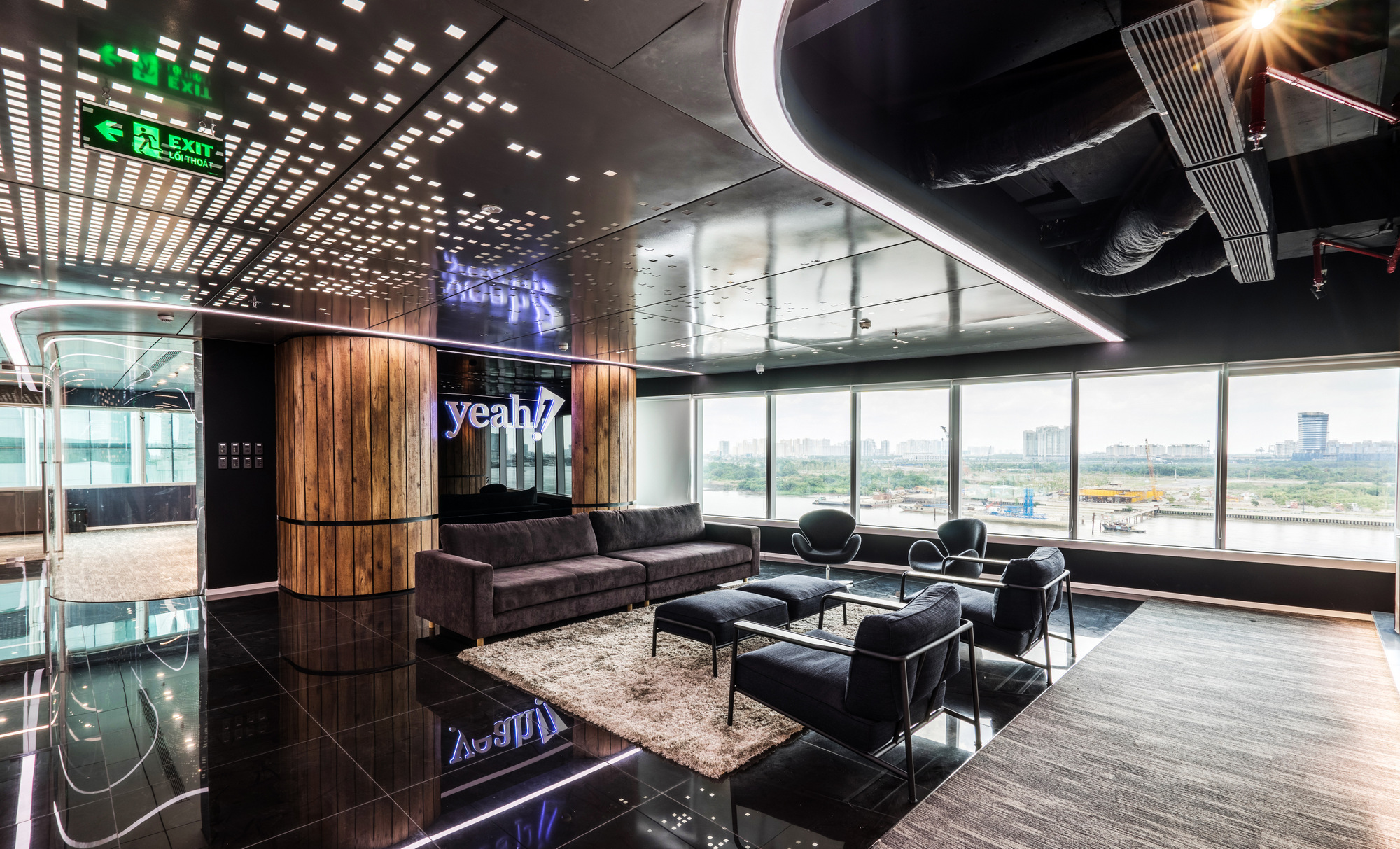
    Online entertainment company Yeah1 said profits for the third quarter nearly doubled from the previous one to VND14.8 billion (US$597,000).

    The profits for the first nine months topped VND22 billion, as against losses of over VND253 billion a year earlier, on revenues of VND207 billion, a year-on-year decline of 76%.

    More than half the revenues came from media and advertising consultancy and event organization.

    The company, whose equity stands at over VND900 billion, plans to increase it this year by issuing 78.6 million new shares to invest in digital media, tech media and fintech.

  • Meta is working on Instagram Malfunction

    Meta is working on Instagram Malfunction

    Instagram seems to be down for a lot of people around the globe at the time of this writing, according to users flocking to Twitter to make their plight known to the entire world (oh, the irony) and the always reliable Downdetector platform.

    The situation is already so widespread that the social network’s PR team has also taken to Twitter to apologize to everyone for the “inconvenience” of not being able to access your Instagram accounts for the last few hours (at the time of this writing).
    What Instagram parent company Meta is not ready to confirm just yet is the nature of this “inconvenience”, which appears to include random account suspensions for a worrying number of users.
    Many people claim they are not aware of having violated any rules so egregiously that a 30-day ban would be warranted, and because the Instagram app and website themselves refuse to work for a lot of these users, appealing the decision is currently impossible.

    Account confirmation is also being required of some users, which is either not possible at the moment as well or completely broken.

    In short, Meta has a PR disaster in the making, and although the company is undoubtedly “looking into” the outage and its causes, the masses are demanding (and arguably deserving) more detailed and satisfying explanations, not to mention a swift resolution. We’ll keep you posted if we find out more or if the glitches are indeed resolved soon.
  • Invygo Raises $10 Million For Its Car Subscription Service

    Invygo Raises $10 Million For Its Car Subscription Service

    UAE and Saudi Arabia-based startup Invygo has raised $10 million in series A funding led by MEVP as it further develops its long-term car subscription service. The startup, which was founded by Eslam Ahmed Hussein and Pulkit Ganjoo in 2019 so far has raised $14.3 million.

    It counts Al Rajhi Partners, Arab Bank, Amana Capital, and Palm Drive Capital as its main investors. It also has backing from Signal Peak Ventures and Knollwood Investment Advisory, who have participated in the latest round.

    “We’ve split the full payment of the car into three. Normally, you have a massive down payment of around 20% and then your monthly instalments with no way to get out of that commitment. Our starting fee is around 5%, and you can cancel your plan at any time without any penalty,” Ganjoo said.

    Invygo offers three kinds of rental services – one is a short-term rental service that allows one to one to nine months. The other service is the long-term leasing option which allows users to rent a car for between a year and three years. There is also a subscription to own model, which offers brand new or semi-used cars on a 2–3-year rental period with a start fee that’s much lower than a traditional down payment.

    Users for a short-term rental can go to its website and look for available cars and book a rental. Users have access to all kinds of information like model number, year of make, and km clocked by the vehicle in question. Users can also filter parameters like car type, fuel type, transmission type and color.

    Invygo offers doorstep delivery, replacement of car, maintenance, regular insurance, and a 24×7 helpline. Invygo makes money by taking a cut of the subscription. It has around 200 cars in Saudi Arabia on its service and 100 cars in the UAE.

  • Indonesia Hikes Fuel Prices To Rein In Ballooning Subsidies

    Indonesia Hikes Fuel Prices To Rein In Ballooning Subsidies

    Indonesia raised subsidized fuel prices by about 30% on Saturday, as the government moves to rein in ballooning subsidies despite a risk of mass protests.

    The price of subsidized gasoline was raised to 10,000 rupiah ($67 U.S. cents) a litre from 7,650 rupiah, while that of subsidized diesel rose to 6,800 rupiah a litre from 5,150 rupiah, energy minister Arifin Tasrif said.

    “I actually wanted domestic fuel prices to remain affordable by providing subsidies, but the budget for subsidies has tripled and will continue to increase,” President Joko Widodo told a news conference.

    “Now the government has to decide in a difficult situation. This is the government’s last option,” said Jokowi, as the president is known.

    Southeast Asia’s largest economy had already jacked up its 2022 energy subsidies to 502 trillion rupiah ($34 billion), triple the original budget, pushed by rising global oil prices and a depreciating rupiah currency.

    If prices were not raised, the budget would have ballooned to 698 trillion rupiah, said Finance Minister Sri Mulyani Indrawati.

    She estimated total energy subsidies would range between 591 trillion and 649 trillion rupiah for this year following the price hike, assuming the average crude price stays between $85 and $100 a barrel the rest of the year.

    High energy subsidies had restrained Indonesia’s inflation, at 4.69% in August, allowing the central bank to delay raising interest rates until last month, well behind regional and global peers.

    Hariyadi Sukamdani, head of the Indonesian Employers Association, said price pressure from the fuel price hike would not be too much, predicting inflation will top 6% at the end of the year.

    “If prices of goods are too expensive, people won’t buy. We can’t raise prices too much,” he said.

    Businesses are using unsubsidised fuels, but the price hike will affect logistics costs, Hariyadi said.

    Still, accelerating inflation could put pressure on Bank Indonesia (BI) to tighten monetary policy more quickly. The bank holds a two-day policy meeting ending on Sept. 22.

    Bank Mandiri economist Faisal Rachman estimated inflation could accelerate to between 6% and 7% and BI could raise the policy rate to 4.25% this year from 3.75% now.

    Faisal forecasts 5% economic growth this year despite the fuel price increase, supported by commodity exports and post-pandemic mobility, adding that the government’s cash distribution could help cushion some of the impact on consumption. The economy grew 5.44% in the April-June quarter.

    The government has allocated an additional 24.17 trillion rupiah for cash handouts to help the poor cope with the policy’s impact, Jokowi said.

    POLITICALLY SENSITIVE

    Fuel prices are politically sensitive in Indonesia, and the changes will have major implications for households and small businesses, as subsidised fuel accounts for more than 80% of state-owned oil giant Pertamina’s sales.

    The last fuel price hike was in 2014, months after Jokowi took office, aiming to free up fiscal space. That sparked protests across the archipelago.

    The opposition Labour Party has arranged a protest involving thousands of workers for Tuesday, chairman Said Iqbal, who also heads a trade union, told Reuters. He called on parliament to pressure the government to cancel the price hike.

    “This will hurt purchasing power,” he said. “Wages have not increased for three years and inflation is bound to rise sharply.”

    Small protests against any price hike, mostly led by students, had erupted in the recent days in several cities.

    After the price hike announcement, Pertamina said it was committed to ensuring adequate fuel supplies nationally. Cars were seen queuing in some stations in the capital Jakarta after the announcement.

    Pertamina, Asia’s biggest gasoline importer, had deferred some of its gasoline deliveries for September ahead of the price hike, due to an expected drop in fuel demand, traders said.

    Decades ago Indonesia was a major oil exporter, becoming a member of the Organization of Petroleum Exporting Countries in the 1960s, but its oil output declined and it turned to net oil importer in the 2000s. Indonesia is still an exporter of gas.

  • Porsche Singapore launches experience studio

    Porsche Singapore launches experience studio

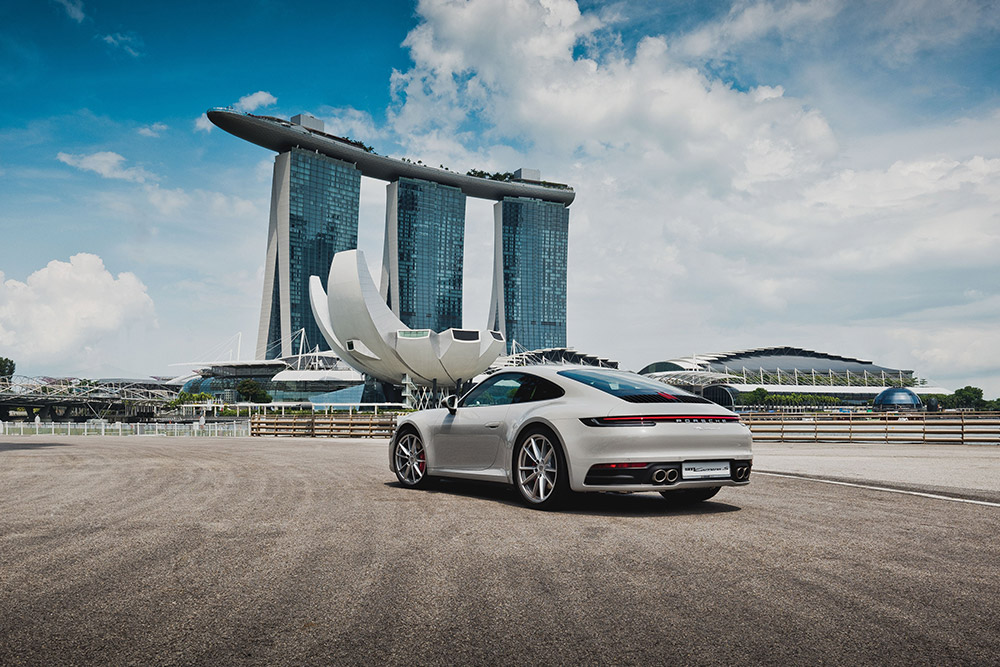
    Porsche Singapore will bring a new experience studio to the city-state, under the partnership with real estate developer GuocoLand.

    The location will open in the second half of next year, at the new Guoco Midtown integrated mixed-use development on Beach Road, near the City Hall, Bugis, and Marina Centre city core districts.

    The company says the concept underscores the brand’s dedication to take it closer to customers in Singapore and provide more customer-centric experiences.

    “Porsche Studio Singapore aims to be a premier brand destination with its convenient city-centre location – a place where fans and customers alike can immerse themselves in new experiences, connecting and exchanging ideas with other likeminded Porsche enthusiasts,” said Andre Brand, GM at Porsche Singapore.

    Porsche Studio Singapore will combine the retail spaces with Porsche car displays, and an integrated F&B experience, along with co-working and community exhibition spaces.

    There are also event spaces available for larger-scale Porsche community gatherings and family reunions.

    “Porsche is the brand for those who follow their dreams, and with Porsche Studio Singapore, we want to dream big and create a space that is both experiential for customers and fans, but also home for us to interact closely with our Porsche community,” Brand added.

    Porsche Singapore also plans to launch a Porsche Now Pop-up at Guoco Tower in the Tanjong Pagar district on January 1.

  • Shein chooses Tokyo for its first permanent store in the world

    Shein chooses Tokyo for its first permanent store in the world

    Fast fashion retailer Shein is set to open its first permanent store in the world – in Japan’s capital Tokyo.

    The store, located in the bustling fashion precinct of Harajuku, will open on November 13.

    Shein’s first brick-and-mortar store will display items and styling that caters to the Japanese market. Spanning 201sqm and two storeys, the store features three fitting rooms and an Instagrammable photo booth.

    Customers can purchase products by scanning the QR code on the tag through the Shein app. However, they cannot purchase on the spot at this store – the products are shipped to their home or office.

    The store announcement follows the launch of the Shein Osaka pop-up store, which will open for three months until January 27. Located in the western metropolis of Osaka, the pop-up store houses nine fitting rooms and displays about 800 items, ranging from men’s and women’s wear to home and pet products.

    Founded in 2008, Shein sells online in more than 150 countries and regions, mainly in the US and Europe, but not its home market China, where it produces its clothing. In February, the company shelved plans for its US market listing, according to Reuters.

  • Diesel Japan opens Ginza flagship

    Diesel Japan opens Ginza flagship

    Italian fashion retailer Diesel has launched its new flagship store in Japan, at Ginza Marronnier Gate 1, Tokyo.

    The shop, which features two floors, is designed by creative director Glenn Martins with red and white as the primary theme colors. Diesel says this renovation reflects a refreshed image and looks under Martins’s creative guidance.

    The first floor’s walls, which are red and white, reflect the brand’s red logo, and the store aims to create a spacious, airy feel by using metal racks that surround it. It also includes a big sofa, modern industrial modules, and resin shelves.

    On the other side, the basement floor also has red and white displays and walls, as well as cutting-edge architectural features. Customers can purchase an all-gender selection of denim, apparel, shoes, bags, and accessories from the Diesel Fall/Winter 2022 collection and runway looks. In addition, products from the Diesel Ginza limited and pre-sale collections are now accessible in the red look that debuted during the Diesel 22FW fashion show in Tokyo in June.

    Diesel has made Japan one of its main markets after spending more than 36 years there. The apparel company debuted its first Asia-sized flagship shop in Ginza in 2008 and its first large-scale global concept store in Tokyo’s Shibuya neighborhood in 2010.

    The brand is also growing in other markets like Singapore, Hong Kong, and Korea. In collaboration with RTG Consulting and Muse Group, Diesel launched China’s world’s first Diesel Hub last year. The 900sqm Hub combines dining and retail, with a restaurant named Diesel Brave Bar occupying nearly a fourth of the area.

  • Vingroup revenues down 5%

    Vingroup revenues down 5%

    Vingroup, Vietnam’s biggest private conglomerate, made total consolidated net revenues of VND88.191 trillion ($3.56 billion) in the first nine months, posting a year-on-year decline of nearly 5%.

    Vingroup gained after-tax profits of VND1.571 trillion, according to its latest consolidated financial statements.

    By the end of September, the firm’s total assets stood at VND555.571 trillion, up 30% against late last year, mainly due to successful transactions among new real estate projects.

    Vingroup said its property segment will continue to grow in the last quarter and next year, and its vehicle sales will rise in the last quarter. Its other segments, including trade center business, tourism, recreation, healthcare and education are also expected to recover.

    Since the beginning of this year, Vingroup has mobilized $760 million from the international capital market, including $625 million worth of international bonds and $135 million from an anti-climate change financial package from the Asian Development Bank.