Blog

  • South Korea’s franchise BHC Chicken to enter Malaysia and Singapore

    South Korea’s franchise BHC Chicken to enter Malaysia and Singapore

    South Korea’s second-largest chicken franchise by sales, bhc Group, said Tuesday it will open its third store in Malaysia next month as part of its strategy to expand into Southeast Asia.

    The new restaurant, which is set to open in a shopping complex located inside the capital of Kuala Lumpur, will be operated by a local logistics company under a master franchise agreement, it said.

    This is the third overseas restaurant by the South Korean chicken franchise company. The group operates two bhc chicken restaurants in Hong Kong. The chicken franchise also said it is in talks with a retail company in Singapore to open a bhc chicken restaurant in the city-state by April next year.

    “With our bhc chicken taking the lead, our ultimate goal is to promote Korean food and culture globally by bringing our various restaurant brands to other countries,” an official from the company said.

    Bhc operates a host of restaurant brands including the fried chicken franchise bhc chicken, Korean barbecue franchise Chango 43 and Outback Steakhouse.

    The company is also the South Korean operator of San Francisco-based Super Duper burgers, which is set to open the first Seoul store in October.

  • Primark to stop sourcing from Myanmar after fresh probe

    Primark to stop sourcing from Myanmar after fresh probe

    UK fast fashion retailer Primark will make a “responsible exit” from the country following the Ethical Trade Initiative’s (ETI) latest report on human rights and responsible business conduct within the country.

    Primark described the situation in the country as “extremely concerning and very complex”, with international stakeholders holding differing views as to the best course of action for the garment sector.

    Last week, ETI urged companies involved in garment manufacture for export to reassess their presence in Myanmar as there has been “evidence of forced labour and exploitation at a sector level”, with evidence of workers facing long hours, low wages, unpaid overtime, and harassment.

    “This poses significant challenges to our ability to ensure the standards we require to protect the safety and rights of the people who make our clothes and products,” Primark said in a statement.

    The fashion retailer said its only option was to begin working towards a responsible exit from Myanmar. The company will work closely with its partners and stakeholders both there and internationally to make sure the exit follows the UN Guiding Principles on Business and Human Rights.

    “We will continue to monitor for compliance with our Code of Conduct as we work through this, and as an immediate priority, we are looking at what additional measures we can put in place to support workers in our supplier factories through this interim period,” the company said.

  • Tesla Weighs Reset For China Retail Strategy Even As Sales Boom

    Tesla Weighs Reset For China Retail Strategy Even As Sales Boom

    Tesla is reevaluating the way it sells electric cars in China, its second-largest market, and considering closing some showrooms in flashy malls in cities like Beijing where traffic plunged during COVID restrictions, two people with knowledge of the plans said.

    The shift would put more emphasis on stores in less-costly suburban locations that can also provide repairs as the company works to meet Elon Musk’s goal of improving service for existing customers, many of whom have complained of long delays, they said.

    As part of that push, Tesla is looking to ramp up hiring of technicians and other staff for service jobs in China, one of the people said. Tesla’s China recruitment website showed more than 300 openings for service jobs as of Thursday.

    Musk said last week on Twitter, in response to a Tesla owner in Texas who complained that he had been waiting a month to get his vehicle fixed, that he had made “advancing Tesla service to make it awesome” a top priority.

    Unlike mainstream automakers, Tesla owns all of its own stores, rather than relying on dealers. It also sells its cars online. That has allowed it more leeway to adjust a retail strategy that had been initially modeled on Apple’s stores.

    Tesla didn’t immediately response to a request for comment.

    The U.S. automaker sold 400,000 China-made Model 3 and Model Y cars in the first eight months of the year, with 60% of them sold locally, according to the China Passenger Car Association. That was 67% more than a year ago.

    The change in Tesla’s approach in China, where it has become the second-largest EV brand behind BYD , would reflect a recognition that it has to build customer loyalty now that it has established its brand in the world’s largest car market, one analyst said.

    “It’s not necessary to open showrooms in expensive shopping malls, especially when the repair business has become lucrative,” said Yale Zhang, managing director at Shanghai-based consultancy Automotive Foresight.

    “It makes better sense to keep only one or two showrooms downtown to keep the brand positioning but move more to suburbs.”

    Tesla opened its first store in central Beijing in 2013 and now has over 200 outlets across the country that display models and arrange test drives for potential buyers.

    More than half of the stores, however, do not offer maintenance service since they are in high-rent locations where space is limited. That includes Tesla’s first store in Beijing and its first store in Shanghai.

    More than half of Tesla’s showrooms in seven of China’s biggest cities, including Shenzhen and Chengdu, are now in downtown areas, according to a Reuters count based on Tesla’s China website.

    Like other companies, Tesla has seen traffic in its stores heavily disrupted by China’s tough approach to containing COVID-19, which has involved lockdowns of varying scope and duration, including in Shanghai where it has a factory.

    Reuters could not determine how many urban showrooms Tesla was considering closing, how many new locations in fast-growing suburbs could be opened or what the cost of that shift would be.

    The carmaker has been the target of a series of customer complaints and lawsuits in China, including a well-known case last year which saw an unhappy owner clamber atop a Tesla at the Shanghai auto show to protest the company’s handling of her complaints about malfunctioning brakes.

    The incident received significant attention in China and prompted state media outlets to criticise the company.

    Tesla later apologised to Chinese consumers for not addressing the complaints in a timely manner and pledged to review its service operations.

    Tesla’s EV rivals in China have taken a mixed approach to retail distribution. Apart from self-run stores, BYD and Xpeng also rely on third-party dealers.

    Nio, like Tesla, has a network of high profile urban stores in China. It has also invested in door-to-door service, dispatching workers, many of whom were hired from the hotel industry, to pick up cars for repairs and drop them off when work is complete.

  • A new leak suggests that WhatsApp might soon let you edit your sent messages

    A new leak suggests that WhatsApp might soon let you edit your sent messages

    If you do a lot of typing on your phone, you know how embarrassing it is to send a message with misspelled words. Sometimes you see that you have typed the wrong key after you have sent the message. There are even instances when the autocorrect feature might replace some of your words without you even noticing. This is why every messaging app should have an edit message feature.

    The latest messaging app that has received such a feature is iMessage. With iOS 16, Apple added the functionality for iPhone users to edit their already sent messages, and — soon — another widely used app might also enable you to do the same.

    Back in June, we reported that WhatsApp is working on a new way to let you edit already sent messages. Now, a new leak from WABetaInfo suggests that WhatsApp hasn’t abandoned the project.

    In version 2.22.20.12 of the WhatsApp beta for Android, the folks from WABetaInfo found that WhatsApp is currently working on a way to let the app replace your sent messages with their edited counterparts. Furthermore, in order to read a received edited message, WhatsApp will prompt you to install the latest version of the app — once the edit function comes out, of course.

    At the moment, it’s still a mystery how much time WhatsApp will give you to edit your already-sent messages. We should also note that the feature is currently in development, and sadly, there is no information on when WhatsApp will release it to the public. However, we can be sure that it is coming.

  • Goldman Sachs Unloads 30 Bankers in Asia

    Goldman Sachs Unloads 30 Bankers in Asia

    As many as 30 bankers have left Goldman Sachs in Asia, as part of a global exercise to trim workers.

    Up to 30 investment bankers have left Goldman Sachs in Asia, sources said, across teams in equity capital markets, healthcare as well as technology, media and telecommunications (TMT), especially those involved in Greater China deals.

    Every year globally we conduct a strategic assessment of our resources and calibrate headcount to the current operating environment, said a spokesperson for the bank. We continue to remain flexible while executing against our strategic growth priorities.

    According to a source familiar with the matter, the job cuts are part of a yearly practice that has been paused for two years during the pandemic.

    Separately, a Reuters report last week said that Goldman’s annual exercise typically results in a 1-5 percent reduction of staff each year with 2022 expected to result in the lower end of that range. Globally, the bank’s headcount reached 47,000, as of end-June, up 15 percent year-on-year.

  • Goldman Sachs Expands Services to Swiss Clients

    Goldman Sachs Expands Services to Swiss Clients

    Goldman Sachs is expanding its investment banking services in Switzerland and Europe as it chases stable revenues on the continent.

    Goldman Sachs is offering transaction banking services to corporate clients in the EU, adding services outside of its investment bank’s core areas of trading and advisory, it said in a statement Tuesday.

    Rolled out from Goldman Sachs’ hubs in Frankfurt am Main and Amsterdam, the offering will address the day-to-day payments and cash management needs of businesses and be available to corporates in Europe and Switzerland, a spokesman from the bank confirmed.

    Transaction banking was named as one of Goldman Sachs’ key focus areas in the bank’s 2020 investor day presentation and was introduced in the US in the same year.  The additional service could help fill holes from deal-making losses within the investment bank this year, resulting from lower stock prices, rapidly accelerating inflation and interest rates as well as an energy crisis.

  • UBS is Hiring a Team to Filter Chinese Research

    UBS is Hiring a Team to Filter Chinese Research

    UBS has reportedly hired a team of «content reviewers» in order for its Chinese research publications to be free of any sensitivities.

    UBS is hiring a team of content reviewers for its Chinese research publications, according to a report citing a job ad from the bank’s wealth unit posted in July.

    You will ensure that all our Chinese language publications are   free of any sensitivities, the ad said, underlining that the «language, tone and content will need to be appropriate and adhere to regulatory and internal guidelines.

    The team will sit alongside the research editing team. Thus far, one reviewer has been hired in Hong Kong and the bank is seeking to recruit more people in Singapore, according to a source in the report.

    The recruitment of the team follows three years after UBS’s wealth arm suspended its global chief economist Paul Donovan over comments made in a research report about pigs during a swine fever outbreak which was perceived as distatestful and racist.

    UBS would suffer blowback with Hong Kong-based Chinese brokerage Haitong International Securities cancelling all work with the bank and self-regulatory body Securities Association of China telling members not to quote Donovan’s research or invite him to events.

    Donovan would eventually be reinstated four months later after issuing an apology for having unwittingly used hugely culturally insensitive language.

  • SingPost names new CEO for international

    SingPost names new CEO for international

    Singapore Post Limited (SingPost) has elected Mr Li Yu as CEO for its international business with effect from 12 September 2022.

    Mr Yu possesses over 17 years of experience spanning across Engineering, Operations, Project Management, Customer/Sales support, Strategy, and Technology implementation. He joins SingPost’s management team from United Parcel Service (UPS), where he was most recently responsible for its APAC Global Logistics and Distribution.

    Yu also has experience in transformational P&L and commercial leadership under his belt. He had led an eCommerce portfolio as part of the broader logistics line of business, and grew businesses including those in the eCommerce, healthcare, manufacturing, and retail sectors in previous posts.

    Mr Yu will be establishing long and short-term business strategies for the International businesses, strengthening its corporate and board governance focusing on operational excellence, transformational growth, social responsibility, and sustainability.

    He holds a Bachelor of Applied Science, Industrial Engineering from University of Toronto in Canada. He has lived and worked in North America, Shanghai, and Singapore.

  • Guide to Myanmar Online Casinos

    Guide to Myanmar Online Casinos

    Over recent years, Burmese casino players have had several options to help them enjoy the thrill of online gaming. With the number of online casinos available in Myanmar, it may not be easy to pick the right choice. Let’s take a look at the dynamics of online gaming in Myanmar.

    How to Open an Online Casino Account in Myanmar

    Although signing up for an online casino account in Myanmar is one of the most straightforward things to do, it doesn’t mean you should register on the first one on your browser. When you search for online casinos Myanmar, most sites will be dying for your attention. This allows you to find incredible offerings and promotions.

    Before you create an account, ensure you have met these requirements:

    • Have a valid email address
    • Be at least 18 years of age
    • Read, understand, and agree to the terms and conditions of the online casino site.

    Once you have all these, you are ready to create an online casino account in Myanmar. You will then need to deposit money into the account and begin having fun in no time.

    Benefits of Online Gambling in Myanmar

    There are a lot of benefits you can expect to accrue from playing casino games online. They include:

    Online Gambling is Safe

    Online casinos in Myanmar are safe, so players don’t have to worry about losing critical information shared on these websites. Most websites are protected from hackers.

    Multiple Games Available

    There might be days when you feel like you only want to play slots and not other card games. Whatever online casino game you fancy playing, you will have a chance to play it anytime. Therefore don’t hesitate to explore your options.

    Some of the incredible games to consider include:

    • Baccarat
    • Roulette
    • Slot games
    • Sports betting
    • Keno

    No Need to Leave the Comfort of Your Home or Office

    In the past, Burmese players had to travel long distances to play at land-based casinos. However, modern technology has made anything possible. Besides preserving your data, online gambling allows you to enjoy your favorite games anytime. You no longer have to leave your home to enjoy the thrill of casino games.

    Accessibility

    With only a laptop, smartphone, or tablet and an internet connection, you can play live games and slots whenever you want! The best thing is that these casinos are available 24/7 and have staff ready to offer a helping hand whenever you encounter challenges.

    Entertainment

    Online casino games in Myanmar provide seamless digital entertainment to several players around the country. Unlike land-based gambling, online casinos have a set of popular games. Besides, most online casinos partner with the best software developers to ensure players have an outstanding gaming experience.

    Conclusion

    Thanks to modern technology, you can enjoy your favorite game and earn real money anywhere and anytime. There are limitless opportunities for you to enjoy your online casino games in Myanmar. You only have to browse the web, find the most suitable online casino and begin playing!

  • JD Airlines secures air carrier certificate

    JD Airlines secures air carrier certificate

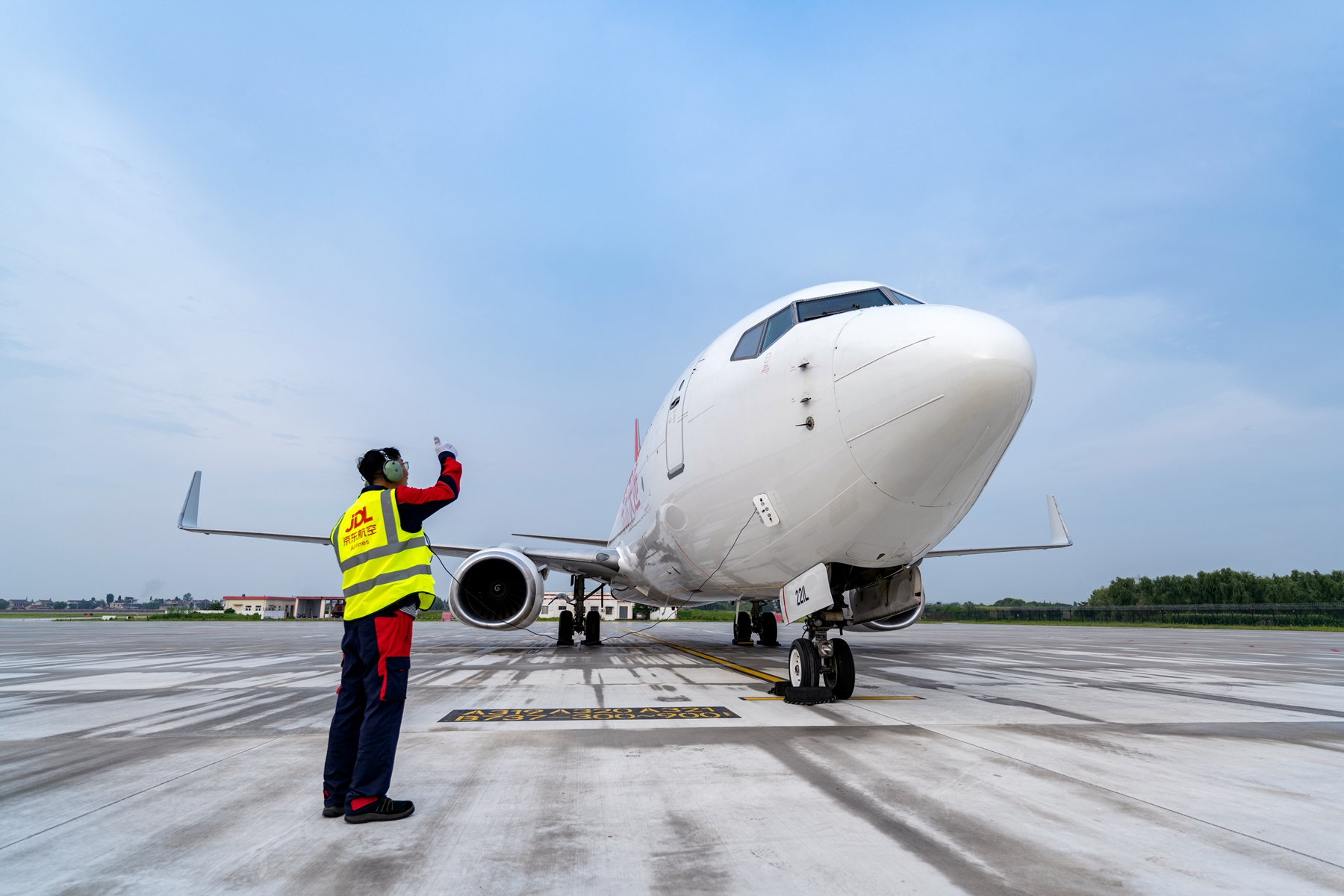
    Jiangsu Jingdong Cargo Airlines, or JD Airlines, an affiliate of JD Logistics, received the air carrier certificate from the Civil Aviation Administration of China (CAAC) on August 31.

    The carrier will have its principal base at Nantong Xingdong International Airport as it plans to develop its domestic network in China around the key cities of Nantong, Beijing, Shenzhen, and Wuxi.

    The airline said it will extend its reach to Chengdu and Chongqing and will gradually cover major cities in Southeast Asia, Japan, and Korea and later in Europe, Middle East and North America by the end of 2025.

    JD Airlines plans to open up its capacity to the market with a single trip able to transport as much as 23 tonnes. The carrier aims to cater to high-value goods, high-end manufacturing, medical, and fresh produce.

  • Hong Kong-based LF Logistics now part of Maersk

    Hong Kong-based LF Logistics now part of Maersk

    Maersk completed its US$3.6b acquisition of LF Logistics in late August, taking control of the Hong Kong-based contract logistics company, which will now be rebranded to Maersk.

    Maersk will add 223 warehouses to the existing portfolio, bringing the total number of facilities to 549 globally, spread across a total of 9.5 million square meters.

    LF Logistics, part of supply chain manager Li & Fung, employs 10,000 people, operates an extensive pan-Asia network and specializes in B2B and B2C distribution solutions within retail, wholesale, and e-commerce. It offers premium omnichannel fulfillment services, e-commerce, and inland transport in the Asia-Pacific region.

    As part of the transaction to acquire LF Logistics, Maersk has entered a strategic partnership with Li & Fung to develop a comprehensive range of end-to-end global supply chain services with Li & Fung focusing on the upstream supply chain and Maersk focusing on the downstream supply chain.

    “Historically, our focus has been on origin logistics or exports out of Asia, but now the region has transitioned into a large consumer market in its own right,” said Ditlev Blicher, Regional Managing Director of Asia Pacific at A.P. Moller – Maersk.

    Blicher noted that the combined team will provide strong omnichannel fulfillment capabilities that will enable exports into Asia and connect with the Asian consumer directly.” The parent company of Li & Fung will retain and continue to build its carved-out global freight management or GFM business.

  • AirAsia, Malaysia Airlines and Batik Air in consumer crosshairs for complaints

    AirAsia, Malaysia Airlines and Batik Air in consumer crosshairs for complaints

    AirAsia received the highest number of complaints in the first half of the year (42.1%), followed by Malaysia Airlines (40.7%) and Batik Air (7.9%). For every million passengers carried, Malaysia Airlines recorded the highest number of registered complaints with 199 complaints, MAVCOM said, followed by Batik Air with 167 complaints and AirAsia with 95 complaints.

    Flight rescheduling, flight cancellations, and online booking collectively contributed to 46.1% (577) of total complaints filed. Other complaints included refunds (7.9%), frequent flyer programs (7.6%), and mishandled baggage (7.3%).

    According to MAVCOM, complaints concerning flight rescheduling jumped tremendously from just eight in the first half of last year to 233 complaints during the same period this year. AirAsia contributed 65% of complaints on flight rescheduling, followed by Malaysia Airlines (30%) and Batik Air (4%).

    At the same time, complaints related to flight cancellation also increased from 14 to 211 complaints compared to the same period last year. Malaysia Airlines contributed 54% of the complaints, followed by AirAsia (36%) and Batik Air (7%). Complaints related to online booking have multiplied more than 13 times from 10 during the first half of 2021 to 133 complaints this year. AirAsia accounted for 47% of the complaints, followed by Malaysia Airlines (32%) and Batik Air (12%).

    Throughout the first half of this year, 1,251 complaints were registered with MAVCOM in total, with 99.1% (1,240) complaints received on airlines while 0.9% (11) complaints were related to airports. According to MAVCOM, this illustrates an increase of almost eight times more than the 157 complaints lodged within the corresponding period last year.

    Additionally, MAVCOM also received 1,317 non-actionable complaints, comprising 1,160 complaints with incomplete documentation, 59 complaints where the airline or airport concerned had fulfilled the obligations under the Malaysian Aviation Consumer Protection Code (MACPC), 35 complaints that were withdrawn by consumers, 31 complaints that were beyond the scope of the MACPC, 29 complaints that pertained to bookings made through travel agents as well as three complaints that were lodged more than a year from the incident date.

    Saripuddin Hj. Kasim, MAVCOM’s executive chairman, said Malaysia’s aviation service providers should prepare by taking heed of the complaints breakdown observed in the consumer report as guidance to improve further service levels and address the root cause of prevailing issues. “As a proactive measure by MAVCOM, we have also been actively engaging aviation service providers to ensure that these issues are being addressed,” he added.

  • Furla appoints Giorgio Presca as its new CEO

    Furla appoints Giorgio Presca as its new CEO

    Italian luxury brand Furla has announced the appointment of Giorgio Presca as the group’s new chief executive officer, effective immediately.

    Presca will succeed COO Devis Bassetto, who temporarily held the position of CEO since April, following the exit of Mauro Sabatini.

    Presca joins the Bologna-based company with 30 years of fashion industry experience.

    He most recently served as CEO of Clarks, prior to which he held the same position at Golden Goose, Geox and Citizens of Humanity.

    Additionally, he has also worked in executive positions for a number of fashion brands such as Diesel and Levis.

    “I am delighted that Giorgio Presca joins Furla as CEO, he is a skilled leader with a strong ability in reinforcing global fashion brands and driving profitable and safe growth,” said Giovanna Furlanetto, president of Fondazione Furla, in a release.

    Furlanetto continued: “Mr Presca shares our values and our determination to establish Furla as a real democratic brand, the only Italian brand in its category. This appointment also stands to highlight my whole family’s willingness to continue with the full control of our business and lead it into the future.”

  • DITO and ZTE Launch Super Core Data Center in Philippines

    DITO and ZTE Launch Super Core Data Center in Philippines

    DITO Telecommunity, one of the major telecommunications corporations in the Philippines, has launched the DITO Super Core Data Center in Batangas, Philippines, powered by ZTE.

    The data center complies with the Tier III design standard and will become the first center in the Philippines to pass such standard certification. The DITO Super Core Data Center is designed to further improve local digital infrastructure and enhance data services.

    The design of the data center focuses on the security of network transmission through resiliency against natural disasters such as typhoons and earthquakes. The facilities also pay more attention to the growing concern of the telecommunications industry on energy efficiency and environmental protection in such design and operations.

    As the major partner of DITO Telecommunity in this project, ZTE has shared its rich end-to-end expertise, from analyzing local process specifications in the early stages of the project, consultation on construction solutions, to the design of solutions, and project delivery, ensuring the smooth and timely turnover of the data center.

    ZTE’s iDCIM intelligent management system has been adopted in the building’s equipment management to improve the operation efficiency of the data center and achieve green energy savings. The system manages operation parameters of the data center in real-time to provide data support for efficient energy saving and O&M.

    Compared to the traditional data center featuring multiple interfaces, complex procedures and a long construction period, the DITO Super Core Data Center employs ZTE’s micro-module solution, which is modular and standardized. Multiple modules can be installed in parallel, enabling the delivery time to be shortened by 60%.

    “We can regard the DITO Super Core Data Center as the heart of the body. Only a safe and healthy beating heart can support the business. The data center adopts the advanced and innovative technology in the industry. Through its multiple-level protections, the data center is truly reliable ,” said Wan Min, president of ZTE Philippines. “It will also become the first Uptime Tier-III data center in the Philippines. By adhering to energy conservation and emission reduction, it has achieved a lower PUE with an intelligent energy management system, which is efficient and environmentally friendly.”

    The launch of the DITO Super Core Data Center further solidifies the commitment of DITO Telecommunity to providing world-class telecommunication services for Filipinos, thus boosting the digital transformation of the Philippines.

  • PLDT to Start Construction Of Two Major ICT Projects by Year End

    PLDT to Start Construction Of Two Major ICT Projects by Year End

    PLDT Group announced that it will inaugurate the construction of its fourth cable landing station and the initial construction phase of the Asia Direct Cable (ADC) system by the end of the year.

    The two additional major ICT infrastructure projects follow the group’s build-out of the Philippines’ largest hyperscaler data center and the activation of Jupiter, the fastest international cable direct to the US and Japan.

    “After the successful launch and activation of Jupiter, PLDT hopes to lead the country to become the best Transpacific cable hub in Asia, as we work on delivering additional subsea cables and new cable landing stations in 2024,” said former PLDT VP and Technology Advisor for Enterprise Victor Aliwalas.

    The cable landing station in Baler, Aurora, to be completed by 2024, will supplement PLDT’s international gateway on the northern and eastern borders. The ADC cable, meanwhile, is expected to be completed by the end of 2023 and is strengthening the country’s data links in Asia.

    “Apart from the DC and the International connectivity, PLDT is also leading the charge on 5G rollouts and domestic fiber rollouts on top of all the other platforms to significantly increase the country’s take up of digitalization. We are not focusing on just one or two pillars, we are building out the entire ecosystem to work as a whole. We need a full working and energized system to support this hyperscale initiative and PLDT is determined to put together everything to be the strongest hyperscale player in the country, to establish and promote the Philippines as a hyperscale destination,” Aliwalas added.

    PLDT has been working closely with government agencies, including the Department of Trade of Industry and the Department of Information and Communications Technology (DICT), in positioning the Philippines as the next hyperscaler hub in the Asia Pacific, as the country transforms into a globally competitive and digitally empowered nation.

    “We believe that the hyperscalers industry will be the next growth engine of the Philippines. We are keen on helping hyperscalers cloud services and start-up ecosystem in the Philippines,” Aliwalas further noted     .

    DICT Secretary Ivan John Uy also recognized the crucial role of ICT in the social-economic development of the country, saying, “the value of information and communications technology or ICT is encompassing. It is necessary in every aspect of life, business, education, and in advancing our general scientific understanding.”

    “We still have a lot of improvement on key strategic areas such as digital infrastructure buildup to achieve the President’s goal of a digitally transformed Philippine government. Hence, it’s important for us to address the gaps that hinder our drive towards inclusive growth and innovation, especially the long-standing gap in the development of digital connectivity nationwide. And indeed, we want to work hand in hand with our partners to achieve this goal,” he added.

    Last year, PLDT joined the multi-agency government initiative to support the priming of the country’s digital readiness to attract global hyperscalers expanding in Asia, including it as the sixth key sector and highlighting the strong government and private sector partnership to cement the foundation of the Philippine digital economy.