Blog

  • Vietnam main securities exchange continues to use FPT trading system

    Vietnam main securities exchange continues to use FPT trading system

    The Ho Chi Minh Stock Exchange will continue to use the trading system developed by FPT while waiting for a replacement from South Korea, Ministry of Finance and bourse officials said.

    The system developed by FPT Information System, a subsidiary of the tech giant, in July last year helped cope with the trading load that had become unsustainable for around half a year.

    It increased the capacity of Vietnam’s main exchange from 900,000 transactions a day to five million.

    On November 19 last year the largest ever number of transactions of 1.84 million was recorded, or just a third of what the system could handle, Dang Truong Thach, deputy director of FPT IS, pointed out.

    Deputy Minister of Finance Nguyen Duc Chi said its replacement, KRX, is being developed in South Korea and seen rapid progress.

    “It will be ready within months.”

    It is being developed under a VND600-billion (US$25.69 million) deal signed in 2012 between HoSE and the Korea Exchange.

    It will allow odd-lot trading and a T+0 settlement cycle (meaning investors will receive their shares or money on the day of trade instead of two days later).

    For the last 10 years HoSE has repeatedly been missing deadlines for installing a new system.

  • Japanese retailer Yoshitsu buys Tokyo Lifestyle

    Japanese retailer Yoshitsu buys Tokyo Lifestyle

    Yoshitsu Co., Ltd (“Yoshitsu” or the “Company”) (Nasdaq: TKLF), a retailer and wholesaler of Japanese beauty and health products, as well as other products in Japan, today announced that on July 20, 2022, the Company entered into a definitive agreement (the “Agreement”) with All Seas Global Limited to acquire 100% equity interests in Tokyo Lifestyle Limited (“TL”), a company principally engaged in the import and retail of Japanese beauty and cosmetic products in Hong Kong and engaged in the live e-commerce business through its wholly-owned subsidiary, Shenzhen Qingzhiliangpin Network Technology Co., Ltd. (“SQNT”). This acquisition is a critical initiative of the Company’s business strategy to boost the Company’s business expansion in the Southeast Asia market and advance the digital transformation of live streaming e-commerce in its retail business.

    Pursuant to the Agreement, Yoshitsu agrees to acquire 100% of the equity interests in TL in consideration of the sum of JPY392,000,000 in cash (approximately US$2,805,192), subject to certain terms. The transaction contemplated by the Agreement was approved by the Company’s board of directors at a meeting on June 27, 2022, with the closing expected to occur by the end of July 2022.

    Mr. Mei Kanayama, the Principal Executive Officer of Yoshitsu, commented, “We are extremely pleased to take another initiative in Yoshitsu’s global business expansion. The capabilities of TL and SQNT and our expansion and digital transformation strategy are well matched. With the acquisition of TL, we expect to improve our operational efficiency and establish a solid foundation in Hong Kong to develop the Southeast Asian market further and strengthen our brand awareness in the region. SQNT is dedicated to cultivating key opinion leaders (“KOLs”), who are frequently approached by brands in the hopes that these KOLs will actively promote their products via online channels. The foregoing strategy is expected to improve our customers’ shopping experience and meet new market demands. We expect the acquisition of TL to strengthen our position in the marketplace and deliver higher value to our shareholders.”

  • Google Maps unveils three new features, two are rolling out now

    Google Maps unveils three new features, two are rolling out now

    Google released a blog post today explaining how three updates are coming to Google Maps just in time for the warmer months. As the gang in Mountain View wrote, “If the warmer months have you feeling extra inspired — and excited — to get outside and explore with friends, Google Maps can help you transform the way you coordinate plans and stay connected this summer and beyond. Whether you’re checking out top landmarks in a new city, planning to hop on your bike, or hanging out with friends around town, these updates have you covered.”
    To help you plan your summer trips, Google Maps is adding what it calls “photorealistic aerial views of nearly 100 of the world’s most popular landmarks in cities like Barcelona, London, New York, San Francisco and Tokyo.” This is the first step, Google says, toward launching Immersive View which combines AI with Street View, aerial, and satellite images.
    Google previously wrote about Immersive View back in May and explained how it allows users to “fly” above an area to see what it looks like at different times of the day. You can then “glide” down to street level and “peek” inside bars and restaurants to get a look at the atmosphere inside. It’s an exciting new technology that Google is bringing to its iconic app.

    Google says that worldwide, bicycling is up 40% which it notes is no surprise given the warmer weather and the higher gas prices. For over 12 years, Google has provided Maps users with cycling directions based on data from cities combined with AI. With Google Maps’ new bicycle route information, you’ll be able to compare different paths. The data will show you the elevation of the road or trail along your route and you’ll also know in advance if you will encounter heavy car traffic, stairs, or steep hills.

    The third and last of the three new updates is about location sharing notifications. Google explains how this works with a realistic scenario. “Say you’re headed to a concert with a group of friends. If they’ve already chosen to share their location with you, you can set a notification for the concert venue’s address so you can see when they’ve arrived and meet up quickly. You could also set a notification to see when they’ve left the venue — just in case you get split up.”
    To protect users’ privacy, these notifications can only be set for those who have agreed to share their location with you. As Google said, “The person who’s shared their location with you will receive multiple reminders to let them know — including both a push notification in the Maps app and an email, along with recurring monthly emails. As always, you’re in control: you choose to stop sharing your location or block someone from setting notifications altogether.”
    Two of the three new features are rolling out now on the iOS and Android versions of the Google Maps app. Those are the aerial view of landmarks, and the location-sharing notifications. The cycling route information will start rolling out in weeks in the hundreds of cities where cycling directions are made available.
    Google Maps is the default mapping and navigation app on Android and while Apple has its own Apple Maps app, Google Maps can be installed from the App Store for the iPhone. If for some reason you don’t have the app on your Android device, you can get it from the Google Play Store by clicking on this link.
  • Tesla Braces For Earnings Hit, But EV Delivery Outlook Is Key

    Tesla Braces For Earnings Hit, But EV Delivery Outlook Is Key

    Tesla Inc’s second-quarter results on Wednesday are expected to show the strains of China’s COVID-19 lockdown and protracted startups of new factories. Investors want to know if the end of the year will be much better.

    Tesla has started layoffs, following through on a plan by Chief Executive Elon Musk, who said he had “a super bad feeling about the economy” in June. He also has said Tesla’s new factories in Austin, Texas, and Berlin are “gigantic money furnaces” which are losing billions of dollars.

    Add to that concerns about growing competition from electric vehicle makers and COVID-19 in Shanghai, home of Tesla’s China factory and its suppliers.

    “The expectations are very low for the quarter. The key to this is what they’re going to say going forward because expectations for the second half of this year are very strong for this company,” Curzio Research CEO Frank Curzio said.

    Analysts expect the electric vehicle market leader to report second-quarter revenue of $17.23 billion, an 8% decline from a record high achieved the previous quarter. Analysts also expect an adjusted profit of $1.86 per share, a 42% slump from a quarter ago, according to Refinitiv data.

    Musk in April said Tesla could raise deliveries 60% this year, which would translate into nearly 1.5 million vehicles, although Wedbush analyst Daniel Ives said many analysts expect closer to 1.4 million deliveries and will want to hear whether Musk is still bullish about demand amid recession fears.

    Tesla delivered 564,743 vehicles in the first half. It delivered 17.9% fewer EVs in the second quarter from the previous quarter as China’s COVID 19-related shutdown hit its factory and supply chain.

    Tesla navigated supply-chain challenges better than rivals early in the pandemic, and Deutsche Bank analyst Emmanuel Rosner said high prices and cost-cutting could help Tesla pleasantly surprise investors.

    The price of Tesla’s Model Y long-range version, now $65,990, has risen more than 30% since the start of 2021.

    The production outlook for the second half will depend much on the factory in Shanghai, which has just emerged from a two-month lockdown and is again scrambling to contain a resurgence of COVID-19.

    The competitive landscape is also heating up.

    Volkswagen AG’s CEO, Herbert Diess, sees a strong second half of 2022 and expects progress in catching up with Tesla due to easing chip shortages. Meanwhile, Musk tweeted in June that “Hyundai is doing pretty well,” referring to the South Korean automaker that has been gaining U.S. market share.

    Musk may also need to talk about issues beyond production and demand, including his effort to escape from a deal to buy Twitter Inc. Other issues include progress on Tesla’s plan to achieve full self-driving following the resignation of a high-profile executive, and progress on Tesla’s new batteries needed to boost production at its Texas factory.

    The value of Tesla’s bitcoin holdings has declined and will lead to impairment charges of hundreds of millions of dollars, according analysts’ estimates.

  • Amiri continues retail expansion with new Japan flagship store

    Amiri continues retail expansion with new Japan flagship store

    Following the recent news of the label’s Shanghai flagship store, AMIRI continues to expand their Asian presence with the opening of its latest bricks-and-mortar outpost in Tokyo, Japan.

    Situated in the city’s iconic fashion district, Minami-Aoyama, the store builds on the aforementioned international opening as a part of AMIRI’s ambitious global rollout. Embodying their relaxed, West Coast approach, the new space marries warmth, intimacy and modernism, taking cues from the brand’s established retail blueprint and expands by using the city’s personality as a springboard for design.

    Spanning two floors and a total of 155.6m2, the glass-fronted building features the likes of white concrete walls punctuated by suspended rails in brushed chrome, marble accents, oak podiums, artisanal checkerboard rugs and artwork by friend of the brand, US artist Wes Lang.

    Playing host to the full range of Men’s and Women’s ready-to-wear collections, accessories, footwear and leather goods, in typical style, the store also offers an exclusive Tokyo capsule collection for visitors which integrates a reimagining of AMIRI’s signature bones stack motif in the red and white of Japan’s national flag,

    Check out some shots of the new store below and check it out for yourself at: 5-3-27 Minami Aoyama Minato, Tokyo, Japan 107-0062.

  • Maybelline to shut all stores in China

    Maybelline to shut all stores in China

    The L’Oréal-owned American cosmetic brand Maybelline is gradually shuttering all of its physical stores across China as it aims to shift its focus in the market to online, the brand confirmed Wednesday.

    In a statement sent to local media, the brand said, “In response to changes in the market and consumer demand, Maybelline New York has been gradually strategically transforming its traditional offline channels since 2020 to achieve a cohesive online and offline shopping experience and to bring consumers a more diverse beauty shopping experience.”

    Customer service from the brand further revealed that the timeline for store closures is not clear so far, but counters within the drugstore chain Watson’s will continue to operate.

    The century-old beauty brand, acquired by L’Oréal in 1996, entered the Chinese market in 1997 and soon became a popular choice for a large number of women who moved from the countryside to big cities in pursuit of an office job as the nation was shifting to a service industry-led economy at the time.

    Maybelline was a key player in the affordable cosmetic sector through brick-and-mortar channels such as supermarkets and department stores, but the brand in recent years failed to catch up with local competitors and adapt to the disruptive Chinese e-commerce model.

    The brand withdrew from the supermarket channel in 2018 and began to leave department stores in 2020.

    This shift coincides with the rise of C-beauty brands, as well as L’Oréal gradually pivoting its focus toward the prestige category.

    Data from market researcher Qianzhan Industry Research Institute shows that Maybelline’s market share in the Chinese market fell to 4.9 percent last year from 10.7 percent in 2018, while Florasis and Perfect Diary became two of the most popular brands, taking market shares of 6.8 percent and 6.4 percent, respectively.

  • Puma raises revenue outlook, handling China woes better than Adidas

    Puma raises revenue outlook, handling China woes better than Adidas

    German sportswear maker Puma reported stronger-than-expected second-quarter earnings on Wednesday and raised its full-year revenue outlook, coping with headwinds in China better than rival Adidas.

    Puma said its earnings before interest and taxes (EBIT) rose 34.4% on the year to 146 million euros ($148 million), compared with analysts’ average forecast for 128.94 million euros.

    It raised its full-year sales forecast to a mid-teens percentage rise in currency-adjusted terms, from at least 10% – with upside potential – previously, and maintained its full-year EBIT guidance.

    Adidas on Tuesday cut its 2022 earnings target, citing a slower-than-expected recovery in China from pandemic restrictions.

    “It’s not easy for everyone,” Puma Chief Executive Bjorn Gulden said, adding his company “cannot expect growth in China in 2022”.

    But he said: “We feel that the increased investments into R&D, innovation and product development over the past years are starting to pay off.”

    Second-quarter sales rose 18.4% in currency adjusted terms to 2.002 billion euros. The company said it saw strong growth in all its performance categories, such as running, training, team sports, golf and basketball.

    Adidas blamed COVID-19 restrictions in China for a sales slump there. Puma’s Gulden saw the main reason as calls for boycotts against Western textile firms, which have been targeted on social media, in response to Western criticism of China’s treatment of the Uighur minority in the Xinjiang region.

    In late June, Puma rival Nike forecast first-quarter revenue below estimates as it expected to discount more and wrestled with pandemic-related disruptions in China, its most profitable market.

    “We do see an increased level of uncertainty around the world,” Gulden said, but added: “I remain optimistic for our sector in general and the PUMA brand in particular”.

  • LVMH sales soar despite China slowdown

    LVMH sales soar despite China slowdown

    LVMH sales jumped in the second quarter as the owner of Louis Vuitton and Dom Perignon continued to thrive in spite of concerns about slowing economic activity.

    The luxury conglomerate was helped by strong sales of its fashion and leather goods. Solid results in Europe, the US and Japan also helped offset a poor performance in China, which suffered due to lockdowns in the second quarter.

    The results underscore the French company’s resilience. LVMH’s diverse offerings — from handbags to spirits to luxury hotel stays — and global footprint are enabling it to withstand a worsening economic outlook. It also shows that well-heeled customers aren’t feeling a global surge in inflation that has caused lower-income shoppers to rein in spending at retailers such as Walmart Inc.

    LVMH’s biggest brand, Louis Vuitton, has been able to maintain profitability “at an exceptional level,” during the first half, the company said. Its executives have been actively restricting entry-priced products such as its classic monogram-coated canvas bags. Instead, the brand is promoting higher-priced leather handbags.

    “The top end of the portfolio has done better than the entry price, but it’s on purpose because we intend to rebalance the two,” LVMH Chief Financial Officer Jean-Jacques Guiony said about Vuitton’s strategy during the analyst call.

    Geographically, LVMH was helped by a 48 percent revenue recovery in Europe, followed by solid rebounds in Japan and the US. Asia, excluding Japan, barely grew during the quarter.

    LVMH’s outlook on the US economy isn’t “particularly gloomy and pessimistic,” Guiony said, citing recent quarterly performance. “We’re trying to manage the business for the growth it can generate.”

    Should there be a downturn, Guiony said LVMH would react swiftly by cutting costs and store openings. Past experience, notably during the 2008 global financial crisis, has shown LVMH has a “strong rebound capacity,” he added.

    In China, store traffic is still “way below” last year’s levels, Guiony said, adding that LVMH is waiting to see how demand evolves there.

    The luxury conglomerate didn’t experience pushback from customers after raising prices across the board this year, mostly in the first quarter. Guiony doesn’t expect LVMH’s fashion and leather brands to be very active when it comes to further price increases in the second half of the year. Thanks to the recent appreciation of the dollar against the euro, LVMH noticed more American tourists spending in Europe toward the end of last month, Guiony said.

    LVMH’s wine and spirits division was a notable outperformer during the period. The division — which suffered some supply constraints in the past — bounced back with organic revenue jumping 30 percent. It was helped by demand for Champagne in Europe, the US and Japan, as well as price increases for Hennessy Cognac.

    First-half profit from recurring operations rose to 10.24 billion euros ($10.35 billion). Analysts expected 9.51 billion euros. Organic revenue for its biggest fashion and leather goods unit in the second quarter grew 19 percent, better than the 17 percent gain analysts expected.

  • UBS Clients Face Most Difficult Environment in a Decade

    UBS Clients Face Most Difficult Environment in a Decade

    Despite one of the most challenging investment environments in a decade, Switzerland’s largest bank managed to match its first-quarter profit performance in the second.

    UBS reported a net profit of $2.1 billion in the second quarter despite facing numerous challenges and despite an 11 percent drop in pre-tax profit in the global wealth management (GWM) unit, the bank reported Tuesday.

    The GWM unit posted a pre-tax profit of $1.2 billion in the second quarter compared to the same three-month period last year. Invested assets for the unit stood at $2.8 trillion. Although net new fee-generating assets grew by a modest 400 million in the second quarter, they increased by $19.8 billion through the first half of the year, underscoring the challenges faced during the second quarter.

    Switzerland and the Asia Pacific region reported net new money inflows during the second quarter of $1.1 and $3.3 billion respectively during the second quarter. The Americas region saw net outflows of $3.5 billion, while EMEA reported a $500 million outflow.

    In the asset management (AM) division, UBS booked a pre-tax profit of $1.0 billion. The unit saw net new money outflows of $12 billion in the second quarter, although for the January to June period, flows were a positive 2 billion. Invested assets for the unit were $1.0 trillion, according to UBS.

    The second quarter was one of the most difficult periods for investors in the last decade. Inflation remained high, the war in Ukraine continued, and parts of Asia continued to pursue a strict corona policy. In these uncertain times, our customers rely on our strong ecosystem to help them to meet market conditions and invest for the long term, said UBS CEO Ralph Hamers.

    Today’s financial results translate into diluted earnings per share of $0.61.

    The report said that high and increasing inflation and tight labor markets in many countries have led central banks to raise interest rates at an accelerated pace. The implications of Russia’s ongoing war in Ukraine, including higher energy and commodity prices, as well as the continuing effects of the pandemic and related restrictions, particularly in Asia Pacific, have increased uncertainty about the global economic outlook. As a result, equity and fixed income valuations declined steeply in the second quarter and high volatility persisted.

    Against this backdrop, client sentiment and activity among our private clients remained muted in the second quarter of 2022, while institutional trading activity remained strong. We expect these uncertainties to continue to affect client sentiment, which, combined with normal seasonality, may also affect client activity levels in the third quarter of 2022. While lower asset valuations will hurt our recurring net fee income and weak client sentiment may affect net new assets in our asset-gathering businesses, we expect higher interest rates will positively affect our net interest income.

  • Singtel’s 5G SA Network Exceeds 95% Nationwide Coverage

    Singtel’s 5G SA Network Exceeds 95% Nationwide Coverage

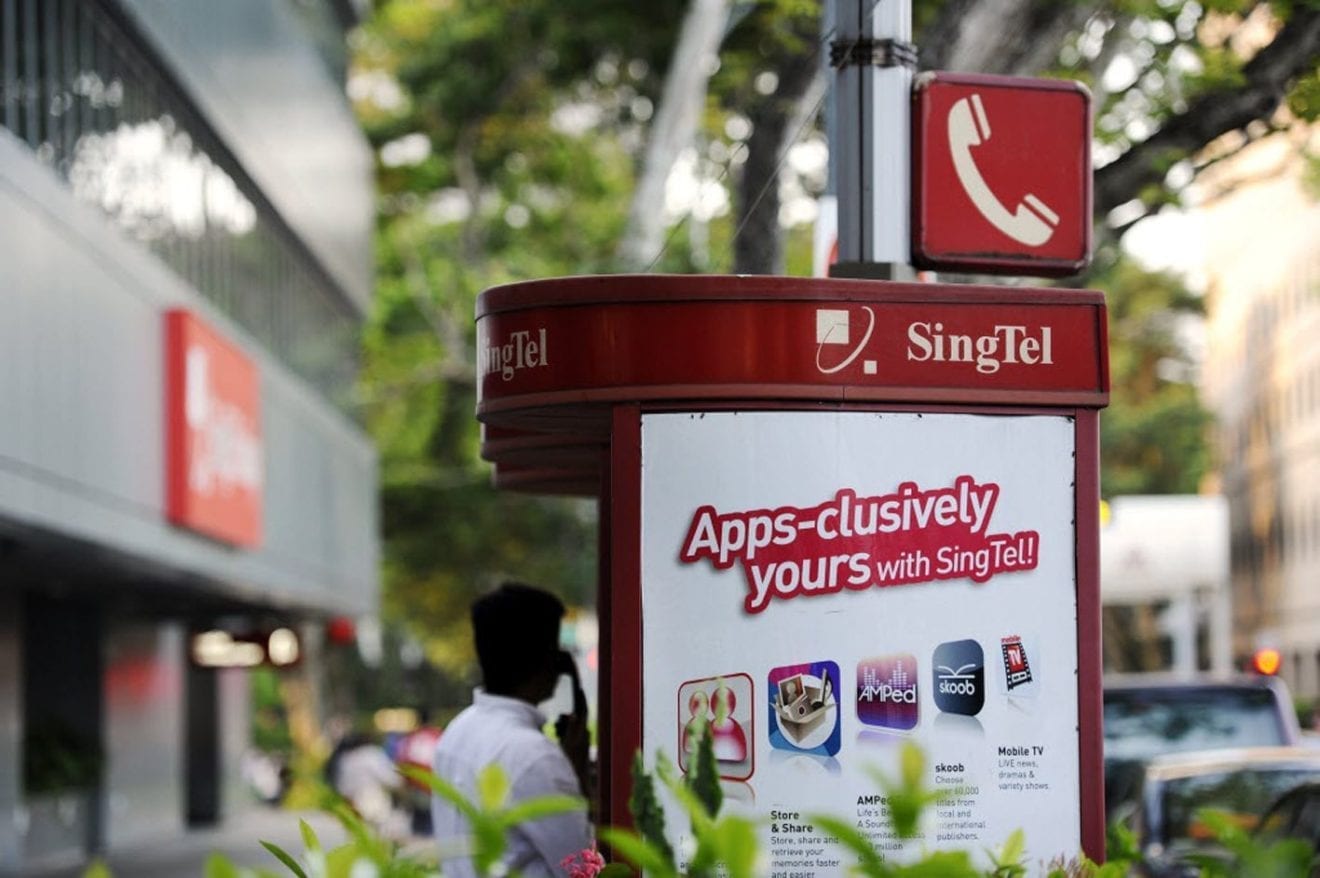
    Singtel has achieved over 95% standalone 5G nationwide coverage. This comes more than three years ahead of the regulatory target of end-2025, effectively making Singapore the first country in the world to be fully covered by standalone 5G.

    Singtel’s standalone 5G network now covers more than 1,300 outdoor locations and over 400 in-building, as well as underground, creating immense opportunities for the development of ground-breaking applications and immersive experiences for both enterprises and consumers. Singtel was officially awarded the 3.5GHz and the millimeter wave spectrum as part of the 5G license issued by the IMDA in June 2020, and an additional 2.1GHz spectrum in November 2021 which supported the achievement of this critical milestone.

    “We’re extremely excited about this important milestone for both Singtel and Singapore as nationwide standalone 5G coverage is a major leap in technology that will spur unprecedented digitalization. Despite disruptions from COVID and the knock-on impact on manpower and resources, our planners and engineers managed to accelerate our 5G deployment, working through the pandemic to lay the groundwork and build a whole new infrastructure for a secure and resilient 5G network. This means that Singapore can now exploit the full capabilities and best applications that 5G can offer, paving the way for innovation and new growth that will propel our country forward,” said Yuen Kuan Moon, Singtel’s Group Chief Executive Officer.

    He added, “As a homegrown Singaporean company, we feel honored to have provided the critical infrastructure and essential services that have sustained the nation’s progress through the years and are pleased to launch this next-generation technology to commemorate Singapore turning 57. With a world-class 5G network in place, we look forward to keep doing our part in enabling Singapore’s next phase of growth as a global smart city.”

  • Labor shortage plagues Vietnam industries

    Labor shortage plagues Vietnam industries

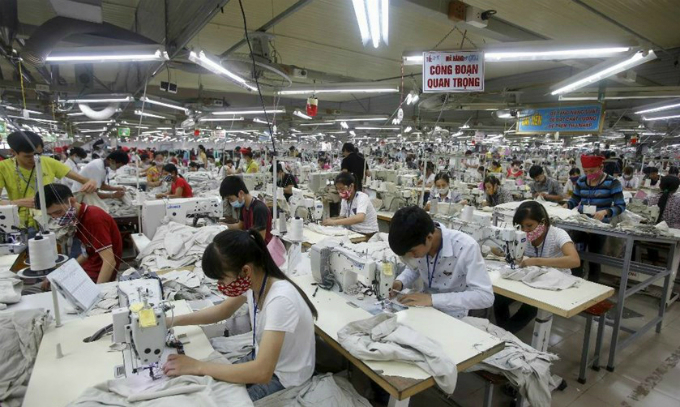
    Both foreign and local companies in various industries continue to grapple with labor shortages as they aim to expand activities in a recovering economy.

    “Air-conditioned workspace, free bus transport, and many other attractive benefits” are part of the recent recruitment notices of electronics manufacturer Pegatron Vietnam in the northern city of Hai Phong.

    The supplier of Apple offers a monthly salary of VND9-13 million ($385-556) to workers. It has also been looking for managers and engineers.

    Another Apple supplier, Goertek Vina, has been looking for workers who can start right away, with no limit in the number of applications.

    Last week it sought procurement specialists, trade specialists, and customer service staff.

    A recent report by recruitment platform Adecco said the trend of manufacturers shifting out of China and trade pacts between Vietnam and the EU, Japan and South Korea have caused a considerable increase in recruitment demand.

    Manufacturing disruptions in China have made Vietnamese and other Southeast Asian markets attractive destinations for manufacturing, CEO of Adecco Hanoi Nguyen Ha said.

    Industrial park data affirmed this trend, as they recorded a 90 percent occupancy in Hanoi, Ho Chi Minh City and Da Nang in the second quarter, according to property consultancy Colliers Vietnam.

    Long Hau Industrial Park in the southern province of Long An said companies there had increased their recruitment demand by 30-40 percent in the first six months.

    “We therefore have to recruit more staff to help these companies find workers.”

    Recruitment platform Navigos said in a note that leasing, industrial property and investment managers are popular jobs but with low supply.

    Companies often look for experienced Vietnamese for these jobs, but struggle to attract talents, it said.

    The IT industry is also seeing a surge in demand as more contracts are sent to Vietnamese companies amid the Russia-Ukraine tension, the report said.

    VietnamWorks, a popular recruitment website under Navigos, saw the number of job posts increase by 20 percent year-on-year to over 65,000 in the first six months.

    Technology was the most sought-after sector, followed by finance/investment and sales.

    Some popular jobs were software developers and data technicians.

    The Ministry of Labor, Invalids and Social Affairs said there was a shortage of 120,000 workers in the first quarter, or nearly 10 percent of recruitment demand, 2-3 percentage points higher than in previous years.

    Since March, factory workers, shippers, salespeople, hotel and restaurant staff have been popular jobs to record a supply shortage, according to recruitment platform Viec Lam Tot.

    There is also a shortage in high-skilled labor.

    Most of Vietnam’s 1.3 million electronics workers perform simple tasks classified as low-value manufacturing, the Vietnam Chamber of Commerce and Industry said in a report released last week.

    Sixty percent of businesses surveyed said the lack of skilled workers was “a moderate to serious” challenge, while 50 percent viewed the lack of professional supervisor and managerial skills as a “big challenge”, said the report, conducted in partnership with International Labour Organization last year.

  • Indonesia Says Mitsubishi Motors To Invest About $667 Million Over Next 3 Years

    Indonesia Says Mitsubishi Motors To Invest About $667 Million Over Next 3 Years

    Mitsubishi Motors plans to invest about 10 trillion rupiah ($666.89 million) in Indonesia between 2022 and 2025, the country’s chief economics minister said on Tuesday.

    Airlangga Hartarto in a statement said the Japanese company had invested 11.3 trillion rupiah up to 2021 and was planning to expand its production in the Southeast Asian country.

    The statement quoted Mitsubishi Motors CEO Takao Kato as saying the company planned to produce hybrid electric vehicles and battery electric vehicles in Indonesia.

    He said Mitsubishi was aiming to increase its export capacity from Indonesia to 72,000 units this year and to 98,000 units in 2024, from 42,000 units in 2021.

    Airlangga met Mitsubishi’s executives during a visit in Tokyo, where they also discussed potential fiscal incentives for the company’s exported products.

    “Indonesia’s tax rate is actually competitive compared to other countries such as Thailand,” Airlangga said.

    “However, there are different regional taxes which make taxes seems bigger in Indonesia, this is what we are reviewing at the central government,” he said, without elaborating.

    Indonesian President Joko Widodo was due to visit Japan later this week.

  • Vestiaire Collective launches in South Korea

    Vestiaire Collective launches in South Korea

    Online fashion resale platform Vestiaire Collective said on Wednesday it is expanding into South Korea, choosing the fast-growing luxury market as a springboard for a deeper push into Asia.

    The expansion of the Paris-based tech start-up that hit unicorn status last year comes as pre-owned fashion sales continue to grow quickly, fuelled by young, environmentally conscious shoppers seeking bargains for second-hand clothing.

    The platform will be available in Korean and the company is adding an authentication site to its operations in Seoul.

    While luxury labels have traditionally been wary of secondhand sellers, an increasing number are exploring ways of getting involved in the market, partly as a way to engage with younger consumers or to provide an extra service to high-spending shoppers.

    Investors in Vestiaire Collective include French luxury group Kering SA which took a 5% stake last year, as well as private equity firm Eurazeo SE, Japan’s SoftBank Group, U.S. investment firm Tiger Global Management and Vogue publisher Conde Nast.

    Founded in Paris in 2009, the platform sells fashion and leather accessories from luxury labels such as Louis Vuitton, Gucci, Prada and Dior, and in May marked its highest transaction – a Birkin handbag from Hermes that sold for 158,000 euros

  • Vietnam’s biggest retailer Masan to bolster pharmacy retail interests

    Vietnam’s biggest retailer Masan to bolster pharmacy retail interests

    Vingroup JSC, Vietnam’s biggest listed firm by market value, said on Tuesday it will merge with leading consumer retailer Masan Group t create the country’s biggest retail company.

    Vingroup said in a statement that the two companies were finalizing legal procedures to sign an official agreement for the merger between its retail and agriculture units and Masan Consumer, a subsidiary of Masan Group.

    “The merger will enable us to expand our consumer base and ensure a fair retail playing ground for Vietnamese manufacturers,” said Truong Cong Thang, chairman of Masan Consumer Holding, which produces Vietnamese must-buy consumer goods.

    The new company is expected to run 2,600 supermarkets and convenience stores, and 14 hi-tech farms across the country, the statement added.

    After the merger, Masan Group will take control of the operation, while Vingroup will be a shareholder.

  • Carousell Group buys Indonesian electronics recommerce platform

    Carousell Group buys Indonesian electronics recommerce platform

    Carousell Group has acquired control of Laku6, an AI-first end-to-end electronics recommerce platform in Indonesia, as part of its vision to make secondhand the first choice for users. Temasek unit Heliconia Capital will be supporting Carousell Group in its acquisition of Laku6 and in accelerating circularity in secondhand electronics. The deal follows the initial investment Heliconia made into Carousell, less than a year ago in October 2021.

    According to Carousell, the partnership between Carousell Group and Laku6 will position Carousell Group as the market leader in the Greater Southeast Asia’s electronic recommerce industry, which is slated to grow over 2.5X to US$18.6 billion by 2026, based on research by RedSeer Strategy Consultants.

    Having inspected and transacted over half a million mobile phones and served over 16,000 mobile phone merchants, Laku6’s proprietary AI-first remote diagnostic technology can remotely inspect the condition of secondhand mobile phones in under two minutes. This proprietary solution is capable of remotely inspecting both software and hardware functionalities, including visible screen damage, and helps establish a credible inspection process to instill both buyer and seller confidence.

    Quek Siu Rui, Co-founder and CEO of Carousell said the partnership provides for a potent combination to secure Carousell’s leadership in the Greater Southeast Asia electronics recommerce market–bringing together Laku6’s AI-first remote diagnostic technology, Carousell’s regional recommerce platform of tens of millions of users, and one of the largest capital investments to-date into the region’s electronics recommerce space.

    “We are truly excited to partner with Alvin, Shing Kae, and the entire Laku6 team. The electronics recommerce opportunity is one that is win-win-win: great for users with affordable like-new devices, beneficial to the environment as people sell and buy secondhand instead of new, and an exciting business opportunity with over 2.5X electronics recommerce growth potential ahead,” said Quek.

    “It is exciting to be part of a regional leader that aligns with Laku6’s vision. Carousell and Laku6 share a deep commitment of making secondhand the first choice and the demand for electronics recommerce is growing faster than ever in Greater Southeast Asia. With Carousell’s scale and investment, we are well-placed to create a winning formula and offer our proven solutions to a very large audience of end-users and merchants,” said Alvin Yap, founder and CEO of Laku6.

    Every quarter, Carousell sees about two million new listings in its electronics category, making it one of the largest platforms to transact used electronics, and particularly mobile phones, in the region. Laku6’s proprietary solutions, pricing algorithms and instant cash service, when integrated with Carousell’s wide user network, will make buying and selling used electronics more accessible than ever before for millions of users.

    As the fastest growing waste stream globally, the e-waste crisis has been perpetuated by a rapid increase in electronic consumption and shorter gadget lifespans, with Asia consistently generating the highest quantity of e-waste globally. “By making it easier for our users to sell their idle devices and buying certified used devices, Carousell and Laku6 aim to extend the life cycle of electronics goods, thereby slowing down the growth of toxic e-waste, added Carousell.

    This partnership also follows Carousell’s acquisition of Ox Street, the leading authenticated streetwear marketplace, and Refash, Singapore’s largest omnichannel fashion recommerce retailer, and reflects the group’s strategic focus to cement its leadership position in the recommerce arena across verticals from fashion to electronics, and its commitment to making second hand the first choice.