Blog

  • Google’s VR/AR headset set to enter the fray

    Google’s VR/AR headset set to enter the fray

    Virtual/Augmented reality is commonly viewed as the next frontier in mobile technology. Hence, many companies are making efforts to engage with it sooner rather than later, so as to ensure that they beat the competition to the punch. And while many are just now entering the market like Apple, some are already veterans in VR/AR… in a way.

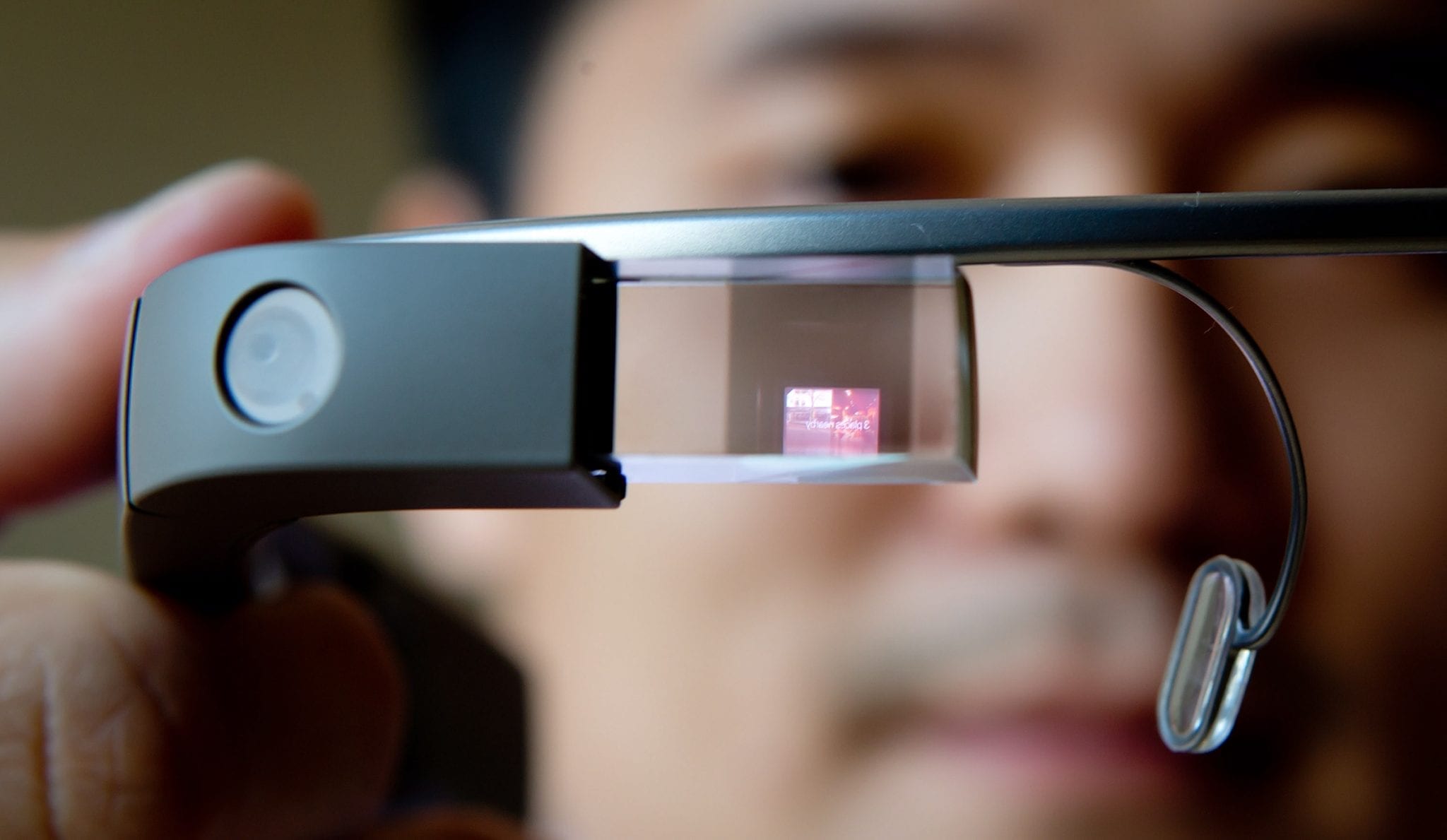
    We are of course referring to Google. The company notoriously flopped nearly a decade ago with Google Glass, but this time around the tech giant is doing its best to get VR/AR right. Some time ago, the first bits of information concerning Google’s “Project Iris”, the codename for the company’s upcoming VR/AR headset.

    In its original report, where we disclosed a number of interesting details about Project Iris, which was then in its early stages of development. It seems that Google’s VR/AR headset has come a long way since, given that field testing is already underway

    Google will be testing a small number of prototype units to better understand how the headset fares under everyday circumstances. Google even published a blog post on the matter. The main features that will be tested are “translation, transcription and navigation”.

    The tests will be conducted according to a set of strict privacy guidelines. The prototype units will resemble ordinary glasses and the testers will have to undergo special training and comply with a number of privacy measures.

    These steps show a decisive move on Google’s part to learn from its mistakes with Google Glass. Whether it will be enough to make Project Iris a success remains to be seen. For reference, most pundits expect Google to release its VR/AR headset sometime around 2024. Hence, there is still a long way to go. We will have to wait and see.

  • Gasoline price plunges to 5-month low

    Gasoline price plunges to 5-month low

    Vietnam gasoline prices on Thursday fell to the lowest in five months as global rates decline.

    The Ministry of Finance and Ministry of Industry and Trade adjusted RON95 prices down 12.1 percent to VND26,070 ($1.11) per liter.

    This means RON95 is now 20.7 percent lower than this year’s peak on June 21.

    E5 RON92 gasoline prices dropped 9.8 percent to VND25,070, down 19.9 percent from this year’s peak. The government also brought diesel prices down 7 percent to VND24,850 per liter.

    Global oil prices fell Thursday for a second straight session, as demand concerns outweighed tight global supply after U.S. government data showed tepid gasoline consumption during the peak summer driving season.

    Brent crude futures dropped 33 cents, or 0.3 percent, to $106.59.

  • Intel vPro platform accelerates business productivity

    Intel vPro platform accelerates business productivity

    The Intel vPro platform offers a comprehensive solution for businesses to increase productivity, protect business assets and maintain business organizations to get over the Covid-19 pandemic.

    The long term effects of Covid-19 have forced the world to quickly find new ways to live safely with it while maintaining stable socio-economic activities.

    With the development of technology, online has become the mainstream form of activity, e-commerce has grown rapidly, while the digital platform has become the main communication channel. Nowadays, many employees are gradually choosing to work from home. IT organizations are going to control the changes between “Work from home” and “Work in the office.” Business leaders need security features as well as productivity improvement during Covid-19. That’s why Intel has released its 11th Gen Intel vPro platform.

    Intel vPro is a platform “built for business,” using 11th Gen – 12th Gen Intel Core. It is a set of hardware and firmware technologies utilized to build business computing endpoints.

    Intel vPro value proposition spans four pillars, and business decision-makers who standardize on the vPro platform can benefit from hardware-enhanced protection, advanced maintenance, and validated platforms, all with the performance headroom to handle a wide range of business workflows.

    The 11th Gen processors feature the all-new Intel Iris Xe graphics processor that delivers a huge jump in performance. These processors also have integrated both Intel Wi-Fi 6 and Thunderbolt 4, so users get the latest wireless and cable connectivity standards built-in. They also deliver an exceptional performance for workers who need to collaborate and be productive.

    Intel Hardware Shield enabled hardware-enhances security features with advanced threat protection, application and data protection and below-the-OS security. Advanced threat protection uses aggressive memory scanning and artificial intelligence to detect new threats like ransomware and crypto-mining.

    Application and data protection includes encryption acceleration along with other features to protect applications and login credentials from attacks. Below-the-OS security prevents attacks against the BIOS and other firmware to enable a secure hardware and firmware foundation for the operating system.

    Intel vPro Platform comes with Intel Active Management Technology (Intel AMT) that allows IT to establish a secure connection between IT and a vPro-based PC. Once that secure connection is established, IT can perform a lot of different tasks as part of AMT.

    Remote power control continues to be one of the most used features of Intel AMT. With this, IT is able to remotely control the power state of a PC. Businesses use this to automate afterhours patching while keeping energy costs down. They can turn PCs off at the end of the day, yet wake them during the night to perform security updates without impacting productivity. Once they complete the patching they can put the PCs back to sleep to save energy. Lastly, before the workday begins, they can wake those PCs so everything is running and ready when employees arrive.

    The other most popular feature is hardware KVM. We’re all familiar with software based tools that we can use to take control of PCs and see the screen and move the mouse to help fix a system. It’s a very powerful tool, but only if the software can run. When a PC can’t successfully boot, those software based tools are powerless. That’s where Active Management Technology really shines, because it has a hardware KVM built into the chips. Even if the PC cannot boot, IT can connect with full KVM support to remotely remediate the PC, even entering the BIOS while maintaining the KVM connection.

    Intel Endpoint Management Assistant extends the power of Intel AMT beyond the firewall. By using cloud-based management infrastructure, devices don’t need a functional VPN to receive support from IT. As long as the AMT-enabled PC can reach the cloud, IT can securely connect to and remotely control that PC. This also allows IT technicians themselves to do their job either onsite or remotely.

    The cloud-based infrastructure is also easier to deploy and scale than traditional on-premise infrastructure and can be controlled using a simple web interface. When you’re running Intel EMA combined with Intel AMT, not only can you fix corrupted applications but a corrupted VPN is no problem at all, and a corrupted OS can also be remediated remotely.

  • China scraps Covid bans on Vietnamese seafood

    China scraps Covid bans on Vietnamese seafood

    Chinese authorities will no longer penalize Vietnamese seafood exporters with a temporary ban if their containers are found contaminated with Covid-19, that country’s embassy in Hanoi has said.

    Exporters used to face a seven-day ban for every container of theirs found contaminated with the coronavirus. A seafood exporter who was once banned for three weeks said shipments have returned to normal.

    “China is trying to reduce the damage caused by its zero Covid strategy, and so exporting to the country has now become easier.”

    Dozens of Vietnamese exporters suffered from the ban, some for weeks and even months due to the large number of containers infected.

    Vietnam exported US$427.6 million worth of seafood to China in the first six months, up 107 percent year-on-year, according to the Vietnam Association of Seafood Exporters and Producers (VASEP).

    VASEP expects exports to China to boom in the second half of this year following the easing of the draconian safety measures.

  • WhatsApp adds ability to transfer chat history and more from Android to iPhone

    WhatsApp adds ability to transfer chat history and more from Android to iPhone

    Switching from an old phone to a new one has become a very mundane process in the last several years, but things are a bit more hectic when it comes to switching platforms. Ever since Android and iOS existed, both Google and Apple have done everything they could to make switching from one platform to another as painful as possible. Very subtly, of course.

    Since many of us want to keep as much of the information we have stored on a phone as possible when we buy a new one, it’s very important for apps like Messenger, Telegram and WhatsApp to provide users with a hassle-free way to transfer their data not just between phones, but also between ecosystems.

    WhatsApp announced this week that it’s now making it much easier to migrate data from an Android phone to an iPhone and vice versa. Regardless of what phone you’re switching to, you’ll now be able to transfer your account information, profile photo, individual chats, group chats, chat history, media and settings.

    However, you will not be able to transfer your call history or display name if you’re moving from an Android phone to an iPhone. The same goes for peer to peer payment messages, although personal messages can be transferred from an Android phone to an iPhone.

    It’s important to mention for iPhone users that transferred data won’t go to cloud storage after migration, at least not until you specifically create an iCloud backup.

    As far as Android users go, the data transferred will remain on the Android phone unless WhatsApp is deleted or you completely wipe your phone. Here what the full process of migrating your data from Android to iPhone looks like:

    • Open the Move to iOS app on your Android phone and follow the on-screen prompts.
    • A code will be displayed on your iPhone. When prompted, enter the code on your Android phone.
    • Tap Continue and follow the on-screen prompts.
    • Select WhatsApp on the Transfer Data screen.
    • Tap START on your Android phone, and wait for WhatsApp to prepare the data for export. You’ll be signed out from your Android phone once the data is prepared.
    • Tap NEXT to return to the Move to iOS app.
    • Tap CONTINUE to transfer the data from your Android phone to your iPhone and wait for Move to iOS to confirm the transfer is complete.
    • Install the latest version of WhatsApp from the App Store.
    • Open WhatsApp and log in using the same phone number used on your old device.
    • Tap Start when prompted, and allow the process to complete.
    • Finish activating your new device and you’ll see your chats waiting for you.

    Make sure you meet the requirements

    To successfully migrate date between Android and iPhone and vice versa, your phone must run Android 5/iOS 15.5 or above, Move to iOS app installed your Android phone, and the latest version of WhatsApp. Also, your iPhone must be factory new or reset to factory settings to pair with the Move to iOS app and move data from your Android phone.

    Finally, both devices must be connected to the same Wi-Fi network. Another option would be to connect the Android phone to an iPhone’s hotspot. Of course, you must use the same phone number as your phone on your new device to be able to transfer your data.

    Every process that involves more than 10 steps would probably not be considered convenient, but the alternative would be to remain stuck with a phone and OS that you no longer love, or risk losing all your WhatsApp data. Despite requiring a little bit of knowledge before attempting to migration process, this is actually a very cool feature that will probably be fine tuned in the years to come.
  • Globe Telecom Earns MEF 3.0 Ethernet Services Certification

    Globe Telecom Earns MEF 3.0 Ethernet Services Certification

    Globe Telecom announced that it has passed the MEF 3.0 Carrier Ethernet services certification for transformative ethernet services.

    In a company press release, it said that the award was given for its “conformance to rigorous specifications established by MEF.”

    MEF’s President, Nan Chen, extended his congratulatory message to the Philippine’s telecom operator. He said, “Companies who purchase from a certified MEF 3.0 service provider can have confidence that they will receive services which conform to MEF’s industry-leading global standards. Companies like Globe understand the value that certification provides—simplified, pre-validated functionality for buyers and simplified, frictionless implementation and partnering.”

    MEF 3.0 Carrier Ethernet certified services indicate the benchmark for connectivity, delivering the maximum level of performance, assurance and agility offered in the market.

    Globe had earlier achieved MEF CE 2.0 certifications for its E-Access, E-LAN and E-Line services. Raymond Policarpio, the Vice President for Product Management and Marketing at Globe Business, Enterprise Group said that this new recognition shows their commitment to providing maximum connectivity solutions to their users. “As network transformation continues at a rapid pace, these MEF industry standards eliminate confusion regarding service components, core capabilities and concepts.”

    He added, “We’re especially honored to be the first in Asia to achieve a MEF 3.0 Certification for Globe’s 100G E-Line services. Meeting these standards allows us to become a trusted partner in network-based enterprise services. Access to MEF’s ecosystem of frameworks, training programs and expert partners empowers us to provide quality services to businesses as we guide them through their digital transformation.”

  • China Now Has More Than 1.85 Million 5G Base Stations

    China Now Has More Than 1.85 Million 5G Base Stations

    China’s Ministry of Industry and Information Technology said that the country has now deployed more than 1.85 million 5G base stations nationwide as it pushes for its target of a total of 3.64 million by the end of 2025.

    According to the government website, fixed asset investment in the telecommunications industry has also increased by almost 25% year-on-year, now reaching 189.4 billion yuan during the first six months of the year.

    Data from the industry regulator shows that as of June, the country has deployed more than 1.85 million 5G base stations, and the number of 5G mobile users was at 455 million.

    The spokesman and chief engineer of the Ministry of Industry and Information Technology, Tian Yulong, stressed that initiatives should be undertaken to immediately begin a series of crucial projects in 5G, gigabit optical networks, the industrial internet and other new information infrastructure to both broaden investment and boost consumption.

    Officials also said that China is seeking to add 600,000 5G base stations this year and speed up their upgrade of the industrial internet.

  • Facebook starts rolling out chronologically ordered Feeds

    Facebook starts rolling out chronologically ordered Feeds

    Facebook is gaining a new way for users to consume content from friends, Favorites, Pages and groups – a chronologically ordered Feed tab. Mark Zuckerberg posted a short demo of the feature on Thursday, saying it is one of the most requested features on Facebook.

    “One of the most requested features for Facebook is to make sure people don’t miss friends’ posts. So today we’re launching a Feed tab where you can see posts from your friends, groups, Pages and more separately in chronological order. The app will still open to a personalized feed on the Home tab, where our discovery engine will recommend the content we think you’ll care most about. But the Feeds tab will give you a way to customize and control your experience further,” posted Zuckerberg on Facebook.

    Furthermore, people will be able to create a Favorites list inside the Feeds tab, consisting of friends, pages and groups, in order to get to their favorite content faster and easier. This change is similar to what Meta has done with Instagram – the company announced a chronological Feed back in January, and rolled out the feature a couple of weeks later.

    The new Feed tab in Facebook is already rolling out to some users on Android and iOS. There’s a slight difference between the two operating systems – on Android the tab can be found at the top of the UI, while on iOS it is at the bottom. The fill rollout should take place over the course of next week.


  • SK Telecom to Spearhead Global Standardization of Quantum Cryptography Technologies

    SK Telecom to Spearhead Global Standardization of Quantum Cryptography Technologies

    SK Telecom announced that its two technologies related to the control and interworking of quantum cryptography communication networks were adopted as new work items at the ITU-T meeting held in Geneva, Switzerland.

    The South Korean telecom service provider said in a press release that these latest solutions will be given international certification standards through its talks among member countries of the ITU-T.

    SK Telecom’s two technologies chosen as work items are: Quantum Key Distribution Network Interworking – Software Defined Networking Control; and Framework of Quantum Key Distribution Network Federation.

    The company said these latest innovations serve as an important tool for the popularization of quantum cryptography communication technologies.

    One of these technologies, the Software Defined Networking Control System for Interworking of Quantum Key Distribution Networks, enables telecommunication operators to run their existing communication networks and QKD networks holistically and efficiently.

    Meanwhile, the company compares the Quantum Key Distribution Network Federation to international roaming between mobile operators. This technology enables the delivery of quantum-safe communication services no matter whose QKD network they are on by “supporting interworking/federation between QKD networks of different service providers.”

    SKT’s Chief Development Officer Ha Min-yong, said, “The approval of these two items by ITU-T carries a significant meaning as they will serve a pivotal role in accelerating the adoption of quantum cryptography communication throughout the globe.”

    He added, “We will continue to drive the growth of the quantum ecosystem by taking an active part in the international standardization of quantum technologies and developing attractive services and business cases.”

    Furthermore, SKT has also employed projects for the Ministry of Science and ICT, in partnership with the SK Broadband consortium and Swiss-based firm ID Quantique. These projects focus on creating pilot QKD infrastructure and advancing application services for 17 different institutions from the public, medical and industrial sectors.

  • Apple looking to further diversify chip suppliers, reportedly finding new partner for the iPhone 14 Pro

    Apple looking to further diversify chip suppliers, reportedly finding new partner for the iPhone 14 Pro

    Apple is gearing up for the launch of the iPhone 14 series (which is inching ever so closely as we approach the fall), and it now seems Cupertino is set on not allowing any supply chain shortages to create issues. Reputable industry insider Ming-Chi Kuo now reports that Apple is looking to further expand its suppliers for the iPhone 14 series and has now added a new partner.

    According to Kuo, SG Micro (headquartered in China) has now passed quality certification for chips for the higher-end iPhone 14 models (meaning the iPhone 14 Pro and Pro Max). The company is likely to take orders for PMICs (power management integrated circuitry – basically a chip to manage power) in the second half of this year for the upcoming iPhones.

    This is the first time that said company would supply components for higher-end iPhones. According to the industry insider, this partnership will continue in the future, so that Apple can avoid future supply chain risks.
    Recently, Kuo said that some iPhone 14 display panel suppliers, as well as memory suppliers, have had supply issues; however, he doesn’t believe this will make a big impact on mass production. It seems that, at least according to Kuo, Apple is on track with the iPhone 14 production.
    As a quick recap, this year we expect there to be a more significant gap between the non-Pro iPhone models and the Pro versions. The iPhone 14 Pro and the iPhone 14 Pro Max are expected to be the only models to come with Apple’s latest processor (the A16), while the non-Pro variants are said to come with this year’s iPhone 13 chip.

    On top of that, the Pro iPhone 14 models will come with a new design for the Face ID sensors and the selfie camera, getting rid of the notch which will remain for the non-Pro iPhone 14 and iPhone 14 Max. We also expect the Pros to come equipped with an always-on display.

    The four phones are to be unveiled sometime in the fall, probably September.

  • ZTE Signs Partnership with Two Philippine Universities

    ZTE Signs Partnership with Two Philippine Universities

    ZTE announced that it has entered strategic partnerships with two well-known universities in the Philippines as it aims to cultivate young talents in the telecom industry under its program called the “Ultimate Service, Leading Ecosystem”.

    The global telecommunications giant has signed an agreement with the University of Santo Tomas (UST) and Polytechnic University of the Philippines (PUP).

    In a press release, ZTE said that this cooperation involved a wide range of programs including internships, faculty immersion, career consultancy and campus recruitment, online seminars and forums, training camps, a scholarship program and joint research exploration in emerging technology fields, among others.

    UST’s President and Rector, Richard G. Ang said that they look forward to this partnership with ZTE as it fits in line with the university’s future development. He added, “We hope that our partnership will set up a new model for the Industry-Academe Linkage Program.”

    Meanwhile, PUP’s President, Dr. Muhi said, “I am very happy that PUP is the first university in the Philippines to sign a strategic cooperation with ZTE. This can enhance the accessibility to the telecommunication knowledge for our college students and provide them with financial support to continue their studies.”

    ZTE said that this collaboration with the two Philippine universities serves as an essential component in the company’s ecosystem plan in the country, and can also allow the company to broaden this ecosystem and boost its competitiveness with its partners in the industry to deliver better services and products.

  • Australia and Singapore to Jointly Fight Against Scam Calls and Messages

    Australia and Singapore to Jointly Fight Against Scam Calls and Messages

    Australia and Singapore will unite in the fight against unsolicited telemarketing, spam and scams, following an agreement between the Australian Communications and Media Authority (ACMA) and the Info-communications Media Development Authority of Singapore (IMDA).

    The new strategic agreement will promote further engagement and information-sharing between the two agencies and assist with both investigations and compliance with telecommunications laws in both countries.

    This memorandum of understanding (MOU) complements the 2020 Australia-Singapore Digital Economy Agreement to expand trade and economic ties in our region. It follows similar agreements the ACMA has made with its regulatory counterparts in the USA, Canada and New Zealand.

    Research conducted by the ACMA in 2021 found that 98% of Australians received some form of unsolicited communication. Scam calls were the most prevalent type of unwanted communication, with 4 in 10 Australians receiving them at least weekly.

    ACMA Chair Nerida O’Loughlin said she was pleased to further strengthen the ACMA’s strong working relationship with the IMDA.

    “Almost every Australian is impacted by unwanted calls, SMS and emails, and we know that many of our international colleagues are dealing with the same issues,” O’Loughlin said. “This agreement will see us building stronger ties with our Singaporean counterparts to crack down on unsolicited calls and messages, particularly when cross-border issues are involved.”

    Lew Chuen Hong, Chief Executive of IMDA said, “Scams is [sic] a global issue that do not respect geographical boundaries. This MOU is an important step for the international community to join forces and tackle this issue decisively. I am happy to join in this partnership with our Australian counterparts and together, the MOU will benefit the citizens of our both countries and increase trust in our telecommunication systems.”

  • Ecommerce Business Lifecycle Technology Requirements

    Ecommerce Business Lifecycle Technology Requirements

    Every business is different. From its launch to its maturity or failure, businesses go through many stages. There are ups and downs, barriers and successes, all that mark the uniqueness of a business and the strategies used in it.

    Just like that, there are many differentiations for the business life cycle of ecommerce stores these days. According to Gartner’s Identify Small Business Opportunities by Understanding Business Life Stage Requirements, there are four key stages that influence the technology requirements of businesses. His differentiation is between startup, expansion, establishment, and business maturity.

    That’s just one point of view, really. The Corporate Finance Institute differentiates between launch, growth, shake-out, maturity, and decline.

    Before we get too far in the differentiations of life cycle events, it’s important to understand that your business strategy is different from that of anyone else. Reality is, the different phases demonstrate your start, your ups and downs, as well as your successes.

    While we cannot tell you what exactly will happen to your business, there are some things that we can help with. In this article, you will learn about the technology requirements that come with the three most commonly defined stages of your ecommerce store life cycle.

    The first is your launch and your business’ growth.

    The second is the period of slowing growth.

    The third is the renewed growth that leads to your business’ maturity.

    Whether you find yourself in all these stages or not, this article will help you determine what technology you need to keep your business afloat.

    1.  Launch of New eCommerce Businesses and Their Initial Growth

    This stage would be your early period, the moment when your ecommerce business is considered ‘a startup’. In most cases, new businesses are subject to an early, sometimes very rapid growth. Everything is better than zero, so whatever you succeed at the start is a growth for your new business.

    At this point, you need technology to get your business up and running and get your products to your customers. For that purpose, you’ll need to decide what platforms you’ll use. Whether you’ll use WordPress or a different platform, pick between Shopify and WooCommerce, and choose between traditional or headless commerce.

    This particular phase is full of experimentation and comes with big costs unless you take wise and well-thought actions. At this stage, we can recommend to make your choices tactfully and take your time while considering what you’ll invest in.

    Keep in mind that, the big choices you make now such as what platform you’ll use for your site, what you’ll use for hosting, or what type of ecommerce you’ll opt for – will determine a lot in the future.

    For starters, we’d like you to think about whether you’ll go for headless commerce or traditional commerce. The first is a big buzzword in this business world because of the flexibility it offers, while the latter is used by most of the older stores and comes with ready templates and fewer customization options.

    Next, we’d like you to consider your hosting options. Will you go for the hosting that your web builder offers or another one that integrates with it?

    Of course, at this point you should also consider things like the SSL certificate and how you’ll protect your customers, data, as well as plugins and tools you’ll use to present your products to your audience. You’ll also need to consider things such as payment methods you’ll offer to customers, delivery options, etc.

    While you can adjust most of this later on, the technology you use now can help you jump into the ecommerce world with full power and get to that growth stage faster.

    2.  Slowing Growth of Your Business

    As we mentioned, businesses have their ups and downs. If you survive the first stages and start making sales and creating customers, chances are you’ll get to this stage sooner or later. It happens to everyone. This is the stage that will challenge your business and determine whether it will keep existing or not.

    Many businesses panic and start searching for some quick-fix technology solutions when this point comes. They invest in things that aren’t effective or long-term, which soon leads to the end of their business.

    It is important to understand that the growth of a business will slow down at some point. It is your job to figure out why and find a way to stop declining.

    At this point, the technologies that can help you with your decisions and actions are mostly research-based. You are looking at research and analytics tools, fierce marketing and retention programs, and many surveys and customer insights.

    3.  Renewed Growth and Business Maturity

    Every phase of slowing or staggering growth makes your business more mature. Successful businesses overcome many such stages, after which this particular period comes – renewed growth.

    This happens when the stagnant phase ends and you start getting new or returning customers i.e. when your business’ success starts growing again. If you overcame the second stage we listed here, this is what comes next.

    However, this doesn’t mean that your job ends here or you don’t need technology to keep going. You can easily get back to the ‘slowing growth’ stage again if you don’t tread carefully.

    That being said, some technologies that are good for this stage include research tools, which you’ll need to use on a regular basis. It is important to keep track of how your business is progressing and which of your strategies are showing good or bad results.

    Research will steer your strategy in this stage, too, which means more customer experience and user testing, optimization of your mechanics for conversions, etc.

    And, of course, getting to this stage means that you’ll have more revenue. At this point, you should re-evaluate your investments and, if possible, invest in more versatile, feature-rich tools to replace the simpler ones you had to use before.

    Wrapping Up

    Strategic planning is vital for the success and survival of an ecommerce business, but so is technology. Since these businesses operate online, they need a variety of technology tools to achieve their goals. If you use the right tools and strategies at different stages that your business is in, you can get it to a more mature state and keep it successful.


    @kateryna.luchenko@boosta.co Approved, aside from one comment below
  • Gold plummets to 8-month low

    Gold plummets to 8-month low

    SJC’s gold price plunged by 3.1 percent to VND62.5 million (US$2,667.18) per tael Tuesday, the lowest in eight months, after recording a historic decrease Monday.

    The drop was the second biggest single-day decline for the safe haven metal after the 6 percent fall Monday.

    A tael equals 37.5 grams or 1.2 ounces.

    Global gold prices fell to their lowest in 11 months last week as the U.S. dollar has been gaining this year amid concerns of inflation and geopolitical tensions.

    But they rose by 1.1 percent Monday to $1,708.18 per ounce.

  • Northern power output rises to new peak

    Northern power output rises to new peak

    Power output in the northern region topped 22,800 megawatts at noon on Monday, 9 percent higher than last year’s peak, amid an ongoing heatwave.

    Hanoi and 14 provinces in the northern and central regions have been recording temperatures of up to 38 degrees Celsius (100 degrees Fahrenheit), and the heatwave is likely to continue for another day or two, according to the National Center for Hydro – Meteorological Forecasting.

    Some thermal power plants that have a combined output of 1,555 MW are reporting technical issues with turbines, according to national utility Vietnam Electricity (EVN).

    Hanoi and some other localities recorded a power outage for around two hours on July 4 due to high demand.

    EVN estimated earlier that the northern region would face a shortage of 1,500-2,400 MW during peak hours or extreme weather conditions this year.

    The state utility has called on people to reduce power usage from 11 a.m. to 2.30 p.m. and form 8 p.m. to 10 p.m.

    It also encouraged people to set their air-conditioner temperature at 27 degrees Celsius or higher and use it in combination with a fan.