Blog

  • iPhone dominates smartphone market in China

    iPhone dominates smartphone market in China

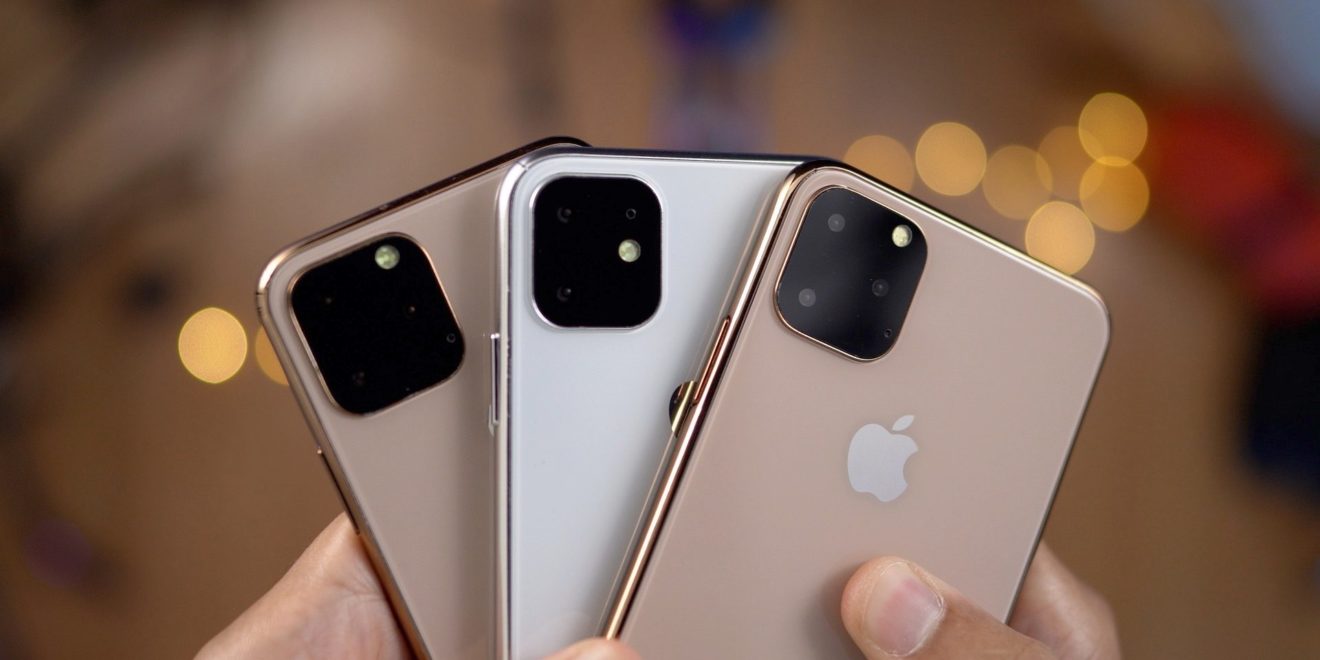
    Someone over at Apple is popping the champagne as an extremely successful holiday season for the iPhone 13 made Apple the top brand in the world’s largest smartphone market — China. We’ve known that the new iPhone models (minus the iPhone 13 mini) have been doing extremely well there, but now that the numbers have been crunched, we have definitive stats.

    Apple outsold giants such as Oppo, Vivo, Xiaomi, and Huawei on their own turf, which probably stings a little bit. The market used to be dominated by Huawei, but the company has sadly been in a freefall in the past couple of years, and we can see it falling all the way down to the sixth spot in Q4 of 2021.

    This isn’t the first time that Apple sells crazy amounts of iPhones in China. Back in 2014, the iPhone 6 Plus made huge impact in Asian markets, since it was a long-awaited big-screened iPhone. Up until then, Apple simply refused to upsize its screens, despite the fact that phablets were the obvious future trend — especially in Asia. When the iPhone 6 Plus and iPhone 6s Plus launched, they became the new craze in China. No joke — some retailers would bundle the iPhone 6 Plus with free tailor services to enlarge pants pockets!

    At the height of the iPhone 6 / iPhone 6s craze (2015), Apple was the top smartphone brand in China. The No1 spot was later taken by Vivo, then Huawei. Now, six years later, Apple is back with a vengeance, taking 23% of the market share — that’s the highest it has ever had.

    As per Counterpoint’s report, Apple rose to the top as soon as the iPhone 13 series launched and held the top spot for most of Q4 2021. The reasons for the wild success are a perfect storm of Huawei customers jumping ship, good pricing strategy by Apple, the 5G implementation in the new iPhones, and the new camera, which is highly praised.


  • Cebu Pacific cancels 24 flights due to workforce shortage

    Cebu Pacific cancels 24 flights due to workforce shortage

    Low-cost carrier Cebu Pacific canceled 24 domestic and international flights on Wednesday, citing workforce shortage.

    “Cebu Pacific continues to manage the impact of Covid-19 (coronavirus disease 2019) on its workforce with employees who are either sick or under home quarantine,” it said in an advisory Tuesday night.

    The following flights have been canceled:

    5J893/894 Manila – Boracay (Caticlan) – Manila
    5J905/906 Manila – Boracay (Caticlan) – Manila
    5J787/788 Manila – Butuan – Manila
    5J567/568 Manila – Cebu – Manila
    5J581/582 Manila – Cebu – Manila
    5J975/976 Manila – Davao – Manila
    5J447/448 Manila – Iloilo – Manila
    5J373/374 Manila – Roxas – Manila
    5J653/654 Manila – Tacloban – Manila
    5J506/507 Manila – Tuguegarao – Manila
    5J5054/5055 Manila – Narita (Tokyo) – Manila
    5J310/311 Manila – Taipei – Manila

    Affected passengers may rebook or refund their tickets, or store the value in a travel fund, until 30 days from the original flight schedule.

    The airline said because the situation is still fluid, those with flights until January 23 may also opt to refund their ticket or rebook their flight for travel within 60 days.

    They can also store the amount to a travel fund valid for two years.

  • Gold prices hit new peak

    Gold prices hit new peak

    Vietnam’s gold price hit a new historic peak of VND62.7 million ($2,769.32) per tael Tuesday, surpassing the previous record in August 2020, even as global rates went flat.

    Saigon Jewelry Company (SJC) sold its gold at VND62.7 million per tael Tuesday, up 1.2 percent to a new record. A tael equals 37.5 grams or 1.2 ounces.

    Jewelry company DOJI sold its gold at around VND62.6 million and Phu Nhuan Jewelry, for VND62.3 million.

    Global rates were little changed at $1,840.49 per ounce Tuesday afternoon as concerns about a faster pace of policy tightening by the U.S. central bank countered safe-haven demand, fueled by escalating tension over Ukraine.

    Vietnam’s gold is now VND12 million, or 23.7 percent, higher than global rates.

  • Uniqlo set to come to Hai Phong

    Uniqlo set to come to Hai Phong

    Japanese fashion brand Uniqlo plans to open its first store in the northern city of Hai Phong this summer.

    It will be a 2,000-square-meter outlet at Aeon Mall Le Chan.

    Uniqlo, which came to the Vietnamese market two years ago, now has 10 stores in Hanoi and HCMC.

    Globally, it has over 2,300 in 25 countries and territories.

    German research firm Statista estimates Vietnam’s fashion industry to grow at an average annual rate of 22.5 percent in 2017-22 to reach US$988 million.

  • Twitter’s Trusted Friends feature is now called Flock

    Twitter’s Trusted Friends feature is now called Flock

    Last year, Twitter showed an early concept of a feature called Trusted Friends. As the name suggests, this feature allows you to tweet to a close group of friends, instead of spamming all your followers.

    This pre-announced feature now has a new name – Flock. Reverse engineer Alessandro Paluzzi has dug up parts of the feature and posted examples on his Twitter page. As you can see from the screenshots, Twitter Flock allows users to add up to 150 people to this privileged group.

    It’s worth noting that people will get a notification when they have been added to somebody’s Flock but won’t get one if they’ve been removed. The idea behind this feature is quite logical and it’s been implemented in other social networks such as Instagram (Close Friends).

    Unfortunately, there’s no official information about a potential rollout date, or whether this feature will be available across all platforms from the get-go. Chances are you’d need to use the official Twitter app on your mobile to get the Flock feature (when it’s officially released).

    Twitter keeps on adding new features lately, with the social network launching Super Follows and Safety Mode last Autumn, and finally starting to roll out the Twitter Spaces record and replay feature earlier this month.

  • Another Apple Car engineer quits, this time, joining Meta

    Another Apple Car engineer quits, this time, joining Meta

    Okay, so far, we’ve had a lot of information about the reported turnover at Apple’s mysterious project for self-driving vehicles. Many engineers have reportedly left the project to join other firms. Now, AppleInsider reports about yet another Apple Car engineer leaving the company, and this time, he will be joining Meta (former Facebook).

    The long-rumored project for a self-driving car from Apple seems to be having a lot of setbacks recently, mainly due to losing engineering managers and other key staff and an overall quite consistent employee turnover.

    It seems this pattern is continuing in 2022. This time, it’s the head of software engineering of Apple Car, Joe Bass, who has reportedly left Cupertino to go join Meta. Joe Bass was the Lead Engineering Program Manager for Autonomous Systems over at Apple since the beginning of 2015. According to his LinkedIn profile, he has now left Apple for a new start.

    His new position is Director of Technical Program Management, Mixed Reality Technologies over at Meta (formerly Facebook). The departure of Bass comes after several other engineers did the same back in December, with a majority of them seemingly going to air-taxi startup Archer Aviation, and another similar company, Joby Aviation.

    Keep in mind that the Apple Car project is still just rumored, and has not had an official announcement. The most recent news about it is the report that the company is looking to announce its key partners for the project sometime this year. This information is coming from South Korean sources: it seems Cupertino has been looking into South Korean carmakers to possibly strike a deal with them for Apple Car components.

    This information seems to indicate Apple has plans to ship an Apple Car by 2025. The possible announcement of the partnerships could give us more information about the time frame in which we expect to see this ever-so-mysterious self-driving car. And from this high level of turnover, one can not help but assume things aren’t going exactly according to plan for the Apple Car.

    This image is a part of the newly-created Apple Car renders that we reported on earlier, coming from British car leasing firm Vanarama, and of course, they are based on patents filed by Apple plus previously released Apple devices.

    It is, indeed, a very early stage to know for sure if the Apple Car will look anything like the image shown above, but it looks cool, don’t you agree?

    There have been many people leaving and joining the supposed Apple Car project in recent months, especially in November and December of last year. Some of its key engineers have been leaving to join air taxi startup companies, while other ex-Tesla engineers have joined to take their place.

    Just to name a few, Eric Rogers, who was Apple’s chief engineer for radar systems for the project for the self-driving vehicle has left to go join Joby Aviation Inc, a flying taxi startup. Alex Clarabut, who was an engineering manager for the team’s battery systems group, has now joined Archer Aviation, another company working on air taxis.

    The third person who recently left Apple is Stephen Spiteri, who was a hardware engineering manager, and he has also gone ahead and joined Archer. The two flying taxis companies have confirmed the appointments.

    All these staff changes serve to show how many challenges the Cupertino tech giant is facing as it is expanding into an entirely new industry. Of course, building and selling a self-driving car represents a massive new sales opportunity, one of its famous “next big thing”. We will see how Apple will face the challenges coming with it.

  • TikTok testing new Video Avatar Tools, audio-only live streams, and more

    TikTok testing new Video Avatar Tools, audio-only live streams, and more

    TikTok is testing a couple of new features, and thanks to social media expert Matt Navarra (who has a great track record of revealing them) we have some inside information on how they look and what they actually do.

    TikTok experimental features at a glance:

    1. Video Avatar Tools
    2. Keyword filtering
    3. Group Chat shareable link invite
    4. Audio-only live streams
    5. Screen sharing in live

    1. Video Avatar Tools

    The first new feature is very similar to Apple’s Memoji, and will allow users to create a digital avatar based on a selfie shot. First you’ll need to choose a face template, which you would be able to subsequently edit with expressions based on your own face.

    “The feature lets you use your phone’s camera to take a selfie with a fun facial expression which your avatar will match,” wrote Navarra on his Twitter page.

    The screenshots, posted by Navarra, don’t explain the exact way this feature works, and whether it would be capable of tracking and mimicking your face in real time, or it would only be able to pre-record short video avatars/still images.

    2. Keyword filtering

    There’s also an interesting keyword filtering feature in the works, apparently. Contrary to the way most filtering options work, the TikTok keyword filtering will allow you to hide content from your feeds.

    Adding a keyword or hashtags to your filter will result in videos containing these words in the description or stickers not showing in your For You page or Following feeds. Advertisement containing these “filtered” keywords may still appear, though.

    3. Group Chat shareable link invite

    Also in the code, dug up by Navarra, lies a string suggesting that a new Group Chat feature is being developed. TikTok users will have the option to invite people to a group chat via a shareable link.

    TikTok has a Group Chat feature but you need to manually invite people by sending a video or creating a group chat in inbox and selecting the users you want to invite. The shareable link invite feature simplifies the process.

    4. Audio-only live streams

    TikTok is experimenting with the option to allow users to join live streams with audio-only, trying to hop on the Clubhouse train, even though the popularity of the app and all of its clones has plummeted in recent months.

    Twitter Spaces is a recent example and the company recently rolled out a new feature called Record and Replay, allowing users to record their conversations and make them available for anyone who wants to listen at a later time.

    5. Screen sharing in live streams

    This one is pretty interesting, as per the code: “Screen sharing allows viewers to see what’s on your screen in real time, including camera, audio, notification, and other alerts.”

    The ability to share your screen with friends will give TikTok creators new tools to enhance their material, new ways to make tutorials, and make live streams more interesting in general.

    TikTok provided an official statement to SocialMediaToday, shedding light on the idea behind these new experimental features:

    “We’re always thinking about new ways to bring value to our community and enrich the TikTok experience. Currently, we’re experimenting with ways to give creators tools to express themselves on TikTok.”

  • A new Lenovo Legion gaming phone leaks with a new Snapdragon chip

    A new Lenovo Legion gaming phone leaks with a new Snapdragon chip

    In his tweet, Evan Blass said that the Lenovo Halo would be equipped with the Qualcomm SM8475 chipset. Although there is little information available for this chip, it is suspected that it may be an improved version of Qualcomm’s current flagship SoC, the Snapdragon 8 Gen 1. The Snapdragon 8 Gen 1’s model number is SM8450 – very close to the SM8475 which the Lenovo Halo is rumored to have.

    Other possible specs of the Lenovo Halo include:

    • 6.67-inch, 2220×1080 pixels (FHD+) POLED display, which is basically an OLED display with a plastic substrate. Lenovo Halo’s display may also support a 144Hz refresh rate with a 300Hz touch sampling rate.
    • 8, 12, or 16GB of RAM, with 128 or 256GB of UFS 3.1 storage space, which offers fast read and write speeds and can also be found in the Samsung Galaxy S21 Ultra 5G and OnePlus 9 Pro 5G.
    • 5,000 mAh battery, 68W wired charging, and 8mm thickness

    It looks like Lenovo is aiming for a more simplistic design with the Lenovo Halo. At the front of the phone, we can see a hole-punch front-facing camera, and at the back we see a triple camera array. Bearing the “Legion” label on its back means that the Lenovo Halo will be aimed at gamers, as Legion is Lenovo’s gaming brand.

    According to Evan Blass, the Lenovo Halo is suspected to be released in Q3 2022. There is currently no information regarding the phone’s price. Evan Blass also didn’t say if the Lenovo Halo would be available worldwide or only in certain markets.

  • Soon we may be using more secure payment cards thanks to Samsung

    Soon we may be using more secure payment cards thanks to Samsung

    Samsung has announced the S3B512C security chip, its new fingerprint security chip developed in partnership with Mastercard, designed primarily for payment cards. According to the company, the chip is the ‘industry’s first all-in-one security chip solution’ and would be able to provide faster and safer interactions while making purchases. Because Samsung’s chip uses biometric authentication, the chip would also remove the need to enter your PIN code on a keypad.

    The S3B512C chip has a fingerprint sensor as well as a tamper-proof secure element (SE) that meets international security requirements, and a secure processor. The chip captures the user’s biometric data via its fingerprint sensor. Then, using the SE, it stores and authenticates the received information. After that, the chip analyzes the data by using its secure processor.

    With its biometric authentication, Samsung’s security chip may prevent fraudulent transactions which could otherwise be made with lost or stolen traditional cards. Because it has securely saved the owner’s fingerprint, a card using Samsung’s chip will check if the person performing the transaction is indeed the rightful owner. The chip also utilizes anti-spoofing technology, which prevents unauthorized users from fooling the security system using tactics such as artificial fingerprints.

    According to Samsung, although the S3B512C chip is primarily designed for payment cards, it could also be used in cards intended for highly secure authentication, such as student or employee access cards. In addition, by utilizing a fingerprint sensor, a tamper-proof secure element, and a secure processor, the S3B512C may assist card makers in reducing the number of required chips in manufacturing biometric payment cards and might help optimize card design processes.

    Although Samsung’s new security chip sounds very promising, currently, there is no information on when Mastercard will implement Samsung’s new chip.

    Currently, Mastercard offers fingerprint-authenticated payment cards, but they are not as secure as the new Samsung chip and don’t use anti-spoofing technology.

  • WhatsApp’s latest update brings Focus mode support to iPhones and iPads

    WhatsApp’s latest update brings Focus mode support to iPhones and iPads

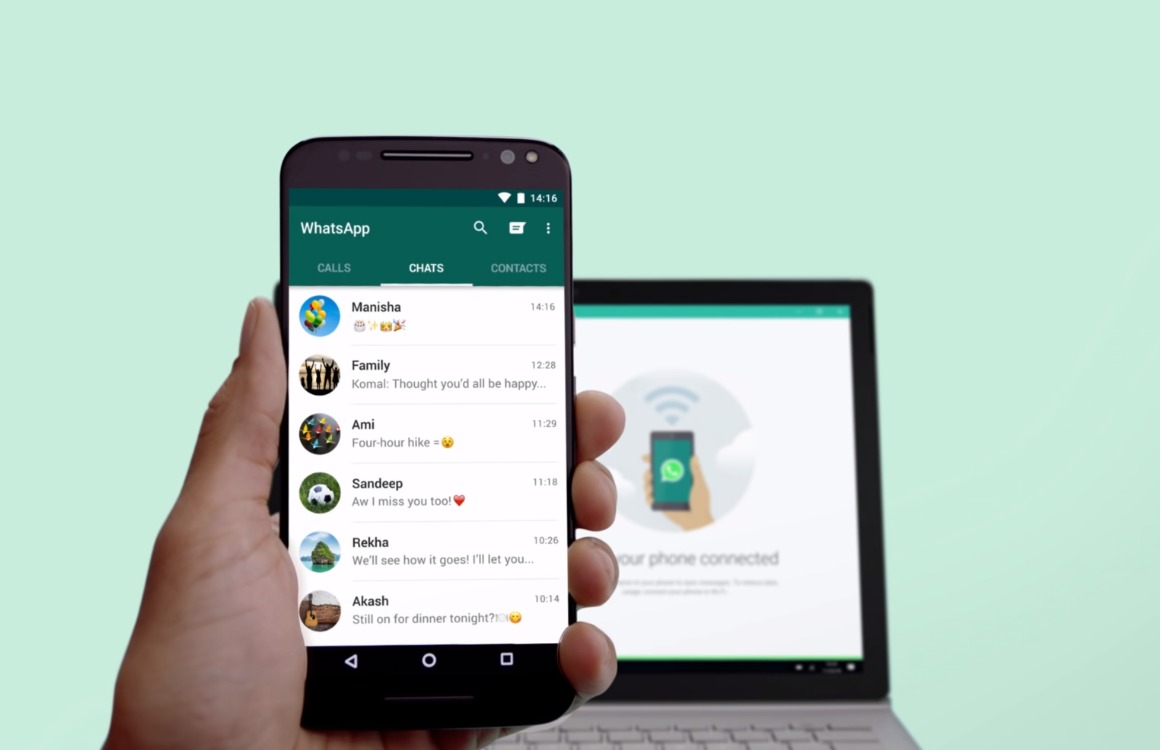
    Although WhatsApp typically rolls out updates simultaneously on both Android and iOS platforms, the latest update is one of the exceptions since it brings specific features aimed at iPhone and iPad users. Two important new features are now making their way to iOS users and are expected to be generally available over the coming weeks.

    The first one is the ability to pause and resume while recording voice messages. Surprisingly, such a nifty feature wasn’t available until the latest update, so if you’re downloading WhatsApp v22.2.75, you can try it out by swiping up to lock a recording and then tap the “pause” and “resume” buttons.

    Another important new feature rolling out to iOS users is support for Focus mode. This has been added in iOS 15 and allows selected users to message you when you have set a Focus mode. When this mode is enabled, you can set notification, call, and message filters, as well as auto-reply to others when you’re not available. Think of it as a more efficient Do Not Disturb feature.

    In other news, WhatsApp is gearing up for yet another important new feature for its users: the ability to transfer Android chats to iOS. However, the feature is still being tested internally, so it might take a while until WhatsApp will be ready to make it available to everyone.

  • M1 and Blacknut to deliver 5G-powered cloud gaming services in Singapore

    M1 and Blacknut to deliver 5G-powered cloud gaming services in Singapore

    M1 Limited (M1) has announced an exclusive partnership with market-leading cloud gaming specialist Blacknut, to bring an all-you-can-play 5G-powered cloud gaming service to Singapore.

    Boasting the world’s largest catalog for cloud gaming, Blacknut has a unified gaming platform that is fully integrated within the M1 ecosystem, enabling users to have unlimited access to more than 450 high-quality PC and console titles, including renowned hits like Overcooked, Lord of Fallen, Modern Combat 5, Asphalt9 and more. Serious and casual gamers will soon be able to discover a seamless “click & play” experience, anytime and anywhere, regardless of their device – television, PC, tablet, or mobile.

    Leveraging the high speed and ultra-low latency of M1’s True 5G network, this upcoming cloud gaming service ensures seamless and uninterrupted gaming experiences for subscribers.

    “True 5G not only transforms businesses but also consumer experiences. We are excited to show the game-changing prowess of 5G through our partnership with Blacknut, to level up gaming experiences for Singaporean gamers. Powered by 5G connectivity, M1 is on track to create an inclusive gaming ecosystem by enabling affordable and accessible gaming options,” said Manjot Singh Mann, chief executive officer, M1.

    “We are very proud to support M1 in their 5G deployments with Blacknut Cloud Gaming. We are pleased that our platform is a great fit and fully aligned with M1’s 5G ambitions. Pairing Blacknut with M1’s 5G connectivity delivers ultra-responsive cloud gaming backed by a fast, reliable network and the best market solution to fulfil M1’s vision for Singapore,” said Olivier Avaro, chief executive officer, Blacknut.

    Since its launch in July, M1’s True 5G network coverage has expanded to about 65% of Singapore, and with the continual growth of the infrastructure, customers can expect to soon enjoy more innovative and diversified digital experiences and even more OTT offerings.

    M1 has been a frontrunner in Singapore’s 5G development and was the first telco in the nation to embark on 5G trials as early as 2018. To date, M1 has a record of more than 15 5G use cases and trials across consumer, enterprise and government sectors. To further the 5G ambition and fully unleash the power of True 5G for all, M1 is also working with Workforce Singapore (WSG) to upskill and train close to 10% of the entire workforce to build a pool of talent with up-to-date skills in 5G and emerging technologies.

    Details of the cloud gaming subscription plan will be announced during the official launch in Q2 2022.

  • Production Ready Tesla Cybertruck Leaked

    Production Ready Tesla Cybertruck Leaked

    Tesla is about to share some more details around the launch of the Cybertruck with many expecting deliveries to start either at the end of the year or early next year. However, now it has been more than two years since Elon Musk showcased the car and after teasing many updates to the car since that unveil, we finally get a glimpse into what changes have happened to the car behind the scenes thanks to a leaked image of a prototype snapped by a Tesla employee which looks ready for mass production.

    Now, there is a single windscreen wiper that is resting vertically and is placed next to the A-pillar. There are two traditional side-view mirrors that were missing in the original unveil and Musk was hoping that cameras would do. There are no door handles and the wheels seem to be inspired by the aero set that was there on the Model 3. There have been reports that there could be a smaller model of the car and by the looks of it, the image showcased is representative of that fact.

    There is also a larger opening on the front bumper and appears to be a bit bigger and lower than before. This probably helps with its aero credentials but perhaps it comes with a trade-off towards its 4×4 capabilities. Musk had also said that this model will come with an updated camera system and an updated self-driving chipset which could be on this prototype.

  • Mercedes To Use Luminar’s LiDAR’s With New Deal

    Mercedes To Use Luminar’s LiDAR’s With New Deal

    Mercedes has announced that it has inked a deal with LiDAR maker Luminar whose devices will be incorporated in its vehicles in the future. Mercedes has also taken a small stake in the company with the acquisition of 1.5 million shares. As a part of the deal, Luminar will also be sharing data with the luxury carmaker.

    Luminar in particular has closed a deal with Daimler North America which is the parent of Mercedes in the US. Daimler will also share data from development and production vehicles for the continuous development of the systems.

    “A landmark moment in the industry that will demonstrate how substantially increased safety and autonomous driving functions on consumer vehicles are going from sci-fi to mainstream,” said Luminar founder and CEO Austin Russell.

    Currently, both companies haven’t revealed when the first Mercedes car will be revealed which will have a Luminar LiDAR. LiDAR is critical for autonomous driving – more importantly, sophisticated autonomous systems which aim for self-driving capabilities, something Mercedes currently lacks in its vehicles.

    Luminar already has announced a deal with Volvo and will be integrating its LiDAR and software in its cars. Volvo will also unveil an electric SUV later this year which will feature Luminar’s technology.

    However, Luminar’s deal with Daimler is also about the development of its Iris LiDAR system. This is not the first time Daimler has invested in Luminar its trucking division also invested in the LiDAR maker for its Blade system.

  • Apple seeks patent on automatic transparency mode for AirPods Pro

    Apple seeks patent on automatic transparency mode for AirPods Pro

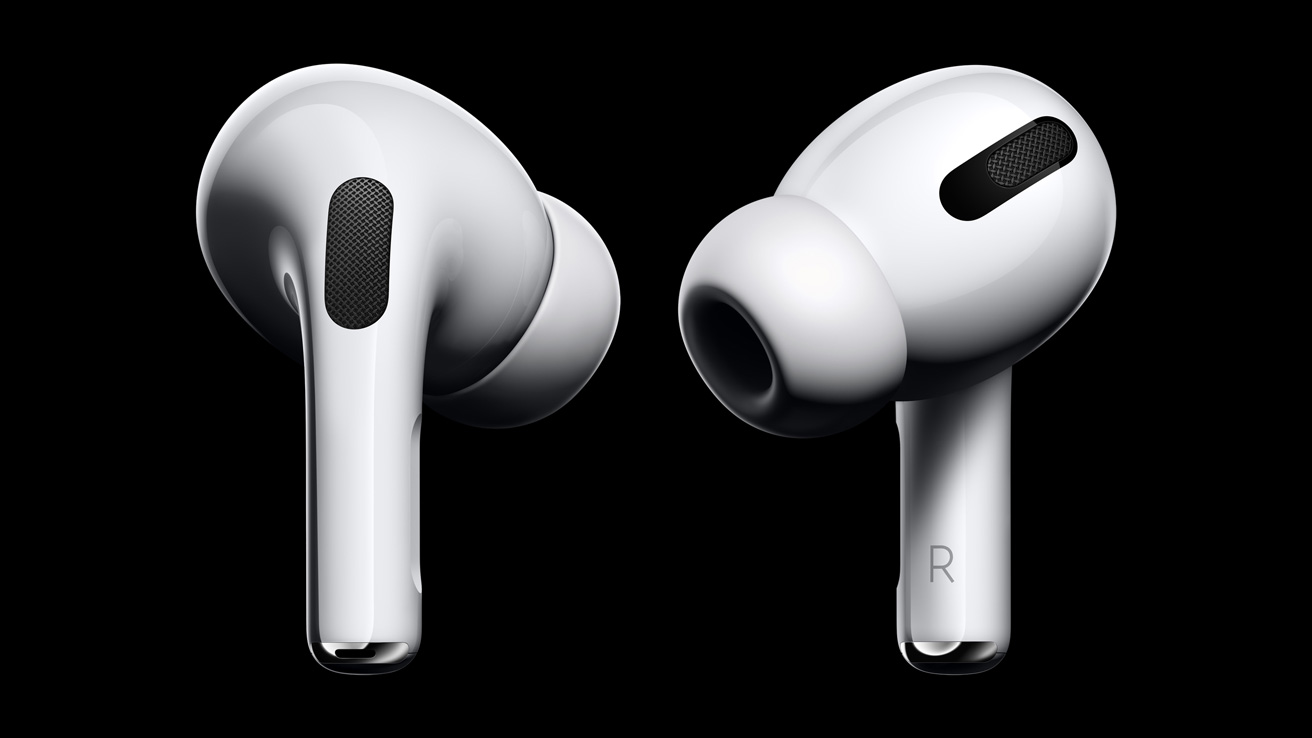
    According to TF International’s highly reliable analyst Ming-Chi Kuo, the AirPods Pro 2 True Wireless Stereo earbuds should be released later this year, perhaps during the third quarter. The major difference between your average garden variety pair of AirPods and the premium-priced Pro model is the Active Noise Cancellation (ANC); the latter prevents ambient noise from getting mixed in with the streaming content heard via the Bluetooth-powered earbuds.

    But just in case you need to hear what’s happening in the background while streaming music to your AirPods Pro, transparency mode will allow you to hear a car honking to alert you to get out of the way, a police siren in case you’re being pulled over, or a friendly “hello” from a pal who has spotted you walking on the street. The problem with turning on the transparency mode is that it allows all background noise regardless of what it is.>

    But what if you could choose which sounds make it through to you via the transparency mode? That could improve your enjoyment of using the AirPods Pro knowing that the transparency mode will remain off until someone you selected is trying to talk to you, or an event takes place that needs your immediate action.

    Apple has filed a patent application titled “Interrupt for noise-canceling audio devices” that details a more selective method of letting in outside noise to be heard through your AirPods Pro. With the technology discussed in the patent application, a user will be able to determine in advance who is allowed to break through the ANC. As Apple states in the documentation, “For example, the user may desire to be interrupted by one or more pre-designated contacts that are identified at an associated electronic device as interrupt-authorized contacts, or by a person who speaks a designated keyword to the user.”

    In other words, the Active Noise Cancellation would remain in effect until people authorized by the user start talking. The voice of the other person could be recognized, or that person’s name could be mentioned by the user, or both the user and the contact could devise a specific password that would flip on transparency mode.

    The patent also notes that the user can train the system to recognize certain important sounds that you would want to hear right away “such as police or ambulance sirens, or smoke or fire alarms.” It is like having transparency mode set on “automatic.”

    There are other differences between the AirPods and AirPods Pro besides the latter offering ANC. For example, the “Pro” variant includes the ability for the user to enjoy a customizable fit. Ironically, the third-generation AirPods offer longer battery life than the AirPods Pro but we expect that to change with the AirPods Pro 2. We also could see the new premium version of the earbuds feature a new design, possibly dropping the iconic and recognizable stem from the device. This might make the AirPods Pro 2 look like some of the earbuds manufactured by competitors’s not to mention Apple’s own Beats Fit Pro.

    Other possible changes for the AirPods Pro 2 include the addition of new sensors that will allow the device to perform some type of fitness tracking. Also expected is a new chip that will make it easier for the wearables to connect with other devices. And Apple is reportedly looking at a way to use the AirPods Pro 2 as a device to measure certain health metrics just as the Apple Watch now does.

    The patent application was originally filed by Apple with the U.S. Patent and Trademark Office (USPTO) last July.

  • Volkswagen & Bosch Form JV For European Battery Production

    Volkswagen & Bosch Form JV For European Battery Production

    Volkswagen and Bosch have signed a memorandum of understanding to explore a joint venture dedicated to providing the European market with battery equipment solutions. The two, together, plan on selling integrated battery solutions with on-site ramp-up and maintenance support for battery cell and system manufacturers. This joint venture has also been designed with the goal of enabling Volkswagen to achieve its goal of building six battery cell factories by 2030 which will also be available to third-party customers.

    The idea for both Bosch and Volkswagen is to be self-sustaining for electric cars in terms of the supply chain. Volkswagen is building on top of its JV with NorthVolt with which it has planned its first facility in Salzgitter in Germany.

    “Europe has the unique chance to become a global battery powerhouse in the years to come,” said Thomas Schmall, a VW board member responsible for the automaker’s battery plans, in a statement.

    “There is a strong and growing demand for all aspects of battery production, including the equipment of new gigafactories. Volkswagen and Bosch will explore opportunities to develop and shape this novel, multi-billion-euro industry in Europe,” he added.

    “Our decision to actively engage in the vertical integration of the battery-making value chain will tap considerable new profit pools. Setting out to establish a fully localized European supply chain for e-mobility made in Europe certainly marks a rare opportunity in business history,” Schmall explained.

    The European battery alliance has already said that a third of the global batteries need to be manufactured in Europe by the end of the decade to cut dependence on South Korean and Chinese suppliers.