Blog

  • Apple gives in to Korea’s law and allows outside payments to developers

    Apple gives in to Korea’s law and allows outside payments to developers

    The first of its kind, a law preventing app market operators—the likes of Apple and Google—from necessitating app developers to use specific payment systems were imposed by Korea’s National Assembly in September 2021. Today, on January 11, 2022, Apple has agreed to the regulation and will allow payment systems different from its own in the App Store.

    Apple did not say the exact fee it will be charging app developers for using an outside payment system, but it did say it will be lower than that for its own, which is 30 percent. The exact commission rate for outside payments and the date on which it will be implemented will be determined after discussions with Korea’s ICT regulator are finished, said the tech giant.

    Google agreed to the new regulation a bit earlier, back on December 18. It charges 26 percent for outside payments. It’s expected that Apple will decide on a similar percentage as well.

    While this might seem like a huge win for app developers, and it is a win, some industry officials are concerned about whether there will be any substantial effects. One such official said that, in actuality, it is much easier and more convenient for developers to use the payment systems that Apple or Google offer, for example, than to do that with outside ones.

    A good example of that is the payment system of Korea’s own One Store market operator. Even though it charges only 5 percent commission for using outside payment methods and 20 percent for its in-house one, developers choose to use the latter.

    The regulation, therefore, does not help app developers at all. It will only end up burdening app users because app developers will reflect commissions charged for payment systems at the prices of their apps. But this is the furthest a government can regulate, given that most countries operate under a capitalist system.

    No matter how effective things turn out to be, the successful implementation of the regulation itself is enough of a big step on its own. It is the first domino to be pushed and could likely be the one to set a chain reaction across other countries that will try and achieve the same goal in their way.


  • Disgraced McDonald’s ex-CEO pays back US$105m in settlement

    Disgraced McDonald’s ex-CEO pays back US$105m in settlement

    McDonald’s has settled a lawsuit with former CEO Steve Easterbrook, forcing the disgraced executive to repay his severance package of more than $100 million.

    Easterbrook was fired in 2019 after the fast-food giant’s board determined that he violated company policy by demonstrating poor judgment involving a recent consensual relationship with an employee. In August 2020, McDonald’s filed a lawsuit against Easterbrook for lying to the board about the extent of his relationships with employees.

    In a filing to the US Security and Exchange Commission Thursday, McDonald’s criticized Easterbrook for his misconduct, lies, and efforts to impede investigations into his actions and that the settlement is the best path forward.

    This settlement holds Steve Easterbrook accountable for his clear misconduct, including the way in which he exploited his position as CEO, Enrique Hernandez, Jr., the chairman of McDonald’s board of directors, said in the filing. The resolution avoids a protracted court process and allows us to move forward.

  • Apple has just killed off the last Beats-branded speaker

    Apple has just killed off the last Beats-branded speaker

    After discontinuing the Beats Powerbeats wireless earbuds, Beats EP wired on-ear headphones, and high-end Beats Solo Pro wireless on-ear headphones just a couple of months ago, Apple appears to have also pulled the Beats Pill+ plug more recently.

    This was of course a long time coming, as the portable Bluetooth speaker made its commercial debut all the way back in 2015, but seeing the $229 product officially and permanently going away is still notable for a number of different reasons.

    First and foremost, as you can easily notice, the disappearance of the Pill Plus leaves both the official Beats website and Apple’s own US e-store without a single Beats-branded speaker option. This bad boy was also the first of its kind to see daylight after the Dre-founded company was acquired by the Cupertino-based tech giant in 2014 in exchange for a whopping $3 billion.

    That highlights the minimal attention Apple gave its audio-focused subsidiary all these years, at least on the surface. Of course, the Beats name was at one point rumored to go extinct altogether for marketing purposes, which hasn’t yet happened and is unlikely to happen anytime soon given that the true wireless Studio Buds and Fit Pro earbuds are still under a year old.

    The only speaker Apple is selling at the time of this writing is the in-house $99 HomePod Mini, which features significantly more advanced technology than the Beats Pill+ in a few key departments while forcing its users to hug a wall at all times.

    If that sounds too inconvenient, you might be happy to know the fully portable battery-powered Pill Plus is still available (in presumably limited numbers) from major US retailers like Walmart or Target at or around its original list price.

    Then again, our complete roundup of the best portable Bluetooth speakers money can buy includes several great alternatives at comparable or lower prices, all of which are alive, kicking, and younger than Apple’s Beats Pill+.

  • How Amazon’s retail battle with Reliance turned into a legal quagmire

    How Amazon’s retail battle with Reliance turned into a legal quagmire

    Amazon and Future Group have been stuck in a contentious business conflict for more than a year, which has stalled Futures $3.4 billion cash transfer to US rival Reliance Industries, with no end in sight. Here’s what the controversy is about, which is thought to be the driver of who has a say in one of the world’s fastest-growing retail markets. What caused the dispute In 2019, Amazon and Future, India’s second-largest retailer behind market leader Reliance, became business partners after the US corporation invested $200 million in an Indian group gift voucher unit. Amazon claims that the deal contained specific non-compete clauses that prohibited Future from selling retail assets to certain competitors, such as Reliance, which is managed by one of India’s richest men, Mukesh Ambani.

    However, Future, which was hit hard by the Covid-19 epidemic, decided to sell assets to Reliance in 2020. Amazon then approached Singapore arbitrators and successfully ended the transaction. Both parties have filed lawsuits in courts, including the Supreme Court, because the place of arbitration is in New Delhi, and Indian law governs the proceedings. What do Amazon and Future say about their partnership?

    Future claims that the agreements include: According to the US company, the thought of a Future-Reliance contract undermines the latter. Future admits to no wrongdoing, claiming that Amazon is illegally seeking to wrest control of Futures’ online market. Future Retail, the group’s flagship retail arm, has announced that it will be liquidated and that if the Reliance agreement fails, its more than 27,000 workers will become jobless. In this controversial controversy, both sides have deployed a team of lawyers and top law firms.

    What is the bigger picture assuming that Amazon will succeed in a $900 billion retail market with 1.3 billion consumers is the ultimate goal. Reliance, a conglomerate owned by Reliance, has 1,100 supermarkets, while Future has more than 1,500. Both are expanding rapidly into e-commerce, but the Future deal would also strengthen Reliance’s retail presence, which has attracted major foreign investors. Amazon has invested $6.5 billion in India, a key growth market for the company, which it considers to be a leading e-commerce market.

    Amazon’s efforts to stop billionaire Ambanis’ expansion plans coincide with Keeping Future away from Reliance. Amazon also stated that Reliances’ combined status with Future would further enhance competition in the Indian retail industry, according to a non-disclosure legal filing. What happened to CCI? Future reported to the Competition Commission of India (CCI) that Amazon was making inaccurate and contradictory submissions about the intentions of the 2019 deal.

    Although Amazon argues that the CCI acted beyond its power, Future maintains that the US corporation no longer has the right to assert its claims because the 2019 agreement itself lacks regulatory approval.In a blow to the US giant, the Delhi high court suspended the Singapore arbitration proceedings between the two sides earlier this month in reaction to the CCI decision.The case has since been postponed, but Amazon has appealed the court’s decisions which are yet to hear it.

  • AS Watson expanding online presence with Amazon Singapore

    AS Watson expanding online presence with Amazon Singapore

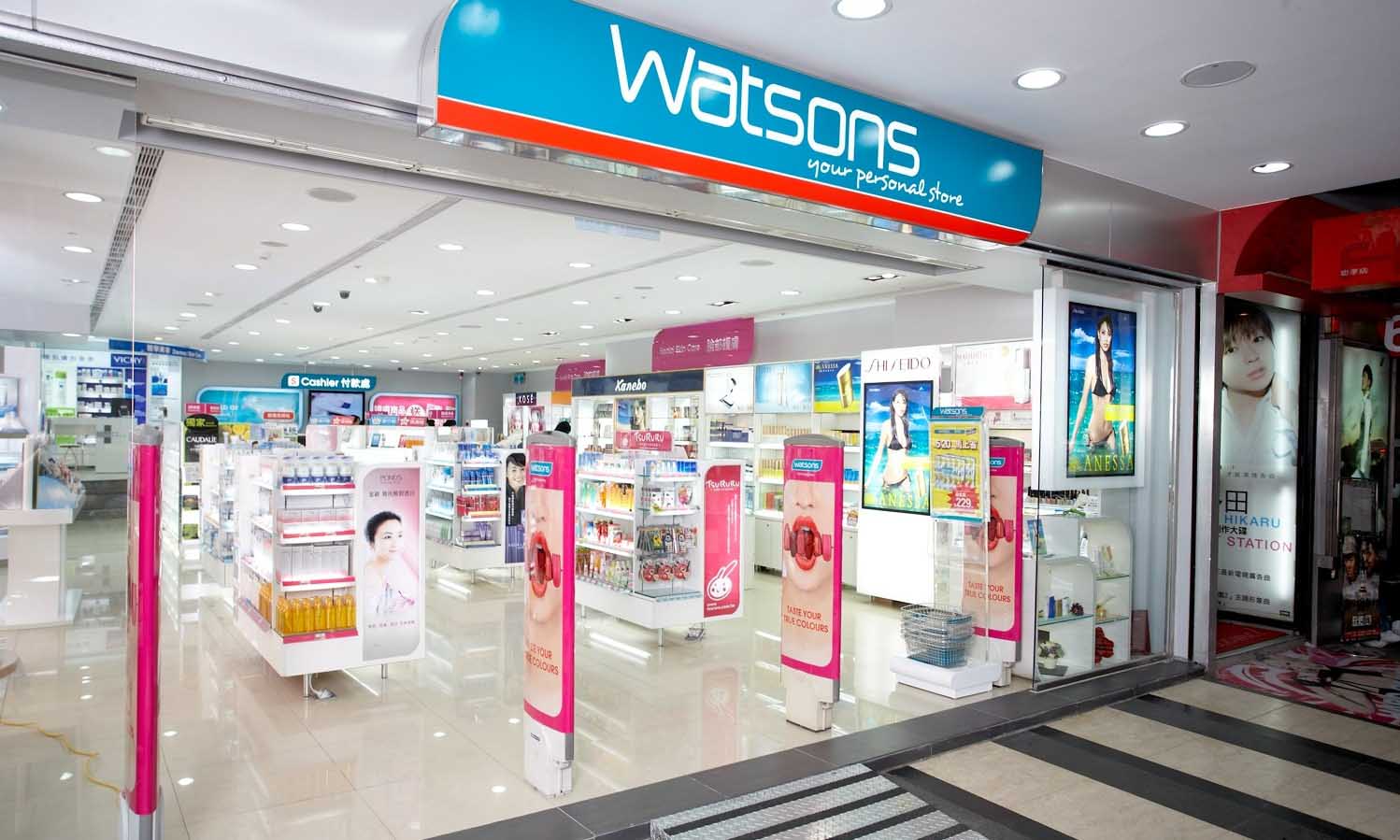
    This will launch an extensive product range and offer free scheduled delivery. Amazon Singapore and Watsons entered a partnership to launch a wider range of beauty, health, and personal care products on Amazon.sg through a dedicated storefront.

    According to Amazon, Prime members will find products available on Watson’s storefront from various brands such as as Aveeno, Bioré, Cetaphil, Bifesta, Wavertree & London, L’Oréal Paris, Oral-B, Anessa, Tsubaki, ZA, and other items ranging from facial care to health supplements.

    Customers are also given a free two-hour scheduled delivery of their items within the same day for orders over S$25 until 10 February. Prime members, meanwhile, will still receive free shipping on Watsons for orders above S$60 after the promotion period, Amazon said in a press release.

    This is Amazon Singapore’s first partnership with leading beauty and health retailers, creating a dedicated storefront on Amazon.sg.

    Henry Low, Amazon Singapore’s country manager, said the partnership is “the perfect next step to improve our offerings in Singapore.

    Irene Lau, Managing Director of Watsons Singapore, also noted the two-hour delivery offered by Amazon.sg to its prime members.

    “This is in line with our proactive customer-centric and Offline+Online strategies to offer our shoppers more convenient options to shop seamlessly, whenever and wherever, be it on watsons.com.sg or partner sites, like Amazon.sg,” she said.

    Special deals and promotions such as Weekend Specials and 1-for-1 Deals would also be available for Prime members until 6 February in line with the partnership.

  • Instagram testing a new “Edit Grid” feature

    Instagram testing a new “Edit Grid” feature

    Facebook is busy adding new features to its sweet child Instagram, as it seems. According to the app researcher Alessandro Paluzzi, the popular photo social network will be getting a cool new feature soon.

    Paluzzi posted a couple of images on Twitter, showing the new functionality in action. “Instagram is working on the ability to edit the profile grid allowing you to rearrange posts in any order you like,” wrote the researcher.

    The new “Edit Grid” option appears in the profile settings and allows users to re-arrange their profile gallery regardless of the date each photo was posted. This feature seems to be pretty useful, as it will allow people to choose what they want to show on their photo grid.

    Alessandro Paluzzi also shared some insight on new stickers Instagram has been working on lately. Among these is a new reaction emoji, although we’re not sure when will all these new features start rolling out.

    At the beginning of January, Instagram head Adam Mosseri announced three new feed changes coming to the platform. Since these are already rolling out, users now have three new ways to sort their home screen – Home, Favorites, and Following.

    Home shows your feed organized the way you’re used to seeing it, while Favorites shows posts from accounts you’ve put a Star on. The third option will display posts from people you follow.

  • WhatsApp voice messages may soon be playable anywhere in the app

    WhatsApp voice messages may soon be playable anywhere in the app

    A report by WABetainfo reveals how WhatsApp’s global voice message player might look like. The player will be able to play voice messages that you have already begun listening to anywhere within the app. The picture shows that the voice message player might be situated at the top of the WhatsApp app and might include a progress bar that shows how much you have left from the audio message. The picture also shows a button to pause and play the message and another button to dismiss it.

    According to the report, WhatsApp’s global voice message player will eliminate the need to stay inside the chatbox in order to listen to a voice message. The player will be constantly visible and will appear on every page of the WhatsApp app, hence the word “global.”

    Because of its global function, WhatsApp’s voice message player is supposed to become very useful for listening to long voice messages. By using the player, you will be able to listen to a long audio message while, at the same time, chatting with other contacts.

    WhatsApp’s global player for voice messages is still in its development stage. At the moment, there is no official information on when this new feature will be released to WhatsApp’s users.

  • Vietnam cut excise duty on battery electric car

    Vietnam cut excise duty on battery electric car

    The National Assembly Tuesday voted to cut excise on battery-run electric cars to 3 percent for a period of five years.

    With effect from March 1, the tax on various types of battery electric vehicles (BEVs) will be reduced by 3-12 percentage points from current levels and be valid until Feb. 28, 2027.

    In 2027, they will revert to current levels of 5-15 percent.

    The National Assembly’s Standing Committee said the introduction of incentives to attract investors earlier than other Southeast Asian countries would create great opportunities for Vietnamese companies to produce BEVs for both domestic and foreign markets.

    A number of companies are preparing to begin the production of BEVs.

    “Electric cars are both environment-friendly and suitable for practical use,” Vu Hong Thanh, chairman of the House Economic Committee, said.

    Automaker VinFast has tied up with a Chinese company to research and manufacture electric car batteries as part of its vision to become a global brand.

  • Vietnam operating costs among Asia’s lowest

    Vietnam operating costs among Asia’s lowest

    Vietnam has the second-lowest operating costs among nine countries in Asia and is assessed to have high logistics development potential, a report says.

    The monthly minimum operating cost for a manufacturing company in Vietnam is $79,280, compared to leader Singapore at $366,561 and second-placed Thailand at $142,344, according to a report by Singapore-based business transformation consultancy TMX.

    The report says the minimum operating cost in Vietnam is only higher than Cambodia’s at $65,313. The report calculated the average costs of doing business in nine popular potential manufacturing locations in Asia: Cambodia, India, Indonesia, Malaysia, Myanmar, the Philippines, Singapore, Thailand, and Vietnam.

    Vietnam, along with several other countries like Thailand and the Philippines, offers a sizable and relatively affordable pool of labor.

    While Vietnam offers abundant employment opportunities, it has fewer highly skilled talent in many sectors with talent competitiveness of around 35 points, compared to the 40 points for the Philippines and Thailand.

    Warehouse rentals in Vietnam is the same as others at eight other countries, the report said.

    The report also said that Vietnam was the only country in the “high potential” group in terms of logistics costs.

    In the overall country competitiveness scorecard, it ranks fifth behind Singapore, Malaysia, India, and Thailand.

    “Vietnam has a better score in a business environment. However, with a lower talent score, it indicates challenges for companies looking to find ready talent. Such businesses may consider investing in training and development,” the report said.

  • Transport ministry wants several airports to be privatized

    Transport ministry wants several airports to be privatized

    The Ministry of Transport wants private investors to build and operate proposed airports such as Sa Pa in the north and Quang Tri in the central region.

    It wants two others built under public-private partnerships in Lai Chau and Cao Bang in the north.

    It also said local authorities should take over the management of runways in 13 airports.

    Four central airports that have military components, Tho Xuan in Thanh Hoa Province, Chu Lai in Quang Nam Province, Phu Cat in Binh Dinh Province, and Tuy Hoa in Phu Yen Province, can also involve private investors if the Ministry of Defense transfers runway management to local authorities.

    Many companies have expressed interest in building and upgrading airports.

    Vietjet has been eyeing Chu Lai in central Quang Nam Province, Cat Bi Airport in Hai Phong City, Tuy Hoa, and Dien Bien in the namesake northwestern province.

    IPP Group wants to invest in Phu Quoc and Tuy Hoa, Vingroup in Chu Lai and FLC in Dong Hoi Airport.

    Vietnam began building and upgrading airports before the Covid pandemic hit since tourism was growing rapidly.

    By 2025, the government plans to have the first phase of Long Thanh International Airport operational with a capacity of 25 million passengers a year.

    Tan Son Nhat in HCMC and Noi Bai in Hanoi are set to be expanded to handle 50 million and 60 million passengers by 2030.

    The country needs VND403.1 trillion ($17.75 billion) to build and expand airports by 2030.

  • UBS Digital Expert Exits for Fintech Role

    UBS Digital Expert Exits for Fintech Role

    The digital expert who jump-started UBS’ platform plans is leaving for a job at a Swiss financial start-up.

    Martha Boeckenfeld is exiting at UBS, where she has was brought in as head of digital platforms and marketplaces in Switzerland over two years ago, finews.com has learned. The 56-year-old German native will join the advisory board of Gentwo, a securitization fintech.

    A spokesman for the Swiss bank confirmed her exit, which comes several months after her job was quietly downgraded last September. Boeckenfeld’s team at UBS will report to Asia wealth co-head August Hatecke, effective immediately.

    Gentwo was founded by Philippe Naegeli and Patrick Loepfe four years ago. Its Assetrush platform seeks to connect financial innovators and investors both digitally as well as physically, through events.

    The Zurich-based start-up recently added Spiros Margaris to the board that Boeckenfeld is joining, alongside Beat Hodel and Marc Bernegger

  • Security Hot Spot: Bankers’ Phones

    Security Hot Spot: Bankers’ Phones

    Uncertainty over the use of private mobiles for work is rife as banks request access to employees’ phones and authorities clamp down on documentation lapses.

    It’s time to look at where the dangers lie in using our personal phones for work after recent events, including J.P.Morgan’s $200 million dollar fine for not documenting conversations conducted on private mobiles, Credit Suisse asking to access employees’ devices, and the Swiss army ‘s military-wide switch from Whatsapp to Swiss-made messenger service Threema.

    Yet, pinpointing the danger to a single area is impossible. The combination of hardware, operating system, and apps installed on our phones, determines how safe our personal devices are, Urs Kuederli, PwC Switzerland’s cybersecurity and privacy lead said. For someone who works in a bank the sheer act of installing Whatsapp for example on an unprotected phone can pose more than just a data breach, he says.

    Given that the messaging service goes through a user’s entire phonebook and uploads all contacts – potentially including client contact information – to a server located abroad, installing the chat app can represent a violation of the banking act and banking secrecy laws.

    The storage of data on U.S. servers, which U.S. authorities can access, was also the reason behind the Swiss Army’s recent decision to shift internal communication from Whatsapp to Swiss-based messenger service Threema, as Tagesanzeiger reported last week.

    Companies should ensure that employees can split functionalities and data used privately from those used for business purposes, by using device management systems, such as Microsoft Intune, MobileIron, or Blackberrywork, Kuederli says. These have so-called container solutions.

    While these do not provide a one hundred percent guarantee, they offer a good balance between security and usability, Kuederli adds.

    There is also the option of carrying around two devices, one strictly for work and one for private use. While this might not very convenient, it is more data-secure.

    It could also be a better solution for those Credit Suisse employees who find that giving their employer access to their mobile phones is an intrusion into their privacy, as we reported last month.

    However, most of the Credit Suisse staff don’t use an additional work phone but receive a monthly reimbursed sum to cover work calls on their personal mobile phones, the outlet wrote.

    Although the Swiss Financial Authority (Finma) prescribes that all communication related to securities trading or information with supervisory relevance must be recorded for two years, it leaves it up to the banks themselves to determine their own communication policies.

    The financial watchdog supervises that internal requirements are adhered to and if it finds that an individual has breached an employer’s policies, it can take action against the bank as well as against the individual.

    Extra caution is now required as Swiss companies revert back to remote working.

    Financial institutions have adapted their processes to the new way of working as well as improving their data security efforts since the first COVID-19 lockdown, yet «there are still lapses and the

  • Swissquote Buys Luxembourg Lender

    Swissquote Buys Luxembourg Lender

    The Swiss digital bank is buying a bank in Luxembourg, in a bid to tackle the wider European market.

    Gland, Switzerland-based Swissquote is buying Keytrade Bank in Luxembourg, it said in an emailed statement on Wednesday. Neither bank disclosed the financial details of the deal.

    Twenty-three-year-old Keytrade has 1.7 billion euros ($1.9 billion) in client assets. Swissquote will take over a majority of its employees through its European-based bank.

    The Swiss bank said Keytrade vaults it to the largest online trading bank in Luxembourg, underpinning its growth plans in Europe. With the acquisition of Keytrade Bank Luxembourg, we will strengthen our European expansion, CEO Mark Buerki said.

    Moreover, we will continue to develop our service offering to suit the needs of institutional as well as private clients in Luxembourg and the European Union.

    The deal is expected to close by mid-year, and Swissquote it would disclose further details when it reported financial results on March 17.

  • AirAsia CEO says international travel will bounce back strongly despite omicron impact

    AirAsia CEO says international travel will bounce back strongly despite omicron impact

    International travel is likely to recover soon despite progress being slowed by the omicron variant, according to AirAsia chief executive Tony Fernandes.

    “I do believe that we’re at the beginning of the end,” he said “Squawk Box Asia” on Monday, noting that the recovery has already begun in earnest.

    “The good thing is, this time last year, we had no planes flying. Now, we’ve got a large chunk of our fleet flying domestic Malaysia, Thailand, and Indonesia,” he said, adding that demand has been “very, very robust.”

    International travel will get back to pre-Covid levels around six months after borders begin to reopen, he predicted and said he hopes borders will start to open again in March.

    After a flurry of announcements about quarantine-free travel in Asia last year, several countries including Thailand and India reinstated restrictions for some arrivals, as omicron drove up caseloads.

    Fernandes also acknowledged that China continues to be a “big question” in terms of reopening, given that the country is still pursuing its zero-Covid policy.

    Separately, Fernandes said the company’s ride-hailing business has done “incredibly well” and “far exceeded” expectations since its launch in August 2021.

    He said AirAsia’s strategy is “exactly the same” as the one it used when the company entered the low-cost airline market years ago — high efficiency that results in lower prices for consumers.

    As a late entrant, AirAsia Ride could observe what models were successful, and did not have to spend a lot of money on research, development or tech, he said. It also acquired part of Indonesian start-up Gojek’s Thailand operations.

    “The market is still very, very calm.”

  • J&T Express celebrates two years of strategic growth and expansion in Singapore

    J&T Express celebrates two years of strategic growth and expansion in Singapore

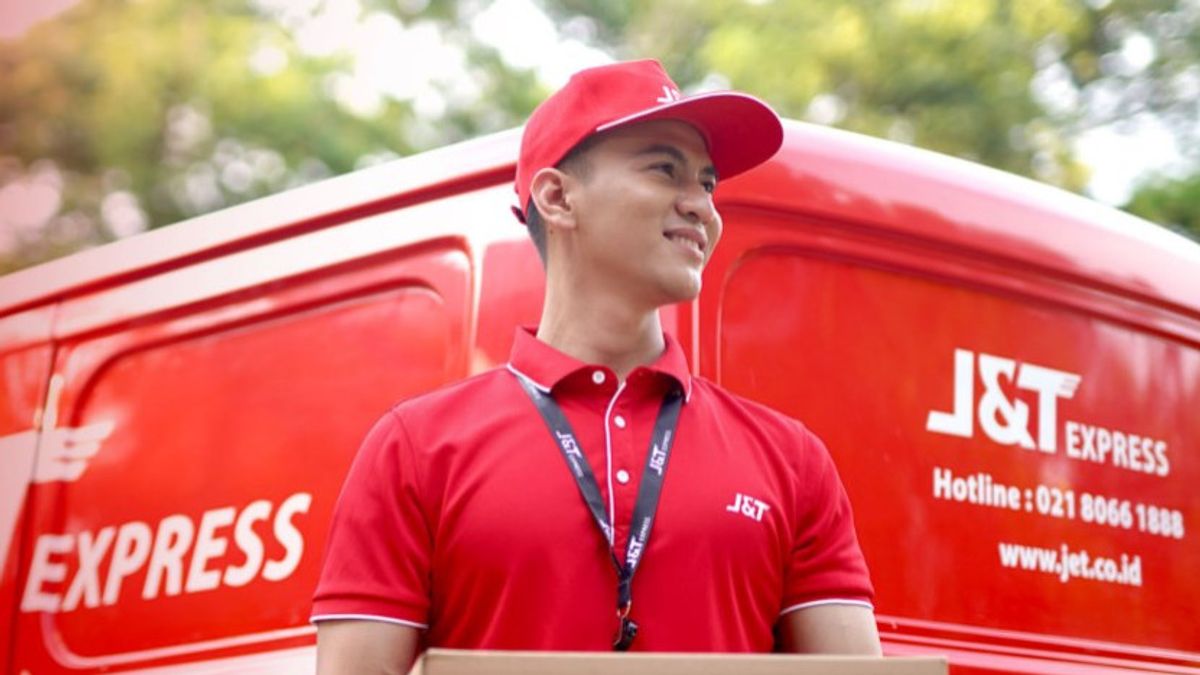
    International express logistics company J&T Express celebrated its second anniversary in Singapore on 9th January 2022, recording two years of exponential growth and progress, including a year-on-year double digit growth for parcel volumes, and an approximately three-fold increase in the total size of all its warehouses.

    Tapping into Singapore’s potential as a regional logistics hub, J&T Express established its operations in the country in January 2020, and has since accelerated its growth plans and invested significantly into its infrastructure. Starting off with just one sorting hub, the company now operates two sorting hubs across Singapore, a fulfilment centre at Penjuru and a warehouse at the Changi Airfreight Centre, and has also expanded its fleet four-fold.

    In addition to its infrastructure development, J&T Express has been actively growing its talent pool across the various departments in Singapore to continue driving success, including building new roles and upskilling employees through regular training programmes. Since 2020, J&T Express’ Singapore team has grown six-fold across a diverse range of roles such as software development, data analytics and automation.

    Andrew Sim, CEO of J&T Express Singapore, said, “J&T Express is in a unique position of not only playing the role of a logistics provider, but also serving as a one-stop e-commerce specialist across each and every touchpoint in the supply chain. Our tremendous growth and fast-paced expansion in Singapore reflects the shift we have seen in the market with an increasing number of Singaporeans embracing e-commerce.”

    With technology and innovation as its strategic priorities, J&T Express continues to strengthen its capabilities to improve operational efficiency and service quality. This includes upgrading its system of operations management, enhancing the technology support for seamless e-commerce experiences, and further optimising its fulfilment and warehousing solutions. In May 2021, the J&T Express mobile app was also launched to enable consumers and small business owners to arrange for door-to-door delivery in just a few clicks.

    J&T Express is also committed to supporting the growth of its e-commerce partners and Singapore’s e-commerce industry as a whole. As part of its efforts, the company launched its inaugural virtual J&T Fashion Week in August 2021 to provide a public platform for local e-commerce businesses to reach a wider audience, successfully helping them reach 3 million Singaporean consumers through online platforms.

    Looking ahead, as e-commerce becomes more cross-border, J&T Express aims to invest further in growing its network to help its customers reach wider markets, building on its current suite of offerings which includes international shipping to over 220 countries and regions worldwide.

    Mr Sim noted that as customers increasingly expect businesses to adapt to their needs and challenges, it is crucial that J&T Express continues to introduce new services and solutions that can meet the latest market demands.

    He added, “We are proud to be one of the key partners of Pick Network and the Locker Alliance, which will help us further enhance our last mile delivery services. We are also excited to have launched J&T Points, an island-wide network of service points that provides sellers greater flexibility by enabling them to drop off parcels at their own convenience and receive real-time tracking. Moving ahead, we look forward to expanding this network to provide even greater access to all Singaporeans.”

    Reflecting on J&T’s achievements over the last two years in Singapore, Mr Sim said, “J&T Express prides itself in being at the forefront of the industry, enabled by our focus on leveraging technology to advance our offerings, as well as our customer-first approach to be the partner of choice. We look forward to further driving our efforts in the market, strengthening our position as a one-stop e-commerce solutions specialist and constantly evolving and improving our services with a focus on agility and innovation.”