Blog

  • Bank of China to Open Geneva Branch

    Bank of China to Open Geneva Branch

    Bank of China, the country’s most globalized bank, is giving Geneva a second chance and opening a branch there again, but this time the focus will be different.

    Bank of China Geneva Branch was registered on the Commercial Register on June 15 and listed as an authorized bank by Swiss financial regulator Finma on July 9, the bank said in a press release Monday.

    Bank of China is the most globalized and integrated Chinese bank. The bank is ranked among the «Fortune Global 500» for 31 consecutive years and among the global systemically important banks for nine consecutive years. Its overseas service network covers 62 countries and regions, the press release said.

    It added that with the establishment of its bank in Switzerland, the Bank of China would work to build a bridge for Sino-Swiss trade and investment, providing comprehensive trade finance products and commodity trade financial services to Swiss enterprises doing business with China and Chinese enterprises in Switzerland.

    The bank previously opened a branch in Geneva in 2008 and intended to operate a classic wealth management model. It was unsuccessful and closed eight years ago, with the business sold to Julius Bär. The new branch’s focus, by contrast, will be on corporate clients. Bank of China employs around 300,000 people globally.

  • Cebu Pacific to operate special flight from Dubai to Manila on July 30

    Cebu Pacific to operate special flight from Dubai to Manila on July 30

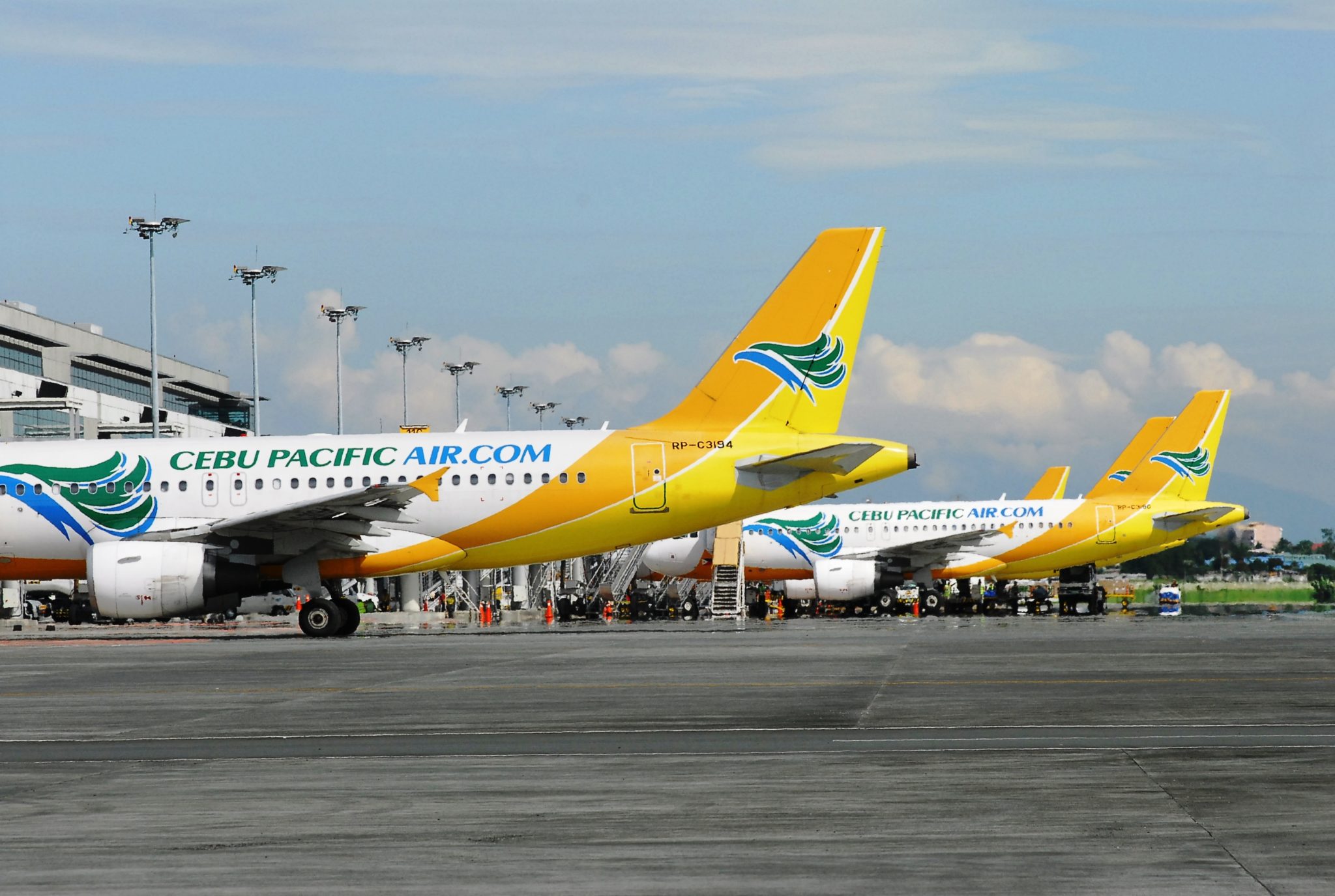
    Philippine budget carrier Cebu Pacific (CEB) will have a special commercial flight on Friday, July 30, “in response to the government’s call for assistance to repatriate Filipino workers in Dubai”, the airline confirmed to Gulf News on Monday.

    CEB earlier announced that it had cancelled all its commercial flights to and from Dubai until August 1, following the decision by the Philippine government to “extend the ban on travellers from India, Pakistan, Nepal, Bangladesh, Sri Lanka, Oman and the UAE” until July 30. New passengers and those affected by previous flight cancellations who would like to take the 5J27 Dubai-Manila special flight on July 30, dubbed as Bayanihan flight, may book their tickets on Cebu Pacific website, though seats are subject to availability.

    CEB noted: “Pursuant to current Philippine health protocols, a passenger who would like to take the Bayanihan flight must present a negative COVID-19 RT-PCR result, taken within 48 hours before departure.” Face masks and face shields should always be worn (except during meals) while onboard the aircraft, as an added precaution against the spread of the COVID-19 virus.

    “Pursuant to government’s health protocols, all passengers will be subjected to a 14-day, facility-based quarantine upon arrival in the Philippines. For this purpose, passengers are advised to have pre-booked quarantine hotels for 15 days/14 nights,” CEB added.

    The cost of quarantine hotels for OFWs (overseas Filipino workers) will be paid for by the Overseas Workers Welfare Administration (OWWA); while tourist and returning overseas Filipinos will have to shoulder the cost of hotel quarantine. All the passengers of Bayanihan flights will undergo COVID-19 RT-PCR test after seven days of quarantine. The cost of the test for land-based OFWs will be shouldered by OWWA; while the Philippine Port Authority will cover the cost for sea-based OFWs. Non-OFWs will have to pay for their own RT-PCR test.

    The Philippine government had first imposed restrictions on inbound travel from India, Pakistan, Nepal, Bangladesh, Sri Lanka, Oman and the UAE from May 15 until May 31, in view of the prevailing COVID-19 pandemic and to prevent the spread of the highly transmissible Delta coronavirus variant that first emerged in India. The travel ban was first extended until June 15, then stretched until June 30 before prolonging it further until July 30.

    Thousands of stranded Filipinos in the UAE have signed an online petition seeking to immediately lift the travel restrictions imposed by the Philippine government. The online petition titled ‘Lift the UAE ban! It’s our right to go home’, has garnered over 4,000 virtual signatures.

  • CUB, Asahi alcohol division CEO to retire

    CUB, Asahi alcohol division CEO to retire

    Asahi Beverages is announcing that Peter Filipovic will be retiring as CEO of Carlton & United Breweries (CUB), our Australian alcohol business division.

    Mr Filipovic will shortly achieve 25 years of service with the business, and following the successful integration of CUB in June 2020, Asahi Beverages and Mr Filipovic decided that now was the right time for the announcement of his intention to retire from the business.

    Mr Robert Iervasi, Group CEO of Asahi Beverages, commented: “Peter has played an important role in the smooth integration of CUB and the continued growth of our business. He has given great service to CUB and Asahi Beverages.

    “Asahi Beverages plans to announce the new CEO of the CUB business division in Q3 2021.

    That person will also join our Asahi Beverages Executive Leadership Team. They will play an important role in helping deliver on our multi-beverage strategy and leading our very
    experienced CUB Leadership Team.”

    Mr Filipovic, CEO of CUB, commented: “It’s been a privilege to have served as CEO of CUB and a member of the Asahi Beverages Executive Leadership Team. It’s a phenomenal business, with exceptional people and an unrivalled portfolio. I’m leaving the business knowing that it’s in great hands and well set-up for long-term success.”

    Peter will step down as CUB CEO once a new CEO for the business has been appointed.

    Mr Roland van Bommel, Chairman of Asahi Holdings Australia, is also pleased to announce that Natalie Toohey has been appointed to join the Board of Asahi Holdings Australia.

    Natalie is a seasoned corporate affairs specialist with senior leadership and advisory experience across a range of sectors including FMCG, particularly alcohol and beverages.

    She will advise on supporting the implementation of business strategy through communication, reputation management, sustainability and government & industry strategy.

  • Coles revamps health foods aisle, boosting sports and diet range

    Coles revamps health foods aisle, boosting sports and diet range

    Coles has transformed its health foods section, moving products traditionally found in the category, such as fodmap-friendly soups, gluten-free cereals, oils and nut spreads to their respective mainstream aisles.

    The revamp has provided space for more than 150 sports-performance and health products from brands like Amazonia Raw, Muscle Nation, and Botanika Blends, which join Coles’ shelves for the first time.

    These products include protein bars and custards from Muscle Nation, 20 new protein products and pure creatine from Body Science (BSC), Macro Mike’s powdered peanut butter and brownies mix, Dose & Co Marine Collagen and 180 Nutrition protein powder and bars. New health ingredients include Superfood Protein Ball Mixes from Mount Elephant and Melrose Superfood Powders and MCT Oils.

    According to Coles, the expansion of the health aisle comes as “Sports & Diet” was identified as the fastest-growing segment of the supermarket’s health food aisle between 2014 to 2019. Earlier this month, Coles revealed it had moved cereal products from the health-foods aisle into the breakfasts area.

    “Our transformed health foods aisle is a giant leap towards delivering Coles’ purpose to sustainably feed all Australians to help them lead happier and healthier lives,” said Leanne White, GM, Coles.

    “We’re seeing more and more customers look for healthier options or specific dietary requirements in the main grocery aisles – they no longer expect to go down one dedicated aisle to find these options.”

  • AirAsia group says Q2 was improved

    AirAsia group says Q2 was improved

    AirAsia Group said its operating statistics for the second quarter of the 2021 financial year were improved during the quarter. All four key operating entities of AirAsia posted year-on-year (YoY) improvements during the quarter, on the back of a low base in the corresponding quarter last year as the group’s fleet were hibernated for the most part of 2Q2020 following the hit of the COVID-19 pandemic since late 1Q2020.

    As for quarter-on-quarter (QoQ) performance, AirAsia Philippines saw a 2 percent increase in number of passengers carried and 4 percentage points (ppts) increase in load factor to reach 78 percent, while AirAsia Indonesia’s load factor increased by 11 ppts QoQ. AirAsia said it remains committed to strengthening its domestic foothold while awaiting positive developments on international air travel. Expectation of high vaccination rates in ASEAN countries by the end of this year is lending confidence on upcoming recovery, enhanced by the group’s short-haul model in addition to leaner and more stabilised operations.

    AirAsia Malaysia’s operations remained constrained QoQ due to a lockdown and interstate travel restrictions imposed from January 2021. AirAsia Malaysia carried 64 percent higher number of passengers YoY on 54 percent higher capacity, subsequently resulting in a 4 ppts increase to a healthy load factor of 64 percent. The ongoing subdued operations are expected to persist until Malaysia reaches herd immunity by the fourth quarter of this year. The government has recently set a new target of vaccinating all adults by October 2021.

    AirAsia Indonesia posted substantial YoY growth against the same quarter last year. Though the number of passengers carried showed a mild 1 percent dip QoQ, load factor grew by 11 ppts to 67 percent in 2Q2021 due to more stringent capacity management. AirAsia Indonesia was operating approximately 70 percent of pre-pandemic domestic capacity in May 2021 and demonstrated strong signs of recovery before it had to enter hibernation mode in early July in support of the containment efforts by the government as infection cases increased.

    AirAsia Philippines’ strong rebound seen in 1Q2021 further increased in 2Q2021, posting a 2 percent higher number of passengers carried QoQ and 4 ppts higher load factor to record a solid 78 percent. Monthly breakdown showed that load factor was as high as 83 percent in June 2021, boosted by active capacity management. This was despite running a limited number of charter and passenger flights due to community quarantine restrictions and despite flying only from its Manila hub.

    AirAsia Thailand more than doubled the number of passengers carried YoY and reported a 9 ppts increase in load factor to 61 percent in 2Q2021, boosted by higher demand during the Songkran festival in April 2021 and on the back of low base effect in the same quarter last year. On a QoQ basis, despite having successfully resumed all domestic routes by the end of 1Q2021, AirAsia Thailand’s recovery was short-lived due to the new COVID-19 wave that began in mid-April 2021. AirAsia Thailand posted a 26 percent QoQ decline in passengers carried, most significantly in June. Nevertheless, load factor was held firm at 78 percent in June, attributed to active capacity management.

  • WhatsApp makes it possible to move chats from iOS to Android using Android’s Data Restore Tool

    WhatsApp makes it possible to move chats from iOS to Android using Android’s Data Restore Tool

    The standard Android tool for transferring data from one device to another, Google’s Data Restore Tool, is preparing a nice addition to its transferring arsenal. The Tool might soon be getting the capability to transfer WhatsApp chats from iOS to Android.

    WhatsApp has a sometimes inconvenient limitation that it can be installed on only one smartphone per account. Despite the multi-device support that got recently introduced in a beta version of the app, the limitation for only one smartphone still stayed. This means there is no easy way for you to transfer your WhatsApp messages from iPhone to Android.

    However, Android’s built-in transfer app Data Restore Tool is getting ready to obtain the capability to do just that. The Data Restore Tool app’s version 1.0.382048734, available on the Google Play Store, will soon be able to transfer WhatsApp chats and history from iOS to Android.

    This feature does not currently work because WhatsApp first needs to launch the needed migration settings. This might happen sooner than later as WhatsApp has been spotted to be working on transfer options.

    When WhatsApp introduces the needed changes, in order to start the WhatsApp chats’ transfer between iOS and Android using the Tool, you need to follow these steps from the app itself:

    Transfer WhatsApp Chats > Scan the QR code with your iPhone to open WhatsApp > Start > Keep your iPhone unlocked and WhatsApp open.

  • Goldman Sachs Asset Management Files for Crypto-Linked ETF

    Goldman Sachs Asset Management Files for Crypto-Linked ETF

    Goldman Sachs continues ramping up its crypto-related efforts with the latest filing for an exchange-traded fund that will track related companies.

    Goldman Sachs’s asset management unit filed for an application with the U.S. Securities and Exchange Commission to offer an exchange-traded fund (ETF) focused on crypto-related companies.

    The Goldman Sachs Innovate DeFi and Blockchain Equity ETF will track the Solactive Decentralized Finance and Blockchain Index, according to the filing which is seeking approval as soon as practicable after the effective date of the Registration Statement».

    Goldman Sachs has been increasingly expanding its cryptocurrency offering in recent months.

    The bank reportedly restarted its crypto trading desk in March to deal bitcoin futures and non-deliverable forwards to support clients like hedge funds. And in June, it also announced plans to offer options and futures trading in ether – the second-largest cryptocurrency behind bitcoin.

    Goldman Sachs is not the lone Wall Street giant eyeing crypto opportunities with U.S. rivals J.P. Morgan recently opening access for its wealth clients to five related funds and BNY Mellon joining a crypto consortium that includes State Street and six unnamed banks.

  • Google TV Android app update adds support for more streaming services

    Google TV Android app update adds support for more streaming services

    Great news for Google TV app users, as a new update is now making its way to Android devices in the coming days. Google has just announced that the TV Android app in the US is going to receive a new update this week and brings changes to the interface, better recommendations, and more ways to watch.

    The most important change included in the update is the addition of a new 16:9 widescreen movie and show posters. Also, Rotten Tomatoes scores have been added under each poster. Users will now be able to mark shows they have already seen by tapping the “watched” icon to get updated recommendations in their “For you” tab in their place.

    The update also introduces more rows of personalized recommendations that will allow Google TV users to browse for their next movie or show. Google also revealed that it made improvements to the app’s recommendation system to make it easier to find something that fits a user’s interests.

    Last but not least, the Google TV app now features support for even more streaming services, including Discovery+, Viki, PBS kids, and Boomerang. Also, support for on-demand content from live TV like YouTube TV, Philo, and fuboTV is available too.

    Keep in mind that the update will not remove the Watchlist feature, and all previously purchased movies and shows will still show up in your Library tab.

  • Intel to build chips for Qualcomm; hopes to rival TSMC

    Intel to build chips for Qualcomm; hopes to rival TSMC

    TSMC and Samsung, the two top contract foundries in the world, will soon have a new rival. Reuters reports that yesterday Intel announced that it will start producing chips for other companies such as Qualcomm and Amazon. Intel expects to challenge TSMC and Samsung by 2025.

    Intel was once the T-Rex of chipmakers, but Taiwan’s TSMC has become the global leader with Samsung right beside it. Both of those firms produce chips for Apple, Qualcomm, AMD, and other top tech companies. The pair also currently manufacture chips using 5nm process nodes and have roadmaps down to 2nm. As an example of what each of the two foundries can offer,  TSMC is the foundry rolling out Apple’s M1 chip that carries a whopping 16 billion transistors (no typo here folks) in each chip.

    Intel says that over the next four years, it will introduce five new technologies related to the production of these vital components. One of the five is the introduction of Intel’s first new transistor design in ten years. As early as 2025, Intel will get its hands on ASML’s next-generation extreme ultraviolet lithography (EVL) machines that place on the silicon an image of where the circuitry will be placed.

    The EVL machine is important because it needs to produce extremely thin lines as transistor size shrinks allowing foundries to pack more transistors inside the components they manufacture. Intel also plans on revamping the way it names its chips to be more in line with TSMC and Samsung. Dan Hutcheson, chief executive of VLSIresearch, an independent semiconductor forecasting firm, said that Intel’s current naming protocol gave the impression that the company was less competitive.

    The larger the number of transistors that fit inside a square mm, the more powerful and less energy-guzzling a chip is. And while Intel has been losing the process node war with TSMC and Samsung, it does plan to reveal a design for transistors smaller than 1nm by 2024.

    Intel’s first major new customers will be Qualcomm and Amazon. The former is known for the Snapdragon chips that drive mobile phones with some helping to connect handsets to 5G networks. These chips will use Intel’s 20A manufacturing technique that will produce chips that consume less power than current components thanks to the use of new transistor technologies.

    Amazon plans on using Intel’s packaging technology for the components it produces itself for the data center chips used for its Amazon Web Services. Intel Chief Executive Pat Gelsinger stated that “There have been many, many hours of deep and technical engagement with these first two customers, and many others.”

    While some analysts remain cautious about whether Intel can deliver on the promises it has made, Real World Technologies’ David Kanter said that the chipmaker is being more cautious than it has been in the past. He says, “Intel is absolutely going to catch up, and be ahead in some dimensions, with TSMC over the next few years. Intel really does have people who spend all their time looking at how to deploy new materials and technology to juice their performance.”

    You might recall that a legal feud between Apple and Qualcomm had Apple scrambling for a 5G modem chip to replace the one it wanted from Qualcomm. Apple planned on using a new 5G modem chip designed and produced by Intel. But Apple wasn’t thrilled about this and eventually reached a settlement that allowed it and Qualcomm to bury the hatchet resulting in the use of Qualcomm’s 5G modems on the iPhone 12 line, the first iPhone models to support 5G.

    Eventually, Apple plans on designing its own 5G modem chip and ended up purchasing most of Intel’s smartphone modem business in July 2019 for $1 billion.

  • Bamboo Airways, Vietjet suspend regular flights

    Bamboo Airways, Vietjet suspend regular flights

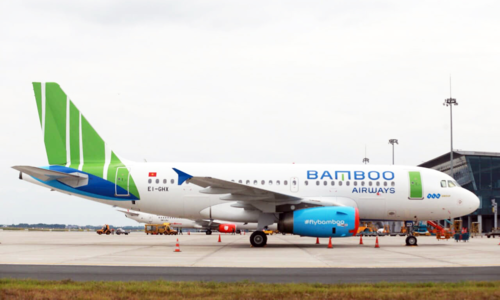
    Bamboo Airways, Vietjet, and Pacific Airlines have suspended most of their regular routes amid a surging number of Covid-19 cases that have seen demand plunge.

    Bamboo Airways will cease all regular flights for two weeks from July 26 to August 7 amid the severe spread of the disease and social distancing measures imposed in major cities, it stated.

    Websites of Vietjet and Pacific Airlines on Tuesday showed few or no flights between popular destinations like Hanoi, Ho Chi Minh City, and Da Nang.

    Most passenger flights between HCMC and Hanoi have been canceled since July 23 as the capital imposed strict social distancing.

    Vietnam Airlines is the only carrier operating on this route with a maximum of two flights a day allowed.

    Between June 19 and July 18, the number of flights plunged 84.6 percent to 3,772, according to the Civil Aviation Authority of Vietnam (CAAV).

    Vietnam has recorded 105,287 local Covid-19 patients in 62 cities and provinces since the new wave started three months ago.

  • Top 5 Locations to Live in the Philippines

    Top 5 Locations to Live in the Philippines

    The Philippines is an Asian country in the Pacific Ocean. It is made up of around 7400 islands and is categorized into three geographical divisions known as Luzon, Visayas, and Mindanao. The country covers an area of 300,000 square kilometers and has a population of approximately 109,000,000. The landscape of the Philippines is diverse: from the green mountain villages to white sandy beaches to busy, crowded cities such as the capital city, Manila. If you would like to visit the beautiful islands and experience the fascinating culture of this country, here is a guide to the Top 5 Places to Live in the Philippines.

    Mandaluyong

    If you like shopping, you will love Mandaluyong – a city directly east of Manila. The city is well developed and is home to the Ortigas Centre, which is a huge business and commercial building. The number of shopping centers is vast, and you can pick up some real bargains in malls such as SM Megamall, The Podium, and SM Light Mall.

    Those who love a good pampering will love this city as it has many luxury spas and salons where you can receive anything from a pedicure to eyelash extensions. Lovers of music can sing their hearts out at one of the many karaoke bars or dance the night away in a nightclub such as Z Roof Deck.

    If you plan to visit the Philippines soon, you may want to consider looking for long term accommodation in various locations that appeal to you and that way you can try before you buy. For example, if Mandaluyong sounds like a great place to live you could look for a place to rent and see how you enjoy living there before you invest in a property. Try to find an apartment for rent in Mandaluyong which will allow you to get to know the city better and decide which districts would make the perfect location for your permanent abode.

    Tagaytay City

    Tagaytay is around 60 kilometers from Manila and is a beautiful city with lots of parks and greenery. The most popular attraction in Tagaytay is Taal Volcano. This relatively small volcano is the most active of several volcanos in the Philippines.

    If you like a cooler climate, Tagaytay is a great place to live as it isn’t as hot as other parts of the Philippines due to its high altitude.

    During the Christmas season and Holy Week, hundreds of tourists flock to the beautiful churches and shrines in this city.

    Boracay

    If you are a beach lover, you must visit the beach capital of the Philippines – Boracay. This beautiful island has over 12 beaches, including White Beach, which, as its name suggests, is a lovely beach with pale white sand, edged with clean, azure water. Some of the luxury beach resorts along the coast are well worth a visit if you want some pampering in luxurious surroundings.

    Bohol

    Bohol is situated in the central geographical belt of the Philippines, known as Visayas, and is known for its natural beauty. It is an excellent place for nature lovers to visit and Bohol island is home to unique natural wonders known as the Chocolate Hills. These are a collection of 1200 grassy hills which turn brown during the dry season on the island and look like lumps of chocolate formed from the landscape.

    A tiny primate called the Philippine Tarsier is native to the country, and a sanctuary dedicated to caring for these cuddly critters with enormous eyes can be found in Bohol. Visitors can enjoy a night walk through the shelter where they may catch a glimpse of this nocturnal creature.

  • Spotify adds new feed feature on Android and iOS

    Spotify adds new feed feature on Android and iOS

    Spotify has just announced a new feature will be making its way to Android and iOS users in the coming weeks. The new feature will enable Spotify users to discover new music and podcasts, a much-needed improvement considering there are more than 50k+ hours of content uploaded to Spotify every day.

    The new feature is called What’s New and will gather all the new releases from the artists and shows Spotify users follow on the music streaming platform. Additionally, What’s New is updated in real-time, which means Spotify users will listen to new content just as it’s released.

    The new What’s New feed feature can be accessed by clicking the bell icon located at the top of the Home tab on your Android or iOS device. If new songs have been released since your last visit, a blue dot indicator on the bell icon will pop up.

    It’s important to mention that the What’s New feed includes filters that let users sort for new music releases or new podcast and show episodes. To have your favorite artists show up in the What’s New feed when they release new content, simply visit their page on Spotify and tap “Follow.”

    According to Spotify, the new What’s New feature will be rolled out to all users globally on Android and iOS over the coming weeks, so it’s not going to be available to everyone at the same time.

  • New KitKat bar made with Aero Mint

    New KitKat bar made with Aero Mint

    Nestle has merged two of its best-known chocolate brands – KitKat and Aero – with the launch of KitKat Chunky Aero Mint.

    The new bar has three layers of crisp wafer, topped with aerated peppermint and covered in milk chocolate.

    Joyce Tan, head of marketing confectionery at Nestle, said the company wanted to create a new flavour and texture combination that would excite consumers.

    “There’s so much love for both of these chocolate bars, so we’re excited for them to become one and take the KitKat choc mint experience to the next level,” said Tan.

    KitKat Chunky Aero Mint is available in grocery and convenience stores nationwide for RRP $2.

  • Saigon supermarkets to close at 5 PM

    Saigon supermarkets to close at 5 PM

    All supermarkets in HCMC will close at 5 p.m. starting Monday to comply with the city’s suspension of night-time activities amid its Covid-19 battle.

    Retail chains like VinMart and Co.opMart will operate from 7 a.m. to 5 p.m. instead of 10 p.m.

    Big C outlets will open 1.5 hours earlier at 7 a.m. and close at 5 p.m. Aeon Malls and Mega Market will also apply the same hours.

    Most supermarkets in the city had shelves full of eggs, meat and vegetables Monday, with no sign of stockpiling.

    Retail chains have been doubling or tripling their supply to fulfill demand. They also have delivery staff ready in case delivery platforms are banned.

    HCMC banned people from leaving their homes except for emergencies after 6 p.m. starting Monday.

    This is the latest effort to curb the spread of the fourth wave of Covid-19, in which over 62,100 cases have been confirmed in the city out of 97,400 nationwide.

  • Coffee prices surge to seven-year high

    Coffee prices surge to seven-year high

    Arabica coffee prices rose 10 percent more on Monday, after jumping nearly 20 percent last week, to their highest in nearly seven years as unusual cold weather threatens coffee crops in the world’s largest producer Brazil.

    Severe frosts last week damaged a large part of fields in the main Brazilian coffee belt and a new polar air mass is forecast to move over the same areas later this week, which will be the third strong cold front to hit crops this year.

    Coffee trees are extremely sensitive to frost, which can cause severe damage and even kill trees completely. If a farm needs to replant trees, production would take around three years.

    Preliminary estimates from the Brazilian government’s food supply agency Conab said that last week’s frosts had affected 150,000 to 200,000 hectares – about 11 percent of the country’s total arabica crop area.

    “This marks the first time since 1994 that the country has experienced such a weather event,” coffee trader I & M Smith said in a market update, referring to the July 20 harsh frosts.

    Arabica coffee futures prices on ICE rose sharply on Monday, with the September contract climbing to a peak of $2.1520 per lb, the highest for the front month since October 2014.

    “The extent of the damage is still unclear, however, estimates are now between 5.5 million and 9 million (60 kg) bags, up from 2 million to 3 million last week,” said Charles Sargeant, softs and agricultural commodity broker at Britannia Global Markets.

    Sargeant was referring to the 2022 Brazilian crop. This year’s smaller production has been mostly harvested. A good production next year in Brazil was seen as important in balancing the global supply.

    Arabica coffee futures have risen by about 35% since the end of June, raising the prospect that major brands may have to raise prices in the coming weeks.

    Starbucks, Nestle and JAB Holdings, which are among the largest coffee processors and retailers in the world, declined requests for comments regarding possible impacts to the industry and the prospect of reduced availability next season.

    Smaller players would certainly suffer, while consumers will have to pay more.

    “We have stocks only up to September. We raised prices already three times this year, following the market moves, but the situation remains difficult,” said Luciane Carneiro Mendes, a partner at Cafe Carneiro, a small roaster in Brazil.

    Coffee prices in Brazil, she said, have risen from 400 reais ($77.30) per 60-kg bag in December to around 800 reais this month, but there are estimates for further increases ahead to around 1.000 reais.