Blog

  • Samsung to sell business that made a specific iPhone component

    Samsung to sell business that made a specific iPhone component

    Apple does depend on Samsung to supply it with certain iPhone components although Apple has made a point of trying to reduce its reliance on its rival over the last few years. But there is a business that Samsung plans on exiting over the next year forcing Apple to change the mix of suppliers for rigid-flexible printed circuit boards (RFPCB). According to TheElec, Samsung will provide Apple with only 30% of the RFPCB that will be used on this year’s iPhone 13 series.
    As a result of Samsung’s decision to stop production of the component in November, South Korea’s BH will deliver approximately 55% of the RFPCB ordered by Apple with Youngpoong Electronics expected to chip in roughly 15% of the total. In 2022, BH could be called on to supply Apple with 70% of its RFPCB needs with the remaining 30% coming from Youngpoong Electronics.
    The component is used to connect the main circuit board with the phone’s OLED panel. Being rigid and flexible might sound like a contradiction, but the combination helps companies like Apple more easily design their products. Compared to FPCB, RFPCB sends electric signals faster but is more expensive.
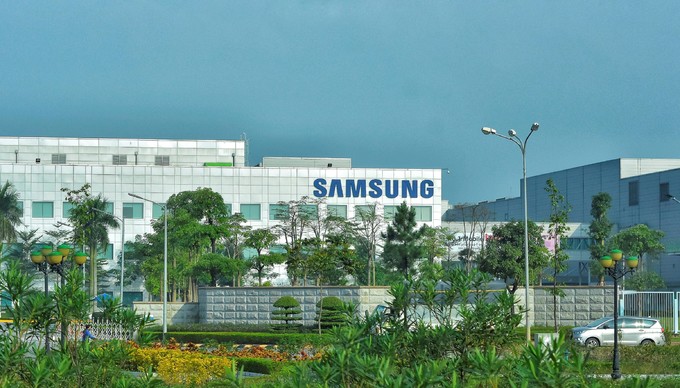
    Samsung’s RFPCB production facilities are located in Vietnam and the company could start the sales process in August. Samsung is apparently planning to sell the unit in two parts. The business has been losing 50 billion won ($44.2 million USD) a year. Samsung originally planned on disposing of the division last year but decided to keep production going for another year.
  • Vietnam begins to make switch to online car sales

    Vietnam begins to make switch to online car sales

    Three auto brands have begun to sell online as they seek to take advantage of the country’s e-commerce boom.

    Since January this year customers have been able to go to the VinFast website, select the model, customize color and interiors, and indicate mode of payment.

    They can then go to the nearest showroom to complete the purchase. VinFast offers to deliver the car to the customers’ doorstep. Customers who want to pay in installments can submit their profiles online. Mercedes launched online sales March. Customers can customize their vehicles and a dealership is suggested to them. The sales procedures are however completed in person.

    TC Motor, which assembles Hyundai vehicles, last month began to allow customers to compare its cars online and see how much they cost after promotions, taxes and fees.

    Auto companies are actually late in adopting technology in sales, Nguyen Trung Kien, chief technology officer at digital marketing company Novaon MarTech, said.

    “When customers become familiar with online transactions, online sales options are inevitable.”

    It has taken a long time for auto companies to start offering online sales since theirs are expensive products and customers are used to the idea of physically touching them before making a purchase decision, he said.

    But with the development of technology, auto manufacturers could now go directly to customers and gradually cut out the middlemen, and also get to know their customers’ needs more, he added.

    But industry insiders expect it to take a long time to change customers’ preference from shopping offline for cars to online.

    “There are many perks in online shopping for cars but to make the decision customers still need to come to showrooms and see with their own eyes and touch with their own hands,” the marketing director of a Japanese auto company in Vietnam, who asked not be identified, said.

    In order to reach the same level as Tesla, meaning customers do not need to test drive the cars before making the purchase, auto manufacturers need to first create firm trust in product quality, the marketing director added.

    Auto sales in Vietnam rose 53 percent year-on-year in the first five months to 126,894 units, according to the Vietnam Automobile Manufacturers Association.

  • Honda Gold Wing Tour First Batch Sold Out In India In 24 Hours

    Honda Gold Wing Tour First Batch Sold Out In India In 24 Hours

    Honda 2Wheelers India launched the 2021 Gold Wing Tour in the country last month and the first batch of the motorcycle has been sold out. The manufacturer’s flagship offering flew off the shelves as soon as bookings opened with all units sold in just one day. Honda though has not disclosed the number of units that were allocated for India under the first batch. It’s unclear at the moment when the company plans to introduce the second batch of the tourer.

    Power on the new Honda Gold Wing Tour comes from the BS6-compliant 1833cc, in-line six-cylinder, liquid-cooled engine that develops 124.7 bhp at 5500 rpm and 170 Nm of peak torque at 4500 rpm. The motorcycle gets two transmission choices – a 6-speed manual and a 7-speed dual-clutch automatic. Colour options on the motorcycle include the Pearl Glare White as well as Gunmetal Black Metallic with Matte Morion Black.

    The feature list is comprehensive on the 2021 Honda Gold Wing Tour that is aimed to maximize comfort on the road. It gets A 7-inch TFT-screen with gyrocompass navigation, Apple CarPlay, Android Auto connectivity, upgraded audio and speaker system, and Smart Key operation. The tourer is also loaded on the safety front and packs Hill Start Assist, ABS, Honda Selectable Torque Control, Dual Combined Brake System, and Idling Stop. There are four riding modes – Tour, Sport, Rain and Econ.

    The new Honda Gold Wing Tour also received visual upgrades over the older model. This includes sharper styling, all-LED lighting, and new alloys. The bike also gets a revised pillion seat for added comfort and a bigger top box. The Gold Wing is underpinned by a die-cast, aluminum frame, and a double-wishbone front suspension along with a preload-adjustable pro-link mono-shock at the rear. Braking duties are performed by twin discs at the front and a single disc at the rear with Combined Braking System.

  • Foreigners in Vietnam face settlement headache

    Foreigners in Vietnam face settlement headache

    The foreigner community has high expectations for quality apartments with synchronized amenities and a favorable location, though good housing options remain limited.

    According to a survey by InterNations, in 2021, Vietnam ranked among the top 10 countries with a foreigner satisfaction rating of more than 86 percent. It was proved in particular by the fact that 9 percent of expats in Vietnam had an annual income of more than $250,000, compared to only 3 percent globally, giving the domestic real estate market, particularly in the high-end and luxury segments of residential and vacation property, a certain customer base.

    To provide foreigners the best living options, Phu Thinh Green Park offers more than 500 smart apartments designed to high-quality standards by Phu Thinh Group. Located in the Ha Dong administrative center with numerous corporate headquarters and international organizations, Phu Thinh Green Park is surrounded by a series of important routes, including Quang Trung, Tran Phu, Nguyen Trai, Le Trong Tan, To Huu, Phuc La, Xa La, Nguyen Xien, and Hanoi metro stations. These customers are mostly experts, high-income employees with strict requirements for living quality, facilities, and proximity to expat communities. However, it is difficult for a foreign specialist to access suitable rental housing that meets excellent living standards and apartment quality, even in a big city like Hanoi.

    Residents can also walk within five minutes to the metro station, supermarkets, commercial centers, administrative centers, hospitals, schools, and golf courses. Foreign tenants who prefer public transportation will soon have the option of taking the Cat Linh – Ha Dong railway. Furthermore, the project is well connected to Thang Long Avenue, where tens of thousands of international professionals work.

    The internal utility system meets all living needs for residents via a 300 square meter overflowing swimming pool, A-class offices, commercial centers, landscaped parks, and rooftop cafes.

    Green Park Phu Thinh is located next to a 100-hectare sports park with four fresh seasons, suitable for recreation and entertainment. The bulk density of trees is like a natural air conditioner for the local atmosphere. The temperature on summer days is usually 2-3 degrees Celsius lower than in other regions.

    Moreover, Phu Thinh Green Park is a place of cultural interference of different countries, which creates a community with diverse lifestyles. Located between the Hyundai Hillstate area and Booyoung Residence, Phu Thinh Green Park attracts a lot of foreigners, mainly from Japan, China, and Korea.

    A square meter in Phu Thinh Green Park costs VND27 million ($1,170). The project is now open for sale during the third quarter of 2021. Documents and handovers are legally transparent to ensure the rights and profits of customers. With each apartment handed over, the basic equipment system will be installed according to standard amenities.

    “Synchronous development of traffic infrastructure of Ha Dong District is strictly guaranteed for a rental profit of 5-6 percent per year and/or a high capital growth of 30-50 percent in the next two to three years. Green Park is suitable for real estate investors expecting high profits and safety,” a project representative said.

    In early 2021, due to the sharp increase of iron and steel prices and transportation costs, the value of an apartment could exceed the purchase price, he added.

  • Inflation in Vietnam likely to be below 3 pct this year

    Inflation in Vietnam likely to be below 3 pct this year

    Inflation this year is likely to be 2.5-3 percent, well below the target of 4 percent set by the National Assembly, due to low consumer demand, analysts said.

    Global prices of strategic materials are likely to climb in the next few months due to geopolitical tensions and Covid-19, but food and foodstuff prices in Vietnam are expected to remain stable due to strong supply and weak demand, the Ministry of Finance’s price management department said at a seminar on the price and market situation on Friday.

    The consumer price index (CPI) was up 1.47 percent year-on-year in the first half of the year, its slowest rise since 2016, according to the General Statistics Office.

    The prices of some foodstuffs like pork and chicken fell, while those of petrol and commodities rose sharply.

    Nguyen Ba Minh, head of the Institute of Economics and Finance, said the CPI would rise by some 2.5 percent this year.

    Le Quoc Phuong, former deputy director of the Vietnam Trade and Industry Information Center, too expected inflation to be below 3 percent.

    Dinh Trong Thinh, an economist at the institute, said if the Covid-19 situation worsens, and Vietnam’s economy grows at 6.8-7 percent in the second half of this year, inflation would be 3.3-3.5 percent.

    If the economy grows at 7-7.4 percent, the inflation would be 3.8-4 percent, he said.

    The government expects growth of 6-6.5 percent in the second half this year depending on the Covid situation.

  • Japanese retailer Muji opens first store in Hanoi

    Japanese retailer Muji opens first store in Hanoi

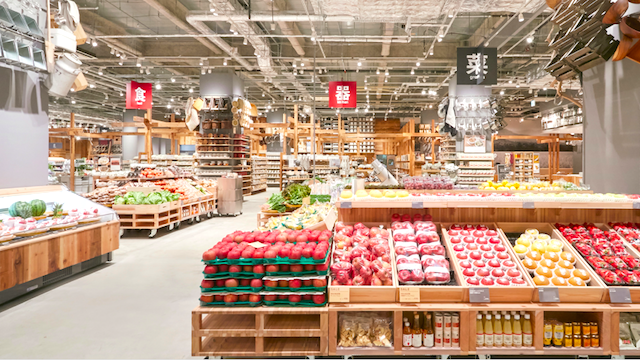
    Japanese chain retailer Muji opened its first store in Hanoi on Saturday after opening one in HCMC last November. The store, which spans 2,000 square meters at Vincom Center Metropolis on Lieu Giai Street, is the second to be opened in Vietnam.

    The flagship store in Hanoi provides around 5,000 products, ranging from fashion, cosmetics to household items, interior design and food.

    Tetsuya Nagaiwa, Muji’s head of Vietnam business, said the chain spent two years searching for a suitable location for the Hanoi store, a much longer process compared to its HCMC endeavor.

    The southern metropolis’s downtown District 1 is a no-brainer when it comes to choosing a location for a store. But Hanoi has multiple locations with different capacities for attracting customers, Tetsuya explained.

    Vincom Center Metropolis was eventually chosen since it is in an area with a big Japanese population and is wide enough to host a large store.

    Tetsuya said Muji’s current strategy is to take hold of Hanoi and HCMC, both major cities, to boost brand recognition. Afterward, depending on factors like economic development and population, Muji would consider opening more stores in other cities.

    Vietnam is among the world’s most promising retailer markets right now, Tetsuya said, adding the country has attracted a large number of investors thanks to its ever-growing economy and a young population with a middle-class income.

    Certain Muji products sold in Vietnam would be cheaper than other markets’ as they are produced by domestic manufacturers, he said, without revealing exact information regarding the domestic factories.

    Muji, founded in 1980, has over 1,000 stores in 33 countries and territories.

  • Shell Plans To Exit California Joint Venture With Exxon Mobil

    Shell Plans To Exit California Joint Venture With Exxon Mobil

    Royal Dutch Shell Plc plans to leave Aera, its California-based oil and gas-producing joint venture with Exxon Mobil Corp, four people familiar with the talks said.

    Shell has divested numerous carbon-intensive assets this year, selling its refinery in Washington state to Holly Frontier Corp and its stake in a Houston-area refining joint venture to Petroleos Mexicanos as it shifts new investments to renewables and power.

    The company is also considering a sale of its assets in the Permian Basin of Texas, Reuters previously reported.

    Aera produces about 125,000 barrels of oil and 32 million cubic feet of natural gas each day, accounting for about 25% of the state’s oil and gas production. Exxon, Occidental Petroleum Corp and others are looking to shed unwanted assets and raise cash, according to industry experts.

    Shell has notified Exxon of its plans to exit the venture, the people said, speaking on the condition of anonymity as the talks are private. A Shell spokesperson declined to comment, citing company policy.

    The joint venture, headquartered in Bakersfield, California, produces primarily in the San Joaquin Valley. Shell has previously sold all of its California oil refining operations, some of which had pipeline connections to the fields.

    California still produces roughly 360,000 barrels of oil per day even as it has introduced the most stringent state-level rules on greenhouse gas emissions. Last year, an executive order required that by 2035 all-new cars and passenger trucks sold in California be zero-emission vehicles, and that the state reduce the dirtiest forms of oil extraction.

    Oil prices have soared this year, gaining more than 50% as demand has rebounded as COVID-19 pandemic travel restrictions are lifted. The price increase has prompted many oil producers to put assets up for sale. The rush to sell is amplified by investor pressure to reduce fossil-fuel investments to stem global climate change brought by carbon emissions.

    Shell and other Europe-based oil producers such as BP Plc and TotalEnergies have pledged to lower emissions through increased investment in renewables while divesting some oil and gas holdings.

    Shell, one of the world’s largest oil companies, said this year it would aim to cut the carbon intensity of its products by at least 45% by 2035, and by 100% by 2050 from 2016 levels. A Dutch court has ruled that Shell’s efforts are not enough, ordering it to lower emissions by 45% by 2030 from 2019 levels.

    More deal-making could take place this year, with Chevron looking to shed about $1 billion of assets in the Permian Basin of Texas and New Mexico. Exxon, Occidental Petroleum Corp and others are looking to shed unwanted assets and raise cash, according to industry experts.

  • Construction steel prices fall further

    Construction steel prices fall further

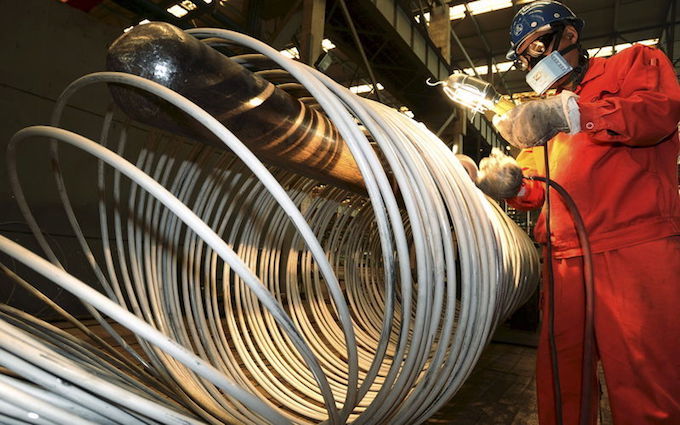
    The price of Vietnamese construction steel dropped to below VND17 million ($732) per ton, but contractors said this was still high.

    The Viet Duc Steel Company said it has lowered prices of steel bars and coils by VND300,000 per ton from July 1, while the Thai Nguyen Iron & Steel Joint Stock Corporation reduced the prices of steel coils by VND300,000 to around VND16.7 million per ton.

    The prices of a ton of steel coils produced by the Hoa Phat Group and the Vietnam-Italy Steel Joint Stock Company are VND300,000-600,000 lower than in June.

    The decline in prices of construction steel in the Vietnamese market over the past few weeks has been attributed to lower prices of steel billets in the world market.

    The most-traded steel rebar on the Shanghai Futures Exchange, for October delivery, closed down 2.9 percent at 5,014 yuan ($774.60) a ton.

    Another contributing factor is weaker demand for construction materials in some localities that have already entered the rainy season.

    However, many construction contractors said the prices of domestic steel products were still high, cutting deep into their profit, leaving them with smaller profits. Steel costs account for 10-30 percent of a construction project.

    Vietnam produced nearly 12 million tons of steel products of different kinds in the first five months of this year, a year-on-year rise of more than 38 percent while exporting nearly 2.8 million tons, up 80 percent.

    The country exported 1.1 million tons of steel to China in the five-month period, twice that of last year, according to the General Department of Vietnam Customs.

  • Kiwi mixer brand East Imperial lists on London exchange

    Kiwi mixer brand East Imperial lists on London exchange

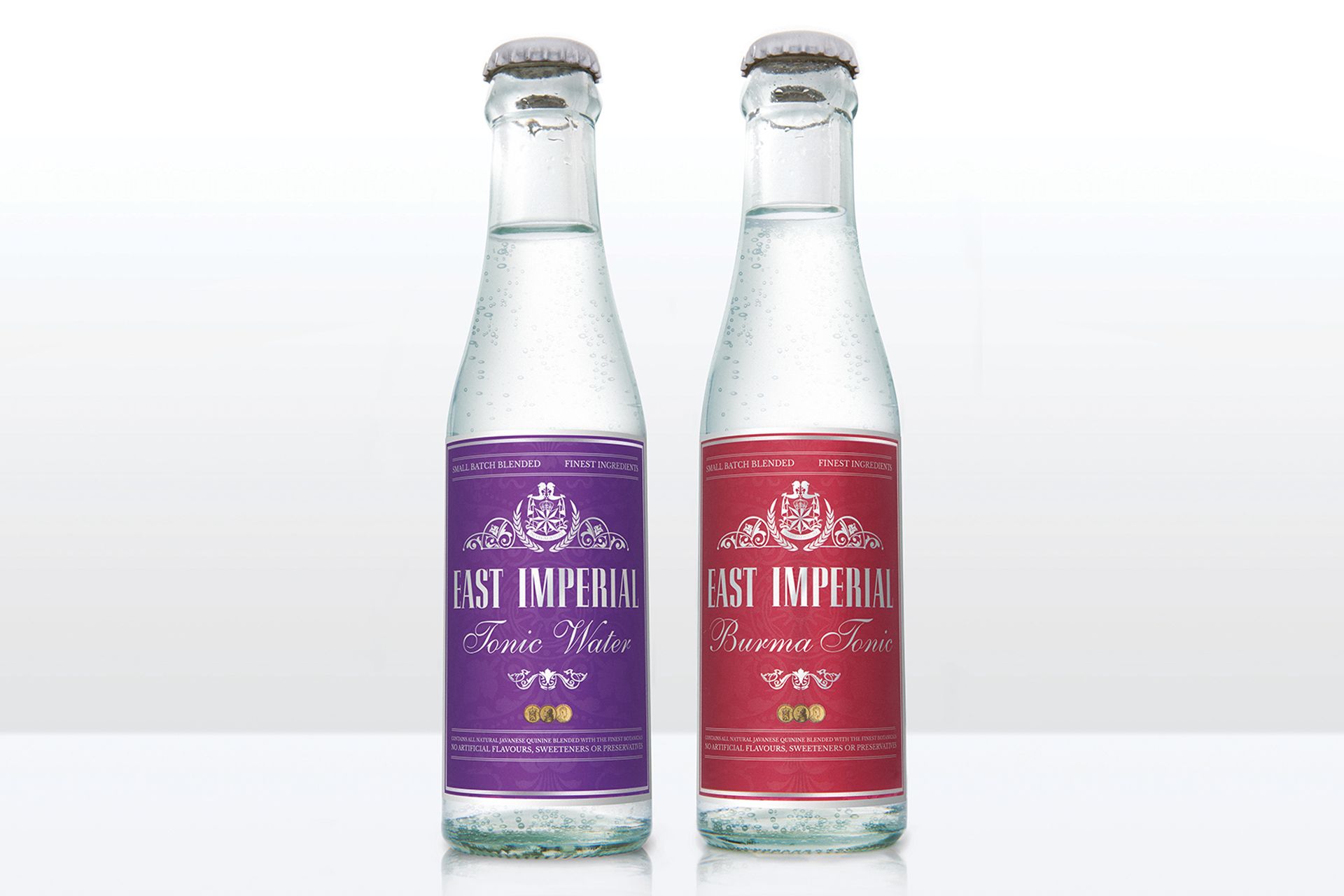
    New Zealand mixer brand East Imperial Company has listed on the London Stock Exchange in a reverse takeover valuing the company at NZ$59.1 million.

    Founder and CEO Tony Burt said the listing marks a significant milestone as the premium mixer brand is set to become one of the global leaders in the mixer category.

    “The team has done an incredible job, and the support we’ve had from all New Zealanders over the past five years or so has laid the foundation for the next chapter in our story. We’re all tremendously proud and excited to be waving the New Zealand flag on the global stage,” said Burt.

    The mixer brand also raised an additional $5.91 million in new funds by placing 30 million shares at 10p each.

    The new funding, said the company, will be used for expansion plans – including building sales teams in the US and China, product development, and maintaining partnerships with liquor brands.

  • Details of new upper mid-range Samsung chip emerge

    Details of new upper mid-range Samsung chip emerge

    Samsung appears to be testing a midrange Exynos chipset. Dutch website Galaxy Club has reported the existence of a new chip with the model number S5E8825.

    The Exynos 2100 that fuels the Galaxy S21 is known by the model number S5E9840 and its successor, colloquially being referred to as the Exynos 2200, is apparently the S5E9925.

    Previously, leaker Ice Universe had said that Samsung would release three chips this year: a flagship Exynos 22xx SoC, a mid-tier 12xx processor, and an entry-level 8xx silicone. Judging by the model name, it seems that the newly discovered S5E8825 is a midrange chip that Samsung might call Exynos 1200. It looks like it will slot below the Exynos 2100.

    In the past, it was relatively easy to differentiate between premium and mid-range chips. The Exynos 990, which powered the Galaxy S20 series, was known as the S5E9830, and the Exynos 9820 that underpinned the Galaxy S10 series had the model number S5E9820. Mid-tier Galaxy A50’s Exynos 9610 had the model number S5E9610.

    Starting last year, Samsung stopped using its proprietary Mongoose cores and adopted Arm’s designs instead. That could be why it has slightly changed the model name nomenclature too as the models seem more aligned now.

    The Exynos 1200 will presumably succeed the Exynos 1080 – a 5nm mid-tier chip that was announced late last year. It seems to be in the advanced stages of development as it is allegedly undergoing extensive testing.

    The chip reportedly has a built-in 5G modem and per a separate report, it may come with an AMD GPU. If a recent report that doesn’t come from a verifiable source is to go by, this new processor could use Arm’s Cortex X1 as the main core.

    As good as that sounds, Samsung may not use the Exynos 1200 for its phones and instead sell it to Chinese smartphone makers, as was the case with the Exynos 1080.

  • Volvo Cars To Harness Real-Time Data From Customer Cars To Set New Safety Standards

    Volvo Cars To Harness Real-Time Data From Customer Cars To Set New Safety Standards

    The next generation of Volvo cars are set to be the company’s safest ever, thanks to cutting-edge software and hardware levels, coupled with continuous and more rapid improvements to safety features with the help of real-time data. Volvo Cars has always taken a data-driven approach to safety, using traffic data from real-life situations to develop new safety technologies and make its cars even safer. For its next generation of cars, Volvo Cars is now looking towards processing data from customer cars in real-time, if customers choose to share data and help Volvo Cars make its cars safer.

    Volvo Cars and Zenseact are investing in a data factory that will contain over 200 PebiBytes (225 million gigabytes) of data within the next few years.

    By allowing customers to choose and be a part of improving safety levels and traffic safety in this way, Volvo Cars can make continuous and much faster improvements to its cars, constantly improving safety levels. This data would include continuous inputs on the car’s environment from sensors like the high-resolution LiDAR delivered by technology company Luminar.

    Volvo Cars engineers would be able to validate and verify autonomous drive (AD) features quicker, to promote a safe roll-out of AD technology. Thanks to the data generated from millions of kilometers driven by tens of thousands of Volvo drivers around the globe, engineers would be able to validate AD features for specific geographic locations much quicker than with a limited number of cars on a test track.

    Verified updates to existing systems and new features can be rolled out rapidly through over-the-air updates, increasing the safety of Volvo cars step by step. The first car to benefit from this new approach to safety development is the company’s first SUV on a completely new electric-only technology base.

    To process the real-time traffic data they will collect, Volvo Cars and Zenseact are investing in a data factory that will contain over 200 PebiBytes (225 million gigabytes) of data within the next few years. By using artificial intelligence (AI) capabilities, data can be crunched at record times. Customers will be able to choose whether this data is collected about them, and all collected data will be aggregated with adequate safeguards for customer privacy.

    Volvo Cars engineers would be able to validate and verify autonomous drive (AD) features quicker, to promote a safe roll-out of AD technology.

    The use of real-time data is part of Volvo Cars’ longer-term vision for a future where collisions simply no longer happen, by equipping its cars with some of the best sensors available and advanced, continuously improving safety and autonomous drive systems.

    Volvo Cars’ forthcoming fully electric flagship SUV will have industry-leading safety technology as standard, helping the company to save even more lives as it sets a new standard for automotive safety. It will come with state-of-the-art sensors, including a LiDAR developed by Luminar and an autonomous driving computer powered by the NVIDIA DRIVE Orin system-on-a-chip, as standard.

    By combining this state-of-the-art hardware with software by Volvo Cars, Zenseact and Luminar for the next generation of its well-established collision avoidance technology, Volvo Cars expect its new safety package to reduce fatalities and accidents as a whole.

    Over time the car will improve and have the hardware and software capabilities to allow the car to take over on its own, in case the driver does not respond in life-threatening situations after repeated warnings. So while the driver always remains in ultimate control, the car and its safety technology can both support and watch over the driver like an extra pair of eyes and brains.

  • Instagram is getting an Exclusive Stories feature

    Instagram is getting an Exclusive Stories feature

    Instagram has been busy with a string of initiatives lately to boost its social media platform and capitalize on monetization techniques. The latest of these is a new “Exclusive Stories” feature, which was discovered by reverse engineer and full-stack Android developer Alessandro Paluzzi. The code Paluzzi found shows the layout of the future option to post paywalled content, much like Twitter’s upcoming Super Follows feature. This will allow certain Instagram users to deliver paid content to fans who are paying a regular fee for access to it.

    Although Instagram hasn’t made any official announcements regarding Exclusive Stories, they’ve acknowledged that it is something they’re working on after news of Paluzzi’s discovery spread. Public testing hasn’t started yet, nor have any details been released, as Instagram still seems to be preparing for an effective launch.

    Тhe leaked screenshots of the “Exclusive Stories” feature show an advanced stage of development, which means that it’s sure to arrive to the platform sometime in the near future.

    As per the screenshots, these paywalled posts will be set apart from regular stories by a marked purple color. And if you haven’t paid your dues to the creator yet, you will see a message across the story stating that “Only members of x can see this story.” Naturally, these exclusive stories will not be able to be screenshotted even by paid members.

    Creators of Exclusive Stories will be prompted to share their story as a Highlight as well, so that “fans always have something to see when they join.”

    There is currently no other information on Exclusive Stories circulating beyond this.

    Alessandro Paluzzi has also caught on to a “collectibles” NFT feature, the details around which are even less clear as of yet. Essentially, it’s another way to allow Instagram users to sell certain virtual goods (NFTs, or non-fungible tokens) in exchange for money, increasing Instagram’s revenue as well.

  • Fintechs Challenge Traditional FIs in Malaysia Digital Bank Race

    Fintechs Challenge Traditional FIs in Malaysia Digital Bank Race

    A crowded field of contenders are vying for the five licenses on offer by Bank Negara Malaysia. The race for digital banking licenses digital banking license is heating up, with more than a dozen applications involving over 50 companies submitted before the closing date on Wednesday.

    With the exception of a few players, most of the digital banking aspirants have not publicized their aspirations. However, a Grab-Singtel joint venture and Singapore-based investment solutions firm iFAST Corporation confirmed their applications on Thursday.

    The notification on the grant of the license will be made by the first quarter of 2020, Bank Negara Malaysia said.

    Among the contenders are also Malaysian conglomerate Sunway, which teamed up with Tencent-backed Chinese firm Linklogis and Bangkok Bank. Likely applications also include e-commerce giant Sea Group, gaming company Razer Fintech and telco Axiata, which previously expressed an interest in the license.

    At least five banks — CIMB Group Holdings, Affin Bank, Hong Leong Bank, AMMB Holdings and Standard Chartered Bank Malaysia — had signaled their interest in pursuing a digital banking licence in Malaysia.

    AirAsia’s fintech unit BigPay also announced its bid for a license on Thursday. The company is partnering with Malaysian Industrial Development Finance – a unit of the country’s largest asset manager Permodalan Nasional – and Singapore-based private equity firm Ikhlas Capital.

    BigPay was launched in 2018 by AirAsia as an e-wallet, hoping to leverage the low-cost carrier’s dominance in regional air travel in Southeast Asia.

    BigPay Bank will allow us to execute deeper on our mission to build a connected financial future for Malaysian consumers and entrepreneurs, Salim Dhanani, CEO and founder of BigPay, said in the announcement.

  • ACCC finds Brownes Dairy in breach of Dairy Code

    ACCC finds Brownes Dairy in breach of Dairy Code

    Brownes Dairy has been penalised $22,200 by the ACCC over two breaches of the Dairy Code of Conduct last year. Last year, the WA dairy producer published two standard form milk supply agreements on its website which failed to specify key terms such as a definite end date of the supply period, and allowing the company to unilaterally vary the terms of the agreement.

    “It is critical that processors take active steps to ensure compliance with the Dairy Code so that farmers have the certainty and transparency in relation to milk supply agreements that the Code is intended to provide,” said ACCC deputy chair Mick Keogh.

    “One of the requirements of the Dairy Code is that processors ensure their milk supply agreements are compliant before publishing them on their websites, and in this instance, Brownes Dairy published two supply agreements that were allegedly non-compliant with the code.”

    Under the code, most dairy processors are required to publish on their websites, every June 1 a standard-form milk-supply agreement to cover all the circumstances in which they intend to purchase milk in the coming financial year. This allows farmers to compare processors’ minimum prices and contract terms.

    According to a statement from the ACCC, Brownes Dairy addressed its breaches in the 2021-22 agreements published last month and has undertaken to write to farmers that it had contracts with, advising that it will only exercise its rights under existing agreements to the extent they are consistent with the terms of these new agreements.

    “Ensuring compliance with the Dairy Code remains an ACCC priority. We are continuing to assess agreements published on June 1 this year, and any identified breaches may result in the ACCC taking enforcement action where appropriate,” said Keogh.

  • Twitter shows off a trio of design concepts that might be added to the app some day

    Twitter shows off a trio of design concepts that might be added to the app some day

    Twitter has revealed three different design concepts that it is thinking about adding to its regular social media service. One is called “Trusted Friends” and would allow a Twitter subscriber to limit the number of people that can access a particular tweet to a small group of buddies and relatives. “Facets” would allow users to categorize the tweets that they are interested in, and the third feature allows users to choose which phrases they would prefer not to see in their replies.

    None of the three features are considered to be inactive development which means that they are not available to Twitter users at the moment. With “Trusted Friends,” users can choose via a toggle switch whether a tweet they send is for public consumption or just for friends and family. Facets will allow a Twitter subscriber to separate tweets into different categories such as “professional” tweets, “personal” tweets, and tweets divided up by hobbies or other interests.

    With Facets, Twitter says that you’ll be able to choose to follow tweets from Twitter users only when they are related to a specific topic that you’re following; this way you won’t have to follow every tweet disseminated by someone you’re following. Think about how much time you might save by restricting the tweets you receive to only those of interest to you.

    The last feature, as we noted in the first paragraph, allows a Twitter subscriber to block certain phrases. In an example released by Twitter, the author of a tweet has asked Twitter to block profanities from the responses he receives from his tweets including the phrase “asshole.” Twitter says that profanity can be harmful and following the requests of the user, tweets including profanities are moved to the bottom of the conversation, out of view for most people.

    Twitter is hoping that by releasing this information about potential new design concepts well before they are being actively considered, feedback from Twitter uses can be generated to help the social media firm determine whether they are on the right track when it comes to improving the app. Note that the images released by Twitter say “Concept only” on the top.