Blog

  • Google Fi enables VPN service on Apple’s iPhone

    Google Fi enables VPN service on Apple’s iPhone

    Google Fi has been offering customers a VPN service to protect their data while they’re browsing the internet for quite a while. Unfortunately, the said service was only available to those using Android devices.

    Today, Google Fi announced that it’s expanding the VPN service to iPhone. Those using Apple’s smartphone will be happy to know that Fi’s VPN service is included in all the carrier’s plans. It will allow Fi’s customers to stream, browse and download on an encrypted, private connection.

    More importantly, the service is meant to protect Fi customers against hackers on unsecured networks, as well as prevent websites from using their IP addresses to track their location. To enable Fi’s VPN service on an iPhone, you’ll have to go to Phone settings, tap Privacy & security, and enable Protect your online activity.

    You’ll get a pop-up, so make sure to choose Got it, and then Allow. You will then be required to enter your device passcode or fingerprint. If everything went well, you should see a VPN icon in the status bar when you’re connected.

  • E-commerce platform Leflair set for Q3 comeback

    E-commerce platform Leflair set for Q3 comeback

    E-commerce platform for branded goods Leflair is expected to resume operations under a new owner in Q3.

    The U.S.-based Society Pass Incorporated announced Wednesday it had bought Leflair and other intellectual properties, including the domain name, from a company in Hong Kong.

    The revived Leflair will expand operations to other Southeast Asian markets next year, Society Pass Inc. said.

    Society Pass is an e-commerce startup that specializes in connecting consumers with suppliers in Southeast Asia and South Asia. In Vietnam, Society Pass currently runs Sopa, an e-commerce platform for foods and drinks and gastronomy, and #Hottab, a supplier of solutions and marketing connections for users’ data management.

    Leflair was established in 2015 by two French young entrepreneurs, Loic Gautier and Pierre-Antoine Brun. It acted as an e-commerce platform for branded goods and flash sales. It did not operate as an online marketplace, but worked directly with brands and official distributors in Vietnam and overseas.

    In four years ending in 2019, it secured over 120,000 clients and made net revenues of tens of millions of dollars a year. It ceased operations early 2020. Co-founder and COO of Leflair, Brun, had told suppliers then that the firm had not settled debts totaling $2 million.

    Society Pass said it has nothing to do with Leflair’s old legal entity in Vietnam as also the two individuals who’d co-founded it earlier.

  • DBS Starts Commodity Trading on LME

    DBS Starts Commodity Trading on LME

    The bank is the first in Asia to hold a London Metal Exchange (LME) trading membership outside of London.

    DBS is one of four Category 4 members on the LME, which allows it to trade and issue client contracts but doesn’t give it clearing abilities.

    The LME membership paves the way for the bank’s corporate clients in Singapore, China, India, Indonesia, Korea and Hong Kong to have access to a broader suite of hedging and financial solutions to support the diverse needs of metal businesses, DBS said in an announcement this week.

    It will also provide the bank’s clients in the metals and mining space with the option to access sustainably-produced metal, Tan Su Shan, DBS group head of institutional banking, said.

    «Metals are an essential enabler to achieve a sustainable future, and as global demand for the commodity continues to grow exponentially, so will expectations on the industry’s sustainability standards,» Tan said.

    The 144-year-old bourse is the global hub for metals trading and was acquired by Hong Kong Exchanges and Clearing in 2012.

  • The Year Global Banking Became Impossible

    The Year Global Banking Became Impossible

    U.S. sanctions and China’s new anti-sanctions law are creating internal compliance mayhem for international banks – and Swiss finance.

    The average compliance officer is facing a world of hurt right now. President Joe Biden’s executive order earlier this month drastically expanded the scope and range of prohibitions against Chinese companies and sovereign-owned entities, and it was met a week later by China’s new anti-sanctions law.

    Although conventional wisdom seems to point towards technological decoupling and irreconcilable compliance problems, the immediate truth is probably a starker, simpler one.

    The average bank or international company in Asia has probably spent the last couple of weeks shadow boxing itself into an unenviable corner. There are likely to be any number of incredibly angry emails going around and quickly convened meetings that decide nothing much. They are then immediately forgotten until the next unsolvable quandary pops up.

    What usually happens is that the combined compliance and risk apparatus, including the legal function, are caught fighting a desperate rear-guard action while still trying to grapple with doing the right thing. So, they call in external legal counsel.

    And law firms have been more than glad to provide. Although they are simply saying what a senior compliance person should be able to verbalize at management or committee meetings, they at least provide a lead-in, a buffer, in front of an irate front-line and management demanding clear and instant answers when there are none.

    It always seems to sound nicer when you schedule a conference call with external parties or, failing that, you can at least point towards or wave a fresh color printout – kind of like Chamberlain after Munich.

    After canvassing the web for literally five minutes with one search engine, a few opinions stand out for the average compliance person to choose from. Law firm Wilmer Hale goes pretty far out on a limb, saying the anti-sanctions law «creates far-reaching potential risks including the extraterritorial scope and a seemingly unbounded catchall provision.»

    They should probably only be used in extremis, although the firm did say it was «prepared to advise clients on how to comply with sanctions regimes in a way that makes sense for their business and to assist as needed in assessing the business implications of the ASL».

    Law firm Mayer Brown was more moderated, saying the law «further expands the risks for both Chinese and non-Chinese companies and individuals who have operations or dealings in or with China, particularly those who may be subject to conflicting legal obligations».

    Linklaters was much more subdued, saying «with these measures the PRC intends to counter attempts to influence its affairs by foreign governments via sanctions or other measures» before adding that clients should reach out to their usual contacts if they want to discuss it in more detail. All three are good choices to pad out any internal meeting even though they might not sway a decision in the direction intended.

    If all else fails, and the decision goes completely the wrong way, blame the screening team for everything.

    After all, they are the messenger and they always deserve to get shot.

  • HelloFresh to open giant new ‘Tuckerbox’ complex in Victoria

    HelloFresh to open giant new ‘Tuckerbox’ complex in Victoria

    Meal-kit maker HelloFresh is to open a new 25,500sqm production facility at Ravenhall in Victoria next month.

    Described as the largest such facility of its kind in the nation – and nicknamed Tuckerbox – the new production and distribution center will speed deliveries to Victorian destinations and nearby states, as well as reduce delivery distances for the company’s suppliers.

    “The launch of our third and largest Australian chilled production facility marks an impressive milestone for the business and will allow us to better serve our growing customer base,” said HelloFresh Australia CEO, Tom Rutledge.

    “Ultimately our focus is to continuously improve the product offering to our customers and how we can increase the value, convenience, and accessibility of our service. The Tuckerbox, with its size, situation, and sophistication provides a tremendous platform for us to realize these objectives over the years to come.”

    The complex will employ about 350 staff including pick packers, forklift drivers, quality control personnel and management.

    HelloFresh has also worked to reduce carbon emissions through the new facility, by shortening delivery routes and using environmental features including skylights to maximize natural light, a rainwater harvesting system, 600kW solar panels for both electricity and heating water, and the use of motion and daylight sensors to reduce overall energy consumption.

    “As the world’s largest meal-kit provider, we also have a responsibility to set a clear precedent and strive towards more sustainable ways of working in our production facilities, said Rutledge.”

  • Twitter’s Facebook-like emoji based Tweet Reactions could be coming to all very soon

    Twitter’s Facebook-like emoji based Tweet Reactions could be coming to all very soon

    Back in March, we passed along the word that Twitter was considering adding Facebook-style emoji reactions for tweets. Android Developer Dylan Roussel discovered that this new feature might be closer to becoming a way for Twitter users to weigh in on a tweet. Currently, there is a heart icon that can be tapped to express one’s positive feelings about a tweet, but the new emoji reactions reveal a much broader range of feelings including  thinking, crying, laughing to tears, clapping hands, and a heart.”

    Roussel says that the reaction emojis don’t work yet since Twitter has just started to implement it. Back when we first discussed the possibility of Facebook-style emoji responses coming to Twitter, a spokesman for the latter said, “We’re exploring additional ways for people to express themselves in conversations happening on Twitter.” Besides Facebook, another social media app that includes the use of reaction emoji is LinkedIn.

    Late last month, reliable Twitter tipster Jane Manchun Wong disseminated a tweet about what she called “Tweet Reactions. Wong said that it would include emoji for like, cheer, hmm, sad, and haha. That seems to match up with some of the reactions spotted by Roussel: thinking=hmm, crying=sad, laughing to tears=haha, and clapping hands=cheer.

    The fact that the emoji reaction showed up on Roussel’s tweet shortly after Wong’s tip should be a sign that Twitter will soon be rolling this out for everyone.

  • Three times more scammed via bank transactions than Bitcoin payments in Australia

    Three times more scammed via bank transactions than Bitcoin payments in Australia

    Bitcoin remains the most popular cryptocurrency playing a role as an investment vehicle and also a payment medium. However, scammers are exploring the payment aspect to defraud victims resulting in losses of millions of dollars.

    According to data compiled by cryptocurrency trading simulator Crypto Parrot, Australians lost an equivalent of AUD 26.65 million in scams where Bitcoin was the payment method in 2020. Despite Bitcoin being a new payment method, the fraud linked to the cryptocurrency ranked second behind banks.

    Scams involving bank transactions amounted to AUD 97.65 million, which is at least 3.7 times more than the amount lost in bitcoin payments scams. Other unspecified payment methods ranked third at AUD 24.17 million while cash ranked fourth at AUD 8.57 million. Credit cards emerged fifth at AUD 8.1 million.

    Elsewhere in terms of reported scams in 2020, payments methods not provided ranked top at 190,959 cases, followed by banks at 8,215. Credit cards rank third at 6,267 cases, followed by PayPal at 2,761. Other payment methods ranked fifth at 2,680 cases. Bitcoin cases emerged sixth at  1,985.

    The coronavirus health crisis partly played a role in Bitcoin being used as a payment method for scams in Australia.

    According to the research report: “Amid the pandemic, most people spend more time online on social media platforms, which became perfect grounds for targeting potential victims. Notably, victims deployed social media to share their referral codes with friends and contacts, bringing more people into the group involving the fake investment scheme. Overall, social media is an excellent tool for scammers who understand most people face the fear of missing out.”

    Furthermore, Bitcoin’s underlying nature of being decentralized and anonymous contributed to the crypto being utilized as a payment method in scams. Notably, this status means that the beneficiaries cannot be traced easily.

  • Singapore to increase ICT spending to accelerate Government digitalisation

    Singapore to increase ICT spending to accelerate Government digitalisation

    Singapore’s Government Technology Agency (GovTech) will spend up to an estimated S$3.8 billion on info-communications technology (ICT) procurement this year, an almost 10 percent increase from FY20’s procurement value of S$3.5 billion.

    This spending will go towards transforming government digital services used by both citizens and businesses and re-engineering government digital infrastructure to support modern application development. It will build on the momentum generated by past years’ investments and serve to lock in the digitalization gains brought about by the COVID-19 pandemic. Small and Medium Enterprises (SMEs) will be able to participate in close to 83 percent of the total potential procurement opportunities.Transforming government digital services for the future

    An estimated S$2.7 billion (70 percent out of S$3.8 billion) will be spent on 250 projects to transform, integrate and streamline digital services across different sectors to create a more digitally empowered nation.

    Of the S$2.7 billion expected to be spent on digital application services, 44 percent will be developed on the cloud in FY21. Developing applications on the cloud increases agility and innovation, resulting in faster delivery of new public services for citizens and businesses. In addition, leveraging on cloud infrastructure increases resiliency and scalability, leading to better performance during periods of high demand. To date, the government has close to 600 systems on cloud and is on track to have 70 per cent of eligible systems on the cloud by FY2023.

    Number of Artificial Intelligence projects to increase

    Over S$500 million (13 percent out of S$3.8 billion) will be spent to accelerate the adoption and deployment of Artificial Intelligence (AI) for the public sector. AI can help the Government to deliver better services, make better decisions based on data-driven insights, and optimise operations to increase productivity. To support government agencies in deploying AI, GovTech has built various central platforms to support common use cases in the area of video analytics, natural language processing, fraud analytics and personalization to help agencies reduce the cost of onboarding AI solutions. The central platforms also enable agencies to access common features and enjoy lower cost of management, maintenance and updating of systems.

    More projects for SMEs to participate in Govt ICT procurement

    The increase in ICT procurement spending will create more opportunities for SMEs, with more than 80 percent of ICT contracts to be made available through streamlined procurement methods. These procurement methods will improve SMEs’ access to Government ICT procurement opportunities. For instance, the government has incorporated dynamic contracting in bulk tenders to allow new suppliers and requirements to be introduced throughout a contract period. Barriers of entry for SMEs are also lowered as government agencies put out more cloud-based services and smaller system projects that allow suppliers with a lower financial grading to bid.

    Mr Kok Ping Soon, Chief Executive, GovTech, said: “We are heartened by the results of the G2C and G2B annual survey on Government Digital Services, which are an affirmation of the Government’s commitment to invest heavily in ICT and digital transformation. Providing more opportunities for SMEs to take on government projects is also important, as SMEs have always been the lifeblood of Singapore, and form a key pillar of our Smart Nation efforts. GovTech will continue to innovate to provide seamless and easy-to-use services and improve the resilience and security of our digital platforms for citizens, businesses and public officers.”

  • AirAsia readies for Sandbox opening

    AirAsia readies for Sandbox opening

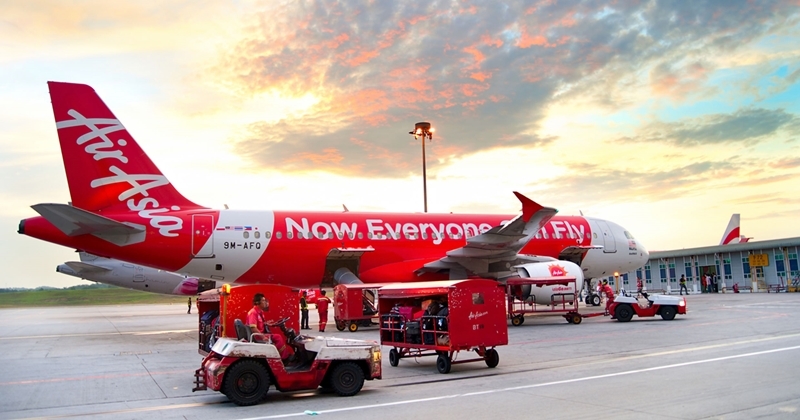
    As the Thai government confirms the country will embark on a reopening phase beginning with a pilot “Sandbox project” in Phuket 1 July, airlines are planning to increase domestic flights.

    In a press statement released Tuesday, AirAsia says it is “set to paint the skies red again in support of the Phuket Tourism Sandbox programme that is also seen as the first step in welcoming international visitors to Thailand.

    Caption 1  Krid Pattanasan

    AirAsia Thailand head of government relations and secretary-general of the Airlines Association of Thailand Krid Pattanasan said: “Domestic travel will be the first to restart with the reopening of Phuket from 1 July 2021. Thai and foreign travellers who have been fully vaccinated against Covid-19 will be able to enter Phuket under strict government guidelines.

    “This initiative will soon be extended to other destinations including Chiang Mai, Krabi, Phang Nga, Pattaya and Hua Hin. AirAsia has been rigorously preparing for this much-awaited programme, and its staff are ready to welcome and facilitate guests, including by getting themselves vaccinated to ensure the safety, wellbeing and peace of mind for all guests.”

    By the end of June, over 80% of AirAsia’s staff will be fully vaccinated against Covid-19. The programme started with those who have direct contact with guests such as ground staff, cabin crew and pilots, but it is extending to those working as baggage handlers, technical crew and engineering staff are also ensured to receive the vaccine.

    In preparation to take to the skies again, AirAsia has lined up various attractive promotions to further stimulate travel. These promos will commence as soon as the government provides the green light for mass air travel to kick off.

    Caption 2 Lunchakorn Saengsiri

    Senior Cabin Crew Lunchakorn Saengsiri, as frontline staff in direct contact with guests, said receiving a full vaccination has provided great confidence when interacting with his co-workers, his family and AirAsia guests.

    He noted that despite the low frequency of flights currently, he and his colleagues have been maintaining safety and hygiene standards for every flight.  Close contact with passengers has been reduced to the minimum in accordance with state regulations, while the consumption of food and sale of goods in-flight has been completely restricted.

    Caption 3 Tapachcha Khanpimool

    For Senior Cabin Crew Tapachcha Khanpimool, most people have been adapting to the situation, and she expressed the belief that once vaccinations become widespread, air travel will quickly return especially the much anticipated domestic travel.

    “We are very excited to return to flying and have ensured that we are fully ready by protecting ourselves and staying up to date on the latest information  so that we can provide the best possible service to our guests.”

    Meanwhile, Ramp Agent Noppalit Budrath shared that despite everyone in his department having been fully vaccinated, it is crucial that the highest safety and hygiene measures continue to be observed. He said this is especially true as in the course of his duties delivering aircraft for service and to be present during landing and take-off, he would frequently come into contact with passengers.

    Caption 4 Noppalit Budrath

    AirAsia intends to increase its domestic service by 20 to 30% compared to the same period in 2020 and before the latest COVID-19 wave.

    It will fly Don Mueang-Phuket three times daily and Suvarnabhumi-Phuket once daily every Monday, Wednesday, Friday and Sunday.


  • Hong Kong Dethroned as Most Expensive City for Expats

    Hong Kong Dethroned as Most Expensive City for Expats

    Hong Kong was dethroned as the costliest city for expatriates, according to a recent survey by Mercer, after holding the top rank for three years in a row.

    Ashgabat, the capital of Turkmenistan, was ranked as the costliest place for expat living, according to «Mercer’s 2021 Cost of Living City Ranking», unseating Hong Kong from the top spot.

    The report is based on the examination of over 400 cities and price evaluation of 200 categories of goods and services across essential needs like housing and utilities to personal spending like footwear and tobacco.

    Despite a shuffle at the top, the broader Asia Pacific region still dominated the ranks as home to the costliest cities.

    In addition to Ashgabat, another five Asian cities were also ranked within top ten including Hong Kong (2), Tokyo (4), Shanghai (6), Singapore (7) and Beijing (9).

    Switzerland was also particularly prominent in the rankings with three cities from the country occupying positions in the top 10.

    They include Zurich (5), Geneva (8) and Bern (10).

    But regardless of the region, all employees and employers were impacted by the coronavirus pandemic especially with regards to international mobility.

    According to Mercer, organizations are already implementing alternatives forms of international assignments and cross-border working arrangements to sustain their overseas operations and workforces.

    Cost of living has always been a factor for international mobility planning, but the pandemic has added a whole new layer of complexity, as well as long-term implications related to health and safety of employees, remote working and flexibility policies, among other considerations, said career president and head of Mercer strategy Ilya Bonic.

  • Costa Group seals $231 million citrus business acquisition

    Costa Group seals $231 million citrus business acquisition

    Listed Australian vegetable grower and marketer Costa Group is to spend $231 million acquiring Queensland citrus-fruit growing business 2PH Farms.

    Costa has distributed and marketed 2PH citrus fruit for a decade on the domestic market and this year expanded into exports.

    “2PH has a long and successful history, having been started by my parents John and Pam Pressler, uncle Geoffrey Pressler and Darryl Hess some 51 years ago,” said Craig Pressler, owner of 2PH Farms. “I know and trust Costa, and I am happy that the business will be owned and run by an Australian company which is not only an industry leader, but also has a genuine commitment to continuing to build on 2PH’s reputation for the growing and export of high-quality citrus.”

    Costa says it is buying the venture to take advantage of 2PH’s established brand presence in Asia, higher citrus category revenue, exclusive rights to proprietary brands, and larger production scale, together with expanded geographical diversity for crops.

    The acquisition will be funded by a $190 million rights issue and existing debt facilities, with a $200 million initial payment to be made upon settlement and a further $31 million in July 2023 relating to the purchase of a property where a new citrus crop is currently being planted by 2PH.

    Costa Group CEO, Sean Hallahan said Costa has been actively engaged in the acquisition of high-quality citrus assets, including its recent acquisition of KW Orchards (Sunraysia) in March.

    “2PH is not only a high-quality asset, but it will also complement and enhance our production footprint, our variety offering and market opportunities, both export and domestic.”

  • Patties relaunches its Ruffie Rustic Foods range entirely meat free

    Patties relaunches its Ruffie Rustic Foods range entirely meat free

    As Australians choose to incorporate more vegetables and meat alternatives into their diets, Ruffie Rustic Foods is relaunching its frozen-ready meal range as an entirely plant-based option to help satisfy this demand.

    Launched in 2019, Ruffie Rustic Foods is an Australian-owned brand of frozen ready-made meals produced by Patties Foods Ltd.

    The new range includes plant-based chicken-less schnitzel with al dente penne Pomodoro, butter chicken-less in rich coconut milk sauce, spaghetti and meat-less balls in Napoli sauce, Thai green chicken-less curry, and portobello mushroom risotto with white beans & broccoli.

    According to the food company, the entire range of products are made with locally sourced ingredients and is high in protein, meat-free, plant-based, and vegan-friendly.

    “With this new plant-based range, we want to treat our customers to the classic flavors they love, in a modern and convenient way,” said Anand Surujpal, GM of Marketing & Innovation, Patties Foods Ltd.

    Ruffie Rustic Food’s frozen range is available in Woolworths and select Independent Grocers and Petrol & Convenience stores nationwide for RRP $7.00

  • Chinese Bitcoin Mining Exodus to U.S. Continues

    Chinese Bitcoin Mining Exodus to U.S. Continues

    More Chinese bitcoin miners are reportedly shifting operations to the U.S. after Beijing ramped up its crackdown against cryptocurrencies.

    Guangzhou-based logistics firm Fenhua International was moving bitcoin mining machines to Maryland, according to social media post, with a total weight of approximately 3,000 kilograms.

    This is estimated to be equal to a small batch of 200 mining units.

    This marks the latest mining exodus after the Chinese government ramped up its crypto crackdown with other firms, such as mining pool BTC.TOP also reportedly planning to shift operations to North America.

    Beijing’s latest move on crypto included a meeting between the central bank and various financial giants which subsequently led to a new announcement and related initiatives launched by industry players.

    Separately, the city of Ya’an had also reportedly committed to rooting out all bitcoin and ether mining operations.

    According to Compass Mining chief business officer Thomas Heller in a CoinDesk report, there are an estimated 526,000 ‘S19 machines’ – a type of crypto mining device – weighing 80,000 metric tons have been switched off in China.

  • Rehiring everyone laid off is my priority, says AirAsia boss

    Rehiring everyone laid off is my priority, says AirAsia boss

    One of the first things Tony Fernandes wants to do after the company is back in business is to rehire every staff he had to let go during the Covid-19 crisis, even as he remains confident the airline is set to come out much stronger.

    The AirAsia Group’s CEO said having survived the last 15 months without raising capital unlike many foreign airlines was a testament to the company’s strength, and said the injection of about RM2.5 billion from various sources is imminent.

    “We made Malaysia globally recognized, we have changed travel after what I came up with within the shower, ‘Now everyone can fly’, has become a reality. So we got to win and make sure we don’t fail. Nothing is cast in stone but we are looking good,” he told BFM in an interview in its Breakfast Grille segment yesterday.

    In this context, he said, his No. 1 priority is to rehire everyone that the company has had to let go.

    “They did nothing wrong. They are great people and we are an amazing company because of our people.

    “I have a responsibility to regrow, rehire and reskill. We are doing all those things right now. The fact that we are still alive after 15 months is a testament that we have very good staff at AirAsia.”

    He was responding to a question from his host who asked if with 90% of its 200 planes grounded and with a cash balance of about RM500 million, how long the airline could survive.

    Fernandes said with vaccination being rolled out rapidly in many parts of the world and flying beginning to return to normal slowly especially in the US, he expects things to pick up soon, adding that Airbus is manufacturing more aircraft with its orders increasing.

    “And now we have new capital coming in. We got some good investors and we will be announcing them soon. I have been very consistent in saying that we will be raising about RM2.5 billion.

    “Our Thai counterparts have already raised (additional capital), while we are in the process of doing it in the Philippines and Indonesia,” he said, adding that the papers have been submitted to the regulators and announcements are expected to be made next month.

    Fernandes said some airlines had gone to raise capital at the beginning of the pandemic and had spent it all, and were forced to raise capital again.

    “We have been very frugal on how we have managed our funds. We have been spending all this time restructuring our balance sheets with our creditors. Most important thing is our creditors have been massive supporters of our business.”

    He said AirAsia will survive as there is an end in sight with the company talking to officials throughout Asean, adding that the opening of Phuket for tourists next month and the massive vaccination were signs of better times.

    He said AirAsia Group is no more just an airline with 17 digital ventures that had been set up recently.

    “We are now a holding company for digital and aviation assets. You will see the clarity of what we built very soon. We are going to be profitable here in 12 to 24 months.

    “Are we going to be the biggest in revenue? No. I am not here to lose money, but I am here to make a margin. We will grow consistently and profitability, we will be the most profitable digital company in Southeast Asia,” he said.

  • AirAsia to add first dedicated freighter in 3Q21

    AirAsia to add first dedicated freighter in 3Q21

    AirAsia Group has announced it would significantly expand its presence on the cargo market with the planned addition of its first dedicated freighter, a B737-800(F), in the third quarter of 2021.

    The Boeing dedicated freighter will be based out of Bangkok Suvarnabhumi from where it will operate on behalf of Air Asia’s logistics arm, Teleport, to regional destinations in South-East Asia, India, Korea, Japan, Taiwan, China, and Hong Kong Int’l. The group did not disclose the identity or the exact variant of the aircraft. It also did not specify the Air Operator’s Certificate (AOC) on which the aircraft would be placed. ch-aviation has reached out to the group for comment.

    “It was evident at the end of last year that the demand for cargo capacity was not going to be served with passenger belly capacity alone in the long run. So, we evaluated the option to utilize dedicated freighters to transport cargo. This is also part of our strategy to build the capacity and connectivity to offer 24 hours door-to-door delivery across all of Southeast Asia,” Teleport’s Chief Operating Officer Adrian Loretz said.

    Teleport’s spokesperson Jessica Tan told ch-aviation that the aircraft will be operated by a third-party cargo airline on behalf of the logistics arm of AirAsia Group and not by any of AirAsia-branded airlines. She did not, however, disclose the identity of the operator just yet.

    The group will also remove seats from two A320-200s to use them as makeshift freighters on behalf of Teleport. One of the pair of Airbus narrowbodies will be based out of Bangkok Don Mueang and the other out of Kuala Lumpur Int’l.

    The first dedicated freighter and the two makeshift converted aircraft will complement the existing fleet of non-converted passenger aircraft used by AirAsia Group for Teleport’s operations. The holding said that last month, it had operated two A320-200s and six A330-300s for cargo-only flights on behalf of its in-house logistics arm.