
Retail News CRM

Tag: 1

  • US Tariffs Set to Launch on August 1: What Retailers Need to Know

    US Tariffs Set to Launch on August 1: What Retailers Need to Know

    The United States is on the verge of finalizing a series of trade agreements, with higher tariff rates set to be communicated to various countries by July 9, as announced by President Donald Trump on Sunday. These new tariffs are scheduled to come into effect on August 1.

    Trump Signals Tariff Changes Amid Trade Deals

    Trump’s announcement follows his earlier unveiling of a base tariff rate of 10% applicable to most nations, with additional duties that could soar to 50%. Initially scheduled for July 9, this new timeline offers countries a fleeting three-week pause to prepare.

    As reporters gathered before Trump returned from a weekend golf outing in New Jersey, he reiterated the August 1 deadline for higher tariffs, although it remains uncertain whether all tariff rates will rise simultaneously on that date.

    Commerce Secretary Confirms Rates in Flux

    To clarify, Commerce Secretary Howard Lutnick acknowledged that the elevated tariffs would indeed take effect on August 1, adding that Trump is actively negotiating the specific rates and agreements. Trump later posted on his Truth Social account, revealing that tariff notifications would start rolling out at noon ET on Monday.

    In a seemingly casual yet crucial update, U.S. Treasury Secretary Scott Bessent told CNN that several significant trade agreements would soon be announced, noting positive developments in discussions with the European Union.

    In a move reminiscent of a game of poker, Trump plans to send letters to about 100 smaller trading partners, primarily nations with limited trade ties to the U.S., informing them of the impending tariff hikes.

    Bessent warned, “President Trump’s going to be sending letters to some of our trading partners saying that if you don’t move things along, then on August 1 you will boomerang back to your April 2 tariff level.”

    Deadline Urgency and Future Negotiations

    The air is charged with anticipation as Kevin Hassett, director of the White House National Economic Council, expressed optimism about the potential for negotiations to extend beyond the deadline. “There are deadlines, and there are things that are close, and so maybe things will push back past the deadline,” he commented, leaving the ultimate decision in Trump’s hands.

    As the clock ticks closer to August, the outcome of these trade negotiations could reshape the landscape of global commerce, with far-reaching implications not just for the United States but also for its trading partners across Asia and beyond.

    Questions & Answers

    What is the significance of the August 1 tariff deadline?
    The August 1 deadline represents a critical turning point as the U.S. prepares to implement higher tariffs in the face of ongoing trade negotiations, impacting various trading partners.

    How are smaller countries reacting to the tariff notifications?
    Many smaller countries, which typically have limited trade with the U.S., are likely reassessing their strategies to avoid the escalating tariff rates and may seek to negotiate favorable terms quickly.

    What role do negotiations with the European Union play in this context?
    Negotiations with the European Union are pivotal, as the U.S. aims to finalize key trade agreements, potentially easing tensions and influencing broader trade relations.
  • BMW 1 Series Breaks Cover

    BMW 1 Series Breaks Cover

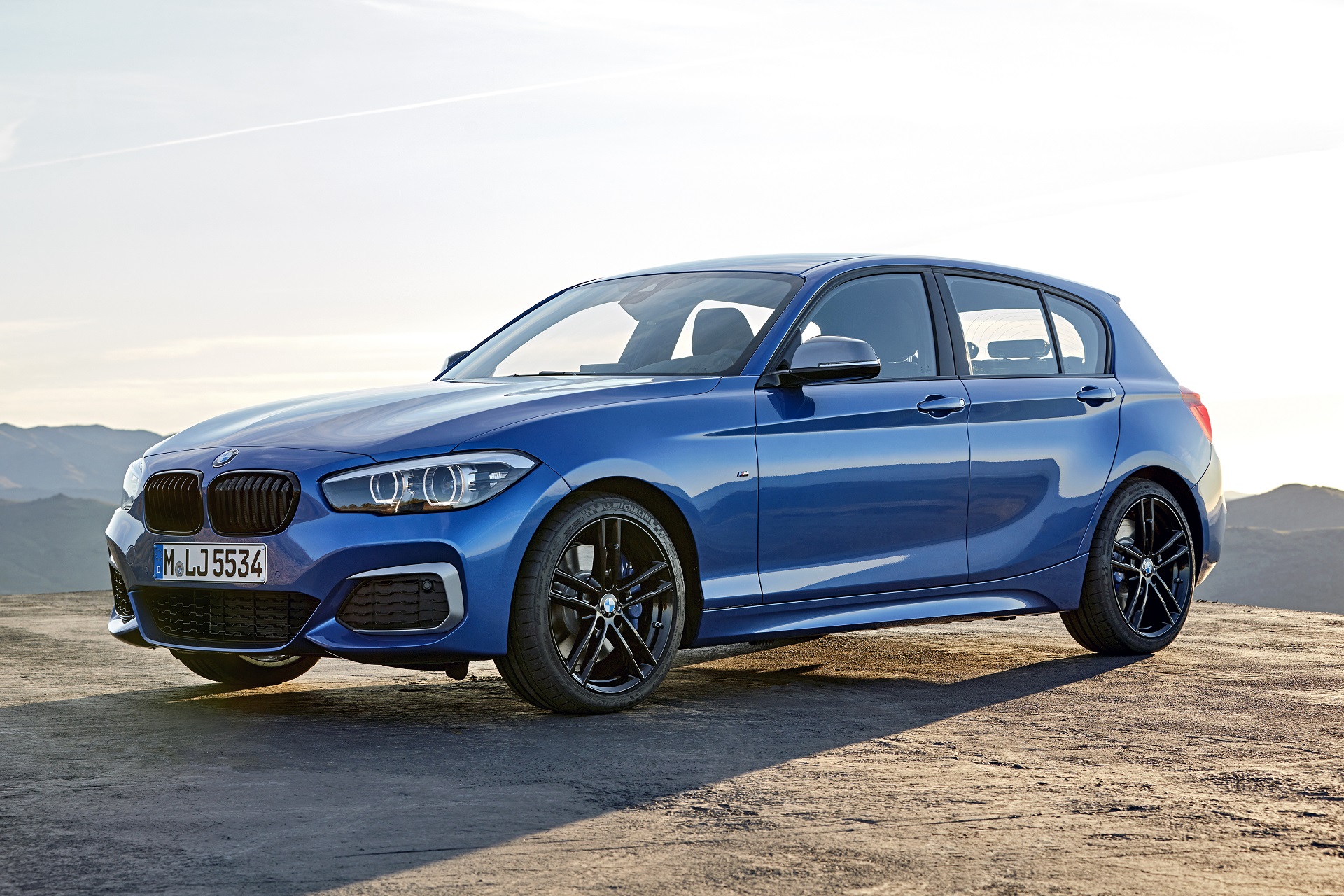
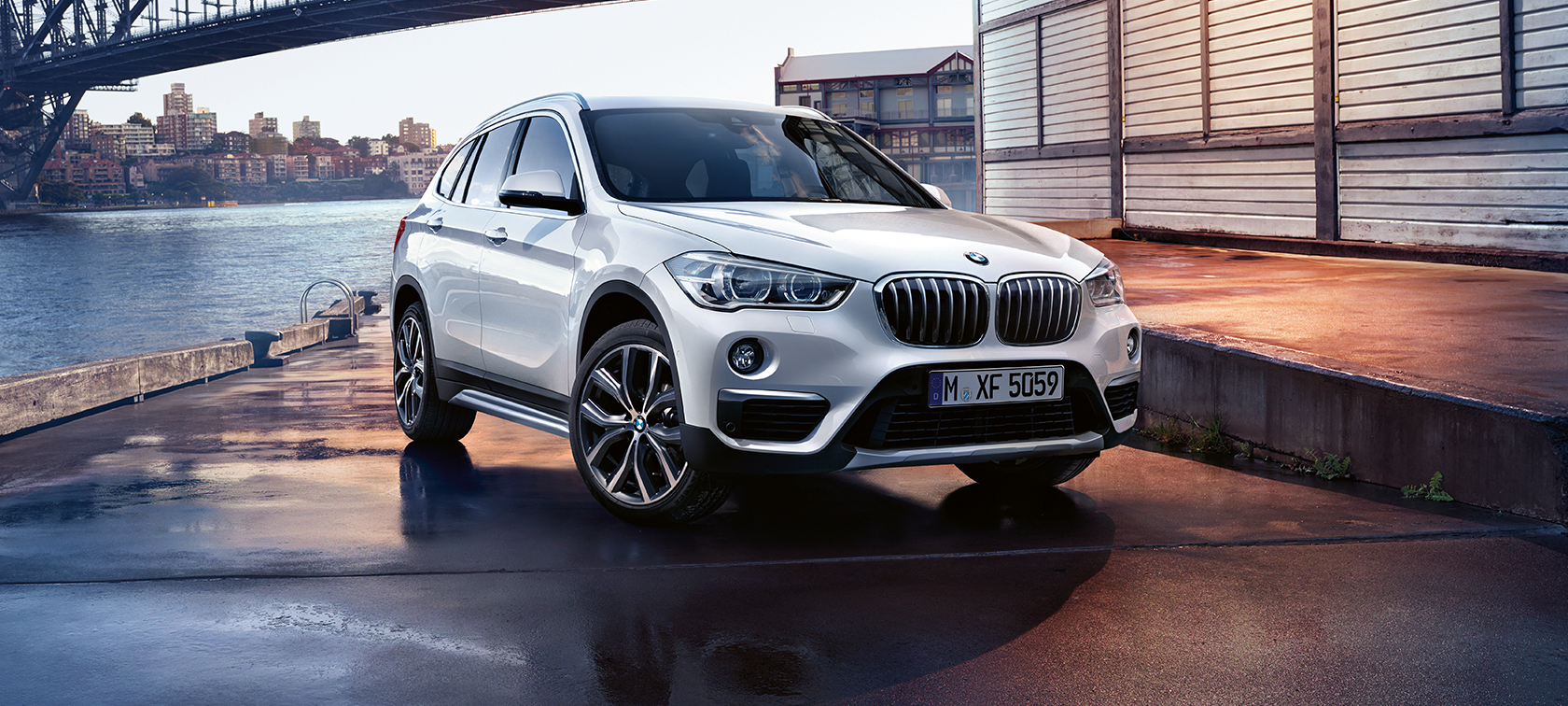
    The BMW 1 Series has been one of the most fun to drive hatchbacks over the previous generations and the automaker has now released the all-new generation of the model. The 2020 BMW 1 Series is quite literally all-new, having been built from the ground up and shares little details with its predecessor. The biggest change by far comes with the front-wheel-drive (FWD) set-up on the third generation that replaces the rear-wheel-drive architecture, which made it such a hoot to drive in the first place. The new 1 Series also comes with All-Wheel Drive (AWD) on the top trims. As a result, the new BMW 1 joins the automaker’s smaller set of FWD cars including the X1, 2 Series and the 1 Series sedan.

    The third generation BMW 1 Series is based on a completely new platform and the design language is also all-new and must we say more proportionate too over the older version. Most prominent are the larger kidney grilles up front that mimic the newer Beamer models, while the bonnet length is long yet in-line with the rest of the body. The headlamps are smartly designed bringing a fresh look and can be had with adaptive full-LEDs that are available as optional. At the sides, the flat beltline on the 1 Series is now slightly raked and the Hofmeister kink gets a subtle update. The rear sports a more athletic appearance with the sharply styled bumper, raked windscreen, and roof spoiler, while the massive wraparound LED taillights to look bold. A first on the new 1er will be the addition of a panoramic sunroof while wheel sizes will range between 16-inch and 19-inch depending on the variant you choose.

    With respect to dimensions, the 2020 1er is 5 mm shorter at 4319 mm (170 inches), whereas the width has increased by 34 mm at 1799 mm. The height is up by 13 mm to 1434 mm, with the wheelbase now shorter by 20 mm and sits at 2670 mm. Nevertheless, the FWD set-up has helped liberate more room in the cabin. You get 33 mm of additional knee room at the rear along with 19 mm of extra headroom and 13 mm of elbow room. The luxury hatchback can also take up more luggage than its predecessor with a cargo capacity of 380 liters, which can be expanded to 1200 liters with the rear seats folded. The automaker says the boot is also wider than before that makes it easy to load and unload luggage, while the tailgate is now electric.

    Inside, the 2020 BMW 1 Series replicates the familiar design language from the larger Beamer models. The car comes with an 8.8-inch touchscreen infotainment system with gesture control and Apple CarPlay compatibility. The instrument console is fully digital and gets a 10.25-inch screen that displays all the necessary information.

    Under the hood, the third generation BMW 1 Series will get two petrol and three diesel engines. The most powerful version will be the M135i xDrive with the 2.0-litre four-cylinder turbocharged motor tuned for 301 bhp and 450 Nm of peak torque. The range-topping model can sprint from 0-100 kmph in 4.8 seconds and has an electronically limited top speed of 250 kmph. An optional M performance package will further shave a tenth of a second on the hatchback. Other engines will range between three- and four-cylinder versions churning out as low as 115 bhp. All units will come paired with a 7-speed dual-clutch or 8-speed Steptronic automatic transmission. There’s a 6-speed manual available as well.

    The new 1 will also come with a host of electronic aids including Lane Departure Warning with active lane return, Active Cruise Control, Lane Change Warning system, rear collision warning and crossing traffic warning. The car also comes with Park Assist, while features like VDC (Variable Damper Control) and  ARB (actuator contiguous wheel slip limitation) technology, further improve the car’s handling capabilities. Customers can also opt for the BMW Digital Key and the BMW Intelligent Personal Assistant on the new 1 Series.

    The all-new BMW 1Series will make its debut in Munich from June 25 to 27 as part of the #NextGen event, while a public showcase has also been planned at Frankfurt in September this year. The previous version of the 1 Series was sold in India, but it’s unclear if the new one will actually make it here. Globally, the car will lock horns against the Mercedes-Benz A-Class, Audi A3 Sportback, Volkswagen Golf and the likes

  • 2020 BMW 1 Series Details Revealed

    2020 BMW 1 Series Details Revealed

    The 2020 BMW 1 Series is all set to be revealed but before it does, the company  is still testing the car at the BMW proving ground in Miramas, Southern France. Of course, it’s taken 5 years of development before this to change to the modern BMW front-wheel drive architecture.  The company says that the front wheel drive layout will improve the driving dynamics of the cars and it will be agile too. A crucial element for the car’s agility is ARB technology (actuator contiguous wheel slip limitation) known from the BMW i3s, which we’ll get to see for the first time in a car with a combustion engine.

    The ARB technology will be standard on the 2020 BMW 1 Series and will feature a slip control system positioned directly in the engine control unit instead of in the control unit for the DSC function (Dynamic Stability Control). BMW Performance Control will also be part of standard equipment on the 2020 BMW 1 series. This will help enhance the torsional stiffness of the body structure by the targeted use of additional struts such as a standard rear-end boomerang strut.

    Under the hood of the 2020 BMW 1 series will be a powerful 4-cylinder motor for the top of the line model. The BMW M135i xDrive will feature the most powerful  2-litre 4-cylinder engine from the BMW Group BMW TwinPower Turbo technology. This engine churns out 302 bhp and it gets a reinforced crank drive, new pistons and cod rods, a larger exhaust turbocharger as well as optimised fuel injection valves.

    Inside, BMW says that the 1 Series has more to offer thanks to the new front-wheel drive architecture with transverse engines and a low centre tunnel. Legroom for rear-seat passengers has increased by 33 mm and headroom at the back by 19 mm. Access to the rear compartment is now easier and luggage compartment capacity has increased by 20 litres to 380 litres. The company will reveal more details closer to the reveal of the car

  • All-New BMW 1 Series Launch on The Agenda for this Year

    All-New BMW 1 Series Launch on The Agenda for this Year

    The 2019 BMW 1 Series has been one of the long-awaited launches not only for the Indian market but also globally. The 1 Series is BMW’s most affordable offering and has been around since 2011 globally. The hatchback also made its way to India in 2012, however, it was soon taken off the production line in India pertaining to its low demand. That said, BMW has heavily updated the next-generation BMW 1-Series and it will make its first public appearance at the 2019 Frankfurt Motor Show in September. The company has also confirmed that the all-new BMW 1 Series will be launched in Europe in 2019 and will make its way to the other global markets in 2020. The all-new BMW 1 Series will have a similar interior design to the latest 3-Series.

    The new BMW 1 Series has been developed on the FAAR platform and will embody BMW groups latest design language with its face picking up cues from the 8-Series Coupe. The cabin of the new BMW 1 Series is also inspired by the bigger models of the family and the dash will be quite similar to what we have seen on the latest 3 Series sedan. However, the size of the infotainment screen and instrument panel is still uncertain. The key highlight, however, is that the new 1 Series will be front-wheel driven like the BMW X1 and, unlike its predecessor which was rear-wheel driven.

    At the 2019 Frankfurt Motor Show, the next-generation 1 Series will be showcased alongside the BMW 2 Series Gran Coupe. While the latter is unlikely to be considered for the Indian market, we still hope the BMW 1 Series could return given the fact that BMW is planning to launch 12 new models in India in the 2019 Fiscal year. The new 1 Series will also be a feature loaded model, unlike the previous one which lost its sheen being bare basic for a luxury car brand. Moreover, being a front-wheel-drive model, it’s likely to be cheaper than its predecessor.