
Tag: 2050

  • Malaysia Vows to Slash Reliance on Foreign Food by Half by 2050 for Enhanced National Food Security

    Malaysia Vows to Slash Reliance on Foreign Food by Half by 2050 for Enhanced National Food Security

    Malaysia has outlined an ambitious plan to decrease its dependence on imported food by half by 2050 in an effort to bolster national food security. This objective arises as the nation grapples with an annual food import expenditure hitting around 80 billion MYR, or approximately US$20 billion, as per the statement of Ahmad Zahid Hamidi, Deputy Prime Minister and Minister of Rural and Regional Development, on July 4.

    Phased Implementation

    The strategy is set to be executed in stages, with intermediate milestones set at a 15% reduction by 2030 and just over 30% by 2040, before eventually realizing the ultimate aim by 2050. Hamidi stated that the strategy would focus on maximizing the use of underemployed and unused land owned by branches under the Ministry of Rural and Regional Development. This land would be transformed into agricultural and livestock production areas in order to increase domestic food production capacity.

    Hamidi further elaborated that the food security program has been active for the past three years and has already contributed to stabilizing prices, specifically through broiler chicken and egg production initiatives.

    Domestic Supply and Stable Prices

    Hamidi emphasized that the purpose of the plan is not to rival commercial producers. Instead, its primary focus is to guarantee an ample domestic supply and reduce price fluctuations. By increasing local production, Malaysia aims to obtain a more reliable and sustainable food source, reducing its vulnerability to global market changes and potential supply chain disruptions.

    Questions & Answers

    What is Malaysia’s goal with respect to imported food?
    Malaysia aims to cut its reliance on imported food by 50% by 2050 in order to enhance national food security.

    How does the country plan to achieve this objective?
    Malaysia plans to utilize underused and idle land owned by agencies under the Ministry of Rural and Regional Development, converting it into agricultural and livestock production zones.

    What is the purpose of this initiative?
    The goal is to ensure a sufficient domestic food supply and reduce price volatility, not to compete with commercial producers.
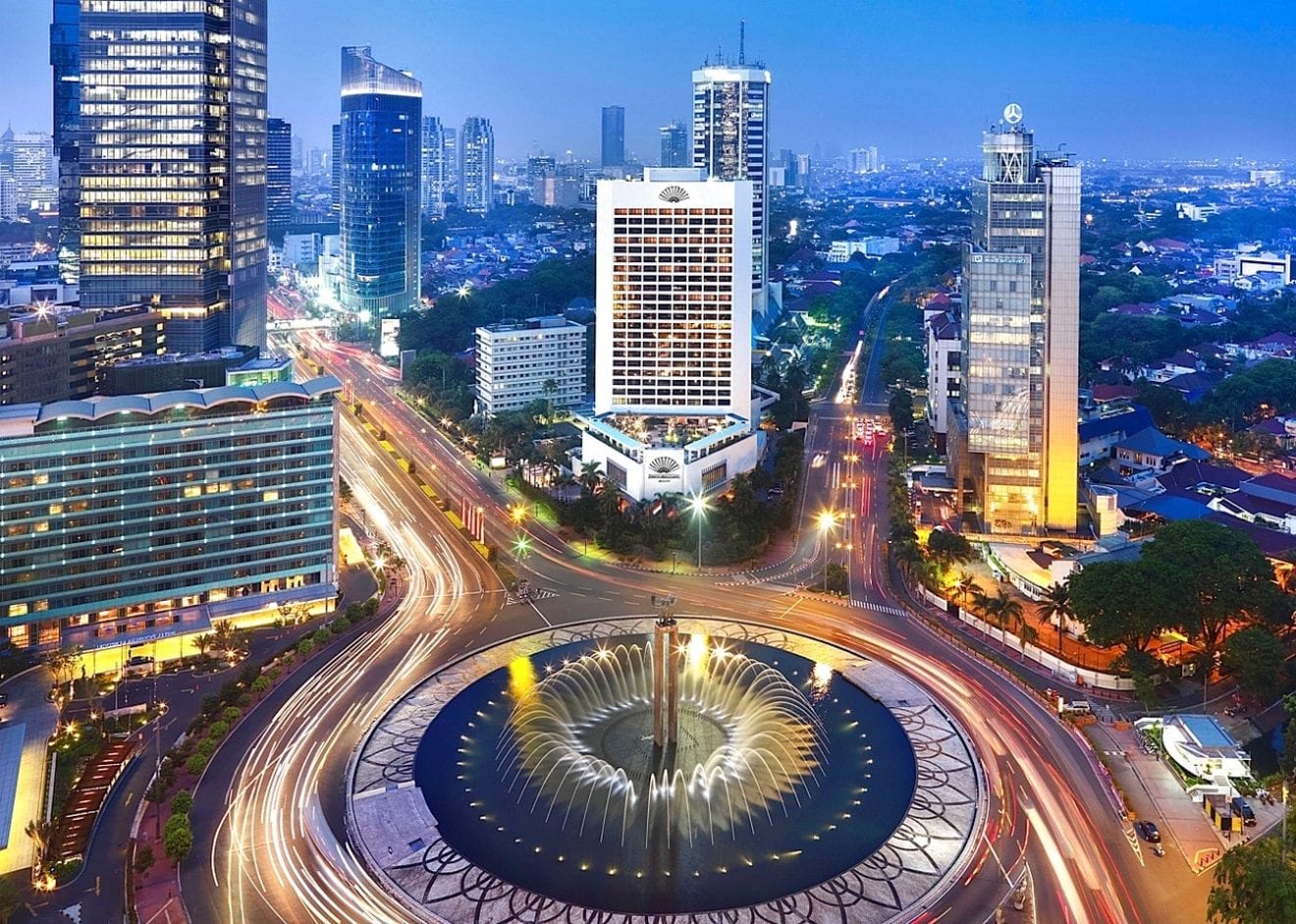
  • Indonesia’s Economic Leap: Poised to Join Global Top 5 Economies by 2050

    Indonesia’s Economic Leap: Poised to Join Global Top 5 Economies by 2050

    According to the Coordinating Minister for Economic Affairs, Airlangga Hartarto, Indonesia possesses the potential to rank among the top five global economies by the year 2050 provided it continues its current growth trajectory and structural reformation efforts.

    Indonesia’s Economic Outlook

    Airlangga is optimistic for the short-term, forecasting a growth rate of around 5.4% for the Indonesian economy by 2026. He bases this prediction on the stability of the domestic economy, citing a 69-month long trade surplus, a healthy level of foreign currency reserves, and inflation successfully kept within target bounds.

    Government Strategy for Economic Growth

    The Indonesian government is currently focusing on fortifying coordination between public and private sectors, encouraging industrialization, digital transformation, and sustainable economic growth. Key policy areas include strategic infrastructure, downstream mineral resources, development of electric vehicles, renewable energy, and strengthening the domestic supply chain.

    Regional Partnerships and Global Economy

    Airlangga highlighted that Indonesia is eager to extend collaboration with regional partners, particularly within the Association of Southeast Asian Nations (ASEAN) framework and free trade agreements. This is with the aim of boosting the resilience of the global economy in the face of geopolitical fluctuations.

    Airlangga further noted that Asia has the capacity to emerge as the principal economic powerhouse globally, given its commitment to open and inclusive regional cooperation. He projected that by 2050, the region could contribute around 52% of the global GDP.

    Long-Term Economic Forecasts

    Long-term forecasts cited by Airlangga suggest that by 2050, China could have a GDP of US$58 trillion, India could reach $44 trillion, and Indonesia could achieve $10-11 trillion. These figures would place Indonesia third in Asia and among the top five economies worldwide.

    In order to actualize this, Indonesia needs to sustain an annual growth rate exceeding 5%, expedite institutional reforms, enhance the quality of its human resources, and boost labor productivity. The nation’s young population, large domestic market, and plentiful resources are seen as vital drivers for the expansion of Southeast Asia’s biggest economy.

    Questions & Answers

    What are the key factors driving Indonesia’s potential as a global economic powerhouse?
    Indonesia’s potential is driven by its young population, large domestic market, and abundant resources. Additionally, the government’s ongoing efforts towards industrialization, digital transformation, and green economic development have a significant role.

    What are the main policy areas of the Indonesian government?
    The main policy focus includes strategic infrastructure, downstream mineral resources, electric vehicle development, renewable energy, and strengthening the domestic supply chain.

    What is the projected GDP of Indonesia by 2050?
    It is projected that by 2050, Indonesia could reach a GDP of $10-11 trillion, potentially making it the third-largest economy in Asia and one of the five largest economies globally.