Tag: 3D

  • Meta seals partnership for 3D ads in step toward the metaverse

    Meta seals partnership for 3D ads in step toward the metaverse

    Meta Platforms will make it easier for brands to run three-dimensional ads on its Facebook and Instagram social media platforms through a new partnership with an eCommerce technology firm.

    The integration with VNTANA will allow brands to upload the 3D models of their products to Facebook and Instagram and easily convert them into ads, VNTANA said on Thursday in a press release.

    The move is a stepping stone into advertising in the metaverse, said VNTANA Chief Executive Ashley Crowder, referring to the futuristic idea of a collection of virtual worlds that can be accessed through devices such as headsets.

    Meta has staked its future on contributing to the building of the metaverse, which it has said could take up to a decade to be realized.

    Meta previously partnered with augmented reality (AR) companies Modiface and PerfectCorp to help beauty and cosmetic brands more easily run 3D and AR advertising.

    “The metaverse is basically the spatial internet,” Crowder said. “It is a whole world of possibility that starts with having the right 3D models of your products.”

    Facebook and Instagram users who see a 3D ad while browsing on their desktop or phone can interact with an image of a handbag, for instance, and move it around to view the item from all angles.

    “In a way, this offers a glimpse of what you might expect on future devices like AR glasses,” said Chris Barbour, director of augmented reality partnerships at Meta’s Reality Labs unit.

    Before VNTANA’s integration with Meta, advertisers would need to reformat 3D files to be compatible with Meta’s ad systems. Now, brands can use VNTANA to easily upload and convert the files into ads without technical expertise in working with 3D images, Crowder said.


  • With 3D printed ‘steaks’, Spanish startup eyes the mass market

    With 3D printed ‘steaks’, Spanish startup eyes the mass market

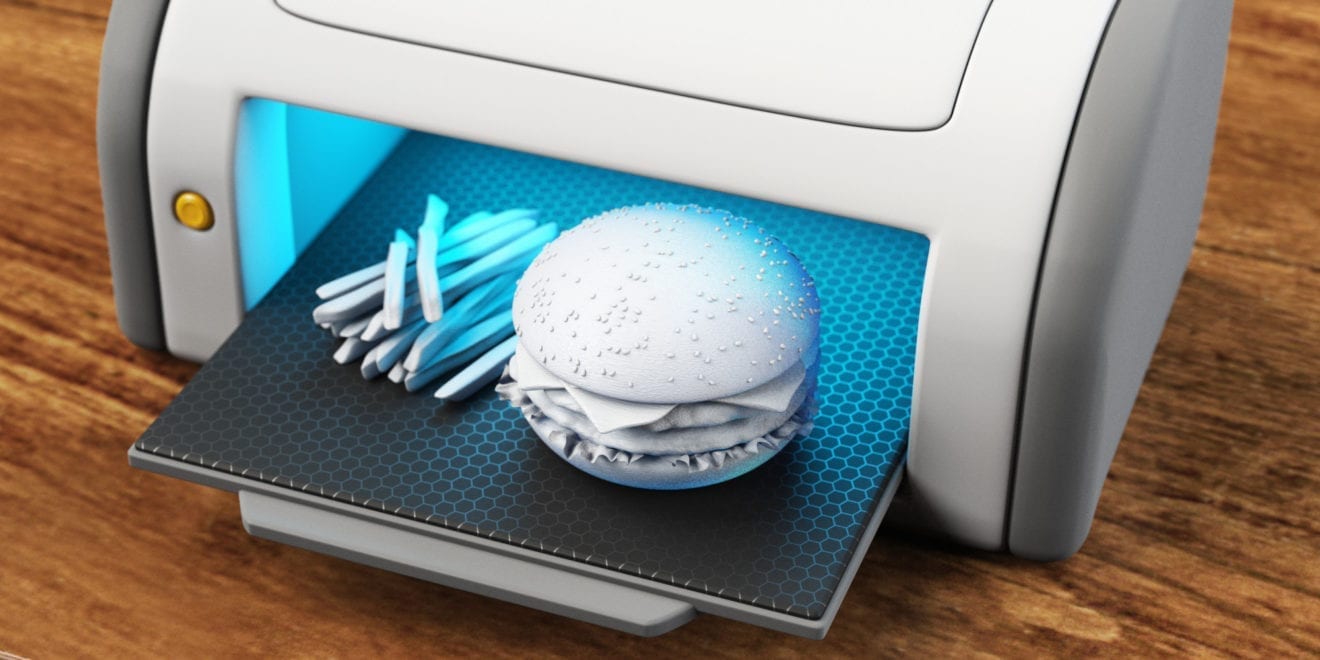
    As demand for plant-based alternatives to meat rises, Barcelona-based startup Novameat is using its 3D printing technology to manufacture vegetarian “steaks” that it hopes will reach the mass market next year.

    Novameat plans to sell its “steaks” directly to consumers and to businesses such as restaurants interested in producing plant-based meat, business development manager Alexandre Campos said.

    The Spanish company, which developed its technology in 2018, was showing how its latest 3D printer produced food at Barcelona’s Mobile World Congress (MWC).

    “It didn’t have the feeling of a traditional steak but I was positively surprised because I did not expect that the texture would be so well achieved,” said Ferran Gregori, after trying one of the “steaks” printed at Novameat’s stand at the world’s largest telecoms gathering.

    The company uses 3D technology to test recipes, introducing ingredients through capsules because it is a cheaper process than mass-producing, Campos said.

    Once a model is considered successful, it could then be produced on a larger scale in bigger machines not using 3D technology, manufacturing up to 500 kg of fake meat per hour, he added.

    Campos said the startup’s aim had been to recreate the muscle fibers of animal meat but using 100% plant-based ingredients. He forecast the plant-based industry would keep growing at double-digit rates in the foreseeable future.

    The company also said it was producing fake meat for environmental reasons.

    “We seek to replace animal meat for something that is better for the planet, ourselves and animals,” Campos said.

  • Amorepacific launches 3D face mask-printing technology at CES 2020

    Amorepacific launches 3D face mask-printing technology at CES 2020

    South Korean beauty company Amorepacific has revealed a high-tech 3D face-mask printing system called IOPE Tailored 3D Mask at the annual Consumer Electronics Show in Las Vegas.

    Amorepacific has teamed up with 3D printing-system developer Lincsolution to create a system that prints bespoke face masks.

    Using its own smartphone app to instantly measure users’ facial dimensions, Amorepacific’s printing system designs a personalized hydrogel mask that caters to individual facial features and skin conditions.

    “Digitalisation is making waves in the beauty industry,” said Wonseok Park, senior VP of Amorepacific R&D center’s innovation division. “Amorepacific is actively investing in converging the best of both worlds to develop creative products for our customers.”

    The Amorepacific’s 3D printing technology will be available to its customers at the brand’s Seoul flagship store opening this April through the lab-based skincare brand IOPE.

    Besides the IOPE Tailored 3D Mask, Amorepacific introduced its MakeOn Flexible LED Patch, a flexible LED beauty device. Fitting close to the skin, minimizing light dispersion and maximizing the skincare effect, as well as providing a hands-free wearable experience, the flexible LED device will be available in Korea through the company’s beauty device brand MakeOn this year.

  • Tommy Hilfiger engages in 3D design technology

    Tommy Hilfiger engages in 3D design technology

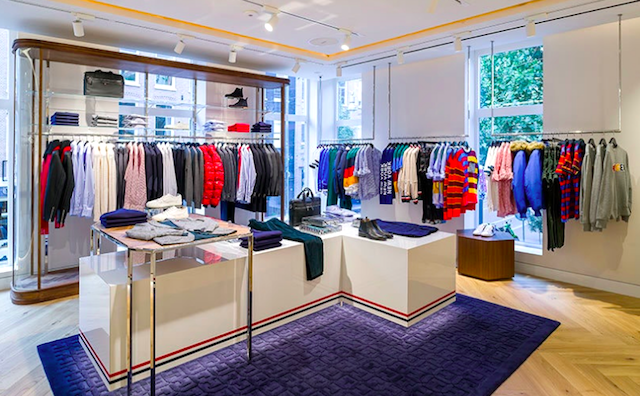
    PVH Group’s Tommy Hilfiger brand will incorporate 3D design technology into all global apparel design teams at its Amsterdam headquarters.

    Its Spring 2022 apparel collections will be the first to be fully designed using Tommy Hilfiger’s 3D design technology platform, building on the company’s target to digitise its end-to-end value chain.

    “The potential of 3D design technology is limitless, allowing us to meet consumer needs faster and in a more sustainable way,” said Tommy Hilfiger Global and PVH Europe CEO Daniel Grieder.

    “The technology has become a fundamental tool in our collection design and has the potential to significantly accelerate our speed to market and replace traditional product photography entirely. For our Fall 2020 season, our men’s dress shirts will be 100 percent 3D designed and require no sample production; the difference will be almost indistinguishable from styles designed and presented historically. This is the future.”

    In order to realize its 3D design goal, Tommy Hilfiger has founded a tech incubator called Stitch, dedicated to digitizing the company’s design practices. Since 2017, teams of software engineers, 3D design technology experts, and transformation specialists have developed an ecosystem of proprietary tools that enable a fully digital design workflow. This includes a digital fabric, pattern and color asset library; digital 3D presentation tools and rendering technology. Transforming traditional design and sample production steps into virtual processes allows for faster timelines and seamless integration into digital showrooms.

    Scaling 3D design technology across Tommy Hilfiger’s apparel collections follows two years of targeted pilots that have connected the design platform to the brand’s digital showroom. In autumn next year, Tommy Hilfiger will launch a capsule collection designed, developed and sold digitally, including products modeled on virtual avatars. The initiative is the next step in uncovering the full potential of sample reduction, time savings, cost savings and sustainability by leveraging 3D design.

    Associates in more than 50 percent of the apparel divisions located at Tommy Hilfiger’s global headquarters have been trained and educated in 3D design technology through the Stitch Academy, with the technology active in 20 product groups and counting. Moving forward, all Tommy Hilfiger product teams will receive 3D design training and upskilling as standard, including designers, patternmakers, fit technicians, product developers, and merchandisers.

  • Android Q will bring an iconic Apple iPhone feature

    Android Q will bring an iconic Apple iPhone feature

    Introduced in 2015 with the Apple iPhone 6s and iPhone 6s Plus, 3D Touch allows iOS users to press the screen to see previews, details, and shortcuts. Some applications allow users to Peek and Pop. For example, you can get a preview of an address in the Maps app. That’s a “Peek.” Applying a little harder force will “Pop” you into the app. Note that for technical reasons related to the Liquid Retina display on the iPhone XR, that model does not feature 3D Touch.

    In Android 8 Oreo, Google added a long press gesture that allows Android users to see shortcuts related to certain apps. That feature was continued on Android 9 Pie. For example, press hard on the YouTube icon in either build, and you’ll see shortcut options that can take you to the app’s search feature, and a list of your YouTube subscriptions. Documentation for Android Q reveals that the next Android build will allow users to see the same information, only faster, with a “deep press.”

    Found inside documentation for MotionEvents is a statement that says a touch on the touchscreen can be classified as a “deep press” when a user presses harder on the screen intentionally. This will “accelerate the long press behavior.” In other words, a “deep press” will reveal the same information as a long press, only quicker. Unlike 3D Touch, it doesn’t appear that Android devices will be able to distinguish between a light press, a medium press, and a hard press.

    Google could turn to algorithms to determine whether a user is using enough force to count a touch as a “deep press.” Or, the new feature might require specialized hardware. Either way, we could hear more about this during Google I/O. The annual developer conference will run from May 7th through May 9th. During the conference, Google traditionally reveals new features that will be found on the upcoming Android build.

    Just the other day, Google disseminated the second beta preview for Android Q. This included a foldable device emulator to help developers see how their apps will look on one of the new foldable phones that will be released soon. That includes the Samsung Galaxy Fold, due out on April 26th, and the Huawei Mate X. That model will be launched sometime this summer. Another feature called Bubbles allows you to take the functionality of certain apps with you from screen to screen on Android Q.

    Google plans on releasing six beta versions of Android Q with the final version scheduled to drop during the third quarter. If you have a Pixel handset, you can quickly sign up to receive the Android Q beta versions OTA. Simply head to the Android Beta for Pixel website and click on the Devices tab. Scroll down to “Your Eligible Devices” and tap the Opt-in button. Expect to wait up to 24 hours before the update arrives. When you’re ready to return to the public version of Android, repeat the process and tap on the Opt-out button. Keep in mind that the beta versions of Android are unstable and many of the features that you might depend on could fail to work. As a result, you might want to think twice before signing up to receive the Android Q beta previews.

  • DJI Introduces DJI Terra To Capture, Visualize And Analyze Drone Data

    DJI Introduces DJI Terra To Capture, Visualize And Analyze Drone Data

    DJI, the world’s leader in civilian drones and aerial imaging technology, today introduced DJI Terra, a new software tool that transforms drone data into digital 3D models and maps for easy analysis and decision making. DJI Terra enables businesses and organizations using DJI drone technology to capture, visualize and analyze aerial images for a wide variety of applications across the public safety, construction, infrastructure, agriculture and film industries.

    “As the leader in the commercial drone industry, DJI continues to develop accessible and easy-to-use hardware and software solutions that help organizations transform their operations with drone technology and gain a competitive advantage in their industries,” said Sunny Liao, Director of Enterprise at DJI. “As an all-in-one mapping and modeling solution, DJI Terra makes it simple and efficient to extract value from drone data, generating conclusions and recommendations across multiple use cases from crash reconstructions to critical infrastructure inspections as well as agriculture field mapping and construction site modeling.”

    Automatic Flight Planning and Data Capture

    DJI Terra helps commercial drone pilots quickly plan automated flights with several easy-to-use options based on the area or objects they’d like to capture and the type of map or 3D model they’d like to create. It features three mission planning types:

    • Area – Capture a specific area quickly and easily by drawing a custom polygonal flight zone on a map. DJI Terra automatically generates efficient flight path options based on the area selected.
    • Waypoint – Create dynamic custom flight paths through an area or around objects using waypoints and adjustable parameters like aircraft altitude, speed, heading, gimbal pitch and angle. For more complex missions that require high attention to detail, the 3D Flight Visualization feature enables the design and simulation of missions on existing 3D models.
    • Oblique – Capture a rich data set by automatically flying the same route multiple times. Each flight automatically adjusts the angle of the camera to capture new details, giving an extra crisp 3D model of the object or asset from multiple angles.

    Real-time Mapping and Detailed 3D Models

    With real-time mapping capabilities, DJI Terra allows drone pilots to quickly generate 2D orthomosaic maps as the drone flies, ideal for time-sensitive missions where situational awareness is critical and decisions need to be made in minutes. DJI Terra’s fast processing capability also creates sharp and realistic representations of any environment through detailed 2D orthomosaics and 3D model reconstructions used for industrial applications like reconstructing vehicle crashes, tracking progress on construction projects or conducting large-scale critical infrastructure inspections on bridges and roadways.

    Easy Data Analysis

    In addition to map and model creation, DJI Terra helps users analyze data and generate instant insights with easy-to-use analysis tools that provide a variety of measurements including linear distance, surface area and volumetric estimations. To improve team communication and reporting throughout ongoing projects, annotation labels can be edited and shared. For detailed site inspections and accident reconstruction situations, DJI Terra’s photo inspection tool lets users closely examine every photo used to create the model so they can pinpoint and highlight critical elements.

    Availability

    DJI Terra is available today for purchase through authorized DJI Enterprise resellers worldwide and is compatible with Windows PCs and all current DJI Phantom 4 Series drones.

  • Korea advances in the Asian entertainment market with 3D technology

    Korea advances in the Asian entertainment market with 3D technology

    Korea Creative Content Agency organised the 3D VFX pavilion at the recently concluded Asia TV Forum 2010 held in Singapore from 8-10 December, in hopes of promoting Korean 3D contents technology.

    The 3D VFX was further demonstrated at the 3D conference thus promoting not only the technology but also the so-called Korean Wave.

  • World-first 3D-printed basketball boot unveiled

    World-first 3D-printed basketball boot unveiled

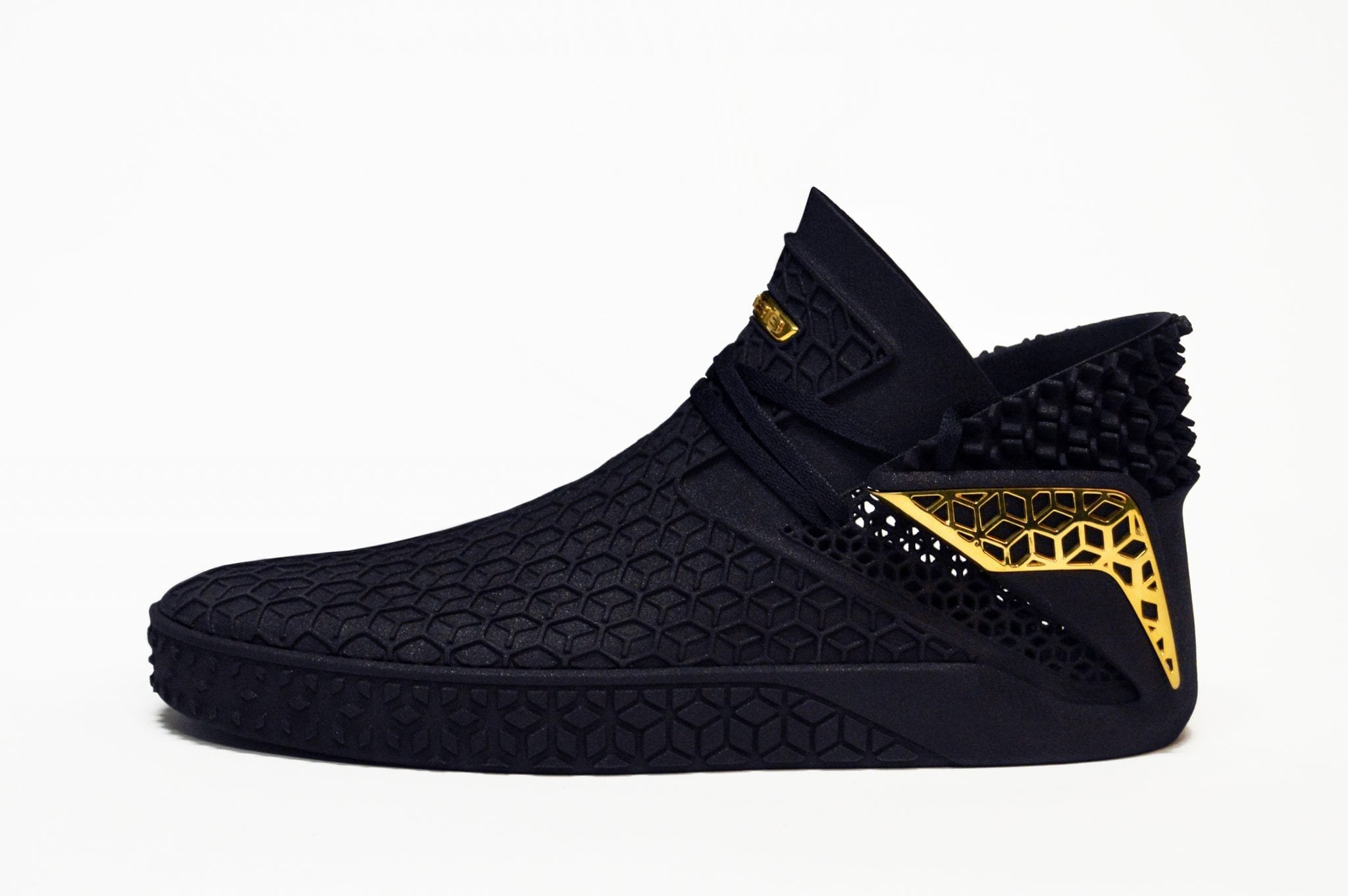
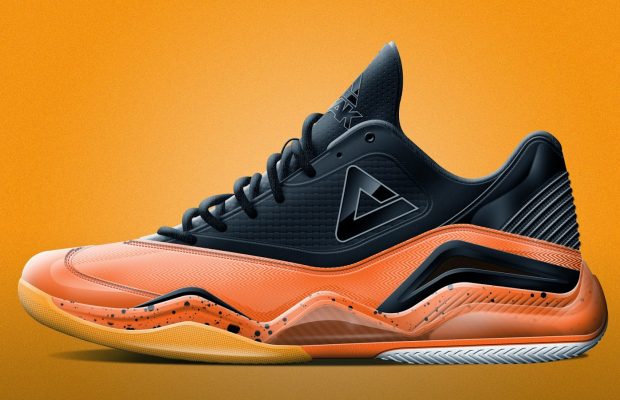
    US sports brand Peak has unveiled what it says is the world’s first 3D-printed basketball boot.

    Peak is one of the world’s first footwear brands to apply 3D printing technology to a sports shoe. Three years ago, the company acquired advanced 3D printing equipment and rolled out products based on the 3D printing concept.

    Peak launched the “Future I” 3D printed running shoes last May and believes the evolution to a 3D printed basketball boot moves the company into the position of being the world’s leading sports brand in the research and application of 3D printing technology.

    Peak uses SLS laser technology and printing prototyping of flexible and light TPU powders in the design.

    “As a new prototyping and processing technology, 3D printing is of great significance to Chinese sports brands and the country’s Made in China 2025 strategy,” said Peak GM Xu Zhihua.

    NBA professional player Dwight Howard III, who plays with the Charlotte Hornets, is impressed: “This pair of boots has obviously higher performance than traditional ones,” he said at the boot’s unveiling in China.

    “I felt that the 3D printed soles and vamp side walls enable a more comfortable wearing experience. Maybe, one day in the future, you’ll see me wearing the 3D printed basketball boots, footwear designed based on R&D carried out by Peak, during an NBA competition.”

    The Dwight Howard III 3D-basketball boot deploys a 3D-lattice structure in the middle of the sole, while using the 3D printed TPU structure for the vamp side walls, breaking existing design structure limits and expanding the room in which designers could allow themselves to be more creative.

  • Vietnamese property developers see new tricks in VR

    Vietnamese property developers see new tricks in VR

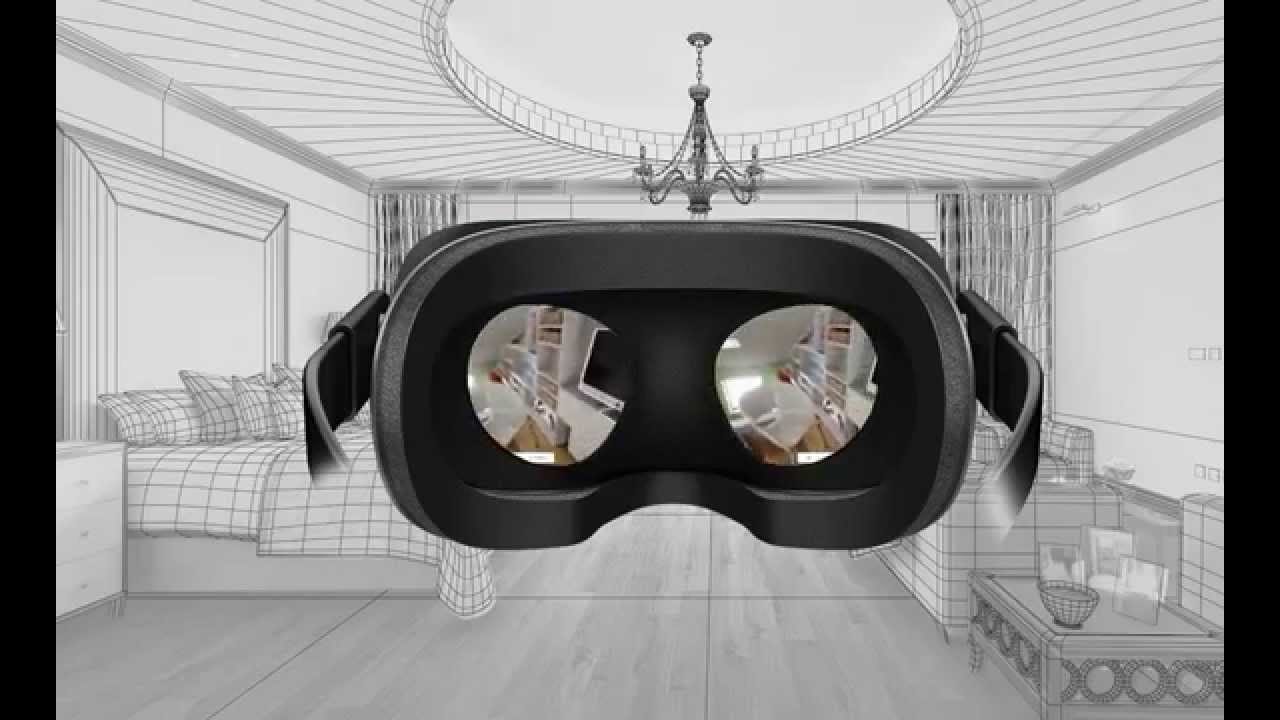
    As competition in the property market heats up, developers are seeking new ways of attracting buyers – one recent attempt makes use of virtual reality and augmented reality (VR/AR).

    It’s expected that VR will boom this year, with a wide number of sectors taking advantage of the latest technology, including real estate, which will allow potential buyers “real” experiences of property projects.

    A recent report by Cushman & Wakefield estimated that VR and AR would become a US$2.6 billion market in real estate by 2020, as headsets such as the Oculus Rift and the Microsoft Hololens become common place over the next few years.

    “It’s essential to begin preparing for the expansion,” Cushman & Wakefield said. “In addition to virtual walkthroughs of both finished and unfinished buildings and virtual models projected onto desks and tables in the real world – innovations which are already in development – companies see opportunities for more game-changing features a little further down the road, once mass adoption takes hold.”

    Cushman & Wakefield cited a research report released last year by Goldman Sachs, saying that VR/AR hardware and software is finally catching up with consumer expectations, and are posed to disrupt a number of markets, including real estate.

    Catching up with the trend, several Vietnamese developers have started to use VR and AR in their marketing to promote sales, such as Vingroup, Sun Group and BIM Group.

    At a recent sale opening of Citadines Marina Ha Long, BIM Group used the Microsoft Hololens to demonstrate every detail of the project in front of buyers’ eyes.

    A representative from the developer said that the use of new technologies would help make up for the gaps in traditional marketing tools.

    Phan Thanh Hue from Booyoung Vina was quoted by Dau Tu Bat Dong San (Real Estate Investment) newspaper as saying that the new technologies brought life-like experiences to customers.

    Dinh Anh Tuan, director of 3D Vni, which provides the hardware, said that many customers were excited about the new experiences. Tuan said that developers were staring to use VR and AR in marketing and more expansion was expected.

    Tuan said that VR was forecast to become an indispensable trend, changing the face of marketing and sales in many sectors, including real estate. This technology would also help increase the competitiveness of property products, he added.

    According to Pham Ngoc Mai Anh, director of ADT Creative, a start-up in VR applications, there is an increasing interest in using VR by property developers.

    However, because of current prices, VR is now only appropriate for high-end segments rather than having broad appeal, experts say.

  • Peak Sport first Chinese firm to release 3D sneakers

    Peak Sport first Chinese firm to release 3D sneakers

    Sports brand Peak has released its first 3D printed running shoes in Beijing, the first-ever Chinese firm to successfully launch the innovative sneakers.

    Dubbed ‘Future I’, the sneakers are being sold on local e-commerce platform Tmall for RMB1299 (US$188).

    The 3D printed running shoes are based on the most popular Peak FLY V, with 3D printed technology applied to achieve technological innovation. Promoting comfort and breathability, the shoes are made with a special lattice structure insole made via 3D technology.

    In a press release, Peak said its “SLS laser sintering technology shapes the shoes with the more elastic TPU, to ensure the lightness and flexibility… bringing an extraordinary and excellent wearing experience.”

    Peak brought in 3D printing technology in 2013, and over the past 5 years, the firm has used 3D printing technology to produce shoe molds to make 3D printed versions to create exclusive design for athletes such as NBA player Dwight Howard.

    This latest design feat crowns Peak’s design efforts, and harks a promising future in innovative sportswear.

    “This pair of 3D printed shoes is Peak’s latest outcome of Peak Innovation Strategy, our goal is to build Peak as the most international, professional and innovative sports brand in China,” said Zhihua Xu, general manger of Peak Sport.

    Peak owns five research and technology centres in Beijing, Guangzhou, Quanzhou, Xiamen and Los Angeles, with 200 staff across all campuses.

    Based on 3D printed technology, Peak’s ‘Longji’ running shoes were awarded first prize in the first China Industrial Design Competition.

    “In the future, Peak will insist on technological innovation research and release more professional sports products to meet the mass requirements, and become the leading sports brand,” added Zhihua Xu.

    Peak is the third sports brand to release and sell 3D printed running shoes after Adidas and Under Armour.

  • Ford exploring 3D printing of one-piece auto parts

    Ford exploring 3D printing of one-piece auto parts

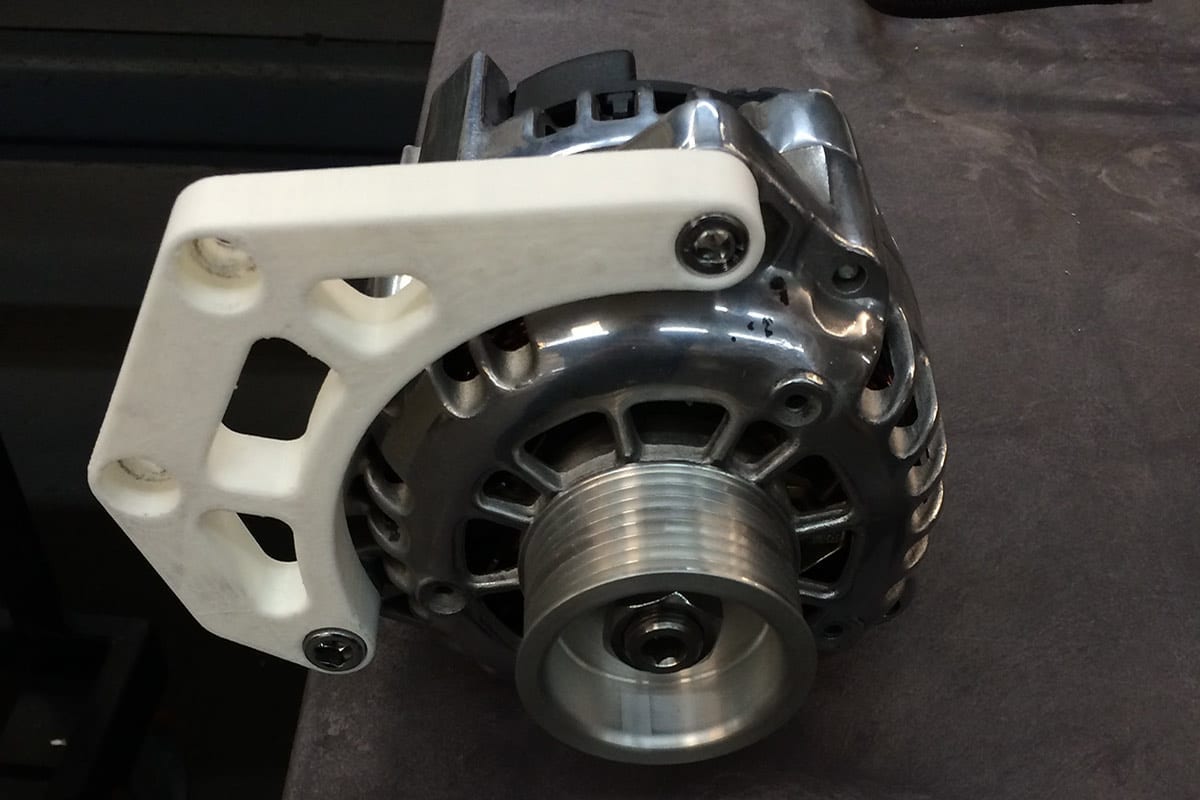
    US based car manufacturer Ford Motor Company is exploring how large-scale one-piece auto parts, like spoilers, could be printed for prototyping and future production vehicles, as the first automaker to pilot the Stratasys Infinite Build 3D printer.

    Capable of printing automotive parts of practically any shape or length, the Stratasys Infinite Build system could be a breakthrough for vehicle manufacturing claims the company. It will provide more efficient and affordable way to create tooling, prototype parts and components for low-volume vehicles such as Ford Performance products, as well as personalized car parts.

    The new 3D printer system is housed at Ford Research and Innovation Center in Dearborn.

    “With Infinite Build technology, we can print large tools, fixtures and components, making us more nimble in design iterations,” said Ellen Lee, Ford technical leader, additive manufacturing research. “We’re excited to have early access to Stratasys’ new technology to help steer development of large-scale printing for automotive applications and requirements.”

    Wider adoption of 3D printing has been driven by recent technology advances, new areas of application and government support, according to Global Industry Analysts.

    By 2020, the global market for this emerging technology is expected to reach $9.6 billion, the organization reports. As 3D printing becomes increasingly efficient and affordable, companies are employing it for manufacturing applications in everything from aerospace to education to medicine.

    3D printing could bring immense benefits for automotive production, including the ability to produce lighter-weight parts that could lead to greater fuel efficiency. A 3D-printed spoiler, for instance, may weigh less than half its cast metal counterpart.

    The technology is more cost efficient for production of low-volume parts for prototypes and specialized race car components. Additionally, Ford could use 3D printing to make larger tooling and fixtures, along with personalized components.

    How it works
    With 3D printing, specifications for a part are transferred from the computer-aided design program to the printer’s computer, which analyzes the design. The device then goes to work, printing one layer of material at a time, then gradually stacking layers into a finished 3D object.

    When the system detects the raw material or supply material canister is empty, a robotic arm automatically replaces it with a full canister. This allows the printer to operate unattended for hours – days, even.

    Using traditional methods to develop, say, a new intake manifold, an engineer would create a computer model of the part, then have to wait months for prototype tooling to be produced. With 3D printing technology, Ford can print the intake manifold in a couple of days, at a significant cost reduction.

    3D printing is not yet fast enough for high-volume manufacturing, but it is more cost efficient for low-volume production. Additionally, minus the constraints of mass-production processes, 3D-printed parts can be designed to function more efficiently.

  • Youku picks Nokia for 3D 360 VR content

    Youku picks Nokia for 3D 360 VR content

    Youku in China has chosen the Nokia OZO VR ecosystem of technologies “to bring the most immersive” VR content to the more than 500 million monthly active users engaged in its online video platform which has daily views of more than 1.1 billion.

    Youku users and content creators are promised the ability to experience and share the highest quality VR content including natively captured spatial audio.

    “China is one of the most progressive VR markets in the world with an appetite for high-quality virtual reality experiences that is enormous and growing,” said Paul Melin, VP of digital media at Nokia Technologies.

    Youku will use the entire OZO VR solution, which includes the OZO Camera, OZO Software Suite, OZO Live and OZO Player SDK in the creation and distribution of content ranging from film and television to news and documentary, as well as professional user-generated content featuring Youku’s top talent.

    Youku will be the first Chinese content producer and distributor to have fully integrated the Nokia OZO ecosystem of technologies.

    Also, Youku will integrate Nokia’s OZO Player SDK and OZO Audio solutions, which are designed “to deliver a superior consumer experience,” into all its platforms, mobile apps and consumer offerings, enabling its enormous audience to enjoy 3D 360 degree VR.

    The OZO Player SDK allows VR professionals to create amazing VR app experiences on most major platforms with a single, unified development interface. Full-featured reference players are also included in the SDK for all supported platforms.

    The multi-platform OZO Player SDK is now available in a free version as well as a Pro tier with more features and larger deployment options.

  • How 3D printing will shake up the supply chain

    How 3D printing will shake up the supply chain

    Consumers today are already familiar with personalizing their favorite treats by molding them into unique shapes or printing edible messages on cakes, chocolate and flowers, among others. What if you could customize any product in the future to suit your preference – from shoes to even houses? While some may perceive this to be a pipe dream, the fact is that this is actually a reality. New Balance just introduced 3D printed shoes last April, and in China, Huashang Tengda successfully built a two-storey house in just under two days!

    3D printing is also known as additive manufacturing, a process that allows us to seemingly create objects such as bicycle frames and toys out of thin air. Manufacturing and supply chains have typically been all about assembly lines, warehousing and shifting products outwards from the point of manufacture. 3D printing is now revolutionizing the way products are manufactured and distributed.

    With the advent of 3D printing, individualized products can be designed, produced, delivered, and serviced in new ways. To start, organizations can leverage a product innovation platform that supports direct communication with customers and network partners from conceptualization to production. Consumers today love to customize everything and anything, and 3D printing makes this both possible and affordable. Organizations can now evolve beyond demand-driven supply chains to enable demand-driven manufacturing, furthering customer centricity and personalization.

    3D printing is also transforming the manufacturing industry, making it more digitized and in the process throwing out all the traditional rules of the game. Essentially, 3D printing changes who is in control. Analog manufacturing used to be the realm of huge companies that have the resources to invest and produce large quantities of the same good. These companies need to have the capital to support research, prototyping and focus groups to identify products that will please the critical mass, and marketing to promote that same product to large volumes of consumers. On top of that, delivering the products to consumers requires complex supply chain and retail channels.

    In contrast, 3D printing allows complex items to be produced on demand, eliminating the need for assembly lines. With 3D printing, the supply chain has the potential to become more efficient, more local and globally connected. Manufacturers are using 3D to respond to dynamic, real-time customer demands, reduce inventory and slice into transportation costs while dramatically compressing the time needed to ship products.

    Imagine this: Without the need for huge capital outlay, manufacturers do not need to set up factories at permanent locations. All manufacturers need is a 3D printer in local markets or regional production hubs, solving a number of large problems. The ability to bring manufacturing local will provide a way to significantly reduce carbon footprint. If you add the benefits of timeliness, cost reduction, and the freedom to print multiple materials and properties, you start to understand the impact 3D printing can have on society.

    Supply chains have a reputation for being boring, complicated, and uninteresting. But with the advent of the digital economy and 3D printing technologies, all of this is about to change. As the digital supply chains become both disruptive and important within the next few years, supporting the supply chain and the manufacturing floor to boost productivity will have ripple effects throughout any industry. The future of supply chain will be more collaborative and integrated with suppliers, retailers and even product planning and design.

    Where supply chain used to be the most inelastic piece in the journey from manufacturing to customer delivery, 3D printing will be the catalyst and enabler to reimagine a supply chain that can dynamically respond to customer requirements and expectations. In addition, we are going to see more of these advanced efficiencies permeating production activities as 3D printing continues to rise past the hype and into everyday manufacturing.

    In 2013, Wohlers Associates, a consulting firm that specializes in 3D printing, predicted that the sector would grow to $10.8 billion by 2021. The firm now forecasts even greater and faster growth, with the industry reaching $21.2 billion in 2020. That’s because while the firm is skeptical about the value of low-end, consumer-oriented printers, they are positive that more and more industrial clients – especially manufacturers – will be buying and implementing high-end, expensive 3D printers.

  • UPS expands its on-demand 3D printing network to Asia

    UPS expands its on-demand 3D printing network to Asia

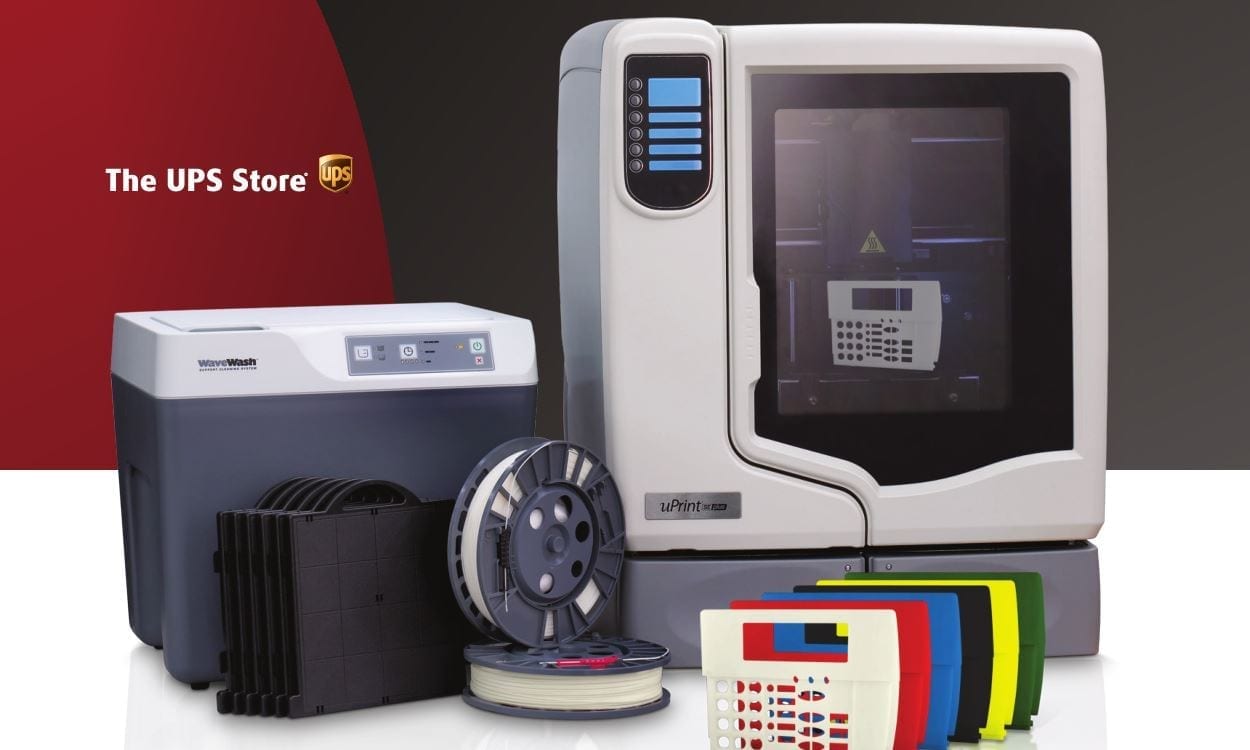
    UPS will expand its on-demand 3D printing network to Asia when Fast Radius opens a factory in Singapore by the end of the year.

    According to UPS, it will also set up a team in Asia to create a centre of excellence which will develop supply chain solutions and promote the use of 3D printing.

    “3D printing will have a significant impact on industrial manufacturing and 21st century supply chains,” said Ross McCullough, president of UPS Asia Pacific. “At UPS, we are embracing disruptive technologies and integrating them into our global logistics network. We believe that much like e-commerce digitized and transformed retail, 3D printing will have a similar impact on manufacturing.”

    Advantage of 3D printing include lower inventory for slow-moving parts, lower transportation costs, shorter production runs and better customization.

    “UPS’s 3D printing Centre of Excellence reinforces Singapore as an innovation-driven economy,” said Michelle Ho, managing director of UPS in Singapore. “Having Fast Radius’ factory connected to UPS’s network means customers can send their 3D printing orders by 5pm and have them delivered to their customers in most major Asian cities within 24 hours. The automotive, high-tech, aeronautic and aviation, healthcare and retail industries have a lot of opportunity to take advantage of this type of manufacturing.”

    Fast Radius will direct 3D printing orders to the manufacturing location in either Singapore or the US, depending on speed, geography and product requirements, according to UPS.

  • Largest 3D printing factory in SEA opens in Singapore

    Largest 3D printing factory in SEA opens in Singapore

    The largest commercial 3D printing facility in South-east Asia opened in Singapore today (Sept 28), capitalising on the rising demand for such services.

    Launched by NASDAQ-listed ­Ultra Clean Asia Pacific (UCT), which develops and supplies systems for the semiconductor industry, the UCT Additive Manufacturing Centre will target business sectors such as the aerospace, dental and medical industries. It will also offer consumer services.

    The centre, which cost more than S$5 million to establish, has 15 sets of 3D printers. There are ­12 ­employees at the facility at present, with plans for that number to double by next year, UCT said.

    “The establishment of UCT’s ­additive manufacturing facility ­reflects Singapore’s progression ­towards advanced manufacturing and engineering,” said Mr Lim Kok Kiang, Assistant Managing Director of the Singapore Economic Development Board, which supports the facility.

    “Companies can tap on Singapore’s base of skilled engineering talent, ­industry-focused public research and development ecosystem … to ­develop better products and services to serve their growing Asian customer base.”

    The Singapore Government in 2013 announced plans to set aside S$500 million over five years to support a “future of manufacturing” programme, which includes 3D printing.

    Such 3D printing functions much like conventional 2D printing. But instead of printing a flat image, a 3D printer extrudes material through a nozzle, layer by layer, to create a physical ­object.

    Although it has been around since the late 1980s, technological improvements have made the service more affordable, driving up demand.

    In Singapore, ­retail shops have reported ­increased requests from consumers seeking to print products, from figurines to jewellery.

    Mr Lavi Lev, senior vice-president of the Asia Division at UCT, added that 3D printing allows individuals and companies to manufacture parts with no capital equipment investment.

    “It allows large corporations to ­increase their R&D pace through rapid prototyping. In particular, the medical and aerospace sectors are ­using 3D printing extensively,” he said.

    For instance, he explained, if someone breaks a bone, they can take an X-ray or CT scan of it, and 3D print a bone implant.