Retail News CRM

Tag: 3G

  • China Mobile Hong Kong to Shut Down 3G Services by the End of June

    China Mobile Hong Kong to Shut Down 3G Services by the End of June

    The decision comes following a steady decline in 3G users, who now make up less than 0.25% of CMHK’s total mobile customer base, including post-paid, pre-paid, and virtual network operator-related subscribers. CMHK has been notifying customers of the upcoming transition since late 2023 and continues to assist affected users in upgrading their 3G phones, devices, or SIM cards.

    In a separate statement, the Communications Authority (CA) confirmed it granted CMHK prior approval to cease 3G services under Special Condition 10.4 of the company’s Unified Carrier Licence. The CA acknowledged that only a small number of users were affected and highlighted CMHK’s continued efforts to support them through service upgrades and transition arrangements.

    Customers who do not wish to upgrade will be offered reasonable termination options. The CA has also mandated that CMHK maintain adequate 3G service quality until the shutdown date.

    The CA also encouraged customers to consider upgrading to newer mobile services for improved quality and features.

  • Viettel to gift 4G phones to 700,000 2G subscribers

    Viettel to gift 4G phones to 700,000 2G subscribers

    State-owned telecom giant Viettel will spend VND300 billion (US$12.2 million) to gift 4G phones to 700,000 of its subscribers who still use 2G devices.

    The military-owned company announced Friday that the program, which aims to support a rapid switch to 4G networks, is meant for customers still using 2G phones who lack access to 4G devices due to their remote location or financial status.

    It plans to gift feature phones but with added cloud phone features that allow the use of some OTT apps.

    The program will run from now until the 2G network is shut down on Oct. 15, with eligible users getting a message instructing them to go to the nearest Viettel store or contact its local employees for support.

    Viettel said it would prioritize subscribers in mountainous regions affected by recent storms, like Lao Cai, Yen Bai, Tuyen Quang, Hoa Binh, Bac Kan, Son La, Dien Bien, Lai Chau, Cao Bang, and Ha Giang provinces.

    The Ministry of Information and Communications and telecom firms have been taking a number of measures to promote the shift from 2G. The number of 2G users declined from 11 million in July to three million now.

    Viettel has the most 2G subscribers of any network operator, but has seen over eight million switch to 4G devices this year.

    It recently installed over 6,000 new base stations nationwide to expand its 4G network coverage to 96% of the population, including four million new users in remote and rural areas.

    Pulling the plug on 2G will promote the adoption of 4G, which can help familiarize people with digital and online public services, and free up resources for network providers to focus on developing 5G and 6G technologies.

  • 2G and 3G Migrations Completed or in the Pipeline

    2G and 3G Migrations Completed or in the Pipeline

    The Global mobile Suppliers Association (GSA) has released the findings of its new report ”2G-3G Switch-off July-2022”. Drawing on information collected by the GSA about the switch-off of 2G and 3G around the world, this report noted that 135 operators have either completed, are planning or are in progress with 2G and 3G technology transitions in 68 countries and territories.

    75 operators in 42 countries and territories have either completed or are planning 2G switch-offs with 23 operators in 14 countries and territories having completed 2G switch-offs.

    For 3G, the report reveals that 75 operators in 40 countries and territories have either completed, are planning or are in progress with network switch-offs, including 26 operators in 15 countries and territories that have completed the move.

    The report observes disparities between regions including the pace of 2G and 3G network switch-offs. Europe has or will be undertaking the largest number of technology migrations,   of the total. Asia will be responsible for 31 (23%), followed by North America, and the Middle East and Africa with 8 (6%) each, and Oceania with 7 (5%). Latin America and the Caribbean have just 2 (1%) 2G and 3G switch-offs.

    “When they were first introduced to the market, 2G and 3G were highly important innovations, but as greater technological advances have emerged, their importance has waned, and usage of both technologies is now diminishing worldwide,” stated Joe Barrett, President of the GSA. “As such, more and more operators and governments are coming to the decision that the older 2G and 3G technologies as well as the spectrum allocated to them should be migrated to faster and more efficient 4G and 5G networks. At the GSA, we are forecasting an increase in the number of operators moving off 2G and 3G networks as the transition to 4G and 5G will fully unfold.”

  • Singapore offers best mobile experience in South East Asia

    Singapore offers best mobile experience in South East Asia

    At a country-level, Singapore won in all metrics tested, with the most important win being the highest Excellent Consistent Quality in South East Asia, with 84.5% of connections having a network experience suitable for use-cases like 1080p video streaming, real-time mobile gaming and HD video calling. Singapore also had the highest Core Consistent Quality in the region at 94.4%.

    Consistent Quality is a set of metrics that Tutela has developed to objectively evaluate when connections are (or are not) enabling users to do the things they want to on their mobile devices. There are two sets of thresholds, Excellent and Core. A connection that hits the Excellent threshold is sufficient for use-cases like 1080p video streaming, HD video calling, and multiplayer gaming, while a Core connection should be sufficient to stream standard-definition video or handle day-to-day activities like web browsing or uploading photos to social media. The percentages seen in this report represent the percentage of tests for subscribers on a given operator that was above the Excellent or Core thresholds.

    Singapore also had the fastest download speed at 26.2 Mbps, the fastest upload speed at 14.7 Mbps, and the most responsive network with a latency result of 9.0 ms. However, Vietnam was always very close behind, with second-place winnings for both Excellent Consistent Quality (72.3%) and Core Consistent Quality (86.1%).

    The report was released by Tutela Technologies, a global crowdsourced mobile data company, and evaluated over 55 million speed and latency tests, conducted on the smartphones of real-world users of national mobile operators within Common Coverage Areas, between August 1st and January 31st, 2021.

    Per country findings were as follows:

    Singapore:

    • By operator in Singapore, StarHub dominated in four of the seven metrics tested, including the highest Excellent Consistent Quality with 87.3% of users having a network experience suitable for 1080p video streaming or HD group video calling.
    • StarHub also had the highest Core Consistent Quality, Tutela’s measure of whether a connection is good enough for everyday uses, like email, social media, and SD video streaming, the fastest download speeds, and the most responsive network in the country.

    Indonesia:

    • Telkomsel won six out of the seven metrics tested, with Indosat Ooredoo being the only other operator to make it onto the leaderboard in Indonesia with the fastest median upload speed.
    • Telkomsel was in first place for Excellent Consistent Quality with 65.0%, and also in first for Core Consistent Quality with 83.5%. However, there was only a 3% difference between the operator and second-place Indosat Ooredoo.

    Malaysia:

    • In Malaysia, the leaderboard was shared by at least four operators, with U Mobile offering its users the best mobile experience in the country. The operator won the highest Excellent and Core Consistent Quality, and fastest upload speed.
    • Digi had the fastest median download speed in Common Coverage Areas across Malaysia with 10.6 Mbps but came third in the upload speed test with 6.2 Mbps. Maxis had the most responsive network in the country, while Celcom had both the best 5G/4G coverage and total coverage.

    Thailand:

    • By operator in Thailand, AIS won in four of the seven categories tested, including the highest Excellent Consistent Quality and most responsive network. However, TrueMove was also on the leaderboard in three of the seven categories including the highest Core Consistent Quality and both the fastest download and upload speeds.
    • With only two operators in the Philippines to compare, Smart outperformed Globe in six out of the seven categories tested, with Globe taking out one category with the best total coverage.

    Vietnam:

    • Viettel Mobile in Vietnam offered the best mobile experience to its users, winning in five categories and tying for first place with Vinaphone for fastest median download speeds.
    • MobiFone was on the leaderboard in one category with the highest Core Consistent Quality.
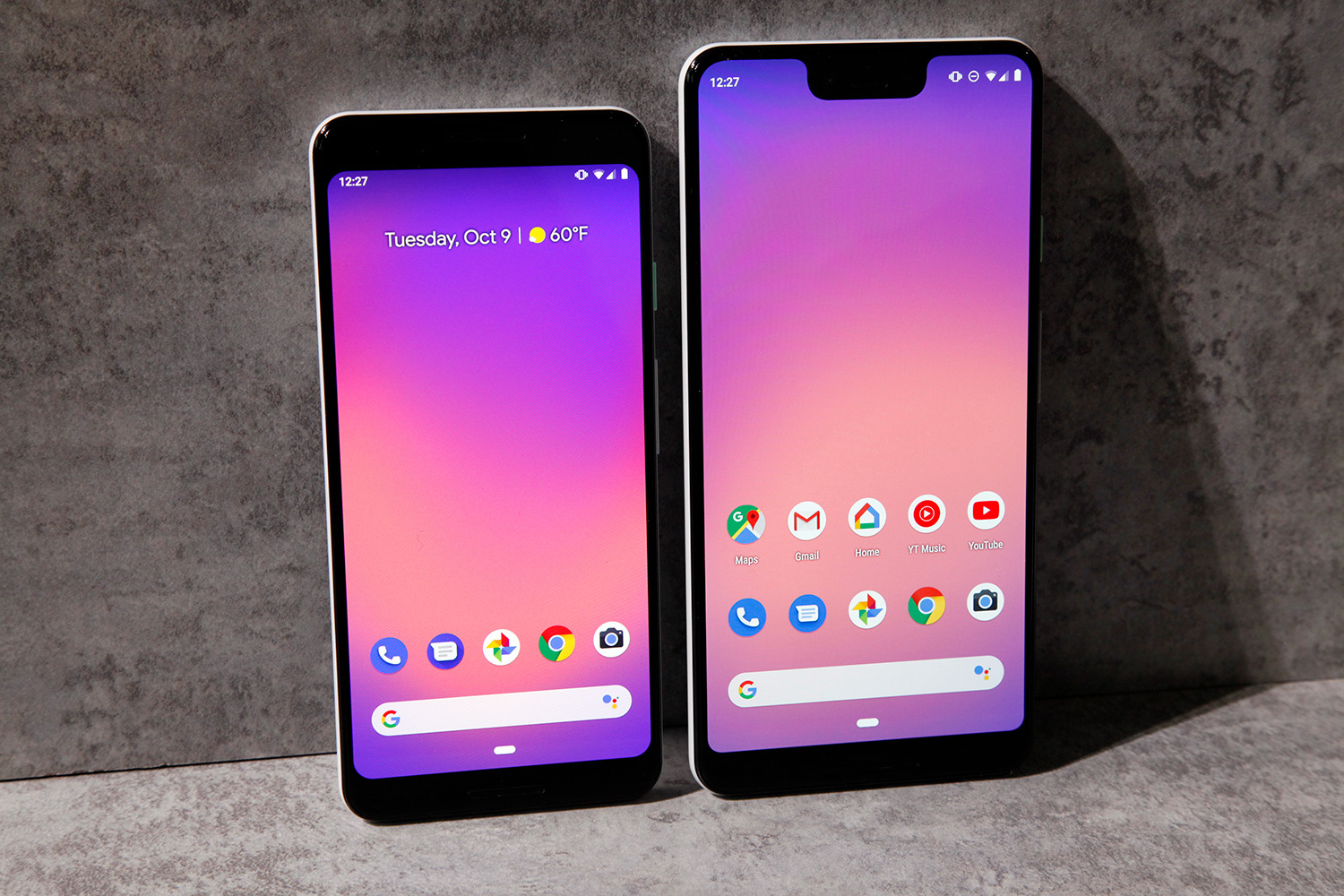
  • Google has yet to fix a serious issue with the Pixel 3 and Pixel 3 XL

    Google has yet to fix a serious issue with the Pixel 3 and Pixel 3 XL

    Back in December, we told you that several Google Pixel 3 and Pixel 3 XL users were having an issue getting the person on the other end of a phone call to hear them properly. The Pixel series has been notorious for having a number of problems out of the box that are fixed by a subsequent software update. You might recall that the Pixel 2 and Pixel 2 XL had so many issues out of the gate that a law firm was recruiting users of the 2017 models to join a class action suit against Google, LG and HTC.

    According to Android Authority, it appears that Google never got around to fixing the problem with phone call connectivity with the 20218 Pixels. On the Google Product Forums are the posts that we discussed in our original story. But newer comments have been posted as recently as last month. It seems that when a Pixel 3 or Pixel 3 XL user is on a regular phone call, the person on the other end of the line is hearing an echo, choppy audio that cuts off words, silence, and more.

    Some troubleshooting tips (factory reset, going into safe mode, switching to 3G from 4G) failed to resolve the issue for everyone, which puts the ball back squarely in Google’s court. Hopefully there will soon be a software update disseminated that will allow those engaged in a phone call with an affected unit to hear the Pixel owner’s voice crystal clear.

  • Soaring 3G, 4G use to boost mobile ads, commerce

    Soaring 3G, 4G use to boost mobile ads, commerce

    Widespread adoption of 3G and 4G networks in Vietnam presents a lucrative growth opportunity for mobile advertising and commerce.

    Vietnam had more than 123.9 million mobile subscribers active on 2G, 3G and 4G networks as of June this year, according to the Ministry of Information and Communications.

    The number of 3G and 4G subscribers had soared by 29.2 percent year-on-year. Preliminary statistics showed that the combined adoption of 3G and 4G reached 51.5 million subscribers in early 2018.

    Mantosh Malhotra, Southeast Asia and Pacific head of telecom equipment giant Qualcomm, said the growth was impressive and predicted 3G and 4G numbers to rise to 120 million by 2020, or 67 percent of all mobile devices.

    Doan Duy Khoa, head of consumer insight, banking and technology industry division at Nielsen Vietnam, said that the extensive 3G and 4G adoption in Vietnam would create huge opportunities for mobile advertising and commerce.

    Vietnam is ranked third in consumers’ internet access in Southeast Asia, behind only Singapore and the Philippines, he said. “Vietnamese spend 24.7 hours a week on average on the internet compared to nearly 26 hours in developed countries like Singapore.”

    Two-thirds of local internet users surveyed by Nielsen said they regularly use smartphones to browse the net.

    Khoa said this trend has been fostered by the upgrades to the 3G and 4G telecom infrastructure and the increasing mobile connection speeds on smartphones.

    By 2020 some 60 percent of Vietnam’s population is expected to use smartphones.

    Khoa quoted statistics from market research company eMarketer as saying Vietnam’s mobile advertising revenues were worth $77 million last year, double that of the previous year.

    He presumed the growth is on the rise.

    Mobile advertising growth would be driven by new ad formats like in-app ads, mobile video ads and mobile search services, Khoa said. “The rising trends of connectivity and smartphone use also give impetus to mobile commerce growth.”

    Smartphones inspire consumers to search online for brands, products and services before buying, and share their impressions after a purchase, he said.

    Khoa recommended that marketers should use smartphones as a tool to build brands and loyalty programs and promote sales. “Many providers of air, accommodation, and tourism services are leading the mobile commerce charge in Vietnam.”

    eMarketer predicted the mobile retail sector to grow by 24.3 percent to $1.14 million this year. The figure is expected to climb to $1.8 million in the next three years.

    But Khoa warned that mobile advertising and mobile commerce sectors face challenges since consumers tend to quickly turn off ads or even block and skip them. “Thus, to get past this, the advertising content must be very good.”

    “Consumers’ attention span is very short when it comes to mobile phones, especially compared to tablets and laptops. So, ads must be designed to run for six or 12 seconds instead of the 30 or 60 seconds of traditional ads,” he added.

  • Taiwan to switch off 3G networks at year end

    Taiwan to switch off 3G networks at year end

    Taiwan’s telecoms regulator has revealed that the nation’s 6.4 million 3G users will need to migrate to a 4G network by the end of the year, when operators’ 3G licenses are due to expire.

    The 3G licenses are scheduled to expire on December 31 and services will terminate in 2019, as reported.

    Four operators are still offering 3G services – Chunghwa Telecom, Taiwan Mobile, Far EasTone Telecommunications and Taiwan Star. Asia Pacific Telecom switched off its 3G service in 2017.

    According to the report, officials expect the 3G switch-off to be smoother than last year’s 2G service termination, as operators have retained ownership of their 2,100-MHz spectrum holdings and will be able to use these frequencies to serve their 3G users.

    Operators are also expected to continue to use circuit-switched fallback technology to offer voice over 3G.

    But the nation’s 6.4 million 3G customers may need to switch to a 4G SIM and a new 4G plan in order to continue using services. This represents around a fifth of the market’s mobile customers and compares to roughly 22 million 4G users.

  • North Korea’s sole 3G player Koryolink said to shut down

    North Korea’s sole 3G player Koryolink said to shut down

    North Korea’s sole 3G operator Koryolink may have shut down operations as a result of international sanctions over the nation’s ongoing nuclear testing.

    Koryolink’s owner, Egypt’s Orascom Telecom is preparing to withdraw from the company as it faces mounting pressure from the US and UN Security Council to comply with the sanctions, according to a UPI report.

    The report itself cites a Japanese article that cites Japanese intelligence officials and unnamed industry sources. The sources say that Koryolink’s customers have been transferred to state-run GSM operator Byol.

    Orascom holds a 75% stake in Koryolink with the remaining 25% owned by the North Korean government. The operator reportedly racked up around 3.5 million customers. Orascom has revealed it invested around $250 million in its North Korean operations.

    While Orascom had hoped to continue its operations in North Korea within the framework of the international sanctions, the Japanese report suggests that the company has given up on these ambitions as a result of international pressure.

    But it adds that Orascom has yet to officially announce its withdrawal from the market due to needing more time to smoothly handle exit procedures.

    Orascom first entered the North Korean market in 2008, but has reportedly faced difficulty withdrawing its earnings from the operations as a result of the sanctions.

  • Philippines’ new ICT chief orders spectrum audit

    Philippines’ new ICT chief orders spectrum audit

    The chief of the new Philippines Department of Information and Communications Technology (DICT) has ordered the inventory of used and unused telecoms spectra.

    In his first public speaking engagement and media interview since assumption into office on July 1, DICT Secretary Rodolfo Salalima said frequency is a scarce public resource and the patrimony of the nation.

    “I do not want public telephone entities to be warehousing frequencies, meaning getting assigned frequencies from the government, storing it without using it but using it for speculative purposes,” he said.

    He clarified that this act is contrary to the Philippine Constitution and a public service law which states that frequency must be assigned only to those who can make it effective and efficient use of it.

    “If they (telecommunications companies) have not used these frequencies within a reasonable time as stated in the position of giving or assigning to them the frequency, we better start revoking these frequencies because it ought to be assigned to telcos that can effectively and efficiently utilize them,” he added.

    The DICT Chief, however, gave assurances that due process will be observed if the department will resort to revocation of spectrum licenses or permits if some telcos are found to have not used them within the prescribed period.

    “We will hear them out,” he said, further clarifying that what telcos pay for is only the use of the frequency. “They do not become owners of these frequencies because they can never be owned under the Philippine Constitution.”

    The issue stemmed from the recent co-purchase of the telco business of San Miguel Corporation (SMC) by the country’s two dominant carriers – PLDT and Globe Telecom, which the government’s antitrust body, the Philippine Competition Commission (PCC) now wants investigated.

    Salalima said frequency is crucial to the operations of telecommunications companies in servicing the public.

    “This is the reason why to my mind, PLDT and Globe have to purchase control of the holding company of SMC so that at least they can have part of the frequency (not the entirety) needed for them to further improve the service,” he said.

    He clarified though that he is leaving it to the PCC to decide on the issue of whether the telco buyout deal is in the best interest of the public. His concern is the efficient use of spectrum, especially in light of the need to improve internet connection speed in the country and public services.

    Newly elected President Rodrigo Duterte has given local telecommunications players one year to shape up telco services and internet speed or ship out.

    The DICT, which was given the mandate to make policies and plans in regard to telco services and the country’s ICT infrastructure, is still in the transition period. It is currently awaiting the Implementing Rules and Regulations (IRR) of the law that created the new department only last May.

  • Telenor Myanmar launches 4G services

    Telenor Myanmar launches 4G services

    Telenor Myanmar has officially launched 4G services, starting in capital city Nay Pyi Taw.

    With the launch the operator has become Myanmar’s second mobile operator to launch LTE services, following Ooredoo Myamar’s debut in May.

    Telenor Myanamr CEO Petter Furberg said in addition to the debut in the capital, the company is continuing to test 4G in other cities, and will progressively roll out the technology nationwide.

    “While Telenor users in Nay Pyi Taw now can enjoy 4G services we aim to expand the service to other cities gradually. To provide high speed 4G services all over the country Telenor will need more spectrum,” he said.

    “Telenor is looking forward to participating in the spectrum auctions planned by the Union Government later this year. Due to explosive growth of data and increasing data demand by the Myanmar people we believe it is urgently required to expand our services to 4G all over Myanmar.”

    He noted that 60% of the operator’s 16 million customers are now data users, and that Telenor has Myanmar’s largest internet network with more than 5,800 towers across the country in all states and regions.

    “Myanmar is experiencing an extensive growth of mobile subscriptions and we are also witnessing higher demand for mobile data,” Petter said. “Our 4G service is one more important step in the rapid development of the Myanmar telecom sector.”

  • Viettel to roll out 3G-only network in Myanmar

    Viettel to roll out 3G-only network in Myanmar

    Vietnamese military-run operator Viettel has provided details of its plans for entering the Myanmar mobile market, including a goal of connecting 95% of the country’s population within three years.

    Viettel was recently selected as the international partner for a consortium of 11 local technology and other companies selected to become Myanmar’s fourth mobile operator.

    As part of this consortium, Viettel announced plans to roll out a 3G-only network on the 900-MHz and 2100-MHz frequency bands. The operator also aims to launch 4G services on the 1800-MHz bands if it secures the required licenses.

    The consortium will have a total investment of $1.5 billion, and Viettel will take a 49% stake in the venture.

    “We enter Myanmar at this historic phase in the country’s reform era, when the country is forecast to witness accelerated economic growth, enhanced also through increased foreign direct investment,” Viettel deputy general director Le Dang Dung commented.

    “Advancing the country’s telecom infrastructure will help us drive a surge in mobile and smartphone subscription penetration, to achieve the government’s target of reaching 90% of the population by 2020. We believe that the role of telecommunications is fundamental in driving Myanmar’s next phase of economic growth.”

    The consortium will be competing with Telenor Myanmar and Ooredoo Myanmar, as well as the joint venture between Myanmar Posts and Telecom and Japan’s KDDI.

  • RCom to upgrade CDMA network to 4G from May

    RCom to upgrade CDMA network to 4G from May

    India’s Reliance Communications (RCom) has revealed plans to progressively upgrade its CDMA customers to 4G starting in May.

    The operator will upgrade its CDMA network to LTE using the newly liberalized 800-MHz spectrum starting on May 4, citing a letter sent from the company to the Department of Telecom.

    RCom will progressively move its roughly 5 million CDMA customers onto 4G as the rollout progresses.

    RCom has already liberalized its 800-MHz spectrum in 16 of India’s 22 telecom circles and recently received clearance from India’s cabinet to do the same in four more.

    The first round of spectrum liberalization cost a hefty 53.83 billion rupees ($806.5 million), while the second will cost around 1.3 billion rupees. In the remaining two circles, RCom has already paid for liberalized 800-MHz spectrum.

    The sources stating that RCom plans to take advantage of its spectrum sharing pact with Reliance Jio Infocomm by deploying its own network but mostly using Reliance Jio’s infrastructure to provide the 4G services.

    RCom and Reliance Jio plan to leverage each others’ spectrum to ensure they are both capable of providing pan-India 4G coverage and competing against the nation’s three largest operators, Bharti Airtel, Vodafone India and Idea Cellular, which have already launched 4G.

  • Indonesians pressure the country’s largest telco to lower data costs

    Indonesians pressure the country’s largest telco to lower data costs

    Indonesians are pissed off about Telkomsel’s data package pricing policy. While they’re considered expensive for Jakartans, Telkomsel – Indonesia’s state-owned and largest mobile carrier – charges up to twice as much for the same amount of data if you happen to live in a bad “zone.”

    To protest this, activist Djali Gafur started a petition called “Internet for the people“. It has already accumulated over 10,000 signatures.

    Telkomsel divides the archipelago into 12 districts. Jakarta, as well as most parts of Java and the surrounding islands are in Zone 1, and tariffs actually go up as the areas get more remote. West Papua’s Raja Ampat district, for example, is in Zone 12.

    “We in Zone 12 don’t have a choice,” says Gafur in the petition on Change.org. It’s true because Telkomsel is often the sole carrier in remote areas. The others don’t even bother because the infrastructure costs outweigh the opportunities.

    Gafur demands that people in his area get access to the internet for an equal price, so that they too can participate in things like education, tourism, government, and creative industries online. “If [the connection] is a little slow, that doesn’t even matter so much,” he adds.

    Indonesia’s ICT Minister Rudiantara has since responded to the petition, and met with Telkomsel’s president director to discuss the matter, according to local media.

    Rudiantara said that the government is looking into subsidizing Telkomsel in areas where it is the only operator on the ground, supported by the Universal Service Obligation (USO) fund.

    The USO in its current form has been in place since 2005. Mobile phone carriers operating in Indonesia have to contribute 1.25 percent of their gross revenue into a shared pool, which non-profit government agencyBP3TI deploys toward connectivity programs in remote areas.

    Apparently, BP3TI is not quick enough to keep up with the demand for affordable mobile internet connectivity in the remote parts of Indonesia.

    Indonesia currently has no regulation on data tariffs, but according to Rudiantara, discussions on this will take place in 2016. In order to allocate funds from the USO to support Telkomsel in said remote zones, USO’s structure has to be changed. That will take time. For now, it’s up to Telkomsel to respond to the increasing frustration from people in zone 12.