Tag: 7eleven

  • 7-Eleven continues regional expansion with Dalyellup store opening

    7-Eleven continues regional expansion with Dalyellup store opening

    After opening four new stores in 2021, including its first regional store in Busselton, 7-Eleven will continue to invest in the state, with seven new stores on the horizon for 2022.

    Sine opening its first store in WA in 2014, the company has invested $47 million across the State, and according to Nick Maddox, 7-Eleven Area Lead – WA, will invest a further $6 million in new stores in 2022.

    “Approximately 45 additional West Australians have joined our team in 2021, and we hope to have about 100 new roles available as our network continues to grow in 2022.”

    Maddox said the company was incredibly excited to have opened their first regional store in Busselton and plan to grow its regional network by adding a new store in Treendale early next year.

    7-Eleven is continuing to look for the right locations to bring its offer to new communities in metropolitan and regional Western Australia.

    Maddox said they are interested in sites in both established suburbs and growth corridors positioned within reach of customers along busy commuter routes, immersed within residential precincts along connecting roads, local shopping, and community centres.

    “Our preferred sites provide convenient access for passing traffic and suitable room for vehicle movement and easy customer parking. We’re continuing to work with landlords and developers in Western Australia to secure locations to serve our local communities.”

    The pace of 7-Eleven’s growth means there’s potential for people who want a career in retail and to accelerate their progression, stated Maddox.

    “For people looking to make a career path in a new industry, our career development and network growth provide support and opportunity.

    “We’re looking for talented people with the right capabilities who might be interested in leadership. We invest in giving our people the skills they need to take advantage of the opportunities our growth provides.”
  • 7-Eleven Hong Kong opens its 1000th store

    7-Eleven Hong Kong opens its 1000th store

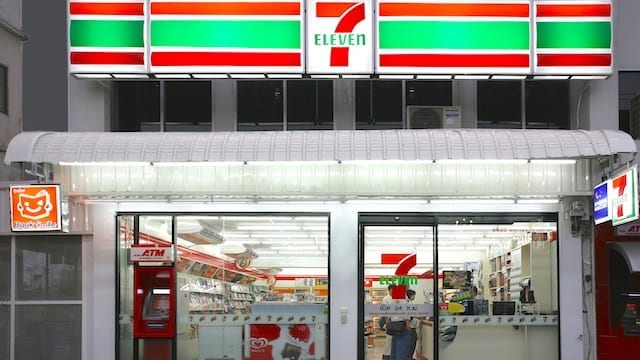
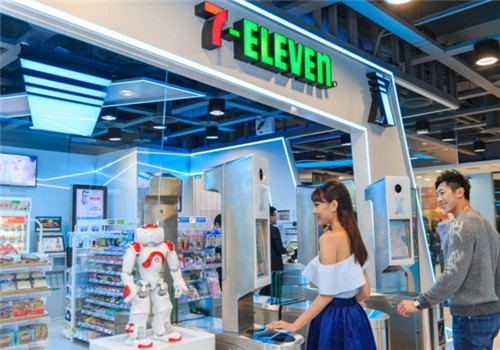
    7-Eleven has officially opened its 1000th store in Hong Kong – a milestone moment for both the brand and its customers. 7-Eleven launched its very first store in Happy Valley back in 1981 and, 40 years later, has opened its 1000th store on Des Voeux Road in Central. An integral part of the community and a true neighborhood store, 7-Eleven is committed to bringing convenience closer to its customers wherever they are, whenever they need.

    Evolving alongside the people of Hong Kong, the brand has constantly innovated to live up to changing consumer expectations. To mark this landmark achievement, a series of promotions and offers are being rolled out to thank customers for their loyal support.

    A Journey of 1000 Stores: the story of 7-Eleven in Hong Kong

    The Journey of 1000 Stores, a retrospective showcase outlining the story of 7-Eleven in Hong Kong, was held today in Central on 8 July. The exhibition charted 7-Eleven’s journey from its very first store right up to the opening of its 1000th store highlighting the brand’s milestones over the years, which many Hongkongers may still fondly remember from childhood.

    These include the immensely popular Hello Kitty badge collectible program, from 2004 and the launch of HOTSHOT, its ready-to-eat range of authentic Hong Kong-style treats beloved by students of all ages!

    Serving the community for 40 years

    7-Eleven has always been committed to giving back. Since 2013, it has worked with Caritas to offer training and job opportunities to over 40 people with special needs. In 2017, it teamed up with Pei Ho Counterparts to donate and distribute food to the homeless, the elderly, and low-income families. It also hands out small gifts every Christmas to children in need to spread festive cheer.

    In 2020, 7-Eleven launched the Charity Meal Voucher Programme: 553,787 vouchers were collected within eight days and then distributed in local neighborhoods hardest hit by the pandemic in collaboration with Food Angel, St. James’ Settlement, Foodlink, Hong Kong Christian Service, and Pei Ho Counterparts.

    Fun and exciting offers to say a big thank you to all its customers!

    7-Eleven’s continuing success is down to its team members, business partners, and, most importantly, its customers. To thank customers for their ongoing support, several tempting promotions and offers are taking place throughout July. For example, 7-Eleven launched an Instant Win Game, a first-of-its-kind Augmented Reality lucky draw with over $10 million worth of prizes to be won including 2,000 free cups of 7CAFÉ, 1,000 $100 cash vouchers, and a whole host of product discounts. To mark 7-Eleven Day on 11 July, 7-Eleven will be running unmissable offers such as $7 cups of 7CAFÉ, $7 and $11 discounts on a wide range of products and more. There will also be “1000-themed” promotions exclusively for you Rewards members such as product redemptions for 1,000 yuu points and 1,000 yuu point giveaways. 7-Eleven deeply appreciates the continuous support of its customers and looks forward to sharing this milestone moment with everyone!

    #7ElevenHK #7ElevenConvenienceStore #7Eleven1000thstore

  • 7-Eleven Japan has been underpaying staff for up to 50 years

    7-Eleven Japan has been underpaying staff for up to 50 years

    Investigators have discovered 7-Eleven Japan to have been underpaying staff since the 1970s, according to a Nikkei report.

    The review uncovered inaccuracies in the formula used by the retailer to calculate overtime wages for part-time staff since the business was established. The error resulted in staff earning less than mandated by Japan’s Labour Standards Act. All staff payment calculations are performed by the 7-Eleven Japan’s head office, which guides payment levels for franchise operators.

    The company, which was first alerted to the problem in October, has responded by promising to compensate around 30,000 affected staff for underpayments going back as far as the company has kept its archives since March 2012. Staff seeking compensation for underpayments dating from before that time can be paid if they have preserved records.

    7-Eleven Japan could face a bill for compensatory payments of ¥490 million (US$4.51 million).

  • 7-Eleven Malaysia plans to take control of Caring Pharmacy

    7-Eleven Malaysia plans to take control of Caring Pharmacy

    Convenience store operator 7-Eleven Malaysia Holdings is to boost its stake in Caring Pharmacy Group and take control of the chain.

    7-Eleven Malaysia says it plans to buy a further 25.35 percent of the Caring Pharmacy business, taking the total shareholding under control of its related parties and itself to 38.57 percent. That would require a mandatory general takeover offer under Malaysian stock exchange regulations as it takes the combined stake over the 33-per-cent threshold.

    The founder of Berjaya Group, Tan Sri Vincent Tan, is a major shareholder of 7-Eleven Malaysia Holdings and has shares in Caring Pharmacy Group.

    Caring Pharmacy was established in 1994 by five pharmacists, who were course-mates in the School of Pharmacy, Universiti Sains Malaysia. The first outlet opened in Taman Muda, Cheras and the chain has now grown to 121 stores.

    In a stock-exchange filing, 7-Eleven Malaysia said it wants to take its shareholding above 50 per cent, but will maintain Caring Pharmacy’s independent listing.

    Caring is a profitable player in the retail-pharmacy category and has a successful online business. Acquiring a majority stake in the pharmacy retailer would allow 7-Eleven Malaysia to expand its e-commerce operations using Caring’s expertise, as well as generally add to its product offer, networks and customer base.

    The process will be completed in the first half of next year.

  • Dairy Farm Group agencies under Investigation

    Dairy Farm Group agencies under Investigation

    Dairy Farm Group has announced a review of its creative and media agencies across all its brands and markets.

    The process will see advertising and other agencies invited to pitch for branding and promotional services across brands as diverse as 7-Eleven, Giant, Cold Storage and Guardian, potentially expanding to Ikea in several Asia markets and Starbucks, which Dairy Farm has the rights to in Hong Kong, Singapore, Vietnam, Thailand and Cambodia, through subsidiaries.

    Those retail brands are currently serviced by a variety of agencies and there is no suggestion that Dairy Farm will opt for a single agency across all brands.

    A Dairy Farm spokesperson said: “As part of normal business practice, Dairy Farm, with its multiple banners and brands, from time to time reviews creative and media agencies to ensure we are getting the best service and value for our brands and customers.

  • One door closes, more opening for 7-Eleven Singapore

    One door closes, more opening for 7-Eleven Singapore

    Following the termination of its 11-year partnership with petroleum company Shell, 7-Eleven Singapore plans to roll out 80 stores by the end of next year.

    All 56 of the convenience stores at Shell petrol stations will close from early next year after the companies’ 2006 partnership agreement expired last month. However, 7-Eleven already has plans to open 30 stores by the end of this year, with another 50 to follow next year.

    Shell ended the partnership as part of a rebranding exercise that introduces its own Shell Select and Deli by Shell convenience outlets.

    However, the impact of the move “will not be material”, says a spokesperson from Dairy Farm Singapore, which manages 7-Eleven’s 422 stores islandwide.

    “We have had a good partnership with Shell over the past 10 years, with 7-Eleven contributing to the growth of Shell’s business with positive outcome and increase in sales, profitability and customer count,” says the spokesperson.

    “We respect their business decision not to renew the alliance arrangement in view of their plans to align their operations here with a long-term global business strategy.”

  • Thumbs up for 7-Eleven Thailand draught beer

    Thumbs up for 7-Eleven Thailand draught beer

    Convenience store chain 7-Eleven Thailand is not breaking the law by offering beer on tap as long as it is poured by cashiers rather than customers, and beer brand names or logos are not visible.

    Debate is raging after 7-Eleven outlets on Bangkok’s Yaowarat Road in Chinatown introduced a draught beer service, but an official says a beer dispenser worked by store staff members is fully within the law.

    Deputy-director Dr Asadang Ruayajin of the Department of Disease Control (DDC), which works under the umbrella of the Public Health Ministry, says an inspection of the stores in question – after receiving a petition to do so – shows the dispensing machines have labels attached to obscure the beer brands’ logos, which complies with the Alcohol Control Act.

    The department has been watching about 10 stores but has not found any transgressions.

    Coconuts Bangkok offers a backstory to the protest, following a video of draft beer being poured from a 7-Eleven automatic machine went viral on the Facebook page Thai Smile.

    Thai netizens got just a little too excited about the new Leo beer-pouring machine,” it reports. But when an official visited the store the beer machine was covered with a big white cloth hiding the beer logo. Also, customers need to pay at the cashier where IDs can be checked.

  • Lawson chases retail rival in Philippines

    Lawson chases retail rival in Philippines

    Japanese convenience store chain Lawson is cautiously planning its expansion in the Philippines, which the company considers a key market to expanding its global presence.

    Under pressure to keep up with rival Japanese chains 7-Eleven, Ministop and Family Mart, which are rapidly opening new stores, Lawson President and CEO Genichi Tamatsuka said Tuesday that the company and its Philippine partner, supermarket operator Puregold Price Club, are developing “a winning franchising formula.” They plan to test the model in late 2016 before moving into full-scale operation in the next two to three years.

     PG Lawson, the partners’ joint venture, opened fewer than 20 stores when they began doing business in the Philippines last year. In contrast, Family Mart opened more than 30 shops when it entered the Philippine market in 2013.

    Lawson and Philippine partner Puregold Price Club officials open first flagship convenience store in Makati central business district

    Going commercial

    “Franchising is the key,” Tamatsuka said. In Japan, 99% of Lawson’s 12,000 stores are franchises, he said.

    PG Lawson has set a medium-term target of opening 500 outlets in the Philippines by 2020. This year alone, they plan to spend 450 million pesos ($9.7 million) on 75 stores located mostly in office buildings.

    On April 5, the company opened its first flagship store and its 20th outlet along Ayala Avenue in the Makati business district. Last year, Lawson opened shops mostly near schools.

    John Hao, Puregold’s investor relations head, said PG Lawson will partner with independent property developers to gain access to office spaces with tenants like outsourcing companies that operate around the clock.

    Most of Lawson’s competitors already have the backing of big real estate companies. Family Mart is partly owned by Ayala Land and Ministop is operated by Robinsons Retail Holdings of the Gokongwei Group, which also owns Robinsons Land. Alfamart, an Indonesian convenience store operator, has SM Group as its Philippine partner. SM owns SM Prime Holdings, the Philippines’ largest developer.

    Lawson CEO Genichi Tamatsuka

    7-Eleven, despite not having a real estate backer, is expanding aggressively. As of the end of last year, it had 1,602 stores nationwide, up 25% from 2014. This year, it plans to spend 3.5 billion pesos to accelerate its openings.

    With more than 2,000 convenience stores serving 100 million people, Tamatsuka sees great potential in the Philippines, where the retail sector is dominated by 700,000-800,000 neighborhood shops called sari-sari (“variety”) stores. Modernizing just 5% of these mom-and-pop retailers translates to around 35,000 convenience stores, he said.

    Lawson sees the Philippines and other Southeast Asian countries such as Thailand, Indonesia, and Vietnam, as important markets for the company’s global expansion. In the next five to 10 years, it expects to have more outlets overseas than in Japan, Tamatsuka said. At present, overseas shops make up just 5% of the total.

  • Seven & I store closures hit regions

    Seven & I store closures hit regions

    Losses have forced two Seven & I store closures in regional Japan, both outlets after 40 years of trading.

    Seven & I Holdings, which owns the Sogo and Seibu department store chains, is closing a Sogo store in Kashiwa, Chiba Prefecture, and a Seibu store in Asahikawa, Hokkaido. Both are scheduled to shut their doors on September 30, and the company has not revealed any plans for either site.

    Japan’s regional department stores have been hit hard by competition from major shopping developments and other factors. Also, they are not easily accessible for foreign tourists, so have not benefited from the tourism boom.

    “It has been difficult to attract customers and we cannot continue to run deficits,” says Seven & I Holdings president Noritoshi Murata.

    Sogo and Seibu are known for having a higher ratio of regional outlets than other major department store chains, says The Japan News. Since their sales peaked in the 1990s, both Sogo Kashiwa and Seibu Asahikawa have been on a downward trend.

    Many other regional department stores have already closed. The Kenmin Department Store in Kumamoto, in business for more than 40 years under different names, shuttered in February last year. The Imari Tamaya store in Imari, Saga Prefecture, closed in January, citing a shrinking population, poor sales and other factors.

    Run by Isetan Mitsukoshi Holdings, the Marui Imai department store in Hakodate, Hokkaido, has reported a 4.8 per cent drop in sales to ¥6.3 billion (US$55.46 million) for the nine months ending December compared to the same period the previous year. In contrast, the Mitsukoshi Ginza store in Tokyo logged ¥64.3 billion in sales during the same period, up 19.6 per cent from the previous year. The Ginza outlet has been helped by increased foreign tourism.

    Department stores in 10 major cities sold about ¥12.1 million per 100 sqm in January, compared to about ¥5.68 million in regional stores, according to the Japan Department Stores Association.

    “It will be difficult to close the gap,” says an association official.

    Meanwhile, Isetan Mitsukoshi Holdings plans to increase small and midsize stores nationwide from 102 to 180 by the end of the 2018 fiscal year.

    Takashimaya last year created in-store displays of cosmetics and other products available online instead of at the regional outlets themselves.