Tag: A321

  • Vietnam Airlines gets go-ahead to buy 50 narrow-body aircraft

    Vietnam Airlines gets go-ahead to buy 50 narrow-body aircraft

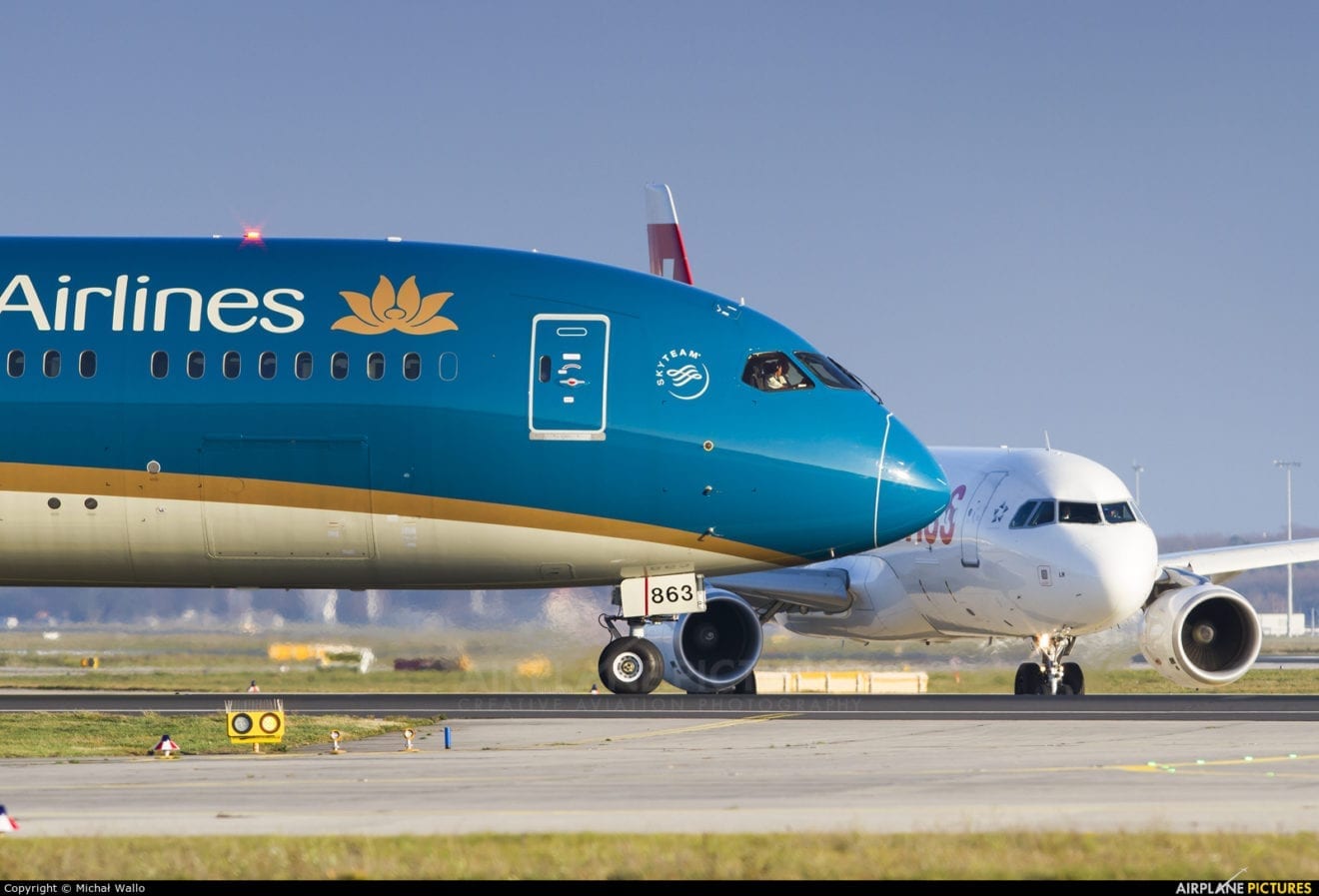
    Vietnam Airlines has been granted in-principle approval by the government to acquire 50 narrow-body aircraft without requiring a state guarantee.

    The approval, outlined in an official dispatch from the Government Office reflecting the views of Deputy Prime Minister Ho Duc Phoc, is intended to address future travel demand and phase out aging aircraft.

    Vietnam Airlines previously proposed buying 50 Airbus A320 NEO and Boeing 737 MAX jets, along with 10 spare engines, at a total estimated cost of around US$3.7 billion—equivalent to 1.6 times its current total asset value, based on 2024 financial data.

    The new aircraft will gradually phase out older A321 CEO planes as part of the airline’s fleet modernization plan.

    Earlier this month, during Phoc’s visit to the U.S., Vietnam Airlines signed a memorandum of understanding with Citibank for $560 million in funding for strategic projects, including the aircraft purchase. It also signed a separate MOU with Vietcombank to prepare additional capital for the acquisition.

    In September 2023, Vietnam Airlines signed a deal to purchase 50 Boeing 737 MAX aircraft, with deliveries expected between 2027 and 2030.

    Looking ahead, the airline projects it will need a fleet of 52 wide-body and 112 narrow-body aircraft by 2035. At present, Vietnam Airlines operates a fleet of about 100 planes, including more than 30 wide-body jets.

    According to its 2024 financial report, the carrier earned over VND113.7 trillion (US$4.37 billion) in revenue, transporting 22.7 million passengers and 314,700 tons of cargo. Its aircraft utilization averaged 11 hours per day, a 25% increase from 2023.

  • Bamboo Airways adds A321NEO ACF to fleet

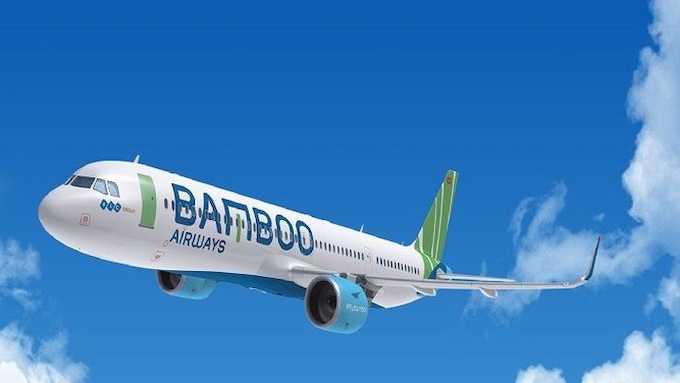
    Bamboo Airways adds A321NEO ACF to fleet

    The brand new aircraft model Airbus A321NEO ACF (also known as Airbus Cabin Flex) with number VN-A222 departing from Hamburg, Germany, landed at Noi Bai International Airport, Hanoi, at 6 a.m. on February 7, officially joining Bamboo Airways’s fleet.

    Airbus A321NEO ACF is the first narrow-body aircraft to join Bamboo Airways’s fleet in 2021, following the Embraer modern jet that did so in January 2021.

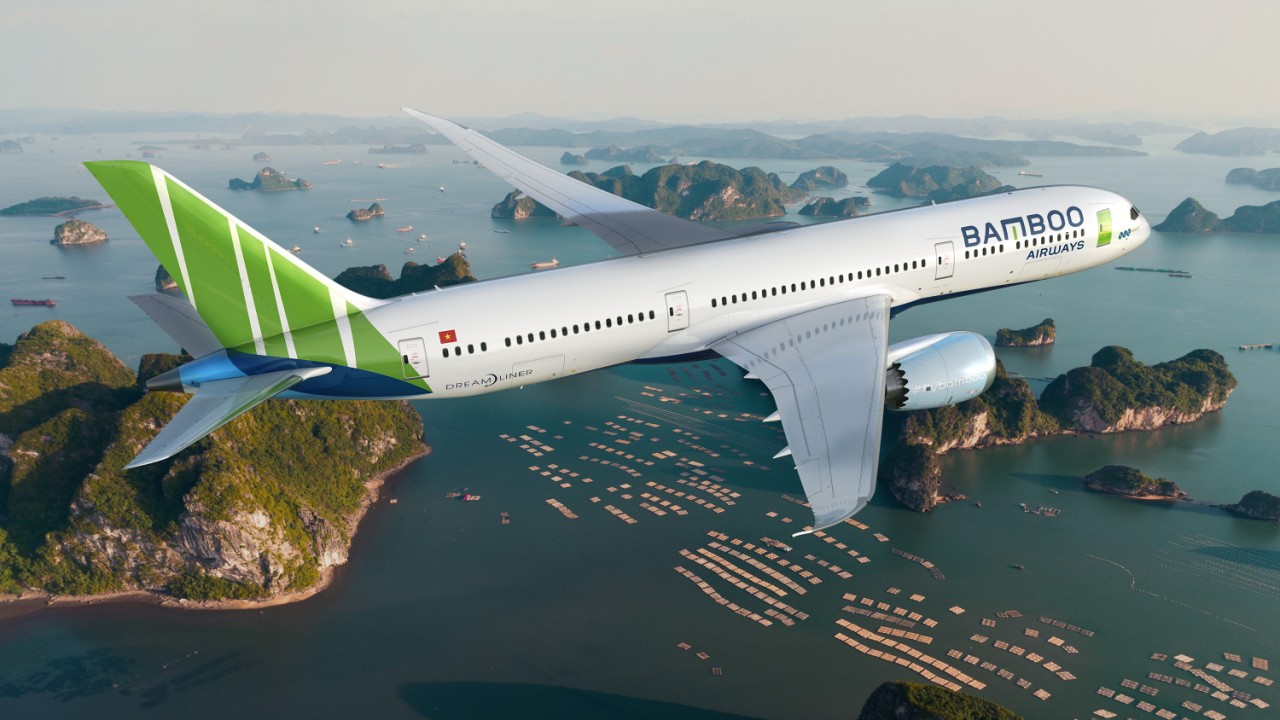
    With the addition of A321NEO ACF aircraft, Bamboo Airways will be operating A320/A321NEO fleet of 10 aircraft, together with wide-body Boeing 787-9 Dreamliner aircraft and regional jet Embraer 190, 195.

    The airline plans to expand its fleet to 100 aircraft by 2025, including at least 30 A321NEO aircraft under the purchase agreement signed with Airbus. After landing at Noi Bai, Bamboo Airways A321NEO ACF was disinfected in accordance with standard regulations and instructions from the government.

    The entire aircraft was sprayed and sanitized thoroughly in 30 minutes, with special focus on items and areas which are commonly touched by passengers such as dining tables, handrails, entertainment screens, etc.

    “Safety of pandemic prevention is always the ultimate goal of Bamboo Airways in all operating processes. Therefore, the comprehensive sterilization process is strictly followed by the airline to ensure that A321neo ACF aircraft meets the safety standards before being put into service,” said a representative of Bamboo Airways.

    As the newest aircraft in the A320 family, A321NEO ACF has an upgrade in cabin structure that enhances efficiency and hardware interior, advantaging both the operator and passengers.

    It is equipped with a cutting-edge engine, allowing at least 16 percent cut in fuel consumption, up to 75 percent reduction of noise and 50 percent of emissions cut.

    The aircraft is being addressed by Airbus as the base for the airline to continue developing a line of narrow-body aircraft for longer flight routes such as the A321LR.

    Bamboo Airways adjusts an additional upgrade of seating space, legroom, reclining as well as aisle area to suit Vietnamese passengers.

    Bamboo Airways reduces the A321NEO ACF passenger cabin design to 223 seats, instead of the original 244 seats, comprising two classes of business and economy. The interior design is sophisticated and prevalent, delivering the brand identity of the airline.

    Along with the sterilization and disinfection of aircraft, amid the pandemic, Bamboo Airways always implements a full range of prevention measures to ensure maximum safety for passengers and crew members.

    Dining tables in the cabin’s seats were turned over, the storage compartment, the toilet were also opened to be sprayed with disinfectants in every corner. The disinfection solution used was CH2200, applied according to medical standards and proven not to affect passengers’ health.
    `
    As soon as completing the fumigation procedure, A321NEO ACF aircraft will be put into operation in many key routes to meet the travel demand in the Lunar New Year and early spring. To this date, Bamboo Airways has not recorded any employee positive for Covid-19.

    In the morning of February 7, at Rach Gia airport, Bamboo Airways also held the opening ceremony of Hanoi – Rach Gia route, officially marking the milestone of Bamboo Airways as the first airline in history to operate direct flights connecting the capital with Rach Gia.

    This is a continuation to the airline’s launch of Ho Chi Minh City – Rach Gia route on February 4, 2021.

    In recent years, Bamboo Airways has implemented numerous programs and services, helping passengers to save travel costs and have safe travel options during the complicated and unexpected pandemic.

    For example, the Bamboo Pri-Flight charter service allows passengers group of under 20 people to rent a full flight using Bamboo Airways narrow-body jets.

    Customers can freely choose the itinerary and departure time, guaranteed social distancing, prioritize fast check-in and in-flight service with business-class standards, combined with the most convenient, private and secure flight experience.

    Bamboo Airways has operated over 50 routes, transporting nearly 7 million passengers with absolute safety.

    In 2020, the airline has operated more than 40 percent of capacity compared to 2019 and maintained the leading rate of on-time performance in Vietnam’s aviation industry.

    Bamboo Airways was also voted as “The Airline with the Best Service”, “The leading regional Airline in Asia.” The airline aims to occupy 30 percent of domestic aviation market share by 2021.
  • Airbus resells six unwanted jets built for AirAsia

    Airbus resells six unwanted jets built for AirAsia

    Airbus has found buyers for six aircraft from the A320neo family rejected by one of its main customers, Malaysia’s AirAsia, as it works off a surplus left by the coronavirus crisis, industry sources said.

    Unwanted jets have become an emblem of pandemic-induced problems in the aerospace industry that have come on top of a chill in ties between two of its major players.

    Tensions became unusually public when Airbus in April invited tenders for six jets that AirAsia had failed to take delivery of.

    It has now found homes for all six, the last of which is being delivered this month, a European industry source told Reuters. Airbus provided no comment.

    Airbus has been steadily increasing deliveries as it strikes deals with airlines to reschedule deliveries or store jets.

    It said last month it had reduced an overhang that it had been unable to deliver during the crisis by 10 units to 135 jets. The redeployment of AirAsia orders is expected to trim the surplus further as deliveries top output in November.

    Airbus is seeing strong demand, relative to the rest of the battered sector, for its A321neo jet, and the aircraft has broadly held its value, the European source said. It is sticking with plans to increase output of the single-aisle jets.

    The A321neo competes with the two largest versions of the Boeing 737 MAX, which won approval last week to re-enter service after a 20-month grounding in the wake of two crashes.

    Boeing is expected to re-sell dozens of 737 MAX whose buyers cancelled during the grounding, potentially depressing prices.

    According to the UK-based consultancy IBA Group, all aircraft have lost some value during the COVID-19 crisis but the A321neo is trading around 5% below its inherent value while the MAX is 10% below – hurt also by the recent grounding.

    Doubts remain, however, about demand for a larger Airbus, the A330neo, whose largest customer, AirAsia’s long-haul unit Air Asia X, is seeking new funding to survive.

    AirAsia said in April it would stop taking deliveries of all Airbus jets this year and review remaining orders.

    The move exacerbated concerns about demand in Southeast Asia, which was already struggling with overcapacity before the crisis.

    AirAsia’s relations with Airbus were further clouded when it was drawn into an Airbus bribery case before being cleared by local investigators, industry sources have said.

    AirAsia co-founders denied any wrongdoing in a sports sponsorship deal cited in a wider Airbus bribery settlement with prosecutors in January. The European source said AirAsia remained an important partner for Airbus.

  • AirAsia Receives Its First Airbus A321neo by

    AirAsia Receives Its First Airbus A321neo by

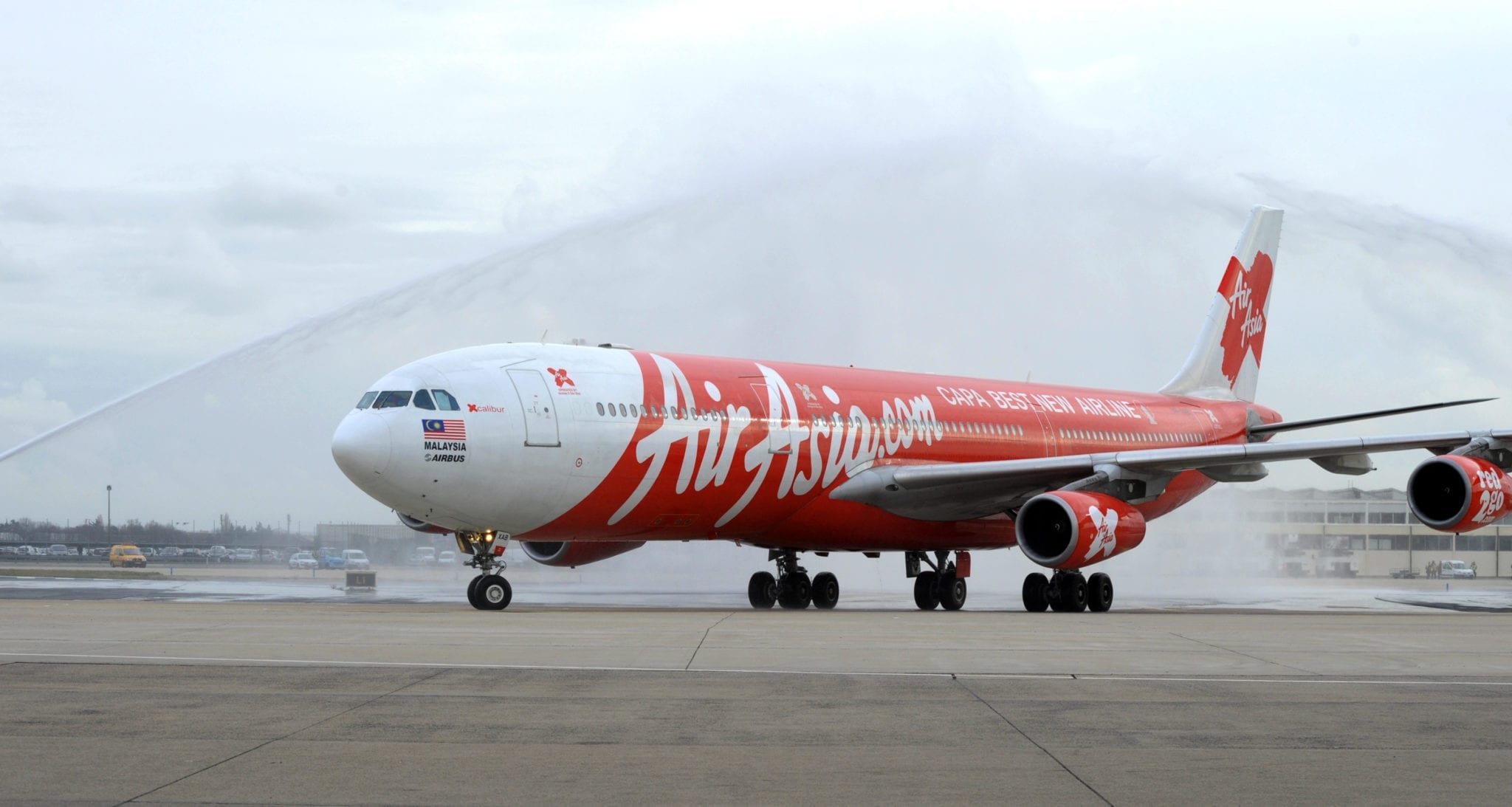
    At a delivery ceremony in Hamburg, Germany, budget airline Air Asia took delivery of its very first Airbus A321neo. The event took place on Wednesday under grey skies and wet conditions. The narrowbody long-haul jet will begin operating this week from AirAsia’s hub in Kuala Lumpur to cities across Asia. Destinations already identified include Kuching and Kota Kinabalu

    The Star also reports that it had its ferry flight back home after the ceremony, with over 30 media personnel from the Southeast Asian region as well as AirAsia staff. According to sources included FlightRadar24 and Planespotters, the airplane has been assigned the registration 9M-VAA and includes a unique and ‘funky’ livery.

    “We could not be more thrilled that it will be the new backbone of our operations across the AirAsia Group. With the 25% increase capacity and 10% reduction in cost per seat, the A321neo will enable us to maintain low fares so ‘Everyone Can Fly!’…This new generation aircraft delivers significant capacity and cost benefits which we can pass on to our guests in the form of great value fares and it also unlocks exciting network expansion opportunities allowing us to fly the aircraft for an additional one and a half hours longer.” -AirAsia Indonesia chief executive officer Veranita Yosephine

    A recent Twitter post about the delivery (shown below) mentions that this is the first aircraft out of the 353 ordered from Airbus. In fact, the delivery of this particular model is part of AirAsia’s plan to move from its existing fleet of A320neo aircraft to the larger A321neo.

    AirAsia revealed the order for the A321neo at the Paris Air Show this year. The airline announced the conversion of 253 A320neos to the larger A321neos. This will make AirAsia the largest customer in the world for this type.

    The larger A321neo offers 50 seats more over the current A320neos. Furthermore, it also provides 40% more cargo space as well as “expanded seating capacity with optimized use of cabin space”.

    The upscaling of the order back in June was welcomed news for Airbus. Although the quantity of aircraft ordered stayed the same, all of them being converted from existing A320 orders marks the biggest order for the larger variant of the narrowbody to date. It also signifies a massive vote of confidence for the type.

    The A321neo is the longest variant of the popular A320 family of aircraft. In fact, with the new improvements of the neo (new engine option), there is an expected 20% increase in fuel efficiency from the A321ceo (conventional engine option). Efficiency features include new generation engines and fuel-saving Sharklets.

  • Bamboo Airways inks deal for 26 Airbus aircraft

    Bamboo Airways inks deal for 26 Airbus aircraft

    Private airline Bamboo Airways will buy 26 new narrow-body Airbus aircraft as it expands operations. The value of the deal is $6.3 billion, based on list price, chairman Trinh Van Quyet told. With the previous order of 24 aircraft of the same model last year, the airline has ordered 50 in total.

    Quyet said that the first of the A321Neo planes will be delivered in 2022.

    Bamboo Airways had previously said that it was considering purchasing 25 narrow-body Boeing 737 MAX, which has been grounded internationally after two deadly crashes within a space of five months.

    Last month, Bamboo Airways had inked a deal with Boeing for 10 wide-body 787-9 Dreamliners worth almost $3 billion.

    Starting this year, the airline operates 17 domestic flight routes. It plans to start international flights next month, with Japan, Singapore and South Korea mentioned as possible destinations.

    It also plans to fly to Europe in June and directly to the U.S. by the end of this year or early next year.

    Bamboo Airways is one of five airlines operating in Vietnam. The others are state-owned Vietnam Airlines, budget airline Vietjet, low-cost carrier Jetstar Pacific and Vietnam Air Services Company (VASCO).

    Local airlines served almost 50 million passengers last year, up 10 percent from 2017.

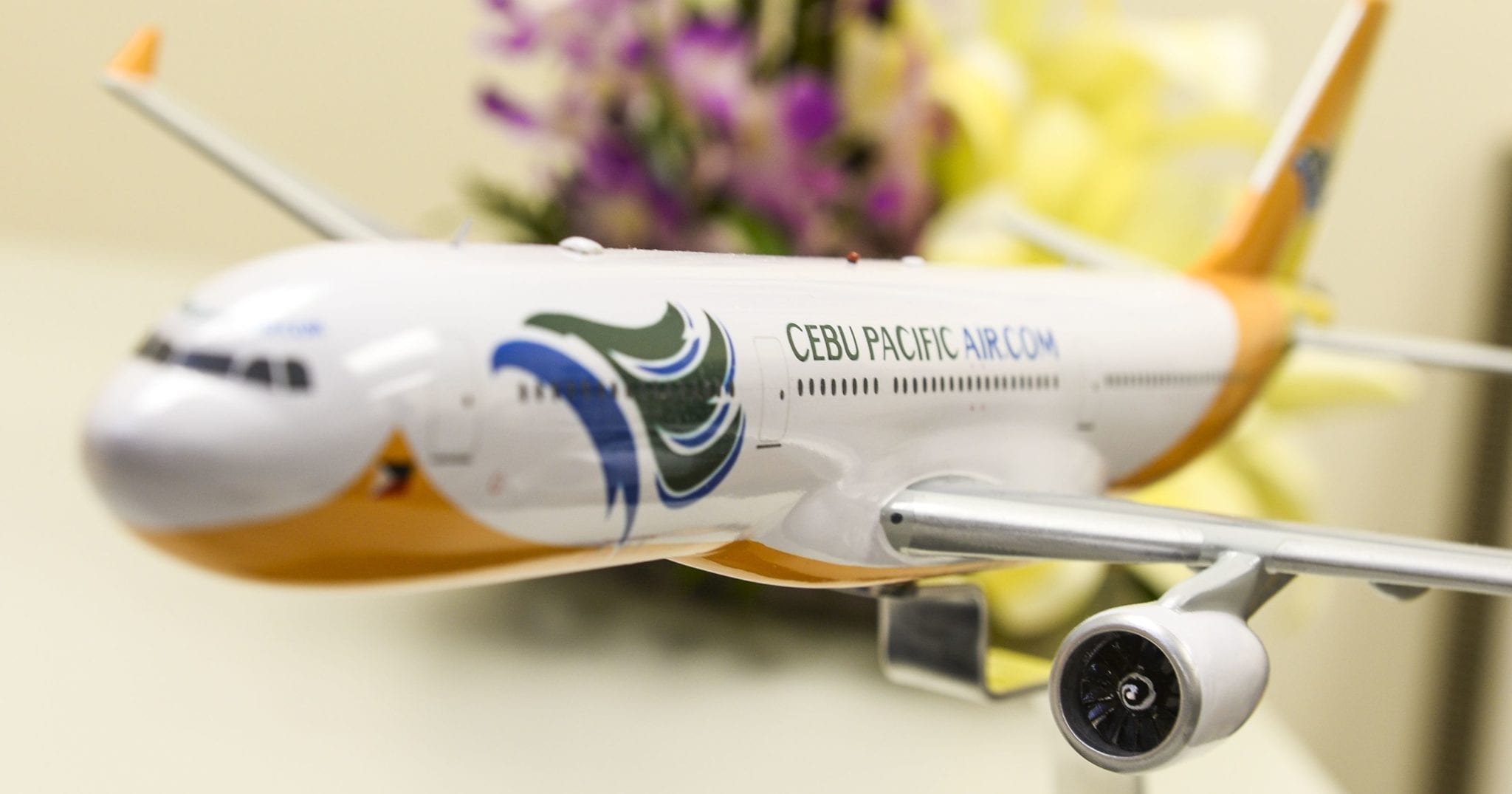
  • Cebu Pacific targets 12% passenger growth with A321 deliveries

    Cebu Pacific targets 12% passenger growth with A321 deliveries

    Cebu Pacific is targeting for passenger numbers to hit 22 million in 2018, a 12% increase from the year before.

    Last year, the Philippine low-cost carrier handled 19.7 million passengers, a 3% year-on-year increase, largely driven by an 8% growth in the number of international passengers. Performance was strong in its key markets of Sydney, Dubai, Hong Kong, Tokyo Narita, Taipei, and Seoul.

    “To reach our goal of flying 22 million passengers this year, we remain committed to offering a compelling route network where we can meet rising demand and sustain our year-round low fare proposition,” says JR Mantaring, the airline’s vice-president for corporate affairs.

    He adds that despite the higher fuel price, the weakening of the Philippine peso against the US dollar, security concerns and travel advisories, the carrier has “remained relatively resilient”.

    This year, the carrier is scheduled to add seven A321s from March through September, before its first Pratt & Whitney PW1100G-powered A321neo is delivered in November. These large narrowbodies will add capacity and also free up some A330s that are used on short-haul services to go further afield.

    Two of these A321s have already been delivered, while another three are scheduled to arrive “in the coming days”.

    Last year, operating profit slipped 17.3% to Ps10.1 billion ($194 million), as the growth in expenses outpaced that of revenue. Net profit fell 18.9% to Ps7.91 billion.