Tag: aasia

  • Jollibee Foods Corporation gears up to open 600 stores this year

    Jollibee Foods Corporation gears up to open 600 stores this year

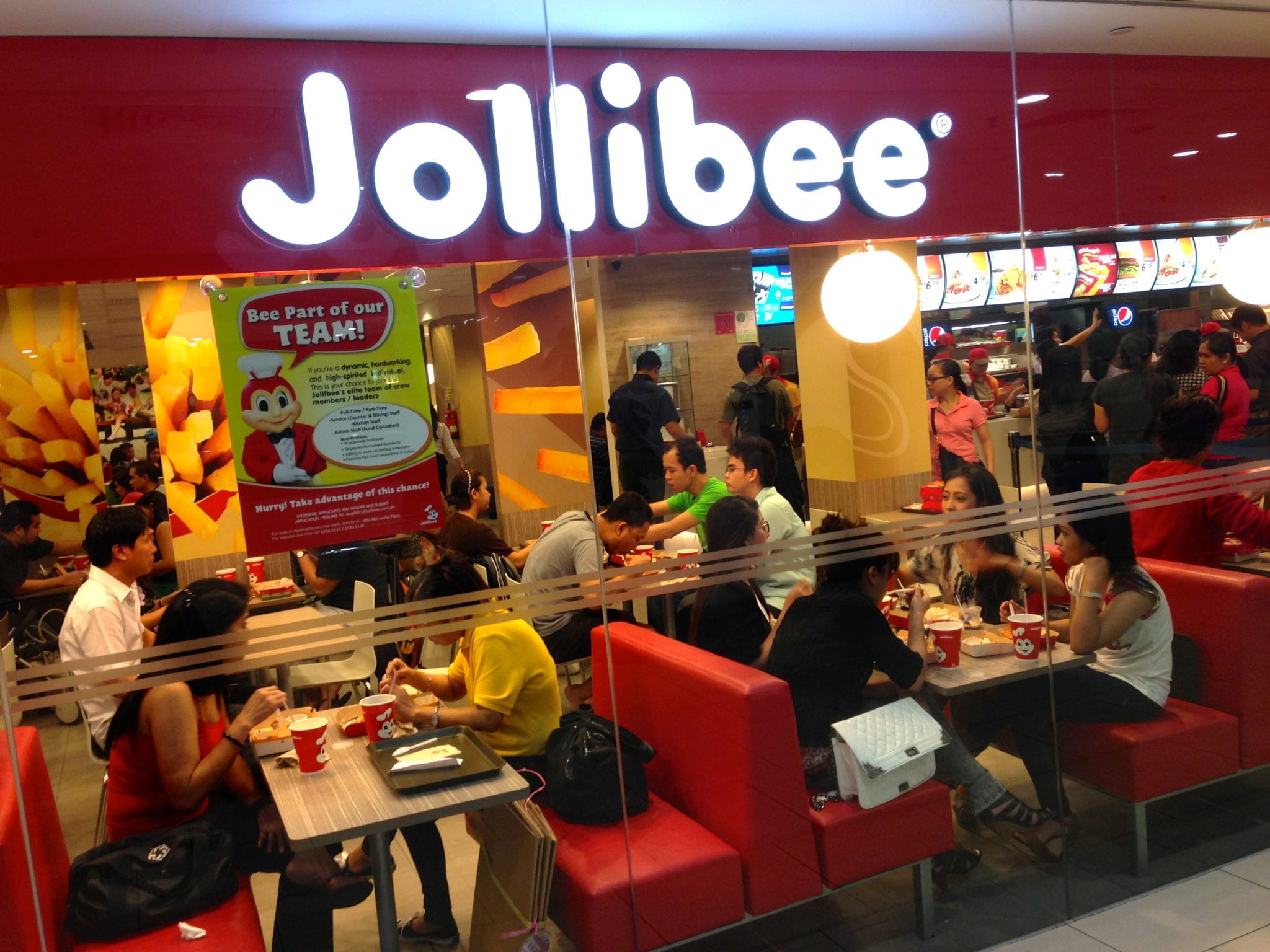
    Home-grown fast food giant Jollibee Foods Corp. (JFC) is planning to expand its global presence by opening up to 600 new stores this year.

    In a Thursday disclosure to the Philippine Stock Exchange, JFC said it plans to open 550 to 600 owned and franchised stores in 2023.

    With this, the company expects its capital expenditures to range from P17 billion to P19 billion this year.

    This year, the quick-service restaurant chain’s expansion plan could be the biggest in its history, exceeding the record 542 stores openings in 2022.

    At the end of 2022, JFC operated 6,480 stores worldwide —3,285 in the Philippines and 3,195 internationally.

    The company booked a net income of P7.338 billion in 2022, up 33.4% from P5.502 billion in 2021 driven by P211.9 billion in revenues, which grew by 38% year-on-year.

    “Looking ahead, while we expect macroeconomic challenges to persist in 2023, we are confident that the JFC Group is resilient and well-positioned to drive near-term growth. We have clear priorities on profitability while we continue to invest strategically to deliver long-term growth and value for our shareholders,” said JFC CEO Ernesto Tanmantiong.

  • World’s first Oreo cafe launches in US

    World’s first Oreo cafe launches in US

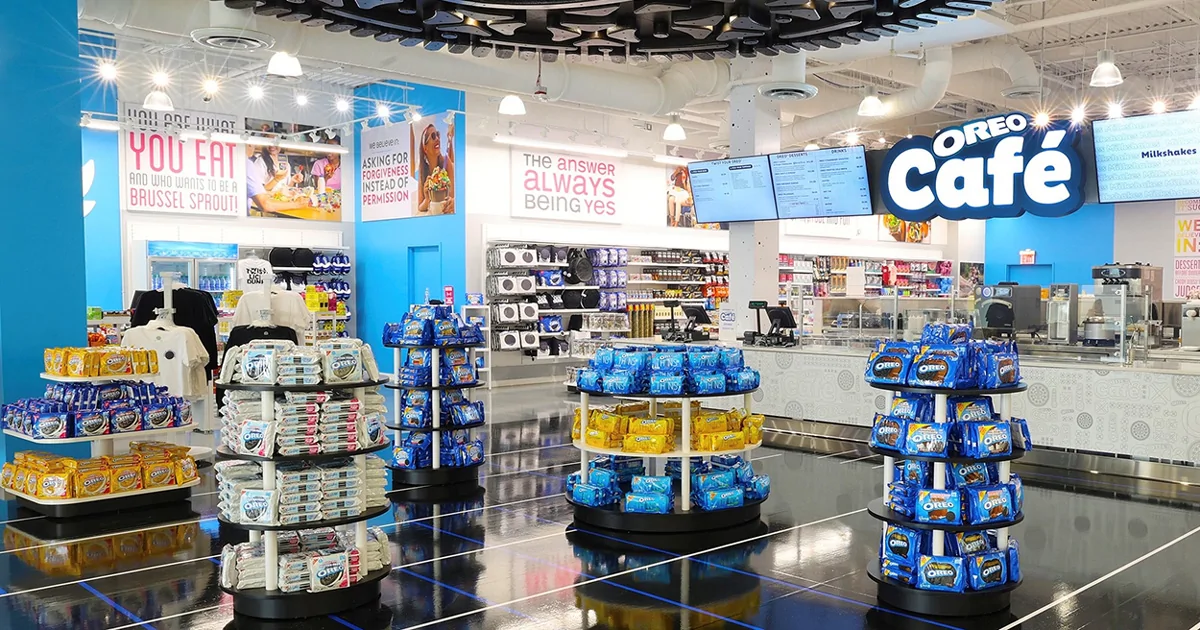
    A sweets shop at New Jersey’s American Dream mall just got even sweeter. The first-ever Oreo cafe opened last week on the top floor of the candy department store IT’SUGAR, a candy and gift shop that measures 22,000 square feet across three levels. The store features a menu of Oreo-inspired desserts, including do-it-your-self customizable treats, and limited-edition cookie merchandise.

    Located in the Meadowlands complex in East Rutherford, American Dream is a 3 million square foot commercial and entertainment center that opened in 2019 after nearly two decades of delays.

    In addition to dozens of retailers and food vendors, the mall includes DreamWorks Water Park, the largest indoor water park in North America, a Nickelodeon Universe Theme Park, an indoor ski and snow resort, LEGOLAND, an aquarium, mini-golf, and more.

    The immersive Oreo cafe includes a treats bar where visitors can customize sweets or pick from the menu of Oreo desserts, like a Waffle Sundae with baked-in Oreo pieces and Oreo cookies & cream cheesecake with Oreo cookie mousse.

    Visitors can build their own treats by choosing a dessert base, which can be a waffle, ice cream sandwich, cone, or milkshake, and then pick from more than a dozen toppings. According to the shop, there are over 200 possible combinations. Lovers of the famous cookie can even purchase Oreo products and merchandise, like tote bags, apparel, and home decor.

    The Oreo cookie actually has roots in the area. Just across the Hudson River, the cookie was invented at the former Nabisco factory, the present-day site of Chelsea Market. Nabisco wanted to create a cookie to compete with Hydrox, a creme-filled sandwich cookie. The company’s lead food scientist Sam Porcello created the recipe for the filling and the Oreo Biscuit was first sold to a grocer in Hoboken in 1912. Today, over 60 billion Oreo cookies are sold each year around the world.

  • Google is bringing a huge change to the Play Store

    Google is bringing a huge change to the Play Store

    As of this month onwards, Google is completely changing the game when it comes to the development and functionality of applications published on the Google Play store.

    Until now, most Android apps have been submitted to the Play Store packaged in the traditional APK format, or Android Package Kit. In this form, an app is packaged into one single bundle that goes up on the Play Store, and is then downloaded in that same compact form to desiring Android customers, with all the odds and ends included.

    As simple as it sounds, this is hardly the optimal delivery standard, mainly because it may burden the user with much more than they will need or use on their particular device.

    From August 1, however, Google is obligating Android software developers to deliver all their applications via the newer AAB (Android App Bundle) framework. The good news is that the shift won’t constitute a huge hassle for developers, as they don’t have to change too much on their end between the two standards.

    Now, you may be thinking that this probably only concerns developers, and won’t affect the everyday end user—but that would be far from the truth. The new app delivery format allows for much greater compartmentalization of components within the app, prioritization, and optimization in order to deliver the smoothest experience to whichever Android device you are using.

    Here is what this all means:

    1. No unnecessary app clutter

    In the older APK format, if a developer wanted their Android app to be usable on multiple Android device types (smartphones and tablets, for example), they would go one of two routes. In the first scenario, they would create all the necessary particularities and differing graphics for each device that will use the app, and bundle them all together into a single application on the Play Store.

    When a user downloads the APK app on their phone, then, they often end up with unnecessary odds and ends that are particular to other devices, which they’ll never use or need on their own phone.

    Alternatively, developers could also create and publish separate APK’s for each Android device the app will be run on, but that’s obviously inconvenient and a general hassle.

    But with apps bundled in the AAB framework, the Play Store is able to smartly split up the bundle into separate APK’s, recognizing which one is right for your device, and thus only downloading what’s necessary. These optimized APK’s are 15% more compact than their old counterparts, Google claims.

    2. Effective Compartmentalization

    The AAB framework allows apps to be broken down into components with differing targets and priorities, which may be downloaded one at a time to the end user, as needed. The Play Store will then automatically know which version or components to deliver to a user’s specific device, without cluttering them with unnecessary packages.

    Games or other heavier, multi-layered apps will also have the ability to be downloaded to your phone part by part, as the need arises. If you start a new graphics-heavy game, then, the Play Store could download it to your device level by level (or a few levels at a time), for example—so you don’t have to bother with insane loading times every time you open the app.

    Developers also have the freedom to play around with optional add-ons, such as augmented reality—which may work on some devices but not others—which come separately and are only downloaded to the appropriate device, when needed.

    3. Reduced load on cheaper phones

    While the Google Play Store changes will certainly streamline the average app user experience even on the newest of flagships, those with older or slower phones should see a significant difference in load times and reduced device strain.

    Because older or low-tier phones generally have weaker processors and less storage space, they will see the biggest improvement in the way newer AAB apps behave.

    Google created AAB in 2018

    The new AAB format was actually launched along with Android 9 in 2018, and has been free for developers to use at their own discretion this whole time. It’s also completely open-source and available for other application libraries to adopt if they choose.

    Google reports that already one thousand of the most popular apps are built on AAB’s, and there are already over 1 million live apps using the newer format.

    While AAB is not a novel framework in and of itself, with the new requirement that all Google Play apps be submitted in AAB’s, Google is simply enforcing the already trending, more efficient format across the Android platforms for the benefit of the end user, and at no serious cost on the development side.

    Traditional APK’s that are already on the Play Store will stay and work just fine, as only future apps will be impacted.

    The one downside, as noted by Wired, is that because AAB is Google’s handiwork, and Google controls the full packaging and verification process, the tech giant is tightening the rains on the Play Store ecosystem, wielding complete control over app distribution in the foreseeable future.
  • Deutsche Bank Sidesteps Archegos Hit

    Deutsche Bank Sidesteps Archegos Hit

    The German bank pulled off what Swiss rivals failed to: avoid major losses from the collapse of the family office-hedge fund.

    Frankfurt-based Deutsche Bank swung to a net profit of 908 million euros ($1.1 billion) in the first quarter, from a loss of 43 million euros year-ago, it said in a statement on Wednesday. The result was powered by its investment bank, which is still feeding its business with revenue.

    In doing so, the German bank largely avoided what is now more than $10 billion in losses from Archegos, which hit Credit Suisse the worst but didn’t leave UBS unscathed either. CEO Christian Sewing is now in his fourth year of reviving Deutsche Bank, following years of outsize risk-taking.

    The bank had quickly offloaded roughly $4 billion in collateral against Archegos’ business before others. On Tuesday, Deutsche reported investment banking revenue surged by nearly one-third in the last three months, illustrating that Deutsche is still heavily reliant on Wall Street.

    By contrast, revenue in its wealth management arm overseen by Claudio de Sanctis edged two percent lower. The unit won 7 billion euros of fresh money into investments products and lent 2 billion euros more to clients in the quarter.

    Deutsche’s international private bank hiked overall assets to 267 billion euros, from 252 billion euros at year-end. The bank’s quarter overall represents its healthiest in seven years.

    It comes against the backdrop of Credit Suisse sliding deeper into crisis: the Swiss bank took the biggest Archegos hit on Wall Street – 4.4 billion Swiss francs ($4.7 billion) – or nearly half the total which has surfaced publicly so far. UBS took a $774 million one, it reported on Tuesday, as well as another $87 million in the coming quarter.

  • Operators shift IT spend to IT services and software

    Operators shift IT spend to IT services and software

    The 4Q17 Telecom Infrastructure Services Benchmark report by Technology Business Research (TBR) revealed that the spending shift by operators towards offerings from IT services‐ and software‐centric companies may spell bad news for equipment vendors. The spend coincides with an industry that itself is following the global digital transformation movement.

    TBR Telecom senior analyst Chris Antlitz noted that operator spend on digital‐related initiatives will accelerate over the next few years. “IT services companies will continue to garner a disproportionate share of digital‐related, software‐centric business from operators as their competencies and capabilities align with what operators need to pursue digital transformation,” he added.

    Lower RAN (radio access network) volumes globally significantly impacted most RAN vendors’ telecom infrastructure services (TIS) revenue throughout 2017. TBR’s research suggests the global RAN market peaked in 2015 with product-attached services revenue now tapering off as payments are fully recognized. RAN vendors are responding to this headwind by diversifying into other areas, such as the IT domain, and are concurrently restructuring their network deployment businesses to profitably align with the new demand level.

    The global RAN market is likely to bottom out in 2019 and then return to growth in 2020 as 5G deployments ramp up. Until then, operators are likely to continue to shift spend from RAN and RAN‐related services to other business areas.

    Huawei spokesperson noted this trend towards IT, software and services, which forced the company to also make a course correction. “We have been actively investing in and developing these capabilities for some time. In addition, we have built an active global ecosystem of industry partners to support this industry shift, and count many of the world’s leading IT and software providers among our strategic partners today.”

    It is a similar comment from long time equipment vendor Nokia. Danial Mausoof, head of Strategic Marketing for Asia Pacific and Japan, commented that Nokia has taken steps to help the industry address this.

    “As an example, we are working on a common software foundation (CSF) which allows for a scalable library of common components and this gives us greater speed and flexibility by using pre-integrated blueprints to address the customer’s needs. In addition, we have identified key enterprise verticals such as energy and public sector transportation where we are able to leverage our extensive solution offerings to help industry players accelerate their digital transformation journeys,” he added.

    Not just operators

    “We do see the trend and it is not only happening to operators but many large enterprises as well. Apart from the cloud security and cloud infrastructure are more mature so that buying services on the cloud than the actual equipment on-site is more viable, said Linda Hui, managing director of Ruckus Hong Kong and Taiwan.

    “Secondly, many enterprises find that the technology has moved very fast, hence, before they can amortize the equipment, they need to upgrade their infrastructure to cope with the existing traffic, hence, it will be easier for them to just subscribe the service.”