Tag: AB InBev

  • AB InBev Posts Strong Q1 Profit Despite Volume Declines and Global Headwinds

    AB InBev Posts Strong Q1 Profit Despite Volume Declines and Global Headwinds

    Anheuser-Busch InBev (AB InBev), the world’s largest brewer, reported a 7.9% increase in first-quarter operating profit, far exceeding analysts’ expectations of a 3.1% gain. The profit surge was driven primarily by improved margins, even as global beer sales volumes declined.

    Margins Expand Despite Lower Sales

    While global beer volumes dipped 2.2% in the quarter ending March 31, AB InBev managed to expand its margins through reduced sales costs and more efficient overhead management. This operational discipline helped the company outperform its rivals, including Heineken, which also reported falling volumes.

    CEO Confirms Positive Outlook for 2025

    CEO Michel Doukeris credited the company’s solid performance to consistent strategy execution:

    “The consistent execution of our strategy by our teams and partners drove a solid start to the year and reinforces our confidence in delivering on our outlook for 2025.”

    Challenges in Key Markets

    In the United States—one of AB InBev’s most important markets—revenues fell 5.1% year-on-year. The company attributed the drop to fewer selling days, poor weather, and the timing of Easter. Notably, AB InBev did not directly mention potential impacts from U.S. tariffs, unlike competitors Heineken and Carlsberg, who expressed concerns about how tariffs might affect consumer spending.

    Aluminium Tariffs Could Pose Future Risk

    The company may face rising costs due to potential U.S. tariffs on aluminium, a key material used in beer cans. Analysts warn that if tariffs weaken the broader economy, consumer spending on discretionary items like beer could also fall.

    Struggles in China Offset Gains Elsewhere

    China remains a challenging market for AB InBev, with first-quarter sales volumes down 9.2%. The brewer’s premium brand portfolio has struggled in the face of a sluggish economic recovery, causing the company to lose ground to competitors.

    Strategic Response: Invest in Core Brands and At-Home Consumption

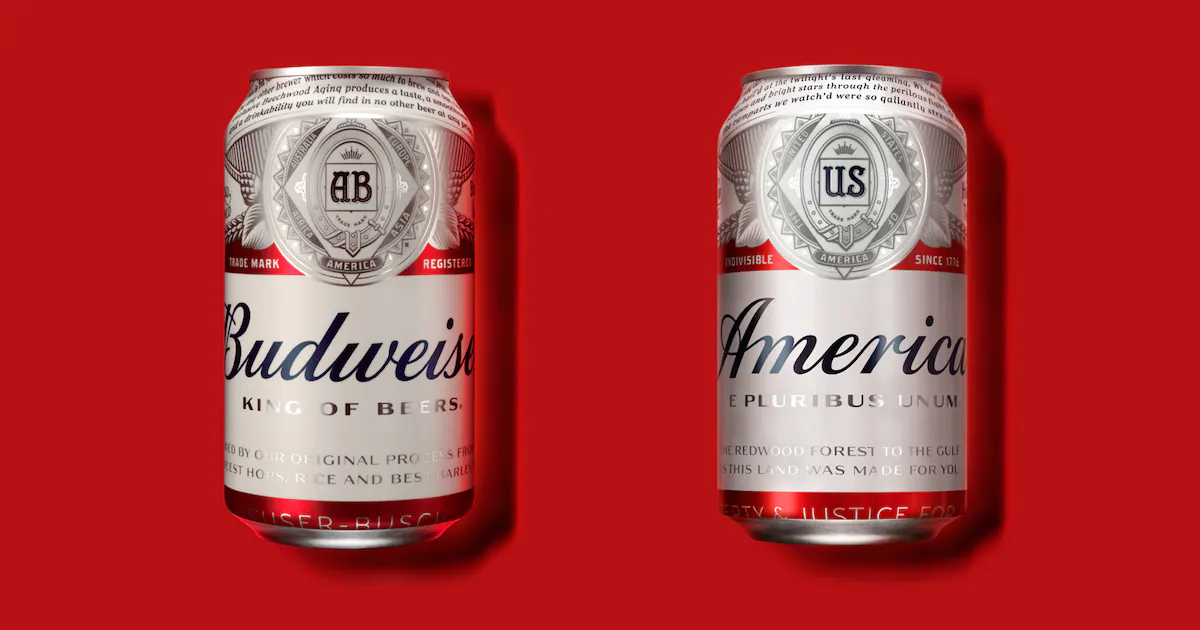
    In response to shifting consumption patterns, AB InBev is increasing investment in key brands like Budweiser and promoting at-home beer consumption, as demand in bars and restaurants softens.

    Questions & Answers

    1. What was AB InBev’s Q1 operating profit growth, and how did it compare to expectations? The company reported a 7.9% rise in operating profit, more than double the 3.1% increase analysts had forecast.

    2. Why did U.S. revenues decline despite overall profit growth? U.S. revenues fell 5.1% due to fewer selling days, poor weather, and a late Easter, which offset gains from margin improvements.

    3. How is AB InBev addressing market pressures in China and globally? The brewer is ramping up investments in key brands and focusing on boosting at-home consumption as traditional bar and restaurant sales come under pressure.
  • Retailers to raise prices of alcoholic beverages

    Retailers to raise prices of alcoholic beverages

    South Korea’s discount chains and convenience stores said Thursday they will raise prices of beer and soju, a popular Korean distilled beverage, beginning next week.

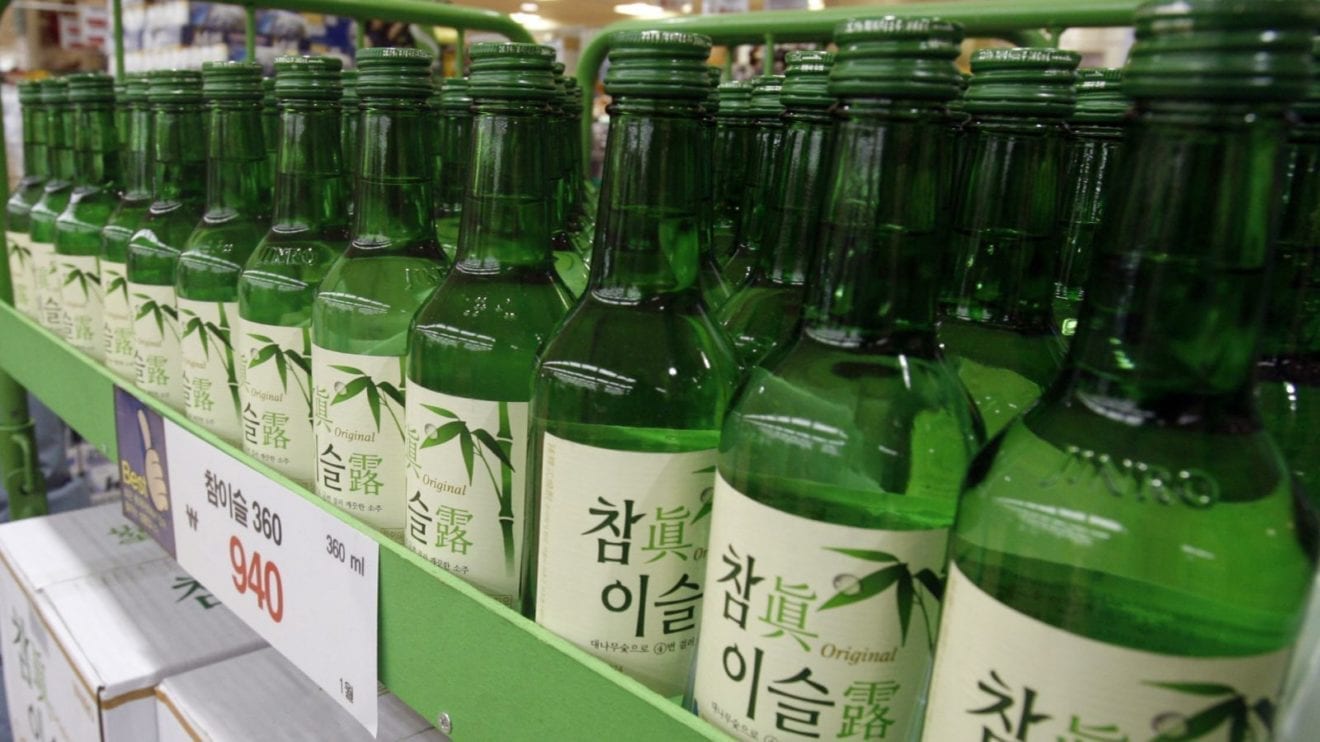
    CU, a major South Korean convenience store chain, is set to raise prices of two brands of 360 milliliter soju bottles — Hite Jinro’s Chamisul and Lotte Chilsung Beverage’s Chum-Churum — to 1,700 won (US$1.4) from 1,600 won.

    The convenience store also plans to raise prices of Oriental Brewery’s Cass and its rival Hite Jinro’s Hite to 1,900 won each from 1,850 won and 1,800 won, respectively.

    GS25 and Seven Eleven, two other major convenience store chains, also plan to follow suit.

    E-Mart, the No. 1 discount store chain in South Korea, is also set to sell a 500 ml beer bottle for 1,410 won, up from 1,330 won. It will also raise soju prices to 1,220 won from 1,140 won.

    Lotte Mart, a discount store chain operated by South Korea’s retail giant Lotte Group, said it will raise prices of a 640 ml beer bottle to 1,830 won from 1,750 won.

    The planned price hike came in response to a recent government decision to raise a subsidy for empty bottles of beer and soju.

    Consumers can now receive 100 won from retailers in return for handing over an empty soju bottle, compared with 40 won in the past. In case of beer, consumers can receive 130 won, up from 50 won when they return an empty bottle of beer.

    The price hike came just months after Oriental Brewery Co. and Hite Jinro raised their beer prices by an average 6 percent and 6.33 percent, respectively.

    AB InBev, the world’s largest beer producer, purchased Oriental Brewery Co., South Korea’s biggest brewer, in 2014.


  • One of the final hurdles for biggest beer deal almost cleared

    One of the final hurdles for biggest beer deal almost cleared

    Anheuser-Busch InBev’s $107bn acquisition of SABMiller is nearing Chinese approval after the companies agreed to divest the maker of Snow beer, the world’s top-selling brand, according to people familiar with the matter.

    Approvals for both transactions could come as soon as this month based on typical review timelines, clearing one of the final hurdles for the biggest beer deal in history.

    DEBT BREWING: AB InBev agreed to buy SABMiller in October for about $110bn. Picture: REUTERS

    Though China’s Ministry of Commerce may attach some conditions to the deal, including the Snow divestiture, regulators see no major hurdles, said one of the people, asking not to be identified because the deliberations are private. Some local beermakers told the ministry that they don’t object to the takeover as it won’t have a big impact on the Chinese market, another person said.

    SABMiller shares closed up 3 pence to £43.06 in London, erasing an earlier decline. AB InBev shares fell less than 1% to €114.95 in Belgium.

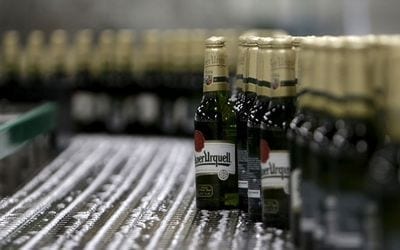
    The merged company would redraw control of the global beer market. Following divestitures, the deal will keep Budweiser, Beck’s and Stella Artois under AB InBev’s roof, while ceding control of brands including Miller in the US and Peroni and Pilsner Urquell in Europe.

    In China, the companies agreed to sell SABMiller’s 49% stake in its joint venture with China Resources Beer, which controls Snow beer, back to its partner.

    Deals unravelled

    In clearing these global hurdles, the beer megadeal contrasts with other big proposed tie-ups that unravelled amid antitrust scrutiny, including Halliburton’s failed bid for Baker Hughes, Staples’s foiled merger with Office Depot and General Electric’s decision to abandon the sale of its appliance business to Electrolux. In the beer deal, the sides were aggressive in offering divestitures from the start — including the plan for SABMiller to sell Snow — which may have ultimately helped reduce regulatory resistance, antitrust lawyers have said.

    The US Justice Department may clear the tie-up as soon as this month, people familiar with the process have told Bloomberg News. SA has yet to bless the deal, which has hit some obstacles amid protests from local unions.

    AB InBev and SABMiller declined to comment. China Resources and the commerce ministry didn’t immediately respond to queries.

    The merger plan, which the two companies reached in November as a way to gain access to emerging markets, has already won antitrust approval in more than a dozen jurisdictions, including the European Union.

    In March, China Resources announced it would buy out SABMiller’s stake in their Chinese venture for $1.6-billion. That deal is also nearing approval from China’s commerce ministry, the people said.

    In the US, AB InBev has agreed to sell SABMiller’s stake in the MillerCoors joint venture. It may also have to agree to further conditions related to beer distribution, according to people familiar with the matter. Smaller brewers and wholesalers want officials to restrict AB InBev’s control and influence over how beer gets on to store shelves, according to the people.