Retail News CRM

Tag: Abercrombie

  • Abercrombie & Fitch Conquers Asia: Opens New Store in Manilas SM Mall of Asia

    Abercrombie & Fitch Conquers Asia: Opens New Store in Manilas SM Mall of Asia

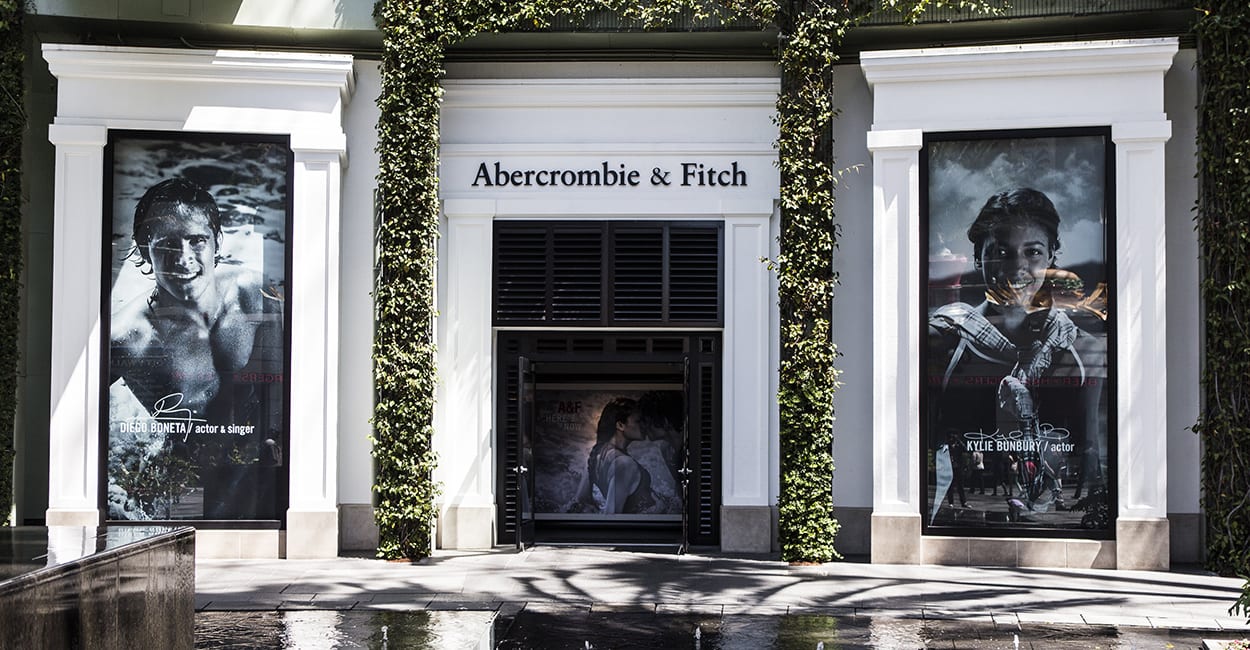
    Abercrombie & Fitch, the well-known American fashion label, has extended its global reach with the opening of a new store in the Philippines. Nestled within the bustling SM Mall of Asia, this marks a significant milestone for the brand’s continued foray into the Asian market.

    Continued Expansion into Asia

    Abercrombie & Fitch’s expansion into Asia has been strategic and steady. The brand recently widened its presence in India through a strategic franchise agreement with Myntra Jabong India Private. Besides this, it also established a retail presence in Jakarta and further added three Abercrombie & Fitch and Hollister stores in Hong Kong.

    To facilitate this expansion across Southeast Asia, Abercrombie & Fitch has partnered with MAP Group, a leading retail partner in the region. Steven Sare, Abercrombie & Fitch’s Managing Director for Asia-Pacific, expressed his delight at the warm reception the brand received at the SM Mall of Asia. He praised the new retail store’s aesthetic appeal and thanked his global team for their unwavering support during the rollout.

    Future Endeavors and Financial Highlights

    While the physical store is now open, Abercrombie & Fitch’s official website for the Philippines is still under development. The brand’s increased focus on expanding its Asian presence has been highly profitable. Abercrombie & Fitch Co, the controlling group, reported sales of US$46.5 million in the Asia-Pacific region in its fiscal first quarter. This represents a 24% increase from the previous year, making it the fastest-growing region for the group.

    Questions & Answers

    Where is Abercrombie & Fitch’s newest store located?
    The latest Abercrombie & Fitch store has opened in the SM Mall of Asia, Philippines.

    Who is Abercrombie & Fitch’s retail partner for Southeast Asia expansion?
    Abercrombie & Fitch’s is partnering with MAP Group for its Southeast Asia expansion.

    How has the brand’s expansion into Asia impacted its financial performance?
    The brand’s expansion into Asia has resulted in a significant boost to its sales. Abercrombie & Fitch Co reported US$46.5 million in sales in the Asia-Pacific region in the fiscal first quarter, marking a 24% increase from the previous year.
  • Abercrombie & Fitch Q2 Earnings Soar, But Tariffs Threaten Future Profits

    Abercrombie & Fitch Q2 Earnings Soar, But Tariffs Threaten Future Profits

    Abercrombie & Fitch reported a record-breaking performance for Q2, driven in large part by a 19% sales increase from its subsidiary, Hollister. This performance prompted the company to revise its full-year sales forecast upward. However, not all was rosy, as the Abercrombie brand itself recorded a 5% fall in sales, following a 26% increase in the previous year.

    Detailed Business Performance

    Net sales for the quarter that ended on August 2nd soared by 7% year on year to reach US$1.2 billion, with comparable sales increasing by 3%. Operating income rose to $207 million, a significant jump from the $176 million recorded during the same period the previous year.

    The performance varied by region, with the Americas posting an 8% growth, and the Asia-Pacific region registering a 12% increase. However, the Europe, Middle East, and Africa (EMEA) region saw a slight decrease of 1%.

    During the announcement of the results, CEO Fran Horowitz lauded the resilience demonstrated by the company. She stated that the company outpaced its expectations by achieving a growth of 7% from the previous year and exceeding profitability expectations. The company also returned a considerable portion of its profits, $50 million, to its shareholders.

    Horowitz expressed optimism about the future, stating the company is entering the second half of the year with a proactive approach, backed by an upbeat sales outlook that builds on the previous year’s record results.

    Challenges and Opportunities

    Despite the positive outlook, the company issued a warning about potential challenges. It stated that tariffs on imports from Vietnam, Indonesia, Cambodia, and India are projected to add $90 million in costs this year. This is a significant increase from the company’s May forecast of $50 million in tariff expenses, despite mitigation efforts.

    However, industry experts have recognized Abercrombie & Fitch’s momentum. Neil Saunders, MD at GlobalData, pointed out that the company’s consistent execution has been pivotal to its growth. He praised the company’s strategies, citing the successful store and merchandising efforts, the rate of product refresh, strong seasonal marketing, and responsiveness to trends.

    Saunders also commended Abercrombie Kids’ strategic move into the wholesale market as a smart growth strategy. He highlighted that the US kids’ wear market was valued at $82.1 billion in the previous year, and Abercrombie & Fitch only has a small share of this market. Therefore, expanding through wholesale could provide fast access to new customers and require less capital than opening additional stores.

    Questions & Answers

    What drove Abercrombie & Fitch’s record Q2 performance?
    The main driver was a 19% sales increase from Hollister, a subsidiary of Abercrombie & Fitch.

    How did Abercrombie & Fitch’s performance vary by region?
    Sales in the Americas and Asia-Pacific regions grew by 8% and 12% respectively, while the Europe, Middle East, and Africa region recorded a 1% decrease.

    What challenges does Abercrombie & Fitch anticipate for the future?
    The company expects tariffs on imports from Vietnam, Indonesia, Cambodia, and India to add $90 million to its costs this year.

  • Abercrombie sales soar after online focus, store reopenings

    Abercrombie sales soar after online focus, store reopenings

    With social distancing becoming the new norm due to the coronavirus pandemic, consumers have taken to digital shopping, which in turn is boosting online sales. Catching up with the current trend, the majority of retailers are improving their websites and mobile apps, and omnichannel capabilities to serve customers better. One such retailer is Abercrombie & Fitch Co. ANF, which has witnessed robust digital growth over the past few months.

    Despite a sluggish top line in second-quarter fiscal 2020 owing to pandemic-induced store closures and consumers’ altered shopping habits, a solid online show provided Abercrombie with the much-needed shield. Even as stores reopened after almost seven long weeks following local health guidelines, the company continued to witness the solid online performance. Digital net sales surged 56% year over year to $386 million in second-quarter fiscal 2020, representing nearly 55% of the top line. The upside can be mainly attributed to improved traffic, higher conversion, and AUR.

    Encouraged by the spike in online demand, management has increased focus on the omnichannel shopping experience, including home delivery, buy online and pick-up in-store, buy online ship-to-store facility, same-day delivery as well as mobile app services. Notably, combined total visits to the company’s website and mobile app increased 25%. Also, app visits alone rose approximately 50% in the quarter.

    Other retailers benefiting from the sudden surge in online sales include Hibbett Sports HIBB, Gap GPS, and PVH Corp. PVH. Notably, Hibbett’s online sales advanced 212.2% year over year in the fiscal second quarter on rising in new customers. Also, Gap’s e-commerce channel recorded 95% growth during the fiscal second quarter. Moreover, PVH Corp’s e-commerce sales improved more than 50% year over year during second-quarter fiscal 2020 driven by strong online sales growth in all regions, even after the reopening of stores.

    Coming back to Abercrombie, the company reopened roughly 90% of its store base at the end of second-quarter fiscal 2020. In the United States, nearly 85% of the company’s store base opened at the end of the second quarter. The company’s entire store base opened in the EMEA region, while the APAC region had 96% of its stores open at the end of the quarter. Further, it has been making efforts to optimize store fleet to improve store productivity. So far through Aug 27, 2020, the company has closed 14 stores, while opening nine. This move will help reduce expenses by nearly $200 million this year.

    All said, we believe that strong digital growth and improved trend in reopened stores are likely to aid this Zacks Rank #3 (Hold) stock, which has lost 21.3% year to date compared with the industry’s fall of 15.7%. You can see the complete list of today’s Zacks #1 Rank (Strong Buy) stocks here.

  • Abercrombie & Fitch sales continue to climb

    Abercrombie & Fitch sales continue to climb

    Abercrombie & Fitch sales rose for the second consecutive year as its restructure and new store format begins to pay off. Comparable sales rose by 3 per cent in the year to February 2, to US$3.6 billion and operating income, after excluding extraordinary items, was $138.6 million compared to $100.8 million last year. However fourth-quarter sales fell by 3 per cent.

    CEO Fran Horowitz said the fashion retailer achieved an improvement in gross profit and reduced operating expenses, resulting in a 77-per-cent improvement in net income.

    “We continue to keep the customer at the centre of everything we do and are excited about the future of our brands. Our transformation initiatives are gaining traction and keeping us on track to deliver our previously disclosed fiscal 2020 targets.”

    Neil Saunders, MD of GlobalData Retail, said while the sales decline during the fourth quarter looks poor on the surface, the dip is a function of a calendar shift and a shorter trading period compared to last year.

    “The comparable Abercrombie & Fitch sales figure, which strips out these negative influences, provides a more balanced assessment of performance and here we believe A&F continues to deliver good growth. The comparable growth rate of 3 per cent is particularly impressive when set against last year’s stellar 9 per cent uplift.”

    He said there was now a clearly evident divergence between the performance of the Abercrombie and Hollister brands. The former posted a 2 per cent decline in comparables with the latter recording an impressive 6 per cent uplift.

    “In our view, Hollister is a brand that is strongly connected to its core customer base, both through impressive marketing and an assortment that is attuned to their needs and tastes. Our own tracking shows that the brand has strong traction and is attracting and converting a core group of shoppers on a regular basis at the same time as adding some new shoppers into the mix. Provided Hollister remains on trend with its range – and we see no reason why this should not be the case – we believe it should continue to perform well as the company moves into its new fiscal year.”

    Saunders said that while Abercrombie’s performance was a little soft this time around, the brand was up against tougher prior year figures.

    “Nevertheless there has clearly been a loss of momentum. Our data show that affinity to the brand, although much improved, is a more tenuous than Hollister. This means that Abercrombie was more exposed to the loss of consumer momentum in the general economy after Thanksgiving and Black Friday.”

    But he said the brand continues to show good potential and there were a number of fashion wins over the period, including good traction in outerwear.

    “Despite the slowdown we remain confident that Abercrombie is on the right track and can improve its numbers as it fine-tunes both marketing and merchandising.”

  • Abercrombie & Fitch results going uphill

    Abercrombie & Fitch results going uphill

    Abercrombie & Fitch is on the right road to recovery. Third-quarter net income is up by 133 per cent year on year, supported by a 75 per cent increase in operating profit. The company has still delivered positive comparables both overall and for each of the Hollister and Abercrombie brands. And at 6 per cent growth, US comparables are still on fairly solid ground.

    While Abercrombie & Fitch’s sales growth has slowed, both overall and on a comparable basis, and total sales at the Abercrombie brand have slipped into negative territory, a calendar shift in reporting periods, currency fluctuations and some tough-to-match prior year comparable figures are mitigating factors.

    GlobalData’s consumer-tracking data continues to show a number of positive movements in consumer sentiment about both of the main brands. Over the past year, there has been a 4 percentage point increase in the number of American shoppers who say they consider Abercrombie when shopping for apparel. For Hollister, the same metric rose by just shy of 6 percentage points. The same research also reveals that among core shoppers, perceptions of quality and design at both Abercrombie and Hollister are up sharply on last year.

    The results justify the step changes that have been made to things like fabrication, detailing and styling of the product set. The range – especially at Abercrombie – is now more sophisticated, more on-trend, and better reflects what modern consumers want. There is also a cohesiveness to the assortment which stimulates multiple purchases and helps to push up average transaction values. However, as good as these things are, both brands have more to do yet in making consumers aware of the changes and getting them to take a fresh look at the brands.

    Many of the positive movements are far more pronounced in the US than they are elsewhere. In our view, the geographical difference in the pace of recovery is telling. While it is right that the company has focused its recovery efforts on its most important market, there is now a need to adapt some of the strategies and plays so that they are relevant overseas. Customer dynamics, competitive sets, and perception of the brands are all very different in markets like the UK and a degree of localisation is needed to ensure that the brands fully resonate with regional consumers. We believe management recognises this and has already taken some steps, such as opening a new-format mall-based store in the UK at Manchester’s Intu Trafford Centre.

    Overall, the recovery at Abercrombie & Fitch is still a work in progress. However, turning around a once very-troubled brand is far from easy. Progress and advancement do not all come at once; this is a step-by-step process that will build over time.

  • Abercrombie and Hollister lead A&F path to recover

    Abercrombie and Hollister lead A&F path to recover

    Following on from a robust fourth quarter, Abercrombie & Fitch has continued its run of success with another solid set of sales numbers. Although growth has come off the back of soft prior year comparatives, the positive comparable sales numbers are an indication of momentum at both the Abercrombie and Hollister brands.

    Under the leadership of Fran Horowitz and her team, the business now has a much clearer sense of direction and a strategy that is producing results.

    Last quarter the Abercrombie brand delivered its first positive comparable sales number in five years, an advancement that has continued into this period with the division reporting a 3 per cent uplift. While this represents something of a bottoming out of sales declines, we also believe that Abercrombie is benefitting from the many improvements that have been made over the past year.

    One of the biggest shifts at Abercrombie has been the change in tone of the business. It has moved from a brash brand to a somewhat confused brand to a brand with a much clearer and more focused identity.

    While we would argue that this reinvention is still a work in progress, we think that the more authentic tone and the coalescing around an effortless American casual theme has paid dividends.

    A key part of the reinvention has been a focus on the product. There are two things we particularly like here. The first is the more disciplined approach to merchandising, which has involved having fewer items in the assortment but making sure that the pieces stocked are a mix of staples and on-trend garments.

    This has made the range much easier to shop. Alongside this, there have been significant improvements to quality and styling. Most of this is subtle and seen in small details like stitching, discrete monograms, or the design of buttons and zippers. The net effect is a range that is more mature and sophisticated, with many more ‘must have’ elements.

    Although it has traditionally been a stronger business, Hollister has also benefited from a more focused approach. Its carefree casual position resonates with the target audience and this is helping to differentiate it and drive sales in a crowded marketplace.

    Across both brands, there are some impressive changes which are supporting sales growth. Marketing efforts are much more comprehensive, with social channels and influencers being used to gain attention.

    Importantly, the company is now marketing where its customers are rather than just through traditional channels, using platforms like Snapchat and app-based games to create brand awareness and affinity.

    Stores have also been an area of focus and we applaud the continued efforts to rightsize the chain.

    Moreover, we remain impressed with the new store formats of both Abercrombie and Hollister. These represent an enormous shift in thinking and allow customers to see and experience the new face of the brands. Digital has not been neglected and we equally welcome changes made to the websites and the development of more omnichannel services.

    Admittedly, all of this has added to costs, which contributed to this quarter’s loss. That said, the company is a lot less in the red than it was this time last year, which represents progress.

    Abercrombie & Fitch’s work is not yet complete. The past couple of years were about stabilising and transforming the business, something we think has been achieved.

    In the year ahead, the focus must be on accelerating growth.

  • Abercrombie opens eyes after a long sleep

    Abercrombie opens eyes after a long sleep

    After an extended run of decline, Abercrombie & Fitch is finally back with a market-beating 4.5 per cent uplift in total sales.

    Although the result comes off the back of a weak prior year comparable, it nevertheless provides comfort that the group’s strategies are starting to bear fruit.

    As good as the headline figure is, it masks disparities between A&F’s two core brands. Hollister’s 8 per cent increase in comparable sales is impressive and represents a significant acceleration from the first half of the year. Meanwhile, Abercrombie is still in the red with a 2 per cent drop in same-store numbers – a disappointing outcome, but one that marks a significant improvement over the double-digit declines the brand was previously recording.

    That Hollister is performing better than Abercrombie is not surprising. Hollister’s brand reinvention program is more advanced, and initiatives like the Club Cali loyalty program have had much longer to play out. As a result, the brand is engaging far more with its customer base and enticing them with relevant on-trend product across categories like denim and intimates.

    Abercrombie has not been neglected, but the division’s reinvention is at an earlier stage and so financial results are nowhere near as positive. Arguably, the task of finding a new voice and pitch for a brand that carries so much baggage has been far more difficult than Hollister’s reasonably gentle evolution. However, having seen the work undertaken at Abercrombie, it is clear that progress is being made and that the direction of travel is correct.

    Ditching the logos

    On the product front, there have been significant improvements in quality, especially to fabric and stitching. Subtle detailing, like more stylish buttons on shirts, has also helped to give basic garments a lift. On top of this, the big logos of the past have been firmly ditched in favour of no-branding or very subtle A+F monograms. The net effect is a range that is more mature and sophisticated, with much more emphasis on fit and function than branding.

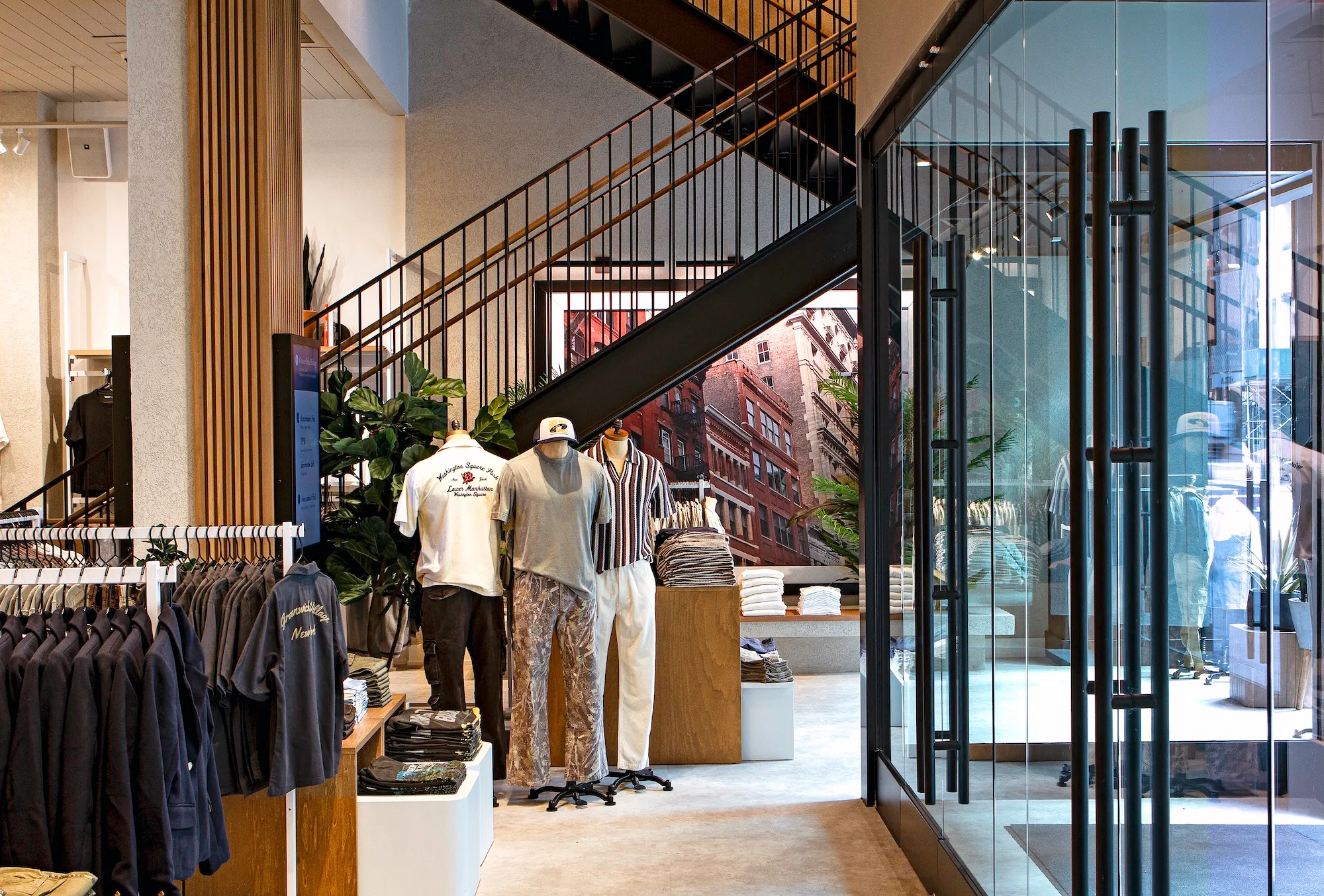
    The new Abercrombie prototype store, which has been opened in a select number of locations, is impressive. It is revolutionary rather than evolutionary and is a significant step forward for the brand. The two most immediately striking things about the new design are how light and open it is, and how subtle the branding is. Alone, these make the shops almost unrecognisable as A&Fs.

    Beyond these significant shifts, there are more subtle changes, foremost among them a smaller footprint, with some new prototypes being around half the size of older stores. This is made possible by a much more efficient use of space and also because ranges have been thinned out.

    A&F is now putting more weight behind key items and cutting back on slower, less relevant lines.

    The consumer impact of all these changes is positive. The new format is more pleasant to shop, and the ‘less is more’ approach makes putting outfit ideas together easier. From A&F’s perspective, the new format provides financial benefits, with higher sales densities and lower rents.

    With only a few new stores open so far, the impact on Abercrombie’s sales is currently small.

    However, this should grow as the concept is rolled out further. In the meantime, there is much more work to do to reconnect the brand with customers. While initiatives like the loyalty scheme are working well, Abercrombie needs to communicate its new essence more effectively and more widely.

    Overall, Abercrombie & Fitch is still a company in transition and is not back to full health.

    However, it is now showing some encouraging signs of life.

  • Abercrombie launches on Alibaba’s Tmall

    Abercrombie launches on Alibaba’s Tmall

    Abercrombie & Fitch has announced it is launching both its Abercrombie & Fitch and Abercrombie Kids brands on Alibaba Group’s Tmall this month. Abercrombie & Fitch Tmall is China’s largest platform for brands and consumers.

    Through Tmall, Alibaba reports reaching 454 million annual buyers. The core consumer is under 35 and shops primarily on their mobile devices. Abercrombie’s target customer is in their 20s and shops digitally.

    Pairing up with Tmall is a data driven move that should result in much needed financial success for Abercrombie as it continues to rebrand.

    Moving onto Tmall reveals insight into Abercrombie’s plans for chasing the Chinese consumer. Abercrombie recently opened a new retail concept flagship in Hong Kong’s Harbour City. Additionally, Abercrombie operates 10 retail stores across China.

    Abercrombie’s rebranding began with a revitalization of its retail concept. The brand describes its new retail concept as intimate and service oriented. To that end, Tmall offers the capabilities to make online shopping more individualized through marketing tools.

    Tmall offers live streaming options and big data options designed to personalize and streamline the shopping experience.

    “Alibaba Group places a strong emphasis on consumer engagement, which aligns with our focus on creating a unique online brand experience for our customers, as well as facilitating a seamless and frictionless shopping experience” said Fran Horowitz, Chief Executive Officer of Abercrombie & Fitch Co.

    Tmall has sold the Hollister brand since 2014. This month is the first time Abercrombie has put its namesake brands on the platform.

    Jessica Liu, President of Tmall Fashion, Alibaba Group said consumers both online and in China have “sought [the brand] out for some time.”

    Abercrombie will begin selling a full assortment of men’s, women’s and kid’s product on Tmall starting July 26.

  • Abercrombie & Fitch ends year weak

    Abercrombie & Fitch ends year weak

    Abercrombie & Fitch ended the year in a tailspin, with sales down by almost 7 per cent and operating profit falling 49 per cent.

    The embryonic recovery seen at the start of this fiscal is now little more than a faded memory. Fortunately, the group has a fairly strong balance sheet and remains profitable, which provides some comfort that it has the time and financial firepower to try and turn things around.

    That said, it is now clear that fairly decisive and radical action is required to reconnect the brands with consumers. Especially so for Abercrombie which has, like last quarter, seen same-store sales deteriorate at a rapid pace. While factors like reduced tourist spend at flagship stores and negative mall traffic have pushed down sales, the main reason for the decline is that Abercrombie simply doesn’t resonate with customers like it once did. In essence it has lost its reason for existing.

    This is a serious issue and is one that needs an urgent remedy. Worryingly, A&F has already tried to shift perceptions and engineer a turnaround, but this is clearly not delivering. Part of this comes down to the fact that, to date, the company’s efforts have been rather patchy and piecemeal, and this has been insufficient to cut through with consumers.

    The recent marketing campaign, with the strapline of “people have a lot to say about us, they think they’ve got us figured out”, exemplifies this approach. Not only is the message confusing and opaque, but the promise of change that it suggests is not entirely delivered on by stores which look and feel the same as they have always done. To be fair, some developments – including making products more mature and stylish – have been substantial. However, when the package they are delivered in has not evolved it is difficult to communicate such efforts effectively.

    Fortunately, A&F is making an effort to change its stores – as the new format launch in Columbus, Ohio proves. This is a step forward and is more reflective of what the brand now wants to stand for. The integration of improved customer service elements – like better fitting rooms and the ability to place online orders from the store – are also helpful in making the environment more friendly, inclusive and welcoming.

    As good as the new format looks and feels, A&F will only roll out seven of them this year, so it is unlikely they will have a material impact on sales growth. However the cautious pace is sensible given the new concept has yet to be proven. In any case, it is likely that there will be existing stores in some locations where poor performance and declining traffic does not justify significant capital expenditure on refurbishments.

    A&F is clearly hoping that all of its changes will allow Abercrombie to shift into a higher gear – much as has been the case for Hollister, where positive same-store sales were achieved this quarter. But A&F still has much more work to do in building a new base of customers and this is a long-term effort that may not have a tangible impact on sales for many quarters.

    This noted, A&F is going in the right direction. As it has shown with Hollister, which is more advanced in its redevelopment program, the reinvention work will ultimately pay dividends. However, the company cannot turn on a dime and there will likely be a number of bumpy quarters ahead before recovery comes.

  • Tourists taint Abercrombie & Fitch sales

    Tourists taint Abercrombie & Fitch sales

    After a short lived rally at the back end of its previous fiscal year, US apparel group Abercrombie & Fitch is now firmly back in negative territory with a weak set of sales figures at both the total and comparable level.

    It is particularly disappointing that sales growth has deteriorated since the prior quarter with much worse comparable numbers coming through for the US market.

    Once again, Abercrombie led the way with a decline of 7 per cent in same store terms; Hollister fared a little better but also slipped into negative territory with a comparable sales slide of 2  per cent. In the US both brands suffered from weaker traffic to malls and from lower tourist spend at flagship stores in key locations. This was offset, in part, by a more robust performance from the online channel which continues to show signs of life.

    Thanks to tighter inventory control, discounting was not particularly pronounced across the period which allowed A&F to produce a stronger margin outcome than might otherwise have been the case. Even so, higher product costs, relatively higher store and distribution expenses – which include the impact of lower margin eCommerce orders – and an asset impairment charge all helped push the company to an operating loss of US$10.8 million over the period. This is a marked deterioration on last year’s profit of $1.9 million.

    As disappointing as these numbers are, they are not entirely unexpected. The second quarter was expected to be fairly weak before a slight recovery of fortunes during the fall and winter seasons when stronger ranges should help drive more consumer interest. Since the previous update, however, the dollar has strengthened and this will take some of the edge of both sales growth and the profit line across the remainder of this year.

    As much as A&F is still in a period of correction, the company continues to move in the right direction. The decision to shutter 60 stores in the US over the course of this fiscal year reflects the changing dynamics of shopper behavior and will reduce A&F’s exposure to weaker malls and retail centres. The company’s emphasis on eCommerce will ensure that some of these sales are recouped.

    The company’s efforts around eCommerce are not just confined to the US. In Europe A&F’s new partnership with Zalando is encouraging, allowing it to bolster volumes and sales across Europe in a cost effective way. This gives the company and its brand extensive reach without the associated costs of opening and operating a vast number of stores.

    All that said, A&F still has much work before its brands are restored to full health. Its new ranges are better and much more appealing to core customers as well as a slightly older demographic. However, the brands still need a stronger sense of identity and focus in what remains a very crowded and competitive marketplace.