Retail News CRM

Tag: access

  • Google To Enhance Photo Access And Privacy In Messages App With Android 16 Update

    Google To Enhance Photo Access And Privacy In Messages App With Android 16 Update

    Navigating to your photos in the Google Messages app for Android is simple, though it could be more streamlined. To begin, you’ll have to open Google Messages and select any prior message. A round button with a “plus sign [+]” icon is located to the left of the text input area. Clicking on this button reveals a range of options, including:

    – Gallery
    – Camera
    – GIFs
    – Stickers
    – Files
    – Location
    – Contacts
    – Schedule Send

    When you choose the Gallery option, the most recent images and videos stored locally on your device, as displayed by the Google Photos customized media selector, will be visible. However, if you need to access your photos via the Google Photos app using the Android System photo selector, you’ll have to press the Folders button situated at the bottom of the screen. This represents an additional step if you want to see the photos stored in the cloud rather than just on your device.

    Google is reportedly developing a solution to this issue, aiming to erase the additional step required to access your photos from the Google Photos app within Google Messages.

    Security and Access Concerns

    While the additional step may not bother some, it does raise a significant security concern. Google’s custom picker requires access to your full media gallery to function effectively. In contrast, Android’s photo picker allows applications to access only the photos and videos that you select. However, there is promising news — Google is said to be working on a way to allow users to access their photos from the Photos app via Google Messages without the need for the extra tap on the Folders button.

    New Developments in Android 16

    Android 16 introduces a new integrated photo picker equipped with its APIs, enabling apps to incorporate this photo picker directly into their interface. This provides app developers with a media gallery that feels native to their app, while also offering the security and privacy inherent in the Android system photo picker. This is because comprehensive media permissions no longer need to be sought. It was discovered that this embedded photo picker was present on a OnePlus 13 running OxygenOS 16.

    The Gallery button, when pressed, displays cloud-hosted photos and videos together with photos and videos stored on the local device. Before the introduction of the embedded photo picker with Android 16, users would have had to take the extra step and tap the Folders button to see their cloud-hosted photos and videos from the Google Photos app.

    Privacy Improvements

    Once the embedded photo picker is rolled out, there will be no need to grant the Google Messages app “Photos and videos” permission to share photos or videos. In fact, this permission can be revoked once the embedded photo picker is available.

    Questions & Answers

    What is the embedded photo picker in Android 16?
    The embedded photo picker in Android 16 is a new feature that allows apps to integrate a photo picker directly into their interface. This provides a media gallery that feels native to the app while also offering improved security and privacy.

    Does the Google Messages app require access to all my photos and videos?
    Currently, to function effectively, Google’s custom picker requires access to your entire media gallery. However, with the forthcoming embedded photo picker feature in Android 16, this will no longer be necessary.

    What is the benefit of the embedded photo picker?
    The embedded photo picker will eliminate the need for users to make an extra step when accessing cloud-hosted photos and videos from the Google Photos app. Additionally, it will enhance privacy as broad media permissions will no longer be required.


  • Google Bolsters Security Measures Amidst Rising Pixnapping Attacks Targeting Two-factor Authentication

    Google Bolsters Security Measures Amidst Rising Pixnapping Attacks Targeting Two-factor Authentication

    A cutting-edge threat known as Pixnapping has the ability to illicitly take your two-factor authentication (2FA) code within a mere 30 seconds, all without your knowledge. This is a significantly hazardous variety of cyber attack. In response, Google has ramped up its security measures, which are specifically engineered to assist users in accessing their Gmail accounts should they find themselves locked out. Some common reasons for such occurrences include losing one’s device, forgetting their password, or falling prey to a malware attack.

    Rising Threats to Google Apps

    There has been an 84% surge in attacks targeting Google apps such as Gmail over the previous year, as per Google’s own data. The most perilous security risk to users of Google’s apps is emails engineered to steal their passwords. This is where the feature of Account Recovery can prove instrumental. However, even Google itself concedes that Account Recovery may not always successfully facilitate access to a locked Gmail account. Claire Forszt and Sriram Karra, both of whom are part of Google’s Identity and Engagement team, express concerns over relying on Account Recovery to regain access to a locked Gmail account.

    Google’s feature known as ‘Sign in with Mobile’ employs your phone number to log into your account. Forszt and Karra highlight the difficulties of recovering a locked Gmail account using a one-time SMS code, especially in situations where the user has lost their phone or failed to update their recovery phone number.

    New Recovery Contacts Setting

    In order to tackle such issues, Google has introduced a fresh Recovery Contacts setting. This new feature empowers Gmail users to nominate family members or trusted contacts to help them regain access to their Gmail account. Forszt and Karra view this as a simple and secure solution to rely on trusted individuals when other recovery options are not feasible.

    To implement this feature, it’s essential to set up Recovery Contacts before losing access to your account. Users can do this by visiting the Security tab on myaccount.google.com/security and following the directions to confirm their identity. This will guide them to a page where they can add Recovery contacts. Users can assign up to 10 trusted people who can help them regain access to their locked Gmail or Google app account.

    Sign in with Mobile Number Feature

    Moreover, Google has rolled out a new mechanism for Android users to validate their identity and reclaim Gmail access solely using their mobile number. Google’s ‘Sign in with Mobile Number’ process is straightforward. Upon entering their phone number, users will be presented with accounts linked to that number. They can then select the account they wish to access and input their lockscreen passcode. The unique aspect of this feature is that it allows account access without a password.

    Eugene Liderman, Google’s Director of Android Security and Privacy, informed that this feature would be introduced gradually across the globe.

    Questions & Answers

    What is the new threat called Pixnapping?
    Pixnapping is a new form of cyber attack that can stealthily take your two-factor authentication (2FA) code within 30 seconds without your awareness.

    What is Google’s response to rising threats to its apps?
    In response to the rising threats, Google has enhanced its security measures with features like Account Recovery and Recovery Contacts setting, designed to help users regain access to their locked Gmail accounts.

    How does ‘Sign in with Mobile Number’ feature work?
    ‘Sign in with Mobile Number’ is a new feature from Google that allows Android users to verify their identity and regain access to their Gmail accounts using their mobile number. The users can select the account linked to their number and enter their lockscreen passcode to access the account, even without a password.

  • Vietnam Poised to Boost Market Access for U.S. Exports, Reveals Economic Minister

    Vietnam Poised to Boost Market Access for U.S. Exports, Reveals Economic Minister

    During a pivotal meeting with Senator Roger Marshall in Washington D.C. on Wednesday, Vietnam’s Minister of Industry and Trade reaffirmed the nation’s commitment to strengthening its Comprehensive Strategic Partnership with the United States. This bold step aims to bolster economic and trade cooperation, benefiting both countries’ citizens and businesses.

    Negotiating New Trade Horizons

    At the heart of the discussions was the ongoing Reciprocal Trade Agreement talks between the two nations. The minister emphasized Vietnam’s steadfast commitment to pursuing these negotiations based on mutual respect for sovereignty and political systems, as well as a balance of interests, all in line with international commitments and the developmental statuses of both nations.

    He expressed confidence that Senator Marshall would leverage his influential standing within the Republican Party, along with his deep knowledge in trade, agriculture, and innovation, to champion Vietnam’s interests throughout the negotiation process. The minister also called on Marshall to foster cooperation between Vietnam and Kansas, particularly in sectors where the state excels, such as agriculture, aerospace, and biotechnology.

    Building Stronger Partnerships

    Senator Marshall responded positively, noting Vietnam’s proactive stance and integrity in the negotiations. He pledged to discuss the matter with the President and relevant Cabinet members, anticipating fruitful results from both parties. He also commended the minister’s visit, recognizing it as a doorway to enhanced collaboration across various fields.

    Later that same day, the Vietnamese minister engaged with leaders from Nike and Walmart, both of which have made significant investments and maintained substantial operations within Vietnam. During his discussion with Nike executives, he commended the company’s long-term commitment to the country, where nearly half of Nike’s global footwear is produced, generating over 450,000 jobs for locals. Addressing potential concerns regarding the impact of current tariff policies, he proposed strategic initiatives to support Nike’s continued success in Vietnam, emphasizing that the company is viewed not just as an investor but as a vital strategic partner in Vietnam’s sustainable development and international integration.

    Boosting Walmart’s Commitment

    In his talks with Walmart, the world’s largest retail corporation, the minister recognized the company’s role in promoting Vietnamese goods worldwide. He encouraged Walmart to amplify its procurement of high-value, environmentally friendly products and even consider creating a strategic sourcing hub in Vietnam. Furthermore, he highlighted the importance of strengthening supplier capacity by sharing technical standards and offering training initiatives.

    Addressing the challenges Walmart has encountered in Vietnam, the minister assured that the Ministry of Industry and Trade, along with the Ministry of Finance and other relevant agencies, would work together to enhance policies for better transparency and alignment with global practices.

    As negotiations for the Reciprocal Trade Agreement reach a crucial stage, the minister called on Nike and Walmart to actively champion the process and foster a fair, balanced, and sustainable agreement between the U.S. and Vietnam. He reiterated that Vietnam not only wishes for these companies to flourish in its market but also sees them as key allies in creating a green, transparent, and sustainable supply chain, enhancing economic ties between the two nations.

    Earlier, on June 10, the minister had a productive meeting with ExxonMobil executives regarding ongoing collaborations in energy projects in Vietnam, highlighting the significance of ExxonMobil’s commitment to providing reliable energy while minimizing greenhouse gas emissions, thus aligning with Vietnam’s carbon neutrality goals. The ExxonMobil representatives expressed strong confidence in Vietnam’s economic growth prospects, a testament to their commitment to developing multiple projects in the region.

    Questions & Answers

    What key message did the Vietnamese minister convey to Senator Marshall?
    The minister emphasized Vietnam’s determination to enhance its partnership with the U.S. and focus on economic and trade cooperation for mutual benefits.

    How does Vietnam view its relationship with Nike and Walmart?
    Vietnam sees both companies as strategic partners, essential for sustainable development rather than just as investors.

    What specific areas did Vietnam hope to collaborate on with Kansas state?
    The minister called for cooperation particularly in agriculture, aerospace, and biotechnology, where Kansas has significant strengths.

  • The trend for personalisation in retail continues with much hype, but limited success

    The trend for personalisation in retail continues with much hype, but limited success

    This apparent failing owes much to a disconnect between the retailers view of personalisation, and what the individual customer perceives – and wants – as a personalised buying experience. It’s a balance that the retail sector has to redress, if the industry is to fully benefit from the potential gains of true personalisation – which can be quite considerable.

    According to research conducted by the Boston Consulting Group (BCG), personalisation is key to increasing the rate at which retail organisations can convert occasional shoppers into regular customers, and increasing the lifetime value of those customers.

    Many retailers assume that simply because an individual looks at an item, they automatically want it. Crude attempts at personalisation based on this kind of assumption include putting someone on a remarketing list, then pestering them with discount offers for goods they may have simply glanced at out of curiosity.

    Clearly, the fundamental principle of personalisation (as understood by customers) is being misinterpreted by many retailers. And the message that their marketing is giving to consumers is breeding frustration and a lack of respect – hardly the intended result.

    In a truly personalised journey, power resides with the customer, who can decide whether or not they receive personalised advertising, the nature of the content they see, and the products they are able to access.

    Some retailers do appreciate this distinction, and take steps to customise their buyer experience in a manner more appealing to their consumers. The tailoring brand Savitude for example, requests minimal data from its customers, yet uses this information to produce outfits cut to suit the customer’s body shape, their individual preferences, and even the occasion they plan to attend.

    The tailoring analogy extends to current trends in consumption, which look for sustainability in the form of minimal purchases of curated goods, designed for longevity. The price tags associated with commodities like this may be higher, but consumers are increasingly prepared to part with their money if the products and services they get are specifically attuned to their needs.

    This is the kind of personalisation that customers want: a personalised service on their terms, with responsible data gathering, their consent requested from the outset, transparency, and clarity over how their information is put to use.

    How do you then quantify personalisation and put observation into practice? There is a small percentage of organisations getting it right, though many retailers are unclear what steps to take and which capabilities to build, in order to generate and sustain a truly personalised experience for their customers. Find out about the methodology here.

    From a generic standpoint, top-level retail organisations use a variety of tactics, such as personalised merchandising, loyalty schemes, and reward programmes. They use mobile, paid display, and paid search marketing to frequently activate more channels.

    Their technology stack typically includes infrastructure that enables predictive algorithms (which help retailers to make personalised product recommendations and offers), and to access integrated customer data in real time (which helps in developing deep insights into how customers behave, and enables rapid response).

    Get access to some recommendations on personalisation in retail with a free case study here

    Day 2 at eTail Asia highlights an all-star panel discussion on “How can you improve, personalise and simplify the customer experience, adding value through each journey?”

    With powerhouses such as Adidas, Flipcart, and Luxasia representing the speaker line-up, audiences are guaranteed to not only learn from the best of their category, but also get the unique opportunity to cross-learn from relevant case studies, all in the convenience of a single location.


  • Myanmar opens talks with Thailand on reciprocal banking access

    Myanmar opens talks with Thailand on reciprocal banking access

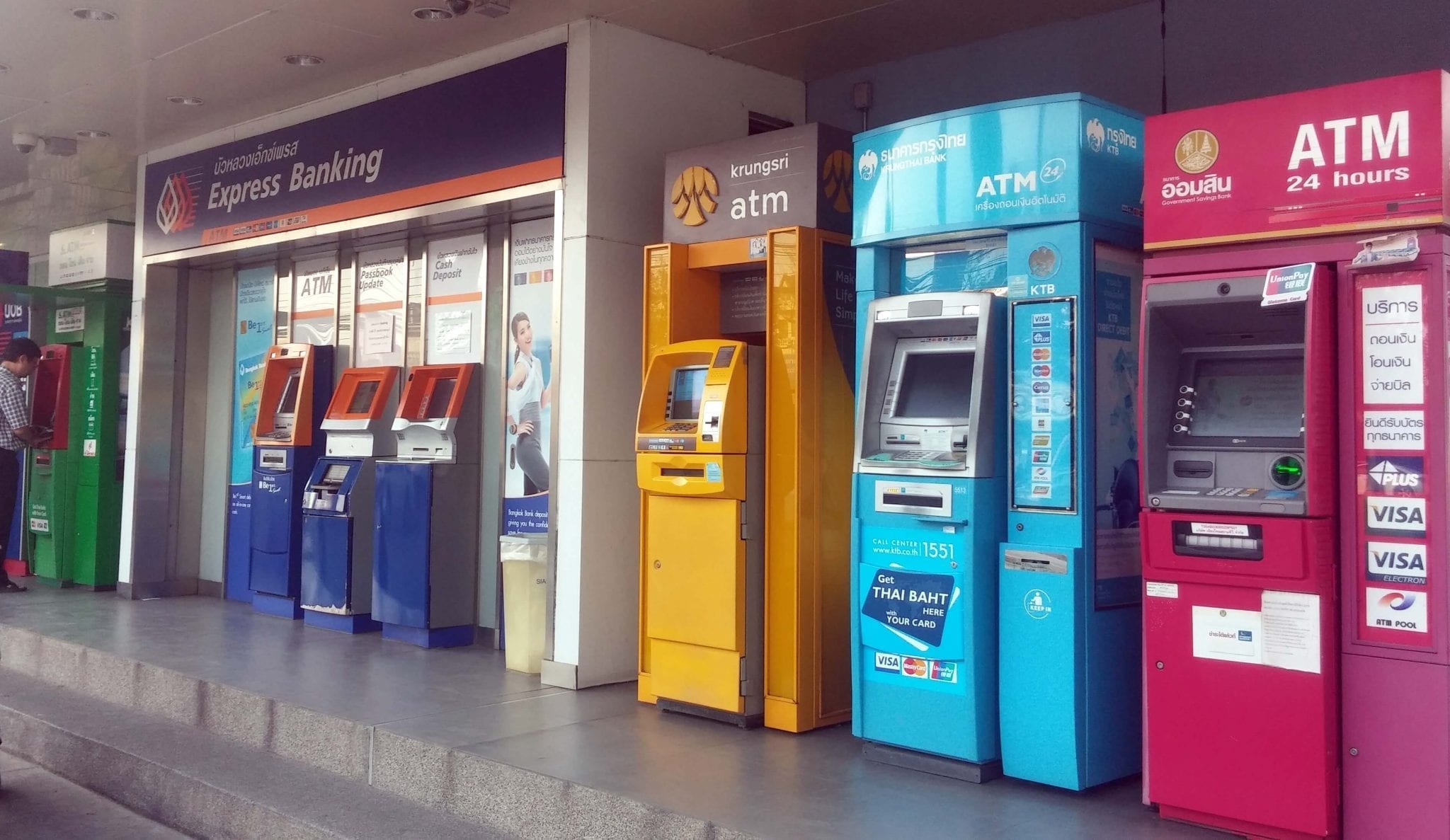
    The central banks of Thailand and Myanmar agreed Sunday to start talks on granting access to designated banks in each other’s markets, marking a small step forward in the financial integration of the Association of Southeast Asian Nations.

    For Thailand, Myanmar is the third country to enter bilateral discussions on bank access, following Malaysia and Indonesia; for Myanmar it is a first.

    Under the ASEAN Banking Integration Framework, countries can enter into bilateral deals allowing banks that meet certain criteria to become “Qualified ASEAN Banks” that operate in each other’s markets on the same terms as local banks.

    “The expansion of a banking presence through QAB will enable greater efficiency and reduce costs for bankers and customers alike,” Bank of Thailand Gov. Veerathai Santiprabhob told bankers who were in Bangkok for the 21st ASEAN Banking Conference on Monday.

    With Myanmar opening up its economy after nearly 50 years of isolation and the ASEAN Economic Community kicking off last year, banks in  Thailand and Myanmar have been growing more active in each other’s markets.

    Myanmar’s largest lender, Kanbawza Bank, opened a representative office in Bangkok in August, becoming the first Myanmar bank to venture abroad.

    Last year, Thailand’s Bangkok Bank was among the first of nine banks to be granted a foreign banking license in Myanmar. Other big Thai banks were not granted licenses in the first round, but have opened representative offices in Myanmar in anticipation of the next opportunity.

    “It’s good that the Bank of Thailand signed the QAB agreement with Myanmar,” said Predee Daochai, president of Kasikornbank, which now has a representative office in Myanmar. “We would like to open a bank there,” he said.

    The time frame for the negotiations and details such as the number of banks to be designated QABs have yet to be decided.

    While trade and investment have been increasing in the region in the wake of deregulation and elimination of tariffs, “much work remains with regards to financial connectivity” in the region, Veerathai said.

  • Bharti Airtel launches VDSL vectoring

    Bharti Airtel launches VDSL vectoring

    India’s Bharti Airtel has launched a new VDSL vectoring service the company has branded V-Fiber, capable of delivering speeds of up to 100Mbps.

    The company’s new service has been launched in Chennai, and is being rolled out across Airtel’s national broadband network – which spans 87 cities.

    Airtel will offer the service to its existing customers at no additional cost, except for the cost of an upgraded modem. For new subscribers, Airtel will offer an unlimited three month trial offer.

    The operator will now also offer all its fixed broadband subscribers unlimited voice calling at no extra cost, and is providing a rewards program to allow broadband customers to get 5GB of additional mobile data per month if they are also subscribed to Airtel’s mobile services.

    As part of Project Leap, Airtel’s nationwide network transformation initiative, the company is meanwhile augmenting its 550,000km of domestic and international fiber capacity to improve latency and customer service and meet growing demand for data services.

    “India is witnessing an explosive growth in data usage and a lot of in-home data consumption is happening over fixed broadband that offers consistent speeds. Airtel has always innovated ahead of the curve and offered its customers best-in-class broadband technology and experience,” Airtel director of operations Ajai Puri said.

    “With ‘V-Fiber’ and our national optic fiber backbone, we are all set to offer a future ready network for tomorrow’s digitally connected homes. This solution, besides reducing our carbon footprint, offers a very quick and convenient upgrade to the customer.”

    Airtel is bracing for the anticipated impact of the planned entry into the fixed broadband market of Reliance Jio Infocomm, the disruptive pan-Indian 4G service provider with an extensive existing fiber footprint.

  • ACCC likely to continue regulating ADSL access

    ACCC likely to continue regulating ADSL access

    Australian competition regulator the ACCC has made a draft decision to continue regulating access to Telstra’s wholesale ADSL network for a further five years.

    Former government monopoly Telstra is required to provide access to its ADSL network to competitors due to its dominant position in both the wholesale and retail ADSL markets. When a commercial agreement cannot be reached, Telstra must provide access at regulated prices.

    The ACCC had been investigating whether regulated access was still necessary given the progress of the rollout of the national broadband network (NBN).

    “Telstra retains its dominant position in both the wholesale and retail markets for the supply of ADSL fixed-line broadband services on a national level,” ACCC commissioner Cristina Cifuentes said.

    “Continuing regulation will ensure network providers continue to have access to Telstra’s copper network at reasonable prices. This will encourage them to continue competing in the retail market to develop and offer different ADSL broadband products to meet the needs of customers as they prepare to shift to the NBN.”

    A final decision on the matter is expected in early 2017, before the current access declaration expires.

  • Susi Promises Banking Access for Fishermen

    Susi Promises Banking Access for Fishermen

    Marine and Fisheries Affairs Minister Susi Pudjiastuti will facilitate fishermen or ship owners who owns ships with a capacity of less than 10 gross tonnage to have access to banking services. Minister Susi said that ship owners would only need came to the Marine and Fisheries Affairs Ministry office.

    “I will establish an outpost at the Ministry’s licensing office. We will meet [fishermen] with banking institutions,” Susi said on Wednesday, October 5, 2016.

    Susi promised to help fishermen to be able to access credit facilities to get funds to replace their trawls. Susi targeted fishermen to be able to get at least Rp 200 million loan. The Minister also offered to provide a debt restructuring program for fishermen.

    Susi hoped that ship owners will take the opportunity to replace their trawls and fish with more environmentally friendly method. The Minister added that she had recently managed to help a fisherman to get a fresh loan from the bank.

    Susi said that she had contacted two state-owned banks, Bank Rakyat Indonesia, and Bank BNI, to help with the program. The Minister also expected other banks to take part in the program, which is supported by the Financial Services Authority.

    In addition, the Marine and Fisheries Affairs Ministry had asked fishermen to re-measure their ships, while Minister Susi guaranteed that there will be no illegal levy in the process.

  • Indonesia talks reciprocal access with M3; moves to improve safety

    Indonesia talks reciprocal access with M3; moves to improve safety

    Indonesia welcomes additional flights by the Gulf network carriers Emirates, Etihad and Qatar Airways, as long as Gulf authorities allow reciprocal access for Indonesian carriers, Indonesian Minster of Transport Ignasius Jonan tells Runway Girl Network in Paris.

    In a wide-ranging interview, RGN put the question of Gulf carrier expansion within Indonesia to Jonan, from the point of view of a developing nation with a strong economy looking to expand internationally and a growing middle class demanding longhaul travel.

    “It’s reciprocal,” Jonan says. “As long as it reciprocates between the two countries we can accept it. Otherwise, I think it’s going to be very difficult for negotiation.”

    Jonan notes that he would welcome additional flights from international airlines — including the Gulf carriers — further into Indonesia, as long as the access is reciprocal and as long as those airlines meet the international safety standards required by Indonesia.

    Does this reciprocity requirement limit additional routes to only markets where Indonesian carriers (principally, therefore, Garuda and AirAsia X Indonesia) wish to operate additional services? “No, it’s open. Whoever can meet the standards.”

    In the context of the ongoing Open Skies fight between the three large US international airlines and the three largest Gulf network carriers, RGN put the question to Jonan of whether Emirates, Etihad and Qatar were good for his country. “It’s a very difficult question if you ask whether the Gulf carriers are good for Indonesia or not, but we always treat all carriers on a reciprocal basis,” Jonan says.

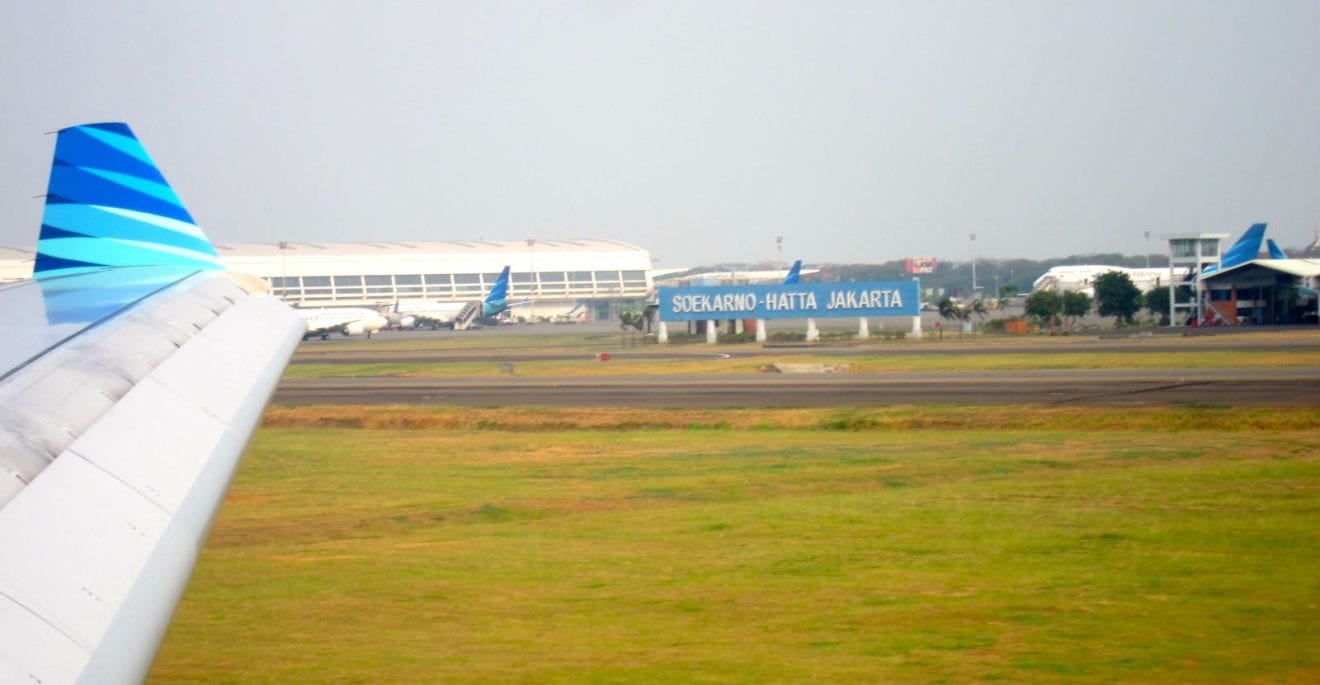
    Part of the issue of demand is a practical one, Jonan notes. “For example, if you fly to Europe from Indonesia, some people might choose European carriers because the transit can be in Kuala Lumpur or in Singapore, but the Gulf carriers transit in Doha, in Dubai and so on. It’s a choice for travellers. Myself, I would like to transit near Jakarta, because I can sleep longer.”

    Jonan also notes that Emirates is already in negotiation with his government for additional services into the island archipelago: “So far it’s been running as it is, but Emirates has requested more business for Indonesia so we are now negotiating whether we can have reciprocal treatment.”

    Airlines to be shut down for safety violations by July

    Indonesia expects to cancel the operating licences of a number of airlines within the month, and hopes to upgrade the runways of all 237 Indonesian airports within three to five years,

    Speaking as Indonesian carrier Sriwijaya Air purchased two Boeing 737-900ER aircraft at the Paris Air Show — the first new aircraft purchased by Indonesia’s third largest airline — Jonan flags up an ongoing safety crackdown which will cut into the nation’s aviation industry this summer.

    “So far, we have cancelled sixteen licences for airlines and air charters,” Jonan said, noting that his ministry has reduced the number of Indonesian carriers from 73 to 57. “It is a continuous review, and I believe towards the end of July we will also announce some of the existing airlines and air charters cannot comply with safety, and by safety we are also including financial soundness for airlines and air charters.”

    RGN queried Jonan in detail about his ministry’s intentions towards the 2009 law that requires Indonesian-registered carriers to operate a minimum of ten aircraft, of which five must be owned and five can be leased or otherwise provided.

    “It’s a very good question,” Jonan admits. “We do not aim to expand any air transport business unless they can follow the safety program. We will keep the regulations in place so the airlines should have at least ten aircraft to be operating, five leased or rental or dry-leased and five to be owned. It is mandatory. The laws do not require any [specific] kind of aircraft.”

    But in terms of startup franchises along the lines of further AirAsia operations or a Tiger-style airline, which have expanded exponentially within the ASEAN region, would existing operations with other franchises internationally provide additional assurances or comfort to the Indonesian safety regulators?

    “Logically, it may be possible from a technical point of view, but if a startup operates only two or three aircraft it is very sensitive and very dangerous. They might then have less focus on regular maintenance because the aircraft has to work without any chance to have a schedule for maintenance. That’s an issue of safety. Also, ten is very small. With the five that can be leased as well, as long as it can be proved at the end of the day you will own ten aircraft. It should be mandatory, guaranteed ownership.

    Jonan also noted that the Indonesian government has a massive runway improvement programme across the archipelago, which will be crucial to the expansion intentions of Indonesian, regional and international carriers within his nation.

    “At the moment we have 237 airports throughout Indonesia. We have started now to expand the runways so that all airports can be used by a minimum of an ATR 72 or a Boeing 737, within five years. I hope it will materialise within three years.”