Tag: aCommerce

  • aCommerce Launches BrandIQ to Help Brands grow sales

    aCommerce Launches BrandIQ to Help Brands grow sales

    Southeast Asia’s leading brand ecommerce enabler, aCommerce, introduces BrandIQ, the company’s new ecommerce measurement and analytics suite. BrandIQ will enable brands to understand and visualize more than 11 million SKUs across 600 brands and 160,000 sellers online across Southeast Asia, enabling global consumer brands and retailers to grow online sales and market share.

    BrandIQ is envisioned to provide brands in Southeast Asia with measurable data and actionable insights for their online commerce strategy. Using sophisticated ecommerce data collection and proprietary machine learning technologies, BrandIQ will empower brands to monitor online merchandise, analyze competitors, offer better promotions, understand consumer sentiments, and improve the overall ecommerce experience.

    “We are now entering an era where usage of survey data is not sufficient to succeed in Southeast Asia’s growing ecommerce landscape,” said Poonpat Wattanavinit, Regional Director of Product, aCommerce. “BrandIQ is a new technology platform that collects data from all the leading online marketplaces to offer brands real-time insights. Through BrandIQ, brands will be able to benchmark their own performance on marketplaces over time as well as compare against competitors in terms of online sales and share of digital shelf.”

    As part of the launch, BrandIQ is also rolling out additional services to help brands and consumers engage in a more meaningful and personal way. Brands can now discover brand advocates and generate authentic product reviews, reward and retain them, and grow brand advocacy at scale.

    “For the last five years, aCommerce has helped brands in Southeast Asia overcome ecommerce challenges, including physical infrastructure and distribution barriers,” added Phensiri Sathianvongnusar, Chief Executive Officer, aCommerce Thailand. “Throughout these years, we saw that data and information is incredibly important to operate a business. The launch of BrandIQ comes naturally as a stepping stone for aCommerce to utilize data and further advance the success of our brands, along with the right tools, teams, and mindset throughout their ecommerce journey.”

    BrandIQ kicked off its pilot operations in Thailand last year and since then has expanded its presence across the Southeast Asian region covering six countries, Indonesia, Malaysia, Philippines, Singapore, Thailand, and Vietnam. BrandIQ will continue to expand the service to other Southeast Asian countries and marketplaces as the ecommerce space continues to grow throughout the region.

  • aCommerce Forms Strategic Partnership with Fluent Commerce to Advance Omnichannel Strategy

    aCommerce Forms Strategic Partnership with Fluent Commerce to Advance Omnichannel Strategy

    aCommerce, Southeast Asia’s leading brand ecommerce enabler, and Fluent Commerce, the cloud-native order management company that allows omnichannel retailers to out-convenience competitors and offer their customers flexible fulfillment options, have signed a strategic partnership to bring together the best of ecommerce and omnichannel order operations.

    Under this partnership, Fluent Commerce will provide the smart omnichannel management and unified ecommerce that retailers and brands are looking for. aCommerce will act as a system integrator for retailers and brands in Southeast Asia, enabling them to provide a seamless experience to their consumers, regardless of online or offline channels.

    “The relationship with aCommerce is an acknowledgment of the imperative for retailers to provide an innovative experience for their ever more sophisticated customers, such as same-day delivery and collect in store options,” said Jamie Cairns, Channel Sales Director at Fluent Commerce. “By working together we’ll grow and unlock new opportunity for our clients by enabling them to rapidly deploy an end to end, unified commerce strategy. We’re certainly very excited by this combined proposition, which is unique in the region.”

    “Despite the ample growth of ecommerce in the region, Southeast Asia’s retail scene is largely happening offline. Combining the strengths of aCommerce and Fluent Commerce enables us to help retailers and brands execute New Retail strategies by leveraging technology to digitize and connect offline stores,” comments Mandy Arbilo, Group Director of Direct-to-Consumer Ecommerce at aCommerce. “By partnering with Fluent Commerce, we will be able to provide convenience, choice of delivery or pickup, return anywhere options, and up-to-the-minute inventory visibility.”

    Currently, aCommerce is working with leading Singaporean retailers to expand omnichannel and New Retail capabilities. The Southeast Asian leading ecommerce enabler will offer this service in Malaysia by March 2019.

  • aCommerce expects online-shopping market share to double to 5.5 percent

    aCommerce expects online-shopping market share to double to 5.5 percent

    E-commerce in the Philippines is gaining ground, given the expectation that its contribution to the total retail market would double to 5.5 percent, according to Southeast Asia’s retail-solutions provider aCommerce.

    Paul Srivorakul, aCommerce Group CEO, said the improved penetration of the online marketplace in the country will further improve as more and more brands move to Web-based retail to expand their presence.

    “Before, it was enough for brands to simply have a web site. But now, brands are starting to realize the importance of utilizing an omnichannel approach to stay ahead of the retail game,” he said.

    The company said this move is due to the changing behavior of the buying public, as they are now beginning to realize that online purchasing is more practical than visiting the so-called “brick-and-mortar” or physical stores.

    In the Philippines aCommerce currently has 25 brand partners. The number could grow to at least 40 next year as its portfolio encompasses consumer goods, home and living, fashion and electronics.

  • Logistics startup aCommerce seeking further funding

    Logistics startup aCommerce seeking further funding

    Thailand-based end-to-end logistics startup aCommerce is seeking to raise more than US$30 million in a series-B funding round.

    Insiders say the company is in discussions with global and local private equity groups to raise funding before the last quarter of this year.

    Founded in June 2013, aCommerce is a regional full-service e-commerce software provider, delivering tailored product to global brands and retailers including Hewlett-Packard, Lazada, Line, L’Oreal, Matahari Mall, Nestle, Philips, Samsung and Unilever.

    In July last year the company raised a $10 million strategic venture round led by MDI Ventures, Telkom Indonesia’s corporate venture capital arm, making it one of the largest series-A rounds for a tech startup in Southeast Asia. Also in the round were Australian firm Blue Sky and Swiss-based services provider DKSH, which had invested in aCommerce previously.

    aCommerce, which has a presence in Indonesia, Malaysia, Singapore, Thailand and the Philippines, plans to expand to Vietnam by the end of this year. It is also expecting its Indonesia business to turn profitable in the same time frame.

    Proceeds from the latest funding round will be used to strengthen its position in Indonesia, Singapore, Thailand and the Philippines, as well as expand in Malaysia and Vietnam. Its services include marketing, fulfilment, store development, delivery, brand commerce and customer care. It launched a 7000 sqm warehouse in Cawang, Indonesia, last year and three months ago opened hubs in Bandung and Surabaya.

  • Lolalola closes online store

    Lolalola closes online store

    Indonesian online lingerie store Lolalola closed yesterday, but customers can still shop on its social-media platform.

    Lolalola says incoming orders will be processed “normally”.

    There has been no word yet from the startup on why it decided to close down the service, but it could be related to the increasingly tight competition among fashion eCommerce startups in Indonesia, says DailySocial. Berrybenka and SaleStock last year laid off employees in order to save their businesses, while Pink Emma temporarily shut down its service before resuming in September.

    Under CEO Donna Lesmana, Lolalola officially launched in March 2015 after being active for six months.

    Claiming to have been inspired by global lingerie brands such as Agent Provocateur and Victoria’s Secret, the startup aimed to “change the way Indonesian customers shop for lingerie” by providing products from local and international brands.

    Lolalola is backed by Ardent Capital and received logistics support from aCommerce. When the startup tested its service for Thai market, it claimed to have sold out within two weeks.

  • Report predicts $25b in eCommerce revenues

    Report predicts $25b in eCommerce revenues

    Southeast Asia eCommerce revenues are projected to exceed US$25 billion by 2020, according to new research by growth partnership company Frost & Sullivan.

    Despite acquisitions, market exits and many online retailers struggling to achieve profitability, the market earned $11 billion last year, says the report, from its Telecommunications and Digital Services program, Analysis of the Southeast Asian E-commerce Market. The study examines market trends and opportunities in six key Southeast Asian markets – Indonesia, Malaysia, the Philippines, Singapore, Thailand and Vietnam.

    Key findings include continuing rapid growth as the industry evolves.

    Total revenues from business-to-consumer (B2C) eCommerce in the six markets will increase at a compound annual growth rate of 17.7 per cent.

    Malaysia and Thailand were the largest eCommerce markets in the region last year, generating revenues of $2.3 billion and $2.1 billion respectively. But by 2020, both these markets are expected to be eclipsed by such emerging economies as Indonesia and Vietnam.

    “Despite being relatively young, the eCommerce market in Southeast Asia is developing quickly, thanks to an astounding rate of digital adoption,” says Frost & Sullivan Asia-Pacific lead consultant for eCommerce and digital transformation, Cris Duy Tran.

    “However, companies pursuing an Amazon-style B2C mass-market business model are struggling to turn a profit, and there have been several mergers and acquisitions and market exits,” he says.

    “With fewer players in the market, eCommerce players are beginning to compete beyond price points and logistics, and are moving into new areas such as Online-to-Offline (O2O) eCommerce and loyalty programs.”

    Although the mass-marketing approach has not worked so far in Southeast Asia, he says there are many exciting opportunities in specialized eCommerce and peer-to-peer (P2P) eCommerce. Services such as Carousell, Shopee and Tokopedia are aggressively pursuing a “mobile first” strategy, and Frost & Sullivan expects to see more sector-specific services in areas such as travel, food delivery and luxury goods.

    Challenges

    While the opportunities for growth are immense, says the report, the eCommerce market in Southeast Asia is not without challenges.

    Several key factors that inhibit growth have been identified, including low credit-card ownership – less than 7 per cent of the population in all Southeast Asian markets except for Malaysia and Singapore. In some countries, more than half of the population does not have a bank account, making payment the biggest challenge for eCommerce companies.

    Logistics is another issue hampering eCommerce growth, especially in areas with complex geographies such as Indonesia and the Philippines. However, recent investments by regional logistics players such as aCommerce and SingPost have strengthened eCommerce logistics infrastructure in these markets.

    China’s rapid expansion in eCommerce is providing further impetus for online retail growth in Southeast Asia, says the report.

    “The eCommerce revenue in China represented 12.1 per cent of all retail sales last year, surpassing the US, Europe and Japan,” says Tran. “Given the massive adoption of eCommerce in China, Southeast Asia is set to follow a similar upward trajectory, even though eCommerce now represents less than 2.5 per cent of all retail sales.”

    With more mergers and acquisitions likely during the forecast period, more exciting market developments can be expected in the near future, says Tran.

  • aCommerce Builds World-class eCommerce Fulfilment Capability  with Manhattan Associates

    aCommerce Builds World-class eCommerce Fulfilment Capability with Manhattan Associates

    Manhattan Associates, Inc., (NASDAQ: MANH) today announced that Southeast Asia’s leading ecommerce service provider and online distributor aCommerce has selected the Manhattan SCALE™ product suite to support its continued expansion in the Southeast Asia region. Manhattan SCALE will deliver an improved warehouse management capability across aCommerce’s warehousing estate in Indonesia, Philippines and Thailand, enabling an easier and faster integration of new aCommerce customers. The system will also provide the required degree of scalability for the business’s projected growth in the years ahead.

    warehouse_49

    While the initial implementation of Manhattan SCALE at aCommerce’s distribution centre (DC) in Thailand will be conducted by a joint team from Manhattan, aCommerce and Manhattan’s Thai GeoPartner Logiciel Consulting and Development Co., aCommerce expects its own team will manage subsequent deployments at its other DCs in the region.

    Paul Srivorakul, Group CEO at aCommerce, commented: “Over recent years, local e-tailers and international retail brands expanding into Southeast Asia have focused on building their websites and supporting front end systems but today their ecommerce strategies are increasingly structured around order execution and fulfilment processes. With the Manhattan SCALE solution, we’re aiming to drive improvements in revenue and profitability for our clients through higher service levels to the end consumer as well as give them a more efficient outsourced logistics capability.”

    warehouse_200

    Richard Wright, managing director at Manhattan Associates, Southeast Asia, commented, “Our unique platform will allow aCommerce to deliver on its customer service, distribution efficiency and enterprise growth goals, as well as create exceptional value for its retail customers and the consumers that they serve. We are honoured to be selected by aCommerce and excited to play such a key role in furthering its success as the leading integrated ecommerce services platform in Southeast Asia.”

  • aCommerce serious about their Series B with new recruits and them joining shows confidence in our company

    aCommerce serious about their Series B with new recruits and them joining shows confidence in our company

    Veteran Cross-Border and Logistics Ecommerce Executive Leaves Arvato Bertelsmann to Join aCommerce as Group Chief Logistics Officer

    Mitch Bittermann to strengthen the cross-border and logistics capabilities of the growing end-to-end ecommerce enabler en route to Series B and arrival of ASEAN Economic Community

    Southeast Asia’s leading end-to-end ecommerce enabler confirmed the hire of Mitch Bittermann as their Group Chief Logistics Officer. Mitch joins aCommerce from arvato, where he was the General Manager for the Hong Kong branch and Head of arvato’s APAC Solution and Design team. As the Group CLO, Mitch will build and lead aCommerce cross-border initiatives to fulfill the increasing demand for easy intra-regional transactions in Southeast Asia as well as cross-border logistics with US, Europe and particularly, China. Mitch joins aCommerce at a time when eyes are increasingly on the region for both investment and ecommerce.

    “I’m excited to join the team at aCommerce. They’ve been at the forefront of driving ecommerce innovation in the region and are closely followed by many in the logistics space. The opportunity for cross-border in Southeast Asia is huge, with China outbound cross-border volume rapidly increasing as well as the upcoming ASEAN Economic Community (AEC) integration, the region will be a launchpad for new innovative distribution solutions,” said Mitch Bittermann, aCommerce Group CLO.

    With the ASEAN Economic Community (AEC) just around the corner, intra-regional cross-border transaction volume is expected to increase rapidly as it will open borders and stimulate trade and commerce across Southeast Asia through better logistics capabilities.

    Companies like Amazon and London-based ASOS already count Southeast Asian countries like Singapore, Thailand, and Indonesia as their fastest growing markets in Asia. Only last year, Amazon-owned Shopbop held a successful cross-border Black Friday/Cyber Monday campaign in partnership with Line and aCommerce. AEC will be a force-multiplier for this trend and allow more companies to extend their campaigns to the overseas audience.

    “With ecommerce in Southeast Asia heating up and the region being strategically positioned next to China, the world’s manufacturing and sourcing hub, there’s been a rapid increase in demand for cross-border logistics services across our client base,” said Paul Srivorakul, aCommerce Group CEO. “Having Mitch’s expertise in international logistics, we will be building out our next generation of cross-border logistics products and services to continue accelerating ecommerce in Southeast Asia.”

    Mitch helped set up Arvato’s cross-border operations in Singapore and Hong Kong serving customers in Asia and globally. With more than 10 years at Arvato, Mitch has worked on a multitude of international logistics projects including building up customer service operations in Canada, setting up distribution centers in Thailand and Europe and driving global freight optimization projects.

    En route to Series B fundraising, aCommerce has been strengthening its management team with recent additions of a new CEO and COO for Indonesia. Snorre Larstad (CEO) and Hadi Kuncoro (COO) joined aCommerce earlier last month to drive the next phase of growth of aCommerce Indonesia, which recently became aCommerce’s biggest regional operation in Southeast Asia surpassing Thailand and Philippines with 360 employees.

    “With our long term mission to make ecommerce easy in Southeast Asia, we’ve tackled the in-country logistics bottlenecks with our fulfilment centers, last-mile delivery solutions, and cash-on-delivery platform across Thailand, Indonesia, and the Philippines. Our next goal is to make intra-regional transactions as easy as possible too,” said Peter Kopitz, aCommerce Group COO.

  • aCommerce aims to pocket $30M series B for ecommerce logistics battle

    aCommerce aims to pocket $30M series B for ecommerce logistics battle

    After breaking records for a series A round in Southeast Asia, ecommerce logistics startup aCommerce is gearing up for a new milestone. The targeted deal size for the series B is US$30 million, group CEO Paul Srivorakul tells Tech in Asia.

    “We’re getting good interest from investors due to the strong team, [the] market opportunity, [our] ‘arms dealer’ business model, and the size of the funding round. US$30 million is a big enough size for private equity guys and attractive to a variety of venture capital firms,” Paul says.

    The Thailand-based startup nabbed US$10.7 million for series A followed by a bridge round of US$5 million.

    “Indonesia recently became aCommerce’s biggest regional operation, this month hitting 360 employees,” Paul says. He also hinted at further expansion in the country in the form of warehouses and an office space, depending on client needs.

    Asia Leaders Summit Paul Srivorakul

    Paul Srivorakul (standing up), co-founder and CEO of aCommerce Group and co-founder and executive chairman of Ardent Capital, at the Asia Leaders Summit in 2014

    aCommerce has been able to secure some of Indonesia’s hottest ecommerce brands as clients. Next to MatahariMall, which launched in August, aCommerce is also the fulfillment partner for MAPeMall (the ecommerce arm of Indonesia’s largest retailer, Mitra Adiperkasa), online fashion store Berrybenka, and several other brands like HP and L’Oreal.

    Ecommerce automation

    The startup offers end-to-end services for ecommerce clients. It doesn’t only handle warehousing and fulfillment – if necessary, it can assist the retailer in customer service, marketing, and building custom tech solutions. It comes as ecommerce booms across Southeast Asia. A 2013 study estimated the retail ecommerce market size in the top 6 ASEAN countries to be worth US$7 billion, while online sales still only represent less than one percent of the total retail market.

    Traditional retailers often choose to partner with companies like aCommerce because of complexities they face as they migrate their businesses online. Ecommerce sales opportunities are abundant but tricky, and retailers need to be aware of and manage multiple channels. At the same time, customer expectations are on the rise, creating demand for same-day deliveries and real-time support.

    aCommerce’s software solutions allow it to automate and optimize aspects of these processes. According to Snorre Larstad, who recently joined aCommerce Indonesia as its new CEO, the firm can even help clients make decisions on things like pricing and promotions, and help with fraud detection.

    The service also helps with cash-on-delivery (COD) payments. Though COD carries risk for the retailer and delivery company, Snorre believes it’s necessary to offer COD in Indonesia because buyers don’t trust online payments yet, and credit card penetration is low.

    Snorre Larstadt aCommerce

    Snorre Larstad, aCommerce Indonesia’s recently appointed CEO

    “Latest research shows credit card penetration at 3.2 percent of the 250 million population,” he says. “We expect that offering COD is going to be a precondition for future growth of ecommerce, and thereby our business volume, at least for the next two years.”

    No consolidation in sight

    Being an “arms dealer” in the growing online retail industry holds promise, but also requires patience, since growth is tied to the pace of the industry as a whole. That’s why it’s no surprise aCommerce plans to fill up its own war chest with a new round of funding.

    In the meantime, new startups are emerging to capture their slice of the market, often settling on specific niches and as such being more nimble than end-to-end solutions like aCommerce.

    One of them is Singaporean startup Ninja Van, which specializes in next day deliveries and parcel tracking and is getting ready to enter neighboring markets. It looks like Go-Jek, Indonesia’s Uber for motorbikes, has plans to offer a package delivery service of its own. It is already partnering with online marketplace Tokopedia for deliveries within the Jakarta area.

    Traditional logistics companies are also reacting to the opportunity. SingPost has established its own end-to-end ecommerce services provider, SPecommerce. At this point, it’s probably the only company in the region offering a similarly broad spectrum of ecommerce services as aCommerce.

    The support system for ecommerce is currently undergoing a similar diversification and fragmentation stage as the ecommerce industry itself. That’s normal in a growing industry, says Snorre.

    “With this boom [come] many more startups and a continued fragmented industry where multiple players will seek to position themselves for future growth. […] As the industry is growing and blooming, I don’t expect ecommerce in Indonesia to see significant consolidation or merger-and-acquisition processes over the next one or two years,” he adds.

    The real challenge for the industry may come from an unexpected place: established internet companies.

    “Google and Facebook are entering ecommerce. As such, [they] are likely to be real ecosystem game changers because they are massive in our markets and already control majority shares of the marketing spend and consumer time spent on mobile,” Snorre says.

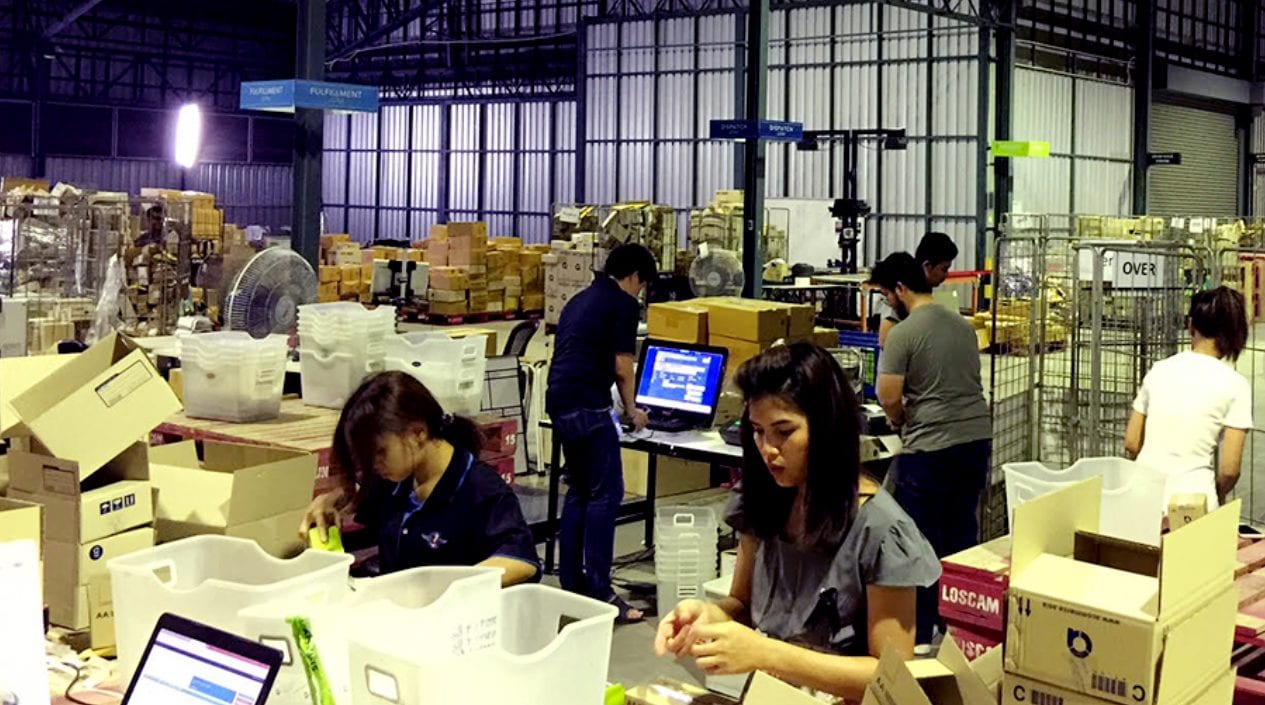
    aCommerce offers end-to-end e-commerce solutions for startups, retailers, brands, and manufacturers in South East Asia.

  • aCommerce recruits new CXOs for Indonesia operations

    aCommerce recruits new CXOs for Indonesia operations

    Norwegian international management executive Snorre Larstad​ will take the lead as aCommerce Indonesia CEO. Larstad previously worked as a chief strategy office for the Morris Group in China.

    Meanwhile, the company has also hired H​adi Kuncoro to lead its Indonesian operations for IT and supply chain management. This follows stints by Kuncoro in co-founding an Islamic fashion e-commerce company​ and a successful founding role at Rocket Internet’s Zalora Indonesia.

    Commenting on the leadership appointments, Paul Srivorakul, group CEO of aCommerce, said,“We’ve seen unparallelled growth in Indonesia and it is on track to become our most important strategic market.”

    Srivorakul added, “With Snorre’s experience scaling and managing huge and complex international retail businesses and Hadi’s success rate in building massive ecommerce operations in Indonesia we are confident that this pairing will streamline our incredible growth and gear us up for the next phase of our commercial development in Indonesia.”

    Indonesia recently became aCommerce’s biggest regional operation, with August seeing it reach a manpower count of 360 staff, surpassing the growth of its operations in Thailand and the Philippines. July 2015 also saw aCommerce Indonesia double its warehouse capacity to 9332 square metre. A new Pondok Ungu fulfilment center of more than 5232 square metres was added to supplement the current 4100 square-metre Halim facility.

    aCommerce Indonesia currently powers ecommerce for major brands and retailers such as Matahari Mall, HP and L’Oreal. According to official statements, the demand for aCommerce’s services in Indonesia exceeded forecasts due to the rapidity and growth of heady new entrants to the Indonesian e-commerce space and the growth in major clients signed.

    This internal round was targeted at funding the development of further competencies in marketing, technology platforms, expanding warehouse space and recruitment. The addition of Snorre and Kuncoro to the team brings significant knowledge capital to aCommerce as its scales up operations in Indonesia and the region.

    In a media release, Snorre stated: “This is an exciting time to be in the ecommerce industry in Indonesia. With ecommerce still accounting for much less than one per cent of retail in Indonesia, I will be continuing the work of positioning aCommerce as the key driver of ecommerce industry development across the archipelago.”

    Snorre succeeds previous CEO Hadi Wenas, who has taken up the role of CEO as M​atahariMall.com.​ Previous co-CEO Adrian Suherman has shifted to an executive role within the Lippo Group.

    Snorre speaks fluent Chinese and his twenty years in international management have predominantly taken place in Asia, with a career involving roles across the retail, manufacturing, supply chain, shipping, strategy and financial advisory sectors. Snorre had also previously worked for AT Kearney as a strategy consultant, advising CXOs on M&A, supply chain and growth strategies across multiple industries on a global scale.

    A member of i​dEA​ and deputy chief of the Indonesia L​ogistics Association, new COO​ Kuncoro previously served as the COO of First Logistics and as VP and operations director at Zalora Indonesia. Kuncoro brings deep domain experience in r​etail management, supply chain and domestic and cross-border logistics across consumer goods and retail industries.​

    Indonesia is slated to become the biggest ecommerce market in Southeast Asia, with a recent AT Kearney report estimating the market to grow to reach $30 billion in value over the next few years, up from the $1.3 billion in 2013.

    “In Indonesia, we envision that the industry is about to enter into a rapid growth phase. aCommerce will be at the forefront of providing the solutions for any obstacle in the growth path of the ecommerce industry,” said Snorre.

    According to aCommerce, the latest CXO recruitments are in preparation for a Series B round and further scaling of its operations in Indonesia and the region. Earlier this year, it raised a $5 million internal bridging round in preparation for a Series B round of funding.

  • B2B Marketplace Bizzy.co.id Launches in Indonesia With $2.5 Million Investment

    B2B Marketplace Bizzy.co.id Launches in Indonesia With $2.5 Million Investment

    Ardent Capital today announced the launch of one of Indonesia’s first B2B ecommerce marketplaces with a $2.5 million commitment to Bizzy.co.id, amidst a growing investor gold rush to ecommerce ventures in the country.

    Bizzy will solve a pain point with procuring inventory, supplies and services from other businesses. The platform carries thousands of products from hundreds of merchants in business supplies, electronics, cleaning, pantry and services.

    “Globally B2B ecommerce has gained massive traction. In Korea we’re talking 91 percent penetration, while in Indonesia this type of ecommerce is in its infancy so the opportunity is huge. Just 11 percent of all startup endeavours in Indonesia are dedicated to B2B,” said Adrian Vanzyl, CEO of investor Ardent Capital.

    Disrupting the Traditional B2B Climate

    Bizzy CEO and co-founder Peter Goldsworthy spent the past eight years building businesses in Indonesia and saw a lack of innovation in business supplies and services.

    “I was constantly frustrated with ordering supplies and services. In particular I felt the entire process of sourcing, approval and shipping could easily be improved upon,” Peter said.

    Through market research Bizzy discovered that many distributors and principal brands were having difficulties reaching and servicing their direct B2B customers.

    “Merchants were struggling to meet the needs of businesses. What we were seeing was that the way businesses shop was much more complex than how an individual would and this was causing problems at both ends of the transaction,” Peter explained.

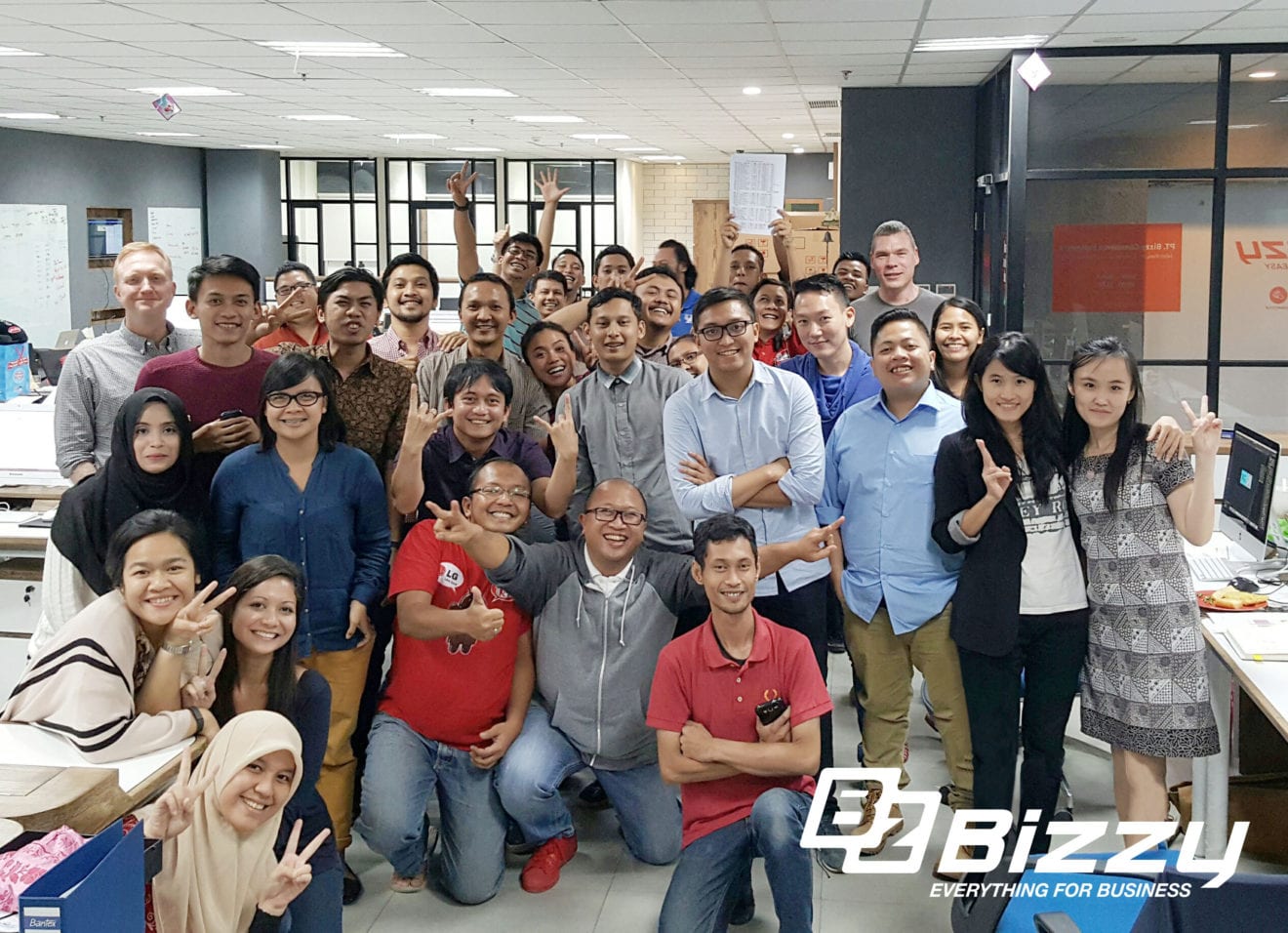
    Bizzy helps merchants make the shift to online and meet the logistical demands of B2B business customers, by integrating multiple shipments from multiple vendors, known as ‘crossdocking’, through the fulfilment center of partner aCommerce.

    Enticing Millennials

    The demographics of those making B2B purchasing decisions has shifted rapidly. In a Google- and Millward Brown Digital-partnered B2B marketplace report this year, data showed that between 2012 and 2014 the age of those doing B2B research increased 70 percent in the 18- to 34-year-old age group. The data also showed that by 2014 this millennial age group was also accounting for 46 percent of B2B purchasing decisions.

    “Millennials are now the key decision-makers for company sourcing. This changing of the guard means they expect the same information available for personal purchases when they search for business solutions. Bizzy addresses that need,” Peter added.

    Bizzy will actively support not just tech startups but charities, hospitals and universities by offering wholesale pricing through a complimentary year of ‘Bizzy Wholesale’ membership, entitling them to wholesale purchase rates irrespective of purchase quantity.

    With customers like Tiket.com, Traveloka, Halomoney and Grabtaxi already onboard, Bizzy is generating the buzz to make 2015 the year of B2B.

    Snapshot: Penetration of B2B Ecommerce in Asia

    In the US, B2B ecommerce represents a $1 trillion opportunity, while in mature Asian markets B2B ecommerce already accounts for a large and growing share of total online transactions:

    • In China B2B ecommerce is estimated to have a potential value of $2.1 trillion by 2020
    • In South Korea 91 percent of online transactions are B2B
    • In Thailand B2B represents more than 50 percent of all online transaction value, yet by startup founder type, captures less than 20 percent of all founders who launch businesses
    • In Indonesia the current split between B2B and B2C revenue is just 11 percent