
Tag: acquisitions

  • Nebula Brands Secures $50 Million Series B at $530 Million Valuation

    Nebula Brands Secures $50 Million Series B at $530 Million Valuation

    Beijing-based e-commerce aggregator Nebula Brands raised $50 million in a Series B funding round, valuing the enterprise at $530 million. Consumer private equity firm L Catterton Asia led the capital injection.

    Matrix Partners China and early backer Alpha Startups joined the round, lifting total capital raised by the rollup operator to roughly $60 million across two institutional financings. Founded in May 2021, the venture acquires profitable, high-volume Chinese third-party merchants operating on Amazon’s international storefronts and integrates them into a centralised supply chain and brand management network.

    Financing the Buyout Pipeline

    Proceeds from the transaction provide dedicated balance-sheet capacity to accelerate merchant acquisitions. Nebula Brands had already completed one vendor purchase and lined up several pipeline targets before the round closed.

    The business model targets established domestic vendors that have reached multimillion-dollar annual sales volumes on Amazon but lack the working capital, brand marketing expertise, and overseas infrastructure required to scale. The company handles cross-border operations, product development, digital marketing, and local manufacturing relationships directly from its headquarters in China. The company’s prior equity raise was a $10 million Series A led by Matrix Partners China in January 2021.

    The Cross-Border Vendor Battle

    Chinese storefronts account for more than one-third of Amazon’s active merchant base. About 600,000 mainland third-party vendors generate roughly $135 billion in gross merchandise value on the marketplace, with projections showing their share expanding to 45 per cent of all third-party sales on the platform by 2025.

    Foreign aggregators including Berlin Brands Group, Razor Group, and Thrasio have set up sourcing outposts inside China to acquire those same merchants. Nebula Brands takes an opposing position by establishing domestic operational control, banking on local proximity to manufacturing clusters to outmanoeuvre European and American acquirers. Aggregators operating from Western markets struggle to verify proprietary supplier contracts and factory relationships on the ground. Operating locally removes that information barrier.

    Valuation Demands and Operational Realities

    A $530 million valuation on $60 million of equity capital raised establishes aggressive performance targets for an operator that launched within the same calendar year. The Fulfillment by Amazon aggregation model demands continuous operational improvements across acquired storefronts, not merely passive balance-sheet consolidation.

    Risk sits directly in marketplace execution. Amazon’s routine algorithmic changes, advertising cost inflation, and account enforcement policies expose rollup portfolios to sudden operational disruptions. Public comparable operators demonstrate the broad spread of multiples applied across digital consumer channels, where marketing service providers like Shanghai Lily & Beauty trade around 1.5 times revenue while facing volatile operating income margins. Sustaining profitability requires Nebula Brands to avoid the inventory bloat that penalises aggregators once acquisition pipelines outpace supply chain integration.

    The Trajectory of China’s Amazon Aggregators

    The institutional backing from L Catterton matches the playbook private equity applied across North American and European direct-to-consumer networks over the past decade. L Catterton provides global operational channels and consumer marketing resources, while Matrix Partners China supplies local capital syndication.

    Competition for high-margin third-party sellers remains tight across consumer categories including household goods, electronics, and personal wellness accessories. Aggregation platforms must balance acquisition purchase multiples against rising inventory carrying costs and international container shipping friction.

    Nebula Brands plans to complete its initial slate of pending vendor acquisitions while preparing its infrastructure for the targeted 45 per cent market share expansion anticipated from Chinese Amazon sellers through 2025.

  • SoftBank Plans Record $6.3 Billion Retail Bond Issue for AI Acquisitions

    SoftBank Plans Record $6.3 Billion Retail Bond Issue for AI Acquisitions

    Japanese technology conglomerate SoftBank Group is set to issue around 1 trillion yen, or approximately $6.26 billion, in corporate bonds targeting retail investors within Japan. This planned offering would represent the largest ever retail bond issue by a Japanese company, signaling a bold move by the firm to secure capital for its strategic investments.

    The substantial funds generated from this bond sale are earmarked for an aggressive expansion into the ‘physical AI’ sector. SoftBank’s Chairman and CEO, Masayoshi Son, has consistently championed AI as a critical area for future growth, and this financing move aligns with his vision to bolster the company’s position in advanced technological fields.

    Funding Strategic AI Expansion

    SoftBank’s focus on ‘physical AI’ indicates an interest in artificial intelligence applications that interact directly with the real world, potentially through robotics, autonomous systems, or smart infrastructure. This investment direction could see the company acquiring firms specializing in these areas, deepening its technological capabilities and market presence. The retail bond structure allows SoftBank to tap into domestic Japanese savings, diversifying its funding sources beyond institutional investors or venture capital rounds.

    The strategy reflects a broader trend among major Asian tech players to aggressively fund and acquire innovative technologies, particularly in the AI space. RetailNews Asia has observed similar capital-raising efforts and strategic investments from other regional giants, all vying for leadership in emerging tech markets that promise to reshape consumer experiences and business operations across the continent.

    Boosting Investment in Physical AI

    Masayoshi Son has been a vocal advocate for significant investment in artificial intelligence, previously stating that the AI boom would necessitate trillions in annual investment. This record bond issuance underscores SoftBank’s commitment to transforming that vision into reality. The company’s prior investments in various tech startups globally have positioned it as a key influencer in the digital economy, and this latest move reinforces its determination to lead the next wave of technological innovation.

    For retail investors in Japan, these bonds represent an opportunity to participate in the growth of a prominent domestic tech firm while potentially seeking more attractive returns than traditional savings options. The success of this large-scale offering will be closely watched as an indicator of both investor appetite and SoftBank’s ability to finance its ambitious AI-driven future.

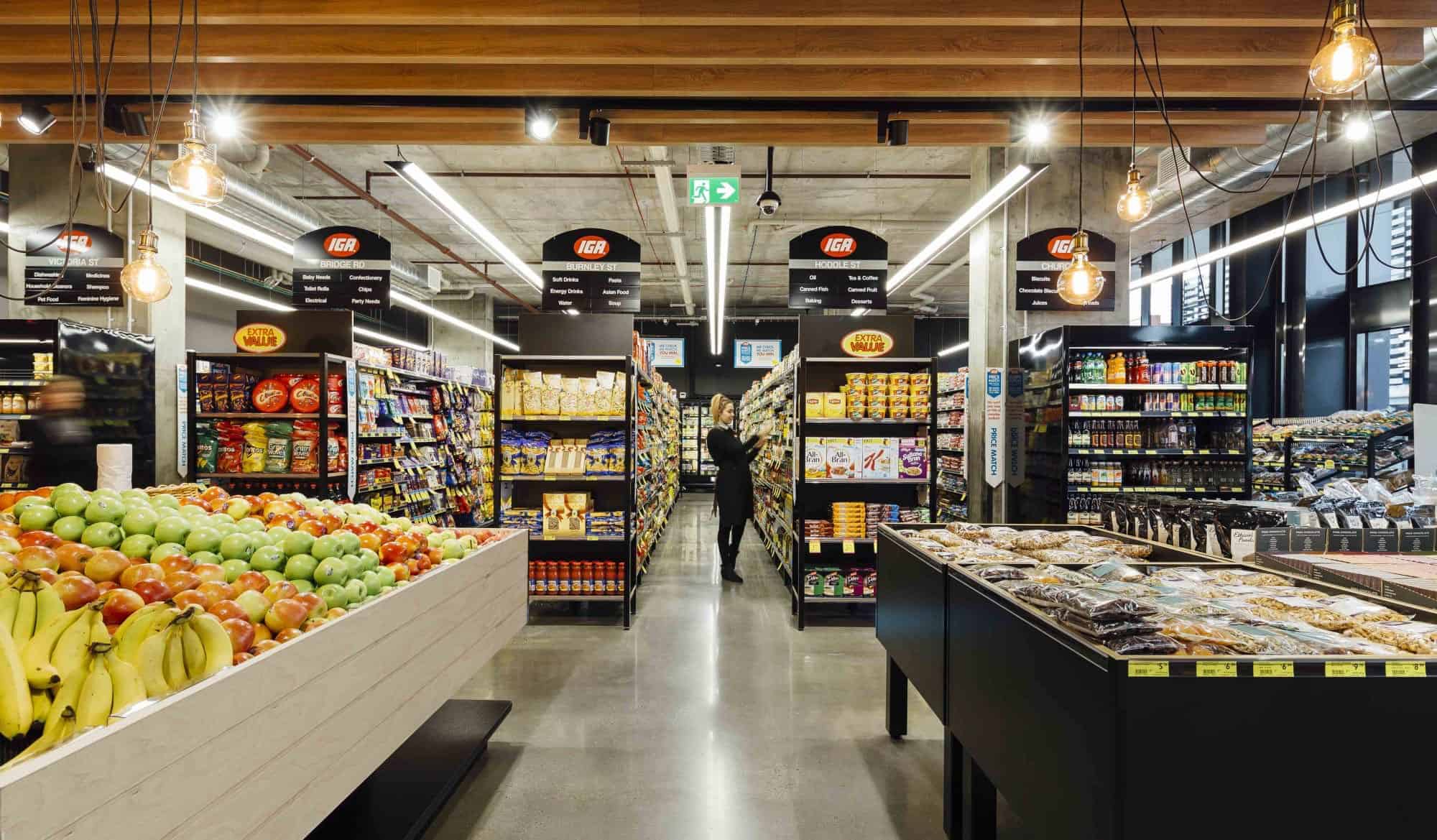
  • Metcash Reports Robust Financial Growth, Hits $17.3 Billion Group Sales Revenue

    Metcash Reports Robust Financial Growth, Hits $17.3 Billion Group Sales Revenue

    Metcash, a leading wholesale distribution and marketing company, has recently announced a robust financial performance for the current fiscal year. The company’s group sales revenue reached $17.3 billion, marking a 7.2 per cent growth compared to last year’s figure of $15.9 billion.

    Financial Performance Details

    The company’s underlying group EBITDA (Earnings Before Interest, Taxes, Depreciation, and Amortization) witnessed a considerable rise, going from $688 million to $737.8 million. Further, there was also a 10.1 per cent increase in its reported profit after tax as the figures moved from $257.2 million to $283.3 million.

    In terms of sector-wise performance, Metcash’s food division reported sales revenue of $8.8 billion, excluding tobacco sales. This substantial figure, which is a 20.8 per cent increase year-on-year, has been largely attributed to the growth of supermarkets and convenience stores, along with Metcash’s partnership with Superior Foods beginning this June.

    Sector-wise Breakdown

    Metcash’s liquor division also exhibited growth, with the revenue rising by 3.3 per cent, moving from $5.1 billion to $5.3 billion. This growth has been fuelled by the successful performance of all IBA brands under Metcash, including Cellarbrations, The Bottle-O, IGA Liquor, and Porters. However, this sector did see a minor setback as its liquor EBITDA decreased from $125.7 million to $123.5 million, marking a 1.8 per cent drop.

    Lastly, Metcash’s hardware division reported a revenue of $3.6 billion, indicating a 2.4 per cent increase. This growth can be attributed to Metcash’s acquisition of Total Tools.

    Questions & Answers

    What was the total group sales revenue reported by Metcash for the current fiscal year?
    The company reported a total group sales revenue of $17.3 billion.

    Which division of Metcash recorded the highest increase in sales revenue?
    Metcash’s food division recorded the highest increase in sales revenue, marking a 20.8 per cent growth year-on-year.

    What factors contributed to the growth of Metcash’s hardware division?
    The growth in the hardware division is largely due to the company’s acquisition of Total Tools.