Retail News CRM

Tag: activewear

  • Nike Partners With Skims For Inclusive, Innovative Women’s Sportswear Line

    Nike Partners With Skims For Inclusive, Innovative Women’s Sportswear Line

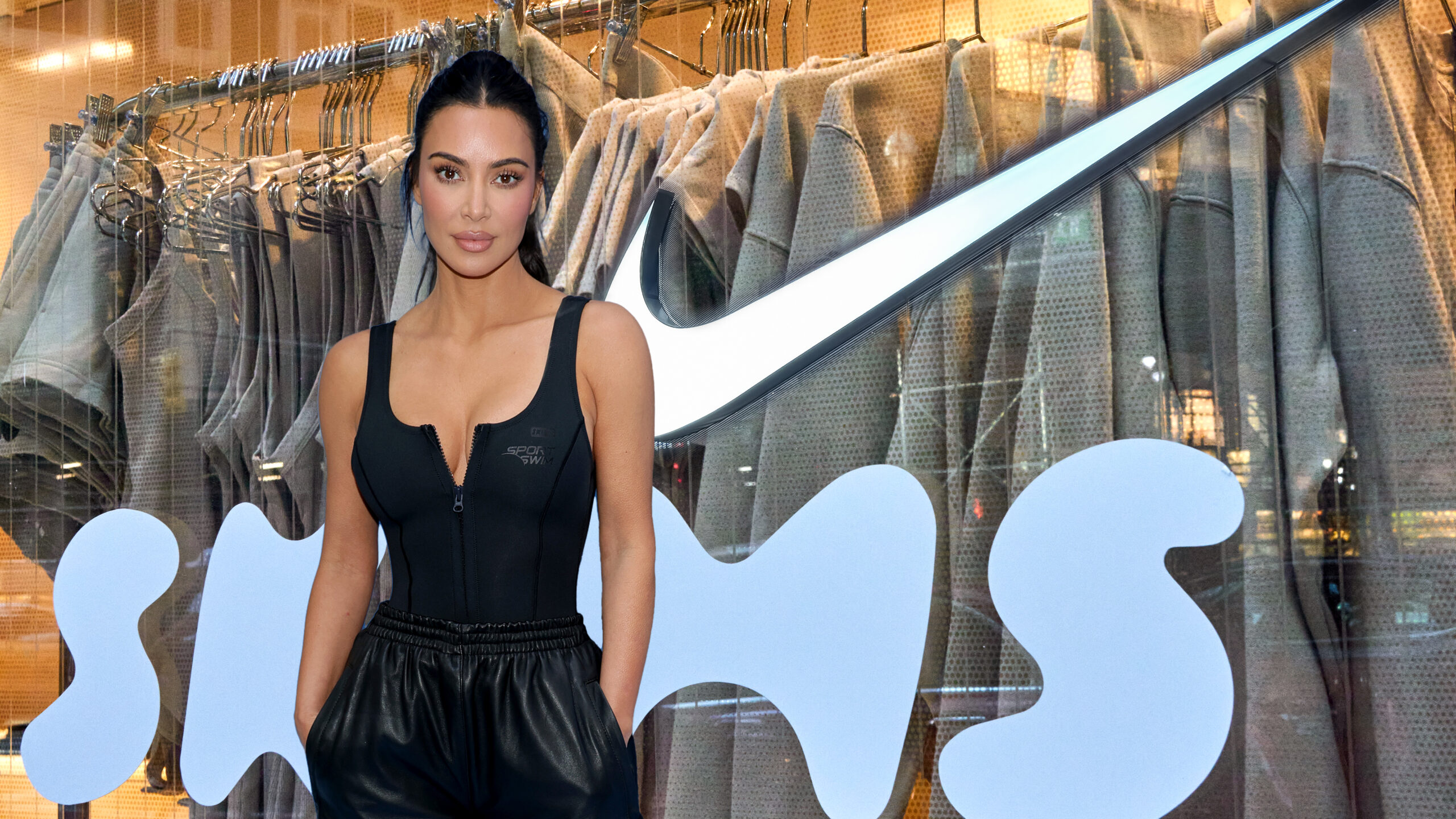
    Nike has recently joined forces with Skims to unveil a line of women’s sportswear, a move that aligns with their commitment to inclusivity and ongoing innovation.

    The NikeSkims collection, expansive in its offering, covers seven categories and 58 styles. The companies have described the collection as a “system of dress” which allows for more than 10,000 combinations to cater to women’s diverse needs.

    The collection features essential items such as bras and leggings, as well as seasonal pieces and accessories that are designed for a comfortable transition between athletic activities and casual, daily wear.

    Kim Kardashian, co-founder and chief creative officer of Skims, expressed the goal of the collaboration was to “redefine the rules of women’s activewear.” The aim is to bring together style and performance-driven designs that meet the modern woman’s demand for both. “No more compromises,” Kardashian asserted. “We’re combining high-performance innovation with sexy, style-forward design for all women who demand both.”

    In addition to its emphasis on inclusivity and innovation, the line focuses on sculpting fabrics, neutral color palettes, and versatile layering options, further enhancing the adaptability of the collection to different body types and lifestyles.

    Amy Montagne, the president of Nike, stated the collaboration falls in line with Nike’s broader strategy to pioneer innovation in women’s products. “NikeSkims is a bold evolution in how women experience sport and style. Together with Skims, we’re delivering an experience that no other brand can offer,” said Montagne.

    Questions & Answers

    What is the aim of the NikeSkims collaboration?
    The joint venture aims to redefine the rules of women’s activewear by combining performance-driven design with stylish aesthetics that cater to the diverse needs of women.

    What are some key features of the NikeSkims line?
    The line is characterized by its sculpting fabrics, neutral color palettes, and versatile layering options. It offers foundational items like bras and leggings as well as seasonal pieces and accessories.

    How does this collaboration align with Nike’s broader strategy?
    The collaboration aligns with Nike’s wider strategy to expand innovation in women’s products, offering a unique blend of sport and style that no other brand can provide.

  • On Unveils Nature-inspired Flagship Store In Bangkok’s Iconsiam: A Blend Of Luxury Retail And Community Hub

    On Unveils Nature-inspired Flagship Store In Bangkok’s Iconsiam: A Blend Of Luxury Retail And Community Hub

    Swiss-based sportswear retailer, On, has proudly unveiled its new flagship store located within the luxurious confines of Bangkok’s prestigious IconSiam mall. This exciting venture was launched in collaboration with their Singaporean counterpart, Gill Capital.

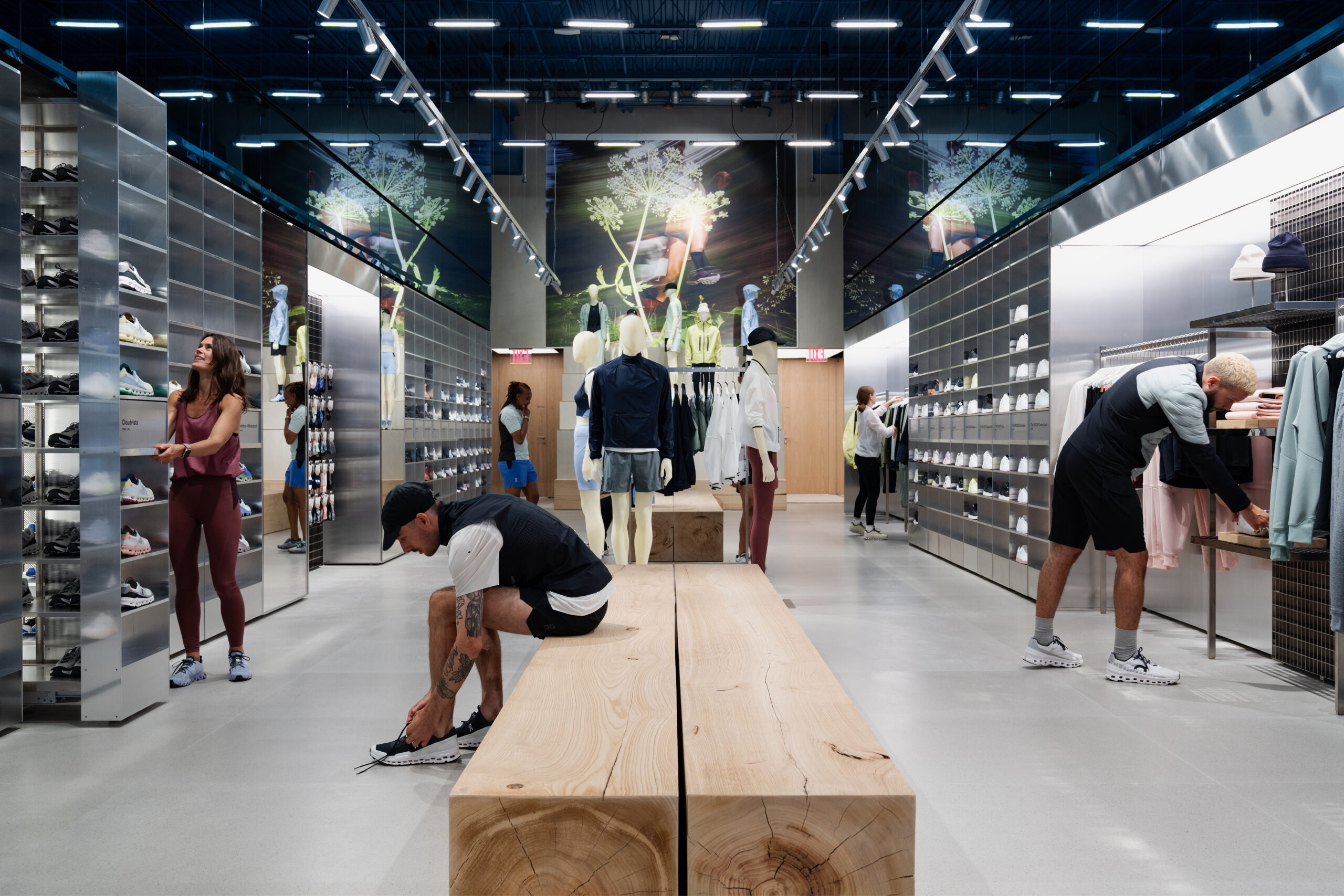
    The store, an expansive area covering 826 square meters, takes its inspiration from the natural beauty of Khon Kaen’s Blue Spring. The interior is a harmonious blend of nature-inspired elements such as stone textures and fluid, curved designs, alongside state-of-the-art technological innovations.

    The centrepiece of the store is the “Magic Wall.” This interactive installation invites customers to explore a variety of footwear options, delve into the narratives behind the products, and learn about the brand’s proprietary CloudTec cushioning and Speedboard technology.

    Visitors will find the store segmented into distinct zones to cater to a wide array of activities. These dedicated sections include running, training, lifestyle, tennis and children’s wear, providing customers with an immersive journey through the full spectrum of the brand’s product offerings.

    In addition to serving as a retail destination, the new flagship store will also function as a community hub. The space will host a variety of events such as run clubs, workshops, and training sessions, fostering a sense of community among its patrons.

    Questions & Answers

    What is the inspiration behind the design of On’s new flagship store?
    The store’s design draws inspiration from Khon Kaen’s Blue Spring, merging natural stone textures and curved design with high-tech elements.

    What distinct zones can customers expect to find in the store?
    The store is segmented into zones for various activities, including running, training, lifestyle, tennis, and kids’ wear.

    What additional purpose will the new flagship store serve?
    Beyond a retail destination, the store will also function as a community hub, hosting run clubs, workshops, and training sessions.

  • China’s Xtep arrives in five more Indian cities

    China’s Xtep arrives in five more Indian cities

    Hong Kong activewear firm Xtep will open new locations in five Indian cities by the end of next year.

    The firm launched in Bengaluru last year, going on to open stores in Chennai, Gurugram, and Thrissur (Kerala). It is expected to open its new locations in Hyderabad, Goa, Kochi, Pune, and Mysuru.

    According to an Economic Times report, the brand’s local director Vijay Chowdhary said the firm will expand next year by “introducing products through a mix of exclusive and multi-brand outlets”.

    Xtep India is preparing to “bring high-tech consumer sports technology and after that will invest in sports infrastructure after assessing the market demand”.

    Xtep currently operates outlets in 20 countries

  • Leather bag sales decline due to Activewear Offerings

    Leather bag sales decline due to Activewear Offerings

    For the second year in a row, leather bag sales have declined and nylon and other fabric options are now driving significant growth for the US women’s bag market, according to retail tracking service The NPD Group.

    According to the group’s analysis, the same casual athleisure wear trend that continues to drive growth in the active apparel and sport leisure footwear markets is starting to influence women’s fashion accessories.

    While leather still accounted for more than half of dollar sales in the women’s bag market as of the 12 months ending March this year, its decline accounted for 60 per cent of the category’s falling sales. Vinyl accounted for 20 per cent of market and 30 per cent of the declining sales.

    Much smaller in terms of overall sales, nylon, polyester, and cotton options accounted for just 11 per cent of all women’s bag dollar sales, but accounted for almost 90 per cent of the growth this past year.

    “Today, fashion is as much about comfort as it is about personal style, and that is carrying over into the way consumers are accessorising,” said The NPD Group fashion footwear and accessories industry analyst Beth Goldstein. “Women’s bags in new silhouettes and new materials are driving the industry forward.”

    Traditional leather silhouettes, such as shoulder bags, cross-body bags, totes, shoppers, and satchels, are all contributing to leather bag declines. These styles account for 90 per cent of total women’s leather bag sales by value, and drove as large a share of the losses during the year to March. The smaller, fast-growing categories of fanny/waist packs and fashion backpacks remain strong, as does leather in the designer space – but designer non-leather/non-vinyl alternatives grew at a faster rate and generated almost as many incremental dollars as did leather.

    Both established and emerging brands are promoting nylon and other alternative materials, such as “vegan leather”, neoprene and recycled options that may be lighter in weight and easier to clean than leather items. These options can appeal to a consumer looking for day-to-day practicality, as well as those looking for sustainable purchases.

    “New leather goods are facing competition from a multitude of angles – from the casualisation of today’s styles to the emphasis on sustainability, and a changing retail market that is helping to extend the life of pre-owned leather products,” said Goldstein.

    “At the same time, the recent focus on alternative materials and new styles signals opportunity for the fashion accessories market – the opportunity to capture the consumer’s attention again.”

  • Decathlon opens Singapore megastore

    Decathlon opens Singapore megastore

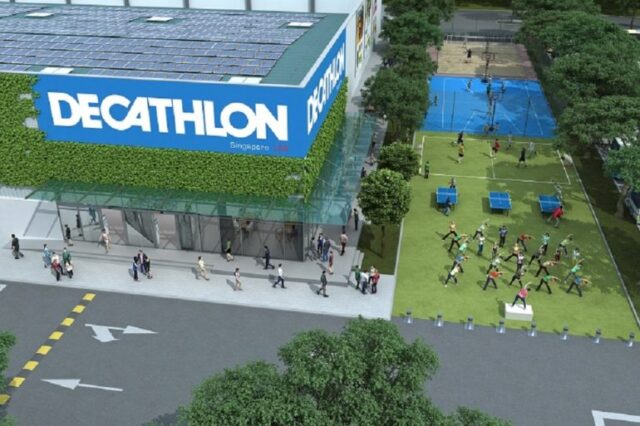
    French sports chain Decathlon opened its largest store in Singapore late last month, as the European retailer continues to build upon its popularity in the Asian market. Dubbed ‘Decathlon Singapore Lab’, the new experience store is located at Stadium Boulevard and covers 5,000 square metres of retail space, making it the biggest Singapore store. It is also opened 24 hours.

    In addition to Decathlon’s inventory of sports apparel, footwear and accessories, the new ‘Lab’ boasts a series of ‘experiential’ features including an indoor area of four different running surfaces wherein shoppers can test running shoes before purchasing, as well as a hiking path with a gravel surface for the testing products in-store.

    At a media briefing last month, Decathlon Singapore chief executive Yves Claude said the store has been named Decathlon Singapore Lab “because a lab is a disruptive and innovative place where we test new solutions.”

    The store also hosts an Active Health Lab in partnership with Sport Singapore, where users can take a free health assessment and there are free-to-play areas next to the store as well.

    To speed up the delivery process for shoppers, Decathlon has established an in-house conveyor built that transports products as soon as they are ordered online. Shoppers can also order online and collect their items at their preferred store within two hours for free.

    “We have to give new reasons for customers to come back to our store,” added Claude.

    The store is the latest in a string of ‘Decathlon Experience’ stores being rolled out across Singapore and is the fourth in the nation’s offering.

    Decathlon also has a 4,000-square-metre showroom in Joo Koon and two click-and-collect stores.

    In May last year, Decathlon signed a memorandum of understanding with Sport Singapore, which marked the announcement of this new Decathlon in Kallang.

    “We share a common purpose, which is to make sport accessible. They come with a good price point, high-quality products, (and) most importantly, they come with ideas on how to improve participation,” said Lim Teck Yin, Sport Singapore CEO.

  • The shares of Lululemon athletica have risen 90% in 2018

    The shares of Lululemon athletica have risen 90% in 2018

    Over the past 12 months, shares of lululemon athletica have risen 90%. The most recent surge came after an upgrade on 2018 holiday season guidance, helping the athletic-wear stock rebound from a slump brought on by a broad stock market sell-off at the end of the year. Lululemon has enjoyed several tailwinds. Athleisure (that is, activewear and sports-inspired clothing for all situations) has continued to grow in popularity, and consumers have been generously spending — to the tune of 4.9% more on clothing alone in 2018, according to the U.S. Census Bureau. After a blockbuster run, though, Lululemon may have a difficult time repeating that same success in the new year.

    It is easy to see why shares of the clothing company have come roaring back. During the all-important holiday shopping season, management updated revenue guidance to between $1.14 billion and $1.15 billion, up from previous guidance of $1.12 billion. Earnings per share also got an upgrade to a range of $1.72 to $1.74, up from a range of $1.64 to $1.67.

    The results are impressive, but Lululemon has been measured by how it approaches expansion. Through the third quarter of 2018, there were 426 physical stores, up a net 22 from the start of the year. Instead of growing primarily by new openings, the company has instead benefited from a surge in same-store sales at existing stores — which increased 6% during the third quarter — as well as directing traffic to the online store. Direct-to-consumer sales were 25.3% of revenue in the third quarter, compared with 21.2% in the same period in 2017.

    Lululemon is not alone in the athleisure-wear category, though. Gap and its Old Navy and Athleta brands continue to grow their presence in sportswear, and the largest sports-only chain, Dick’s Sporting Goods, has also launched its own branded lines of clothing. Yet in spite of the competition, Lululemon has continued to resonate with new and existing buyers, both here in the states and abroad.

    The maker of stretchy pants and other sports-inspired clothing could nevertheless continue to run higher. After all, Lululemon has momentum on its side, both on the top and bottom lines. Even should sales growth take a breather, management has said it thinks gross profit margin on product sold could continue to expand, especially as a result of the emphasis on direct selling online and new higher-margin products such as coats and sweaters.

    On the other hand, there is reason for investors to give pause before jumping on the bandwagon. Even after earnings nearly doubled in 2018, the stock still trades at a premium, largely because share performance matched that of earnings. The trailing-12-month price-to-earnings (P/E) ratio currently sits at 52.5, a metric that only slightly improves to 43.2 when using free cash flow — a better measure of profitability, as it factors only for basic operating expenses and capital expenditures and excludes items such as depreciation and amortization.

    On a one-year forward basis, the P/E is currently at 40. Paying for decades’ worth of profits that haven’t yet been realized only makes sense if the bottom line continues to expand at breakneck speeds, and that’s what is implied in the rich valuation. Thus, there’s little room for error, and if there’s any slowdown at Lululemon, the stock could suffer losses at current levels.

    Of course, for those looking to the long term, Lululemon looks like a solid bet on the apparel industry of the future. Nevertheless, after renewed investor optimism over new fourth-quarter guidance, the stock is too rich for my taste.

  • Brands planning to cash in on rising menswear trend

    Brands planning to cash in on rising menswear trend

    This week, Nike launched its new collection of yoga wear for men. While this was the company’s first foray into men’s yoga apparel, the move was very much in line with competitors who have been making a push into the menswear apparel market recently. Lululemon, whose bread and butter has long been women’s yoga trousers, is one of those competitors. Former CEO Laurent Potdevin described menswear as one of the brand’s “best-kept secrets.” The company is now looking to grow this division into a billion-dollar business.

    Gap also jumped on the bandwagon last year, with its new casual menswear brand Hill City. But a push into menswear stretches beyond the athletic wear market – Madewell rolled out menswear in September, Saks Fifth Avenue recently closed its womenswear store in Brookfield Place but kept its menswear location open, sisters Mary-Kate and Ashley Olsen launched their own menswear collection for fashion brand The Row last year, and the list continues.

    These brands are all looking to capitalise on a big change in fashion, and that is that in the not too distant future, menswear may outgrow womenswear.

    Business intelligence firm Gartner L2 estimated that in just two years, revenue growth of men’s clothing will surpass that of women’s clothing. This data is backed up by Euromonitor International, which estimated that men’s lines will outperform women’s over the next six years. 

    “Fashion has always been about women but men are finally having their time,” says Lizzy Bowring, catwalk director at trend-forecasting agency WSGN.

    Bowring believes that the rise of a young, fashion-conscious male consumer is a key reason for this. “It’s the younger men that are driving the push for menswear,” she says. “These men are more savvy and aware, and there is a lot of competition to look the part.”

    Ayako Homma, beauty and fashion consultant at Euromonitor International, echoed these thoughts in an email.

    “One key trend is men’s changing perception of fashion. Men are spending more time, effort and money on their grooming and appearance,” she wrote.

    Experts say that this peak in menswear can be traced back to a boom in streetwear clothing, which has been driven by brands such as Supreme, Yeezy, and Off-White. These brands have experienced explosive growth in recent years and are considered to be redefining the fashion landscape.

    These labels have been embraced by luxury players, a move that has in turn given new life to some of the luxury brands.

    Louis Vuitton recently hired industry pro Virgil Abloh to become its new artistic director. Abloh is responsible for setting up perhaps the buzziest streetwear brand of all, Off-White, which was recently ranked the hottest label in the world.

    “The men’s business has exploded in the past five years,” Roopal Patel, fashion director of Saks Fifth Avenue said. Patel said the focus had shifted to bringing in newer menswear-focused labels such as Off-White.

    “We’ve gone from just category addressing to designers looking at how they’re going to wardrobe a man’s lifestyle, everything from work to evening to weekend to sport,” she said.

    Industry insiders say this trend is here to stay. “It’s more than a buzz. It’s a deeper trend,” said Sidney Toledano, head of LVMH’s fashion group. He continued: “There’s strong demand across the men’s fashion industry, in all its shapes and forms, and which comes in part from a younger clientele. We see it very clearly in the sales.”

  • Inside the Indian sportswear industry

    Inside the Indian sportswear industry

    India today is at par with wider global fitness trends. The booming economy and changing lifestyle preferences have compelled Indian consumers to be more health conscious and add new health and wellness routines to their hectic lifestyles. This trend has largely benefited the sportswear industry in India, which now is among the top in demand fashion segments of the country.

    According to a research report published by Global Industry Analysts Inc., the global market for Sports and Fitness Clothing is projected to reach US $231.7 billion by 2024. The research also indicates that technological developments designed to improve comfort and performance has also led to the growth in sales of sports apparel. The report points out that the Asia-Pacific region is expected to be fastest growing region, with a CAGR of 6.9 percent over the forecast period. Sales came from emerging markets, such as India and Thailand, as well as the US, the world’s largest sportswear market.

    The Indian Market

    According to reports from various internet sources, the Indian sportswear market grew 22 percent from 2015 to 2016, outpacing the segment’s global increase of 7 percent.

    As documented by a Euromonitor research, the sportswear market in India has grown from Rs. 24,000 crore in 2014 to Rs. 37,000 crore in 2016 at more than 50 percent over the past two years. A same study has shown a 23.7 percent CAGR for the 2011-16 period with a forecast of 11.3 percent for the 2016-2021 period.

    Men’s wear comprises the biggest share of the Indian sportswear market followed by the women’s and kids’ segments. In the recent past, the women’s market is progressively showing positive signs of accelerated growth. “Women’s wear is the fastest growing segment in the sportswear industry in India now — both for the industry and for us. Earlier, it was highly underpenetrated, but now it’s a booming segment. The men’s segment continues to grow at a steady pace of 40 percent,” says Sandeep Mukim, Managing Director, Proline.

    “While the men’s segment in sportswear is growing fast as numbers of sale, it is the women’s segment that is registering a higher growth percentage. This is due to the growing awareness of women for individual sports category like running, marathon, and other fitness activities. The kid’s segment is highly influenced by team sports – and the segment is growing fast along with the increasing popularity of cricket, football, etc.” says Mohit Prabhakar, GM, Nivia.

    “For our brand, as also for the category as a whole, the growth is largely driven by the men’s category. The women’s and kids market has not grown at the same pace, largely for the need to be fashion-oriented and/or more colourful as opposed to the fact of being more functional and performance-driven. Also, given the same budget, women are likely to purchase more garments to match element of their wardrobe and hence are more likely to buy, say, 2 pieces of stretch leggings rather than 1 track bottom,” says Sakshi Juneja, Key Accounts Manager of Black Panther, a unit of Juneja Global.

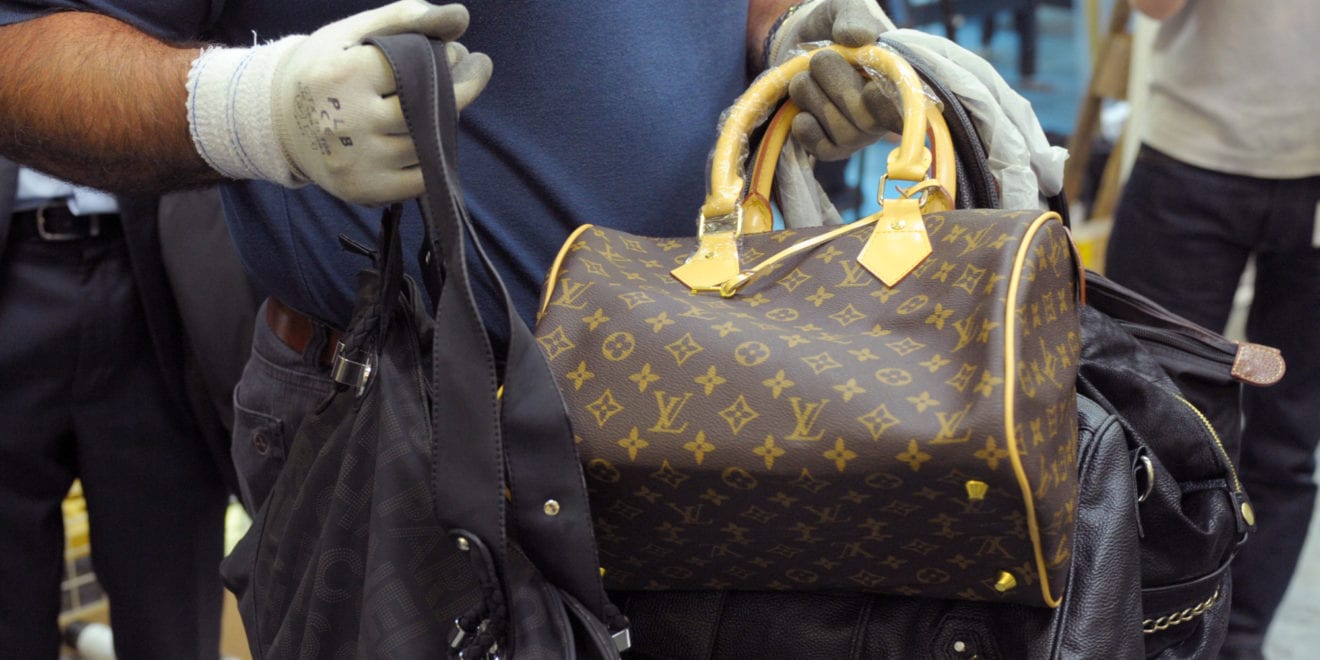
    “It is very difficult, almost impossible to accurately estimate the market size for sportwear, considering the fragmented nature of this particular industry and the overlapping categories such as lounge wear, athleisure and even sleepwear and undergarment brands vying for a slice of the activewear pie by styling themselves as sportwear brands. Added to this is the huge unorganized sector with a full-fledged and well-developed market for counterfeit merchandise of global brands, retailing brazenly through not only MBOs but also leading online portals,” she adds.

    As a whole, the sportswear market in India has traditionally been dominated by the big international brands, aptly named the ‘Big Four’ — Reebok, Adidas, Nike and Puma. Most of these brands entered the country in the 1990s and in the years that followed established their presence through a flood of local franchisees.

    But, in the recent past, given the enthusiasm of consumers towards sports and sportswear in general, a slew of brands, both home grown and foreign, have mushroomed absorb the market tendencies to cater to the rising needs of the consumers. Indian brands, although young, have an edge over their international peers – the price segment in which they operate. “In the case of apparel, international bigwigs are growing at very slow rate compared to homegrown brands due to their high price points. Indian brands are creating huge demand due to their capability of manufacturing compatible quality in India and offering products at very affordable prices,” explains Mohit Prabhakar.

    Of late, a legion of celebrity launched brands have surfaced in an attempt to cash in on the mammoth popularity they enjoy among the commonality. “With fitness fever gripping the nation, celebrities have also caught on to this trend. Bollywood stars Hrithik Roshan and Jacqueline Fernandez have launched their own sportswear brands which are gaining popularity amongst the general audience. However, for those who are more seriously into fitness, they still stick to more international and well-established brands because of proven technologies and brand equity,” remarks Vishal Gupta, Director – Retail, Puma India.

    Growth Drivers

    The average, modern Indian consumer’s lifestyle is undergoing a massive metamorphosis. Rising incomes and discretionary expenditure in urban India have allowed people to focus increasingly on health and wellness, as well as rising awareness of lifestyle diseases. The proliferation of international brands represented by sports and Bollywood stars have kept sportswear in the public eye fuelling this drive as well.

    Contemporary trends like taking long vacations, going on bike rides, hiking, travelling and indulging in recreational activities has been instrumental in driving growth of outdoor, sports inspired apparel. Most of the reputed brands of the sportswear domain have a wide range of outdoor apparel that makes a significant contribution to the total brand revenue.

    Driving the sportswear trend further into the masses are Indian pop culture icons, who are becoming self-proclaimed spokespersons of the fitness movement that is sweeping the country by storm. The proliferation of international brands represented by sports and Bollywood stars have kept sportswear in the public eye, fuelling this drive.

    The flourishing online retail market is yet another catalyst that has been successful in bolstering the growth of the sportswear market in India. E-commerce has especially been instrumental in aiding brands reach to smaller cities and towns where they are not physically present of yet. “E-commerce is a channel which is going to stay and keep becoming stronger because of its massive reach and the huge Indian population. As a brand we would never be able to reach them all with physical retail and hence would have to depend upon online. The younger population is also very tech savvy and spends a lot of their time on social media where they not only get to know fashion / trends but also make purchase decision,” says Vishal Gupta.

    “E-commerce is filling the availability gap for the consumers and thus growing fast. As physical retail would expand in these towns, we foresee that consumers would be happier to experience the products and buy,” says Sandeep Mukim.

    Considering that the second innings of the Indian retail revolution is all set to start from the country’s smaller cities, these geographical locations have emerged as key points of importance for the sportswear industry too.

    “The next big consumer group to adapt to this trend is currently in the smaller towns and cities of India. Their rising aspiration makes our availability in these locations a prime priority,” adds Sandeep Mukim.

    “Sportswear is a brand-driven category and footwear even more so, and footwear is what gives international brands the edge. Added to this is the fact that sports footwear has a largely undeveloped domestic manufacturing capability in terms of material, styling and technology. So the sourcing from manufacturing bases like China entails high MOQs and huge investments. Also, footwear having a low shelf life is a high-risk business. As such, global brands have an edge as it gives them the critical value and volume to sustain EBOs and premium retail space in megastores,” explains Sakshi Juneja.

    “However, Indian brands are pulling up their socks by smart sourcing of limited styles in footwear. Also, global brands are largely marketers who are dependent on local and international vendors for their apparel sourcing. Local brands like Black Panther, having vertically integrated manufacturing facilities are able to adapt and customize to customer preference more efficiently and will always have their own space,” she adds.

    The Indian Consumer

    The modern Indian consumer too has metamorphosed over the time and the Indian sportswear market now speaks to a more educated consumer who is aware of the importance of the right type of gear. “Through the internet and via international trends the consumer is updated with the latest in sportswear technology. To keep up with the evolving consumer, sportswear brands now launch products and technology at the same time as their global counter parts. The coolest and latest technology is brought to Indian audiences, giving them a taste of the type of innovation and experience the brand has to offer. Along with performance technology, trends such as athleisure and street style have played a big role in inspiring product and collections for the Indian market,” says Vishal Gupta.

    Although Indian consumers have come a long way from their earlier price conscious selves, vestiges of this trait are still witnessed today. In line with this, brands still have to make deliberate efforts in their pricing policies. “Our prices are competitive with other international players in the market. We also try to ensure that our price points are more or less the same in India and internationally. The key is providing an awesome product with cutting edge technology while keeping the pricing competitive,” says Vishal Gupta.

    “Nivia is capitalizing in a big way on our affordable price and technical products. In our factory at Jalandhar, we have total control from fabric designing to the final garment which is helping us in keeping our prices affordable for most products,” states Mohit Prabhakar.

    Conclusion

    The sportswear segment in India, like many other fashion segment, is undergoing an astounding change of perception as well as evolution. A noticeable change in the Indian sportswear industry is that it’s becoming increasingly organized; and modern retail is picking pace in small cities too, much to the delight of brands, suppliers and retailers of sportswear and sports lifestyle products.

    Overall, the industry is poised to grow, and India will be a key market as the awareness about sports and fitness increases and people become aware of being healthy.

    “We are extremely positive of the future and next opportunity is in making products for India at local prices. There is large population waiting to consume this category, which has stayed away till now because of the absence of trustworthy home grown players. The domestic brands would take this advantage as local manufacturing is becoming more updated,” concludes Sandeep Mukim.
  • Nike develops performance hijab

    Nike develops performance hijab

    Nike has developed a performance hijab for Muslim women athletes.

    The head covering, called the Nike Pro Hijab, has a single-layer pull-on design made from lightweight polyester in dark, neutral colors. Tiny holes in the fabric make it breathable while remaining opaque.

    Nike says it began work on the hijab after Muslim athletes complained about wearing a traditional head scarf during competition. The design process took 13 months, and the final product will be ready to roll out in the company’s spring 2018 collection.

    Meanwhile, a prototype is already being worn by Emirati figure skater Zahra Lari, who says few hijabs work for her when performing. “But once I put on the Nike hijab and took it for a spin on the ice, I was blown away by the fit and the light weight.”

    News of the new product comes just weeks after Nike released a commercial in the Middle East featuring five female professionals from different parts of the Arab world pursuing their athletic dreams while a voice asks, “What will they say about you?” – a rhetorical question many young Arab women face if they step out of cultural and traditional norms. The video went viral with million of views on social media, prompting a debate over its message.