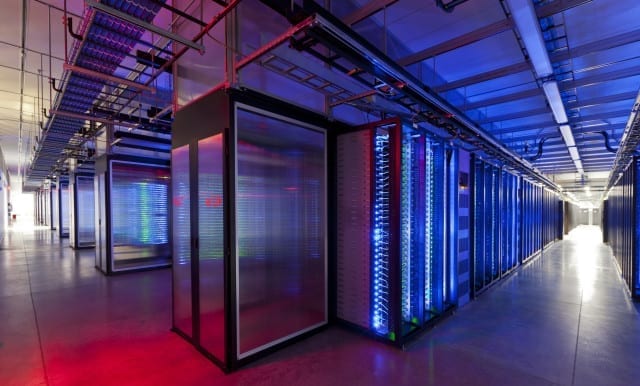
India is pouring billions of rupees in incentives into data centers for the likes of Google and Amazon, even as the drive is not expected to directly create much employment.
Industry reports show the country generates about 20 per cent of the world’s data but accounts for only 4 per cent of global data center capacity.
State Subsidies and Tech Builders
Key developments include a Google-Adani data center construction site in Vizag, Andhra Pradesh, seen on Aug. 3, alongside a Hewlett Packard Enterprise data center in Bengaluru pictured in May.
These facilities require heavy capital expenditure for land acquisition, high-voltage electrical grid hookups, advanced cooling units, and high-end server racks. Yet once construction finishes, the facilities run on automated management software and minimal human supervision. A multi-megawatt campus that costs hundreds of millions of dollars to erect often requires fewer than 100 permanent technicians, security personnel, and facility managers.
The Automation Reality in Digital Infrastructure
For industrial real estate developers and infrastructure funds across Asia, the asset class offers reliable long-term yields backed by top-tier credit tenants. Power and land availability dictate project viability rather than access to deep labor pools. The economic return flows to landlords, power utilities, and equipment vendors rather than local payrolls.
Retailers and enterprise software platforms across the region gain faster cloud compute speeds and lower network latency from local server farms. However, government planners expecting large-scale white-collar employment from data centers face a structural mismatch. The sector builds digital backbone capacity, not mass employment.
Shifting Focus to Component Supply Chains
Earlier policy frameworks treated digital infrastructure investments as equivalent to traditional technology services campuses that once absorbed thousands of engineering graduates. Experience across major Asian hubs from Singapore to Johor shows that high-density computing clusters generate indirect jobs primarily during site preparation and electrical civil works.
State authorities are now monitoring whether downstream server assembly and electrical manufacturing can capture additional domestic value. The gap between India’s 20 per cent data generation share and its 4 per cent physical capacity ensures building will continue, with power procurement contracts serving as the next major performance metric.