Retail News CRM

Tag: adoption

  • Riding the Yuan Wave: Global Companies Amplify Chinese Currency Adoption, Says StanChart Report

    Riding the Yuan Wave: Global Companies Amplify Chinese Currency Adoption, Says StanChart Report

    Companies across the globe are progressively employing the Chinese yuan in an array of contexts, as noted in a recent study by Standard Chartered. These contexts range from settling trade transactions to financing supply chains.

    A growing number of international corporations are adopting the use of the Chinese renminbi (RMB). Statistics from a Standard Chartered study reveal that 23% of revenues and 25% of costs are subject to the influence of this currency. However, the report also points out that only 14% of debt is in RMB, indicating a discrepancy between operating exposure and the currency employed for financing.

    The study suggests that the uptake of RMB is increasingly motivated by operational necessities of corporations rather than currency positioning. The main factors encouraging its adoption are trade settlement, supply chain financing, alignment of balance sheets, and management of foreign exchange and interest rate exposure.

    Diverse Regions, Diverse Adoption Trends

    The adoption patterns of the RMB vary across different regions. For instance, corporations in Greater China and North Asia are extending their use of RMB beyond settlement to include funding and liquidity management. The uptake in Southeast Asia is primarily driven by supply chain needs, whereas in the Middle East and parts of Africa, the usage is concentrated in the energy and infrastructure trade sectors. In Europe and the Americas, the capital market issuances and selective funding diversification are emerging as significant starting points.

    Karen Ng, the head of China opening and RMB internationalization at Standard Chartered, stated, “Many corporations already have significant RMB exposure through trade, procurement, and supply chains. As the market infrastructure deepens and liquidity expands, the adoption is increasingly being driven by operational needs, including trade settlement and balance sheet alignment.”

    The report titled “Renminbi in Motion for Corporates” is based on a survey involving nearly 300 global corporations across 19 sectors.

    Questions & Answers

    Why are corporations worldwide increasingly using the Chinese yuan?
    The use of the Chinese yuan is growing due to operational needs including trade settlement, supply chain financing, balance sheet alignment, and managing foreign exchange and interest rate exposure.

    How does the adoption of the Chinese yuan vary across different regions?
    Adoption patterns differ by region. Corporations in Greater China and North Asia are expanding its use beyond settlements to include funding and liquidity management, while in Southeast Asia, adoption is largely driven by supply chain needs.

    What is the percentage of revenues and costs carrying exposure to the Chinese yuan, according to the report?
    The report indicates that 23% of revenues and 25% of costs are subject to the influence of the Chinese yuan.

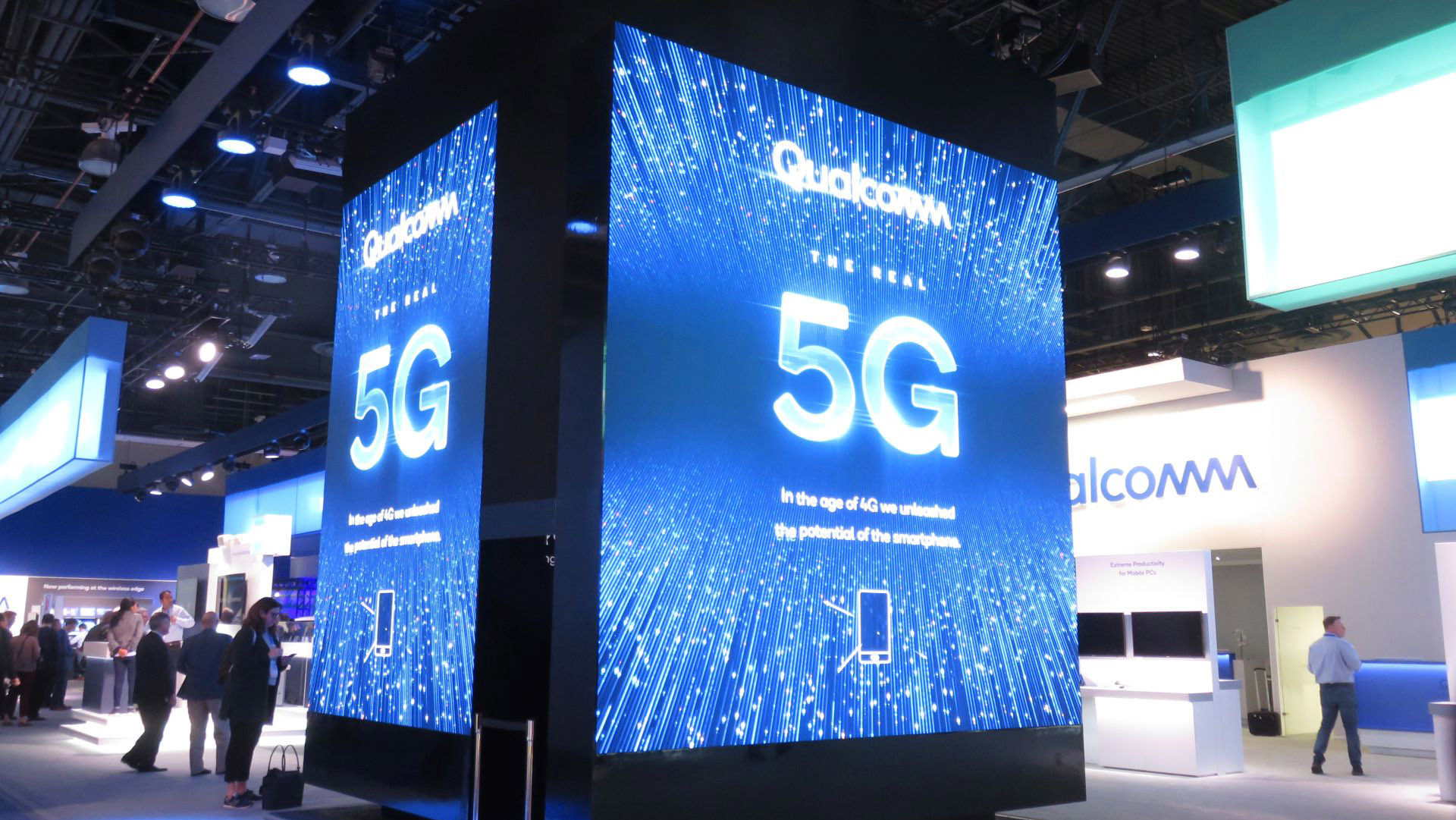
  • 5G Revolution in Asia-Pacific: Skyrocketing Adoption Set to Reach 4.6 Billion Connections by 2030

    5G Revolution in Asia-Pacific: Skyrocketing Adoption Set to Reach 4.6 Billion Connections by 2030

    5G technology is quickly gaining traction in the Asia-Pacific region, with its compound annual growth rate (CAGR) projected to climb by 11.4%. This surge is anticipated to elevate the number of 5G connections from 2.7 billion in 2025 to 4.6 billion by 2030. The escalation is primarily attributed to the increasing availability of cost-effective 5G devices, continual network expansions, particularly in India, Malaysia, and Thailand, and the imminent unveiling of services in Pakistan and Sri Lanka.

    Key Drivers of 5G Adoption

    Government initiatives, corporate digital transformation efforts, and the burgeoning demand for high-performance connectivity necessary for evolving application areas are the primary drivers of this growth. Emerging application areas include smart manufacturing, autonomous mobility, and cloud gaming. Additionally, government and telecom regulatory bodies in Australia, China, India, South Korea, Japan, and Taiwan have introduced national 5G strategies and action plans. These outline the vision and guidelines to establish 5G ecosystems, expand 5G coverage, and drive adoption. These strategies feature supporting initiatives such as public sector investment in 5G applications, favorable tax incentives, industry-government collaboration forums, promotion of 5G-led technological innovations, and license arrangements to optimize spectrum use.

    China Leading the 5G Market

    China is projected to maintain its position as the world’s largest 5G market throughout the forecast period. Approximately 75% of its total mobile subscriptions are expected to be on a 5G network by 2029, fueled by investment and regulatory efforts to extend 5G service coverage to rural areas and industrial parks. For instance, China had installed close to 4.2 million 5G base stations by 2024, increasing this figure to 4.6 million by the end of September 2025, significantly enhancing its network capacity and coverage. This continued expansion of 5G networks by telecom operators is also propelling the market forward throughout the Asia-Pacific region.

    Investments in 5G Infrastructure

    Regional telecom companies are planning to invest approximately USD 254 billion in network infrastructure by 2030, with a primary focus on 5G deployments. These expansions present telecom companies with opportunities to increase revenue through the sale of premium 5G mobile plans and the provision of enterprise connectivity solutions, such as private 5G. The synergy of 5G’s speed and reliability with emerging technologies like AI, data analytics, and M2M/IoT will allow telecom companies to innovate and extend their customer base into sectors like healthcare, manufacturing, and mining.

    Questions & Answers

    What is the projected compound annual growth rate (CAGR) of 5G in the Asia-Pacific region?
    The CAGR of 5G in the Asia-Pacific region is expected to be 11.4%.

    Which country is anticipated to remain the world’s largest 5G market?
    China is projected to retain its position as the world’s largest 5G market.

    What is the planned investment by regional telecom companies in network infrastructure by 2030?
    Regional telecom companies plan to invest an estimated USD 254 billion in network infrastructure by 2030, primarily focusing on 5G deployments.

  • Balancing Speed and Security: UOB CEO Wee Ee Cheong’s Take on AI Adoption in Fintech

    Balancing Speed and Security: UOB CEO Wee Ee Cheong’s Take on AI Adoption in Fintech

    United Overseas Bank (UOB) CEO, Wee Ee Cheong, recently expressed his concerns over the potential risks that come with the swift implementation of technology. He emphasized that in the financial services sector, ensuring security and maintaining trust is crucial to prevent undesired consequences.

    Striking a Balance between Progress and Risk

    There’s no denying that the integration of artificial intelligence (AI) brings about a myriad of advantages. However, it is equally important to recognize that with these benefits comes an array of risks. These risks can take various forms, from distorted results due to faulty data interpretation, breaches of data privacy, to the rise of sophisticated fraudulent activities. Wee Ee Cheong highlighted that the pace at which these technologies are adapted should be tempered with appropriate security measures.

    According to Wee, “Speed without security is fragile. The foundation of lasting relationships is trust,” while speaking at the Singapore FinTech Festival in 2025. He underscored the importance of regulatory transparency and the need for standardization within the industry.

    AI: An Aid, Not a Substitute

    Wee also shed light on the broader societal implications of the widespread use of AI, emphasizing that technology cannot and should not replace humans.

    “AI cannot replicate the empathy in advice, the ethics in decision-making, or the leadership and judgement that builds trust over time,” said Wee. He stressed the role of AI as a tool to assist humans in improving efficiency and increasing productivity rather than replacing them.

    A “Mindset-First” Approach

    Wee proposes that the financial sector should adopt a “mindset-first approach”. This approach centers on problem-solving guided by purpose and value, as opposed to a “technology-first approach” that promotes innovation solely for its own sake.

    As an illustration of this approach, he mentioned initiatives at UOB such as a program that has assisted 1,000 SMEs in Southeast Asia in the initial stages of AI integration and efforts to improve the skills of the bank’s 32,000 employees through an innovation academy.

    By working together, Wee believes we can shape a financial industry that is resilient, adaptive, and aligned with society’s changing needs and values.

    Questions & Answers

    What are the potential risks associated with the rapid adoption of AI in the financial sector?
    Answer: Risks can range from data misinterpretation leading to inaccurate results, violation of data privacy, and the emergence of sophisticated fraud schemes.

    What is the role of AI according to UOB CEO, Wee Ee Cheong?
    Answer: Wee views AI as a tool to aid humans in increasing efficiency and productivity, not as a replacement for human empathy, ethics, leadership and judgement.

    What approach does Wee advocate for in the financial sector regarding technology adoption?
    Answer: Wee advocates for a “mindset-first approach” that focuses on problem-solving guided by purpose and value, as opposed to a technology-centric approach that promotes development purely for the sake of innovation.

  • Grab Soars Past Quarterly Revenue Projections, Fueled by Consumer Adoption of ‘Superapp’ Services

    Grab Soars Past Quarterly Revenue Projections, Fueled by Consumer Adoption of ‘Superapp’ Services

    Grab Holdings Inc. surpassed projected revenues for the third quarter, thanks to strong consumer spending on its ride-hailing and food delivery services. The increase in user numbers can be linked to the company’s efforts in expanding its platform.

    Grab’s Superapp Transformation

    Grab’s initiative to transform into a “superapp” by integrating food and grocery delivery, ride-hailing, and financial services has proven successful. These integrated services offer consumers a comprehensive solution for their daily mobility and lifestyle requirements amidst an unpredictable economic climate. The concept’s popularity has surged, especially in regions where tariffs have reshaped the economy.

    In addition to offering standard services, Grab has been emphasizing more cost-effective options in ride-hailing and food delivery. This strategy aims to appeal to budget-minded consumers and provide a safety net against potential declines in consumer spending.

    According to CFO Peter Oey, approximately one-third of new monthly users in the deliveries segment are drawn from these affordable channels. Furthermore, about 40% of these users have subsequently upgraded to standard products. Oey noted, “We’re observing increased engagement from these saver platforms or these affordable products, and simultaneously, users are spending more frequently as we successfully upsell them.”

    Expansion into Autonomous Vehicles

    As the service sector in Southeast Asia becomes increasingly competitive, Grab is exploring new avenues for growth. One such venture involves leveraging its ride-hailing platform to penetrate the autonomous robotaxis market. Industry analysts predict that this sector will witness considerable growth in the near future.

    The company has also raised the lower limit of its annual revenue forecast from $3.33 billion to $3.38 billion, while the upper limit remains at $3.40 billion. Grab’s revenue for the period stood at $873 million, marginally beating analysts’ average estimate of $872.9 million.

    Additionally, the company has updated its yearly adjusted earnings before interest, taxes, depreciation, and amortisation (EBITDA) forecast. The new range is set between $490 million and $500 million, up from the previous projection of $460 million to $480 million.

    The third-quarter revenue for Grab’s deliveries segment stood at $465 million, slightly under the estimated $470 million.

    Questions & Answers

    What is Grab’s strategy for attracting cost-conscious consumers?
    Answer: Grab has introduced more affordable options in its ride-hailing and food delivery services to attract budget-minded consumers.

    How is Grab planning to expand amidst increasing competition in Southeast Asia’s service sector?
    Answer: Grab is planning to leverage its ride-hailing platform to expand into the autonomous robotaxis market.

    What has been the impact of Grab’s transformation into a “superapp”?
    Answer: The transformation has been successful, as it provides consumers with a one-stop solution for their daily mobility and lifestyle needs in the midst of an unpredictable economic landscape.

  • Singapore Leads Banking-as-a-Service Adoption

    Singapore Leads Banking-as-a-Service Adoption

    Almost half (47 percent) of all financial institutions in the republic have invested in banking-as-a-service in the last year, and 45 percent are looking to do so in the next 12 months, according to a new survey by Finastra.

    Financial institutions (FIs) in Singapore are among the most confident in BaaS globally, with 87 percent saying they expect to see benefits in the coming year, Finastra said in its Financial Service State of the Nation Survey 2021, published on Tuesday.

    At the same time, 97 percent said open banking is important to their business, with 56 percent calling it a must-have and highlighting its ability to deliver new services.

    Hong Kong FIs are also some of the most optimistic towards BaaS, with 42 percent deploying or improving BaaS in the last 12 months and 92 percent expecting to see positive impacts from BaaS and embedded banking (89 percent) in the next 12 months.

    Covid-19 Boost

    Singapore financial institutions had the largest increase in digital banking investment (25 percent) in response to COVID-19 among markets surveyed, and the highest proportion of respondents globally saying their bank increased overall investment/budgets in response to the pandemic (84 percent).

    The study was conducted in March 2021 among 785 professionals at financial institutions and banks in France, Germany, Hong Kong, Singapore, the U.A.E., U.K. and U.S.

  • Mobile dominates Southeast Asian internet, says Google’s Year in Search report

    Mobile dominates Southeast Asian internet, says Google’s Year in Search report

    Google has released its Year in Search 2019 report for Southeast Asia, showing that 90 percent of the region’s 360 million internet users now connect primarily via mobile phones.

    The report offers five key search insights for brands in the territory seeking to drive business impact in the new year.

    The Year in Search notes that Southeast Asian consumers are becoming increasingly sophisticated consumers with higher expectations, seeking high-quality products and services that improve productivity; expect convenience at a relatively low cost; are using search to make comparisons, ultimately guiding their purchase decisions. Indonesian consumers are increasingly searching for “best” products, while Malaysian consumers are more proactively researching what goes into their food and beauty products.

    Southeast Asian consumers are increasingly dependent on the internet as a source of entertainment and trusted advice, turning to search in higher numbers to seek reviews before making purchases and as a platform for entertainment. Thai users have shown a huge surge in “near me” related queries for food.

    Users in the region are increasingly socially conscious and concerned with the social impact of their purchase decisions. From trending search terms, Google’s Year in Search report shows that users are increasingly influenced by environmental news and regulations around them.

    The report also discovered growth opportunities beyond metros, with more people living in rural areas fast catching up with the urban population on the use of the internet. Google expects its potential to grow to be twice as fast in areas outside the big cities, bringing all Southeast Asians on board with online retail.

    Finally, the report identified growth in digital financial adoption as influencing the way consumers make their payments. According to Google, the digital financial services sector is set to grow in Southeast Asia and strongly shape the way consumers pay for their goods and services.

  • Australian enterprise markets show optimism in 5G adoption

    Australian enterprise markets show optimism in 5G adoption

    With 5G being available in the enterprise market, it is expected to generate around AUD45 billion ($31.1 billion) in value per year by the mid-2020s. The economic earnings will come from next-generation application development, IT services, platforms, and connectivity.

    In fact, a survey by the research company found 68% of IT and business leaders consider 5G as an integral part of their business strategy to make progress. Half of these respondents said it is as important for future development as it is for supporting existing services.

    The company stated that what future services are mainly expecting in 5G are the large data transfer capabilities, more reliable connectivity, and lower latency 5G will offer. This will provide a unity to change software architectures to account for real-time services and cloud-based AI architectures.

    The top three barriers to 5G investment cited were integration with current systems (34 percent); a lack of business cases (23 percent); and security concerns (17 percent). A lack of skills is also an issue with more than 25 percent indicating they will be looking for an outsourcing partner for developing services.

    Almost half of businesses surveyed assume the number of connected devices running on internal systems to increase at least five times within five years. Telsyte said the jump is powering innovation and experimentation in the IoT segment, as it found that one in four companies have already IoT-capable devices, but no formal strategy around them.

  • IoT adoption in retail set to take off

    IoT adoption in retail set to take off

    Retailers will connect 12.5 billion business assets such as products, digital signs and Bluetooth beacons to IoT platforms by 2021, up from 2.7 billion in 2016, Juniper Research has predicted.

    The company has argued ‘next-gen’ processes, such as personalized retail, could be achieved by integrating enterprise software and emerging technologies, with data from connected IoT assets.

    Juniper forecasts that software spend for enterprise resource planning (ERP) systems to integrate this data would reach $11.3 billion annually in 2021, from $1.5 billion in 2017.

    The research firm also predicted that radio-frequency identification (RFID) will re-emerge as the industry’s ‘killer app’ becoming the key factor in the IoT retail ecosystem.

    RFID tags, used to identify and locate retail assets in real-time, are now at a low enough price point for mass deployment and integrate well with new IoT systems and analytics. New services, such as dynamic pricing or enabling promotional offers via in-store digital signs are also poised for growth.

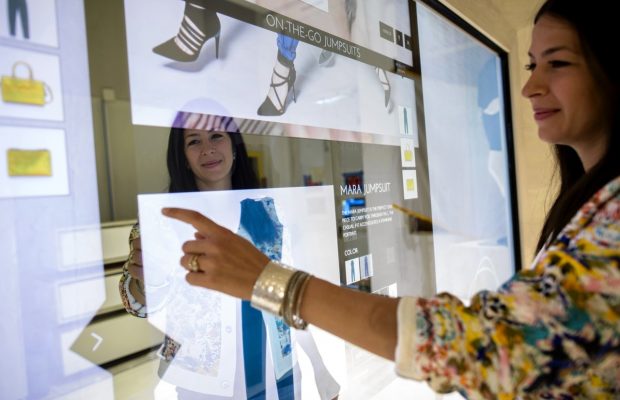
    “Innovative retailers such as Rebecca Minkoff have combined RFID with smart mirrors,” said research author Steffen Sorrell. “Integrating these systems allows real-time information to improve the store experience and bridge physical and virtual worlds – in this case, the concept drove a 200% increase in sales.”

    Juniper believes that physical retail spaces still have many benefits, not least in terms of being able to avoid the sterility of online shopping. It predicts online retailers’ focus would be on technologies such as machine learning to provide digital assistance, or digital performance management.

  • Corporate-issued mobile device adoption still low

    Corporate-issued mobile device adoption still low

    Mobile device adoption in the workplace is not yet mature, research from Gartner indicates. Although 80% of workers surveyed by the analyst company received one or more corporate-issued devices, desktops are still the most popular corporate device among businesses, with more than half of workers receiving corporate-issued desktop PCs.

    The survey findings are based on the 2016 Gartner Personal Technologies Study, which was conducted from June to August 2016 among 9,592 respondents in the US, the UK and Australia.

    Thirty-six percent of workers received laptops, including convertible laptops. Adoption of convertible laptops as a corporate-issued device is still very low, but has been gradually increasing.

    Gartner analysts expect that more employees will receive convertible laptops in the next three years, driven by the Windows 10 refresh that can enhance the user experience with touch-based input. Adding desktops and laptops (including convertible laptops) together, 75% of workers will receive at least one PC-type device in mature countries.

    In contrast to the high numbers of corporate-issued PCs in the workplace, relatively few workers receive mobile devices. The majority of smartphones used in the workplace are personally owned devices — only 23% of employees surveyed are given corporate-issued smartphones.

    “The low adoption of corporate-issued mobile devices underlines the fact that large numbers of personally owned mobile devices are used in the workplace,” said Mikako Kitagawa, principal research analyst at Gartner. “In fact, more than half of employees who used smartphones at work rely solely on their personally owned smartphones.”

    The usage rate of personally owned tablets lags behind that of personally owned smartphones. Only 21% of employees use tablets — regardless of whether they are corporate issued or personally owned.

    “In the era of mobility, it comes as something of a surprise that corporate usage of smartphones and tablets is not as high as PCs, even when the use of personally owned devices is taken into account,” said Kitagawa. “While it’s true that the cost of providing mobile devices can quickly escalate, proper usage of mobile devices can increase productivity, which can easily justify the extra costs.”

    When employees are provided with corporate-issued devices, they are generally happy with the devices that they receive. Less than 20% of respondents said they were dissatisfied with their employer-provided devices. The satisfaction level is higher with tablets and smartphones compared with desktop and laptops.

    “Usage of personally owned devices in the workplace is nothing new, but the survey results confirm that this trend has become a new workplace standard. Two-thirds of survey respondents said that they use a personally owned device or devices for work,” said Kitagawa.

    “Smartphones and phablets are the most popular personally owned devices used for work, with 39% of employees using them, compared with just 10% who are only using corporate-issued smartphones and phablets.”

  • LTE-A reaches mainstream adoption

    LTE-A reaches mainstream adoption

    LTE-Advanced deployments have reached the mainstream adoption phase, according to the latest GSA figures.

    LTE-Advanced now accounts for 147 of the 521 commercial LTE networks that have been launched worldwide, while LTE-Advanced Pro is used in a further 9, according to the GSA’s latest Evolution to LTE report.

    The TD-LTE standard has seen 78 commercial deployments in 46 countries, and 82 operators have now commercially launched VoLTE in 43 countries, the report shows. A total of 146 operators in 68 countries are investing in VoLTE deployments, studies or trials.

    Meanwhile LTE deployments are continuing at a rapid pace, with 74 mobile operators having launched the technology since the beginning of 2016. The newest markets for LTE mobile broadand include Bermuda, Gibraltar, Jamaica, Liberia, Myanmar, Samoa, and Sudan.

    The GSA has now raised its forecast to predict that there will be 560 LTE networks in commercial operation worldwide by the end of the year.

    The 1800-MHz band continues to be the most widely used in commercial LTE networks. It is in use by over 47% of LTE deployments in 110 countries.

    LTE’s device ecosystem is also continuing to expand, with the GSA calculating that there were 5,614 announced LTE user devices by late June.