Tag: adults

  • Singapore’s Public Transport Fares To Rise, Offset By Lower Monthly Pass Costs And Transport Vouchers

    Singapore’s Public Transport Fares To Rise, Offset By Lower Monthly Pass Costs And Transport Vouchers

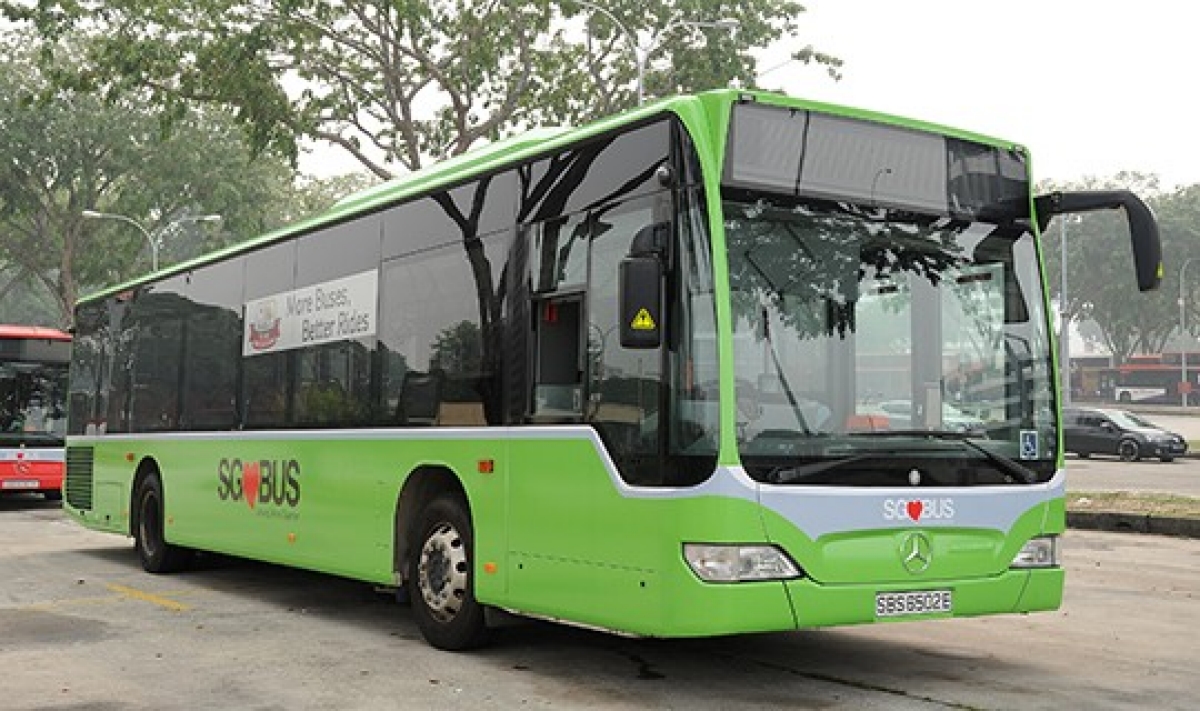
    Singapore’s adult commuters will soon face a 9-10 cent (0.07-0.08 USD) increase in their public bus and train fares per trip, corresponding to an overall public transport price increase of 5%.

    Rising fares from December 27

    Starting from December 27, the base fares for bus and train journeys for adults will increase by 9 cents for journeys up to 17.2 kilometers and by 10 cents for longer trips, according to a statement by the Public Transport Council (PTC) on Tuesday.

    Changes for concessionary card holders

    Fare changes will also affect concessionary card holders, including students, seniors, people with disabilities, and low-wage workers with workfare transport concessions. For these categories, the fare will increase by 3-4 cents for journeys longer than 3.2 kilometers, while fares for shorter trips will remain the same.

    PTC specified that more than a third of all concessionary trips, equating to around 450,000, are 3.2 kilometers or less. These short journeys are typically for commuting to school, work, or local amenities.

    Cash fares on public buses to rise

    Cash fares for public buses will likewise increase; adults will see a 20-cent rise, seniors and people with disabilities will face a 10-cent increase, and students will have a 5-cent increase. The council noted that fewer than 1% of all public transport trips are paid in cash.

    Express bus services fares to increase

    Fares for express bus services, which provide faster commuting options from residential areas to city centers and primary job hubs at higher rates than standard buses, will also see an increase. Adult passengers will pay an additional 49-50 cents per express bus trip, while passengers from concessionary groups will face a 20-24 cent increase. Cash fares for these services will rise by 60 cents per journey.

    Despite the increases, this year’s overall fare increase is less than the 6% and 7% increases experienced in 2024 and 2023, respectively.

    Reduced prices for monthly travel passes

    In an effort to support regular public transport users, the cost of monthly travel passes will decrease by 5% from December 27. The revised prices will be S$122 for adults, S$55 for seniors and people with disabilities, and S$92 for low-wage workers with workfare transport concessions. This discount is expected to benefit approximately 155,000 passengers, according to the council.

    Additionally, the government plans to issue S$60 public transport vouchers to households earning up to $1,800 per person per month to help offset the impact of the fare hikes. These vouchers can be used to top up fare cards or to purchase monthly passes.

    Questions & Answers

    When will the new fare rates take effect?
    The new fare rates will start from December 27.

    Who will be affected by the fare increases?
    The fare increases will affect adult commuters, concessionary card holders (including students, seniors, people with disabilities, and low-wage workers), and users of express bus services.

    What measures are being taken to ease the impact of fare hikes?
    To mitigate the impact of the fare hikes, the government will issue S$60 public transport vouchers to eligible households. Additionally, the price of monthly travel passes will be reduced by 5%.

  • Survey Reveals Japan’s Gen Z Shifting Drinking Culture with Dramatically Low Alcohol Consumption Rates

    Survey Reveals Japan’s Gen Z Shifting Drinking Culture with Dramatically Low Alcohol Consumption Rates

    In a striking revelation about Japan’s changing cultural landscape, a recent survey by Tokyo-based marketing firm Mery Co. reveals that 44% of Japanese in their twenties abstain from alcohol entirely, while an additional 16% drink less than once a month. When asked about their infrequent drinking habits, 33.7% cited “no particular reason” as their response. This seemingly laid-back attitude toward alcohol is followed by reasons such as “poor tolerance for alcohol,” “can have fun without drinking,” and “do not like the taste.”

    As the country grapples with shifting norms, a significant portion of young adults, approximately 60%, view alcohol negatively in terms of fostering workplace camaraderie or enhancing communication. This perspective coincides with troubling reports from major brewers indicating that beer consumption dropped by 9% year-on-year in August, marking the fifth consecutive month of decline. Traditionally, one might expect beer sales to peak during Japan’s sweltering summers, where refreshing brews are a staple.

    Analysts attribute this downturn to a confluence of pandemic-era lifestyle transformations, rising living costs, and evolving perceptions regarding social interactions, particularly among younger generations. “I think the pandemic fundamentally altered Japan’s drinking culture, not just for the youth but for older demographics as well,” remarked Sumie Kawakami, a social sciences lecturer at Yamanashi Gakuin University, in her insights shared with the South China Morning Post.

    The pandemic’s restrictions disrupted habitual social drinking, and many simply lost the inclination to engage in post-work drinking rituals with colleagues. For youth, university often serves as a backdrop for drinking parties, which also ceased during the pandemic. Kawakami noted, “Those individuals have graduated and entered the workforce without developing a taste for drinking.”

    Financial pressures are undoubtedly influencing these trends, but Kawakami posits that a deeper issue lies in the growing disconnect between generations in the workplace. “Many people today are focused on simply getting through their workday and pursuing their own interests afterward—be it spending time at home, socializing with friends, or indulging in hobbies. This desire for a better work-life balance may appear unusual to older generations, yet it’s a sentiment increasingly embraced by them as well.”

    Questions & Answers

    What is the current drinking culture among young Japanese adults?
    The drinking culture among young Japanese adults has shifted significantly, with 44% abstaining from alcohol and many not drinking often, influenced by changing social norms and habits developed during the pandemic.

    How has the pandemic affected social drinking habits in Japan?
    The pandemic disrupted regular social drinking patterns, leading many to lose the habit of after-work drinking and university parties, which has contributed to lower alcohol consumption rates among younger generations.

    What factors are contributing to the decline in beer sales in Japan?
    The decline in beer sales can be attributed to pandemic-induced lifestyle changes, rising living costs, and a growing generational shift in how individuals perceive alcohol’s role in socializing and workplace interactions.

  • Outdoor Retailers Fighting for Market Share

    Outdoor Retailers Fighting for Market Share

    Outdoor retailers Kathmandu and Decathlon are vying for a piece of Australia’s ski and snowboard market this winter.

    Both businesses are launching inaugural snow collections, despite the fact that less than a million Australians regularly or occasionally ski or snowboard, according to 2018 data from Roy Morgan.

    On Thursday, Kathmandu launched its inaugural snow collection called Styper, which includes ski jackets and pants for adults and kids, as well as goggles and snow luggage.

    “Designed to suit beginner and intermediate levels, as well as the more sophisticated skiers, the pieces connect seamlessly together to keep warmth in and snow out, and are made with sustainable, state of the art ngx2 fabric technology that is waterproof, wind-proof and breathable,” the retailer said in a statement.

    The launch comes on the heels of Decathlon’s announcement that it is introducing more than 100 ski and snowboard-specific product lines from its Wed’ze brand available in Australia this year.

    The European discount retailer described its offer as an affordable option for people who want a trusted brand and good advice. The range will include adult ski jackets and pants for under $100, adult ski gloves for less than $40, kids’ ski gloves for less than $20, neck warmers and beanies for $10 and ski and binding packages for under $500.

    The price point is considerably lower than Kathmandu, which starts at $199.98 for kids and $349.98 for adults.

    Kathmandu’s collection is available in-store in Australia and New Zealand, while Decathlon’s collection is available in-store and online in Australia.

    Fashion brand SuperDry has been selling its snow range in Australia and New Zealand for the past three years.