Tag: A&F

  • Abercrombie & Fitch results going uphill

    Abercrombie & Fitch results going uphill

    Abercrombie & Fitch is on the right road to recovery. Third-quarter net income is up by 133 per cent year on year, supported by a 75 per cent increase in operating profit. The company has still delivered positive comparables both overall and for each of the Hollister and Abercrombie brands. And at 6 per cent growth, US comparables are still on fairly solid ground.

    While Abercrombie & Fitch’s sales growth has slowed, both overall and on a comparable basis, and total sales at the Abercrombie brand have slipped into negative territory, a calendar shift in reporting periods, currency fluctuations and some tough-to-match prior year comparable figures are mitigating factors.

    GlobalData’s consumer-tracking data continues to show a number of positive movements in consumer sentiment about both of the main brands. Over the past year, there has been a 4 percentage point increase in the number of American shoppers who say they consider Abercrombie when shopping for apparel. For Hollister, the same metric rose by just shy of 6 percentage points. The same research also reveals that among core shoppers, perceptions of quality and design at both Abercrombie and Hollister are up sharply on last year.

    The results justify the step changes that have been made to things like fabrication, detailing and styling of the product set. The range – especially at Abercrombie – is now more sophisticated, more on-trend, and better reflects what modern consumers want. There is also a cohesiveness to the assortment which stimulates multiple purchases and helps to push up average transaction values. However, as good as these things are, both brands have more to do yet in making consumers aware of the changes and getting them to take a fresh look at the brands.

    Many of the positive movements are far more pronounced in the US than they are elsewhere. In our view, the geographical difference in the pace of recovery is telling. While it is right that the company has focused its recovery efforts on its most important market, there is now a need to adapt some of the strategies and plays so that they are relevant overseas. Customer dynamics, competitive sets, and perception of the brands are all very different in markets like the UK and a degree of localisation is needed to ensure that the brands fully resonate with regional consumers. We believe management recognises this and has already taken some steps, such as opening a new-format mall-based store in the UK at Manchester’s Intu Trafford Centre.

    Overall, the recovery at Abercrombie & Fitch is still a work in progress. However, turning around a once very-troubled brand is far from easy. Progress and advancement do not all come at once; this is a step-by-step process that will build over time.

  • Abercrombie and Hollister lead A&F path to recover

    Abercrombie and Hollister lead A&F path to recover

    Following on from a robust fourth quarter, Abercrombie & Fitch has continued its run of success with another solid set of sales numbers. Although growth has come off the back of soft prior year comparatives, the positive comparable sales numbers are an indication of momentum at both the Abercrombie and Hollister brands.

    Under the leadership of Fran Horowitz and her team, the business now has a much clearer sense of direction and a strategy that is producing results.

    Last quarter the Abercrombie brand delivered its first positive comparable sales number in five years, an advancement that has continued into this period with the division reporting a 3 per cent uplift. While this represents something of a bottoming out of sales declines, we also believe that Abercrombie is benefitting from the many improvements that have been made over the past year.

    One of the biggest shifts at Abercrombie has been the change in tone of the business. It has moved from a brash brand to a somewhat confused brand to a brand with a much clearer and more focused identity.

    While we would argue that this reinvention is still a work in progress, we think that the more authentic tone and the coalescing around an effortless American casual theme has paid dividends.

    A key part of the reinvention has been a focus on the product. There are two things we particularly like here. The first is the more disciplined approach to merchandising, which has involved having fewer items in the assortment but making sure that the pieces stocked are a mix of staples and on-trend garments.

    This has made the range much easier to shop. Alongside this, there have been significant improvements to quality and styling. Most of this is subtle and seen in small details like stitching, discrete monograms, or the design of buttons and zippers. The net effect is a range that is more mature and sophisticated, with many more ‘must have’ elements.

    Although it has traditionally been a stronger business, Hollister has also benefited from a more focused approach. Its carefree casual position resonates with the target audience and this is helping to differentiate it and drive sales in a crowded marketplace.

    Across both brands, there are some impressive changes which are supporting sales growth. Marketing efforts are much more comprehensive, with social channels and influencers being used to gain attention.

    Importantly, the company is now marketing where its customers are rather than just through traditional channels, using platforms like Snapchat and app-based games to create brand awareness and affinity.

    Stores have also been an area of focus and we applaud the continued efforts to rightsize the chain.

    Moreover, we remain impressed with the new store formats of both Abercrombie and Hollister. These represent an enormous shift in thinking and allow customers to see and experience the new face of the brands. Digital has not been neglected and we equally welcome changes made to the websites and the development of more omnichannel services.

    Admittedly, all of this has added to costs, which contributed to this quarter’s loss. That said, the company is a lot less in the red than it was this time last year, which represents progress.

    Abercrombie & Fitch’s work is not yet complete. The past couple of years were about stabilising and transforming the business, something we think has been achieved.

    In the year ahead, the focus must be on accelerating growth.

  • Abercrombie opens eyes after a long sleep

    Abercrombie opens eyes after a long sleep

    After an extended run of decline, Abercrombie & Fitch is finally back with a market-beating 4.5 per cent uplift in total sales.

    Although the result comes off the back of a weak prior year comparable, it nevertheless provides comfort that the group’s strategies are starting to bear fruit.

    As good as the headline figure is, it masks disparities between A&F’s two core brands. Hollister’s 8 per cent increase in comparable sales is impressive and represents a significant acceleration from the first half of the year. Meanwhile, Abercrombie is still in the red with a 2 per cent drop in same-store numbers – a disappointing outcome, but one that marks a significant improvement over the double-digit declines the brand was previously recording.

    That Hollister is performing better than Abercrombie is not surprising. Hollister’s brand reinvention program is more advanced, and initiatives like the Club Cali loyalty program have had much longer to play out. As a result, the brand is engaging far more with its customer base and enticing them with relevant on-trend product across categories like denim and intimates.

    Abercrombie has not been neglected, but the division’s reinvention is at an earlier stage and so financial results are nowhere near as positive. Arguably, the task of finding a new voice and pitch for a brand that carries so much baggage has been far more difficult than Hollister’s reasonably gentle evolution. However, having seen the work undertaken at Abercrombie, it is clear that progress is being made and that the direction of travel is correct.

    Ditching the logos

    On the product front, there have been significant improvements in quality, especially to fabric and stitching. Subtle detailing, like more stylish buttons on shirts, has also helped to give basic garments a lift. On top of this, the big logos of the past have been firmly ditched in favour of no-branding or very subtle A+F monograms. The net effect is a range that is more mature and sophisticated, with much more emphasis on fit and function than branding.

    The new Abercrombie prototype store, which has been opened in a select number of locations, is impressive. It is revolutionary rather than evolutionary and is a significant step forward for the brand. The two most immediately striking things about the new design are how light and open it is, and how subtle the branding is. Alone, these make the shops almost unrecognisable as A&Fs.

    Beyond these significant shifts, there are more subtle changes, foremost among them a smaller footprint, with some new prototypes being around half the size of older stores. This is made possible by a much more efficient use of space and also because ranges have been thinned out.

    A&F is now putting more weight behind key items and cutting back on slower, less relevant lines.

    The consumer impact of all these changes is positive. The new format is more pleasant to shop, and the ‘less is more’ approach makes putting outfit ideas together easier. From A&F’s perspective, the new format provides financial benefits, with higher sales densities and lower rents.

    With only a few new stores open so far, the impact on Abercrombie’s sales is currently small.

    However, this should grow as the concept is rolled out further. In the meantime, there is much more work to do to reconnect the brand with customers. While initiatives like the loyalty scheme are working well, Abercrombie needs to communicate its new essence more effectively and more widely.

    Overall, Abercrombie & Fitch is still a company in transition and is not back to full health.

    However, it is now showing some encouraging signs of life.

  • Abercrombie & Fitch ends year weak

    Abercrombie & Fitch ends year weak

    Abercrombie & Fitch ended the year in a tailspin, with sales down by almost 7 per cent and operating profit falling 49 per cent.

    The embryonic recovery seen at the start of this fiscal is now little more than a faded memory. Fortunately, the group has a fairly strong balance sheet and remains profitable, which provides some comfort that it has the time and financial firepower to try and turn things around.

    That said, it is now clear that fairly decisive and radical action is required to reconnect the brands with consumers. Especially so for Abercrombie which has, like last quarter, seen same-store sales deteriorate at a rapid pace. While factors like reduced tourist spend at flagship stores and negative mall traffic have pushed down sales, the main reason for the decline is that Abercrombie simply doesn’t resonate with customers like it once did. In essence it has lost its reason for existing.

    This is a serious issue and is one that needs an urgent remedy. Worryingly, A&F has already tried to shift perceptions and engineer a turnaround, but this is clearly not delivering. Part of this comes down to the fact that, to date, the company’s efforts have been rather patchy and piecemeal, and this has been insufficient to cut through with consumers.

    The recent marketing campaign, with the strapline of “people have a lot to say about us, they think they’ve got us figured out”, exemplifies this approach. Not only is the message confusing and opaque, but the promise of change that it suggests is not entirely delivered on by stores which look and feel the same as they have always done. To be fair, some developments – including making products more mature and stylish – have been substantial. However, when the package they are delivered in has not evolved it is difficult to communicate such efforts effectively.

    Fortunately, A&F is making an effort to change its stores – as the new format launch in Columbus, Ohio proves. This is a step forward and is more reflective of what the brand now wants to stand for. The integration of improved customer service elements – like better fitting rooms and the ability to place online orders from the store – are also helpful in making the environment more friendly, inclusive and welcoming.

    As good as the new format looks and feels, A&F will only roll out seven of them this year, so it is unlikely they will have a material impact on sales growth. However the cautious pace is sensible given the new concept has yet to be proven. In any case, it is likely that there will be existing stores in some locations where poor performance and declining traffic does not justify significant capital expenditure on refurbishments.

    A&F is clearly hoping that all of its changes will allow Abercrombie to shift into a higher gear – much as has been the case for Hollister, where positive same-store sales were achieved this quarter. But A&F still has much more work to do in building a new base of customers and this is a long-term effort that may not have a tangible impact on sales for many quarters.

    This noted, A&F is going in the right direction. As it has shown with Hollister, which is more advanced in its redevelopment program, the reinvention work will ultimately pay dividends. However, the company cannot turn on a dime and there will likely be a number of bumpy quarters ahead before recovery comes.

  • Abercrombie & Fitch unveils new store concept

    Abercrombie & Fitch unveils new store concept

    US casualwear retailer Abercrombie & Fitch is about to unveil its first concept store for 15 years.

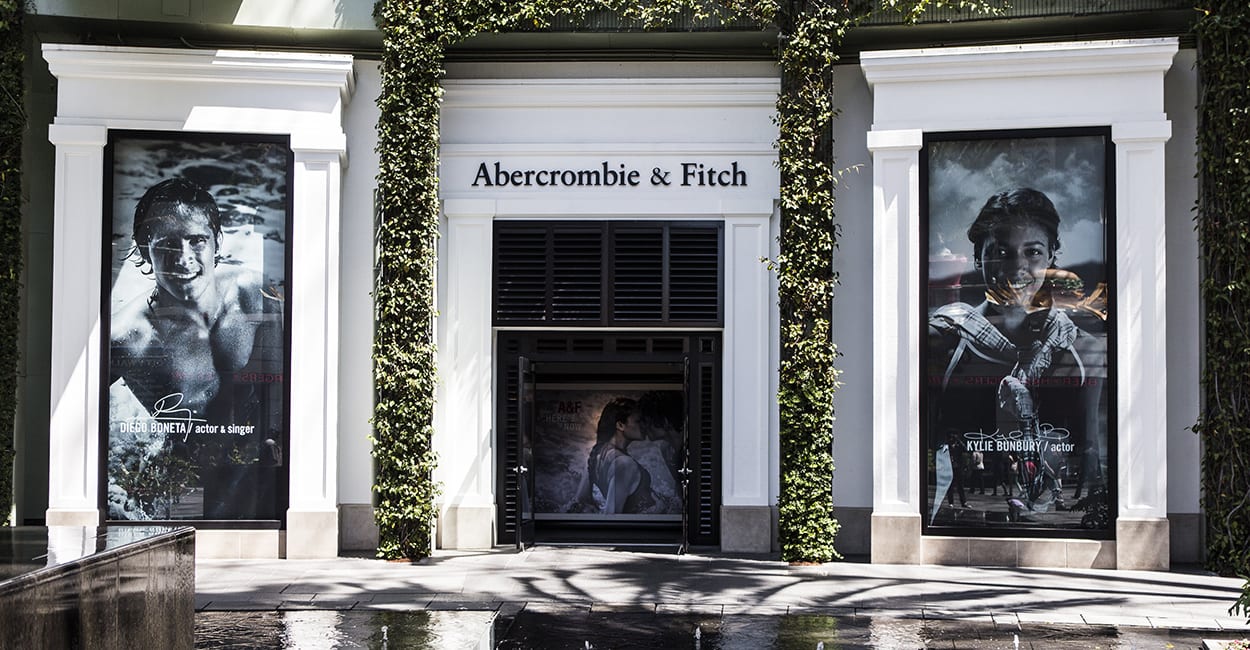
    In a dramatic change of direction, customers will be able to actually see the stock on display, the brand’s heavy scenting has been toned down and stock will be visible from outside.

    Only two images have been released by the brand, but these show the magnitude of the change of direction.  The concept store will open its doors on February 17, inside the Polaris Fashion Mall in Columbus, Ohio.

    Abercrombie & Fitch previously took pleasure in assaulting customers’ nasal senses as well as providing never-ending entertainment for store staff members who could watch customers walking into mirrors, squinting as bright spotlight beams shining directly into their eyes – and for special kicks, watching mothers with pushchairs trying to navigate narrow aisles, staircases and darkened passages, or children crying because they were scared of the dark.

    In place of the “mausoleum” style of store, the new design is a soft brown hue, strong lighting and subtle fixtures. The concept store was designed by MJ Sagan Architecture, which was also involved in creating the company’s New Albany headquarters.

    An A&F statement says the prototype’s look and feel “is in line with the brand’s new evolution”.

    However, A&F is in serious trouble. In November, Neil Saunders, New York-based MD of GlobalData Retail, described the company’s latest quarterly performance as “disastrous” by any standard.

    “Not only are total sales sequentially worse than last quarter, but revenues at Abercrombie have slumped and net income is down by more than 80 per cent.”

    At the core of the problem is the fact that consumers have grown out of clothing ranges bearing oversized logos.

    “A&F is changing – moving away from its traditional brash, image-obsessed focus toward a more inclusive and more gentle approach with an emphasis on stylish, quality clothing,” said Saunders.

    A&F concept store 2017

    First of seven

    Meanwhile, the new Ohio boutique, which covers 4860 sqft (451 sqm), is the first of seven to be built this year, providing the customer “with a new vision of the brand,” A&F says in a statement.

    “In line with the changes that have taken place over the past 18 months, the space was imagined with the best customer experience in mind, encouraging the discovery of the brand’s new collections.”

    A&F and Abercrombie Kids brand president Stacia Andersen says she hopes customers old and new will rediscover what is at the core of the American Heritage brand: “timeless, high-quality clothing you want to live in”.

    “The new A&F store design illustrates a strong brand, with a rich history that is evolving and moving forward. A cohesive material palette, an elevated collection and residential-scale elements enhance the personal, more intimate aspect of the A&F shopping experience,” says architect MJ Sagan.

    In place of the dark, product-devoid entrances more akin to a theme park’s “House of Horrors” than a retail store, the new storefront is transparent and features a metal sculpture of an A&F logo first used in the early 1900s. Inside, there are two shops-in-shops: a fragrance “apothecary” and an area for seasonal capsule collections. There is also a dedicated denim room.

    Mannequins for both genders stand on a concrete platform running from the storefront through the middle of the store, showcasing key trends and ideas for the current season. Throughout the store, the collections are merchandised to inspire the customer and showcase how pieces can be mixed together.

    “Looking to provide a unique and personal shopping experience, the updated layout includes accommodating features such as innovative fitting rooms and omni-channel capabilities,” says the company.

    “The fitting rooms will serve as a comfortable haven from the mall or street, comprising two individual capsules within a larger private suite. This allows each guest to share new looks with a friend or family member while also enjoying privacy. Each suite has thoughtful amenities that heighten the customer’s mood, including separate controls for light and music, as well as a phone-charging dock.”

    The interior features a cohesive palette of modern, tactile materials including cork, bronze, galvanised steel, concrete, “vegan leather”, wood and marble that act as a neutral but complementary background to the collections.

    And that obnoxious olfactory assault that is a trademark of A&F will – thankfully – be laid to rest: “The store will be subtly scented with a lighter, cleaner, gender-neutral fragrance.”

    Store staff members will help shoppers place and pick up online orders in store, and cash wraps will be located throughout the space rather than hidden in a back corner, which was a challenge for first-time visitors to find. Clearly, A&F realised it was too hard to find the register in the old store format, its statement conceding the new approach will “enable a quicker and more accessible checkout experience”.

    Gilly Hicks in comeback

    Meanwhile, A&F’s Hollister Co brand says it has relaunched its intimates brand, Gilly Hicks, in all Hollister stores across the US and will sell it globally online at HollisterCo.com.

    Gilly Hicks, “the brand to start and end your day with”, includes bras, bralettes, undies, swimwear, loungewear and sleepwear. The company launched the brand in 2008 and built a network of 28 exclusive stores, but these were closed in 2013. An online store was rolled into Hollister two years later.

    “We recognised an opportunity to redefine the Gilly Hicks brand, and we know our Hollister customer will enjoy another destination for fun and cozy bras, undies and sleepwear,” says brand president Kristin Scott. “We’ve designed our Gilly product to be effortless and comfortable to align with our customer’s on-the-go, busy lifestyle.”

    Some US stores will host shops-in-shops to provide “a unique Gilly Hicks brand experience”.

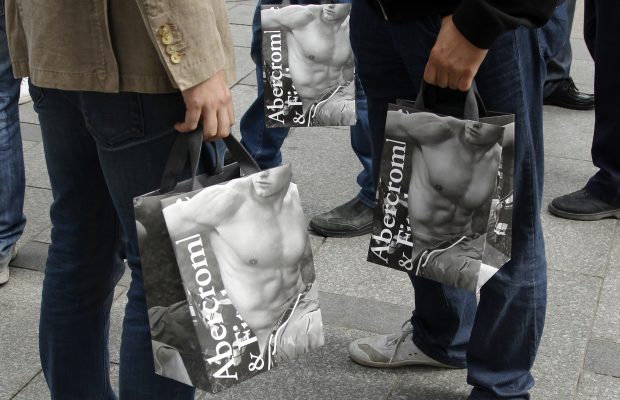
    The Old A&F look...(Image: A&F Canada)

    The Old A&F look…(Image: A&F Canada)
  • Abercrombie & Fitch to shut Hong Kong store in wake of economic downturn

    Abercrombie & Fitch to shut Hong Kong store in wake of economic downturn

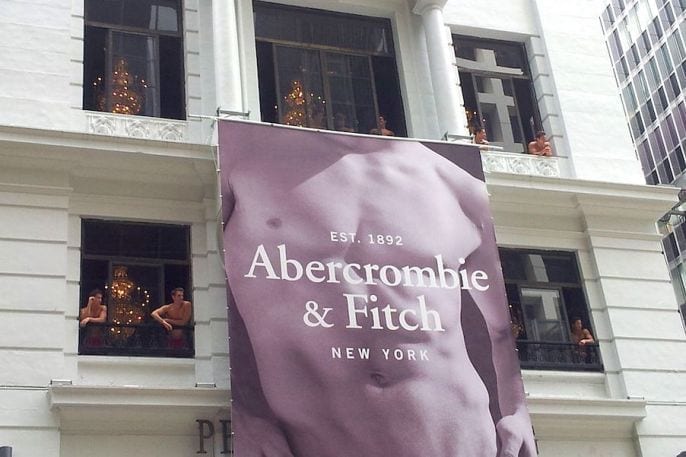
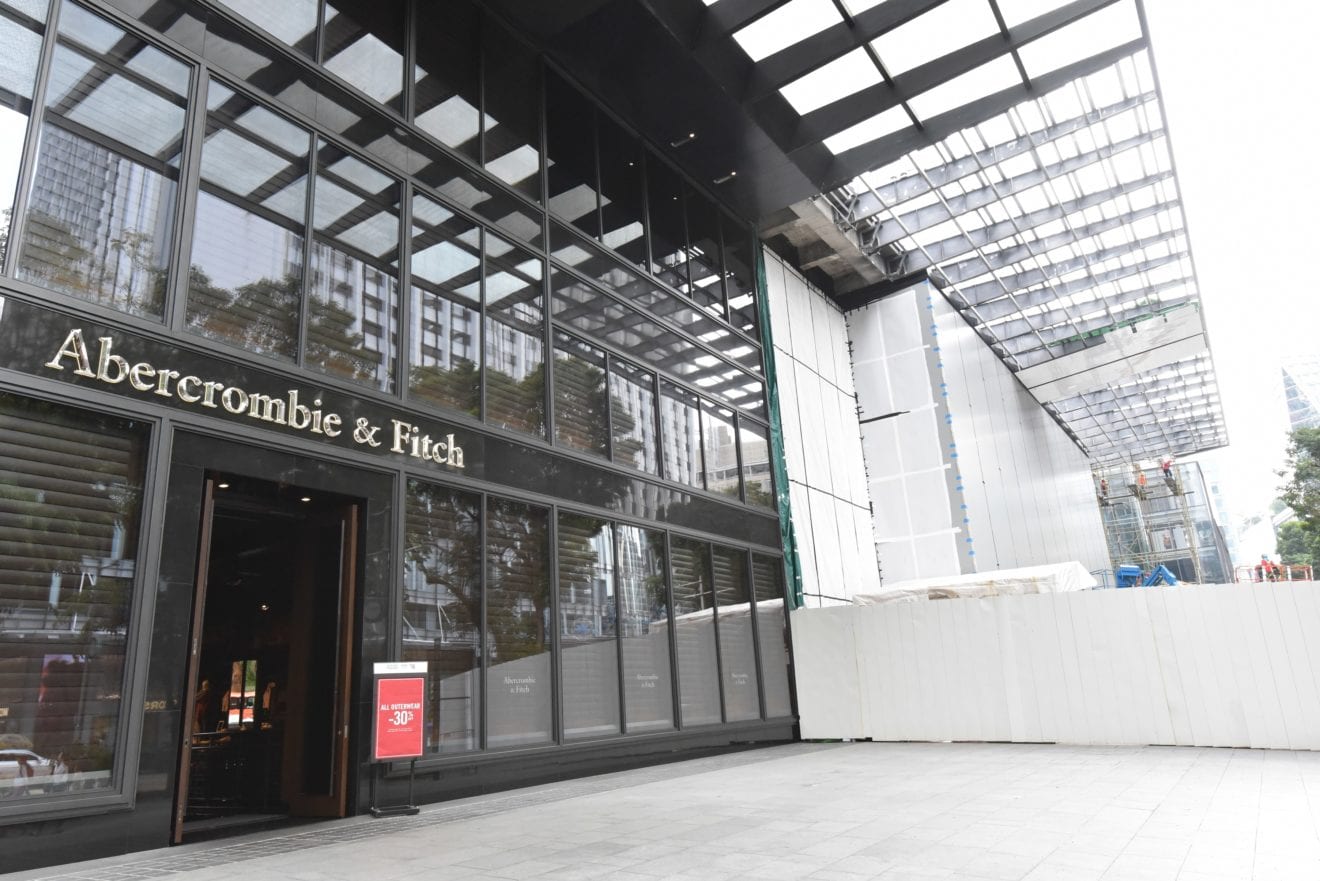
    US fashion chain Abercrombie & Fitch will close its four-storey ­flagship store in Central as early as next year amid the economic downturn and a slump in shoppers from the mainland.

    The 25,600 sq ft store on ­Pedder Street opened in 2011, paying HK$7 million in rent per month, double that of previous tenant Shanghai Tang.

    It has initiated an early exit ­before its lease expires in 2019.

    “The company exercised a lease kick-out option for its A&F flagship store in Hong Kong,” the retailer said on Friday. It claimed the move was “part of the ­company’s ongoing strategic review” and “was expected to drive economic benefit over time”.

    The closure of the store should be “substantially complete” by the end of the second quarter of fiscal year 2017.

    The move would trigger a “lease termination charge” of ­approximately US$16 million in the next quarter, it said.

    There would be no Abercrombie & Fitch branded store in the city after, but the company intended to add five stores on the mainland by the end of January.

    Comparable sales of the brand fell 14 per cent between August and October compared with the same period last year.

    It did not ­reveal its sales performance in Hong Kong.

    The city’s retail sales slumped 9.6 per cent in the first nine months of the year.

    Helen Mak, senior director and head of retail services at ­researcher Knight Frank, said Hong Kong was gradually losing its appeal to mainland tourists as a prime shopping destination after 10 years of high retail growth.

    Earlier this month, US fast-fashion brand Forever 21 said it would close its flagship store in the heart of the Causeway Bay shopping district late next year.

    Helen Mak, senior director and head of retail services at researcher Knight Frank, said many retailers had expanded aggressively a few years ago when the Chinese economy was strong and shoppers poured into the city.

    A&F had made aggressive expansions in the city a few years ago when the Chinese economy was still strong and mainland shoppers tourists poured into city to buy luxury goods.

    “Many retailers were optimistic about the market outlook at that time … But they may not be able to afford it now,” Mak said.

    Tourism spending by Chinese visitors has fuelled the boom in Hong Kong’s retail and commercial property sectors in recent years.

    Coach, another premier US brand, also closed its four-storey main store in Central last year amid weak retail sentiment.

    “Hong Kong is not too special a place for shopping in Asia. Many mainland shoppers now choose to go to elsewhere in the region, such as Japan, South Korea, Taiwan, etc,” she said.

    Last but not least, the yuan depreciation has also hit retail businesses, as a declining yuan makes Hong Kong goods more expensive for mainland shoppers, Mak said.