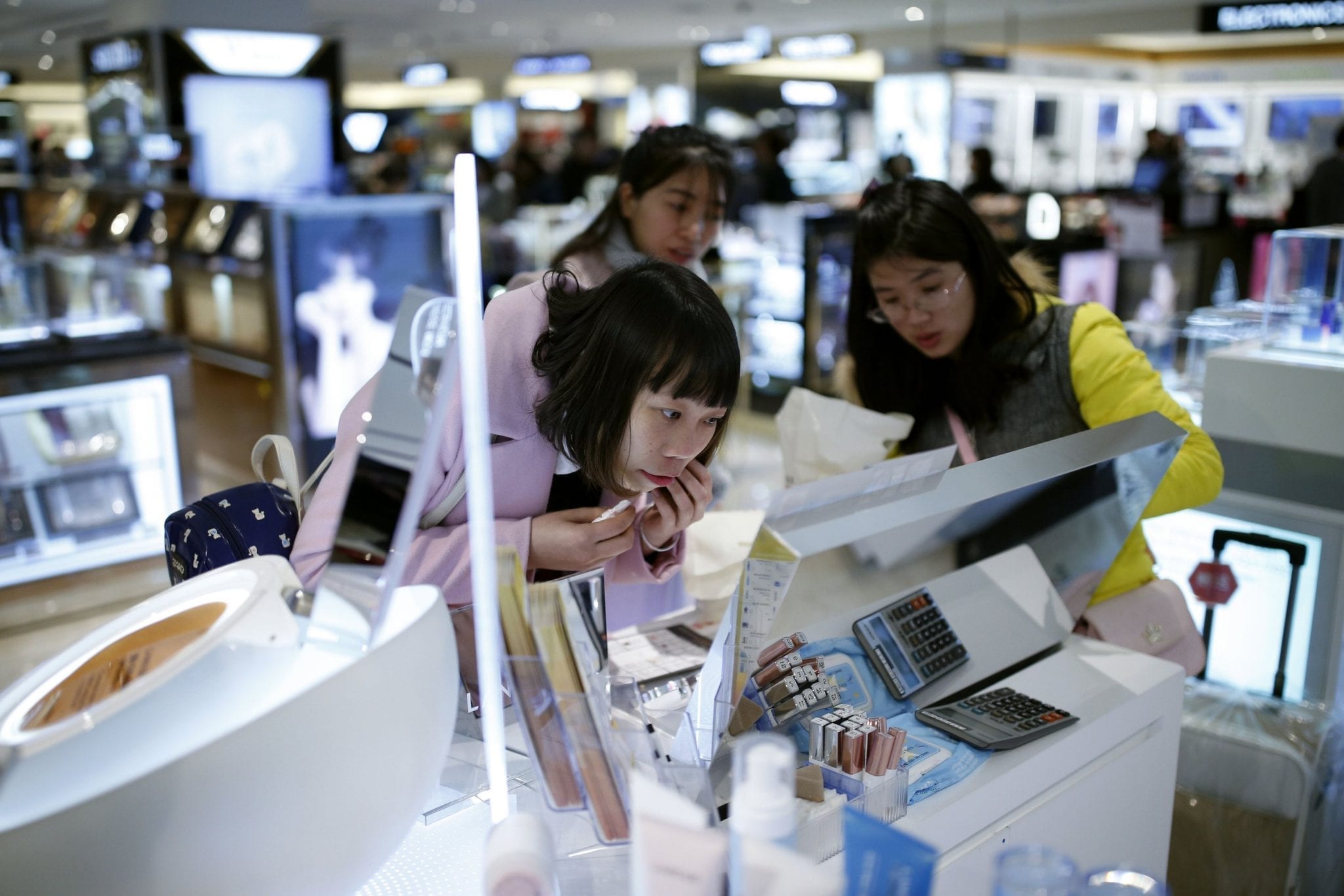
South Korean retail heavyweight Shinsegae has drawn a US$938 million investment to help it build a major e-commerce business.
Shinsegae has signed an initial funding agreement with BRV Capital and private equity company Affinity Equity Partners as it strives to make the most of a rapidly expanding Korean online shopping market.
Shinsegae says it will carve off the online business divisions of Shinsegae Department Store and its discount store chain operator E-Mart and merge them to establish a separate affiliate dedicated to the group’s e-commerce business.
“Our goal is to launch the new affiliate within this year,” Choi Woo-jung, head of the group’s e-commerce business, said in a press release. “Further details, including the name of the company and its structure, will be decided down the road.”
Shinsegae plans to carry out new business projects, including mergers and acquisitions, through the spun-off company and raise it as the business group’s key distribution channel with an annual revenue of 10 trillion won by 2023.
Shinsegae’s e-commerce business has been posting double-digit growth since the launch of an integrated online mall for its subsidiaries, SSG.com, in 2014, it said. The online platform logged 1.5 trillion won (nearly $1.4 billion) in sales in the first nine months of 2017.
The retailer’s move to expand its e-commerce business comes in line with a steep rise of purchases made over the Internet in South Korea as the use of smartphones has fully caught on with local consumers.
Transactions made with personal computers and other mobile devices reached 7.55 trillion won November last year, up a solid 21.7 per cent from a year earlier, according to data from Statistics Korea.
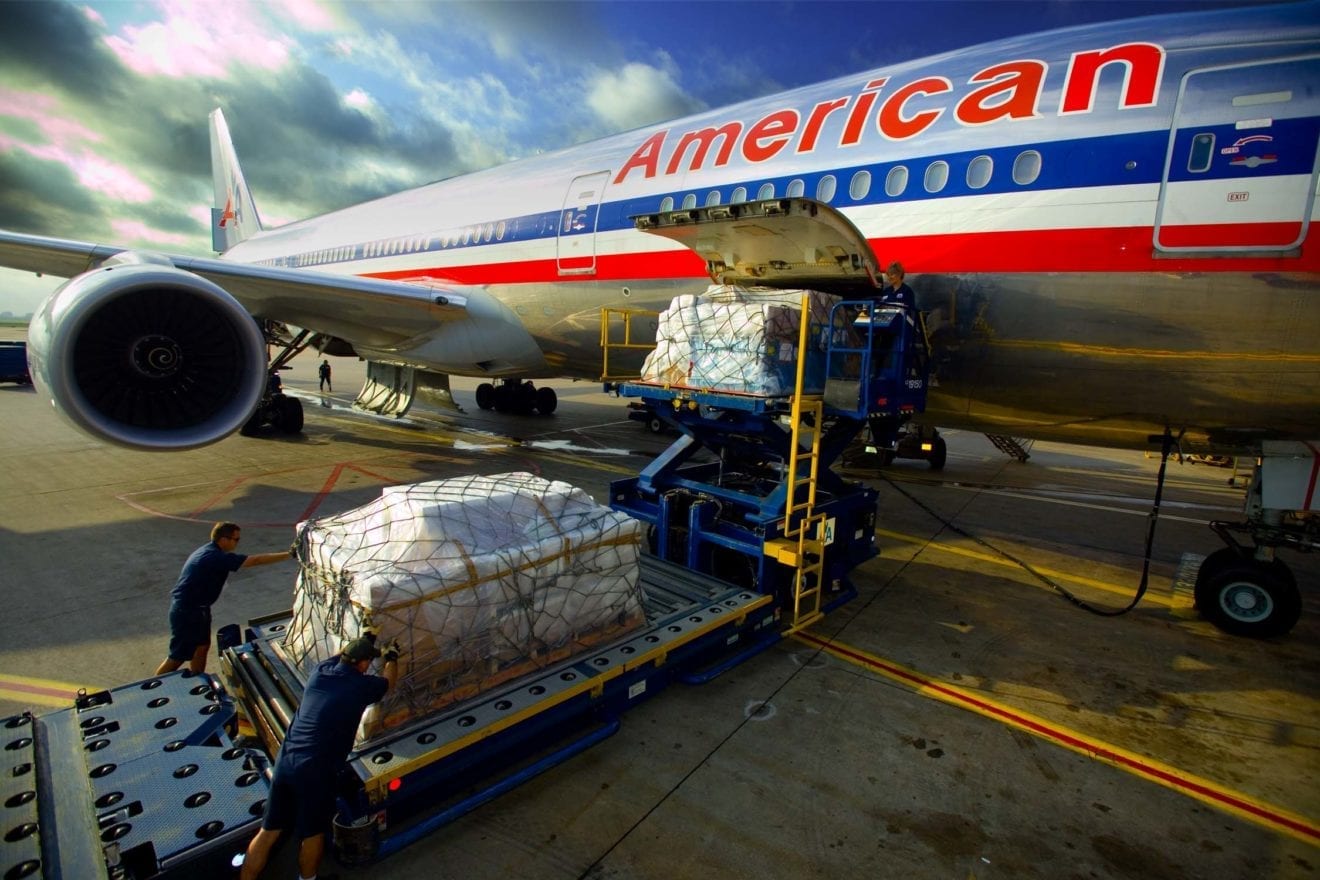
American Airlines Cargo safely delivered more than 3,000 pounds (1,500 kilograms) of priceless artifacts belonging to the Kinsey African American Art and History Collection from Los Angeles (LAX) to Hong Kong (HKG).
Working with Cookes Crating, one of America’s oldest and most respected fine art shippers, over 100 artifacts, including paintings, sculptures, rare first editions, manuscripts and official records, were transported to The University of Hong Kong Museum and Art Gallery. The three month long exhibition tells the story of African American achievement and contribution.
“With priceless artifacts like those in this collection, we offer customers peace of mind with our High Value service, which includes enhanced safety and security measures, such as special handling and surveillance at every touch point,” said Joe Goode, American Airlines Cargo’s managing director, Cargo Sales – Western Division. “Plus, with our direct flight from LAX to HKG, we were able to quickly and successfully deliver the shipment in prime condition before the exhibition’s debut in Hong Kong.”
The Kinsey family’s long-standing relationship with American was just recently extended to the Cargo division for the shipment of their invaluable collection because of the carrier’s experience in handling high-value shipments.
“My family and I have been loyal customers of American Airlines for nearly 40 years, beginning with my parents who have visited 100 countries and flown millions of miles,” said Khalil Kinsey, general manager and chief curator – The Kinsey Collection. “American has played an integral role in our business from a travel perspective, and we are excited to expand our relationship to the cargo and logistics aspect. The Cargo division provided a smooth and efficient experience that gave us great comfort and confidence that our crates full of priceless contents would be handled with the utmost care, as well as arrives safely and on time.”
Affinity Equity Partners has completed the buyout of the Korean business of the US fast food brand for 210 billion won (US$183.3 million), after agreeing to terms in February. The vendor was VIG Partners.
Affinity is already planning to open new outlets as a first step in increasing sales.
Meanwhile, Korean news media report rival fast food chain McDonald’s is seeking a strategic partner to run the local operation and speed up its network expansion.
“We’re committed to Korea for the long-term and intend to combine our global brand with local insights and expertise,” said Steve Easterbrook, McDonald’s CEO and president.
“This gives us the ability to enable faster decision-making, achieve restaurant growth and deliver a great restaurant experience for our customers in Korea.”
Breaking with their traditional role as mutual fund managers or short-term profit seekers, homegrown PEFs have now transformed into strategic investors to spearhead the recent boom of mega-sized M&As. And leading the pack is Seoul-based MBK Partners Ltd.
Beating global big-name PEFs like KKR & Co. and Affinity Equity Partners, MBK Partners clinched a 7.2 trillion won (US$6.37 billion) deal last month to acquire U.K. retail giant Tesco Plc’s Korean unit Homeplus, South Korea’s second-largest supermarket chain with 8.6 trillion won in sales last year. It is the country’s largest takeover deal in size.
Last year, Hahn & Co., the second-largest PEF based in South Korea, bought a controlling 70 percent stake in Hanon Systems, formerly Halla Visteon Climate Control Corp., a leading automotive thermal management solutions provider, for about 4 trillion won.
Taihan Electric Wire Co., South Korea’s second-largest electrical materials manufacturers, was sold to No. 3 IMM Private Equity last month for 300 billion won.
Local PEFs’ aggressive investments have spiced up the long-slumped local M&A market as they have registered huge returns from leveraged company buyout deals amid a low interest rate trend.
Many well known brands are owned by PEFs, ranging from Burger King and KFC to NEPA Co., an outdoor apparel manufacturer, and Coway Co., a leading water purifier firm.
PEF managers offer a series of distinct private equity funds to make investments in various equity securities after raising capital from cash-rich individuals and institutional investors such as public pension plans, insurance companies and foundations.
South Korea opened the PEF market in 2004 to encourage corporate takeovers and investment to provide capital to venture start-ups.
According to data compiled by the Financial Supervisory Service (FSS), a total of 51.2 trillion won in assets were under management by 277 PEFs at the end of 2014, compared with 400 billion won tallied in 2004 when two PEFs were floated for the first time in the country.
They have attracted more than 5 trillion won every year since 2008 and collected 9.8 trillion won in investment last year alone.
PEFs have started to draw attention from institutional investors, including the National Pension Service, as the South Korean economy has seemingly entered a low-growth cycle and the benchmark KOSPI has moved in a narrow box range since the 2008 global financial crisis.
Recently, the South Korean government relaxed regulations in a bid to fuel the M&A market by luring PEFs. It has loosened the so-called double reviewing process by the state anti-trust agency and stakeholder filing requirements.
MBK Partners is in the forefront to explore the PEF-led M&A market.
Founded by former Carlyle managers in 2005, MBK Partners has grown into one of the biggest Asian buyout funds with about 14 trillion won in assets under management, with a focus on South Korea and other Asian regions.
It has invested in 23 companies including Coway, cable TV operator C&M Co., NEPA Co. and Homeplus. Its total assets amount to that of Dongbu Group, the 20th largest conglomerate, with 14.6 trillion won.
Hahn & Co. has assets of 3.3 trillion won with 12 businesses including Hanon Systems, Daehan Cement and Woongjin Foods Co. under management. No. 3 IMM Private Equity operates 100 firms worth 2.8 trillion won in total assets, followed by Mirae Asset Global Investments Co. with 2.2 trillion won and Vogo Investment with 1.9 trillion won.
“In the beginning, most PEFs were founded by retired government officials and fund managers with a career in global PEFs. They were financial investors, who bought stakes and sold them to lock in profits,” said Kim Kyung-young from the Asset Management Supervision Office at the FSS.
“Now they are changing into strategic investors, or buyout investors, playing a major role in acquiring large companies and carrying out corporate restructuring.”
Although such PEFs have successfully made their presence felt in the local M&A market, South Korean investors are wary of such buyout funds as many PEFs have still disappeared from the market due to worse-than-expected profitability in a takeover deal.
“PEF-led M&As are not always successful,” said Koo Kyung-hoe, a senior analyst at Hyundai Securities Research Center. “About 66 percent of PEFs reach target profit rates, but we have to bear in mind that the rest, 34 percent, end up in vain.”
For example, MBK Partners, regarded as having the Midas touch in the financial market, took over C&M in 2008 for about 2 trillion won, but its plan to resell the company has been stalled due to a long slump in the cable TV industry.
He said they have to expand the range of investors as nearly all local PEF clients are institutions like pension funds and financial firms.
“In advanced countries, PEFs collect money from universities, foundations and even cash-rich individuals,” said Koo. “They need to draw up plans to lure them as they can serve as an effective, appropriate alternative investment tool in the future.”
Experts also noted that local PEFs have to overcome the negative public perception in South Korea that they clash with labor unions over restructuring after a takeover.
U.S. Lone Star Funds’ purchase and resale of Korea Exchange Bank has deepened such negative perceptions toward PEFs among South Koreans, according to experts. Lone Star bought KEB in 2003 for 1.38 trillion won and then sold it to Hana Financial Group Inc. in 2012, pocketing a profit of 4.5 trillion won.
A carve-up of Tesco Asia operations seems increasingly likely with credible reports in three different nations now of serious expressions of interest.
While markets await firm news of progress of HSBC’s quest to find a buyer for the Tesco Korea business, the latest news is that Japan’s Aeon has expressed interest in buying Tesco Malaysia, reportedly valued in the region of £900 million.
That follows an approach from Thai billionaire Dhanin Chearavanont late last year who prepared a speculative bid by his company Charoen Pokphand Group (CP) to buy back the troubled Tesco Plc’s Thai business, which he sold during the Asian financial crisis. That bid was initially rejected but if Tesco is selling its Korean and Malaysian operations it is likely to let Thailand go as well if it can gain a fair price.
If all three sales were to proceed, it would almost certainly see the Tesco Asia operations rebranded under new owners – in Thailand, most likely under the Lotus brand, in Malaysia stores would be merged into Aeon’s existing network and in Korea – that would entirely depend on the successful bidder.
Reuters has reported reliable sources confirming Aeon’s interest in Tesco Malaysia. Aeon is cashed up, has a heavy focus on expanding across Southeast Asia and a merger of its network with Tesco’s would give it 29 stores, making it a formidable competitor to local hypermarket operator Giant, which has a lower market positioning to Aeon’s more premium offer.
The Japanese retail and property giant entered Malaysia by acquiring the Carrefour operation in 2012 for €250 million.
Meanwhile, KKR has reportedly rejoined the race to buy Tesco Korea’s Homeplus network which is estimated to be worth US$6 billion, after sweetening its preliminary offer. All the prospective shortlisted buyers reported by the UK and Korean financial press are private equity companies, including Affinity Equity Partners, Goldman Sachs, Carlyle Group and MBK Partners.
However in a market as complex as Korea, it is highly likely any of those bidders would want to partner with a local retail operator for the business connections and local market knowledge.
Tesco’s obvious technique to attract out bidders for its Korean Homeplus operation is already paying off.
Whereas personal fairness gamers have been apparently despatched invites to bid, the best way the information of the as but formally unconfirmed sale plan has unfold, has drawn two public declarations of curiosity.
One is decidedly mischievous – from snack maker Orion, well-known for its “Choco Pie” dessert bought in supermarkets throughout Asia. Simply the place it might discover £6 billion to purchase Tesco Korea is unclear.
The opposite is from Korea’s Hyundai Division Retailer (no relation to the automotive firm). Hyundai is value about US$three billion, so the probability of it pulling off a reverse takeover in its personal proper is slim. However it might make a worthy companion for a personal fairness investor, comparable to KKR, Carlyle, Affinity Fairness Companions, CVC or MBK, all of whom have been formally invited to bid. Native information, overseas capital and the looks of native possession to a finicky native shopper base would show a strong basis for progress and capital achieve.
The top results of these two declarations creates the looks that there’s robust curiosity and demand within the Tesco Korea operation which, whereas worthwhile, faces challenges in sustaining market share.
At the very least one of many events says it has acquired an info memorandum which tends to place past doubt Tesco Plc’s intentions.
Tesco CEO Dave Lewis has already confirmed at Unilever he was unafraid of robust selections. And he’s dealing with many in his new position – his largest but to place Tesco Korea on the block.
With a worth of circa £6 billion, it brings an entire new definition to the time period ‘hearth sale’. But when consumers are in search of a reduction given Tesco’s UK operational woes, they’ll be disenchanted.
The method has been managed by HSBC and an obvious collection of leaks to information media, which, to date, are working properly, presents a protected and risk-free technique of testing the water. If the bids are available and the provides appear affordable, Tesco has a excellent news story of a robust return, a big discount in its debt and a stronger monetary base with which to proceed its residence market reforms and strengthen market share and income. If nobody significantly bites, Tesco can break its silence, deny a sale was ever on – and blame the media and market hypothesis for a misunderstanding.
Our prediction: Tesco will promote the Korean operation and it’ll get a great worth for it, as a result of one or two or extra of these personal fairness gamers, working with a Korean associate with information of the retail business, will be capable of extract worth out of the enterprise that has hitherto eluded Londoners pulling strings from afar.